Raoul's Sedge
Carex raoulii
Last updated:
Raoul's sedge (Carex raoulii), also called coastal forest sedge, is a tufted sedge endemic to New Zealand. It forms dark green tufts up to about 90 cm high, with soft, grassy, double-folded leaves and clusters of reddish brown spikes held on slender three-angled stems. It grows in coastal and lowland shrublands of the North and South Islands. Nationally it is ranked Not Threatened, but NZPCN describes it as rather uncommon, and its real distribution is unclear because it has long been confused with a similar, more widespread unnamed sedge. It is easy to grow from seed or division. Explore more native grasses and flaxes in our native plant guide.
Plant Description
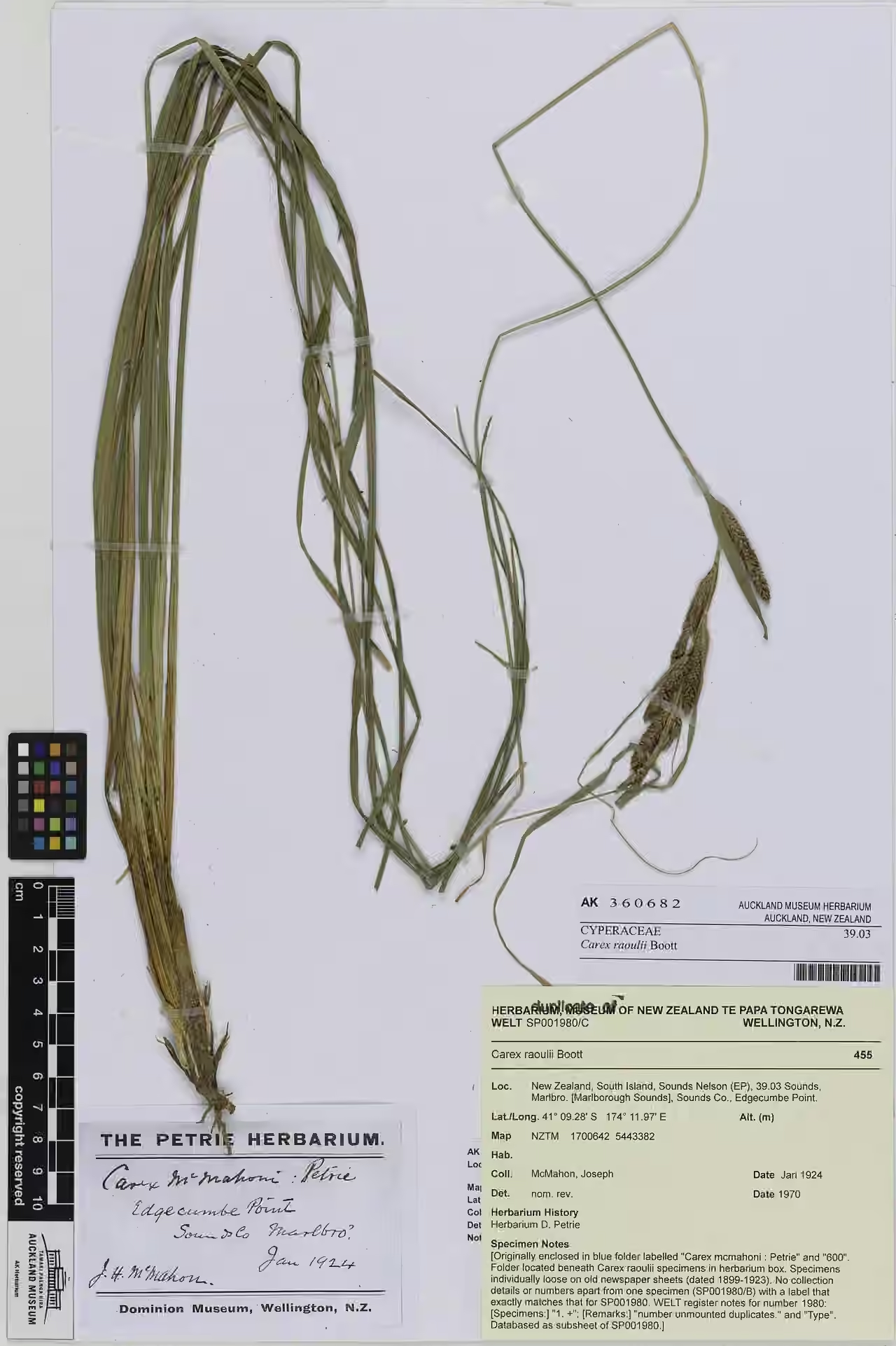
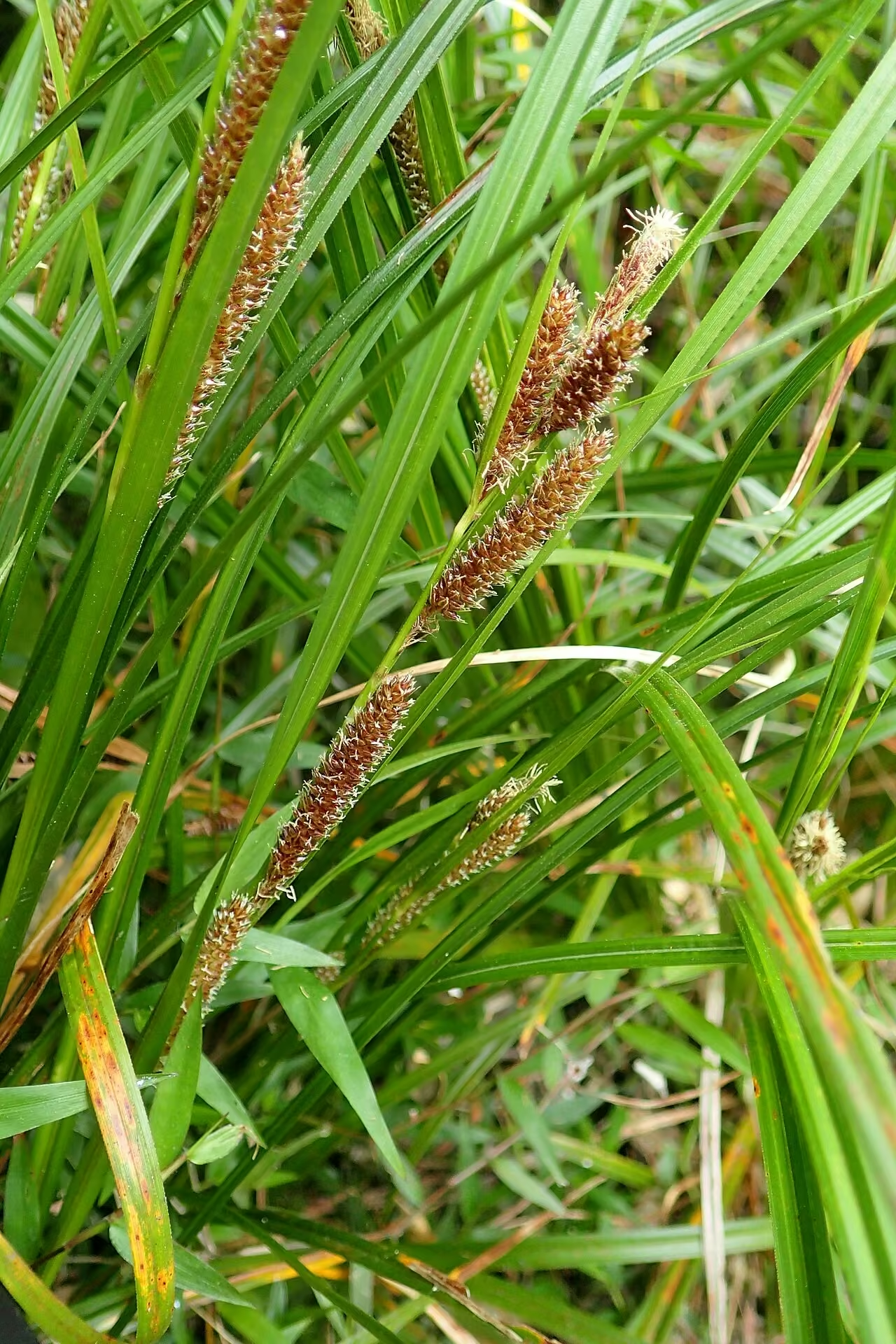
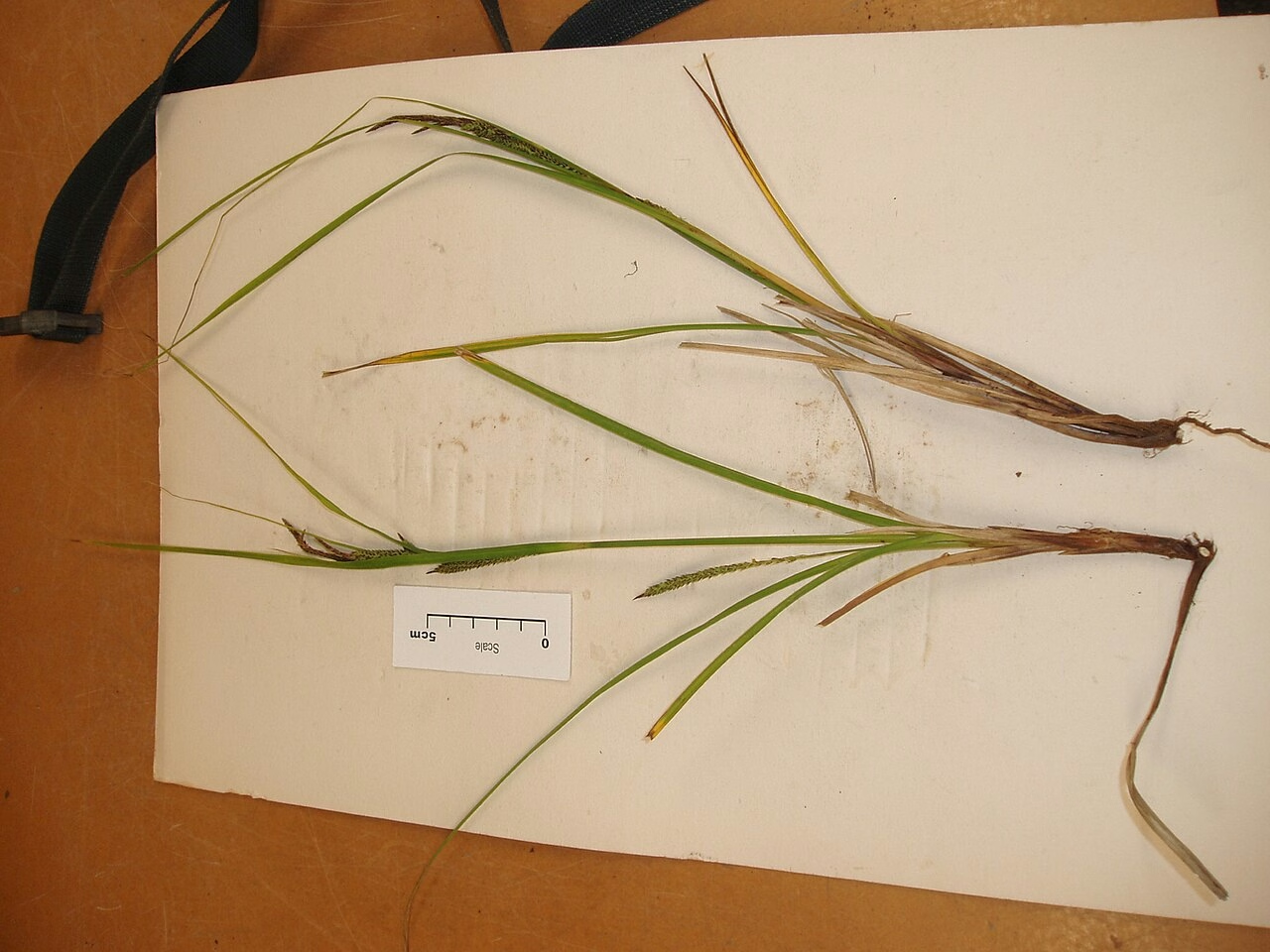
Carex raoulii forms dark green tufts up to about 90 cm high, with dark grey-brown sheaths at the base. The culms are 50 to 90 cm long and 0.5 to 1 mm wide, three-angled and rough to the touch. The leaves are shorter than the culms, 2 to 4 mm wide, soft and grassy, double-folded, with finely toothed margins.
The inflorescence is made up of 5 to 7 unstalked spikes, 1 to 4 cm long and 4 to 7 mm wide, closely clustered near the top of the culm. The terminal spike has female flowers at its base and male flowers above, while the other spikes are entirely female. The glumes are very broad, membranous and colourless with red-brown lines and a pale cream midrib running into a finely rough awn. The utricles are 2 to 3 mm long, flattened on one side, light reddish brown with paler nerves and slightly winged, rough margins, ending in a short two-toothed beak. Each flower has two stigmas, and the nut is about 1.5 mm long and light to dark brown.
The arrangement of male and female flowers in the top spike is the key to identification. In the closely allied unnamed sedge known as Carex 'raotest', the terminal spike is wholly male. That plant is the more common of the two, and many records of C. raoulii are thought to belong to it.
Quick Facts
| Scientific Name | Carex raoulii |
|---|---|
| Height | 0.5-0.9 m |
| Spread | Tufts about 0.4-0.6 m across |
| Water Needs | Moderate; evenly moist soil |
| Light | Partial shade to sun |
| Frost Tolerance | Moderate; a coastal and lowland species |
| Salt Tolerance | Moderate; grows in coastal shrubland but specific tolerance is not documented |
| Growth Rate | Moderate |
| Lifespan | Perennial |
Climate Best Suited to
Suits mild, humid coastal and lowland climates of the North and South Islands. It is not an alpine plant and is best in areas without severe frost or prolonged drought.
Regional Suitability
| City | Climate Suitability |
|---|---|
| Auckland | High |
| Wellington | High |
| Christchurch | Medium |
| Dunedin | Medium |
Plant Habitat
Carex raoulii is endemic to the North and South Islands, but its exact range is uncertain. NZPCN notes that it is less widespread than the 1970 Flora of New Zealand account suggested, because records have been mixed up with Carex 'raotest'. It is listed as Regionally Naturally Uncommon in both Otago and Wellington.
It is a sedge of coastal and lowland shrublands, growing in the shelter of low woody vegetation and at forest margins near the coast.
Growing Requirements
Soil Requirements
It grows in coastal and lowland shrubland soils and adapts readily to garden soil that holds some moisture.
- Moist but free-draining loam
- Moderate fertility; add leaf litter or compost to poor soils
- Avoid compacted, waterlogged clay
Light Requirements
Its shrubland habitat suggests it does well in dappled shade or partial sun.
- Partial shade under open shrubs
- Full sun is suitable where the soil stays moist
Water Requirements
Keep the soil evenly moist, especially while plants establish.
- Water regularly in the first summer
- Mulch to keep roots cool and damp
Planting and Establishing
Plant in autumn or spring into moist, reasonably fertile soil with some shelter. Space plants 40 to 50 cm apart for a loose drift, or closer for a quicker groundcover.
Because C. raoulii is often confused with Carex 'raotest' in the trade and in the wild, buy from a nursery that sources local, correctly identified material if you want the true species for a restoration project.
Ecological Role
Carex raoulii is wind-pollinated. NZPCN records that its nuts are dispersed by granivory and wind, meaning seed-eating birds and other animals, as well as wind, carry the small nuts away.
As a tufted sedge in coastal shrubland, it adds ground-layer cover beneath shrubs, helping hold soil and providing shelter and seed for small birds and invertebrates.
Uses & Significance
Garden Uses
A soft, dark green tussock that suits informal native gardens, shaded borders and coastal restoration plantings.
- Understorey planting beneath shrubs
- Mass planting on banks and woodland margins
- Restoration of coastal shrubland in its natural range
Ecological Value
It contributes to the ground layer of coastal and lowland shrubland, a habitat type that has been much reduced by development.
- Seeds eaten by birds and other granivores
- Tufts shelter ground-dwelling invertebrates
- Helps stabilise soil on banks and slopes
Landscaping Uses
Its soft, dark green leaves and reddish brown flower heads give a fine, natural texture that contrasts well with broad-leaved coastal shrubs such as coprosma and karo. Use it in groups of three or more rather than as a single specimen.
It works well along shaded paths, in woodland edges and on gentle banks where a tidy, low-maintenance tussock is wanted.
Seasonal Care Calendar
Spring
Plants put on fresh leaf growth and begin to produce flowering culms, although exact flowering months are not recorded.
- Plant or divide now
- Apply mulch before the soil dries
Summer
The reddish brown spikes are prominent and seed develops.
- Water in dry spells
- Watch for ripening spikes to collect seed
Autumn
A good time for planting while the soil is warm and moist.
- Sow fresh seed
- Plant new tufts into prepared ground
Winter
Growth slows, but the tufts stay green through mild winters.
- Comb out dead leaves if desired
- Avoid planting into waterlogged ground
When to Prune and How Much
Little pruning is needed. Comb out dead leaves with gloved fingers or a rake in late winter to freshen the tuft.
If plants become tired, they can be cut back to about 10 cm above ground in early spring, but this is rarely necessary.
How to Grow Raoul's Sedge
NZPCN describes Carex raoulii as easily grown by division and from fresh seed. Seed is the best option for restoration work because it keeps genetic diversity in the planted population, while division gives quicker, larger plants for gardens. Whichever method you use, start with material that has been correctly identified, because Carex 'raotest' looks very similar and is the more common plant. Check that the terminal spike carries female flowers at its base before collecting. Raised plants are usually ready to go into the ground after one growing season in pots.
From Seed
Collect spikes when the utricles turn reddish brown and the nuts inside are firm. Fresh seed germinates far more reliably than old seed.
- Strip ripe utricles from the spikes into a paper bag
- Sow on the surface of a moist seed-raising mix
- Cover with a thin layer of fine grit or sieved mix
- Keep moist in a sheltered, lightly shaded spot
- Prick out seedlings into individual pots when they are 3 to 5 cm tall
- Grow on for a season before planting out
By Division
Mature tufts can be divided in spring or autumn. Each division should have healthy roots and several shoots.
- Dig up a well-established tuft
- Split it with a spade or two forks into fist-sized pieces
- Cut the leaves back by about half
- Replant at once or pot up, and water well
- Keep the divisions moist until new leaves appear
Pests & Diseases
No specific pests are recorded for Carex raoulii. Native sedges are generally trouble-free, although aphids can occasionally gather on new growth in sheltered sites.
In wet, poorly drained pots, root rot can develop, so use a free-draining mix for container plants.
Cultural Significance
No traditional Māori name or use specific to Carex raoulii is recorded in the sources consulted.
The species was described by the American botanist Francis Boott, and its name honours Raoul, generally taken to be Étienne Raoul, a French naval surgeon who collected plants in New Zealand in the 1840s. Its confusion with an unnamed relative shows how much taxonomic work remains to be done on New Zealand sedges.
Bonus Tip
When buying plants labelled Carex raoulii, pull a flowering stem and look closely at the top spike. If its lower part holds female flowers with utricles and only the upper part carries male flowers, you have the true species; if the top spike is entirely male, the plant is probably the more common Carex 'raotest'.
Related Plants
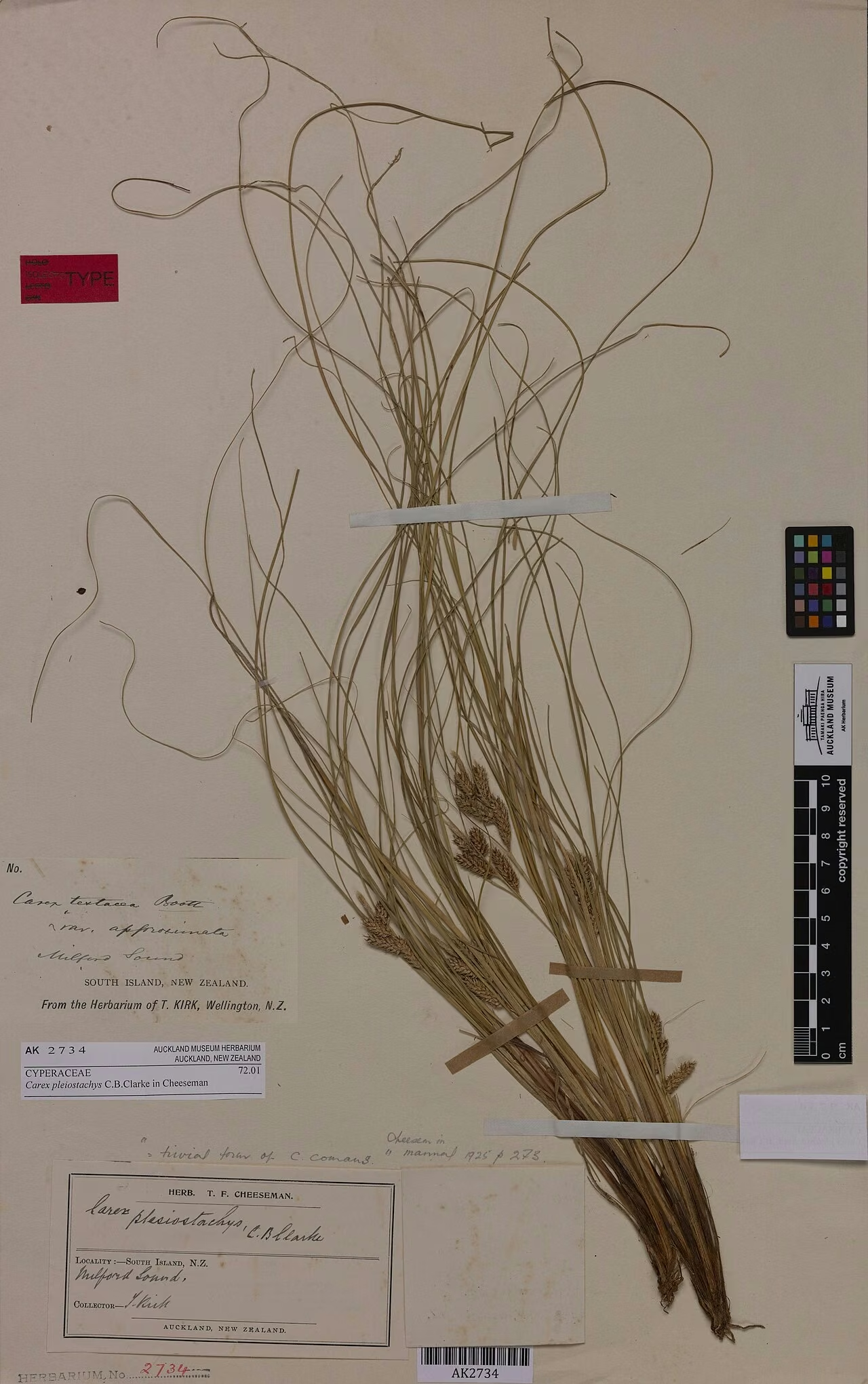
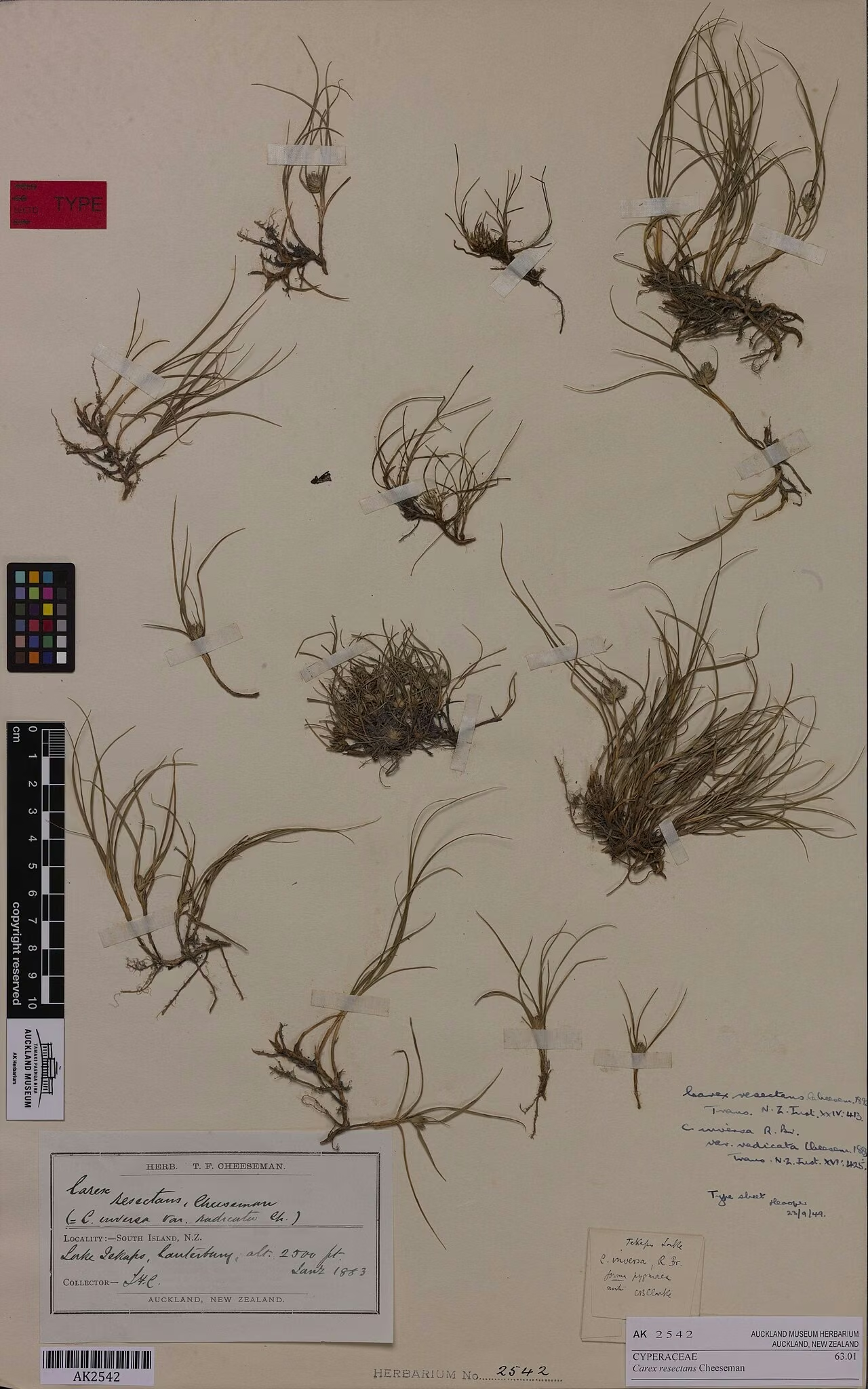
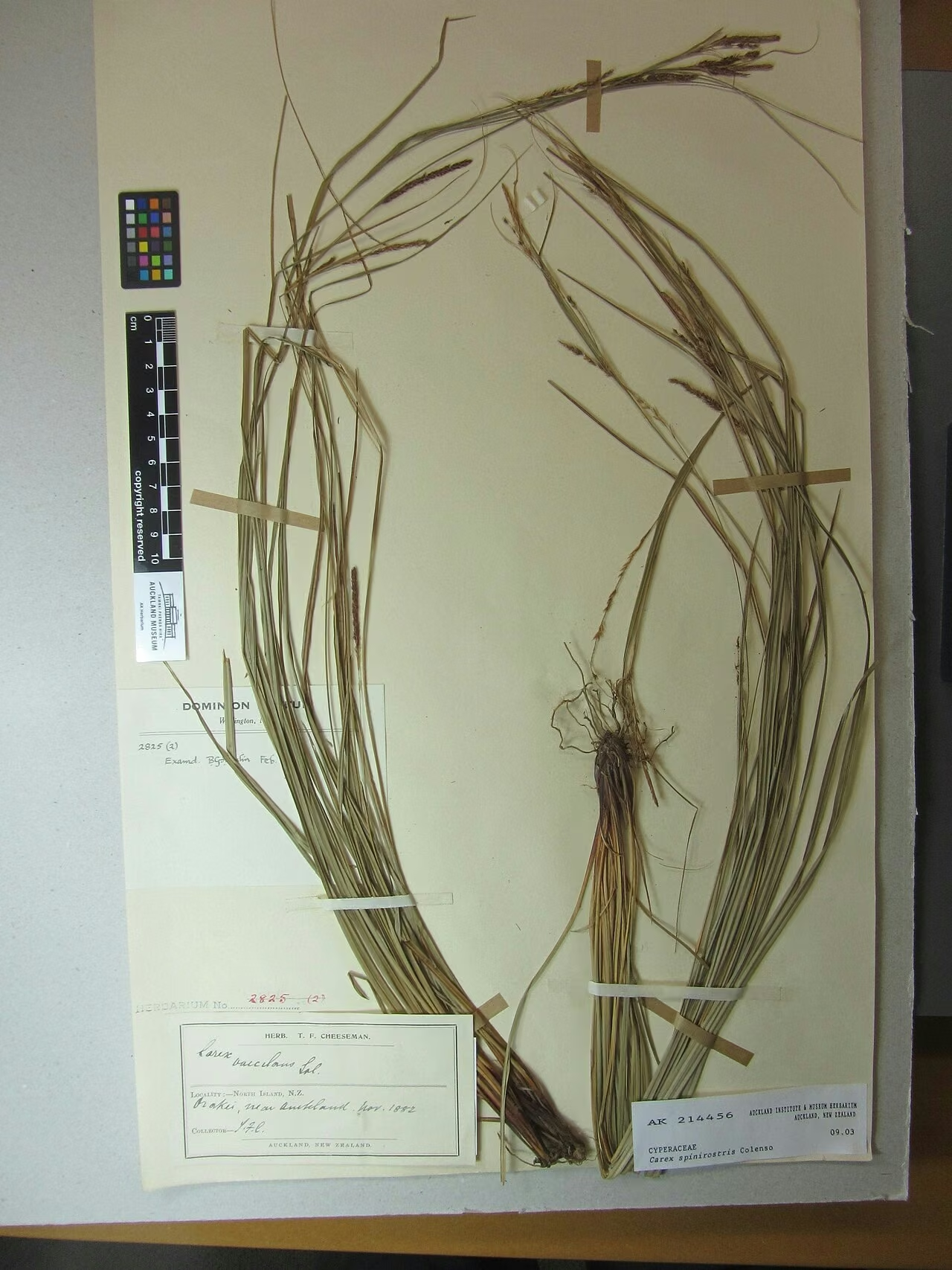
Explore other native plants that share similar characteristics or habitats with Raoul's Sedge (Carex raoulii), offering further insights into New Zealand's diverse flora. These related species provide context and opportunities for complementary planting in your garden.
Plant Conservation
Nationally Carex raoulii is ranked Not Threatened (2023), as it has been since 2004. Regionally, it is listed as At Risk - Regionally Naturally Uncommon in Otago and Wellington.
NZPCN notes that confusion with Carex 'raotest' obscures its true distribution and status, and that it is rather uncommon. Careful identification of herbarium specimens and field records, and protecting remaining coastal shrubland, would help clarify and secure its position.
Frequently Asked Questions
What does Carex raoulii look like?
It forms dark green tufts to about 90 cm tall with soft, double-folded leaves 2 to 4 mm wide and 5 to 7 closely clustered, unstalked spikes of light reddish brown utricles.
How do you tell Carex raoulii from similar sedges?
Its terminal spike has female flowers at the base and male flowers above. The related unnamed sedge Carex 'raotest' has an entirely male terminal spike, sometimes with a small female spike below it.
Is Raoul's sedge easy to grow?
Yes. NZPCN describes it as easily grown by division and from fresh seed, and it suits moist, sheltered positions similar to its coastal shrubland habitat.
Who is Carex raoulii named after?
The epithet raoulii honours Raoul, generally understood to be the French naval surgeon Étienne Raoul, who collected New Zealand plants in the 1840s.
Sources and Further Reading
The botanical, growing, and conservation details for Raoul's Sedge (Carex raoulii) on this page draw on the New Zealand plant references below. Consult them for full technical records and the latest distribution data.