Kirk's Sedge
Carex kirkii
Last updated:
Kirk's sedge (Carex kirkii) is a small, densely tufted, bright to dark green alpine sedge endemic to the South Island. It spreads slowly by short rhizomes, and its flowering stems are so short, under 4 cm in the typical variety, that the crowded spikes sit hidden among the leaf sheaths. It grows between 900 and 1900 m in snow tussock grassland, associated herbfield and semi-stable talus in North-West Nelson, Marlborough, Canterbury and Otago. It is ranked At Risk - Naturally Uncommon. Named after the botanist Thomas Kirk, it can be grown in a sunny rock garden in free-draining but permanently damp soil. Explore more native grasses and flaxes in our native plant guide.
Plant Description
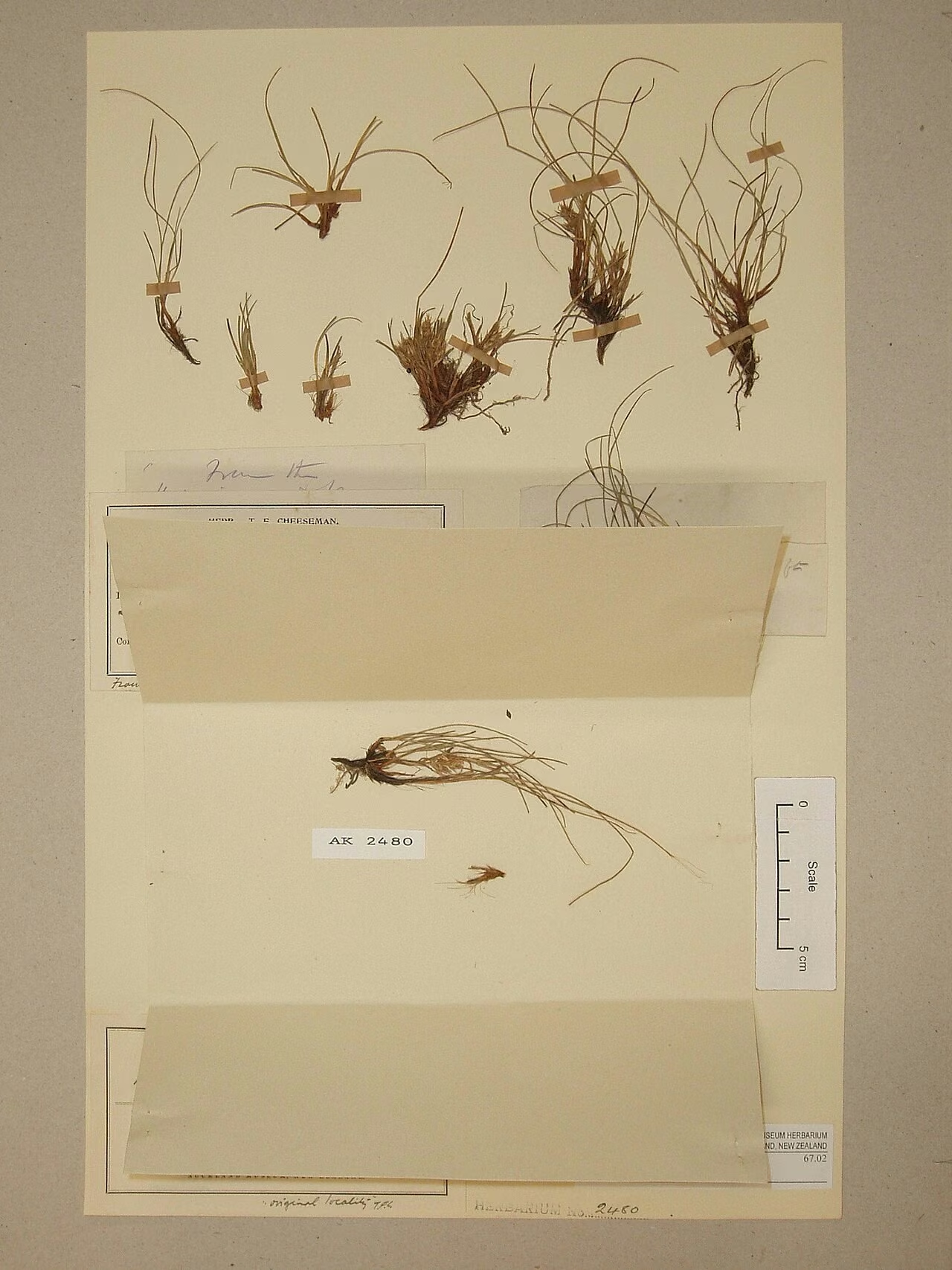
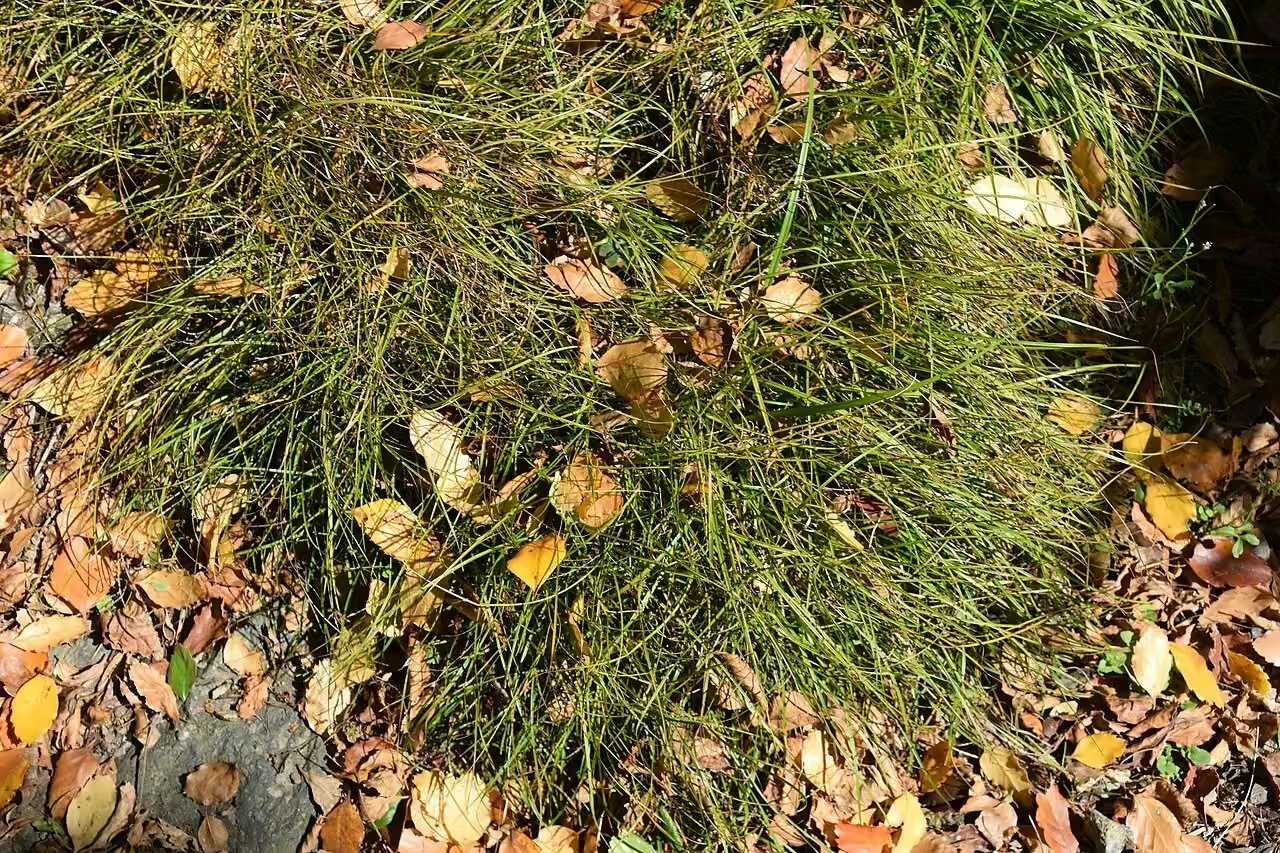
Carex kirkii forms dense tufts of bright to dark green leaves and spreads by short rhizomes. In the typical variety the leaves are rolled inwards (involute) and the flowering stems (culms) are very short, under 40 mm, so the inflorescence is often hidden among the leaf sheaths. The whole inflorescence is almost always subtended by a leaf-like bract.
The spikes are crowded together rather than spaced along the stem. The utricles (seed sacs) are 4 to 4.5 mm long and about 1 mm wide, elliptic-obovoid, covered in tiny papillae and strongly nerved, with a rough beak 1.5 to 2 mm long. The nut is about 2 mm long and flattened on one side.
The variety elatior, known only from historic collections, differs in its much taller culms of 80 to 210 mm that rise well above the leaves, its longer and broader leaves, and its spikes being distinct rather than crowded, usually without a leaf-like bract beneath the inflorescence.
Quick Facts
| Scientific Name | Carex kirkii |
|---|---|
| Height | Low tufts; flowering stems under 0.04 m in var. kirkii |
| Spread | Small tufts slowly spreading by short rhizomes |
| Water Needs | Moderate to high; permanently damp but free-draining soil |
| Light | Full sun |
| Frost Tolerance | High; an alpine species |
| Salt Tolerance | No information available; an alpine species |
| Growth Rate | Slow |
| Lifespan | Perennial |
Climate Best Suited to
An alpine sedge suited to cold winters with snow cover, cool summers and reliable moisture. In lowland gardens it is best in cooler southern and eastern South Island districts and struggles in hot, humid conditions.
Regional Suitability
| City | Climate Suitability |
|---|---|
| Auckland | Low |
| Wellington | Medium |
| Christchurch | Medium |
| Dunedin | High |
Plant Habitat
Kirk's sedge is endemic to the South Island, where it has been recorded in North-West Nelson, Marlborough, Canterbury and Otago. It is an alpine plant found between 900 and 1900 m above sea level.
It usually grows in snow tussock (Chionochloa) grassland and the associated herbfield, and on semi-consolidated talus where loose rock is partly stabilised by plants. NZPCN classes it as a facultative wetland plant, meaning it occurs in both wet and drier sites.
Growing Requirements
Soil Requirements
NZPCN recommends free-draining yet permanently damp soil, reflecting alpine soils that are stony but kept moist by snowmelt and frequent rain.
- Gritty, free-draining mix with added organic matter
- Steady moisture through the growing season
- Stony talus or scree conditions suit it
Light Requirements
It grows in open alpine grassland and herbfield and should be given full sun in cultivation.
- Full sun
- Keep clear of taller plants that would shade it
Water Requirements
It needs constant moisture at the roots but cannot tolerate stagnant water.
- Water regularly in dry weather
- A gravel mulch keeps roots cool and moist
- Avoid both drought and waterlogging
Planting and Establishing
Plant in autumn or early spring in a sunny rock garden, scree bed or alpine trough. Mix plenty of grit into the soil and top-dress around the plant with gravel.
Because it is very small, place it where it will not be overgrown, near the front of a rock garden or among other low alpine plants.
Ecological Role
Kirk's sedge is wind pollinated and flowers in early summer, with seed ripening from December to February. Its seed is likely shed close to the parent among the leaf sheaths, but specific dispersers have not been recorded.
It forms part of the low inter-tussock vegetation of South Island snow tussock grasslands and herbfields, and helps bind loose talus where it grows.
Uses & Significance
Garden Uses
A specialist plant for alpine and rock gardens, valued by collectors of high-country natives.
- Rock gardens and scree beds
- Alpine troughs and containers
- Collections of uncommon native sedges
Ecological Value
It contributes to the diversity of South Island alpine grassland and herbfield.
- Part of snow tussock grassland ground flora
- Helps stabilise semi-consolidated talus
- A naturally uncommon endemic of the high country
Landscaping Uses
Use Kirk's sedge as a small tufted accent among rocks and alpine cushions. Its bright to dark green foliage provides contrast with silver or grey alpine plants.
It is too small for mass landscape planting and is best appreciated close up in a trough or raised bed.
Seasonal Care Calendar
Spring
New leaves emerge as temperatures rise. Plant or divide in early spring.
- Divide established clumps
- Begin regular watering
Summer
Flowering in November and December, followed by fruiting from December to February.
- Collect ripe seed
- Keep roots cool and damp
Autumn
Sow fresh seed and plant out young plants.
- Sow seed fresh
- Top up gravel mulch
Winter
Fully hardy to cold. In lowland gardens, the main risk is wet, poorly drained soil.
- Check drainage
- No frost protection needed
When to Prune and How Much
Kirk's sedge needs no pruning. Gently pull away any dead leaves at the base in spring.
Remove fallen leaves or debris from neighbouring plants that may settle on the tuft and cause rot.
How to Grow Kirk's Sedge
NZPCN reports that Kirk's sedge is easily grown from fresh seed and by division of established plants. As a naturally uncommon alpine species, it should not be collected from the wild without permission; use cultivated stock where possible. Young plants need the same gritty, constantly damp conditions as adults, and should be kept cool in summer. In warmer lowland districts, raise seedlings and divisions in a cool, shaded part of the nursery over summer and avoid rich potting mixes, which make the tufts soft and prone to rot. A pot plunged into damp sand or gravel keeps the roots evenly moist and cool, closely imitating the snowmelt-fed alpine soils in which the species naturally grows.
From Seed
Seed ripens from December to February. Because the spikes sit low among the leaves, part the foliage to find them, and collect when the utricles have darkened.
- Collect ripe utricles from the short spikes.
- Sow on a gritty seed mix and cover with fine grit.
- Keep moist in a cool, bright position outdoors.
- Expect germination as temperatures change through autumn or the following spring.
- Pot seedlings individually into an alpine mix.
By Division
Because it spreads by short rhizomes, established clumps can be separated into smaller rooted pieces. Do this in early spring as growth resumes.
- Lift the tuft carefully.
- Tease apart pieces each with roots and a few shoots.
- Pot into a gritty mix and keep in light shade.
- Water regularly until established, then move to full sun.
Pests & Diseases
No specific pests or diseases are recorded for Carex kirkii. In lowland gardens, root rot in poorly drained soil and heat stress in summer are the most likely problems.
Slugs can damage young plants of small alpine sedges, so protect seedlings.
Cultural Significance
No Māori name or traditional use specific to Carex kirkii has been recorded in the sources consulted.
The species was described by Donald Petrie in 1886 and named after Thomas Kirk (1828 to 1898), a New Zealand botanist and lecturer in natural sciences, author of The Forest Flora of New Zealand (1889).
Bonus Tip
Grow Kirk's sedge in a shallow alpine trough with a deep gravel top-dressing and stand the trough where it gets morning sun but some afternoon relief in hot districts. This keeps the roots damp and cool while the foliage stays compact.
Related Plants
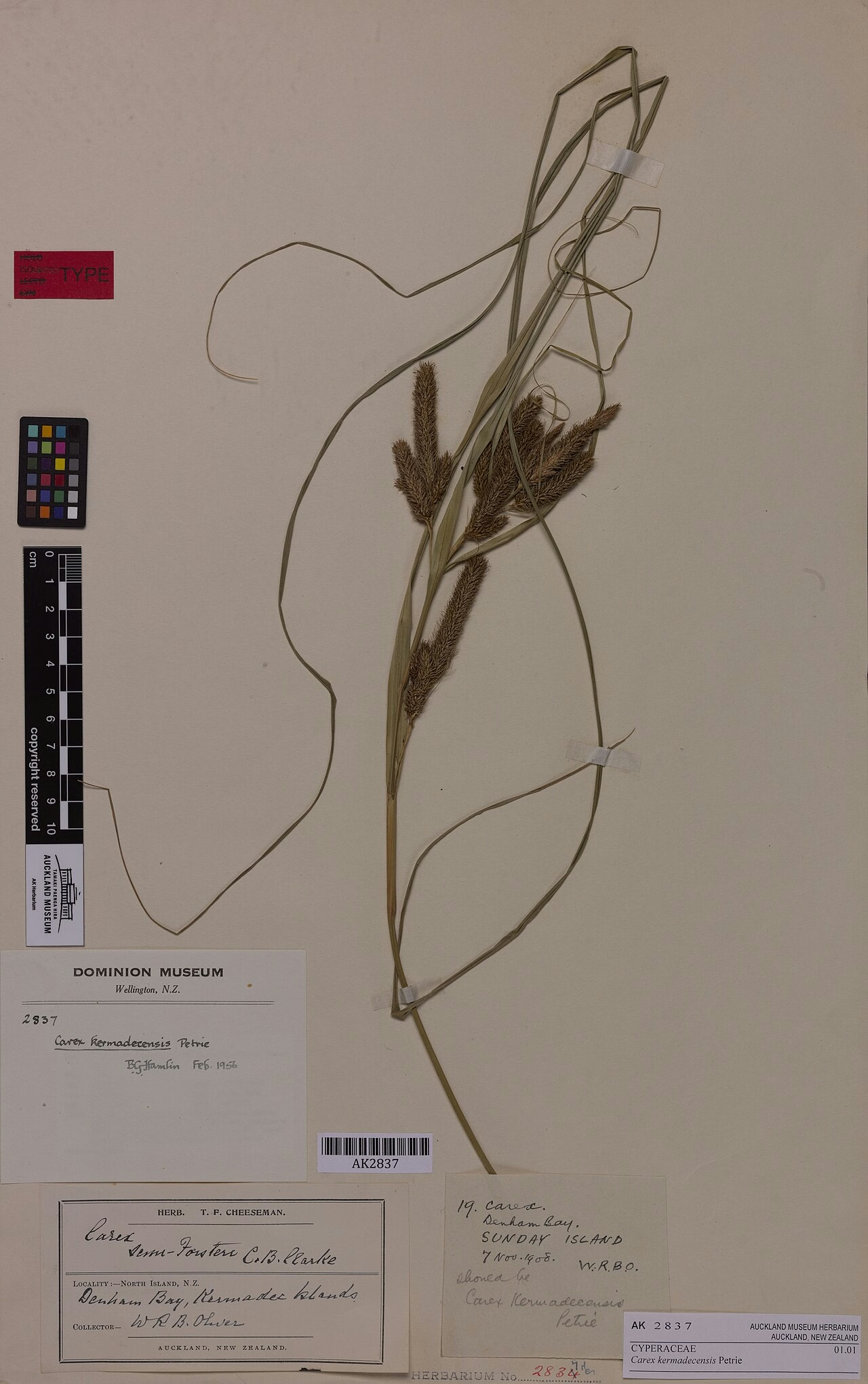
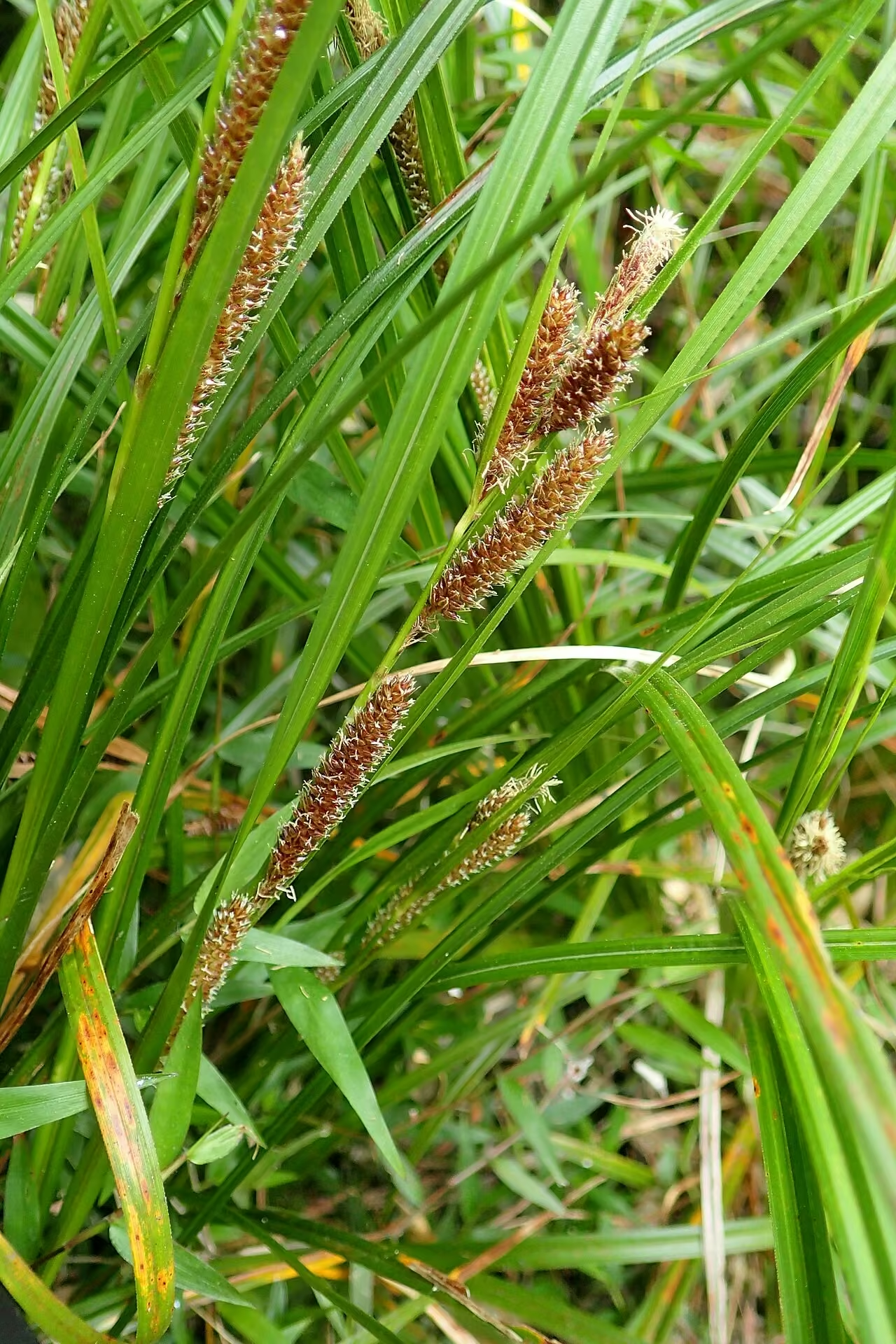
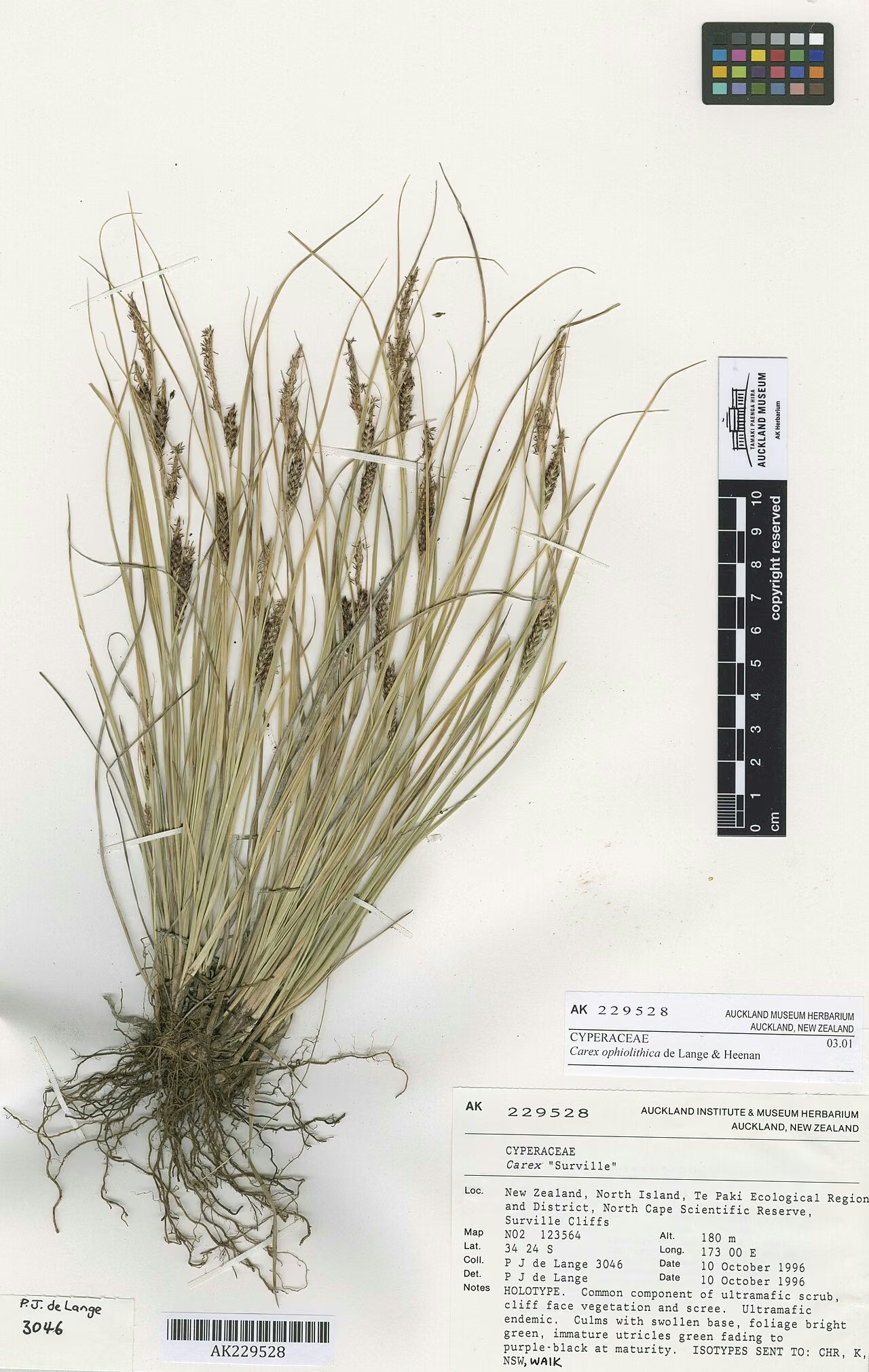
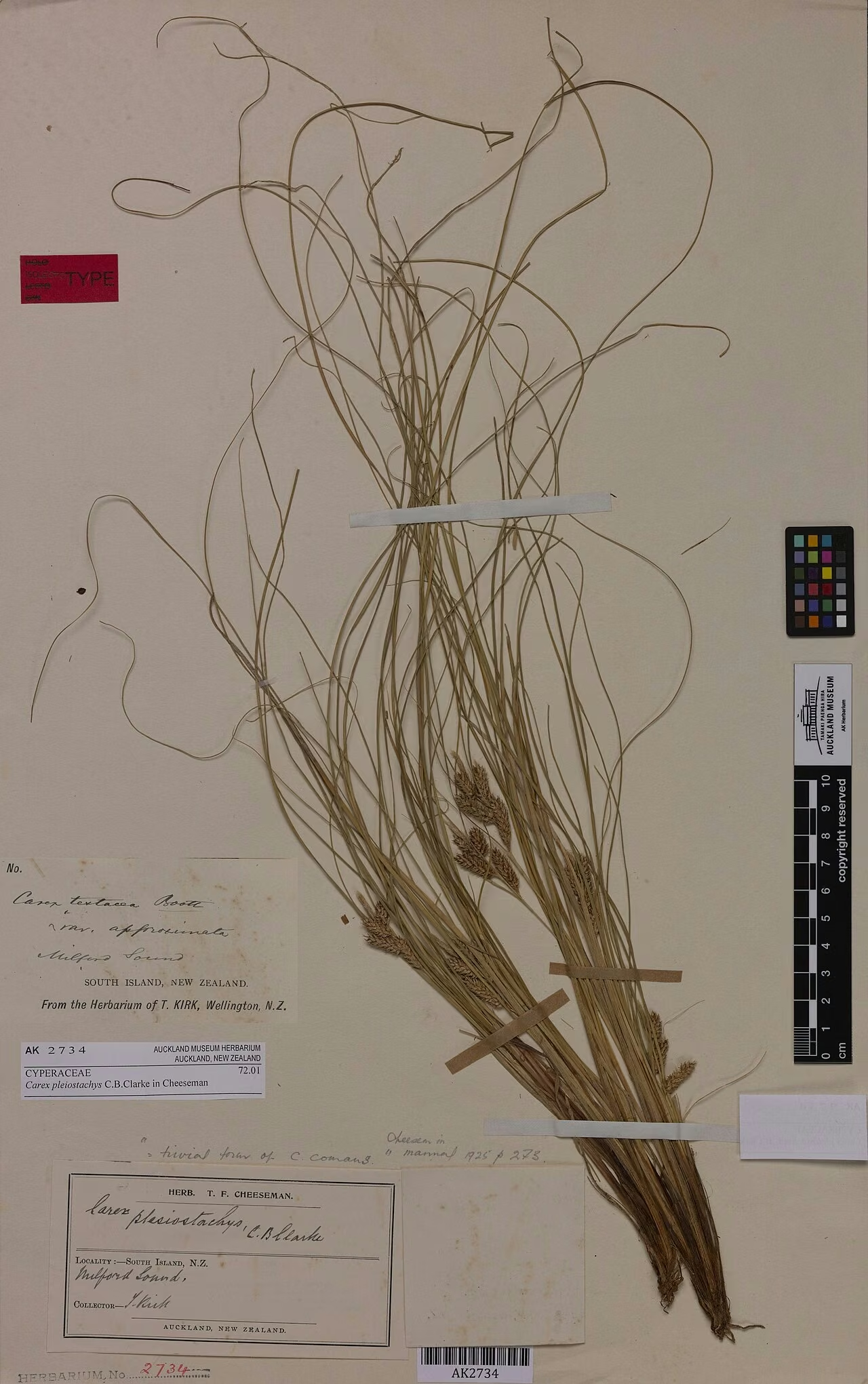
Explore other native plants that share similar characteristics or habitats with Kirk's Sedge (Carex kirkii), offering further insights into New Zealand's diverse flora. These related species provide context and opportunities for complementary planting in your garden.
Plant Conservation
Carex kirkii var. kirkii is ranked At Risk - Naturally Uncommon (2023). It occurs in a scattered range of alpine sites and is not thought to be declining, but its limited distribution makes it vulnerable to local changes.
The variety elatior is ranked Data Deficient and may be extinct, as it has not been collected since the late 1800s; NZPCN notes no targeted surveys have been made. Searches of its historic sites on Mt Arthur and Mt St Bathans would help clarify its status.
Frequently Asked Questions
Where does Kirk's sedge grow?
It is endemic to the South Island, recorded from North-West Nelson, Marlborough, Canterbury and Otago, in alpine snow tussock grassland, herbfield and semi-consolidated talus between 900 and 1900 m.
Who is Carex kirkii named after?
It honours Thomas Kirk (1828 to 1898), a New Zealand botanist and lecturer in natural sciences who wrote The Forest Flora of New Zealand, published in 1889.
What is Carex kirkii var. elatior?
It is a tall form with flowering stems of 80 to 210 mm, known only from old collections on Mt Arthur and Mt St Bathans. NZPCN lists it as Data Deficient, possibly extinct, and doubts its taxonomic validity.
Can Kirk's sedge be grown in a garden?
Yes. NZPCN says it is easily grown from fresh seed or division and is best in full sun in a rock garden with free-draining yet permanently damp soil.
Sources and Further Reading
The botanical, growing, and conservation details for Kirk's Sedge (Carex kirkii) on this page draw on the New Zealand plant references below. Consult them for full technical records and the latest distribution data.