Forest Sedge
Carex lambertiana
Last updated:
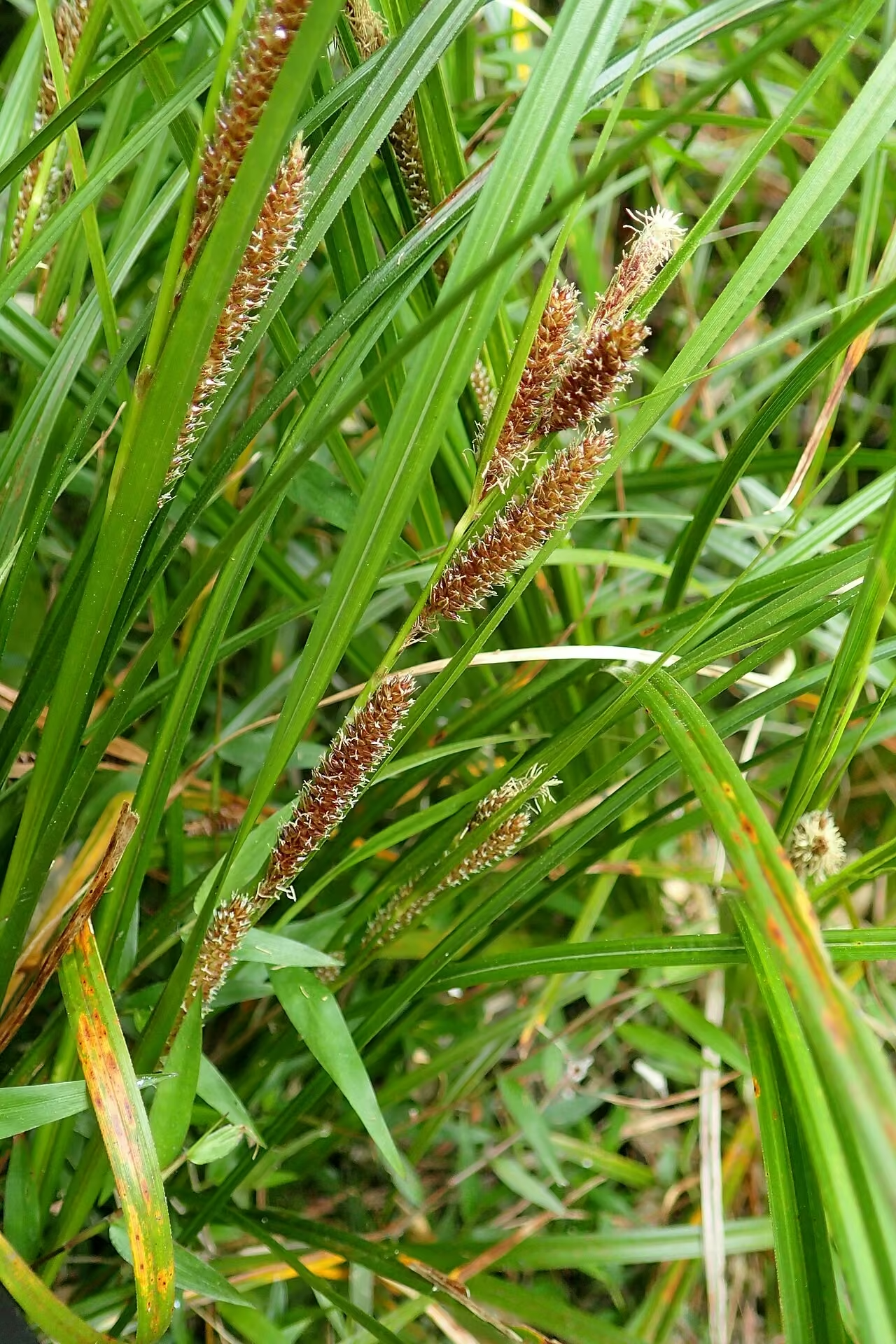
Forest sedge (Carex lambertiana) is a robust, leafy, bright to yellow-green sedge endemic to New Zealand, forming tufts 0.6 to 1 m tall. Its erect, cylindrical spikes ripen to dark brown or almost purple-black, carrying glossy utricles that make the plant easy to spot. It is abundant in the North Island from Te Paki to about southern Waikato and occurs more sparingly further south, with South Island records from Nelson, Marlborough and northern Canterbury. It grows in open but shaded sites in tall forest and riverside forest on river terraces, and sometimes appears in urban parks. NZPCN rates it a better garden plant than the widely sold Carex dissita. Explore more native grasses and flaxes in our native plant guide.
Plant Description
Carex lambertiana forms robust, leafy tufts 0.6 to 1 m tall. The flowering stems (culms) are 1 to 2 mm across, three-angled and smooth, with dark grey-brown or purple-black sheaths at the base. The leaves are about as long as the stems, 3 to 6 mm wide, double-folded, bright to yellow-green and finely rough along the margins.
Each stem carries five to eight cylindrical spikes, 15 to 50 mm long and 5 to 7 mm wide. The top one to three are male and the rest female, sometimes with male flowers at the base. The upper spikes are clustered and stalkless, while the lower ones are more widely spaced and held erect on short, stiff stalks. The utricles are 2.5 to 3.5 mm long, flattened, obovoid, glossy and dark brown to almost purple-black with paler nerves, with a beak just under 1 mm long. The nut is about 1.5 mm, three-angled, light to dark brown and minutely pitted.
It is most easily confused with Carex dissita, which is less robust with smaller spikes and ovoid utricles. Carex ochrosaccus has shorter, paler utricles, and Carex solandri has long-stalked, drooping spikes rather than the short-stalked, erect spikes of forest sedge.
Quick Facts
| Scientific Name | Carex lambertiana |
|---|---|
| Height | 0.6-1 m |
| Spread | About 0.5-0.8 m |
| Water Needs | Moderate |
| Light | Partial shade |
| Frost Tolerance | Moderate; mainly a northern lowland species |
| Salt Tolerance | Low; a forest species |
| Growth Rate | Moderate to fast |
| Lifespan | Perennial |
Climate Best Suited to
Thrives in the mild, humid lowland climate of the northern North Island and grows more sparingly further south. It tolerates light frosts, especially under a forest canopy.
Regional Suitability
| City | Climate Suitability |
|---|---|
| Auckland | High |
| Wellington | Medium |
| Christchurch | Medium |
| Dunedin | Low |
Plant Habitat
Forest sedge is endemic to New Zealand. In the North Island it is abundant from Te Paki in the far north to about the southern Waikato, and uncommon further south. In the South Island it is recorded from Nelson, Marlborough and northern Canterbury.
It grows from coastal to montane elevations, usually in relatively open but shaded sites within tall forest, or in riparian forest along rivers and on river terraces. It occasionally establishes in urban parks. NZPCN classes it as a facultative wetland plant, found in both wetland and dryland settings.
Growing Requirements
Soil Requirements
NZPCN recommends rich, free-draining soil, similar to the alluvial soils of the river terraces where it grows.
- Fertile, humus-rich soil
- Free drainage with some moisture retention
- Alluvial loams are ideal
Light Requirements
It grows in shaded but relatively open forest sites, and prefers partial shade in gardens.
- Partial or dappled shade
- Tolerates brighter light if soil stays moist
Water Requirements
It likes steady moisture but good drainage, as in riverside forest.
- Water during dry summers
- Mulch with leaf litter or bark
Planting and Establishing
Plant in autumn or spring into fertile soil under trees or on the shady side of a garden. Space plants 50 to 80 cm apart, or closer for a massed ground layer.
In restoration plantings, it is a good choice for the understorey of riverside and terrace forest once a canopy has formed.
Ecological Role
Forest sedge is wind pollinated, flowering from September to December, and NZPCN records fruit at any time of year. Its glossy dark seed is shed from the erect spikes; specific dispersers have not been documented, but sedge seed is eaten by native birds.
It is a characteristic plant of the ground layer in northern lowland forest and riparian forest, where it helps hold soil on river terraces and provides cover for invertebrates.
Uses & Significance
Garden Uses
NZPCN recommends forest sedge as a superior alternative to the widely planted Carex dissita for shaded gardens.
- Shaded borders and woodland gardens
- Under-planting beneath trees
- Riparian and forest restoration
Ecological Value
It is an important component of the native forest floor across the northern North Island.
- Seed available through much of the year
- Stabilises river-terrace and stream-bank soils
- Ground cover habitat for invertebrates and lizards
Landscaping Uses
Mass forest sedge under trees for a natural, bright green ground layer. Its upright, dark seed spikes add structure and contrast with ferns and broadleaf shrubs.
Single plants make a neat specimen in a shaded courtyard or along a path edge.
Seasonal Care Calendar
Spring
Flowering from September, with clusters of spikes on erect stems.
- Flowering September to December
- Plant or divide
Summer
Spikes ripen to dark brown or near black; keep soil moist.
- Water in dry spells
- Collect ripe seed
Autumn
Seed continues to ripen and autumn is a good planting season.
- Sow fresh seed
- Plant out young plants
Winter
Evergreen and low maintenance; NZPCN records fruit year-round.
- Tidy dead leaves in late winter
- Check for waterlogging
When to Prune and How Much
Comb out dead leaves with gloved hands in late winter. Cut spent flower stems back to the base once the seed has fallen.
Very tired clumps can be cut back in early spring and will regrow if fed and watered.
How to Grow Forest Sedge
NZPCN reports that forest sedge is easily grown from fresh seed and by division of established plants. Because it fruits year-round, seed can be collected at almost any time, making it a convenient species for nurseries and restoration groups. Sourcing seed from local populations keeps restoration plantings true to the area.
From Seed
Collect spikes when the utricles are glossy dark brown to almost black and come away easily. Sow fresh for quickest germination.
Seed sown in spring or autumn generally germinates over a few weeks in mild conditions. Seedlings appreciate the same partial shade as adult plants, and pricking them out into deep containers encourages the strong root system they need when planted on river terraces or under an established forest canopy.
- Harvest ripe spikes and strip off the utricles.
- Sow thinly on a moist seed-raising mix.
- Cover lightly with fine mix.
- Keep in a sheltered, partly shaded spot and water regularly.
- Pot seedlings individually once they have several leaves.
- Grow on until well rooted before planting out.
By Division
Large tufts can be split in autumn or spring. Divisions re-establish quickly in moist, rich soil.
Division is the quickest way to produce a few large plants for a garden, and it also rejuvenates old clumps whose centres have become sparse. Discard any woody or dead central material and replant only the vigorous outer sections.
- Dig up the whole clump.
- Split into sections with roots and several shoots.
- Cut leaves back by about half.
- Replant straight away and water well.
- Keep moist until new growth appears.
Pests & Diseases
No significant pests or diseases are recorded for Carex lambertiana. Drought stress in full sun and root rot in waterlogged soil are the main cultivation problems.
In forest remnants, grazing stock and invasive ground-cover weeds such as tradescantia can displace it.
Cultural Significance
No Māori name or traditional use specific to Carex lambertiana has been recorded in the sources consulted.
The species was described by the botanist Francis Boott in 1853. The person honoured by the epithet lambertiana is not stated in the sources consulted. NZPCN notes that it occasionally establishes in urban parks, so it is one of the native sedges city dwellers in the north may encounter without visiting the bush.
Bonus Tip
If you have been planting Carex dissita in shade, try forest sedge instead. NZPCN considers it the better garden plant: it is sturdier, with larger, upright spikes that ripen to an attractive glossy near-black.
Related Plants
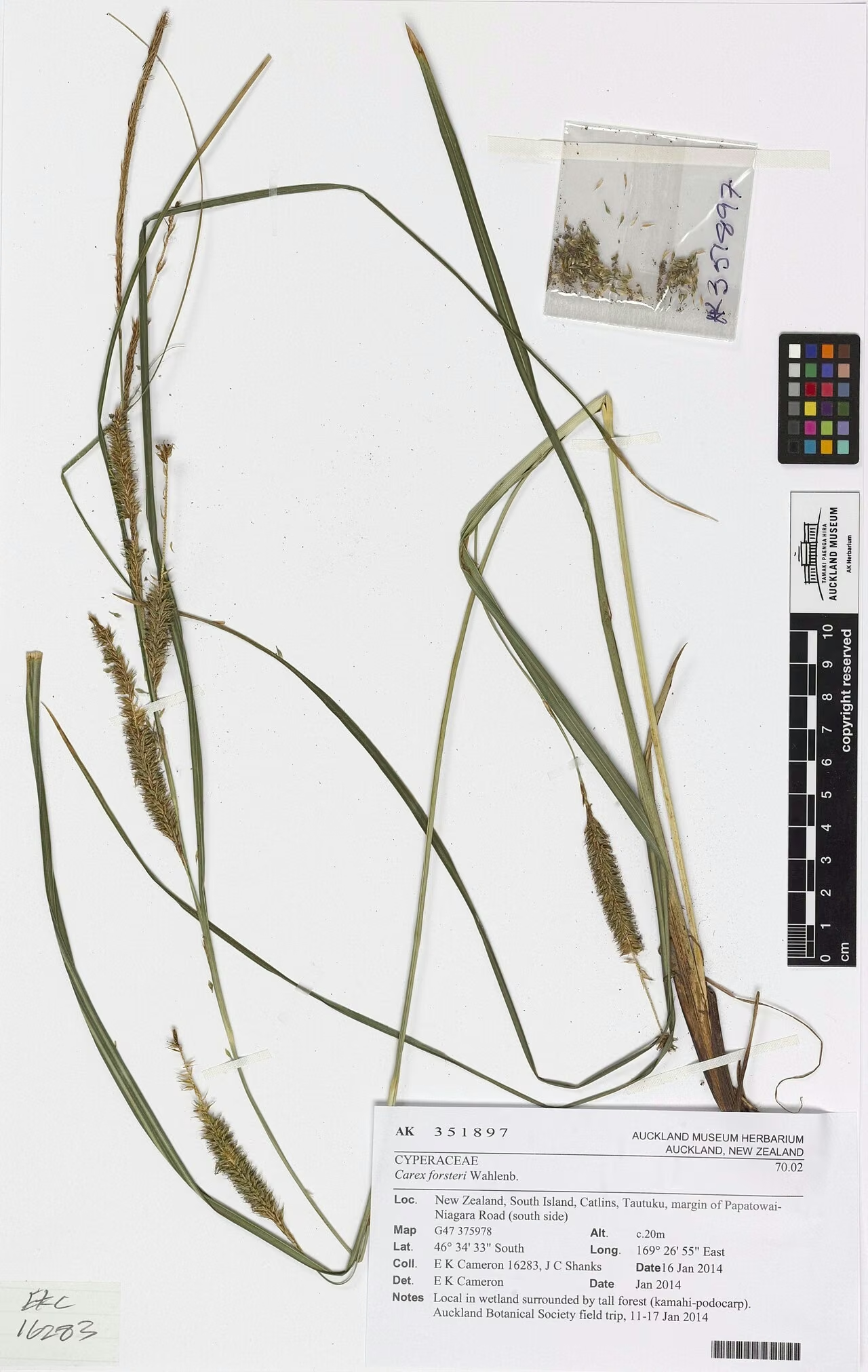
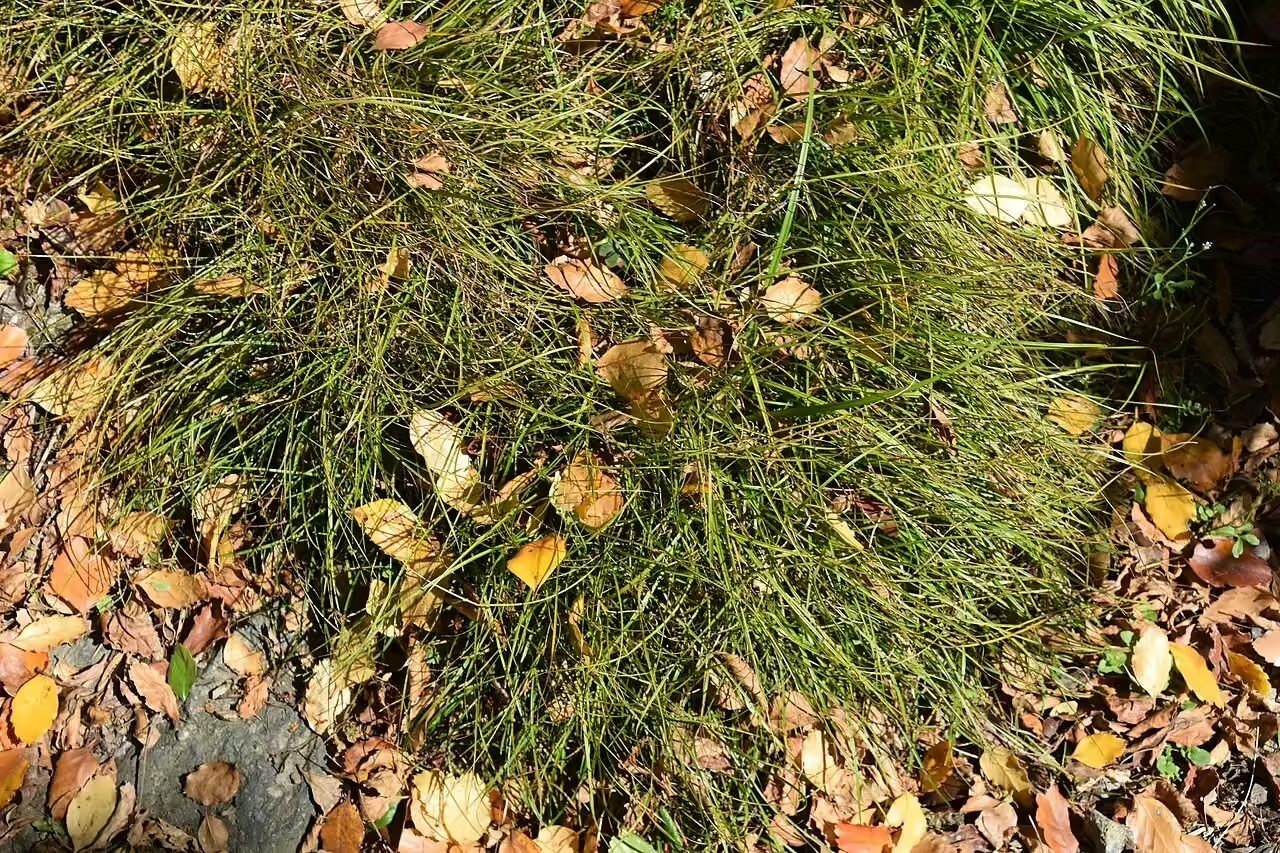
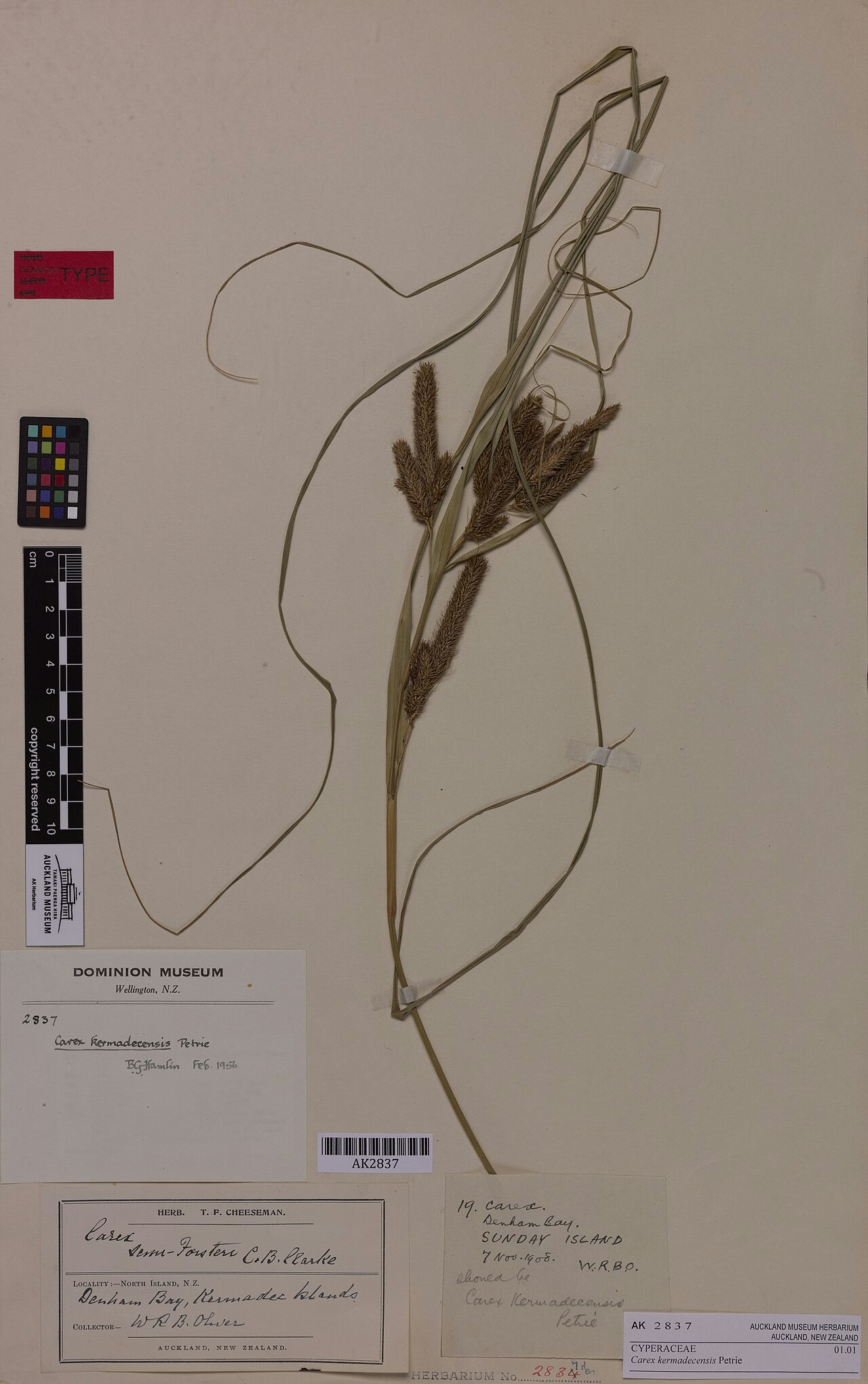
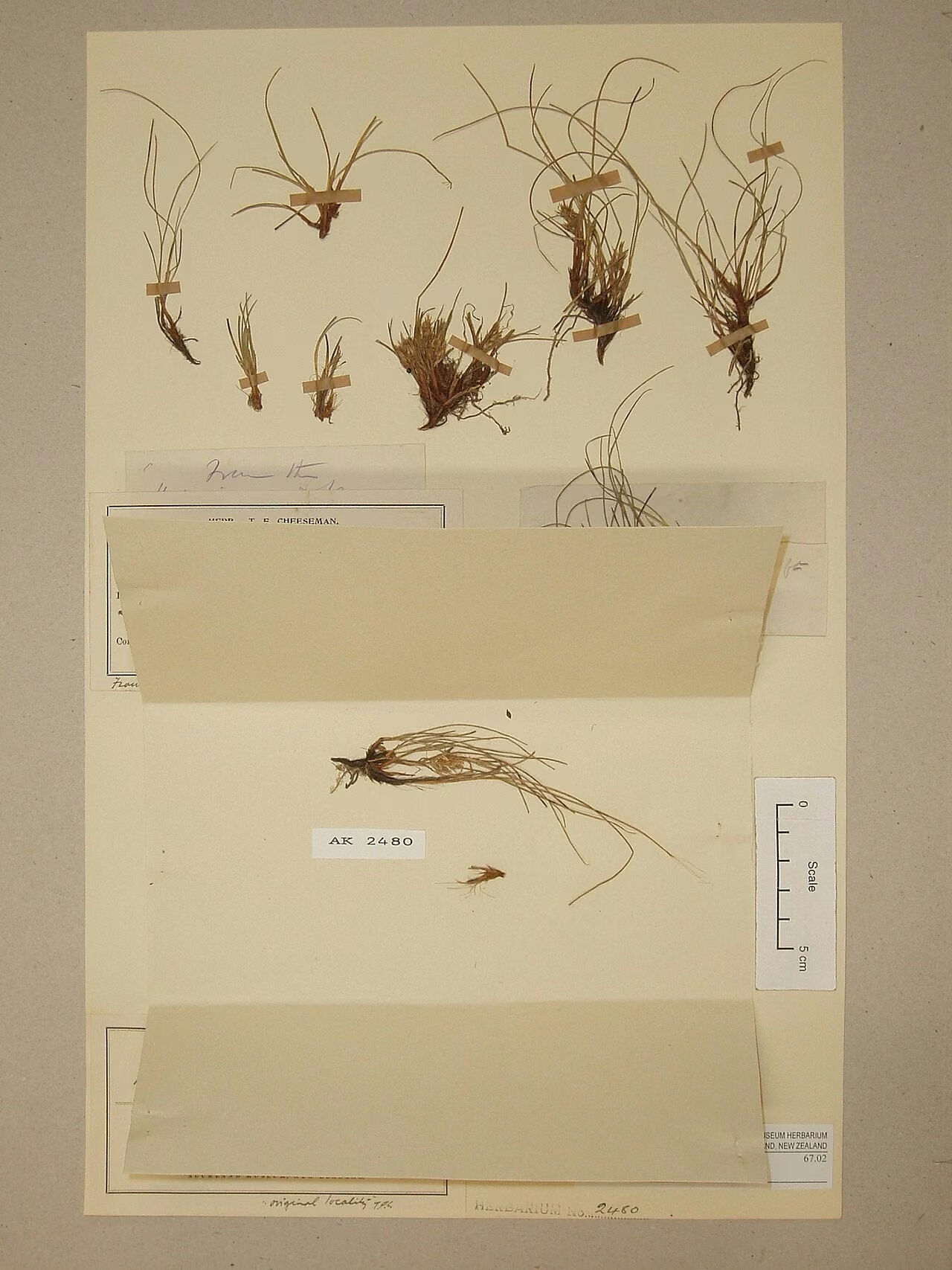
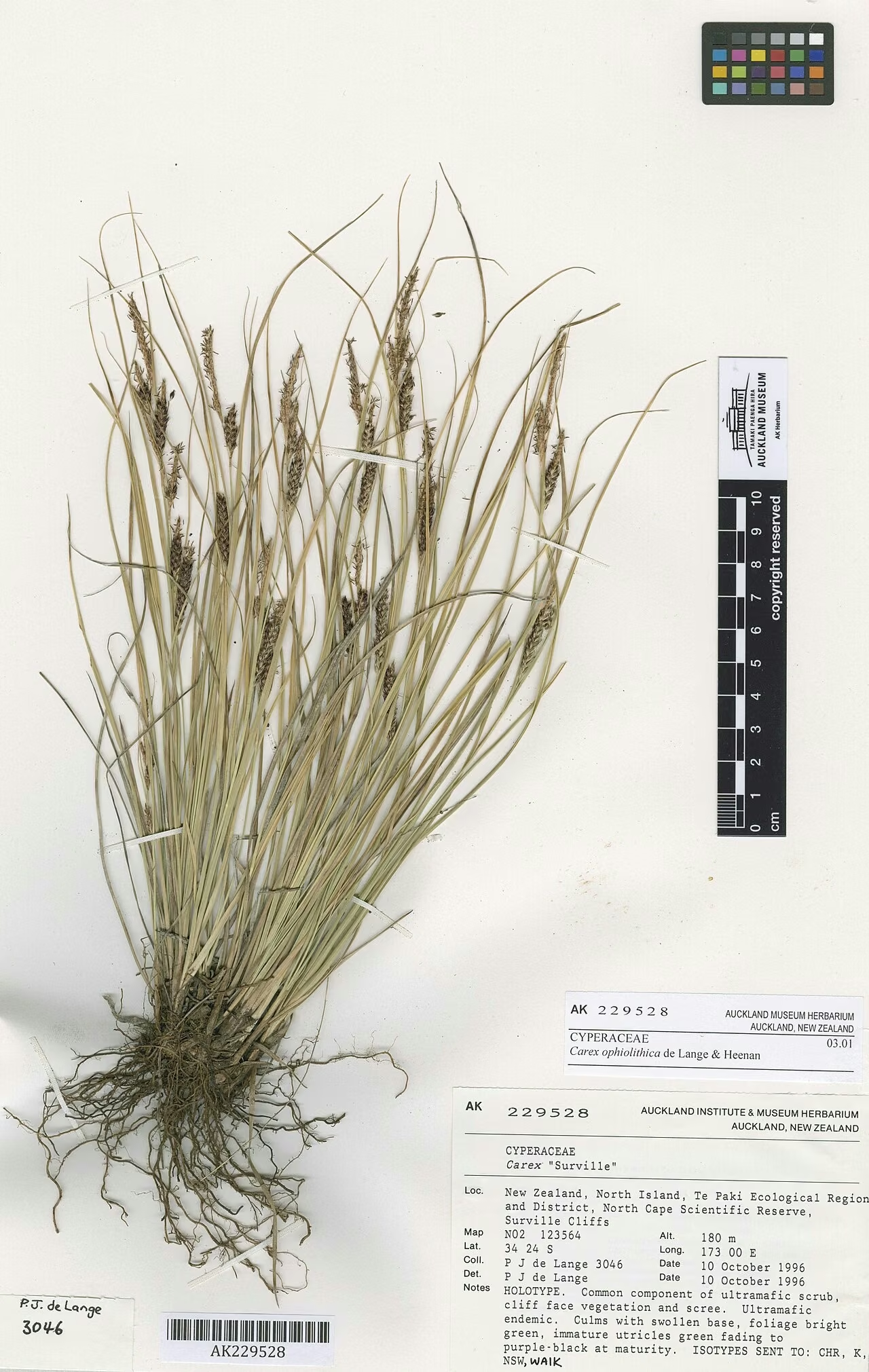
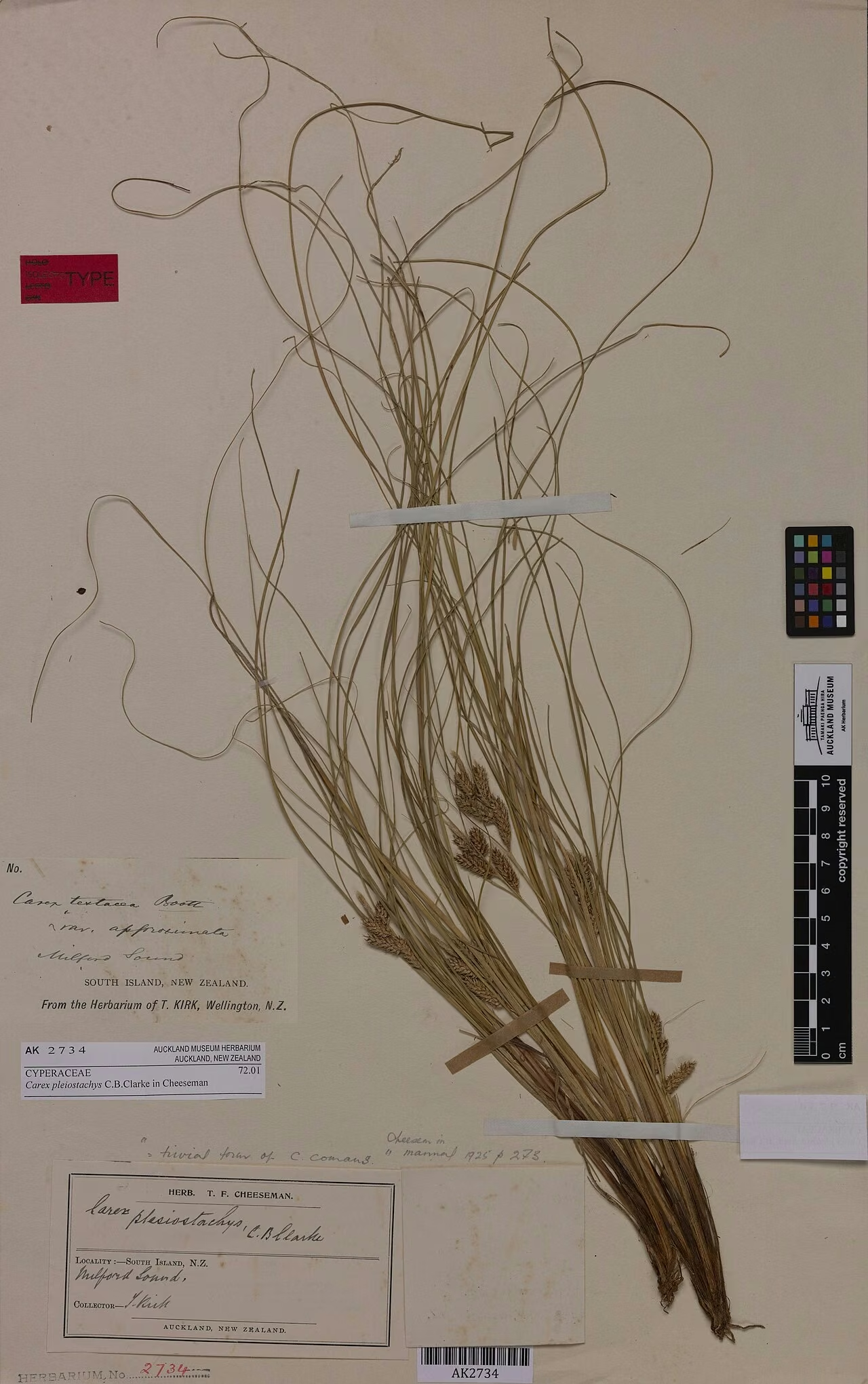
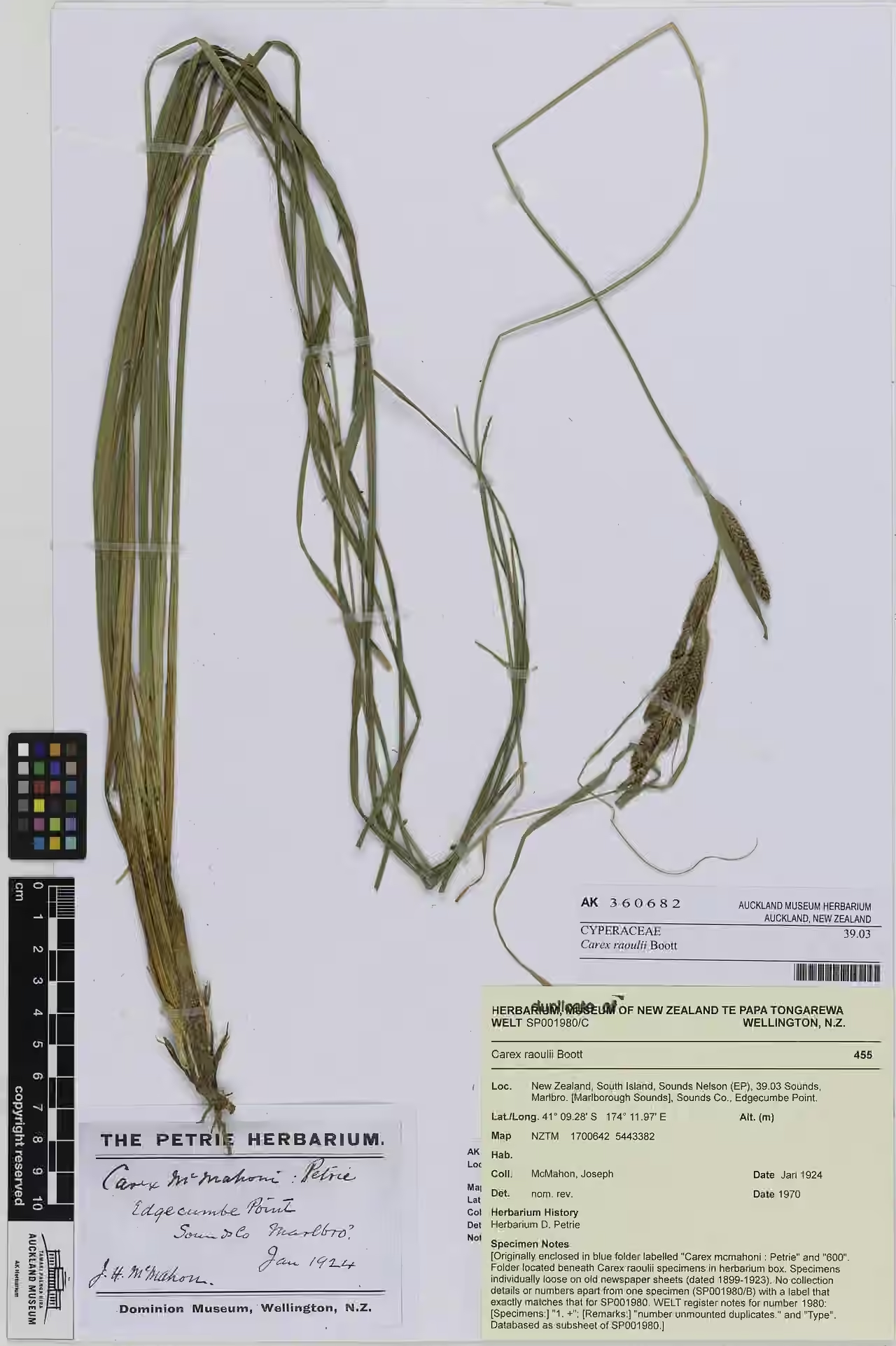
Explore other native plants that share similar characteristics or habitats with Forest Sedge (Carex lambertiana), offering further insights into New Zealand's diverse flora. These related species provide context and opportunities for complementary planting in your garden.
Plant Conservation
Forest sedge is ranked Not Threatened (2023). It is abundant in northern North Island forests and widespread in suitable habitat elsewhere.
Protecting lowland and riverside forest from clearance, grazing and weed invasion maintains healthy populations, and the species is a useful addition to forest restoration plantings.
Frequently Asked Questions
What is the difference between Carex lambertiana and Carex dissita?
Carex lambertiana is stouter and more robust, with larger erect spikes and obovoid rather than ovoid utricles. NZPCN considers it superior to the commonly cultivated Carex dissita for gardens.
Where does forest sedge grow in New Zealand?
It is abundant in the North Island from Te Paki to about southern Waikato, uncommon further south, and recorded in the South Island from Nelson, Marlborough and northern Canterbury.
How do I grow forest sedge?
It is easily grown from fresh seed or by dividing established plants, and prefers partial shade and rich, free-draining soil.
Sources and Further Reading
The botanical, growing, and conservation details for Forest Sedge (Carex lambertiana) on this page draw on the New Zealand plant references below. Consult them for full technical records and the latest distribution data.