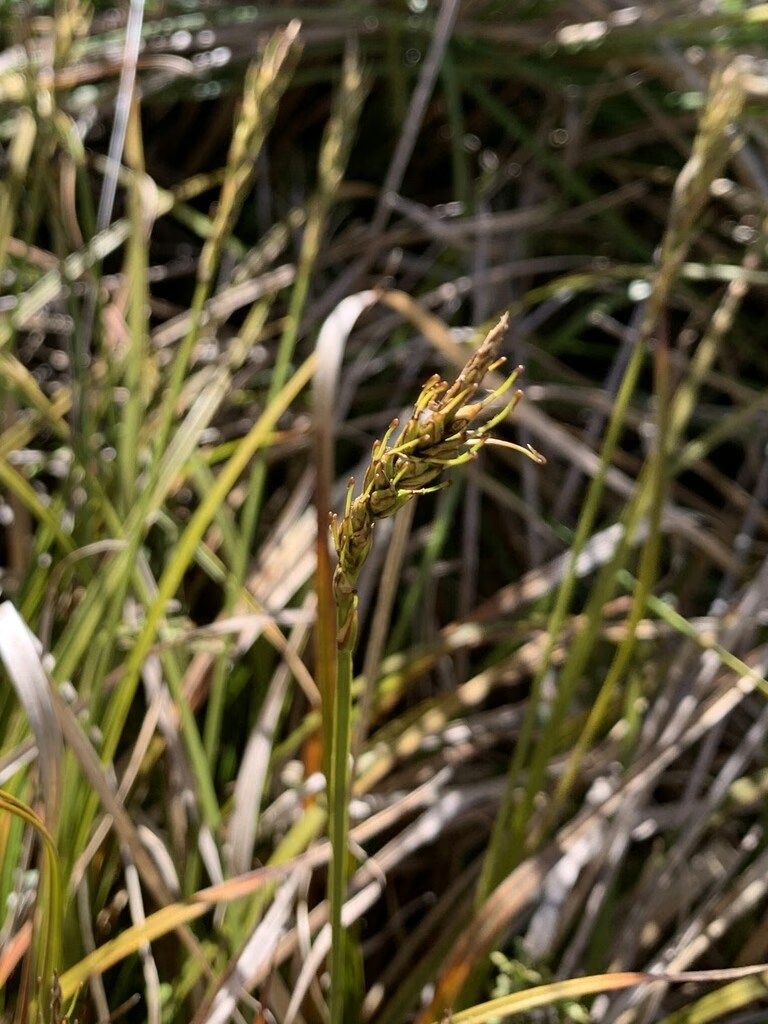
Hook Sedge
Carex penalpina
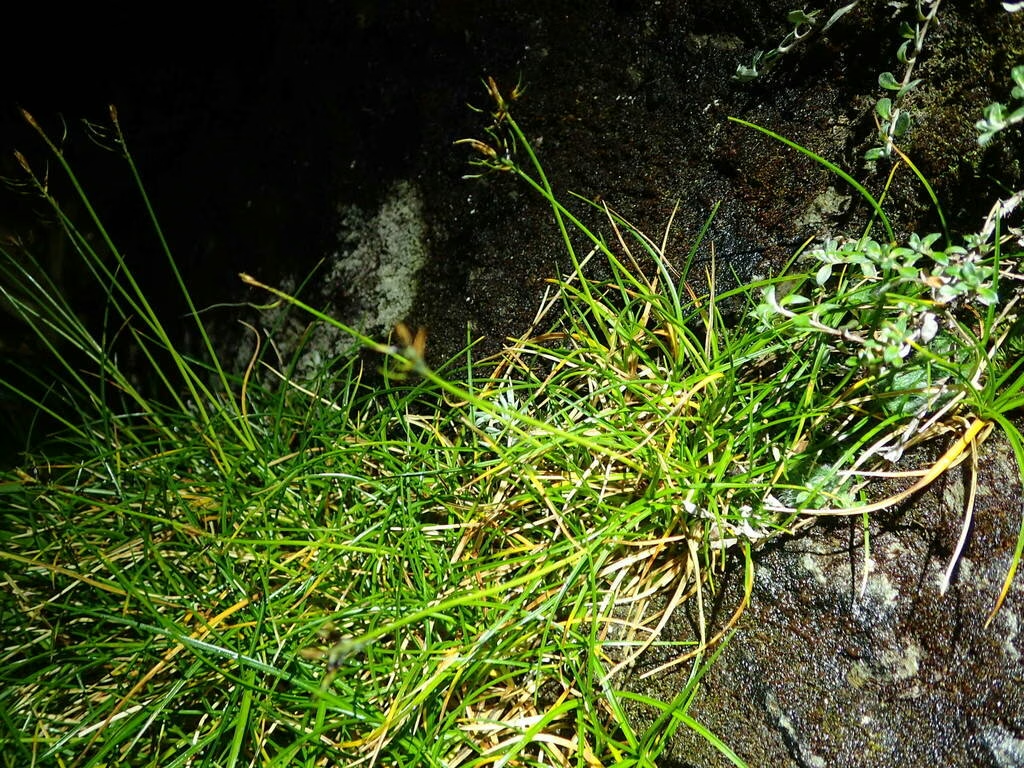
Carex penalpina is a variable hook sedge endemic to New Zealand mountains. It has rigid, curved leaves and grows in open habitats ranging from tussock grassland to alpine scree. This sedge forms loose tufts or short woody rhizomes.
Identification
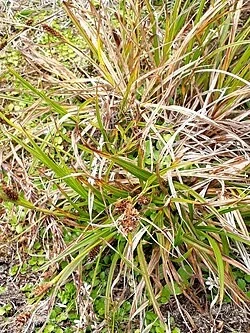
This sedge forms loose tufts or short woody rhizomes. Stiff, upright stems are 80-400 mm tall; the four to seven leaves per stem are 1.5-5 mm wide, leathery and curved to sickle-shaped, usually with rough margins.
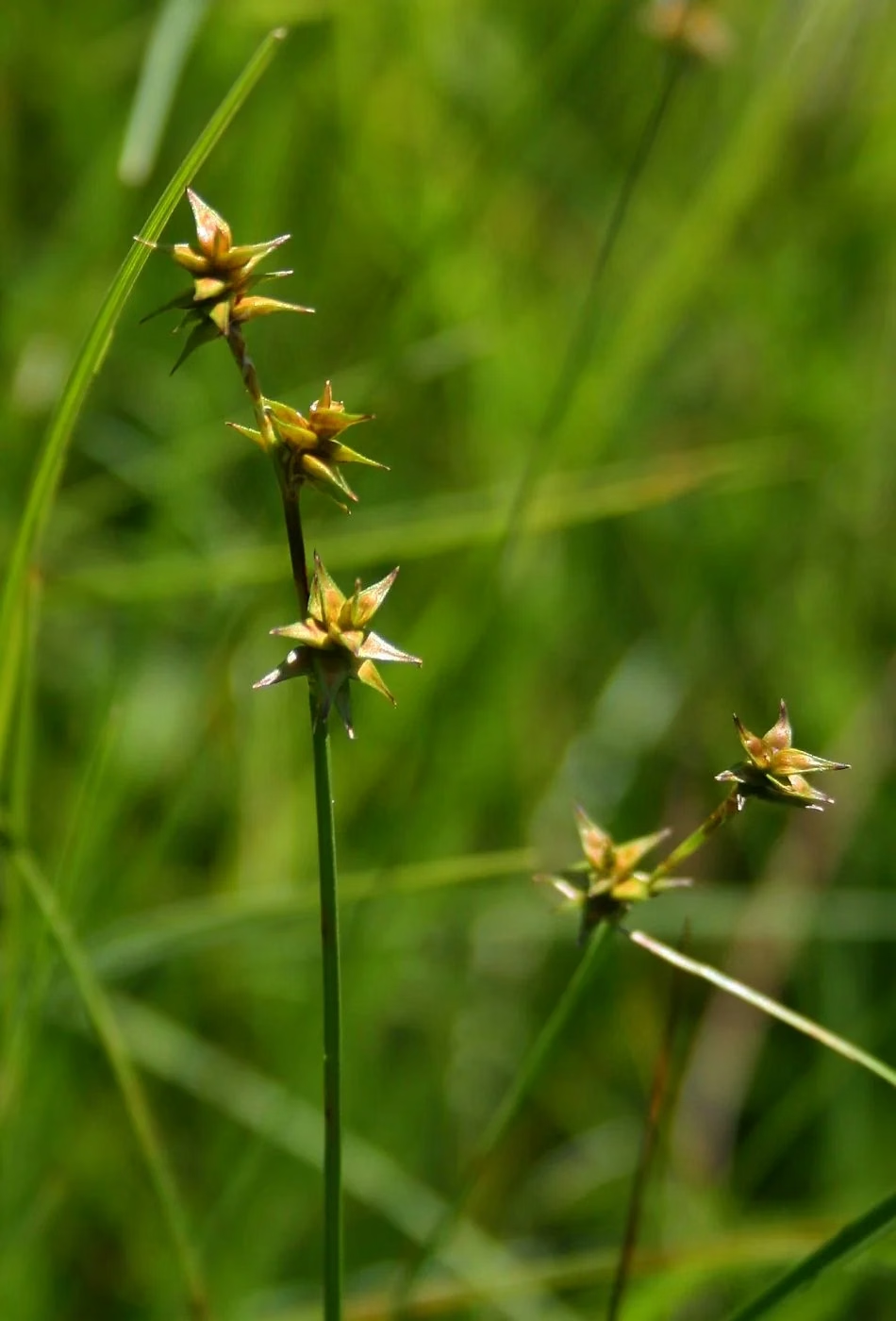
Spikes are 20-75 mm long. Fruiting structures are 5-7.5 mm long, many-nerved and tapered into a beak.
Quick facts
| Scientific Name | Carex penalpina |
|---|---|
| Former name | Uncinia fuscovaginata |
| Family | Cyperaceae |
| Stem height | 80-400 mm |
| Flowering | October to November |
| Fruiting | November to May |
| National status | Not Threatened (2023) |
| Height | Flowering stems 8-40 cm long |
| Water Needs | Moist soil; a wider range of conditions is tolerated after establishment |
| Light | A cultivation light requirement is not specified in the species profile |
| Spread | Loose tufts or short woody rhizomes; total width is not specified |
| Frost Tolerance | Minimum tolerated temperature is not documented |
| Salt Tolerance | Salt tolerance is not documented |
| Growth Rate | Annual extension is not quantified in the cited accounts |
| Lifespan | Longevity in years is not documented |
Mountain range
The species occurs from upper montane to alpine elevations. North Island records include the Volcanic Plateau and Kaimanawa, Ruahine and Tararua ranges; it also occurs in the South Island and on Stewart Island/Rakiura.
| City | Climate Suitability |
|---|---|
| Auckland | Not assessed |
| Wellington | Not assessed |
| Christchurch | Not assessed |
Habitat and distribution
In the South Island this sedge is widespread except in Westland, according to NZPCN. It is also recorded in the central and southern North Island and Stewart Island.
Habitats include sparse forest, subalpine scrub, snow-tussock and short-tussock grassland, herbfield, ultramafic rock, scree and fellfield.
Growing conditions
NZPCN recommends moist soil and notes that established plants tolerate a wide range of conditions. The species occurs naturally in both sparse forest and open alpine habitats, including scree and tussock grassland.
Planting
For cultivation, NZPCN recommends moist soil and observes that divisions can take time to settle. Its wild populations occupy several different mountain habitats, so a particular specimen’s appearance may vary with its origin.
Ecology and variation
Plants range from bright green or yellow-green to glaucous. NZPCN highlights a distinctive glaucous form apparently confined to ultramafic rocks in the northern South Island and suggests that it merits further investigation.
Observing the plant
Look for stiff, curved, leathery leaves and a linear to somewhat club-shaped spike. Female flowers are usually close-set, while the glumes persist and are approximately as long as the fruiting structures.
Garden context
NZPCN considers the glaucous northern South Island form attractive and suggests the species deserves further horticultural investigation. It recommends moist soil, while noting that established plants can tolerate varied conditions.
Flowering and fruiting
Flowering is recorded from October to November, with fruit from November to May. A spike typically has ten to fifteen female flowers; the lower gaps between them can reach 6 mm.
Growth form
The sedge is loosely tufted or grows from short woody rhizomes, with stiff upright stems and curved leaves. Its NZPCN profile does not specify a pruning schedule for this mountain species.
How to Grow Hook Sedge (Carex penalpina)
Raising plants from fresh seed
NZ Plant Conservation Network records fresh seed as an effective way to propagate Carex penalpina. Flowering occurs in October and November, while the fruiting season extends from November to May. The spikes usually carry ten to fifteen female flowers and change from flowering structures into narrow fruiting heads, providing a seasonal opportunity to examine the identity of a cultivated seed source.
Division and establishment
Established plants can also be divided, though the resulting divisions may take time to settle. The species forms loose tufts or short woody rhizomes about 2-3 mm thick. Moist soil is the published preference. Once established, plants are reported to tolerate a broader range of conditions, but this does not supply an experimental drought threshold or a particular watering interval.
Foliage variation
Leaves range from bright green through yellow-green to glaucous. The source highlights a glaucous form from ultramafic sites in the northern South Island as having horticultural interest. The leathery blades are 1.5-5 mm wide, curved or sickle-shaped, and usually distinctly rough along their margins. Flowering stems are stiffly erect and about 8-40 cm long, with roughness below the inflorescence.
Understanding Its Mountain Habitats
Natural sites include sparse upper-montane forest, subalpine scrub, tussock grassland, herbfield, scree and fellfield. Ultramafic rock is one substrate among several. A plant from that habitat should therefore not be presented as requiring an ultramafic garden soil: the actual cultivation advice is to start with moisture and recognise the species’ tolerance of varied conditions after establishment.
Plant health
NZPCN does not list a species-specific pest or disease treatment. Greenish-brown to dark-brown glumes and rough leaf margins are normal features in its description; plant colour can range from green to glaucous.
Naming and classification
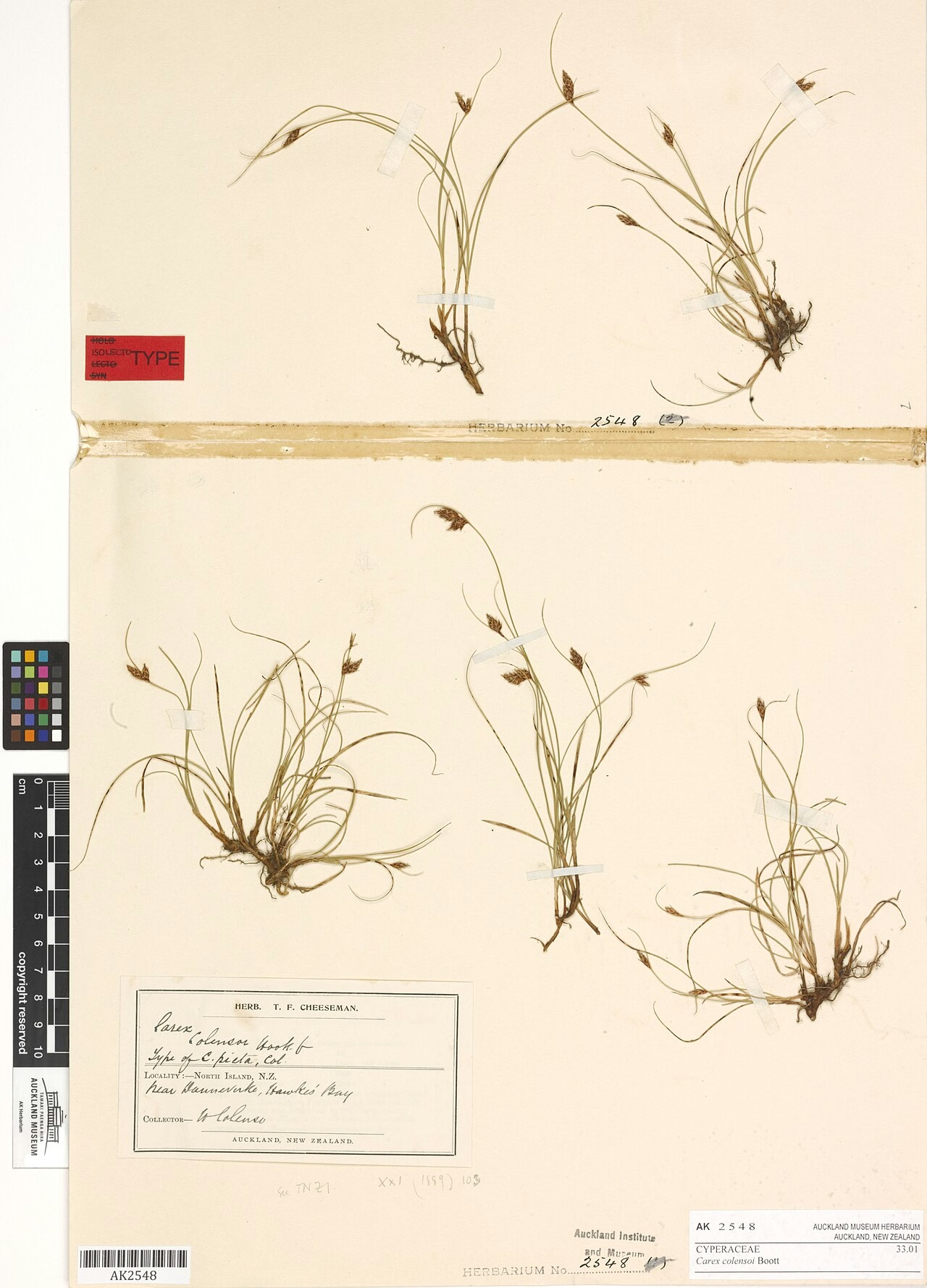
Former names include Uncinia fuscovaginata and its variety caespitans. NZPCN recognises Carex penalpina as an endemic New Zealand species and describes it as highly variable in appearance.
Distinguishing a close relative
Compared with Carex purpurata, this species has thicker stems and glumes approximately equal to the fruiting structures. C. purpurata is confined to Otago, while C. penalpina occupies a wider range of habitats.
Other New Zealand sedges
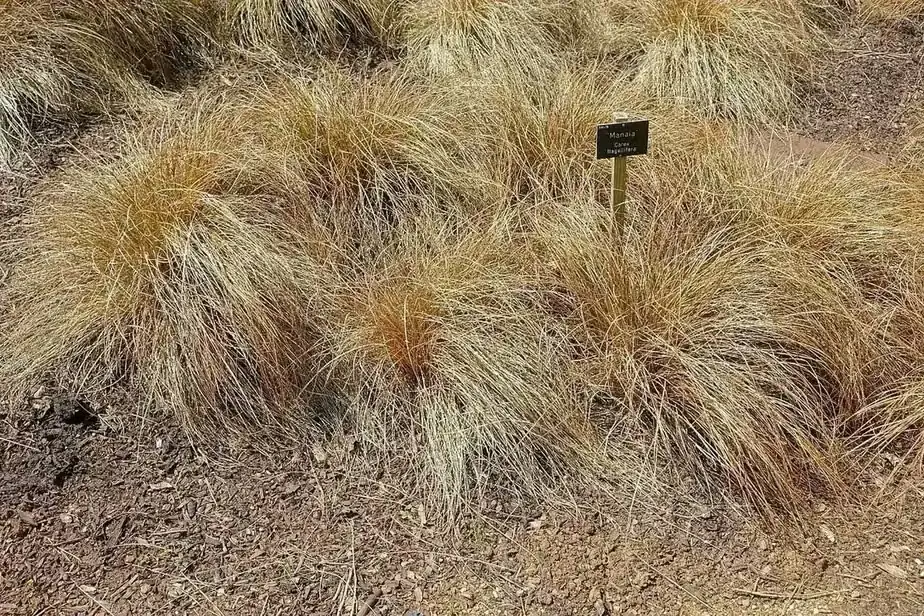
Explore other New Zealand Carex species, including sedges of wetlands, forest margins and open ground.
Conservation
Carex penalpina is nationally Not Threatened in the 2023 assessment. Its recorded sites span several mountain vegetation types, from tussockland and scrub to scree and ultramafic rock.
Frequently asked questions
Is Uncinia fuscovaginata the same plant?
Yes. NZPCN lists that former name as a synonym of Carex penalpina .
What is unusual about the glaucous form?
It is apparently confined to northern South Island ultramafic rocks and may warrant further taxonomic study.
Are all plants the same shade of green?
No. Carex penalpina includes bright-green, yellow-green and glaucous plants. A glaucous form is recorded from northern South Island ultramafic sites.
Sources
Description, identification, habitat, phenology, cultivation and national conservation status: NZPCN: Carex penalpina. The profile draws its botanical description from the Flora of New Zealand.
Taxonomy and New Zealand biostatus: Flora of New Zealand genus account.
Last updated: