Hook Sedge
Carex lectissima
Carex lectissima, the fine-leaved hook sedge, is a slender endemic sedge of New Zealand cloud forests. Its exceptionally narrow leaves and pale stripes on red-brown basal sheaths help identify it.
Identification
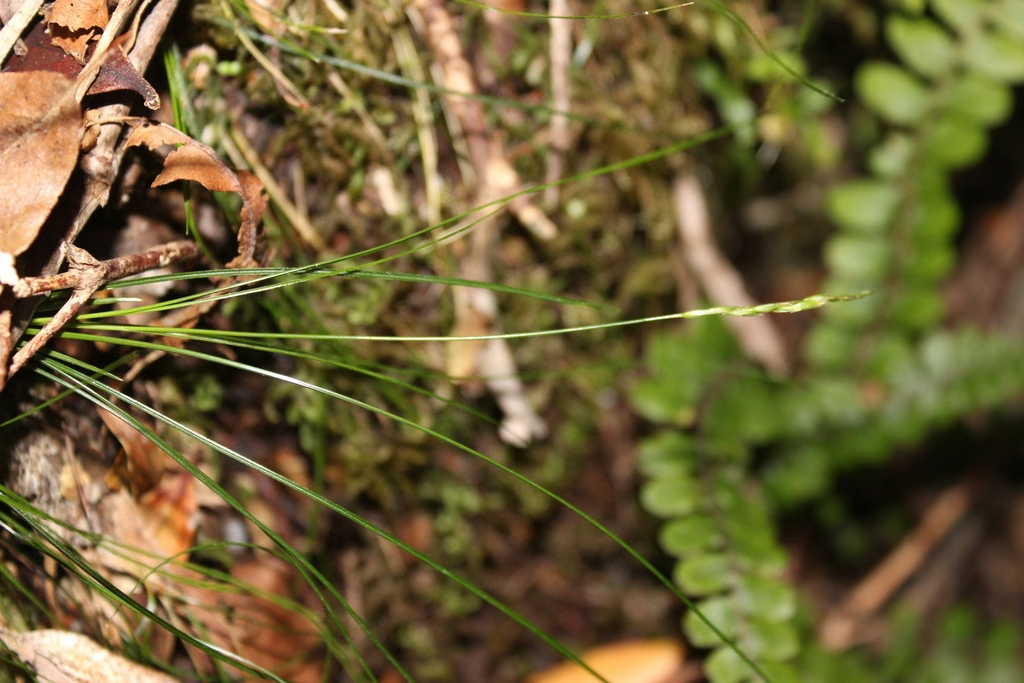
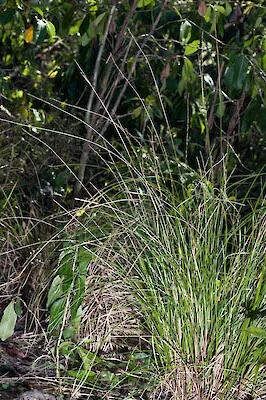
This slender sedge forms bright-green tufts with stems 30-300 mm long. Each stem has four to seven leaves, usually less than half a millimetre wide, with a deep channel or a distinct groove and a finely pointed tip.
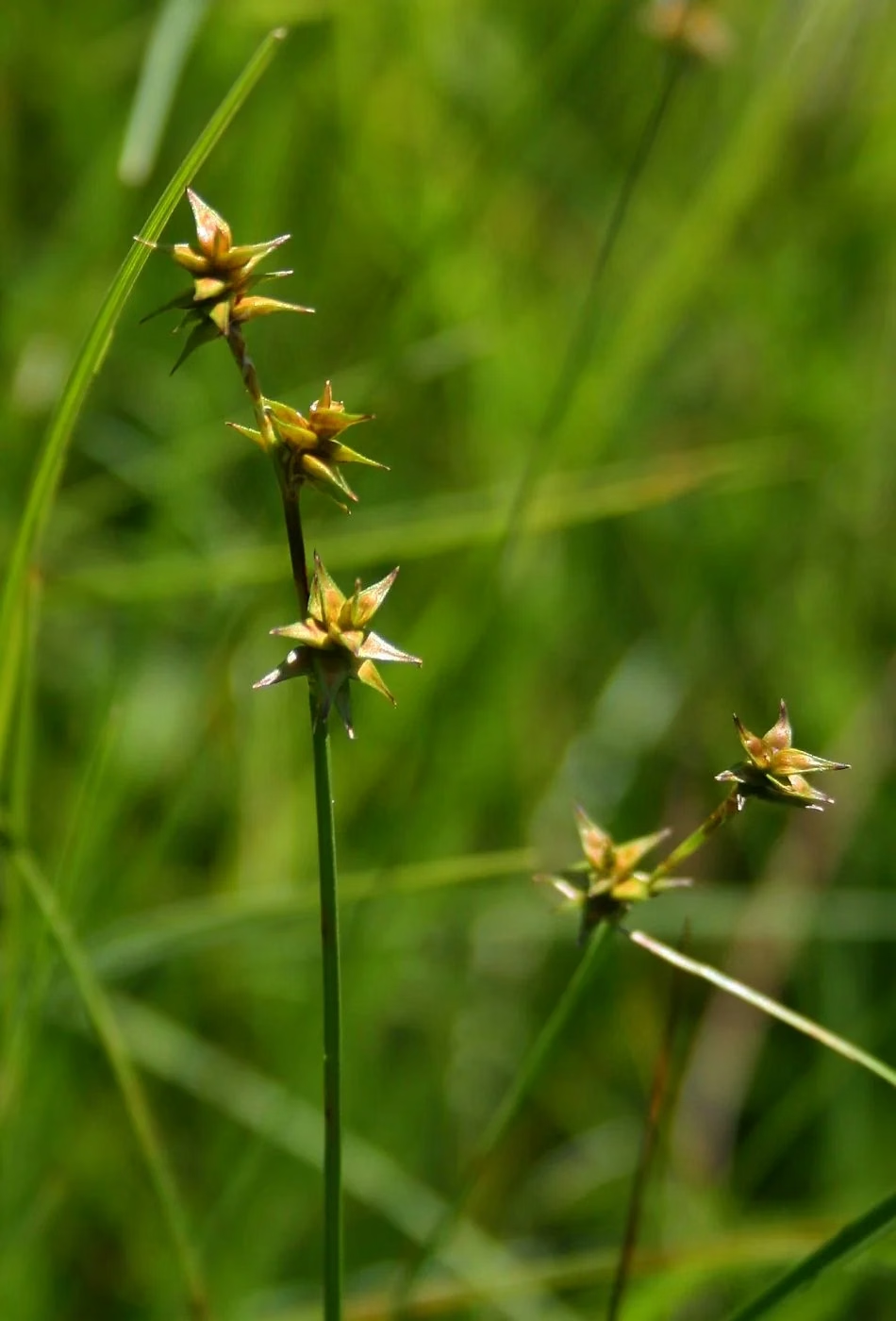
The red-brown basal sheaths have pale longitudinal stripes. Fruiting spikes are 5-30 mm long, with light greenish-brown fruiting structures that spread somewhat when ripe.
Quick facts
| Scientific Name | Carex lectissima |
|---|---|
| Former name | Uncinia filiformis |
| Family | Cyperaceae |
| Stem length | 30-300 mm |
| Flowering | October to November |
| Fruiting | November to March |
| National status | Not Threatened (2023) |
| Height | Flowering stems 3-30 cm long |
| Water Needs | Consistently moist soil; do not allow the root zone to dry out |
| Light | Semi-shade |
| Spread | Slender tufts; mature clump width is not specified |
| Frost Tolerance | Minimum tolerated temperature is not documented |
| Salt Tolerance | Salt tolerance is not documented |
| Growth Rate | Annual extension is not quantified in the cited accounts |
| Lifespan | Longevity in years is not documented |
Natural range
Fine-leaved hook sedge occurs from Te Moehau south through the North and South Islands to Stewart Island/Rakiura. It is usually montane to subalpine, but is also recorded at coastal sites in Fiordland.
| City | Climate Suitability |
|---|---|
| Auckland | Not assessed |
| Wellington | Not assessed |
| Christchurch | Not assessed |
Habitat and distribution
NZPCN describes this endemic as usually growing in cloud forest, on moss- and liverwort-covered ground or peat. It is especially associated with soak holes, semi-permanent pools and rotting logs.
Its New Zealand range extends from Te Moehau to Stewart Island, including coastal Fiordland as well as montane and subalpine locations.
Growing conditions
For cultivation, NZPCN recommends moist soil and a semi-shaded site, stressing that this sedge must not dry out. Its natural sites include damp cloud-forest ground and the edges of semi-permanent pools.
Planting
Choose a semi-shaded position with consistently moist soil, following the NZPCN cultivation advice. The network notes that divisions of established plants can take some time to settle; avoid letting plants dry during establishment.
Ecology
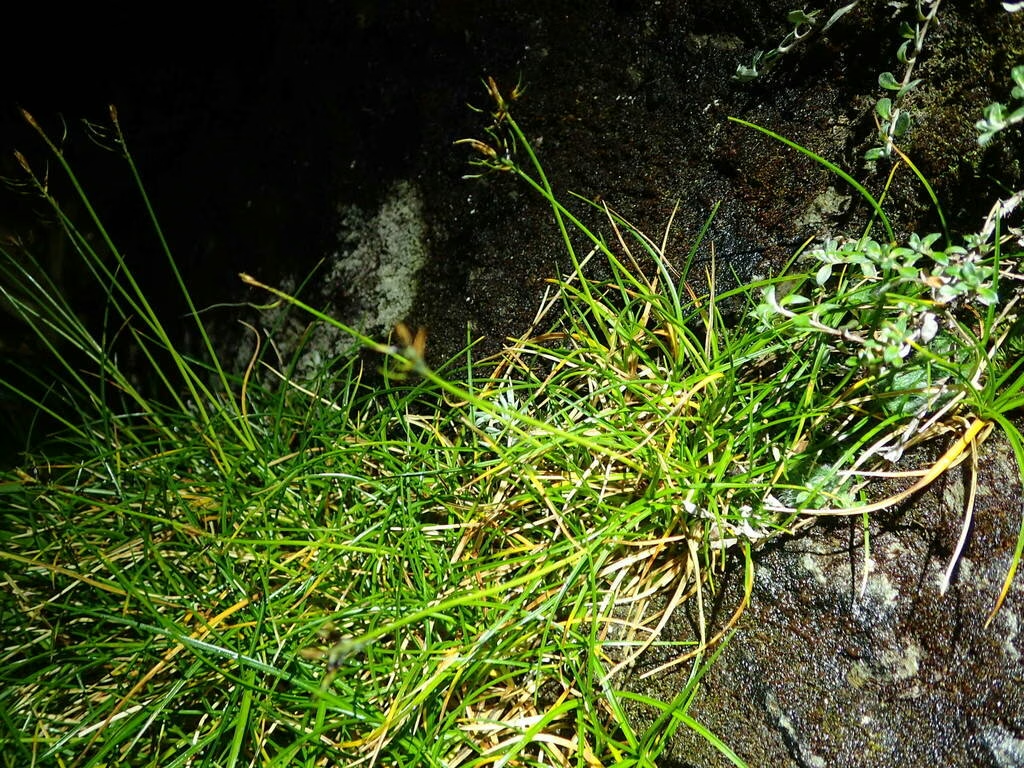
In cloud forest this sedge grows among mosses and liverworts, including around soak holes and on rotting logs. Its narrow fruiting spike usually carries about ten female flowers spaced along a slender stem.
Observing the plant
Examine the base of a tuft for red-brown sheaths marked with paler stripes, and the leaves for their threadlike width and long-tapering tips. Both features help separate this species from other hook sedges.
Garden context
Moisture and partial shade matter when considering this sedge for a garden. NZPCN describes it as not commercially available and notes that divisions can be slow to settle, so its cultivation may require patience.
Flowering and fruiting
Flowers are recorded from October to November and fruit from November to March. Female flowers are mostly spaced along the spike, and mature fruiting structures are light greenish brown with prominent lateral nerves.
Growth form
This is a tufted sedge with fine leaves shorter than its mature stems. The NZPCN account does not specify a pruning schedule; its basal sheaths and mature spikes are useful when checking its identity.
How to Grow Hook Sedge (Carex lectissima)
Fresh seed and division
Fresh seed and division of established plants are recorded methods for Carex lectissima. Divisions may take time to settle, according to NZ Plant Conservation Network. Material in older collections may be labelled Uncinia filiformis; that earlier name refers to the same fine-leaved sedge and is useful when checking the identity of a cultivated source plant.
Keeping the soil moist
The cultivation guidance is unusually explicit about moisture: this sedge must not be allowed to dry out. Semi-shade and moist soil are recommended. Natural populations commonly occupy cloud-forest ground covered with mosses and liverworts, peat, the margins of soak holes and semi-permanent pools, or decaying logs. Its habitat includes coastal sites in Fiordland as well as montane and subalpine forest, so elevation alone is a weaker guide than the consistent association with moisture.
A very slender tuft
Flowering stems are only 3-30 cm long and less than half a millimetre thick. The bright-green leaves are usually less than half a millimetre wide too, with a deep channel or a distinct groove along the blade. Their finely pointed tips and narrow profile explain why the plant can be difficult to pick out among mosses before the spikes develop.
Following the seasonal cycle
Flowering is recorded in October and November, with fruit from November to March. The small spikes are 5-30 mm long and carry about ten female flowers, generally spaced apart. Light greenish-brown mature utricles are approximately 3.5-5 mm long. Those measurements are more reliable for checking a seed-bearing plant than tuft size alone.
Plant health
The cited NZPCN profile does not list species-specific pest or disease treatments. Its main cultivation caution is moisture: the network advises that this cloud-forest sedge should not be allowed to dry out.
Naming and classification
Carex lectissima was formerly known as Uncinia filiformis. NZPCN also lists Uncinia rupestris var. rupestris as a synonym; the sedge is recognised as endemic to New Zealand.
Distinguishing similar sedges
Pale stripes on the red-brown basal sheaths distinguish this species from other New Zealand hook sedges, according to NZPCN. Its leaves are markedly narrower than those of Carex minor and end in acute tips.
Other New Zealand sedges
Explore other New Zealand Carex species, including sedges of wetlands, forest margins and open ground.
Conservation
Carex lectissima is assessed as Not Threatened nationally in 2023. NZPCN also lists it as Regionally Not Threatened in Otago in 2025. Its typical cloud-forest habitat includes peat, soak holes and moss-covered ground.
Frequently asked questions
Is Uncinia filiformis the same plant?
Yes. It is a synonym of Carex lectissima in the NZPCN profile.
How narrow are the leaves?
They are usually less than 0.5 mm wide, and are deeply channelled or flat with a distinct groove.
Can the root zone dry out between waterings?
The cultivation account specifically advises against allowing Carex lectissima to dry out. It recommends moist soil and semi-shade.
Sources
Botanical description, distribution, habitat, cultivation and conservation: NZPCN: Carex lectissima. Regional status also appears in the Wellington regional assessment.
Taxonomy and New Zealand biostatus: Flora of New Zealand genus account.
Last updated: