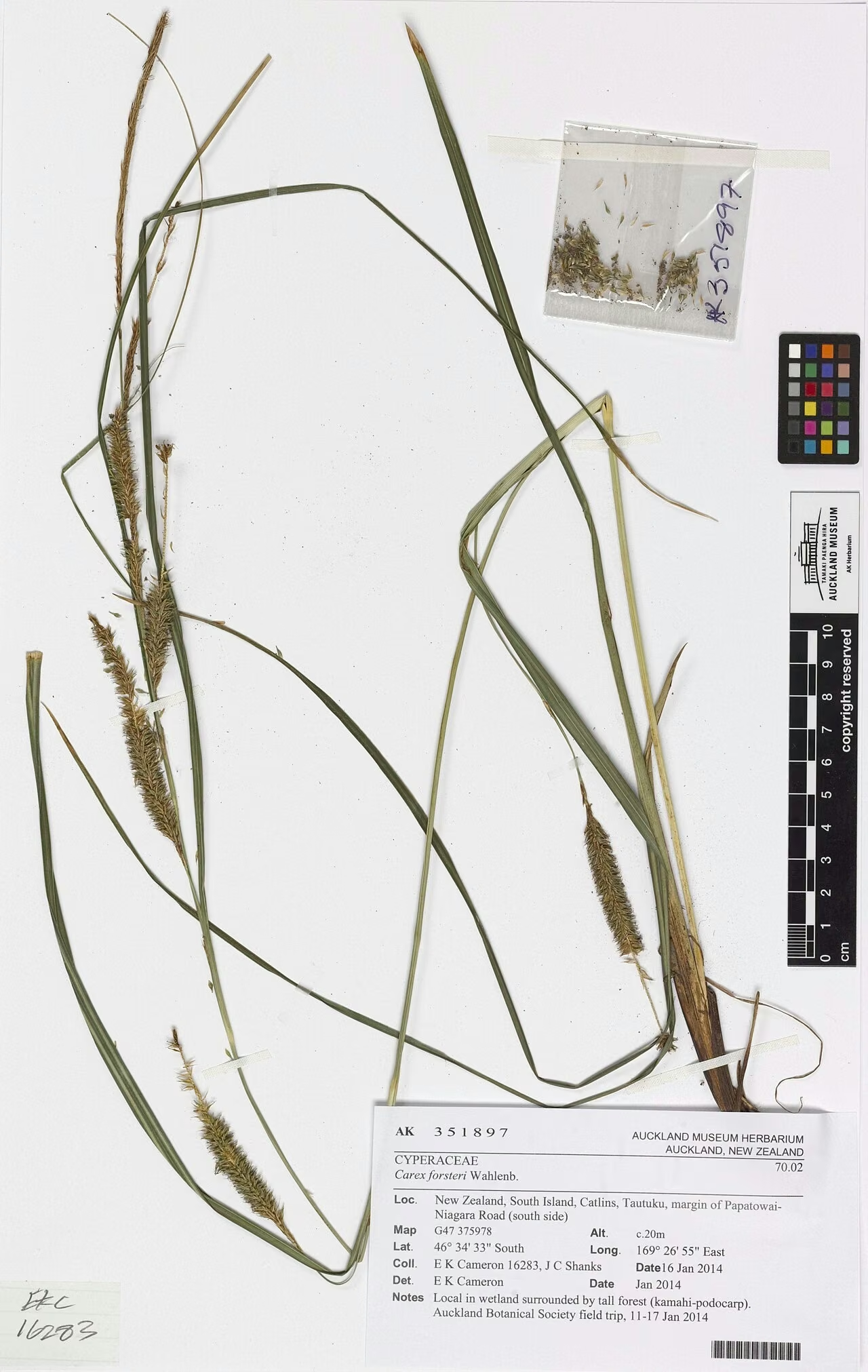
Forster's Sedge
Carex forsteri
Last updated:
Forster's sedge (Carex forsteri) is a large, leafy tufted sedge endemic to New Zealand. Its broad leaves, 3 to 12 mm wide, can reach 1.2 m long and arch beyond the flowering stems, which carry four to eight spikes on long, slender stalks. It grows from the coast to the mountains in wet seepages, hollows and along stream banks, and is often conspicuous around sinkholes and cave entrances in limestone country. It is common south of Auckland in the North Island and occurs patchily in the South Island, but is absent from Westland and Fiordland. It is Not Threatened and easy to grow in damp shade. Explore more native grasses and flaxes in our native plant guide.
Plant Description
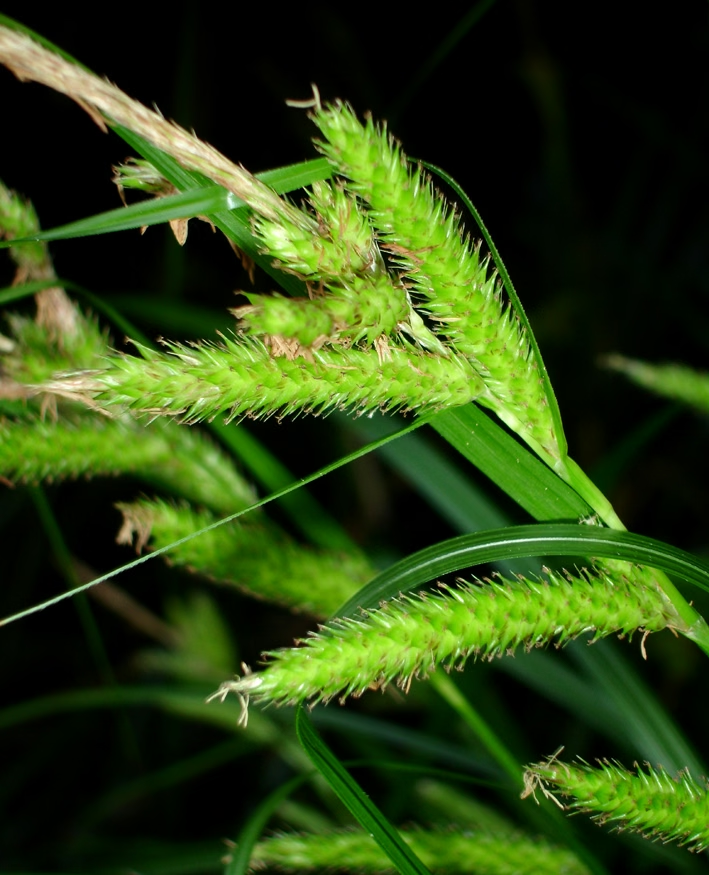
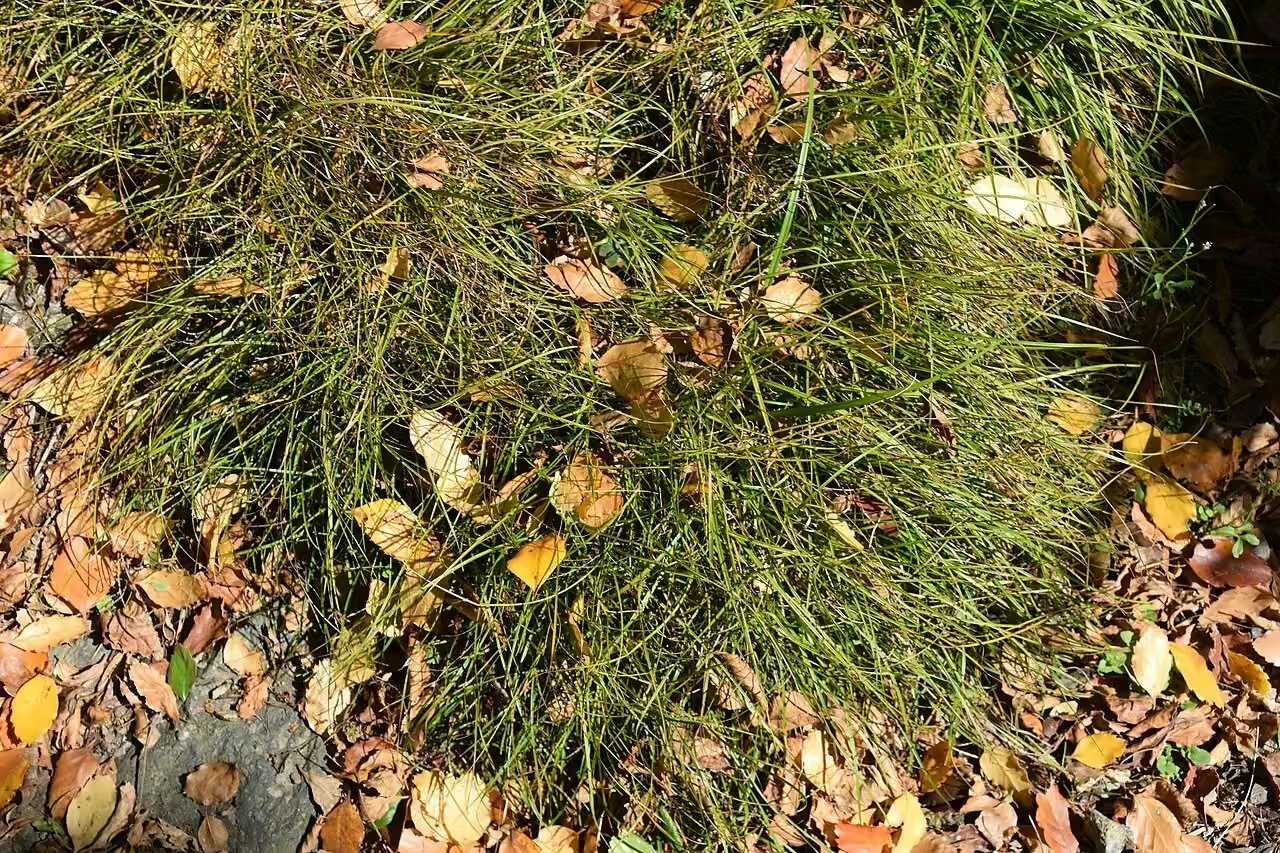
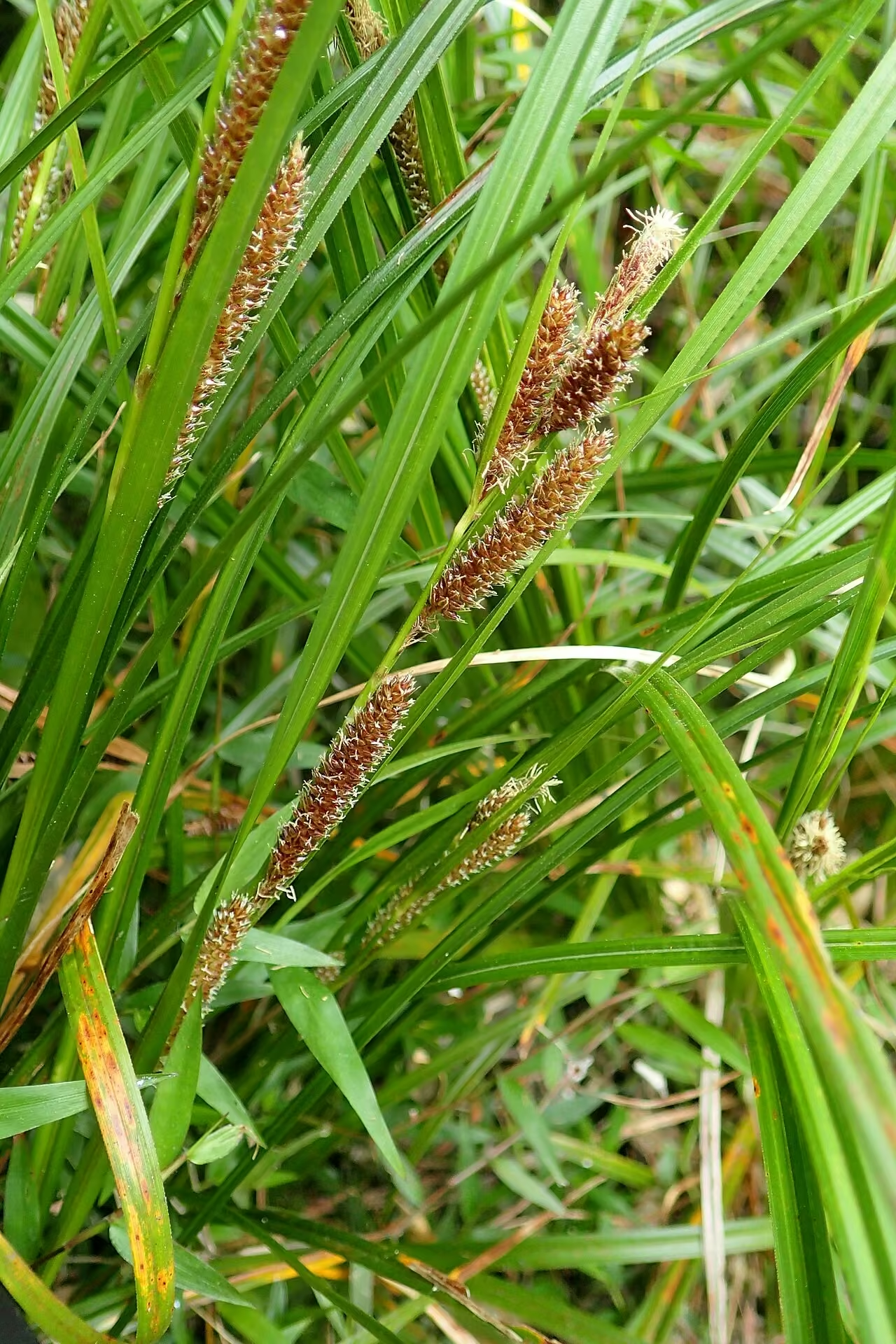
Carex forsteri forms large, leafy tufts that are red-brown at the base. The leaves are much longer than the flowering stems, up to 1.2 m long and 3 to 12 mm wide, with a rough keel and margins. The flowering stems (culms) reach up to 0.9 m.
Each stem carries four to eight spikes. The top one to three spikes are mostly male, and the rest are female, sometimes with a few male flowers at the base. The female spikes are greenish, set apart from one another and hang on long stalks. The utricles (seed sacs) are 4 to 5 mm long and about 1 mm wide, somewhat three-angled, narrow, slightly bent back, swollen towards the base and distinctly many-nerved, tapering to a beak 1.5 to 2 mm long with a slanting, two-toothed opening. The nut is 1.5 to 2 mm long, three-angled and cream to dark brown. Each flower has three stigmas.
Among New Zealand's wide-leaved sedges, Carex forsteri is recognised by the absence of cross-veinlets on the leaves and by its long-stalked spikes. Its closest look-alike is Carex cockayneana, which has shorter, smooth utricles with a straight mouth, compared with the many-nerved utricles and slanting mouth of Forster's sedge.
Quick Facts
| Scientific Name | Carex forsteri |
|---|---|
| Height | Flowering stems up to 0.9 m; leaves to 1.2 m long |
| Spread | About 0.6-1 m |
| Water Needs | High; prefers permanently damp soil |
| Light | Shade to partial shade |
| Frost Tolerance | Good; grows from coastal to montane sites |
| Salt Tolerance | Low to moderate; occurs in coastal areas but in sheltered damp sites |
| Growth Rate | Moderate to fast |
| Lifespan | Perennial |
Climate Best Suited to
Grows in a wide range of New Zealand climates from coastal lowlands to montane areas, wherever there is reliable ground moisture and shelter. It is not suited to hot, dry, exposed sites.
Regional Suitability
| City | Climate Suitability |
|---|---|
| Auckland | High |
| Wellington | High |
| Christchurch | High |
| Dunedin | High |
Plant Habitat
Forster's sedge is endemic to New Zealand's North and South Islands. It is common south of Auckland, frequent in the Marlborough Sounds and on Banks Peninsula, and sporadic elsewhere. It is absent from Westland and Fiordland.
It grows from coastal to montane elevations, and rarely into the subalpine zone, in wet seepages, depressions and along stream banks. In karst country it is often conspicuous around sinkholes and cave entrances, and it is occasionally found in seepages within tall tussock grassland.
Growing Requirements
Soil Requirements
It prefers rich, permanently moist soil, matching the seepages and stream banks where it grows naturally.
- Humus-rich, fertile soil
- Constant moisture; tolerates wet ground
- Grows on limestone-derived soils in karst areas
Light Requirements
NZPCN recommends shaded sites. It grows naturally in damp, sheltered places such as forest seepages and around cave entrances.
- Shade to partial shade
- Full sun only where the soil is always wet
Water Requirements
This is a moisture-loving sedge that should never be allowed to dry out.
- Ideal beside streams, ponds and drains
- Water deeply in dry spells
- Mulch to keep soil cool and damp
Planting and Establishing
Plant in autumn or spring into damp, shaded ground. Space plants 0.6 to 1 m apart to allow the long leaves to arch out. Add compost to poorer soils.
For stream and wetland margin restoration, plant along the damp edge just above normal water level, where it helps hold banks together.
Ecological Role
Forster's sedge is wind pollinated. Its seed is held in utricles on long, drooping stalks, and is shed from spring to autumn. Specific dispersers have not been recorded for this species, although sedge seed is commonly eaten by native birds and carried by water along streams.
In seepages and on stream banks its dense root systems help bind wet soil, and its tufts provide cover for invertebrates on damp forest floors.
Uses & Significance
Garden Uses
A handsome, robust sedge for damp, shady gardens and restoration plantings beside water.
- Stream, pond and rain garden margins
- Shady woodland gardens
- Riparian restoration plantings
Ecological Value
It is part of the native ground layer in moist forests and seepages across much of New Zealand.
- Stabilises wet banks and seepages
- Seed food for birds and insects
- Shelter for ground-dwelling invertebrates
Landscaping Uses
Mass Forster's sedge along a shaded stream or in a damp hollow for a soft, flowing effect from its long arching leaves and drooping spikes. It combines well with ferns and other shade-loving natives.
In smaller gardens, use it as a single specimen in a damp corner where its weeping habit can be seen.
Seasonal Care Calendar
Spring
Flowering stems with drooping, long-stalked spikes appear from September.
- Flowering September to November
- Plant or divide
Summer
Seed develops; keep soil moist through dry weather.
- Fruiting from October
- Water in dry spells
Autumn
Seed can be collected and sown fresh, and autumn is a good planting time.
- Fruiting continues to May
- Collect seed
Winter
Plants are evergreen and hardy. Tidy dead leaves in late winter.
- Remove dead foliage
- Little other care needed
When to Prune and How Much
Comb out dead leaves with gloved hands in late winter or early spring, and cut away spent flowering stems. The leaf margins and keel are rough, so gloves are advisable.
Older, untidy clumps can be cut back hard in early spring and will regrow if kept moist.
How to Grow Forster's Sedge
NZPCN reports that Forster's sedge is easily grown from fresh seed and by division of established plants. Seed is the best option for raising large numbers for riparian restoration, ideally collected from local populations, while division quickly gives sizeable plants for gardens. Whichever method you use, keep the young plants moist and shaded while they establish. Seedlings are usually large enough to plant out within a year. For restoration work, raising plants in deep root trainers produces a strong root system that copes better with wet, uneven stream-bank ground, and planting out in autumn lets them settle in before the following summer.
From Seed
Seed ripens from October to May. Collect when the utricles turn brown and come away easily from the spike, and sow promptly.
- Collect ripe spikes on their long stalks.
- Rub the utricles off over a tray or bag.
- Sow on a moist, fine seed mix and cover lightly.
- Keep damp and in light shade; never let the tray dry out.
- Pot seedlings into individual containers when they have several leaves.
- Grow on for a season before planting out.
By Division
Mature tufts can be lifted and split in autumn or early spring. Divisions from moist garden plants establish quickly when replanted into damp ground.
- Lift the clump with a spade.
- Split it into pieces each with roots and several shoots.
- Cut the long leaves back to about 20 cm.
- Replant immediately into moist, rich soil.
- Water well and keep damp until new leaves appear.
Pests & Diseases
No significant pests or diseases are recorded for Carex forsteri. The main problems in cultivation come from drought, which browns the foliage, and too much sun on dry soil.
In the wild, browsing by stock and the invasion of damp sites by weeds can affect local populations.
Cultural Significance
No Māori name or traditional use specific to Carex forsteri was found in the sources consulted.
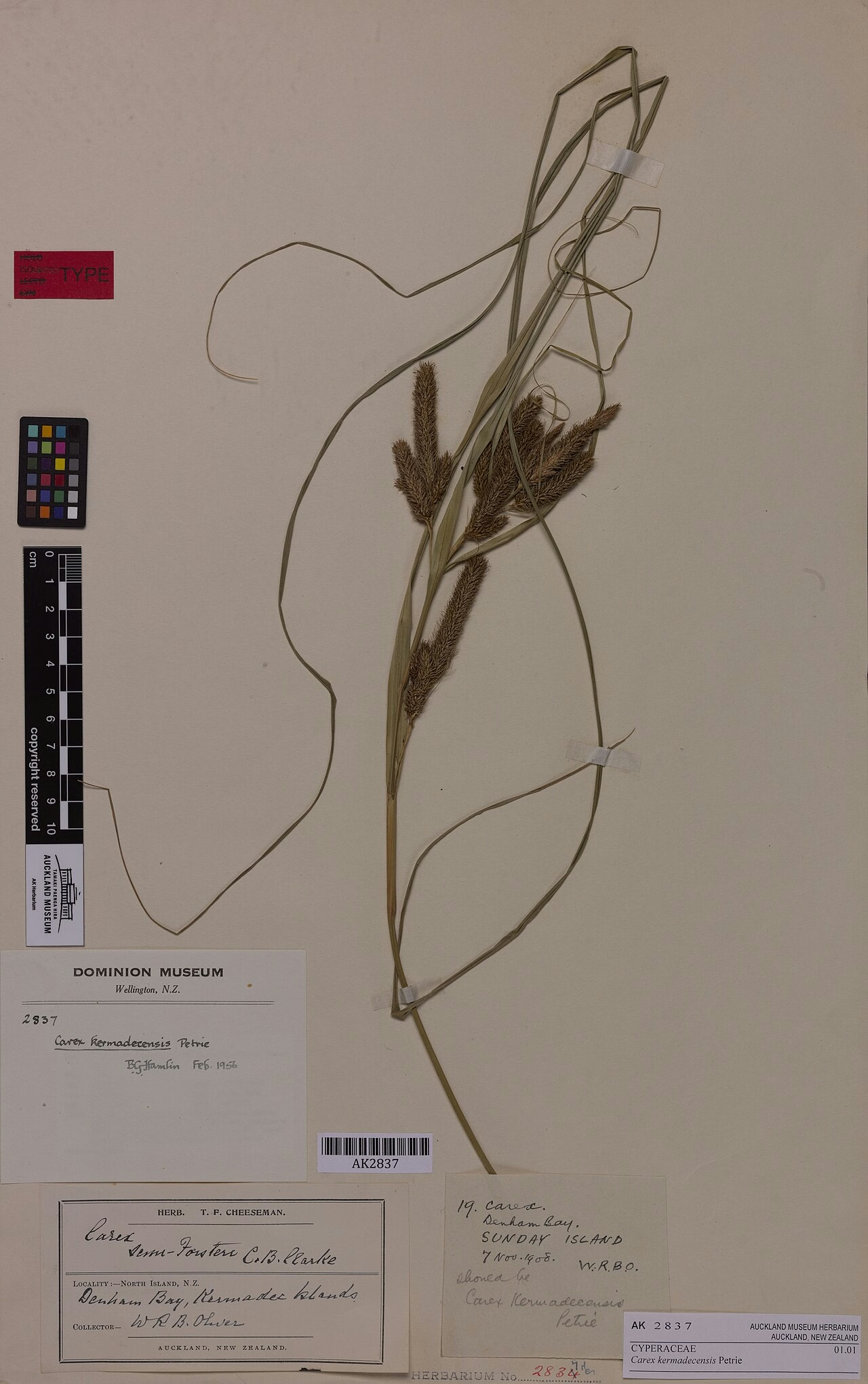
The species was described by Göran Wahlenberg. Synonyms used in older literature include Carex recurva, Carex punctulata and Carex semiforsteri, which may be encountered in historic botanical records.
Bonus Tip
In limestone country, look for Forster's sedge around cave entrances and sinkholes, where cool, damp air suits it. In a garden you can mimic this by planting it on the shady side of a rock wall or water feature where moisture lingers.
Related Plants
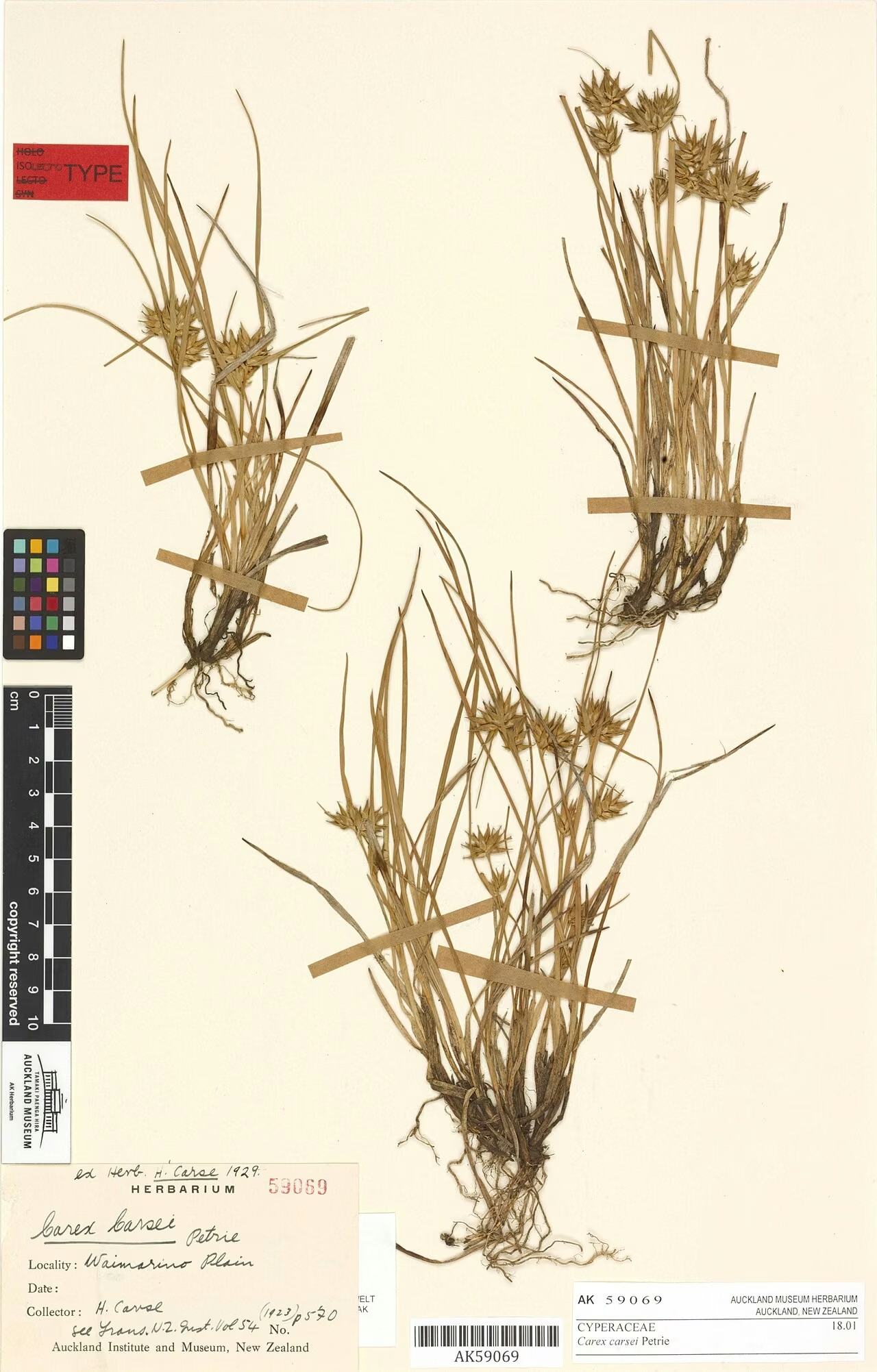
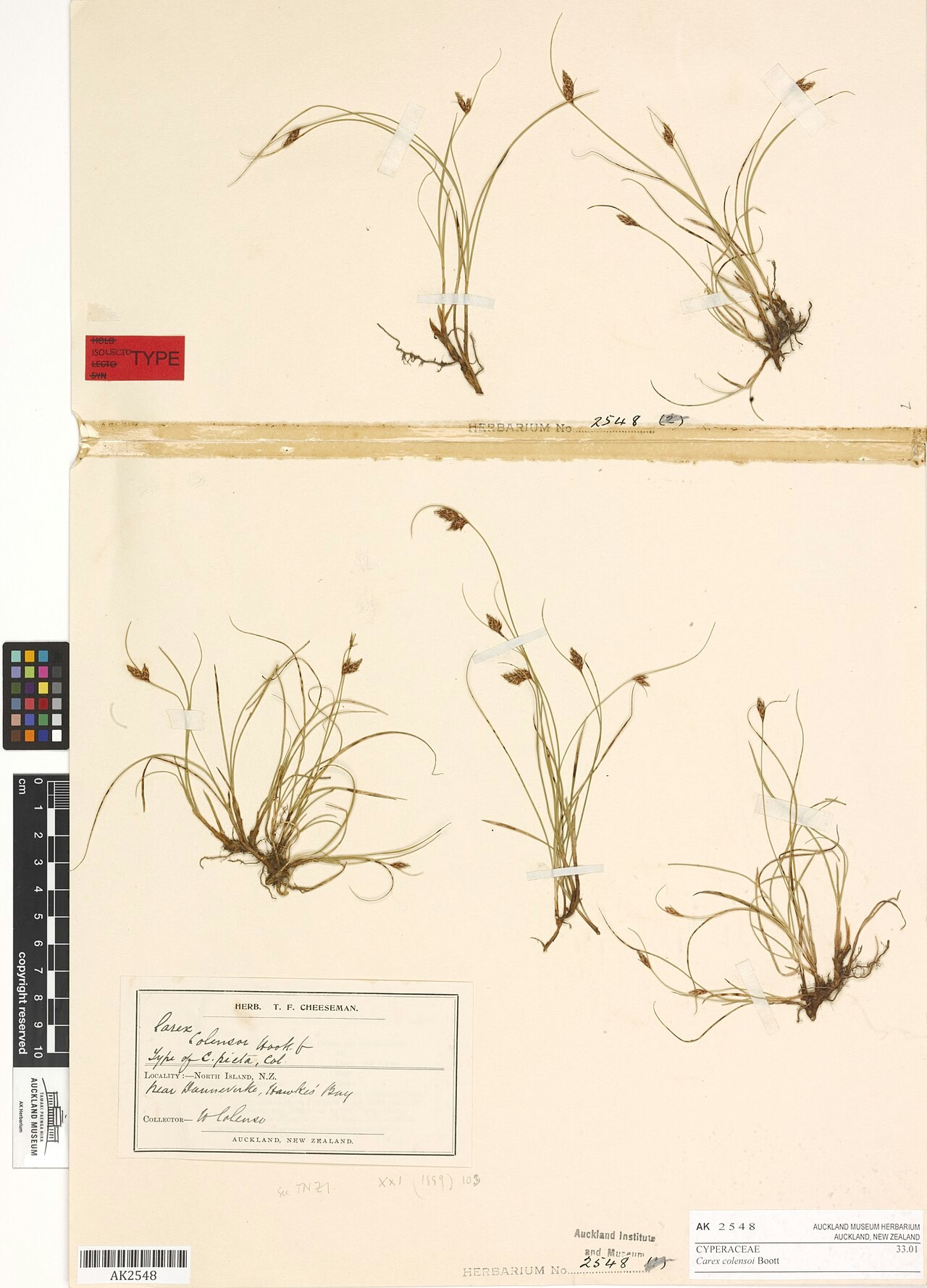
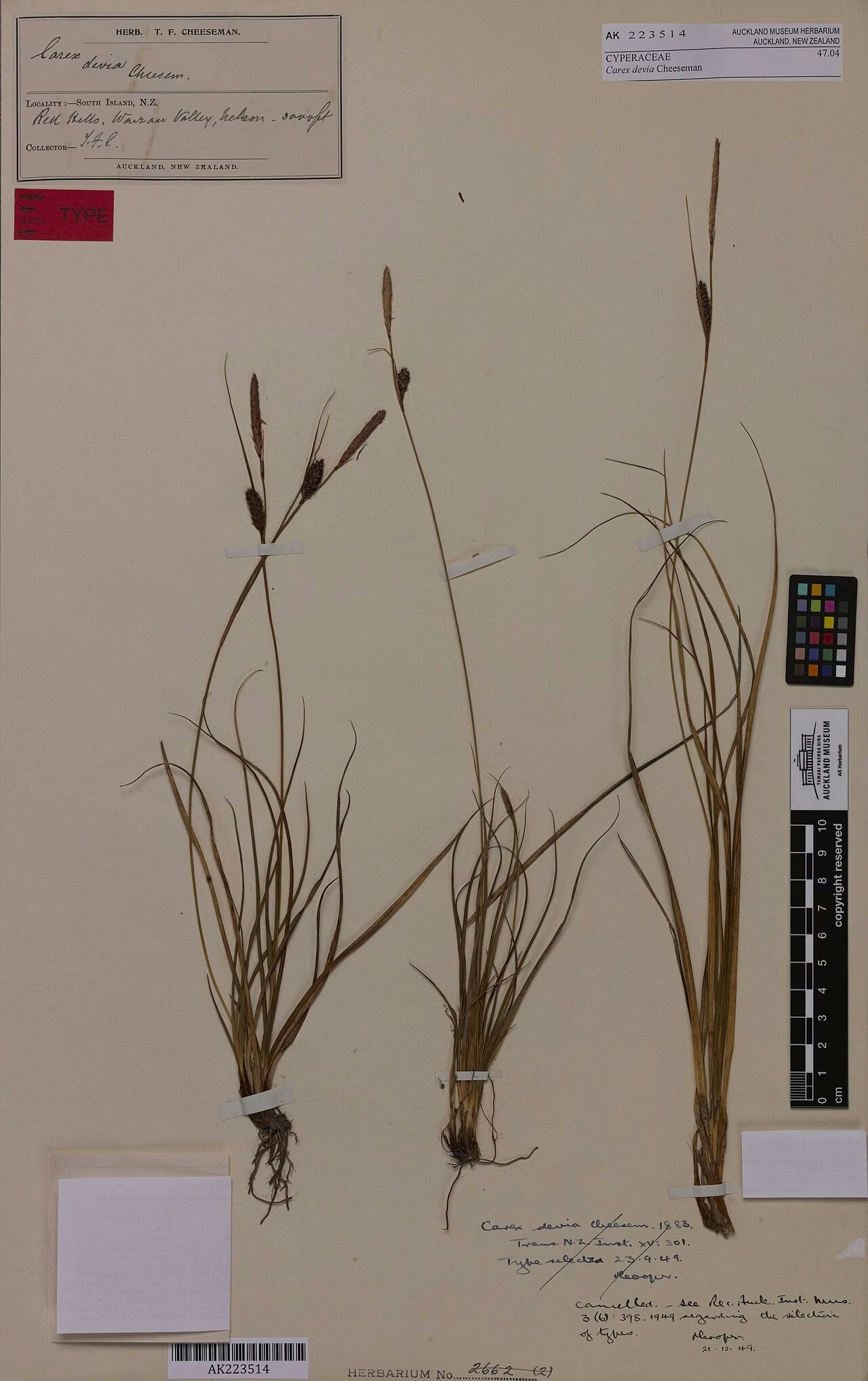
Explore other native plants that share similar characteristics or habitats with Forster's Sedge (Carex forsteri), offering further insights into New Zealand's diverse flora. These related species provide context and opportunities for complementary planting in your garden.
Plant Conservation
Forster's sedge is ranked Not Threatened (2023). It is widespread and common in many districts, especially in the North Island south of Auckland.
Protecting wetlands, seepages and stream margins from drainage and stock trampling helps keep local populations healthy, and the species is a good choice for riparian restoration.
Frequently Asked Questions
Where is Forster's sedge found in New Zealand?
It occurs in the North and South Islands. It is common south of Auckland, frequent in the Marlborough Sounds and on Banks Peninsula, sporadic elsewhere and absent from Westland and Fiordland.
How do I tell Carex forsteri from Carex cockayneana?
NZPCN says Forster's sedge is most likely to be confused with Carex cockayneana. Carex forsteri has distinctly many-nerved utricles with an oblique, two-toothed mouth, whereas Carex cockayneana has shorter, smooth utricles with a straight mouth.
Will Forster's sedge grow in a wet, shady garden?
Yes. NZPCN says it does best in permanently damp, shaded sites with rich soil, which matches its natural habitat of seepages and stream banks.
What habitat does Carex forsteri grow in?
It grows from the coast to montane areas, rarely subalpine, in wet seepages, damp hollows and along stream banks, and is often conspicuous around sinkholes and cave entrances in limestone karst.
Sources and Further Reading
The botanical, growing, and conservation details for Forster's Sedge (Carex forsteri) on this page draw on the New Zealand plant references below. Consult them for full technical records and the latest distribution data.