Hook Sedge
Carex edura
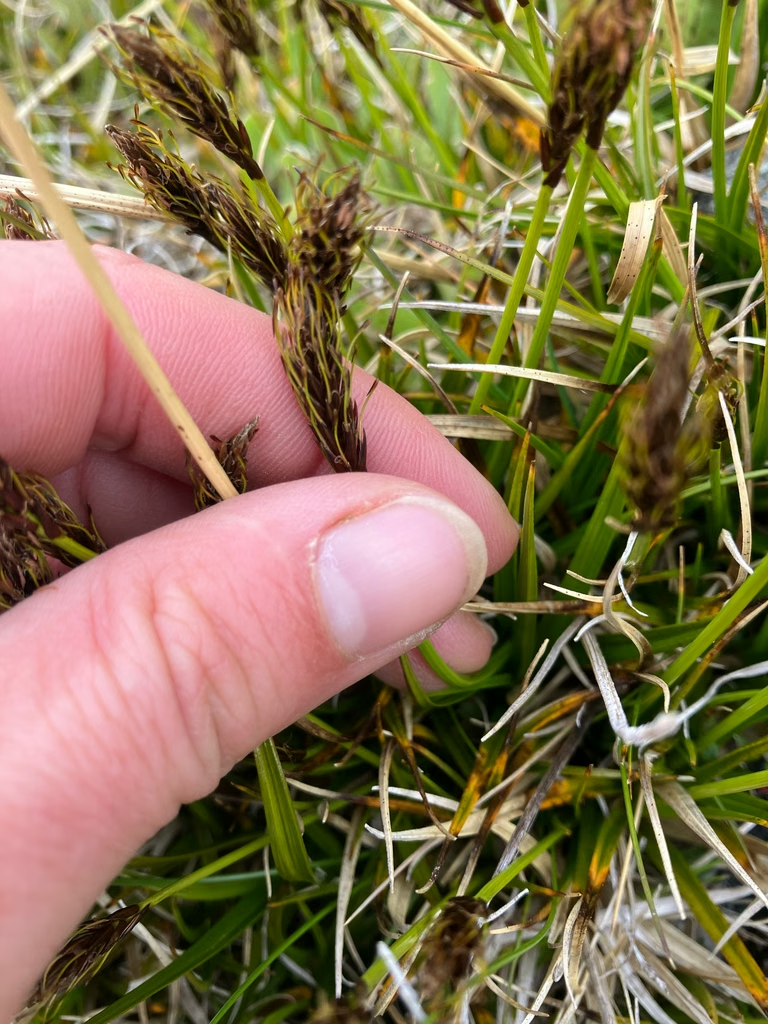
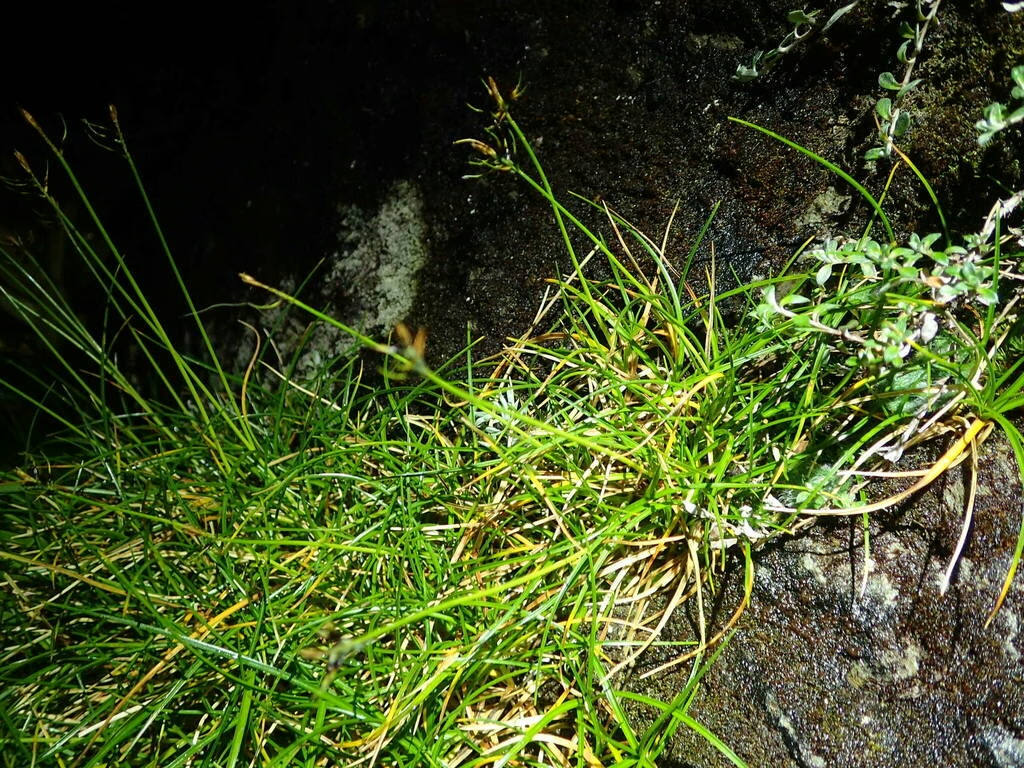
Carex edura is a variable native hook sedge found in montane and alpine habitats. It grows in loose tufts or on short rhizomes and bears spreading, brown fruiting structures on crowded spikes.
Identification
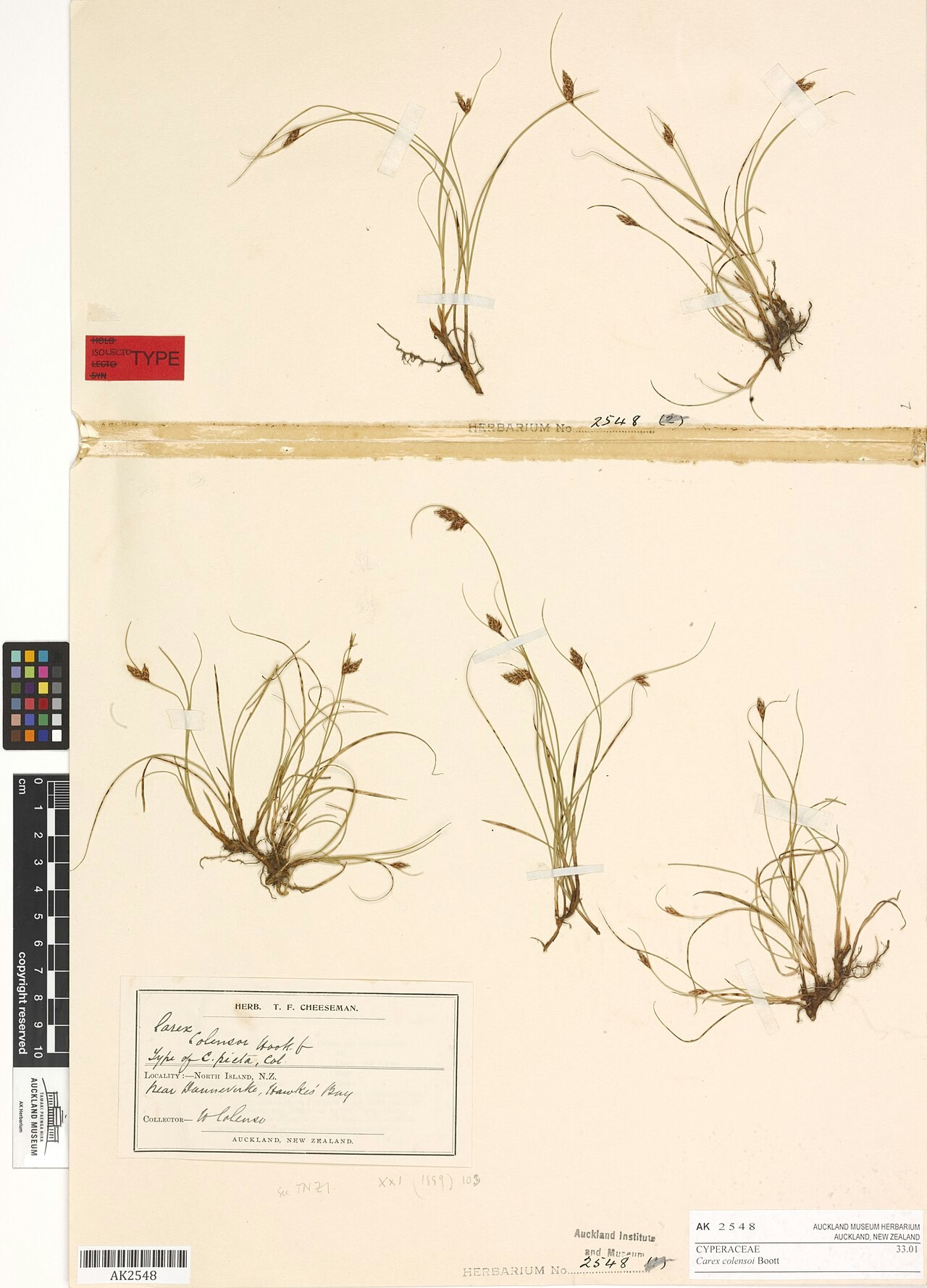
Plants form loose tufts or short rhizomes. Erect or ascending stems range from 10 to 400 mm tall, with four to twelve dark yellowish-green leaves per stem. Leaves are 1.5-4 mm wide and rough at their edges.
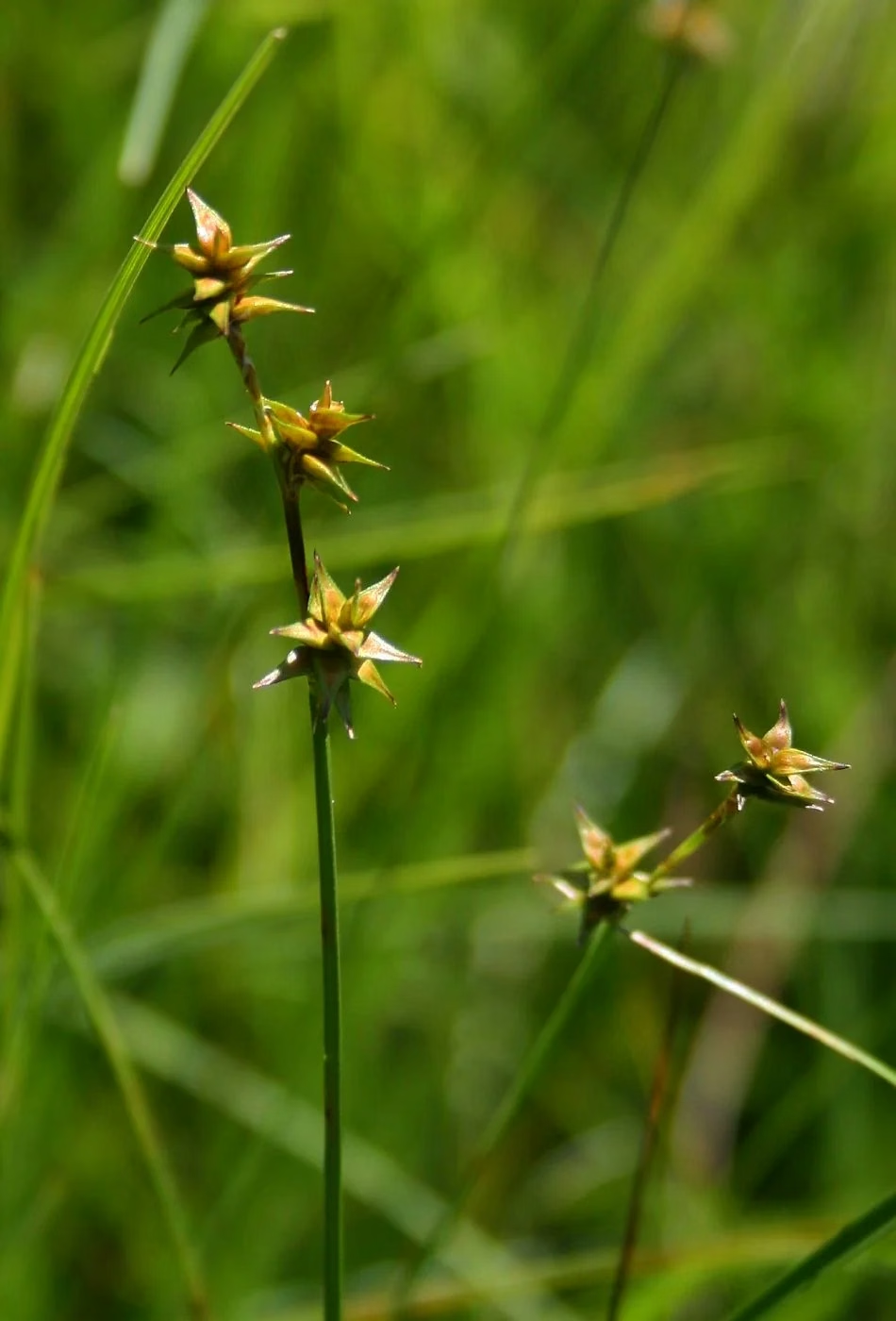
Spikes are 10-45 mm long, with densely crowded female flowers. Fruiting structures become greenish brown to dark brown and spread widely when ripe.
Quick facts
| Scientific Name | Carex edura |
|---|---|
| Former name | Uncinia divaricata |
| Family | Cyperaceae |
| Stem height | 10-400 mm |
| Flowering | October to November |
| Fruiting | November to May |
| Status | Not Threatened (2023) |
| Height | Flowering stems 1-40 cm long |
| Water Needs | Moist, fertile, free-draining soil |
| Light | Full sun |
| Spread | Loose tufts or short rhizomes; total width is not specified |
| Frost Tolerance | Minimum tolerated temperature is not documented |
| Salt Tolerance | Salt tolerance is not documented |
| Growth Rate | Annual extension is not quantified in the cited accounts |
| Lifespan | Longevity in years is not documented |
Montane and alpine range
NZPCN records this sedge from the Raukumara Range south through the North and South Islands and on Campbell Island/Motu Ihupuku. Kew also records it on Macquarie Island. It occupies montane to alpine habitats.
| City | Climate Suitability |
|---|---|
| Auckland | Not assessed |
| Wellington | Not assessed |
| Christchurch | Not assessed |
Habitat and distribution
The species grows in open forest, scrub, tussock grassland, herbfield, mires, bogs and riverbeds. It is also common on ultramafic soils, according to the NZPCN.
Its distribution extends from the Raukumara Range through the South Island to Campbell Island; Kew records it on Macquarie Island as well.
Growing conditions
NZPCN recommends full sun and fertile, free-draining but moist soil for cultivation. The same source records wild plants in both wet mires and drier forest or scrub, reflecting a wider habitat range than a single wetland setting.
Planting
For cultivated plants, NZPCN recommends a sunny position with fertile soil that drains freely while remaining moist. It also describes the species as suitable for pots. Allow for its loose tufting or short-rhizome growth habit.
Ecology
Carex edura is classified as a facultative wetland plant: it commonly occurs in both wetlands and non-wetlands. Its recorded habitats include bogs, riverbeds and tussock grassland, and it also grows on ultramafic soils.
Observing the plant
Examine both the leaf texture and the fruiting spike. Leaves vary from soft to leathery, with rough margins; mature fruiting structures are 3.5-5 mm long and spread out from a densely crowded spike.
Garden use
NZPCN describes this hook sedge as suitable for pots and recommends full sun and moist, free-draining soil. Its growth varies from loose tufts to short rhizomes, so its appearance can differ between plants.
Flowering and fruiting
Flowering is recorded from October to November and fruiting from November to May. The spike can carry numerous densely packed female flowers; its fruiting structures spread widely when ripe and show conspicuous lateral nerves.
Growth form
Short rhizomes or loose tufts support erect to ascending stems. The NZPCN profile does not give a species-specific pruning schedule; retaining mature spikes while identifying the plant allows their shape and fruit to be examined.
How to Grow Hook Sedge (Carex edura)
Seed and division
NZ Plant Conservation Network records propagation from seed and from divisions of whole plants as straightforward for Carex edura. Plants form loose tufts or spread a short distance through rhizomes, which are about 1-2 mm thick. Those contrasting forms explain why nursery material need not always look like a compact, rounded tussock.
Sun and soil moisture
The horticultural recommendation is full sun with fertile, freely draining soil that remains moist. The same account identifies pots as a suitable way to grow it. Its natural habitats span open forest, scrub, tussock grassland, herbfield, mires, bogs and riverbeds from montane to alpine elevations. It is also common on ultramafic soils; that field association does not replace the specific cultivation recommendation for moisture and drainage.
Size and foliage
Flowering stems vary considerably, from about 1 cm to 40 cm long, and may stand upright or ascend from the tuft. Each stem carries four to twelve leaves. The blades are 1.5-4 mm wide and range from rather soft to leathery, with rough margins. Foliage can be dark yellowish green or orange-green, so its natural colour is broader than a simple bright-green garden label suggests.
Seasonal observations
Flowering is recorded in October and November, while fruit may be present from November to May. The short, crowded spikes contain numerous female flowers, with very small, nearly equal spaces between them. Their densely packed appearance is useful when checking a plant raised from seed against the more open spikes of other native hook sedges.
Plant health
The NZPCN profile does not specify a pest or disease treatment for this sedge. Its rough leaf margins and greenish-brown to dark-brown fruiting structures are normal characters in the botanical description.
Naming and classification
The former name Uncinia divaricata is a synonym of Carex edura. Manaaki Whenua explains that the epithet refers to the tough environmental conditions the species withstands; the replacement name was published in 2015.
Distinguishing similar sedges
Carex drucei spreads on long stolons and generally has narrower, softer leaves and shorter oblong spikes. Carex crispa has narrower, stiffly upright leaves with twisted or curled tips; C. edura is highly variable.
Other New Zealand sedges
Explore other New Zealand Carex species, including sedges of wetlands, forest margins and open ground.
Conservation
Carex edura was assessed as Not Threatened nationally in 2023. NZPCN lists it as Regionally Not Threatened in Otago but Regionally Naturally Uncommon in Wellington in the 2025 regional assessments.
Frequently asked questions
Is Uncinia divaricata the same plant?
Yes. NZPCN lists it as a synonym of Carex edura .
Does it only grow in wetlands?
No. It occurs in bogs and mires, but also in open forest, scrub, tussock grassland, herbfield and riverbeds.
Is orange-green foliage necessarily a problem?
Orange-green is one of the foliage colours described for Carex edura. Leaf colour by itself therefore does not establish a nutrient deficiency or disease.
Sources
Identification, habitat, cultivation and conservation: NZPCN: Carex edura. Name history and etymology: Manaaki Whenua Biota of New Zealand. Wider distribution: Kew Plants of the World Online.
Last updated: