Hook Sedge
Carex egmontiana
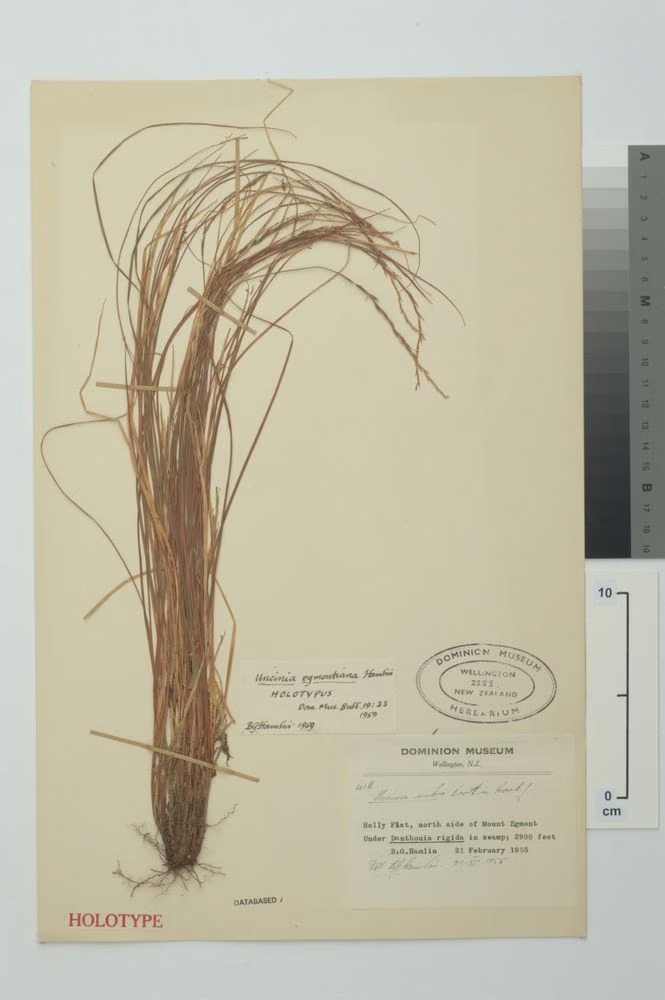
Carex egmontiana is an endemic hook sedge forming dense, usually reddish tufts. It grows from coastal turf to alpine bogs and is known from Taranaki Maunga, the South Island and Rakiura / Stewart Island.
Identification
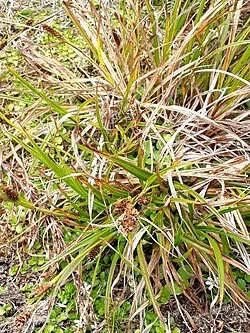
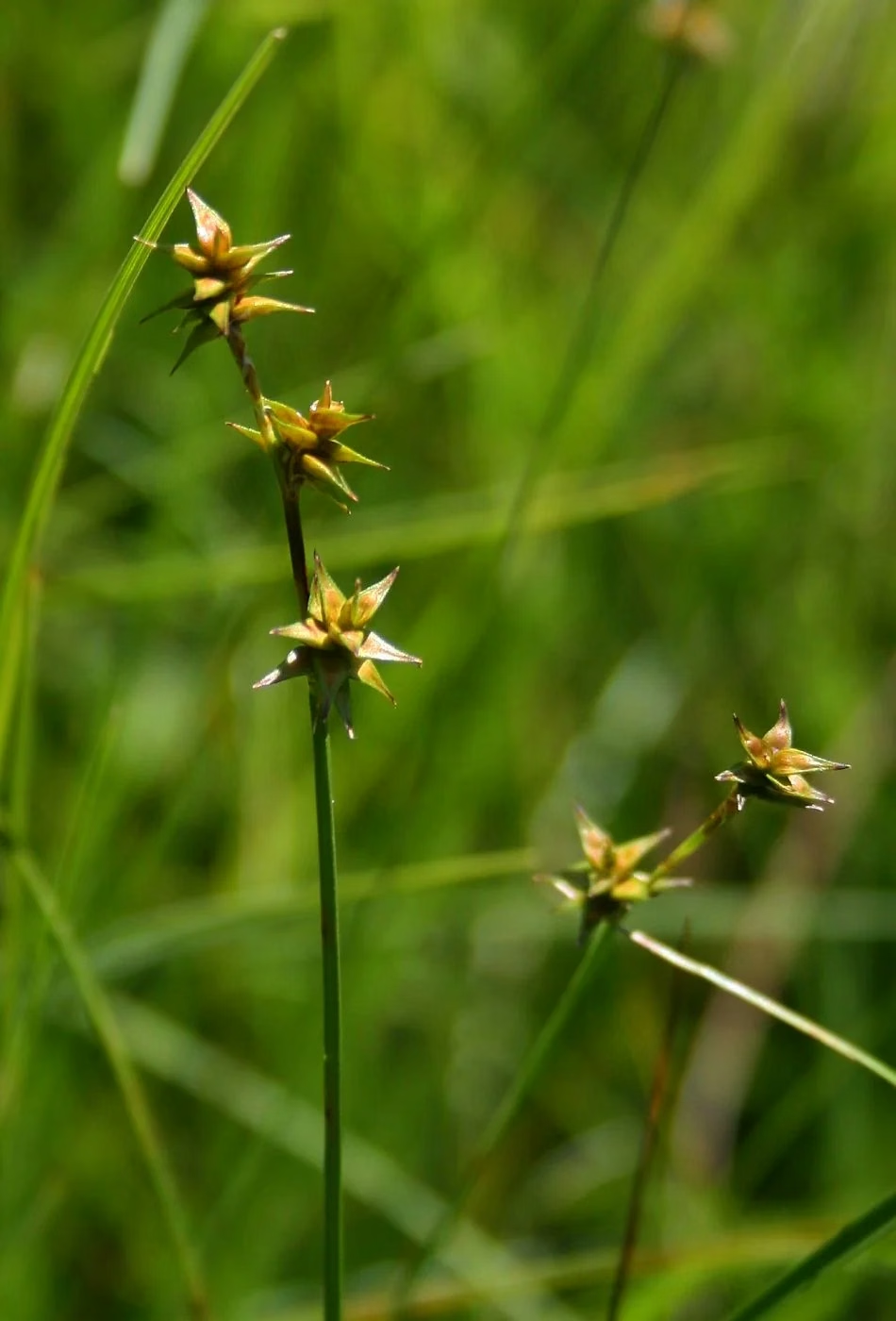
This sedge forms dense tufts 25-40 cm tall, usually dull red or reddish green. The smooth stems are nearly round or weakly triangular, while the narrow leaves are 1-1.5 mm wide with rough margins. The grey-green or reddish-grey utricles are roughly 4.5-6 mm long and taper to a beak.
Quick facts
| Scientific Name | Carex egmontiana (Hamlin) K.A.Ford |
|---|---|
| Earlier name | Uncinia egmontiana |
| Common name | Egmont hook sedge |
| Family | Cyperaceae |
| Origin | Endemic to New Zealand |
| Height | 25-40 cm |
| Habitat | Coastal turf, grassland, mires and bogs |
| Flowering | October to November |
| Fruiting | November to August |
| National status | Not Threatened (2023) |
| Water Needs | Permanently moist soil; peat preferred, though other substrates are tolerated |
| Light | Semi-shade, except in cool climates |
| Spread | Dense tufts; mature clump width is not specified |
| Frost Tolerance | Minimum tolerated temperature is not documented |
| Salt Tolerance | Salt tolerance is not documented |
| Growth Rate | Annual extension is not quantified in the cited accounts |
| Lifespan | Longevity in years is not documented |
Natural range
NZPCN records the species from Taranaki Maunga / Mount Egmont in the North Island, the South Island and Rakiura / Stewart Island. It reports that the species is apparently absent from Fiordland.
| City | Climate Suitability |
|---|---|
| Auckland | Not assessed |
| Wellington | Not assessed |
| Christchurch | Not assessed |
Habitat
Its natural habitats range from coastal turf to alpine vegetation. NZPCN records it in tussock grassland, alpine mires and bogs, and shrubland growing over peat, as well as in coastal turf.
Growing conditions
NZPCN reports that this species prefers permanently moist peaty soil but will grow in other substrates. Except in cool climates, its cultivation advice favours semi-shade; its wild sites include bogs and peaty shrubland.
Planting considerations
Allow for a dense tuft around 25-40 cm tall. NZPCN recommends keeping the soil permanently moist and suggests semi-shade except in cool climates; peat is preferred, although the sedge can grow in other substrates.
Wetland association
The New Zealand wetland plant list classifies this sedge as facultative wetland: usually associated with wet ground but occasionally found outside wetlands. Its natural sites include alpine mires, bogs and shrubland over peat.
Field identification
Look for dense reddish or reddish-green tufts, smooth nearly round stems and grey-green to reddish-grey fruiting utricles. Compare the fruits and foliage with similar Carex silvestris, which is usually brighter green.
Garden context
The sedge’s low dense form and reddish foliage give it a distinctive appearance. NZPCN advises permanently moist soil and, except in cool climates, semi-shade; it describes the plant as readily grown from fresh seed or division.
Flowering and fruiting
NZPCN records flowering in October and November, with fruiting from November to August. About ten to twenty female flowers occur in a spike, more widely spaced near its base than near its tip.
Leaf and stem growth
Each smooth stem bears approximately four to six narrow leaves, and the basal sheaths are straw-coloured or light brown. Reddish foliage is a normal feature; the cited species profile does not prescribe pruning.
How to Grow Hook Sedge (Carex egmontiana)
Fresh seed and division
Fresh seed and division of established plants are the two propagation routes recorded by NZ Plant Conservation Network for Carex egmontiana. The species develops dense tufts rather than the widely spaced shoots of a strongly stoloniferous sedge. Identified parent material is especially useful because its earlier name, Uncinia egmontiana, may still appear on labels and in older botanical references.
Moist peat and shelter
The published preference is for permanently moist, peaty soil, although plants are reported to grow in other substrates. Semi-shade is recommended outside cool climates. Its wild range includes coastal turf, tussock grassland, alpine mires, bogs and shrubland over peat. These records make moisture a more useful guide to site choice than an assumption that all alpine sedges require a dry rock garden.
The mature tuft
Plants are normally 25-40 cm tall. Dull red or reddish-green foliage is characteristic, with green plants less frequent. The slender leaves are approximately 1-1.5 mm wide, with four to six leaves associated with each flowering stem. Their margins and upper surfaces are moderately rough. These colour and surface features belong to the botanical description and should be considered when assessing new nursery growth.
Flower and fruit timing
Flowering occurs in October and November, and the recorded fruiting period extends from November to August. The narrow spikes contain about ten to twenty female flowers, more widely spaced toward the base. Fruiting utricles measure roughly 4.5-6 mm long. Examining those reproductive structures provides a stronger identification check than reddish leaves alone.
Plant health
Dull red or reddish-green foliage and grey-green to reddish-grey fruiting utricles are normal identifying features. The NZPCN species account does not list a specific pest or disease treatment for this sedge.
Names and classification
The epithet refers to Mount Egmont, now Taranaki Maunga. The species was previously called Uncinia egmontiana; Uncinia silvestris var. squamata is another synonym listed by Kew’s Plants of the World Online.
Compared with Carex silvestris
Carex silvestris typically has bright green foliage and smaller green utricles, while C. egmontiana is usually reddish and has grey-green or reddish-grey utricles. Both have smooth stems, so several characters should be checked together.
Other New Zealand sedges
Explore other New Zealand Carex species, including sedges of wetlands, forest margins and open ground.
Conservation
This endemic sedge was assessed nationally as Not Threatened in 2023. NZPCN also lists it as Regionally Not Threatened in Otago in the 2025 regional assessment.
Frequently asked questions
Is Uncinia egmontiana the same sedge?
Yes. Uncinia egmontiana is the earlier name for Carex egmontiana, now placed in the broader genus Carex.
Does it grow only on Taranaki Maunga?
No. NZPCN also records it from the South Island and Rakiura / Stewart Island, in habitats ranging from coastal turf to alpine bogs.
Does the reddish foliage identify this sedge on its own?
No. Red or reddish-green tufts are characteristic, but green forms also occur. Leaf width, spike structure and the mature utricles should be checked as well.
Sources
Identification, habitat, flowering, cultivation and conservation: NZPCN.
Scientific names and synonyms: Plants of the World Online, Royal Botanic Gardens, Kew.
Taxonomy and New Zealand biostatus: Flora of New Zealand genus account.
Last updated: