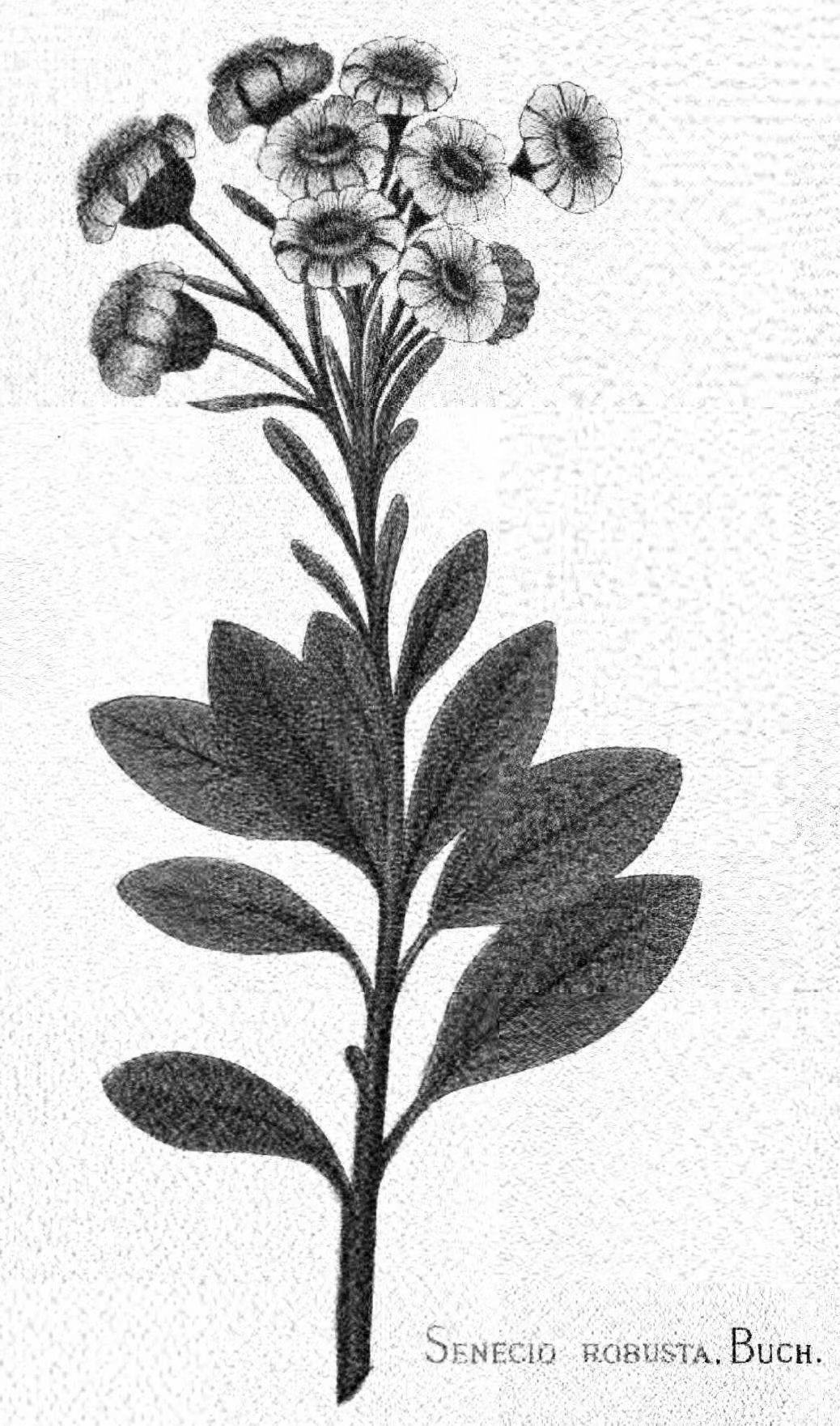
Brachyglottis
Brachyglottis revoluta
Last updated:
Brachyglottis revoluta is a low, sprawling daisy shrub of the mountains of the southwestern South Island. It rarely exceeds 0.5 m, with decumbent main branches, leathery, wrinkled leaves 3 to 6 cm long, and a pale buff to white, slightly sticky felt on the leaf undersides. From January to March it bears clusters of bright yellow daisy flowers up to 2 cm across on stout, leafy stalks. It grows in montane to subalpine shrubland and fellfield between about 900 and 1600 m, from Fiordland east to the Old Man Range. It is endemic and Not Threatened, but it is not commercially available. Explore more native shrubs in our native plant guide.
Plant Description
Brachyglottis revoluta is a depressed to suberect shrub, occasionally reaching 0.5 m tall. The main branches lie along the ground at the base, while the branchlets are erect or ascending and densely leafy. Each branchlet ends in a stout, erect flowering stalk about 5 mm thick and up to 10 cm long, clothed in narrow, leaf-like bracts.
The leaves are leathery, roughly elliptic-oblong with a blunt tip, 33 to 60 mm long and 20 to 30 mm wide. The upper surface is hairless and noticeably wrinkled (rugose), and the margins are wavy and rolled under. The underside is covered in a pale buff to white, pressed-down tomentum that is slightly sticky to the touch, which gives the plant its grey-green look.
The flower heads are carried in a loose, flat-topped cluster of 5 to 15, each up to 20 mm across, with 10 to 15 bright yellow ray florets. The most similar species is Brachyglottis adamsii, which is taller (over 1 m) with smaller, thicker and stickier leaves.
Quick Facts
| Scientific Name | Brachyglottis revoluta |
|---|---|
| Height | Usually low and spreading, occasionally to 0.5 m |
| Spread | Sprawling, often wider than tall |
| Water Needs | Moderate; moist but well drained |
| Light | Full sun, open mountain sites |
| Frost Tolerance | High; a montane to subalpine species |
| Salt Tolerance | No information available; an inland mountain species |
| Growth Rate | Slow |
| Lifespan | Long-lived perennial shrub |
Climate Best Suited to
Suits a cold, mountain climate with snow in winter, cool summers and good rainfall, as found in the ranges of Fiordland, western Southland and Central Otago. It is poorly suited to warm, humid lowland gardens.
Regional Suitability
| City | Climate Suitability |
|---|---|
| Auckland | Low |
| Wellington | Low |
| Christchurch | Low |
| Dunedin | Medium |
Plant Habitat
Brachyglottis revoluta is confined to the southwestern South Island. It extends from Fiordland eastwards across the Eyre, Thomson, Livingstone, Richardson, Harris, Hector, Garvie and Umbrella mountains to the Old Man Range in Central Otago.
It is a plant of montane to subalpine shrubland and fellfield between about 900 and 1600 m, where its low, sprawling habit helps it cope with wind, snow and exposure on open mountain slopes.
Growing Requirements
Soil Requirements
In the mountains it grows in stony, well-drained soils of shrubland and fellfield.
- Gritty, free-draining soil
- Low to moderate fertility
- Cool root run; avoid soils that bake hot and dry
Light Requirements
It grows in open subalpine country with little overhead shade.
- Full sun or very light shade
- Good air movement around the foliage
Water Requirements
Its mountain habitat is cool and receives regular rain and snowmelt, but water drains away quickly through stony ground.
- Keep evenly moist in summer
- Never leave roots sitting in water
- Humid, stagnant air is more harmful than cold
Planting and Establishing
Because it is not commercially available, few gardeners will have the chance to plant it. Where legitimately propagated plants are available, grow them in a rock garden, scree bed or large trough in a cool, open position.
Plant in autumn or spring into a gritty mix, firming gently, and top-dress with stone chips to keep the stem bases dry and the roots cool.
Ecological Role
Its yellow flower heads appear in late summer when many subalpine plants have finished flowering. Like other Brachyglottis it produces small achenes with a pappus that are spread by wind.
The specific insects that pollinate it or feed on its foliage are not documented in the sources consulted. It forms part of the low shrub and fellfield vegetation of the southern mountains, helping to cover and stabilise open stony ground.
Uses & Significance
Garden Uses
It is a specialist plant for alpine enthusiasts rather than a general garden shrub.
- Rock gardens and scree beds in cool southern gardens
- Alpine troughs and botanic garden collections
- Best appreciated on tramping routes in the Otago and Fiordland ranges
Ecological Value
It is a characteristic shrub of the montane and subalpine zone of the far southwest of the South Island.
- Late-summer flowers in subalpine shrubland
- Helps stabilise exposed fellfield and stony slopes
- An endemic part of the distinctive flora of the southern ranges
Landscaping Uses
In an alpine garden, let it sprawl over rocks where its grey-green, wrinkled leaves and late summer yellow flowers can be seen against stone. It combines naturally with tussocks, hebes and cushion plants from similar altitudes.
It is not suited to formal landscaping, hedging or warm, sheltered beds, where it is likely to become soft and short-lived.
Seasonal Care Calendar
Spring
Growth resumes as snow melts and soils warm on the mountain slopes.
- Plant cultivated stock
- Check drainage after winter
Summer
Flowering runs from January to March, later than many lowland daisy shrubs.
- Keep cultivated plants moist and cool
- Look for it in flower on Otago range tops
Autumn
Fruit ripens from February to April and the seed is shed on the wind.
- Collect seed only from cultivated plants
- Take semi-hardwood cuttings
Winter
In the wild it lies dormant, often under snow.
- No care needed outdoors in cold areas
- Protect from prolonged winter wet in lowland gardens
When to Prune and How Much
Little or no pruning is needed. Its sprawling, low habit is natural and should not be clipped into shape.
Remove spent flower stalks after seed has dropped, and cut out any dead or damaged stems in spring.
How to Grow Brachyglottis
There is no published propagation guidance for Brachyglottis revoluta in the sources consulted, and NZPCN records that it is not commercially available. The methods below are those generally used for shrubby Brachyglottis species and should be treated as a starting point rather than a proven protocol. Do not collect material from conservation land without a permit. Because Brachyglottis species hybridise readily, seed from plants grown near other members of the genus may not come true, so cuttings are the more reliable way to keep a plant true to type.
From Cuttings
Semi-hardwood cuttings of the ascending leafy branchlets, taken in late summer or autumn after flowering, are the usual approach for shrubby Brachyglottis.
Rooting times for this species are not documented, so check progress with a gentle tug rather than repotting early, and avoid overwatering, which can rot felted stems.
- Take 6 to 8 cm cuttings from non-flowering branchlets
- Remove the lowest leaves and trim below a node
- Insert into a gritty mix of pumice and fine bark
- Keep cool, bright and lightly moist with good air movement
- Pot on in spring once rooted
From Seed
Seed ripens from February to April. Collect the fluffy seed heads promptly, as the light seeds are blown away soon after ripening.
- Collect ripe heads from a legitimately sourced plant
- Sow fresh on the surface of a gritty seed mix
- Leave outdoors in a cool, sheltered spot over winter
- Expect germination as temperatures rise in spring
Pests & Diseases
No specific pests or diseases are recorded for this species. In lowland cultivation, rot of the stems and roots in warm, wet conditions is the most likely problem.
In the wild, browsing animals such as deer and hares may graze subalpine shrubs, but no impact on this species is documented in the sources consulted.
Cultural Significance
No traditional Māori name or use is recorded for Brachyglottis revoluta in the sources consulted.
Thomas Kirk described it in 1899 as Senecio revolutus, and Bertil Nordenstam transferred it to Brachyglottis in 1978. The genus name comes from the Greek brachus, short, and glottis, the vocal apparatus.
Bonus Tip
To find it in the wild, look on the Old Man, Garvie or Umbrella ranges of Central Otago in late summer. A low, sprawling shrub with wrinkled leaves that feel faintly sticky underneath, topped with clusters of yellow daisies, is likely to be this species rather than the taller Brachyglottis adamsii.
Related Plants
Explore other native plants that share similar characteristics or habitats with Brachyglottis (Brachyglottis revoluta), offering further insights into New Zealand's diverse flora. These related species provide context and opportunities for complementary planting in your garden.
Purua Grass
Bolboschoenus medianus
Fine-Leaved Parsley Fern
Botrychium biforme
Brachyglottis bifistulosa
Brachyglottis bifistulosa
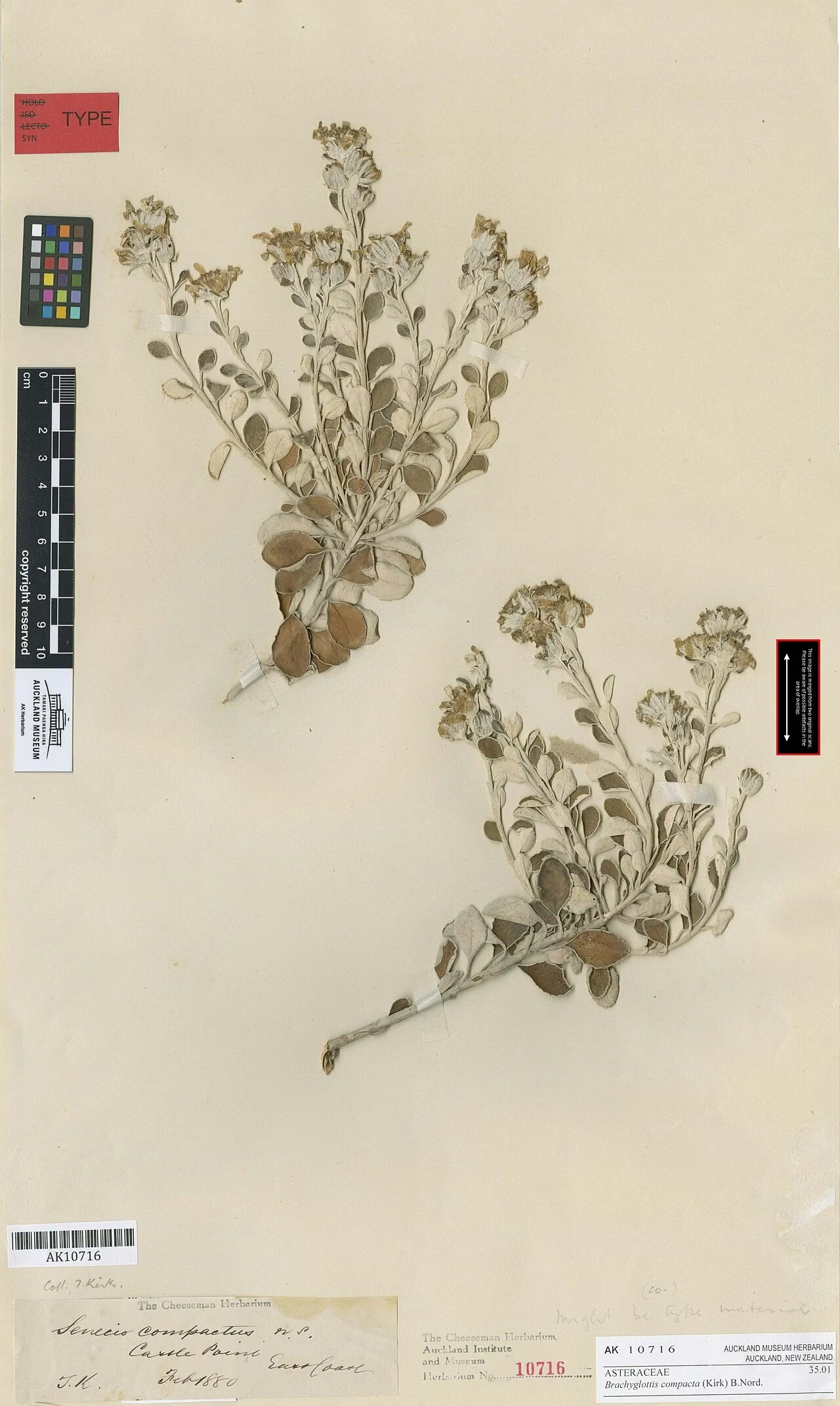
Castlepoint Daisy
Brachyglottis compacta
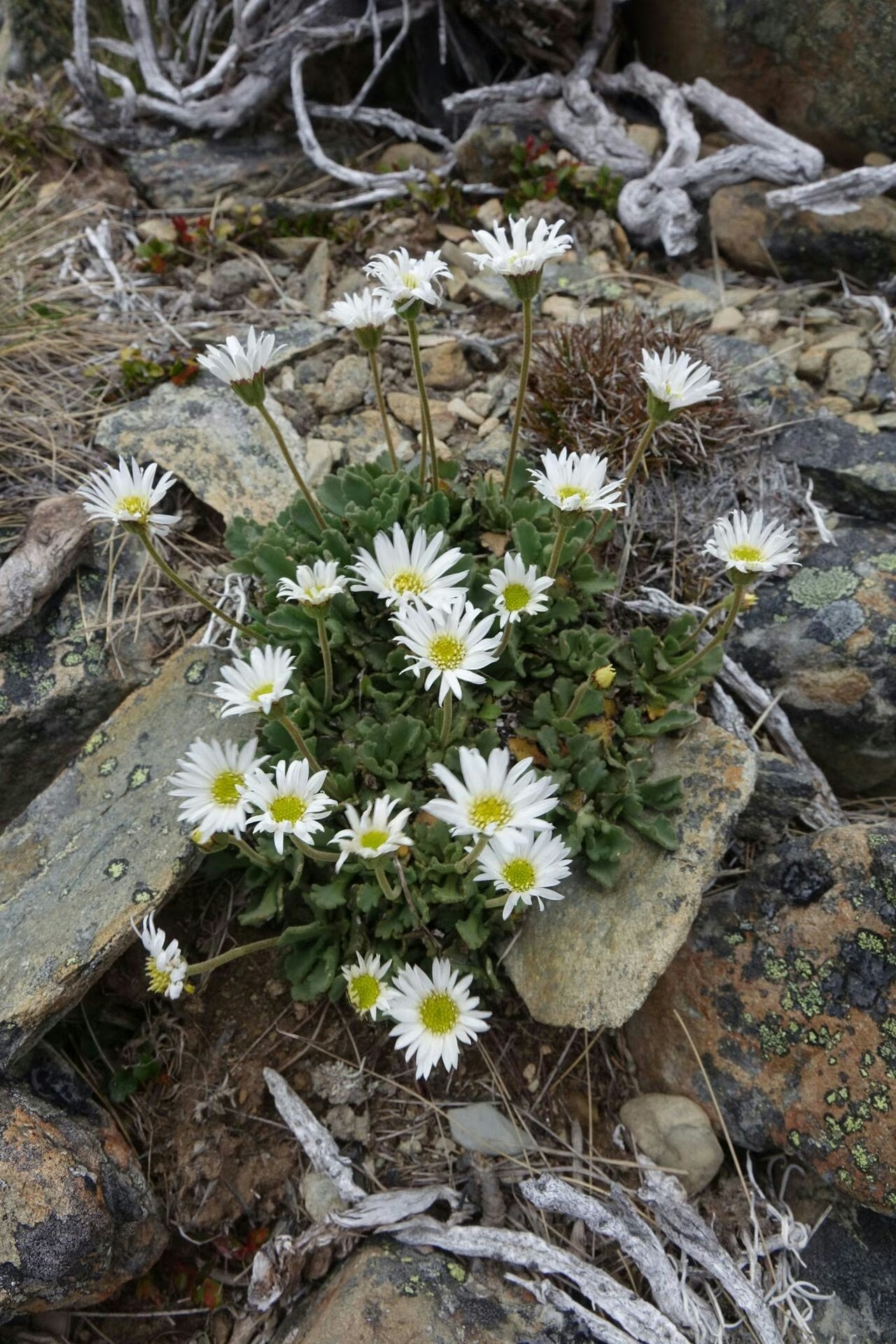
Brachyscome montana
Brachyscome montana
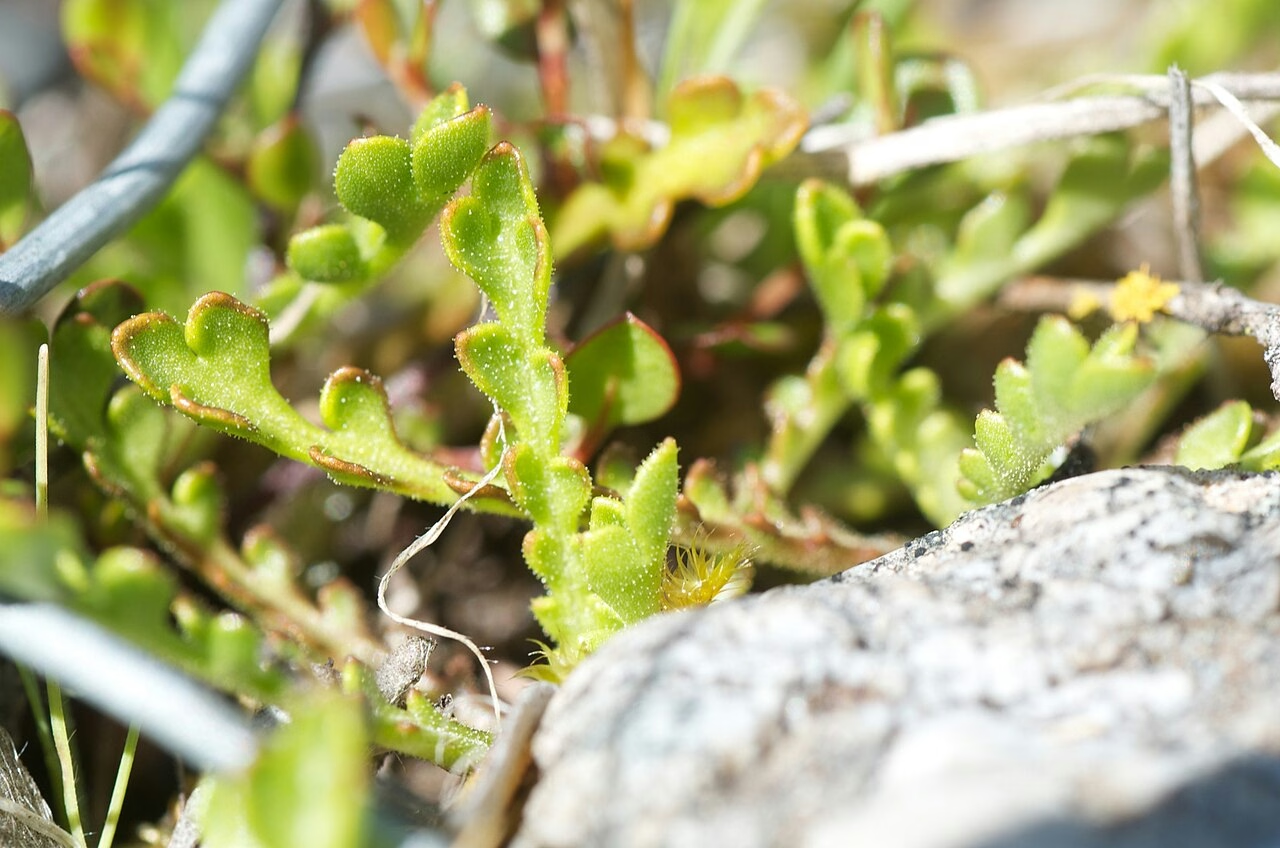
Lees Valley Daisy
Brachyscome pinnata
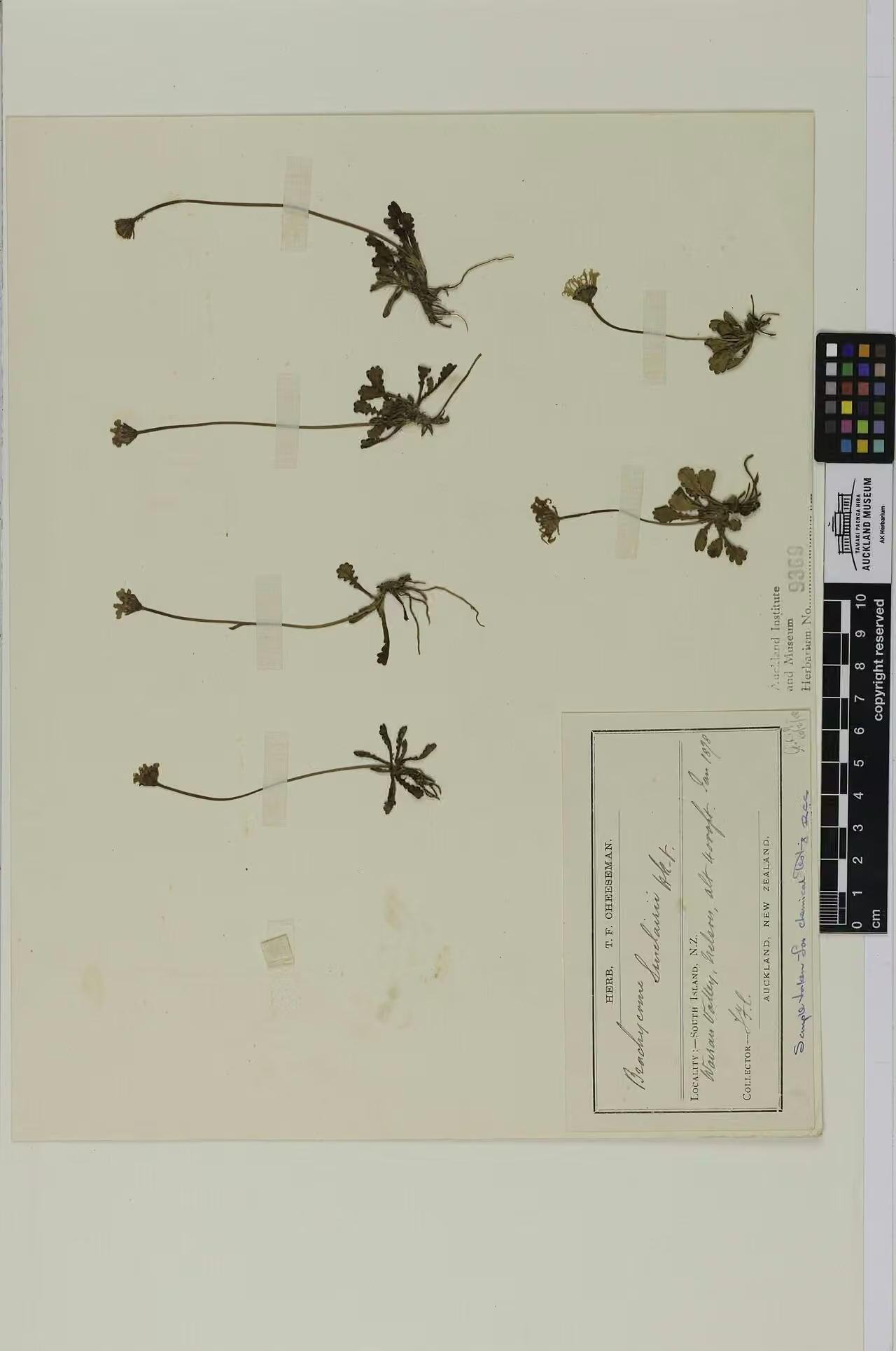
Grassland Daisy
Brachyscome sinclairii
Callitriche aucklandica
Callitriche aucklandica
Plant Conservation
Brachyglottis revoluta is ranked Not Threatened (2023) and has held that ranking in every national assessment since 2004. In Otago it is ranked Regionally Not Threatened (2025).
Much of its range lies on public conservation land and high country. Controlling browsing animals and wilding conifers in the southern ranges benefits this and many other subalpine shrubs.
Frequently Asked Questions
Where does Brachyglottis revoluta grow?
It is endemic to the southwestern South Island, from Fiordland east across the Eyre, Thomson, Livingstone, Richardson, Harris, Hector, Garvie, Umbrella and Old Man ranges, at about 900 to 1600 m.
What does revoluta mean?
The epithet revoluta means rolled back from the margins or apex, referring to the leaf edges, which curl under and give the leaves a wavy outline.
How is Brachyglottis revoluta different from Brachyglottis adamsii?
Brachyglottis adamsii grows taller, often over 1 m, and has smaller, thicker and stickier leaves 25 to 55 mm long. The two meet only in the deep south, and Brachyglottis revoluta does not occur in the North Island.
Can I buy Brachyglottis revoluta for my garden?
NZPCN lists it as not commercially available, so it is rarely seen in gardens. It would suit only cool, well-drained alpine or rock gardens if legitimately propagated stock became available.
Sources and Further Reading
The botanical, growing, and conservation details for Brachyglottis (Brachyglottis revoluta) on this page draw on the New Zealand plant references below. Consult them for full technical records and the latest distribution data.