Purua Grass
Bolboschoenus medianus
Last updated:
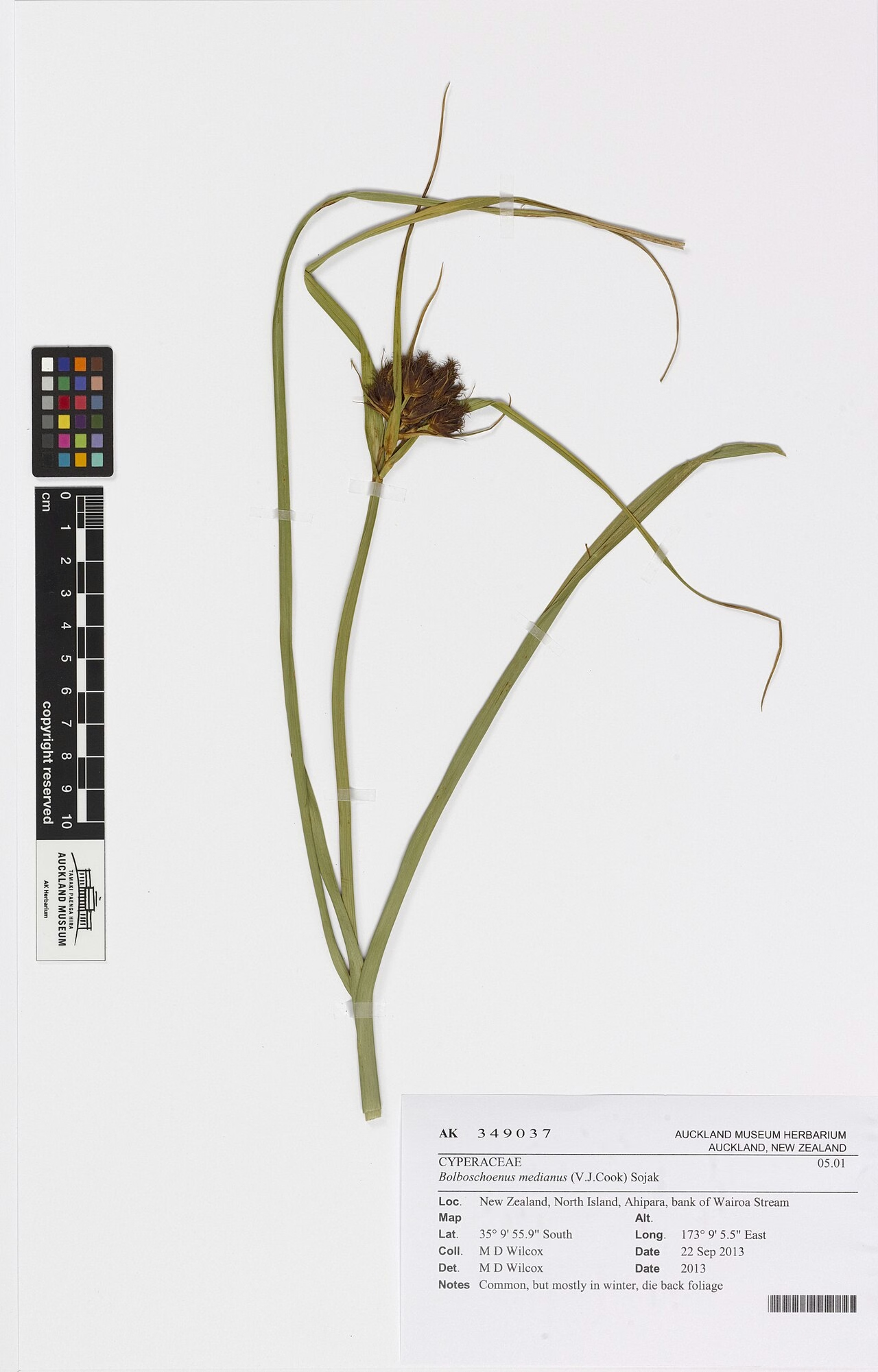
Purua grass (Bolboschoenus medianus) is a tall, summer-green native clubrush of saltmarshes and tidal river margins. Woody rhizomes ending in round tubers send up three-angled stems 0.7 to 1.5 m tall among broad, grass-like leaves, topped by an open umbel of dull red-brown spikelets on four to six spreading rays. It grows in coastal and lowland saline wetlands and sometimes along freshwater rivers and lakes, and is abundant along the tidal Piako, Waitoa and lower Waikato Rivers. Not Threatened, it is a useful plant for restoring estuary edges and wet margins in full sun. Explore more native grasses and flaxes in our native plant guide.
Plant Description
Bolboschoenus medianus is a summer-green, bulbous perennial that forms dense patches. Its woody, dark brown rhizomes, 3 to 5 mm thick, creep horizontally and end in globose woody tubers, each producing one or two stems. The stems are 0.7 to 1.5 m tall and 4 to 5 mm thick, three-angled, striated and smooth except just below the flower head. The numerous leaves are about as long as or longer than the stems, 45 to 50 cm by 6 to 8 mm, folded but flattened, grass-like and leathery with rough margins and midrib near the tip.
The inflorescence is an irregular compound umbel with four to six unequal rays 2 to 10 cm long, each carrying clusters of one to six spikelets, plus a stalkless cluster at the base. Long, leaf-like bracts 15 to 25 cm long extend beyond the head. The dull red-brown spikelets are 10 to 20 mm long, with hairy glumes ending in a rough, recurved awn. Flowers have three stamens and two or three style branches, and the nut is 3 to 4 mm long, flattened with convex sides, ripening greyish to glossy black.
It is distinguished from B. caldwellii by its larger size, open branched heads, and nuts with convex rather than concave sides, and from B. fluviatilis by its flattened rather than three-angled nuts and by having two or three style branches rather than mostly three.
Quick Facts
| Scientific Name | Bolboschoenus medianus |
|---|---|
| Height | 0.7-1.5 m |
| Spread | Forms dense patches from long-creeping rhizomes |
| Water Needs | Wet ground to shallow water |
| Light | Full sun |
| Frost Tolerance | Hardy; dies back to tubers in winter |
| Salt Tolerance | High; saltmarsh and tidal margins, also fresh water |
| Growth Rate | Moderate to fast |
| Lifespan | Perennial |
Climate Best Suited to
A temperate wetland sedge that dies back over winter and regrows in spring. It suits mild coastal and lowland climates wherever there is permanently wet saline, brackish or fresh ground.
Regional Suitability
| City | Climate Suitability |
|---|---|
| Auckland | High |
| Wellington | Medium |
| Christchurch | Medium |
| Dunedin | Low |
Plant Habitat
NZPCN gives its distribution simply as indigenous without a detailed range. It notes that in the Waikato the species is abundant along the tidal stretches of the Piako and Waitoa Rivers on the Hauraki Plains, along the Waikato River to about Taupiri, and around the larger lakes of the Huntly Basin. In the Auckland region it is recorded from Manukau Harbour wetlands, including Ihumātao and Puhinui. Outside New Zealand it grows in Western Australia, South Australia, New South Wales, Victoria and Tasmania.
Its habitat is coastal to lowland saltmarsh and other poorly drained saline areas, and occasionally freshwater river and lake margins. It sometimes spreads into pasture beside tidal streams and estuaries. NZPCN rates it an obligate wetland plant.
Growing Requirements
Soil Requirements
It roots into wet mud and silt on tidal and lake margins, and NZPCN notes it will grow in almost any soil provided it is sunny and damp.
- Saturated mud, silt or clay
- Saline, brackish or fresh water
- Tolerates poorly aerated, waterlogged soils
Light Requirements
Grows best in open, sunny wetlands where it is not overtopped by shrubs or trees.
- Full sun
- Open estuary, river or lake margins
- Thins out under shade
Water Requirements
Purua grass needs wet ground year round and copes with tidal flooding and fluctuating lake levels.
- Permanently damp to shallowly flooded
- Tolerates tidal and flood inundation
- Ideal for pond margins and tidal streams
Planting and Establishing
Plant rooted pieces or tubers in spring into wet mud at the margins of estuaries, tidal streams, lakes or large ponds, spacing them 50 cm or more apart. NZPCN recommends it as a pond plant or for planting along tidal streams.
It is a vigorous spreader, so reserve it for large wetlands, restoration sites or contained plantings rather than small garden ponds.
Ecological Role
Purua grass forms extensive stands along tidal rivers and lake edges, binding sediment and slowing water flow. Its bristly nuts are dispersed by water and possibly wind. It flowers from October to January and fruits from December to May.
Dense clubrush stands give cover to wetland birds and fish along tidal rivers, but specific animal associations with this species are not documented in the sources consulted.
Uses & Significance
Garden Uses
Best used in large-scale wetland and riparian plantings where its spreading habit is an advantage.
- Tidal river and estuary bank restoration
- Lake margin planting
- Constructed and stormwater wetlands
- Large farm ponds
Ecological Value
A dominant native sedge along some tidal rivers and lake shores in the Waikato and Hauraki.
- Stabilises soft riverbanks and lake edges
- Provides habitat structure in brackish and fresh wetlands
- Obligate wetland species
Landscaping Uses
Mass-plant purua grass along a wet edge to create a tall green fringe in summer, topped by red-brown flower heads. Its height makes it a good backdrop to lower wetland plants such as Isolepis or oioi.
As it dies back in winter, plan for a seasonal look, or interplant with evergreen wetland natives so the edge stays green year round.
Seasonal Care Calendar
Spring
Fresh shoots appear from underground tubers.
- Plant or divide
- Remove last year's dead stems
Summer
Branched red-brown flower heads appear between October and January.
- Ensure planting sites stay wet
- Control weeds around young plants
Autumn
Greyish to black nuts ripen from December to May.
- Collect ripe nuts for propagation
- Leave stands undisturbed for wildlife
Winter
Above-ground growth dies back; the plant survives as tubers and rhizomes.
- Little care needed
- Avoid heavy machinery on planted margins
When to Prune and How Much
Purua grass needs no pruning. Dead winter stems can be cut down before spring growth, though in restoration sites they are usually left as cover.
If it spreads beyond where it is wanted, dig out rhizomes and tubers at the edges of the patch.
How to Grow Purua Grass
According to NZPCN, Bolboschoenus medianus is easily grown from fresh seed and from rooted pieces. Large restoration projects often use seed, while gardeners will find dividing tubers and rhizomes the quickest method. Wherever possible use material from nearby populations so the plants are adapted to local conditions, and keep all young plants wet. Because B. medianus and B. caldwellii often grow in similar places, check the open, branched flower heads before collecting so you propagate the right species.
From Seed
Collect nuts once they have darkened to grey or black and fall from the spikelets easily, usually in late summer or autumn. Sow them fresh.
- Rub ripe nuts from the spikelets into a paper bag
- Sow on the surface of a moist seed mix and cover thinly
- Stand the container in water so the mix remains saturated
- Place in a warm, bright position
- Pot seedlings individually when large enough to handle
- Plant out into wet ground once well rooted
By Division of Tubers and Rhizomes
Dig sections from an established stand in late winter or early spring, when the tubers are about to shoot.
Division is reliable because each woody tuber carries buds that will shoot once replanted in wet ground.
- Lift a clump with a spade, keeping tubers attached to rhizomes
- Cut into pieces, each with at least one tuber
- Plant straight into wet mud or pot up in saturated mix
- Keep wet and sunny until growth begins
Pests & Diseases
No serious pests or diseases are recorded. Stock grazing and trampling along unfenced tidal margins are the main sources of damage.
Drainage of wetlands and invasive wetland weeds can displace it from lake and river margins.
Cultural Significance
Ngā Tipu Whakaoranga records the names rīrīwaka, kukuraho, kōpūngāwhā and kōpūpūngāwhā, and the common names marsh clubrush and purua grass, for native Bolboschoenus. It records that the tubers were eaten in times of great scarcity, the mealy inner part of rhizome nodes, called ngā raho o Tuna, was sometimes eaten, and the plant was used for outer thatch. These records are filed under B. fluviatilis, with a note that the names also refer to B. medianus, so the uses cannot be attributed to this species with certainty.
It was described as Scirpus medianus by V.J. Cook and later moved to Bolboschoenus by Soják.
Bonus Tip
To see purua grass at its best, look along the tidal reaches of the Piako, Waitoa and lower Waikato Rivers in early summer, where it forms long, tall bands of green along the banks, topped by branched red-brown flower heads.
Related Plants
Explore other native plants that share similar characteristics or habitats with Purua Grass (Bolboschoenus medianus), offering further insights into New Zealand's diverse flora. These related species provide context and opportunities for complementary planting in your garden.
Miniature Tree Fern
Diploblechnum fraseri
Black Hard Fern
Cranfillia nigra
Austroblechnum norfolkianum
Austroblechnum norfolkianum
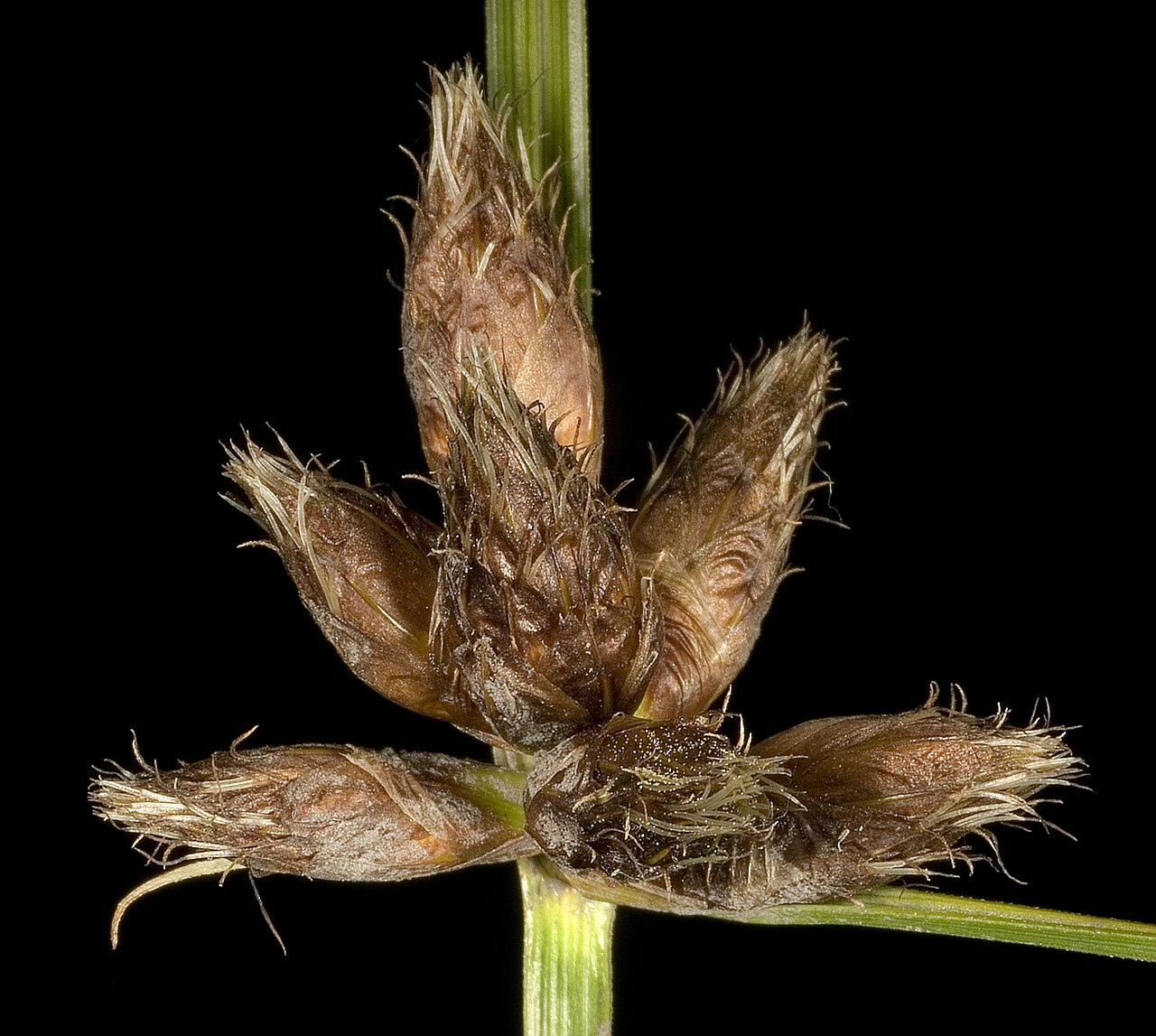
Caldwell's Clubrush
Bolboschoenus caldwellii
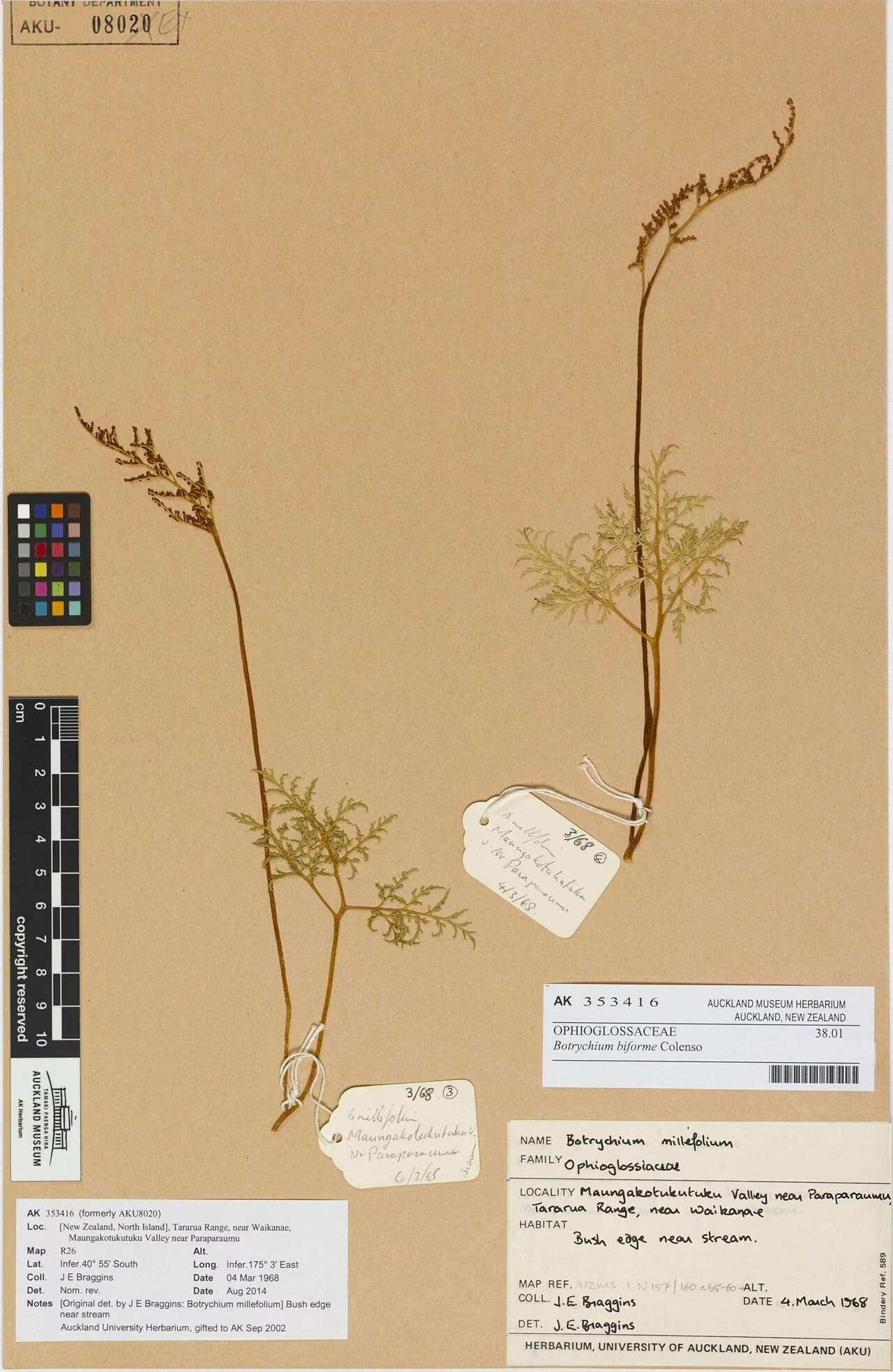
Fine-Leaved Parsley Fern
Botrychium biforme
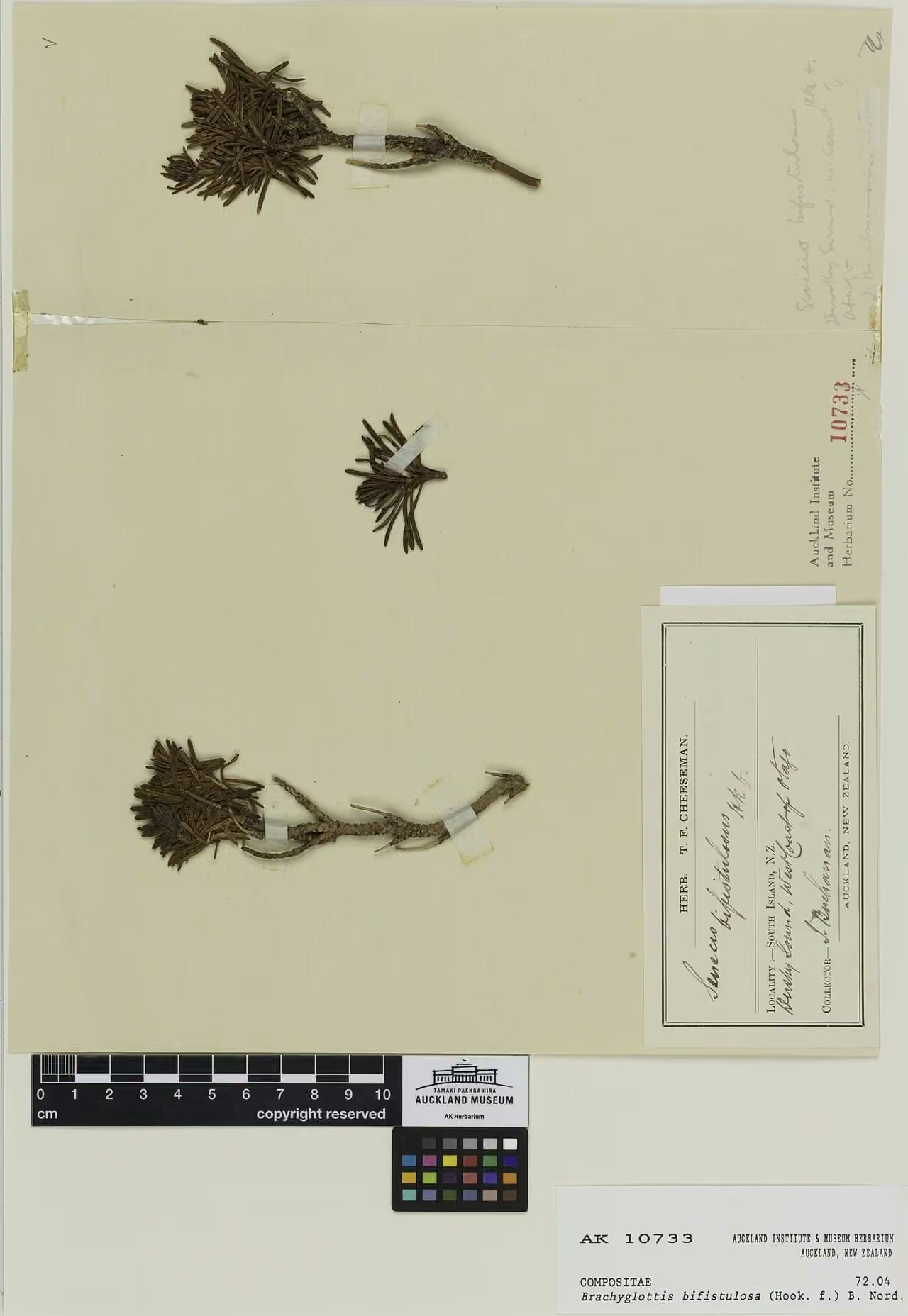
Brachyglottis bifistulosa
Brachyglottis bifistulosa
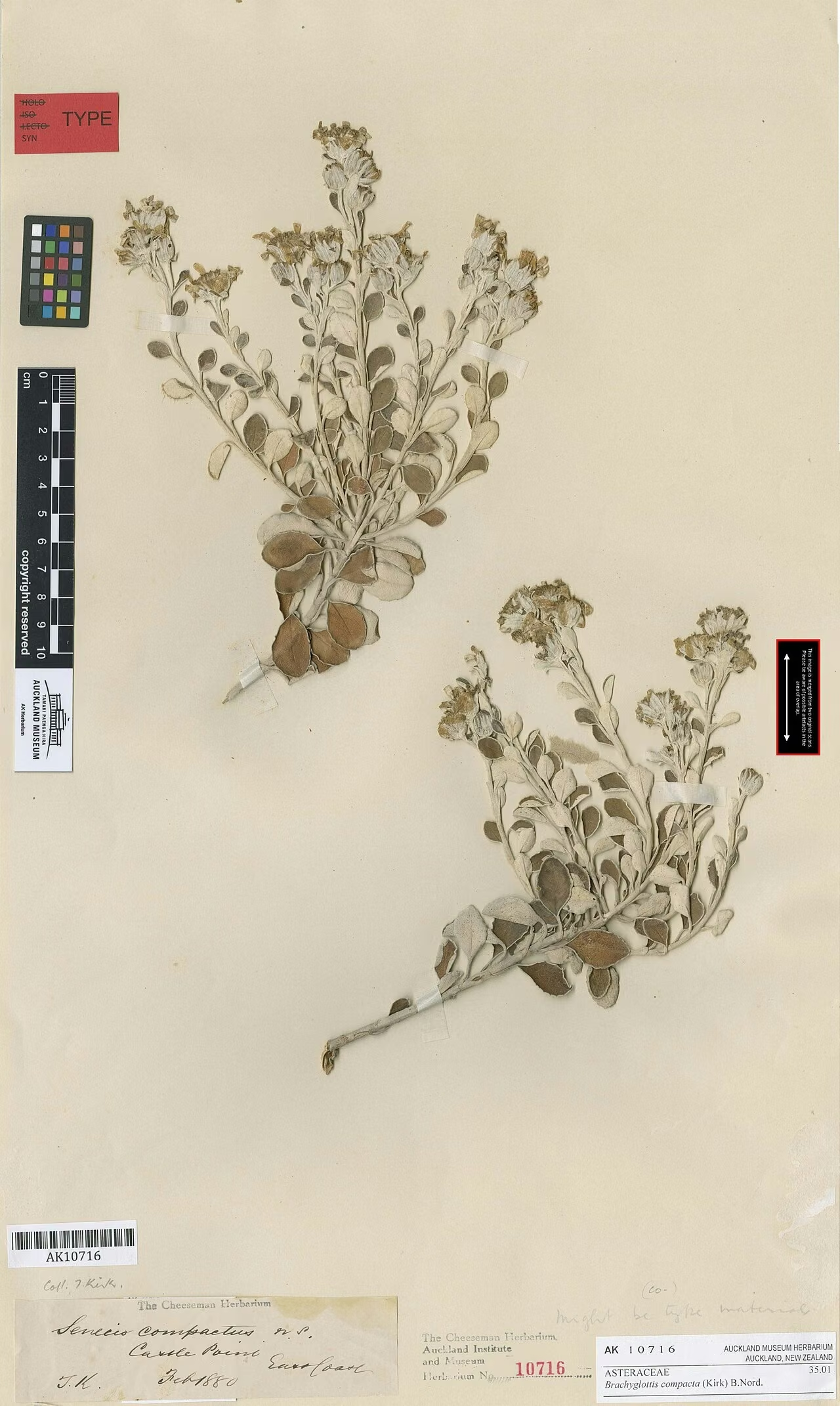
Castlepoint Daisy
Brachyglottis compacta
Brachyglottis revoluta
Brachyglottis revoluta
Plant Conservation
Bolboschoenus medianus is ranked Not Threatened (2023) with the qualifier Secure Overseas. In Western Australia it is a Priority One species known from only a few sites.
Protecting and restoring saltmarshes, lake margins and tidal river banks, fencing out stock and controlling wetland weeds all help maintain its stands.
Frequently Asked Questions
How tall does Bolboschoenus medianus grow?
Its stems reach 0.7 to 1.5 m tall, with leaves 45 to 50 cm long and 6 to 8 mm wide, making it larger than Caldwell's clubrush (B. caldwellii).
How can you identify Bolboschoenus medianus?
Look for an open, branched flower head with 4 to 6 unequal rays and a cluster of stalkless spikelets at the base. The nut is flattened with convex sides and ripens greyish to glossy black, and flowers have 2 or 3 style branches.
Where does purua grass grow in New Zealand?
It grows in coastal and lowland saltmarshes and saline wetlands, and occasionally beside freshwater rivers and lakes. NZPCN notes it is abundant on the tidal Piako, Waitoa and Waikato Rivers and around the larger lakes of the Huntly Basin.
Is Bolboschoenus medianus native to New Zealand?
Yes, it is indigenous. It is not endemic, as it also occurs in several Australian states, where it is uncommon in Western Australia.
Sources and Further Reading
The botanical, growing, and conservation details for Purua Grass (Bolboschoenus medianus) on this page draw on the New Zealand plant references below. Consult them for full technical records and the latest distribution data.