Miniature Tree Fern
Diploblechnum fraseri
Last updated:
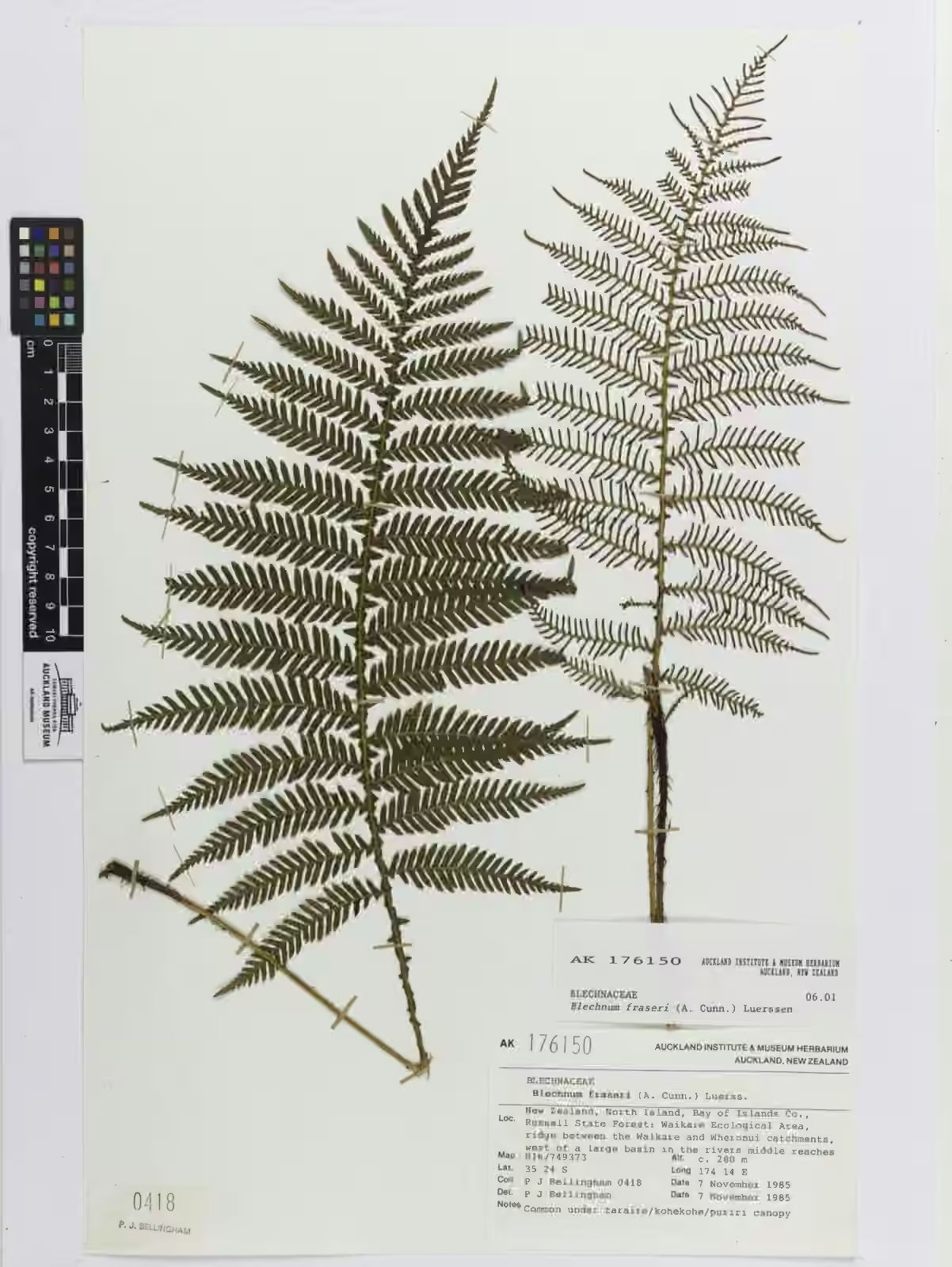
Miniature tree fern (Diploblechnum fraseri, now Diploblechnum fraseri) is a small colony-forming fern whose erect rhizomes become slender woody trunks up to about 1.5 m tall and only 10 to 15 mm thick, each topped by a crown of glossy, leathery, arching fronds 20 to 65 cm long. It is the only New Zealand hard fern with twice-divided fronds, and its midribs carry a broad jagged wing. It grows in lowland kauri, podocarp and broadleaved forest from Te Paki to Pirongia and Rotorua, and in north-west Nelson and north Westland. Not Threatened, it is an elegant fern for a sheltered, shaded garden, though slow to establish. It was previously known as Blechnum fraseri. Explore more native ferns in our native plant guide.
Plant Description
Diploblechnum fraseri has an erect rhizome that develops into a slender woody trunk 10 to 15 mm in diameter and up to at least 1.5 m tall, clothed in small black-brown scales with paler margins. Plants are linked by creeping rhizomes and often form extensive colonies. Each trunk ends in a crown of arching fronds.
The fronds are only weakly dimorphic. Sterile fronds are 19 to 63 cm long with ovate to elliptic, glossy, leathery blades that are divided twice: 12 to 22 pairs of widely spaced primary pinnae, each cut almost to the midrib into small toothed secondary segments. The rachis is yellow-brown with a broad, jagged wing. Fertile fronds are similar in shape but have longer stalks and narrower segments 1 to 2 mm wide, with continuous sori along each side of the midribs, protected at first by inrolled indusia.
No other New Zealand hard fern has twice-divided fronds, and the slender trunk is also distinctive. Young plants without trunks could be confused with other ground ferns, but the winged midrib and glossy, finely cut leaflets identify it. Forms with crested leaflet tips occasionally occur.
Quick Facts
| Scientific Name | Diploblechnum fraseri |
|---|---|
| Height | Usually 0.3-1 m; trunks recorded to at least 1.5 m |
| Spread | Each crown about 0.6-1.2 m; spreads slowly into colonies |
| Water Needs | Moist but well-drained |
| Light | Dappled light to partial shade |
| Frost Tolerance | Not documented; its natural range is mainly frost-mild lowland forest, so shelter from hard frost is advisable |
| Salt Tolerance | Low; a forest fern with no recorded coastal tolerance |
| Growth Rate | Slow to establish, then moderate |
| Lifespan | Long-lived perennial |
Climate Best Suited to
Suits mild, humid lowland climates of northern New Zealand and the wet west of the upper South Island. It needs shelter from wind and drying heat; tolerance of hard frost is not documented.
Regional Suitability
| City | Climate Suitability |
|---|---|
| Auckland | High |
| Wellington | Medium |
| Christchurch | Low |
| Dunedin | Low |
Plant Habitat
In the North Island it grows in lowland and montane areas from Te Paki in the far north to Mt Pirongia and Rotorua, from about 30 m to 600 m on Te Hauturu-o-Toi/Little Barrier Island. It reappears in the South Island from north-west Nelson to the Paparoa Range in north Westland, reaching 580 m on Mt Burnett. Overseas it occurs in peninsular Malaysia, Sumatra, Borneo, the Philippines, Taiwan and Papua New Guinea.
It is a terrestrial fern of kauri, podocarp and broadleaved forest and of mānuka and kānuka scrub, and in the South Island it also grows in beech forest. It favours dry clay soils and often covers extensive areas of the forest floor.
Growing Requirements
Soil Requirements
In the wild it often grows on dry clay soils under kauri and podocarp forest. In gardens it does best in well-drained soil that holds some moisture.
- Free-draining, humus-rich soil
- Tolerates clay if it is not waterlogged
- Acidic, leaf-litter soils like those under kauri suit it
- Avoid wet, airless ground
Light Requirements
NZPCN notes that it does best in dappled light, mirroring the filtered light under forest canopies.
- Dappled light or partial shade
- Protect from hot afternoon sun
- Deep shade slows growth
Water Requirements
It needs steady moisture while establishing, but is less dependent on wet ground than streamside ferns.
- Water regularly through the first two summers
- Mulch to keep roots cool and moist
- Do not leave it standing in water
Planting and Establishing
Plant in autumn or spring in a sheltered, partly shaded spot with well-drained, organic soil. Young plants are slow and can be hard to settle, so disturb the root ball as little as possible and plant at the same depth as in the pot.
Group several plants 40 to 60 cm apart to suggest a natural colony. Mulch with leaf litter, water consistently, and be patient, as establishment may take a season or two.
Ecological Role
Where it forms extensive colonies, miniature tree fern dominates patches of the forest floor in kauri and podocarp forest, contributing to the layered understorey and holding clay soils in place. It spreads by creeping rhizomes as well as by wind-dispersed spores.
Specific invertebrate or animal associations are not documented in the sources consulted.
Uses & Significance
Garden Uses
A refined fern that gives a miniature tree-fern effect in small shaded gardens.
- Understorey planting beneath established trees
- Shaded courtyards and narrow side gardens
- Fern collections
- Large containers in sheltered, shaded spots
Ecological Value
A characteristic ground fern of northern kauri and podocarp forest.
- Forms extensive forest-floor colonies
- Helps protect clay soils from erosion
- Suitable for understorey restoration under an existing canopy
Landscaping Uses
Plant miniature tree fern in groups so the slender trunks rise at different heights, creating a layered, forest-like scene at eye level. It works well beneath taller tree ferns or nīkau, or alongside mosses and low ferns at the base.
In a container it makes an unusual feature for a shaded deck, but keep the pot out of drying wind and never let it dry out.
Seasonal Care Calendar
Spring
New fronds emerge from the crown at the top of each trunk.
- Apply a leaf-litter or compost mulch
- Plant new specimens
Summer
Fertile fronds mature and release spores.
- Water during dry spells
- Watch for sun scorch on exposed plants
Autumn
A good planting season while soils are warm and moist.
- Plant or pot on young plants
- Collect fertile fronds for spores
Winter
Growth slows; plants remain evergreen.
- Shelter container plants from frost
- Avoid overwatering in cold, wet soil
When to Prune and How Much
Little pruning is needed. Remove dead or damaged fronds at the base, cutting close to the trunk without damaging the crown.
Never cut the top off a trunk, as the single growing point is at the crown and the stem will not reshoot.
How to Grow Miniature Tree Fern
Miniature tree fern reproduces by wind-dispersed spores and by creeping rhizomes that link plants into colonies. NZPCN states it can be grown from spores and is difficult to establish, but once established grows easily. Spore raising produces the most plants but is slow, while rooted pieces from a colony give a larger plant sooner. Either way, the young plants dislike disturbance, so handle them gently and keep them in humid shade until they are well rooted.
From Spores
Spores ripen on the fertile fronds, which are similar to the sterile fronds but have narrower segments with continuous lines of sori. Collect a frond when the sori turn dark brown.
- Dry a ripe fertile frond on clean paper for a few days
- Sieve out the fine spores from the chaff
- Sow thinly on sterilised, moist fine mix in a covered container
- Keep warm, shaded and constantly humid
- Prick out small clumps when the first true fronds form
- Grow on in pots under shade for at least a year before planting out
By Rhizome Division
In a colony, young plants connected by creeping rhizomes can be separated with a portion of rhizome and roots. This is best done in spring or autumn.
- Choose a small, healthy offshoot at the edge of the colony
- Cut the connecting rhizome with a clean knife and lift with plenty of soil
- Pot into free-draining, organic mix
- Keep in humid shade until new fronds show it has established
Pests & Diseases
No significant pests are recorded. Slugs may damage new fronds, and dry, windy or overly sunny positions are the usual reasons for poor growth.
Waterlogged soil can cause root rot, so ensure drainage is good.
Cultural Significance
No traditional Māori name or use is recorded for this fern in the sources consulted.
The species was named by Allan Cunningham as Lomaria fraseri, in honour of Charles Fraser (1788 to 1831), Colonial Botanist of New South Wales from 1821 to 1831, whose New Zealand specimen at Kew serves as the type. It has since been placed in Blechnum and, more recently, in Diploblechnum, a genus that also occurs in Asia.
Bonus Tip
Because this fern forms colonies on dry clay under kauri, it is one of the few ferns that copes with the drier, root-filled soil beneath established native trees, provided the light is dappled. Give young plants extra water for their first two summers and they will then look after themselves.
Related Plants
Explore other native plants that share similar characteristics or habitats with Miniature Tree Fern (Diploblechnum fraseri), offering further insights into New Zealand's diverse flora. These related species provide context and opportunities for complementary planting in your garden.
Shore Hard Fern
Austroblechnum banksii
Black Hard Fern
Cranfillia nigra
Austroblechnum norfolkianum
Austroblechnum norfolkianum
Caldwell's Clubrush
Bolboschoenus caldwellii
Purua Grass
Bolboschoenus medianus
True Maidenhair Fern
True Maidenhair Fern
Maidenhair Fern
European Maidenhair Fern
Small Maidenhair Fern
Small Maidenhair Fern
Plant Conservation
Diploblechnum fraseri is ranked Not Threatened (2023) with the qualifier Secure Overseas. It is Regionally Not Threatened in both Northland and Auckland.
Protecting northern lowland forest from clearance, kauri dieback spread and browsing animals helps maintain its forest-floor colonies.
Frequently Asked Questions
Is Diploblechnum fraseri a real tree fern?
No. It belongs to the hard fern family Blechnaceae, not the tree fern families. Its erect rhizome simply grows into a thin woody trunk up to about 1.5 m tall, so mature plants look like tiny tree ferns.
How do you recognise miniature tree fern?
It is the only New Zealand Blechnum with bipinnatifid fronds, meaning the leaflets are themselves deeply divided. The midrib has a broad jagged wing, the fronds are glossy and leathery, and the fertile and sterile fronds look similar.
Where does Diploblechnum fraseri grow in New Zealand?
In the North Island from Te Paki south to Mt Pirongia and Rotorua, and in the South Island from north-west Nelson to the Paparoa Range in north Westland, between about 20 and 600 m altitude.
Is miniature tree fern easy to grow?
NZPCN describes it as difficult to establish, but once settled it grows easily. It needs well-drained but moist soil and dappled light, and resents drying out or being moved.
Sources and Further Reading
The botanical, growing, and conservation details for Miniature Tree Fern (Diploblechnum fraseri) on this page draw on the New Zealand plant references below. Consult them for full technical records and the latest distribution data.