Black Hard Fern
Cranfillia nigra
Last updated:
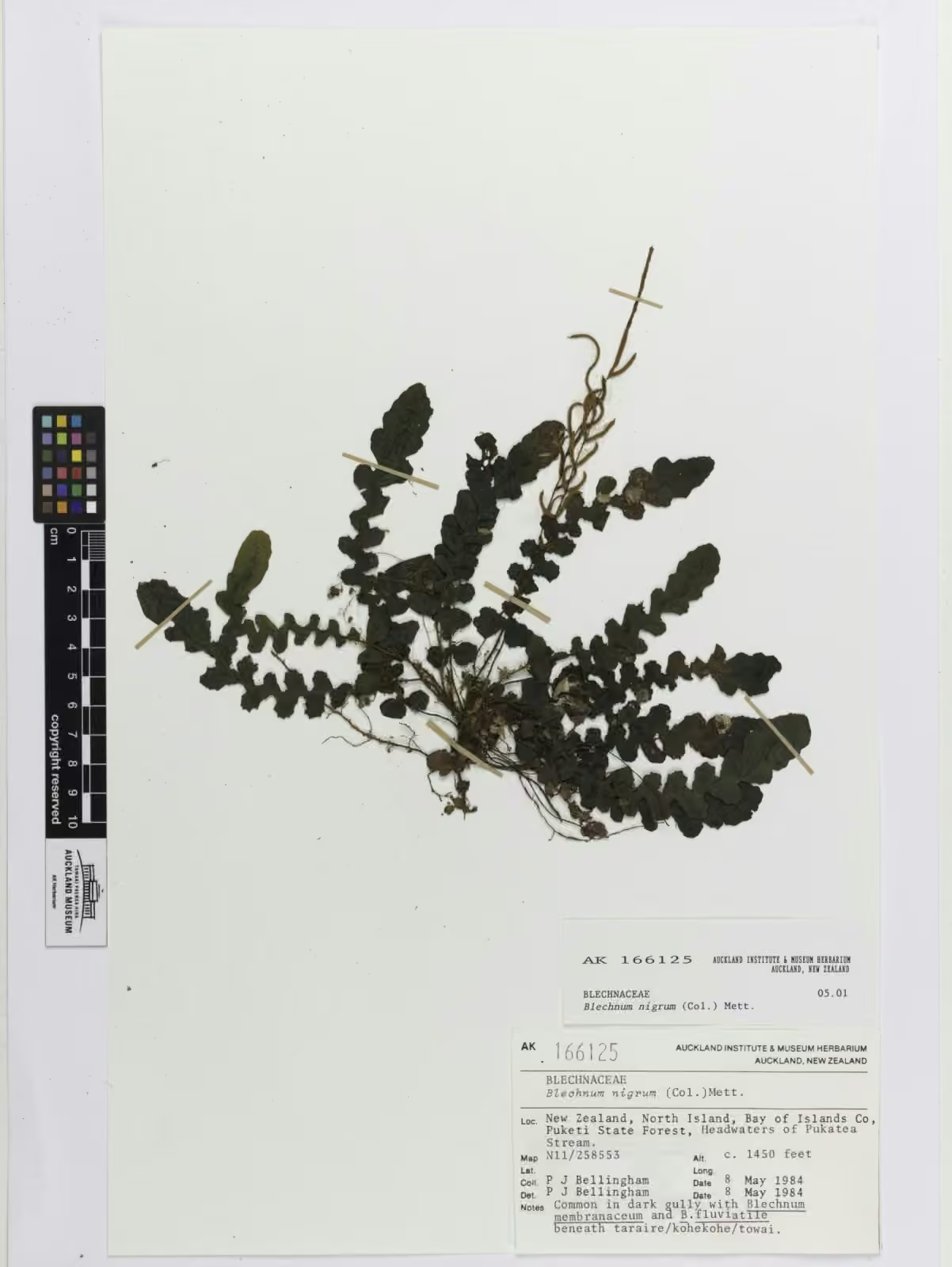
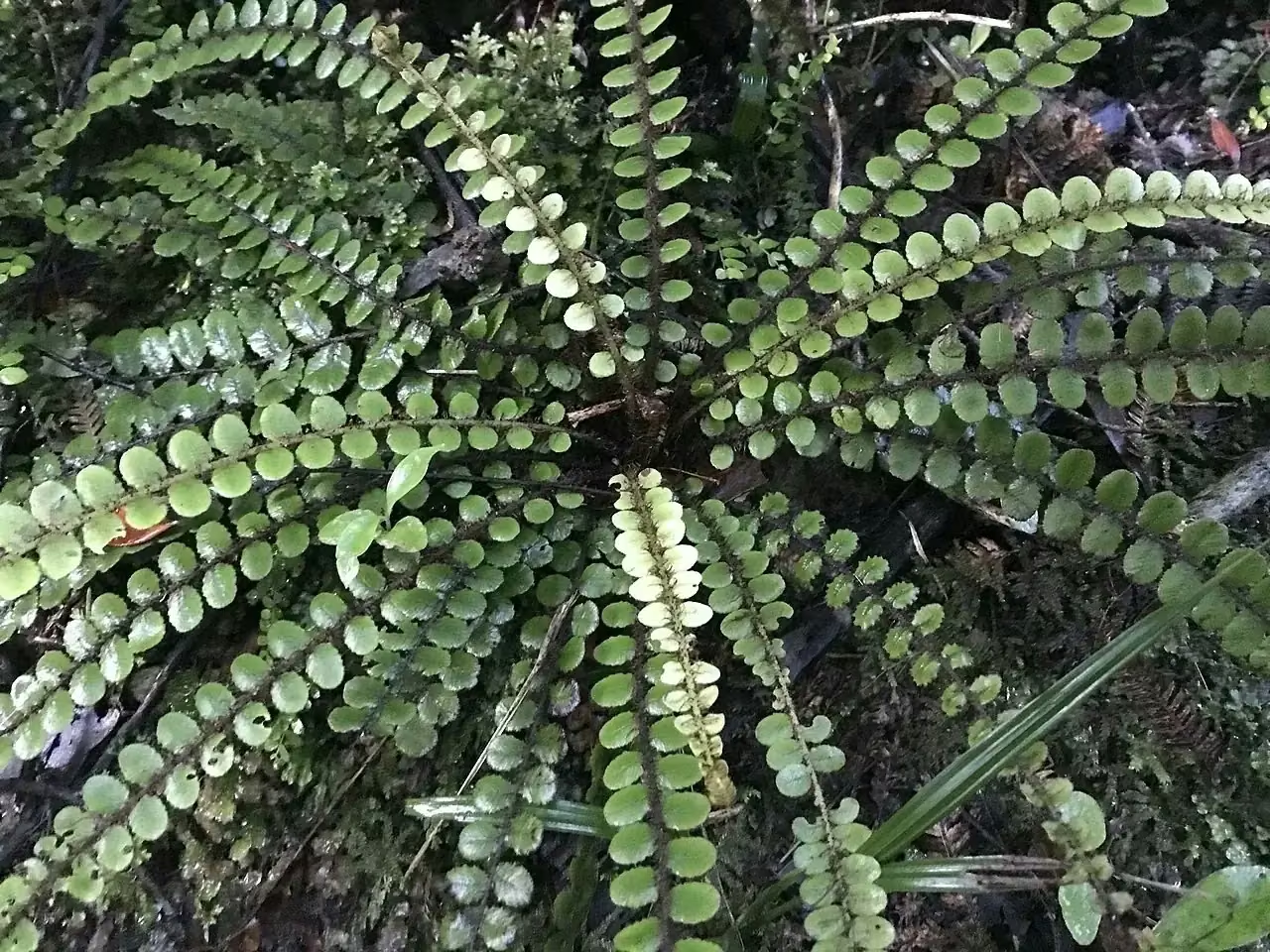
Black hard fern (Cranfillia nigra, now often called Cranfillia nigra) is a small endemic fern of dark, wet forest. Its very dark green sterile fronds, 5 to 27 cm long, lie flat in a rosette and have a large terminal leaflet, a few smaller side leaflets and an enlarged basal pair, while narrow fertile fronds stand upright in the centre. Short red-brown hairs cover the stalks and leaf undersides, and the fronds are often coated with mosses and liverworts. It grows from Kaitāia to Stewart Island, mostly on the western side of both main islands. Nationally Not Threatened, it is uncommon in Northland, Auckland and Otago. It was previously known as Blechnum nigrum. Explore more native ferns in our native plant guide.
Plant Description
Cranfillia nigra is a small fern with a short, erect rhizome bearing chestnut-brown scales. Its fronds are strongly dimorphic. The sterile fronds, 5 to 27.5 cm long, form a flat, prostrate rosette. Each is lyre-shaped, with the terminal leaflet the largest, side leaflets decreasing in size towards the base, and then an enlarged basal pair that equals or exceeds the pair above and often has an extra lobe on its lower side. There are 2 to 14 pairs of broad, oblong leaflets with rounded tips and irregularly toothed margins.
The fronds are very dark green on both surfaces. Stalks, midribs, leaf undersides and leaflet margins carry short, stiff, red-brown hairs. Fertile fronds, 6 to 31 cm long, stand upright in the centre and are as long as or longer than the sterile ones; their 1 to 10 pairs of linear pinnae, 1 to 2 mm wide, bear continuous lines of sori on each side of the midrib.
It is a very distinctive species. The dark colour, few broad leaflets, large terminal leaflet, enlarged basal pair and red-brown hairs distinguish it from creek fern and other rosette-forming hard ferns. Plants are often partly covered in mosses and liverworts.
Quick Facts
| Scientific Name | Cranfillia nigra |
|---|---|
| Height | Fertile fronds up to about 0.3 m; sterile fronds lie flat |
| Spread | Rosette about 0.1-0.4 m across |
| Water Needs | Constantly moist, humid conditions |
| Light | Deep to moderate shade |
| Frost Tolerance | Moderate; grows up to 960 m in natural forest |
| Salt Tolerance | No information available; a forest-interior fern |
| Growth Rate | Slow |
| Lifespan | Perennial |
Climate Best Suited to
A fern of cool, wet, humid forest with high rainfall, especially in the west of both main islands. It does not suit dry or exposed climates.
Regional Suitability
| City | Climate Suitability |
|---|---|
| Auckland | Low |
| Wellington | Medium |
| Christchurch | Low |
| Dunedin | Medium |
Plant Habitat
In the North Island black hard fern occurs in lowland to montane forest from Kaitāia to Wellington, more commonly in the west, reaching 960 m near Matawai in Gisborne. In the South Island it is largely confined to the western side of the Main Divide, from the Marlborough Sounds to Fiordland, with an outlying population at Peel Forest in Canterbury, and it also grows on Stewart Island. It ranges from near sea level to 760 m in the Mt Wynyard Range. It has been observed in Southland but not yet collected there.
It grows in podocarp, broadleaved and beech forest, on stream banks, in gullies, on damp rock faces and banks, between boulders, under tree roots and on the ground in dark, wet forest.
Growing Requirements
Soil Requirements
It roots into thin, damp organic soil on banks, rock faces and the forest floor.
- Humus-rich, moist forest soil
- Crevices and banks with leaf litter
- Free drainage around the crown but no drying out
Light Requirements
This is a fern of deep shade, often in the darkest parts of the forest.
- Deep or full shade
- No direct sun
- Bright light causes the dark fronds to yellow and scorch
Water Requirements
It requires constant moisture and high humidity, as found in wet western forests.
- Never allow it to dry out
- Suits misty, humid sites near water
- A terrarium or shade house helps in drier districts
Planting and Establishing
Black hard fern is a choice plant for the most sheltered, shaded and humid part of a garden, such as a damp rock crevice, the base of a shaded wall or a gully under tree ferns. Plant small specimens in spring with organic soil around the roots, keeping the crown at the surface.
In drier districts it is best kept in a shade house, fernery or large terrarium where humidity can be maintained.
Ecological Role
Growing flat against the ground in dark, wet forest, its long-lived fronds provide a surface for epiphyllous mosses and liverworts, which is unusual among New Zealand ferns. It reproduces by wind-dispersed spores from the central fertile fronds.
Animal or insect associations with this fern are not documented in the sources consulted.
Uses & Significance
Garden Uses
A specialist fern for collectors and very shady, humid gardens rather than general planting.
- Shaded rock crevices and damp walls
- Fern houses and terrariums
- Moist gullies under tree ferns
- Collections of New Zealand hard ferns
Ecological Value
An endemic component of the ground flora of wet western forests.
- Found only in New Zealand
- Supports epiphyllous bryophytes on its fronds
- Part of the fern-rich understorey of wet podocarp and beech forest
Landscaping Uses
Its very dark green fronds make a strong contrast with paler mosses, filmy ferns and lighter-coloured ferns in a shady rockery or fernery. Place it where it can be viewed close up, since the plant is small and lies flat.
Combine it with other deep-shade natives such as kidney fern or Hymenophyllum species in a humid, sheltered setting.
Seasonal Care Calendar
Spring
New fronds unfurl from the centre of the rosette.
- Plant or repot in humid shade
- Keep moisture constant
Summer
Fertile fronds stand up and shed spores.
- Mist or water in dry spells
- Ensure no direct sun reaches the plant
Autumn
Moist autumn conditions suit it well.
- Collect fertile fronds for spore sowing
- Top up leaf mulch
Winter
Evergreen with little growth.
- Protect potted plants from hard frost
- Minimal care needed
When to Prune and How Much
No pruning is needed apart from removing fronds that have died completely. Leave moss-covered fronds in place, as they are still functional.
Cut dead fronds at the base with fine scissors to avoid disturbing the small crown.
How to Grow Black Hard Fern
NZPCN gives no propagation notes for black hard fern, so the methods below are the standard approaches used for small dimorphic hard ferns rather than tested protocols for this species. It reproduces in the wild from spores shed by the erect fertile fronds. Each plant normally has a single short erect rhizome, so it does not spread into large clumps, and division is only possible where a plant has developed more than one crown. Raising from spore is therefore the main practical method, but it requires patience and consistently humid conditions throughout.
From Spores
The sori form continuous lines on the narrow segments of the central fertile fronds. Collect a fertile frond when the sori darken but before the spores have dispersed.
- Lay the fertile frond on clean paper in a dry room until spores drop
- Sow spores thinly on sterilised, moist fine mix
- Cover with glass or a clear lid to keep humidity high
- Keep in low light and at mild temperatures
- Mist gently to keep the surface moist once the green prothalli appear
- Prick out tiny sporelings into small pots and keep them enclosed until well established
By Division
Occasionally an older plant forms two or more crowns. These can be separated carefully, each with its own roots.
- Lift the plant in spring with soil around the roots
- Separate crowns gently by hand
- Pot into moist, humus-rich mix
- Keep in a humid, shaded spot until new fronds appear
Pests & Diseases
No specific pests are recorded. Low humidity and drying out are the most common causes of failure in cultivation.
In the wild, browsing animals and loss of dense, wet forest cover through clearance or canopy damage are the main pressures.
Cultural Significance
No traditional Māori name or use is recorded for black hard fern in the sources consulted.
The species was described by William Colenso as Lomaria nigra. The epithet nigrum, from the Latin niger meaning black, refers to its blackish-green fronds. It has also been known as Polybotrya nana and is now placed by NZPCN in the genus Cranfillia.
Bonus Tip
Black hard fern is easiest to spot after rain in dark streamside gullies of western forests, such as those of the West Coast. Look low down, near the ground: its flat rosettes are often half-hidden under moss, with just the upright fertile fronds giving it away.
Related Plants
Explore other native plants that share similar characteristics or habitats with Black Hard Fern (Cranfillia nigra), offering further insights into New Zealand's diverse flora. These related species provide context and opportunities for complementary planting in your garden.
Shore Hard Fern
Austroblechnum banksii
Miniature Tree Fern
Diploblechnum fraseri
Austroblechnum norfolkianum
Austroblechnum norfolkianum
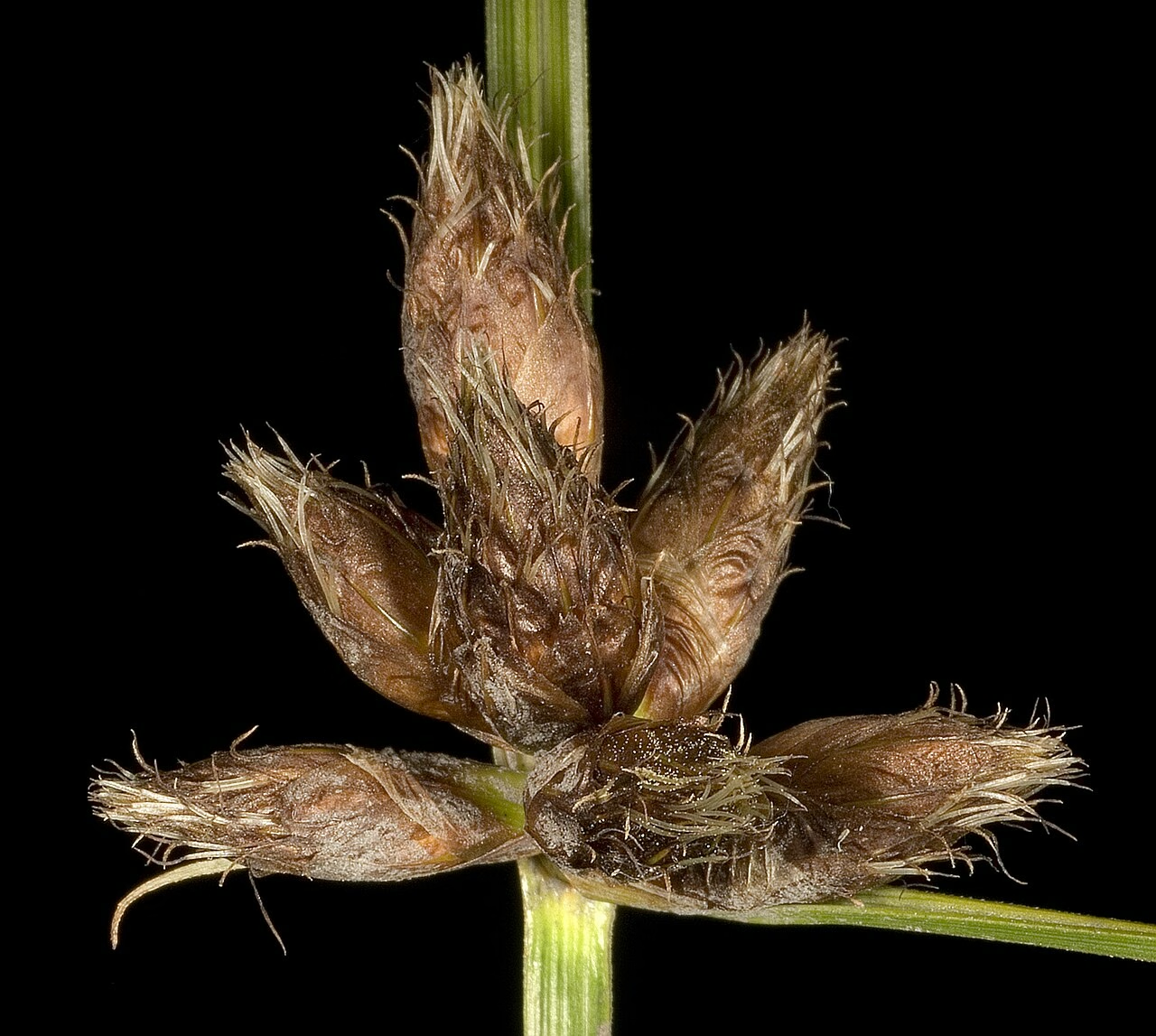
Caldwell's Clubrush
Bolboschoenus caldwellii
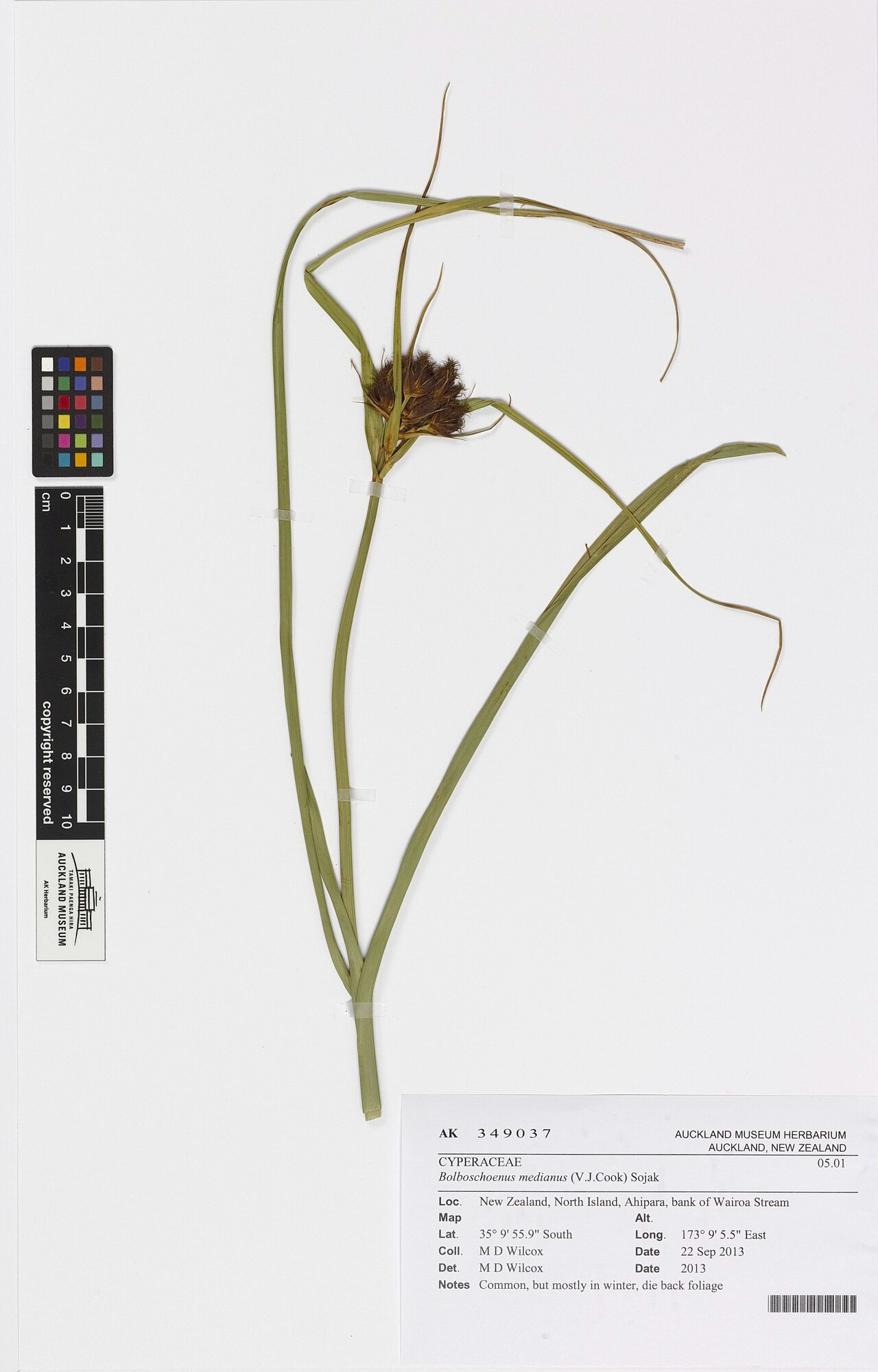
Purua Grass
Bolboschoenus medianus
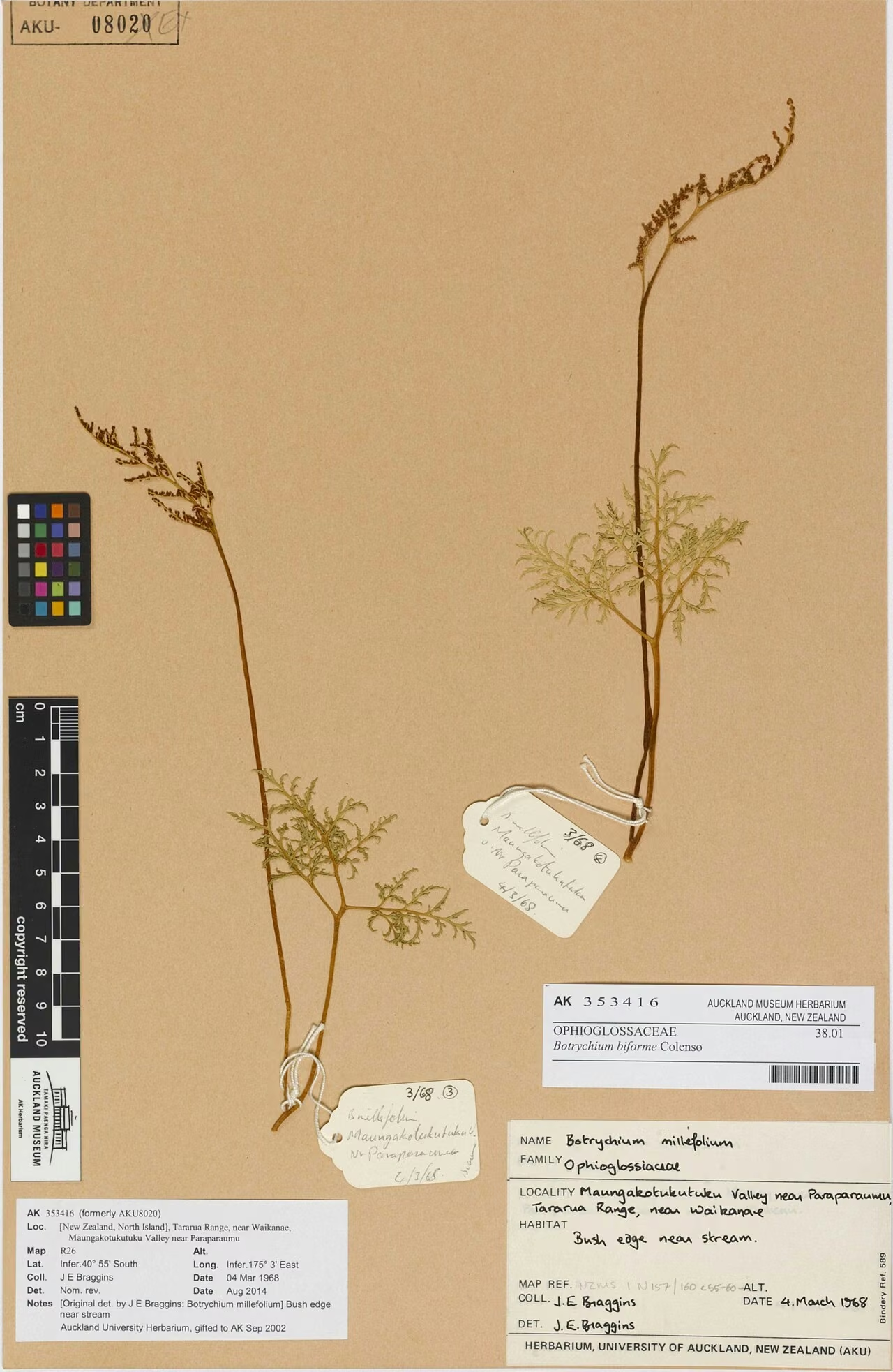
Fine-Leaved Parsley Fern
Botrychium biforme
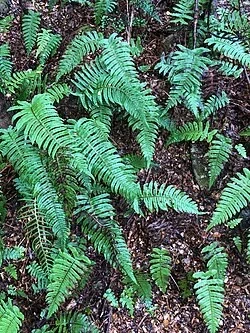
Delta-Leaved Cranfillia
Delta-Leaved Cranfillia
Creek Fern
Creek Fern
Plant Conservation
Black hard fern is ranked Not Threatened nationally (2023). Regionally it is ranked Regionally Endangered in Auckland, and Regionally Naturally Uncommon in Northland and Otago.
Protecting wet forest and its humid microclimate, controlling browsing animals and keeping weeds out of shaded gullies all help this fern in the parts of its range where it is scarce.
Frequently Asked Questions
Why is it called black hard fern?
The name, and the Latin epithet nigrum meaning black, refer to the very dark, blackish-green colour of its fronds, which is especially striking in the deep shade where it grows.
How do you tell black hard fern from creek fern?
Black hard fern has only 2 to 14 pairs of broad leaflets, a large terminal leaflet and an enlarged basal pair, with short red-brown hairs. Creek fern has many pairs of small, evenly sized, rounded leaflets and densely scaly stalks.
Is black hard fern endemic to New Zealand?
Yes. It is found only in New Zealand, from Kaitāia to Stewart Island, and is most common on the western side of the North and South Islands.
Why does black hard fern have moss growing on it?
It grows prostrate in dark, very wet forest, and its long-lived fronds are often colonised by epiphyllous mosses and liverworts. This is a normal feature of the species, not a sign of ill health.
Sources and Further Reading
The botanical, growing, and conservation details for Black Hard Fern (Cranfillia nigra) on this page draw on the New Zealand plant references below. Consult them for full technical records and the latest distribution data.