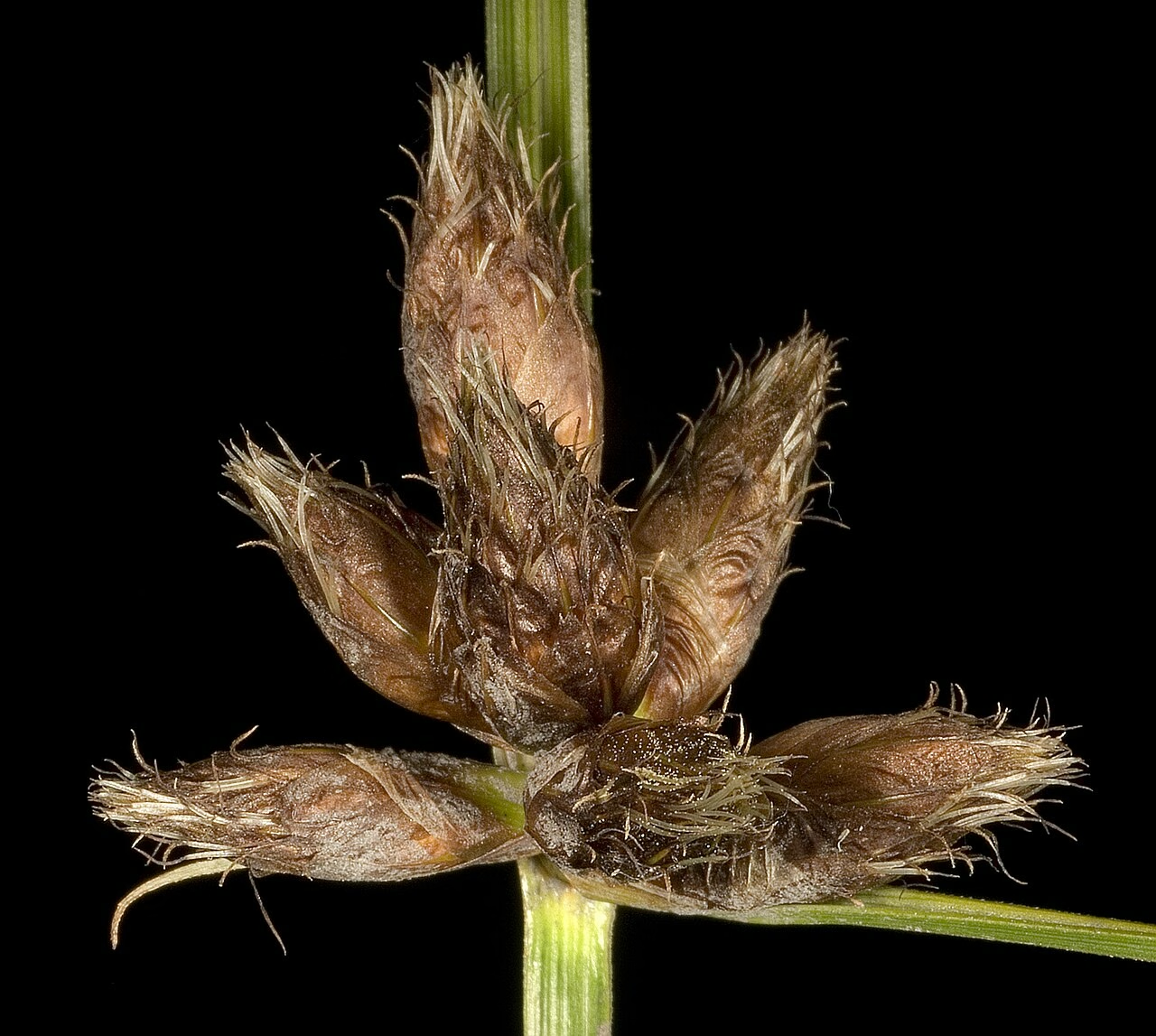
Caldwell's Clubrush
Bolboschoenus caldwellii
Last updated:
Caldwell's clubrush or purua grass (Bolboschoenus caldwellii) is a summer-green sedge of New Zealand saltmarshes. Long-creeping rhizomes end in hard, round woody tubers, from which triangular stems 0.3 to 1 m tall rise among flat, grass-like leaves. Each stem carries a compact head of three to six red-brown spikelets with long, leaf-like bracts. It grows in coastal and lowland saline wetlands from the Kaipara Harbour south, mainly in the east, and through eastern South Island districts to Otago. Not Threatened, it forms dense patches that help stabilise estuary margins and is easily grown for wetland restoration. Explore more native grasses and flaxes in our native plant guide.
Plant Description
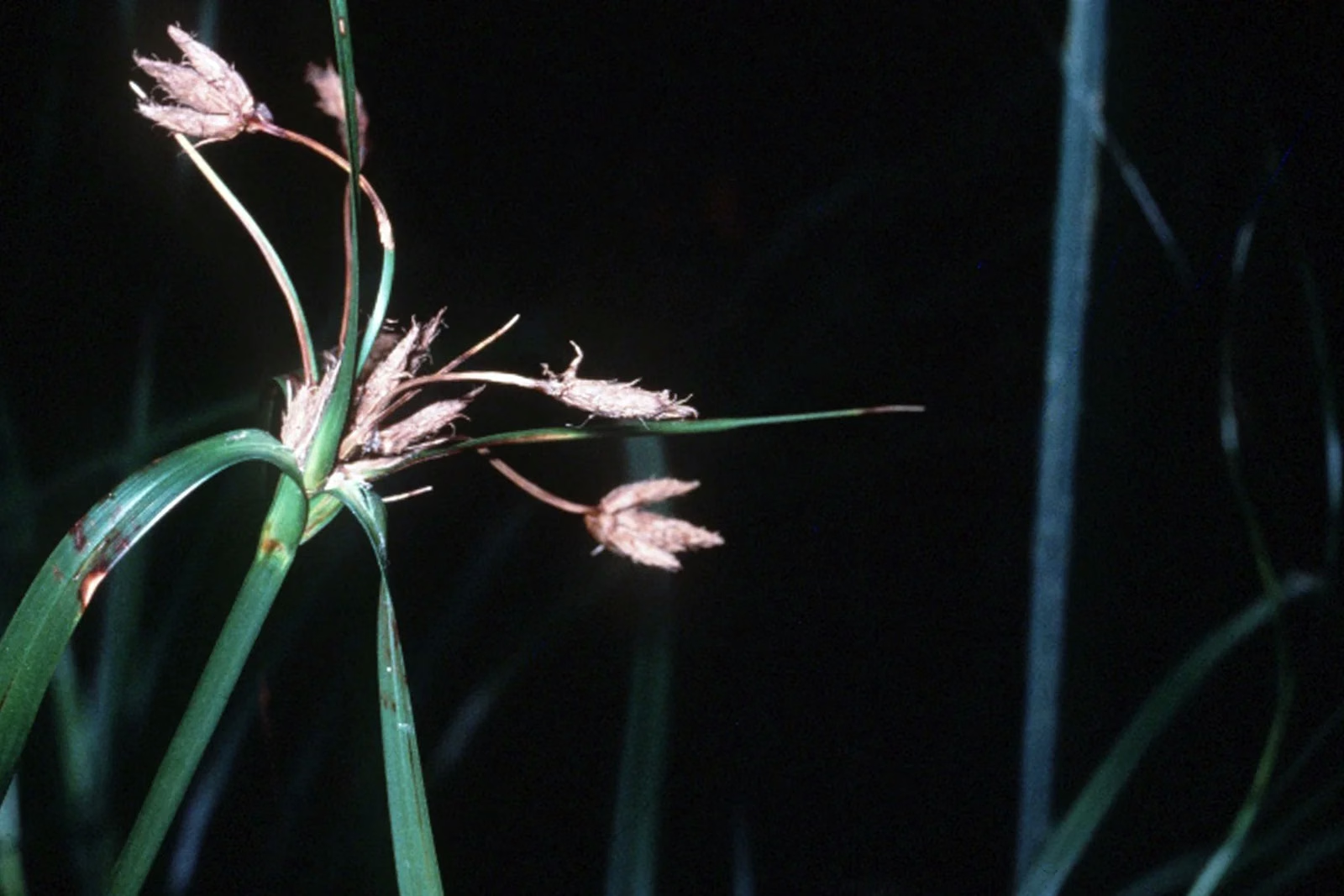
Bolboschoenus caldwellii is a summer-green, bulbous perennial forming mostly dense patches. Its brown, horizontal rhizomes, 3 to 5 mm thick, creep a long way through the mud and end in globose, woody tubers. One to three stems arise from each tuber, 0.3 to 1 m tall and 2 to 3 mm thick, sharply three-angled in cross-section. The numerous leaves are 20 to 32 cm long and 2.5 to 4 mm wide, folded but flattened, grass-like, leathery and rough on the margins and midrib towards the tip, and are often slightly bluish-green.
The flower head is a compact terminal cluster of three to six ovoid to cylindrical, red-brown spikelets 10 to 20 mm long, sometimes on one to three short rays, with several unequal leaf-like bracts 4 to 22 cm long extending beyond it. The glumes are hairy with a short, rough, slightly recurved awn. Each flower has three stamens and two style branches. The nut is 3.5 to 4 mm long, rounded and flattened with a small depression on each side, ripening glossy cream to dull brown.
It differs from Bolboschoenus fluviatilis and B. medianus in its smaller size, often bluish leaves, fewer near-stalkless spikelets in a tight head, consistently two style branches and circular, biconvex nut with concave sides.
Quick Facts
| Scientific Name | Bolboschoenus caldwellii |
|---|---|
| Height | 0.3-1 m |
| Spread | Spreads by long-creeping rhizomes into dense patches |
| Water Needs | Wet; saltmarsh and poorly drained ground |
| Light | Full sun |
| Frost Tolerance | Hardy; summer-green and dies back to tubers in winter |
| Salt Tolerance | High; grows in saltmarshes and saline ground |
| Growth Rate | Moderate to fast once established |
| Lifespan | Perennial |
Climate Best Suited to
A temperate wetland plant that tolerates frost, dying back to its tubers in winter. It grows in both warm northern and cooler southern coastal climates where there is saline or brackish ground.
Regional Suitability
| City | Climate Suitability |
|---|---|
| Auckland | High |
| Wellington | High |
| Christchurch | High |
| Dunedin | Medium |
Plant Habitat
In the North Island it occurs from the Kaipara Harbour south, mainly on the eastern side, and in the South Island it is widespread from Nelson to Otago, again mainly in the east. It is uncommon in the northern part of its range. It also grows in Australia.
It is a plant of coastal to lowland saltmarshes and other poorly drained saline areas, and sometimes spreads into pasture alongside tidal streams and estuaries. NZPCN rates it an obligate wetland plant.
Growing Requirements
Soil Requirements
It grows in saline or brackish mud and silt in saltmarshes, but NZPCN notes it will grow in almost any soil if it is sunny and damp.
- Wet mud, silt or heavy soils
- Saline, brackish or fresh conditions
- Low-oxygen, waterlogged ground is tolerated
Light Requirements
A plant of open saltmarsh, it needs full sun to grow and flower well.
- Full sun
- Tolerates light shade but becomes sparse
- Open estuary margins are ideal
Water Requirements
It needs permanently damp to wet ground and tolerates periodic tidal or flood inundation.
- Keep the root zone wet
- Suits pond and stream margins and shallow water
- Tolerates brackish tidal flooding
Planting and Establishing
Plant tubers or rooted pieces in spring, when growth starts, into wet mud at the edge of a pond, drain, estuary or constructed wetland. Space plants about 40 to 50 cm apart for fast cover. NZPCN suggests it is ideal as a pond plant or for planting along tidal streams.
Because it spreads by long rhizomes, keep it away from small ponds where it could crowd out other plants, or plant it in a submerged container.
Ecological Role
Caldwell's clubrush forms dense patches that bind saltmarsh mud and slow water movement, contributing to the structure of estuarine wetlands. Its bristly nuts are dispersed by water and possibly wind. Flowering is from October to January and fruiting from December to May.
Saltmarsh sedges and rushes provide cover for wetland birds and invertebrates, but specific animal associations for this species are not documented in the sources consulted.
Uses & Significance
Garden Uses
A practical native for wet, saline or brackish areas where few other plants will grow.
- Saltmarsh and estuary restoration
- Pond and stormwater wetland margins
- Planting along tidal streams
- Large wildlife ponds in full sun
Ecological Value
An important native component of saltmarsh vegetation in eastern New Zealand.
- Stabilises mud and estuary edges
- Provides structure and cover in saline wetlands
- Obligate wetland species useful in wetland delineation
Landscaping Uses
Use it in broad drifts on wet ground, where its upright stems and red-brown flower heads give a natural estuarine look in summer. It suits restoration plantings more than formal gardens because it dies back in winter and spreads freely.
Combine it with sea rush (Juncus kraussii), oioi and other saltmarsh natives to rebuild a layered estuary edge.
Seasonal Care Calendar
Spring
New shoots emerge from the tubers and rhizomes.
- Plant tubers or rooted pieces
- Clear old dead stems
Summer
Flowering runs from October to January, with compact red-brown heads.
- Keep the ground wet
- Enjoy the flower heads
Autumn
Nuts ripen between December and May.
- Collect ripe nuts for sowing
- Leave some heads for wildlife
Winter
The plant is summer-green and dies back to its underground tubers.
- Cut down dead stems if desired
- Mark planting areas so tubers are not disturbed
When to Prune and How Much
No formal pruning is needed. Dead stems can be cut to near ground level in late winter before new growth begins, or left in place in restoration sites.
In gardens, control spread by cutting through rhizomes around the edge of the patch.
How to Grow Caldwell's Clubrush
NZPCN describes Bolboschoenus caldwellii as easily grown from fresh seed and from rooted pieces. Seed is useful for producing large numbers of plants for restoration, while division of the rhizomes and woody tubers gives a quicker result. Seed should ideally come from local populations so that restoration plantings match the local genetic stock, and collecting should only be done with the landowner's permission. Plants grow best when the pots or trays stand in water so the mix never dries out.
From Seed
The nuts ripen between December and May. Collect heads when the nuts have turned cream to brown and come away easily, and sow them fresh.
- Strip ripe nuts from the spikelets
- Sow fresh on the surface of a moist, fine mix and cover lightly
- Stand the tray in a shallow dish of water so the mix stays saturated
- Keep in a warm, sunny spot
- Prick out seedlings into individual pots once they are a few centimetres tall
- Grow on in wet conditions until large enough to plant out
By Division of Rhizomes and Tubers
Rooted pieces establish easily. Lift sections of rhizome with their tubers in late winter or spring, as new shoots begin to appear.
- Dig up a section of the patch with a spade
- Separate pieces, each with at least one tuber and some roots
- Pot up or plant directly into wet mud
- Keep the pieces wet and in full sun until new shoots establish
Pests & Diseases
No serious pests are recorded. Grazing and trampling by stock where saltmarsh adjoins pasture can damage patches.
In wetlands it can be crowded out by taller invasive wetland weeds, so weed control helps maintain it.
Cultural Significance
The Māori names kōpūngāwhā, kōpūpūngāwhā, kukuraho and rīrīwaka are recorded for this species in the Flora of New Zealand. Ngā Tipu Whakaoranga records that the tuberous roots of native Bolboschoenus were eaten in times of great scarcity, the mealy inner part of rhizome nodes was sometimes eaten and called ngā raho o Tuna, and the plant was used for the outer thatch of houses. These records are filed under B. fluviatilis, but the database notes the same names also refer to B. caldwellii and B. medianus, so it is not certain which species each record describes.
The species was described as Scirpus caldwellii by V.J. Cook in 1947 and transferred to Bolboschoenus by Soják in 1972. The genus name comes from the Greek bolbos, a bulb or swelling, and schoinos, a rush, referring to the bulbous tubers.
Bonus Tip
To tell this clubrush from its larger relatives in the field, look at the flower head: if the spikelets are packed into a tight cluster with almost no stalks, it is Bolboschoenus caldwellii. B. medianus and B. fluviatilis carry their spikelets on long, spreading rays.
Related Plants
Explore other native plants that share similar characteristics or habitats with Caldwell's Clubrush (Bolboschoenus caldwellii), offering further insights into New Zealand's diverse flora. These related species provide context and opportunities for complementary planting in your garden.
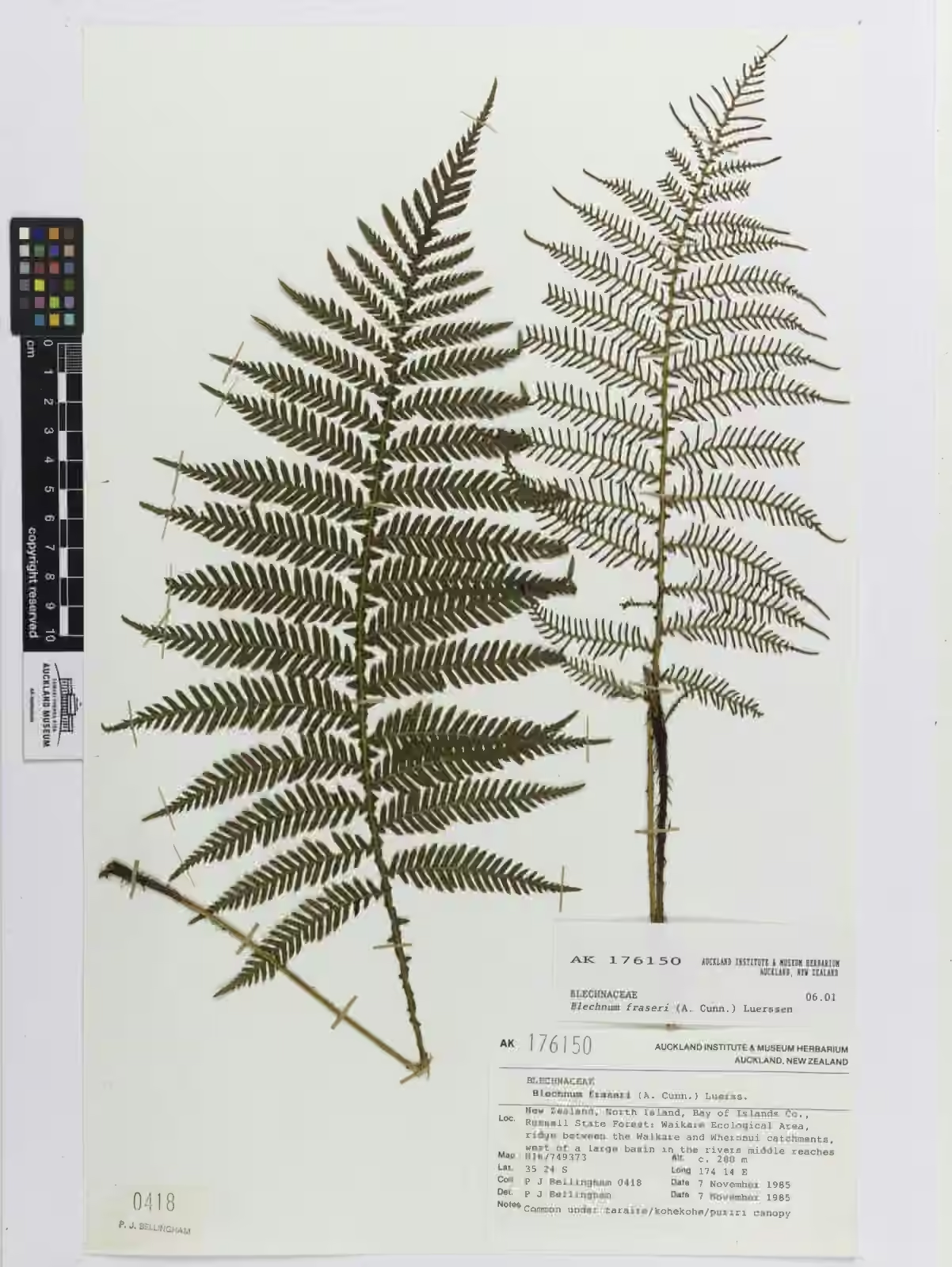
Miniature Tree Fern
Diploblechnum fraseri
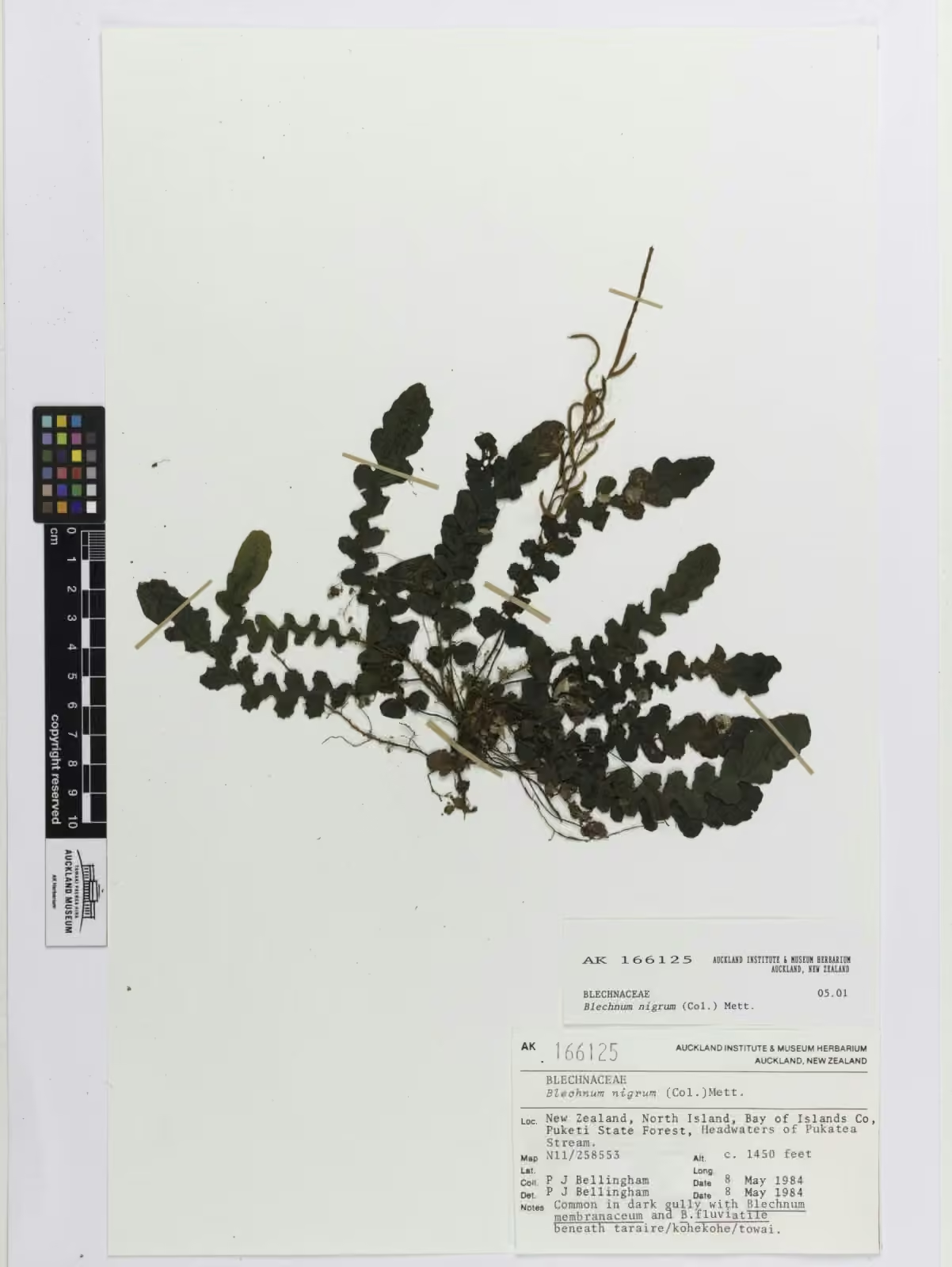
Black Hard Fern
Cranfillia nigra
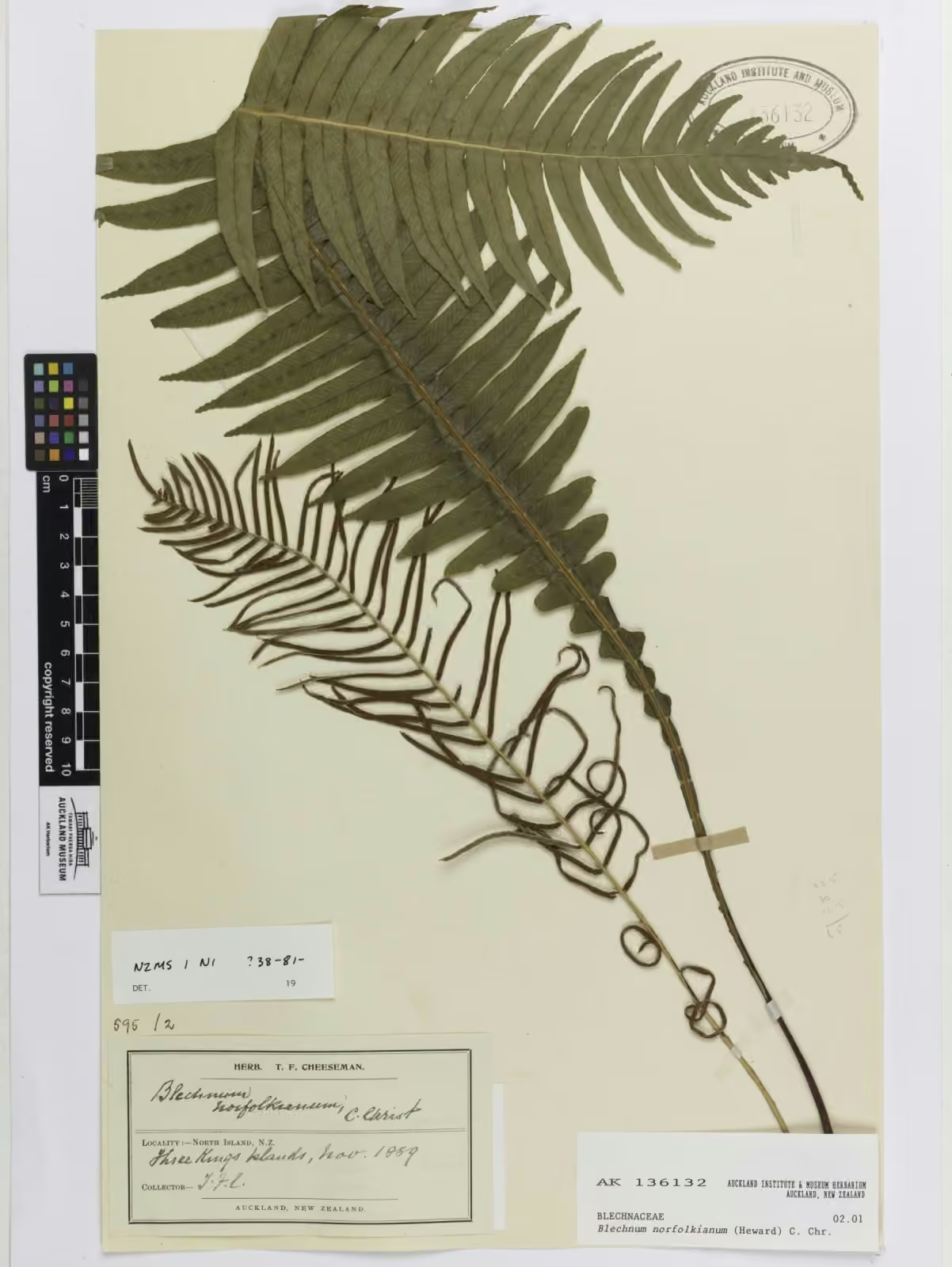
Austroblechnum norfolkianum
Austroblechnum norfolkianum
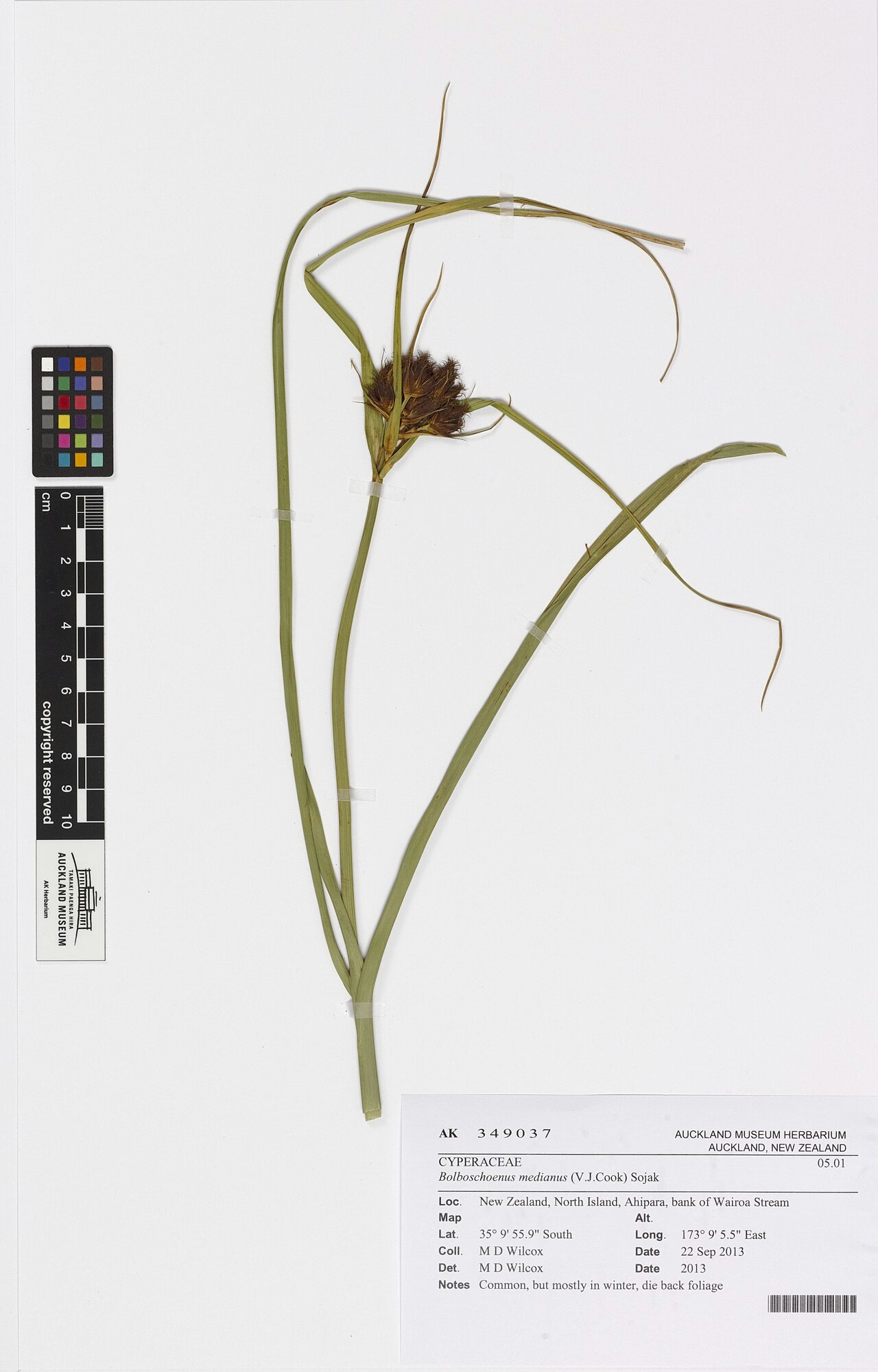
Purua Grass
Bolboschoenus medianus
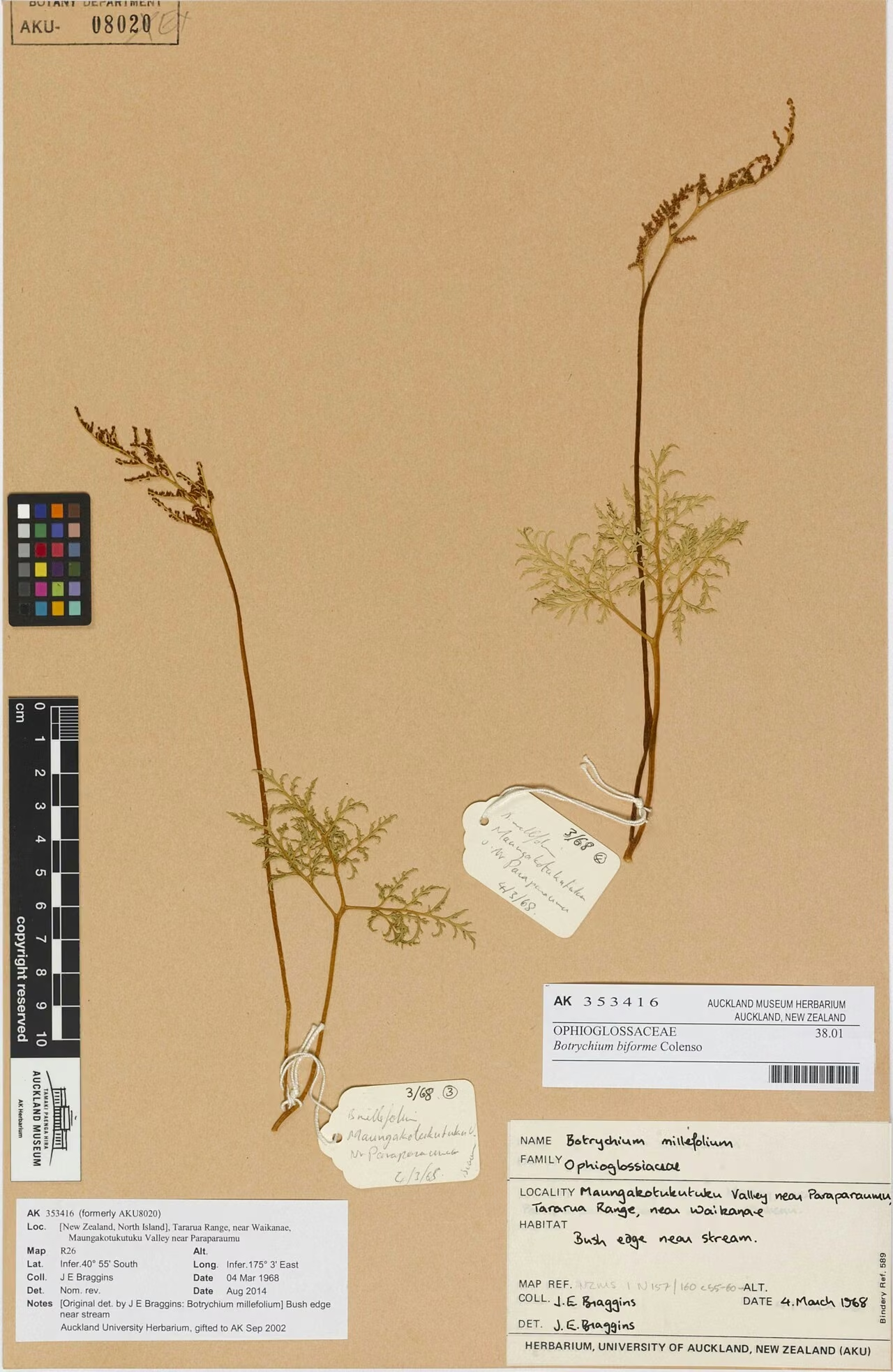
Fine-Leaved Parsley Fern
Botrychium biforme
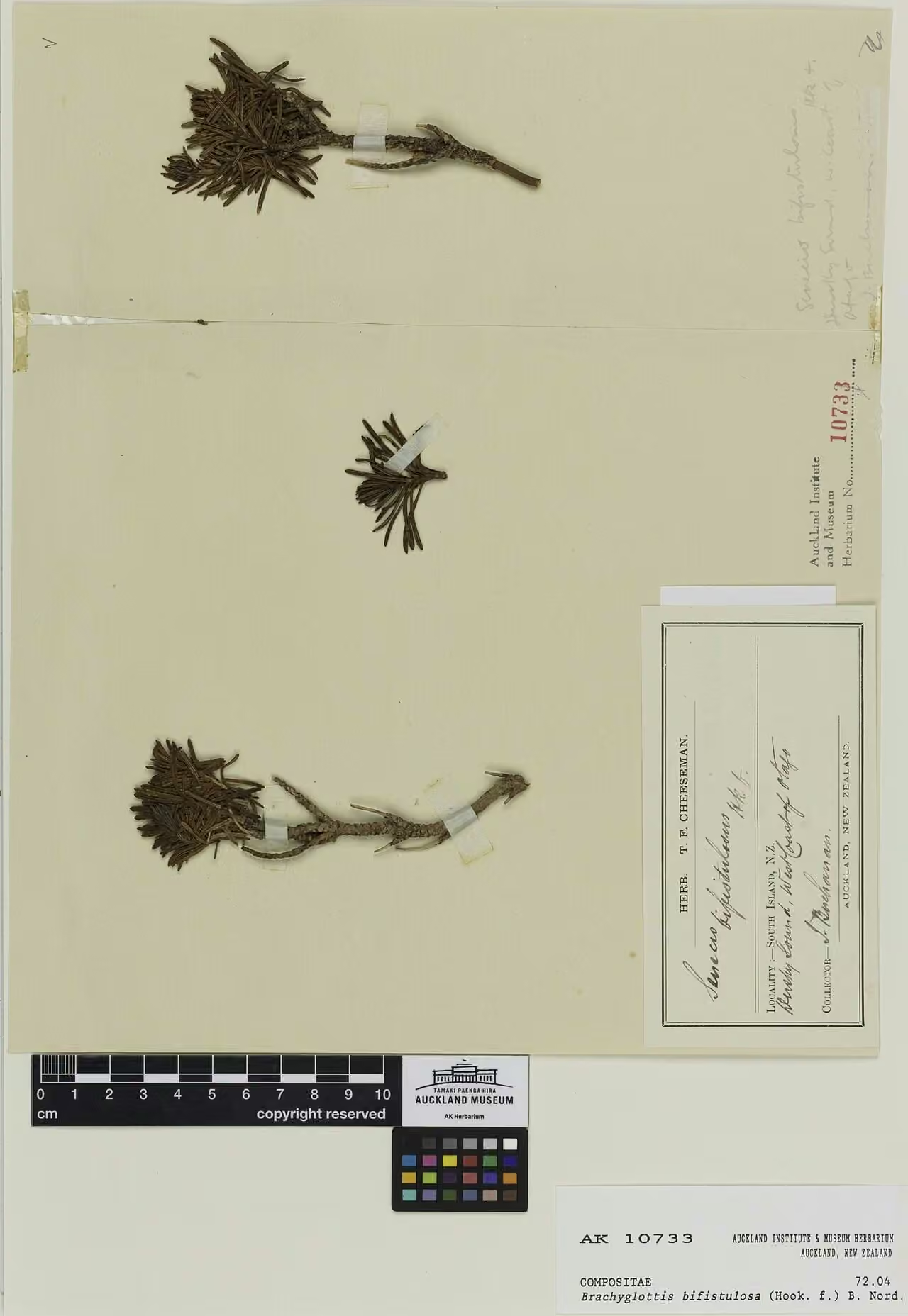
Brachyglottis bifistulosa
Brachyglottis bifistulosa
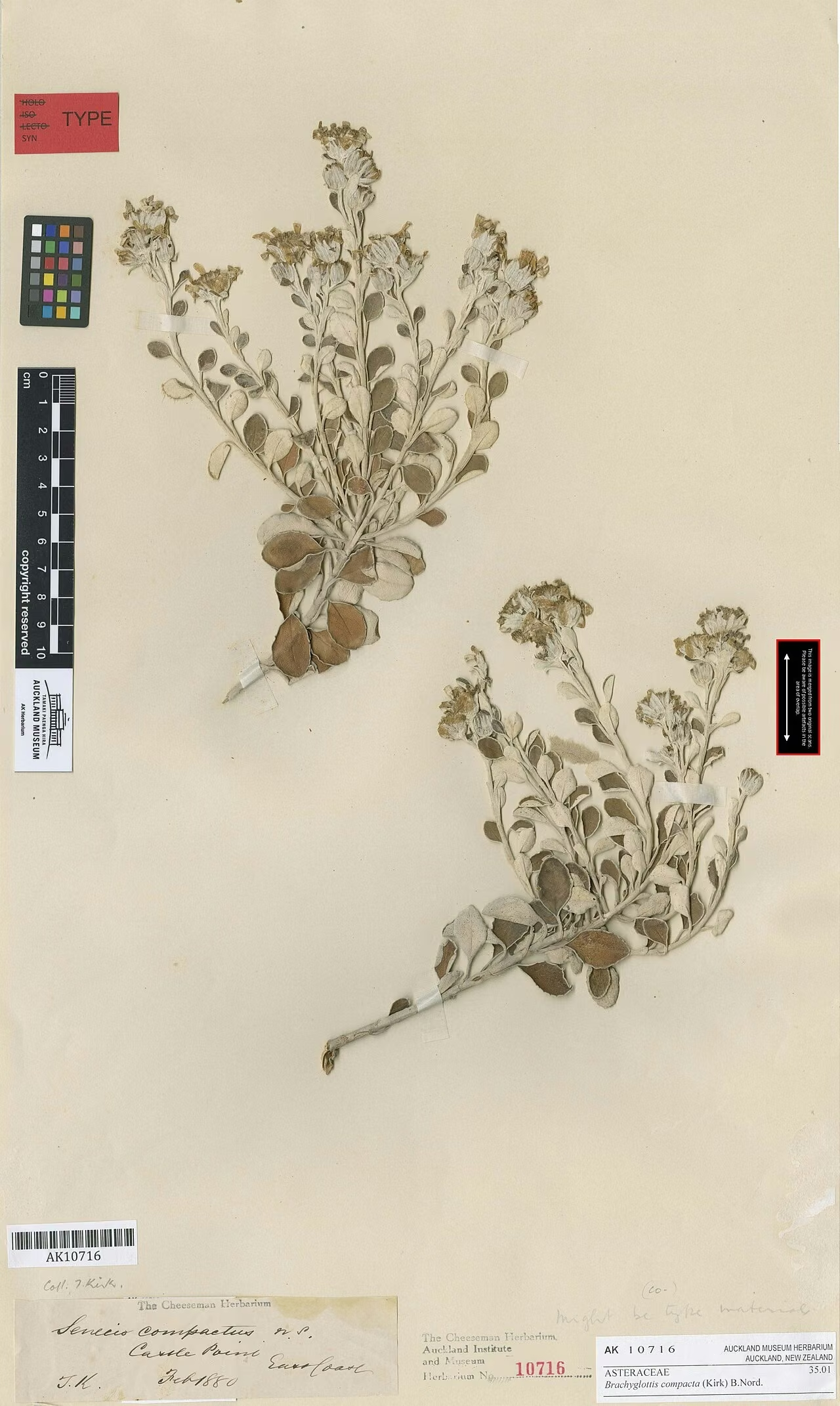
Castlepoint Daisy
Brachyglottis compacta
Fluviatilis Plant
Fluviatilis Plant
Plant Conservation
Bolboschoenus caldwellii is ranked Not Threatened (2023) with the qualifier Secure Overseas, although NZPCN notes it is uncommon in the northern part of its range.
Loss and drainage of saltmarsh, reclamation and stock access to estuary margins are the main pressures on its habitat. Fencing saltmarshes and restoring estuary edges benefit it.
Frequently Asked Questions
What is purua grass?
Purua grass is a name used for New Zealand's native Bolboschoenus clubrushes, including Bolboschoenus caldwellii. They are tall sedges of saltmarshes and wetlands that spread by rhizomes ending in woody tubers.
How do you tell Bolboschoenus caldwellii from B. medianus and B. fluviatilis?
B. caldwellii is smaller, with often bluish-green leaves, a compact head of 3 to 6 nearly stalkless spikelets, always 2 style branches, and a rounded, flattened nut with concave sides. The other two have open, branched flower heads.
Does Bolboschoenus caldwellii die back in winter?
Yes. NZPCN describes it as summer-green, so the stems and leaves die back in the cooler months and regrow from the underground tubers and rhizomes in spring.
Did Māori use clubrush tubers?
Ngā Tipu Whakaoranga records that the tubers of native Bolboschoenus were eaten in times of scarcity and the stems used for outer thatching. These records are filed under B. fluviatilis, but the same Māori names also apply to B. caldwellii.
Sources and Further Reading
The botanical, growing, and conservation details for Caldwell's Clubrush (Bolboschoenus caldwellii) on this page draw on the New Zealand plant references below. Consult them for full technical records and the latest distribution data.