Hard Fern
Austroblechnum norfolkianum
Last updated:
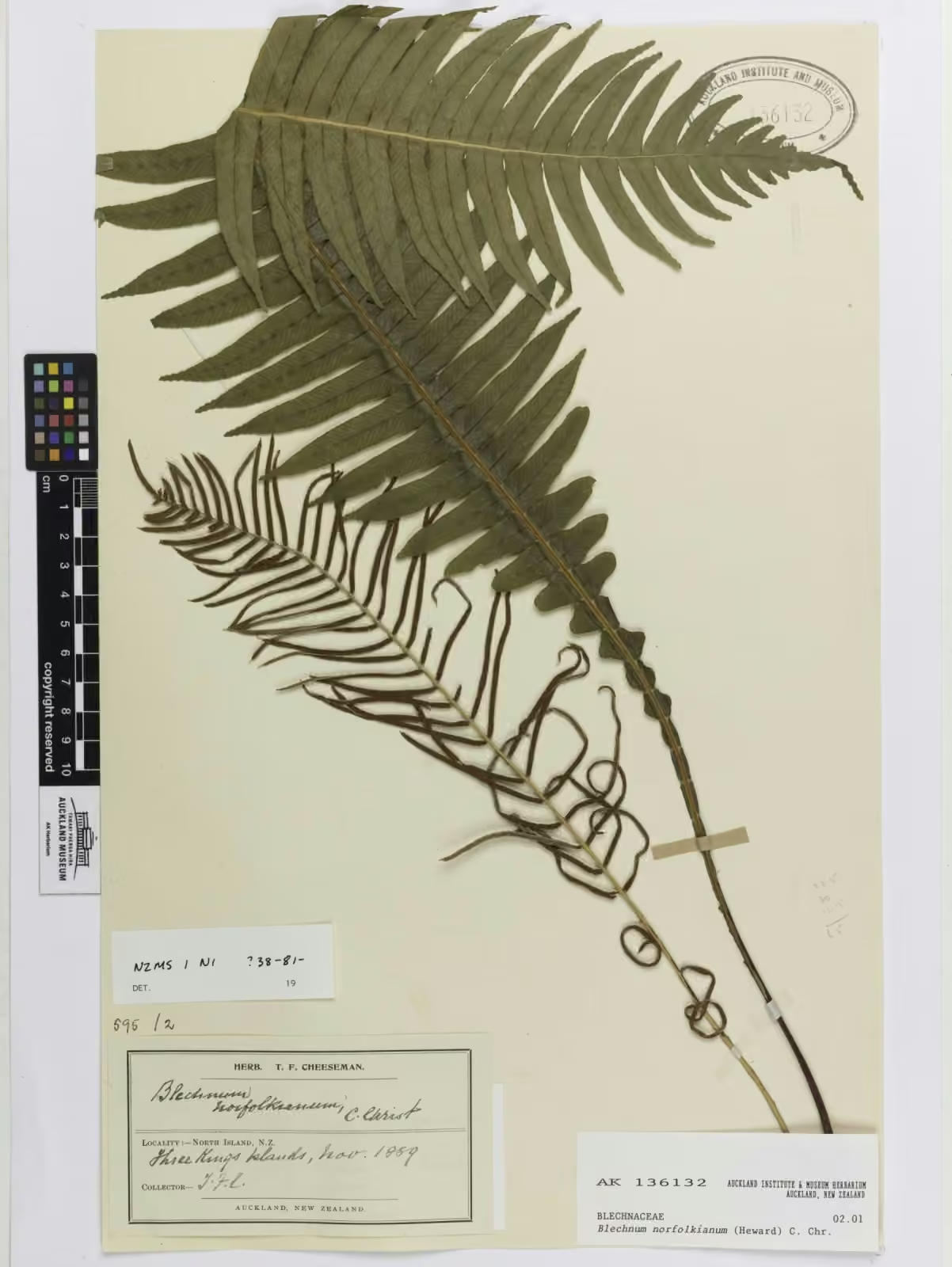
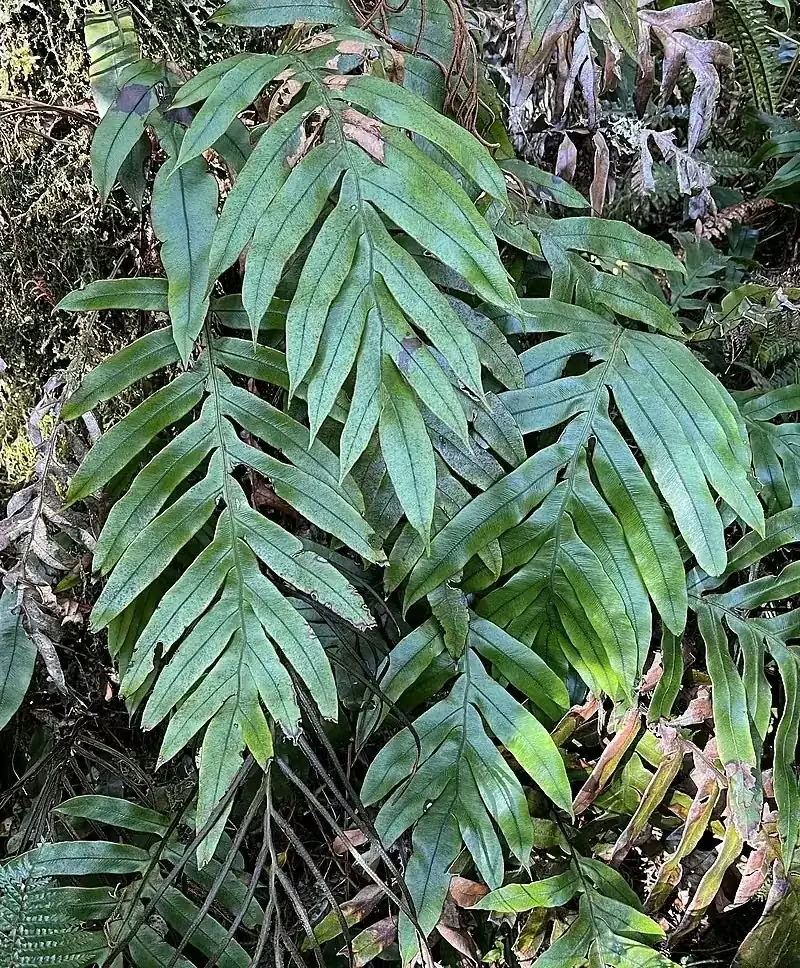
Austroblechnum norfolkianum (now Austroblechnum norfolkianum) is a tufted hard fern with glossy, dark to bright green, rather fleshy fronds 30 to 80 cm long, divided into many narrow, slightly sickle-shaped leaflets. Narrower fertile fronds stand upright in the centre. In New Zealand it is common on Raoul Island in the Kermadecs and on Manawatāwhi/Three Kings Islands, but otherwise uncommon on offshore islands from the Cavalli Islands to Tuhua/Mayor Island, often in shaded spots near seabird colonies. It is ranked At Risk - Naturally Uncommon and, though nearly extinct on Norfolk Island, is easy to grow from fresh spores. It was previously known as Blechnum norfolkianum. Explore more native ferns in our native plant guide.
Plant Description
Austroblechnum norfolkianum is a tufted fern with a stout, erect rhizome covered in old stalk bases and dark brown scales. Its sterile fronds are 30 to 80 cm long and arch outwards. The blades are narrowly elliptic, 26.5 to 70 cm long and 7 to 25 cm wide, thick, leathery and slightly fleshy, glossy and hairless, and dark to bright green but never tinged red or pink. There are 25 to 58 pairs of closely spaced, narrowly oblong, slightly sickle-shaped leaflets with long-pointed tips and shallowly scalloped margins, gradually shrinking to small flanges at the base. The lowest leaflets are alternate.
Fertile fronds sit upright in the centre and are usually a little shorter than the sterile fronds, 23 to 55 cm long, with 30 to 47 pairs of linear pinnae only 1 to 2.5 mm wide, each with continuous sori along both sides of the midrib.
It closely resembles Blechnum chambersii (formerly included in B. lanceolatum), but has larger, wider fronds, a shiny green colour, more sharply pointed leaflets and oblong basal flanges. Intermediate plants occur on islands where both grow and may be hybrids, though this is unproven. Smaller plants are known from the Mokohinau Islands.
Quick Facts
| Scientific Name | Austroblechnum norfolkianum |
|---|---|
| Height | 0.3-0.8 m (fronds) |
| Spread | About 0.5-1 m |
| Water Needs | Moist, free-draining soil |
| Light | Shade to partial shade |
| Frost Tolerance | Low; a subtropical and warm-temperate island fern, not tested in frosty sites |
| Salt Tolerance | Moderate; strictly coastal, in sheltered shaded sites |
| Growth Rate | Moderate |
| Lifespan | Perennial |
Climate Best Suited to
Suits warm, frost-free, humid coastal climates like those of the northern offshore islands and the subtropical Kermadecs. It is unlikely to thrive in cold or frosty inland areas.
Regional Suitability
| City | Climate Suitability |
|---|---|
| Auckland | High |
| Wellington | Medium |
| Christchurch | Low |
| Dunedin | Low |
Plant Habitat
This fern is common on Raoul Island in the Kermadec group and on Manawatāwhi/Three Kings Islands. Elsewhere it is uncommon and sparsely distributed on mainly offshore islands from the Cavalli Islands south to Tuhua/Mayor Island, reaching 600 m on Te Hauturu-o-Toi/Little Barrier Island. On the mainland it is known with certainty only from two collections at Whitford and Castle Rock on the Coromandel. It has been reported from South East Island/Rangatira in the Chatham Islands, but most Chatham collections appear to be large forms of Blechnum chambersii. Outside New Zealand it grows on Norfolk Island and is reported from Vanuatu.
It is strictly coastal, growing in kauri forest, coastal broadleaved forest and under coastal scrub, on cliffs, clay banks, rock crevices, streamsides, gullies and the forest floor. It favours shaded sites, usually in or near petrel colonies or near penguin trails and nests.
Growing Requirements
Soil Requirements
NZPCN recommends free-draining, fertile, moist soil, reflecting the nutrient-rich ground of seabird colonies.
- Fertile, organic soil
- Free drainage
- Consistent moisture
- Clay banks are tolerated in the wild
Light Requirements
It grows in shaded coastal forest and scrub, so it needs protection from strong sun.
- Shade to partial shade
- A sheltered spot under trees or shrubs
- Avoid exposed, sunny positions
Water Requirements
Keep the soil moist but not waterlogged.
- Water regularly in dry weather
- Mulch to retain moisture
- Good drainage prevents crown rot
Planting and Establishing
Plant in a sheltered, shaded spot in fertile, free-draining but moist soil, as NZPCN advises. Spring or autumn planting suits it, with the crown set level with the soil surface.
In northern coastal gardens it can be grown under existing trees or shrubs. In cooler regions grow it in a sheltered, frost-free position or in a shade house.
Ecological Role
Austroblechnum norfolkianum is closely associated with seabird colonies, growing in shaded sites near petrel burrows and penguin trails, where guano enriches the soil. It reproduces by wind-dispersed spores, which helps explain its presence on scattered offshore islands.
On islands where it grows with Blechnum chambersii, plants of intermediate form occur, and the relationship between the two species is still under study.
Uses & Significance
Garden Uses
An attractive, glossy hard fern for shaded coastal gardens in mild districts.
- Shaded coastal gardens in the north
- Fern collections and island flora displays
- Understorey beneath coastal trees
- Large pots in sheltered, shaded spots
Ecological Value
A naturally uncommon fern of New Zealand's offshore islands and seabird-influenced forest.
- Part of the distinctive flora of the Kermadec and Three Kings Islands
- Associated with seabird colonies
- Of conservation value regionally because it is near extinction on Norfolk Island
Landscaping Uses
Its glossy, many-leafleted fronds give a lush, subtropical feel, and planting several together suggests the dense fern cover of island forest. Use it beneath pōhutukawa, karaka or other coastal trees in mild gardens.
Pair it with other coastal island natives in a shaded border, and keep it away from strong salt-laden wind, as it naturally grows in shelter.
Seasonal Care Calendar
Spring
New fronds unfurl from the crown.
- Feed lightly with compost
- Plant new specimens
Summer
Fertile fronds mature and shed spores.
- Water during dry spells
- Collect fresh spores
Autumn
Growth continues in mild, moist weather.
- Sow fresh spores
- Plant out young ferns
Winter
Growth slows; protect from frost in cooler districts.
- Cover or shelter in frosty areas
- Avoid waterlogging
When to Prune and How Much
Remove dead or damaged fronds at the base. Old fertile fronds can be cut off once they have shed their spores.
Do not cut into the crown, which is the plant's only growing point.
How to Grow Hard Fern
NZPCN describes Austroblechnum norfolkianum as easy to grow from fresh spores, and that is the recommended method. As a tufted fern with a single erect rhizome, it does not spread by runners, so division is limited to plants that have developed multiple crowns. Because the species is At Risk in New Zealand and nearly extinct on Norfolk Island, spores should come from cultivated plants or be collected only with permission from the land manager, never by removing plants from island habitats.
From Spores
Use fresh spores, which germinate readily. Collect a fertile frond from the centre of the plant when its continuous lines of sori turn brown.
Spore-raised plants grow on steadily in fertile, moist mix and can usually be planted out within a year or two. Keep them shaded and sheltered from wind while young.
- Place the fertile frond in a paper envelope for a few days to release spores
- Sow thinly on the surface of sterilised, moist fine mix
- Cover to maintain humidity and place in warm, indirect light
- Keep moist; green prothalli should appear within weeks
- Prick out small clumps once the first fronds form
- Pot on into fertile, free-draining mix and grow in shade
By Division
Mature plants sometimes form more than one crown, which can be separated in spring.
- Lift the clump carefully
- Cut between crowns so each keeps roots
- Replant in fertile, moist soil
- Keep shaded and watered until re-established
Pests & Diseases
No specific pests are recorded. In cultivation, poor drainage leading to crown rot, and scorching in sunny or windy positions, are the main problems.
On islands, loss of seabird colonies and habitat change from introduced mammals affect the shaded, enriched sites it favours.
Cultural Significance
No traditional Māori name or use is recorded for this fern in the sources consulted.
The species was first named Lomaria norfolkiana from Norfolk Island, and the epithet norfolkianum refers to that original collecting locality. In some older New Zealand floras it was misidentified as Lomaria attenuata.
Bonus Tip
If you are growing hard ferns for an island-restoration or seabird-themed planting in the north, this fern responds well to rich soil. A mulch of well-rotted compost mimics the guano-enriched ground of the petrel colonies where it thrives in the wild.
Related Plants
Explore other native plants that share similar characteristics or habitats with Hard Fern (Austroblechnum norfolkianum), offering further insights into New Zealand's diverse flora. These related species provide context and opportunities for complementary planting in your garden.
Shore Hard Fern
Austroblechnum banksii
Miniature Tree Fern
Diploblechnum fraseri
Black Hard Fern
Cranfillia nigra
Caldwell's Clubrush
Bolboschoenus caldwellii
Purua Grass
Bolboschoenus medianus
Fine-Leaved Parsley Fern
Botrychium biforme
Brachyglottis bifistulosa
Brachyglottis bifistulosa
Colenso's Hard Fern
Colenso's Hard Fern
Plant Conservation
Austroblechnum norfolkianum is ranked At Risk - Naturally Uncommon (2023) with the qualifier Threatened Overseas. Its New Zealand populations are secure on the Kermadec and Three Kings Islands, but it is close to extinction on Norfolk Island.
Pest-free island management, protection of seabird colonies and biosecurity on offshore islands all help maintain its habitat.
Frequently Asked Questions
Where is Austroblechnum norfolkianum found in New Zealand?
It is common on Raoul Island and the Three Kings Islands and scattered on offshore islands from the Cavalli Islands to Mayor Island, including Little Barrier Island. Mainland records are limited to Whitford in the Hunua Ranges area and Castle Rock on the Coromandel.
How is Austroblechnum norfolkianum different from Blechnum chambersii?
It is larger, with sterile fronds 7 to 25 cm wide, longer leaflets 5 to 12.5 cm long with long-pointed tips, and glossy green, never red-tinged fronds. Blechnum chambersii is smaller and narrower, although DNA sequences of the two are identical.
Why does this fern grow near seabird colonies?
NZPCN describes it as strictly coastal and usually found in shaded sites in or near petrel colonies, or near penguin trails and nests, where seabirds enrich the soil.
Is Austroblechnum norfolkianum threatened?
In New Zealand it is At Risk - Naturally Uncommon because of its restricted island distribution, with the qualifier Threatened Overseas. NZPCN notes it is close to extinction on Norfolk Island.
Sources and Further Reading
The botanical, growing, and conservation details for Hard Fern (Austroblechnum norfolkianum) on this page draw on the New Zealand plant references below. Consult them for full technical records and the latest distribution data.