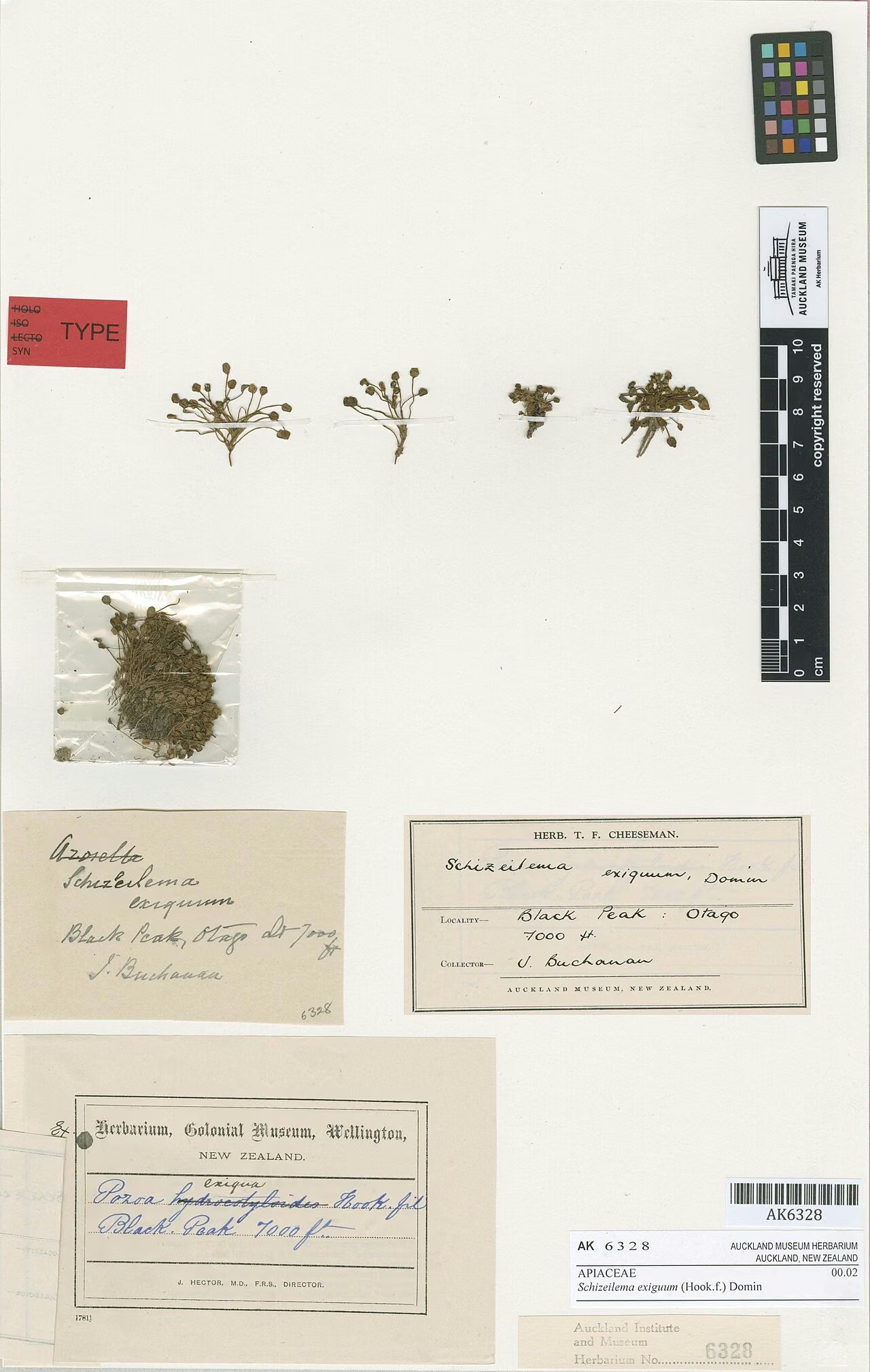
Azorella
Azorella exigua
Last updated:
Azorella exigua, long known as Schizeilema exiguum, is a minute subalpine herb of the carrot family endemic to Otago and Southland. True to its name (exiguus is Latin for small or scanty), it forms patches only about 5 cm across from short, stout rhizomes, with crowded leathery leaves 2-4 mm wide. Allan's Flora records it from subalpine herbfield between latitudes 44 degrees 30 minutes and 45 degrees, and the type came from the Otago lakes district. It is ranked At Risk - Naturally Uncommon because of its restricted range. Explore more native ground covers in our native plant guide.
Plant Description
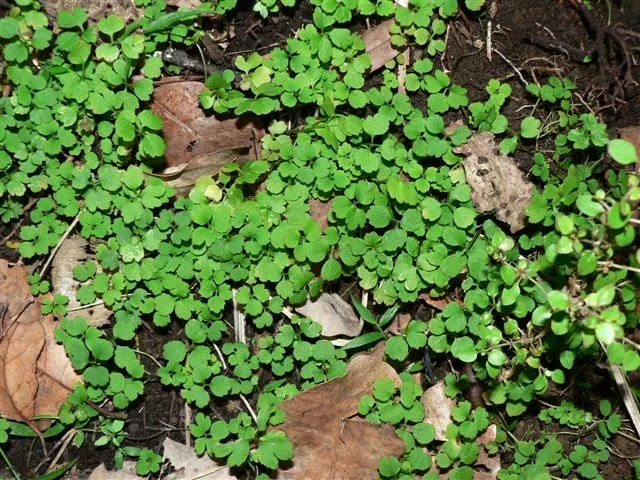
Azorella exigua is a tiny perennial with stout rhizomes up to about 2 cm long that are sparingly branched or unbranched. Rather than spreading widely like many of its relatives, it forms compact patches up to about 5 cm across. The leaves are crowded on rather stout stalks up to about 1 cm long, and the stipules are reduced almost to nothing.
The leaf blades are 2-4 (rarely 5) mm across, almost circular to broadly ovate, cut straight across or slightly heart-shaped at the base, and thick and leathery. Their margins are entire or very obscurely three- to five-lobed or crenulate, and slightly rolled under. The minute flowers, three to eight per umbel, sit on stout stalks less than 1 cm long with linear-oblong bracts beneath. The fruit is 2-2.5 mm long and roughly four-angled, its halves obscurely five-ribbed and rounded on the back.
Its stout, short rhizomes and leathery, undivided or barely lobed leaves distinguish it from the slender-stemmed, divided-leaved species such as Azorella pallida and Azorella nitens. Azorella cockaynei also has tiny simple leaves, but it spreads by thread-like stolons and its leaves sit on hair-fine stalks.
Quick Facts
| Scientific Name | Azorella exigua |
|---|---|
| Height | Under 2 cm (leaf stalks up to c. 1 cm) |
| Spread | Patches up to about 5 cm across |
| Water Needs | Moderate to high; cool, moist soil |
| Light | Full sun |
| Frost Tolerance | Very hardy; subalpine |
| Salt Tolerance | Not recorded; a mountain plant unlikely to tolerate salt |
| Growth Rate | Very slow |
| Lifespan | Perennial |
Climate Best Suited to
Adapted to the cold, snowy subalpine climate of Otago and Southland mountains, with frost, winter snow cover and cool summers. Lowland gardens are generally too warm.
Regional Suitability
| City | Climate Suitability |
|---|---|
| Auckland | Low |
| Wellington | Low |
| Christchurch | Low |
| Dunedin | Medium |
Plant Habitat
NZPCN gives its distribution as endemic to the South Island in Otago and Southland. Allan's Flora of New Zealand describes it as a plant of subalpine herbfield from latitude 44 degrees 30 minutes to 45 degrees, a band that takes in the mountains around the southern lakes.
The type locality is given as 'Otago, lake district, alpine', from a collection by James Hector and John Buchanan in 1863 during the early geological survey of Otago. In subalpine herbfield it grows among other low herbs and grasses, where its small patches are easy to overlook.
Growing Requirements
Soil Requirements
Subalpine herbfield soils are cool, stony to loamy and moist for much of the year.
- Gritty, free-draining mix with some humus
- Cool root run that never bakes
- Low fertility
Light Requirements
Subalpine herbfield is open country, so it is a plant of good light.
- Full sun in a cool climate
- Shade from hot afternoon sun in lowland gardens
- Keep clear of overhanging plants
Water Requirements
In the mountains it receives regular rain, snowmelt and cool temperatures, so it should not dry out in summer.
- Keep evenly moist in the growing season
- Avoid stagnant wet conditions in warm weather
- Drier but not dust-dry in winter
Planting and Establishing
Azorella exigua is not commercially available and there is no published cultivation guidance. It is a plant for alpine specialists with legally sourced material, best grown in a small clay pan or trough in a cool, bright position, where its tiny patches can be monitored.
Use a gritty alpine mix, set the plant so its crown is level with the surface and surround it with fine stone chips to keep the leaves clean and the collar dry. In warmer districts an alpine house or a cool, south-facing bench gives the best chance.
Ecological Role
Azorella exigua is one of many small herbs that make up subalpine herbfield in the southern South Island. Its pollinators have not been studied; its minute flowers, three to eight per umbel, are likely visited by small insects, but no records were found. The fruit has no obvious dispersal structures.
Its compact rhizomes and thick leathery leaves are features shared by many plants of cold, exposed mountain sites, helping it hold on through frost, wind and snow cover.
Uses & Significance
Garden Uses
This is strictly a specialist's plant.
- Alpine house or trough culture
- Collections of southern South Island mountain flora
- Educational displays on New Zealand's endemic Apiaceae
Ecological Value
Its value is as a range-restricted endemic of southern subalpine herbfield.
- Endemic to Otago and Southland
- Ranked At Risk - Naturally Uncommon (Range Restricted)
- Adds to the diversity of subalpine herbfield communities
Landscaping Uses
At its maximum patch size of about 5 cm, Azorella exigua has no landscape role beyond the miniature world of a trough or alpine pan. There it can be grouped with other small Otago mountain plants to show the fine detail of herbfield vegetation.
Label it clearly, as a patch this small is easily mistaken for a weed seedling or lost under fallen leaves.
Seasonal Care Calendar
Spring
Growth begins as snow melts and temperatures rise in its mountain home.
- Replace worn grit mulch
- Check pans for frost heave
Summer
Flowering and fruiting both run from November to February.
- Shade from hot afternoon sun
- Keep the mix cool and moist
Autumn
Any remaining fruit can be gathered as growth slows.
- Sow collected seed promptly
- Clear fallen leaves
Winter
In the wild it lies under snow or endures hard frost.
- Keep pans cold but avoid prolonged waterlogging
- No feeding needed
When to Prune and How Much
No pruning is required. Azorella exigua grows so slowly and so compactly that any cutting would set it back.
Maintenance is limited to removing any dead leaves and keeping weeds and mosses away from the patch.
How to Grow Azorella
No propagation method has been published for Azorella exigua, and it is not commercially available. The suggestions below are based on its structure as described in Allan's Flora: it forms short, stout, sparingly branched rhizomes, which limits how much it can be divided, and produces small fruit 2-2.5 mm long from November to February. Because it is ranked At Risk - Naturally Uncommon, wild plants should not be dug up; seed collection needs landowner permission and, on public conservation land, authorisation from the Department of Conservation.
From Seed
Seed is likely to be the least damaging way to raise new plants, since collecting a few fruit does not harm the parent. Many subalpine plants germinate better after a period of cold, so outdoor sowing in autumn is a sensible approach.
- Collect ripe fruit between December and February.
- Sow on the surface of a gritty seed mix and cover with fine grit.
- Leave the pot outdoors over winter to experience natural cold.
- Keep moist and watch for germination in spring.
- Grow seedlings on slowly in small pots before planting out.
By Division
Because the rhizomes are short and branch sparingly, only an established cultivated patch with several crowns is worth dividing, and pieces should be kept fairly large.
- Choose a mature patch in early spring.
- Ease it from the pot and separate a crown with its own roots.
- Pot each piece into gritty alpine mix and water gently.
- Keep cool and shaded until new leaves appear.
Pests & Diseases
No pests or diseases are recorded for Azorella exigua. In cultivation, rotting in warm, wet conditions and drying out in summer are the likely causes of loss, along with smothering by moss or weeds.
Slugs can damage very small alpine plants in pots, so keep the surrounding area tidy and check plants after rain.
Cultural Significance
No Māori name or traditional Māori use is recorded for Azorella exigua.
The plant was collected in 1863 by James Hector and John Buchanan during the Otago geological survey, and Joseph Hooker named it Pozoa exigua in his Handbook of the New Zealand Flora (1864). It was later placed in Azorella, then in Schizeilema by Domin in 1908, and is now back in Azorella.
Bonus Tip
When botanising in subalpine herbfield in the mountains around the Otago lakes, look closely at the turf for tiny, leathery, round leaves on short stout stalks in patches no bigger than a palm. Records of this range-restricted species on iNaturalist NZ help confirm where it still grows.
Related Plants
Explore other native plants that share similar characteristics or habitats with Azorella (Azorella exigua), offering further insights into New Zealand's diverse flora. These related species provide context and opportunities for complementary planting in your garden.
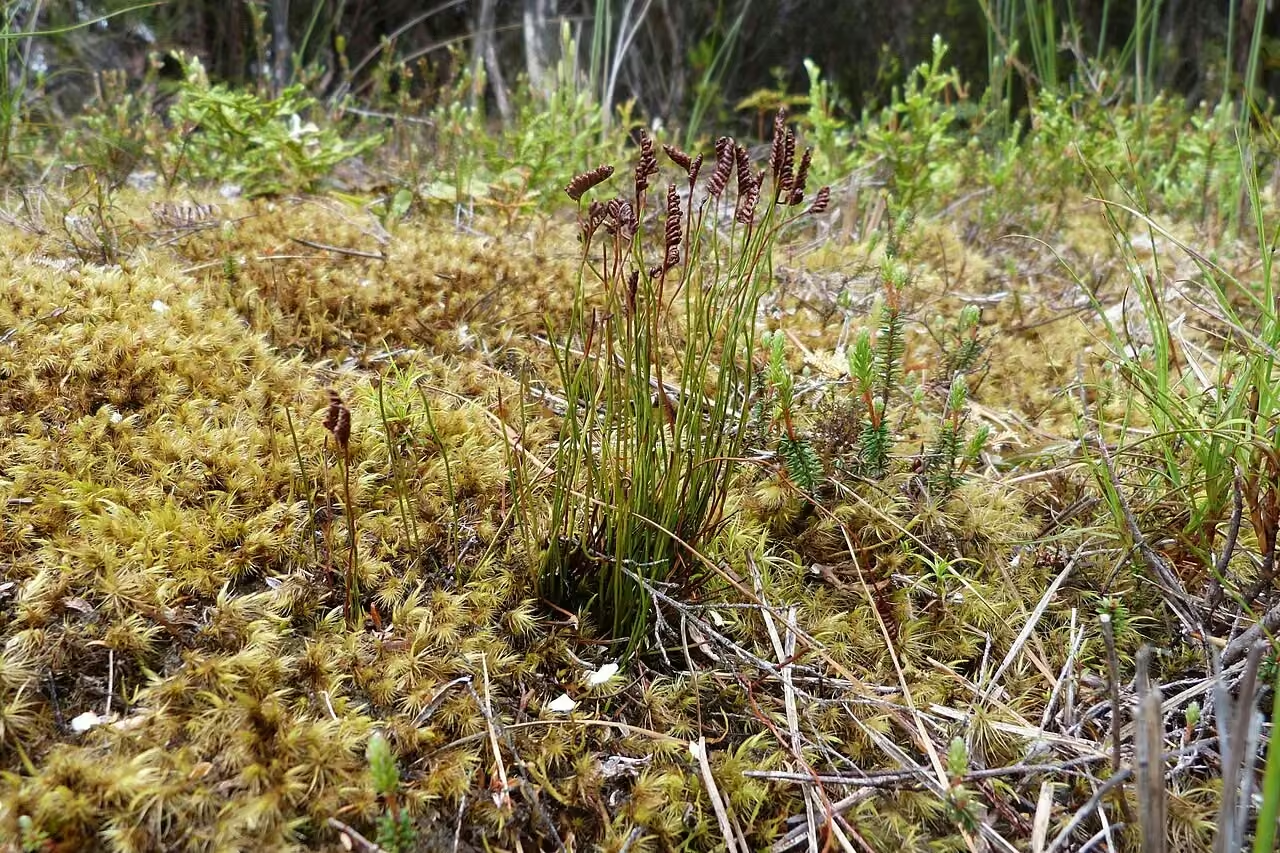
Southern Comb Fern
Schizaea australis
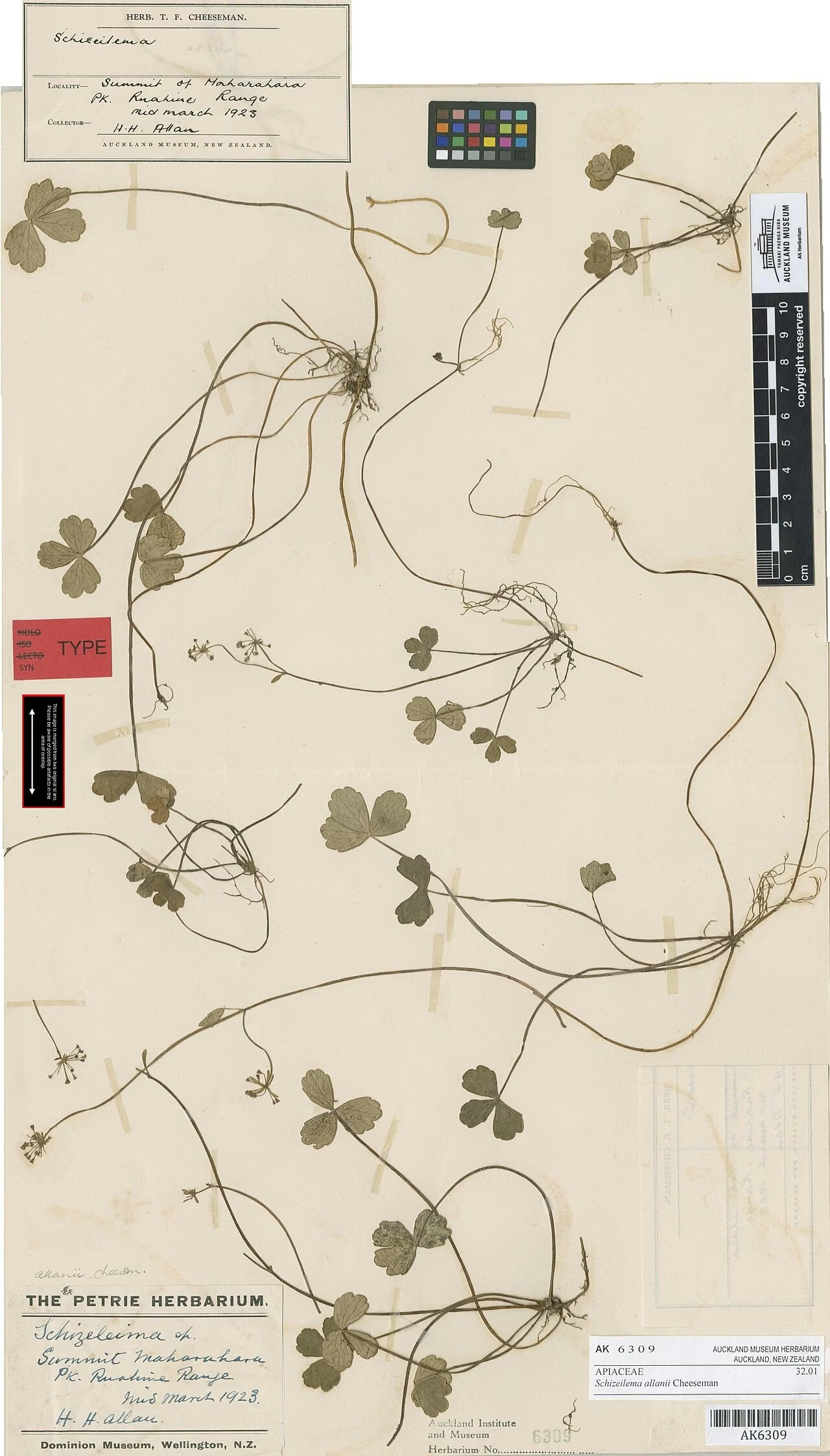
Azorella allanii
Azorella allanii
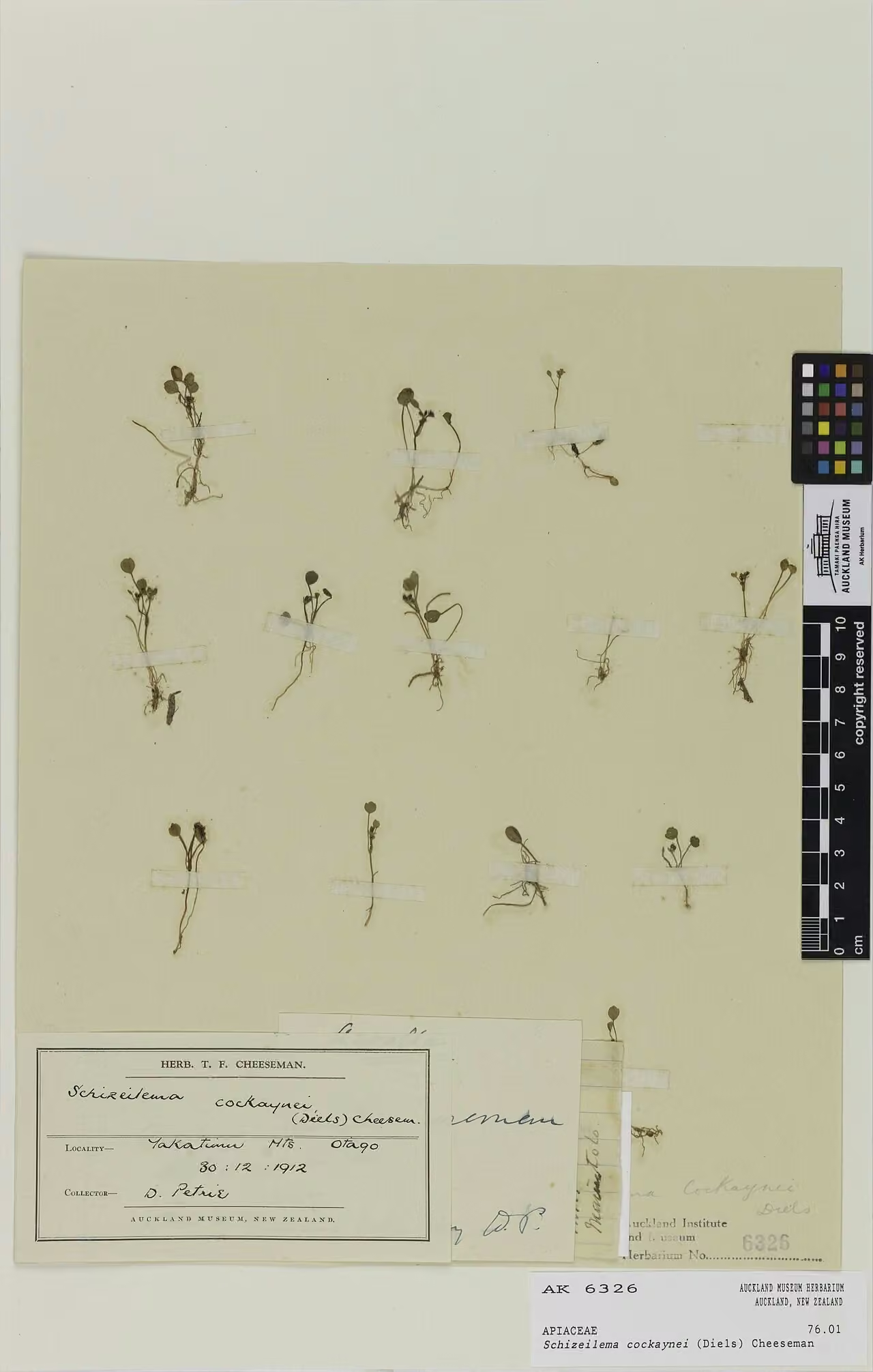
Azorella cockaynei
Azorella cockaynei
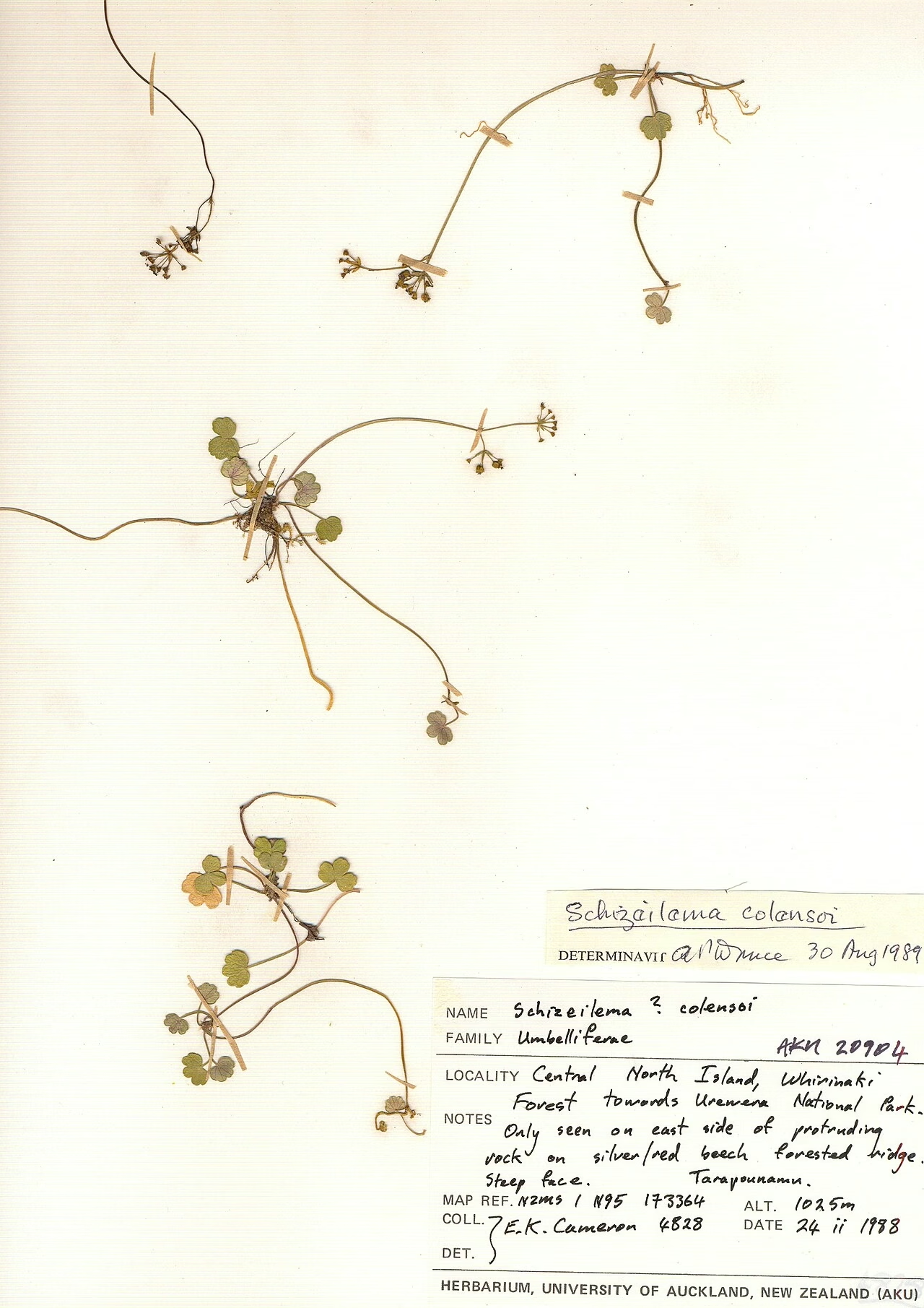
Azorella colensoi
Azorella colensoi
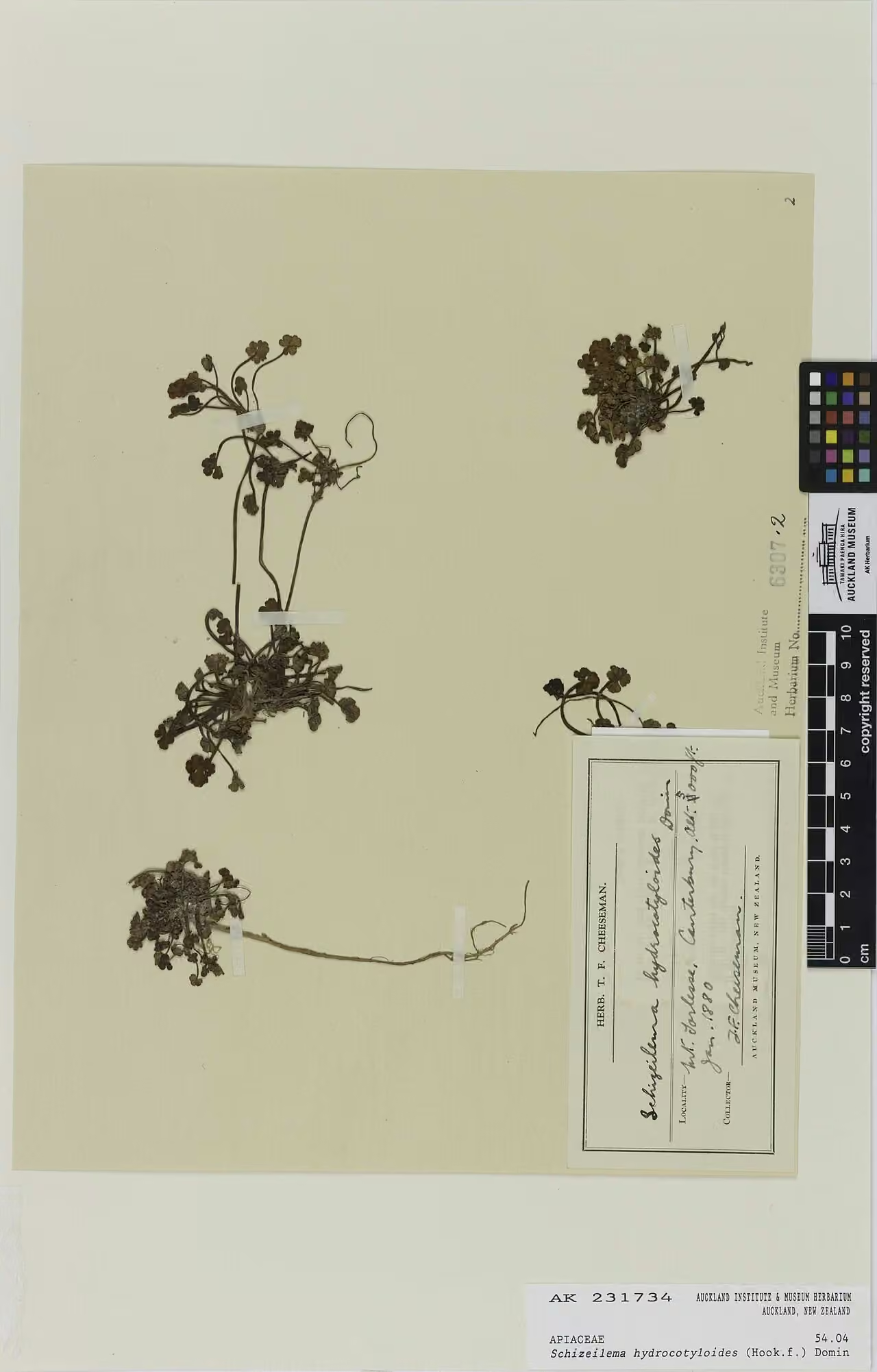
Azorella hydrocotyloides
Azorella hydrocotyloides
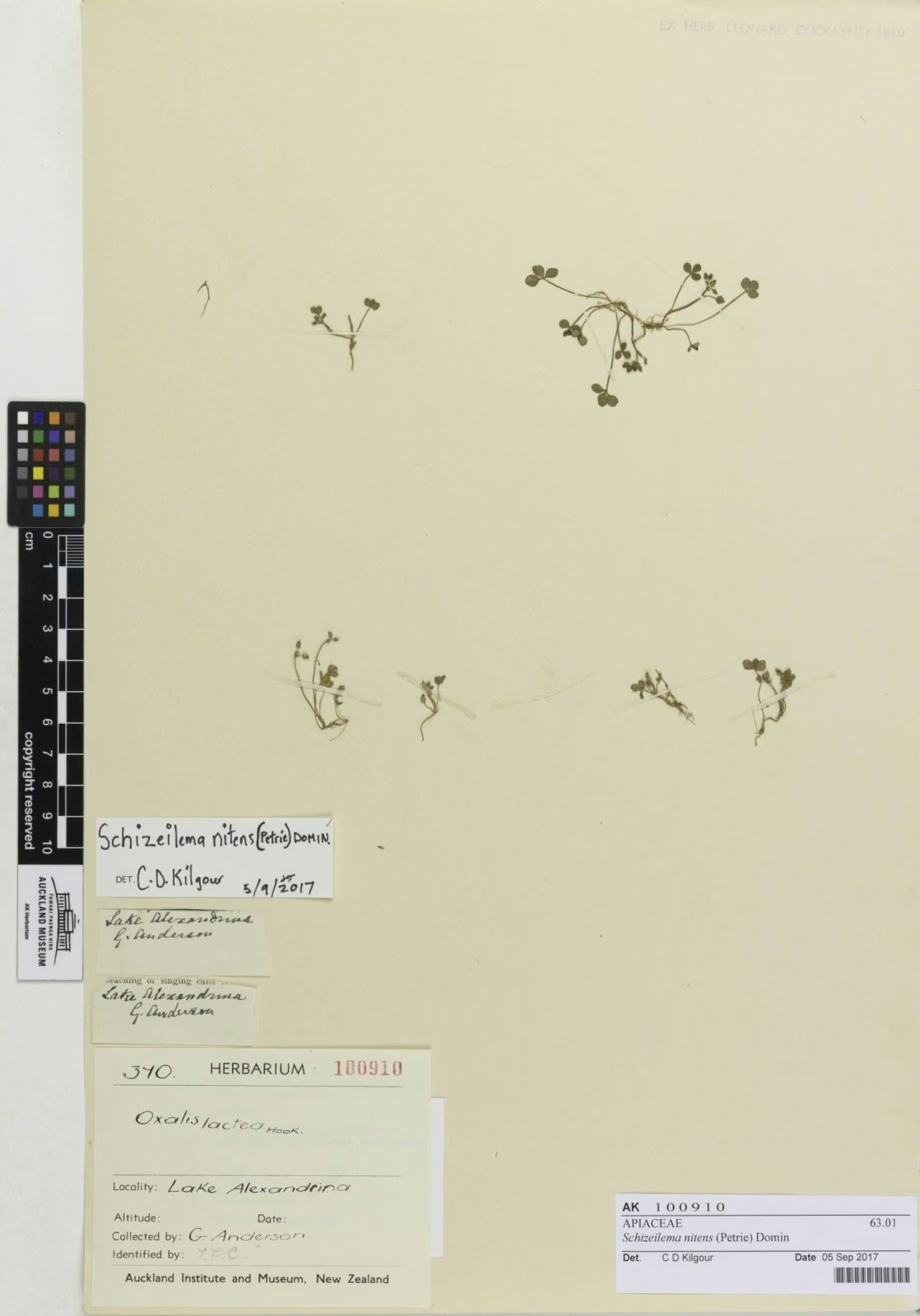
Azorella nitens
Azorella nitens
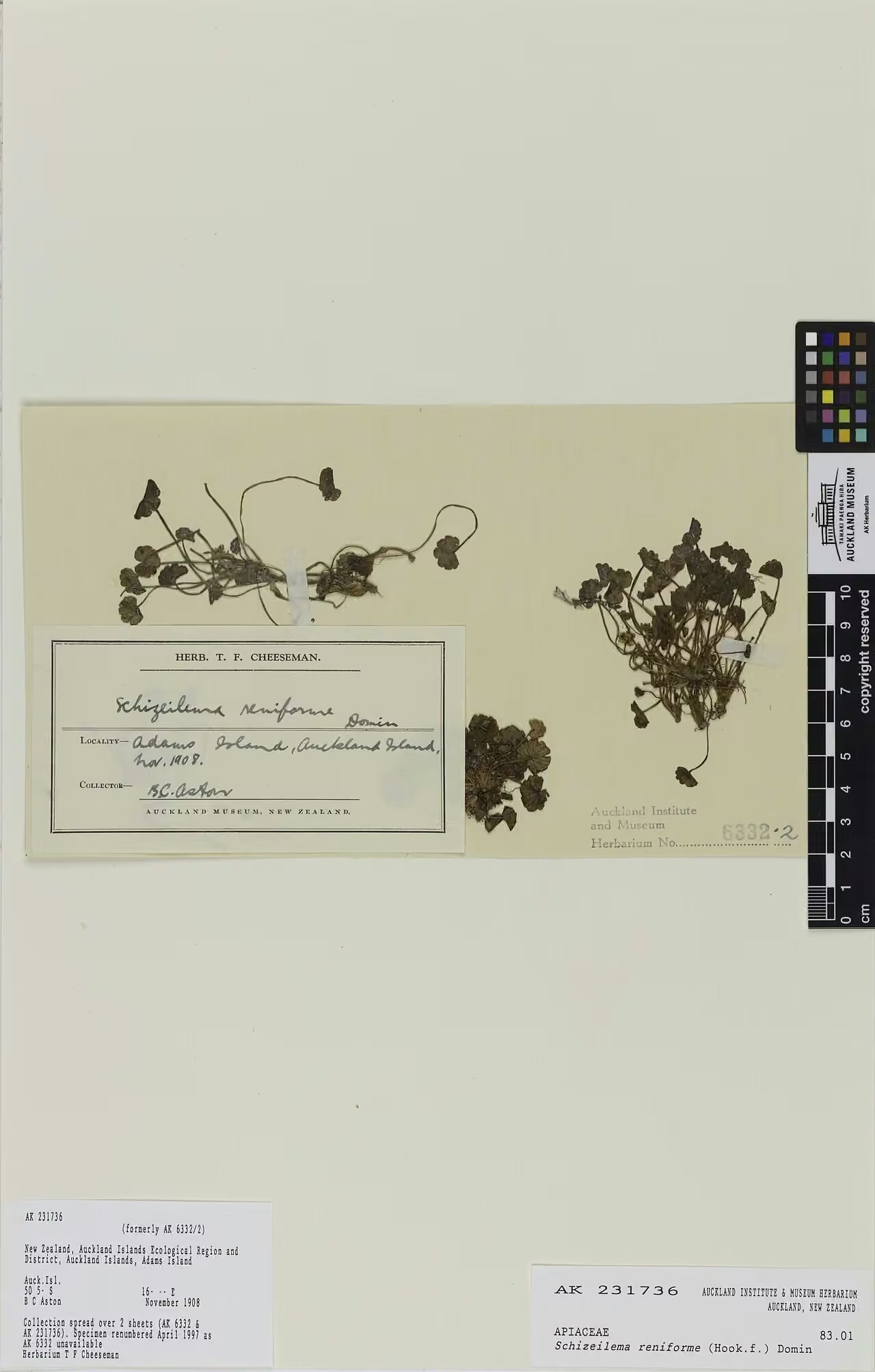
Azorella schizeilema
Azorella schizeilema
Hooker's Azorella
Hooker's Azorella
Plant Conservation
Azorella exigua is ranked At Risk - Naturally Uncommon in the 2023 New Zealand Threat Classification System assessment, with the qualifier RR (Range Restricted). It was ranked Not Threatened in 2004 and 2009 and has been Naturally Uncommon since 2012. The 2025 Otago regional assessment lists it as Regionally At Risk - Regionally Naturally Uncommon.
No specific threats are documented, but its small range makes it vulnerable to changes in subalpine herbfield, such as invasion by weeds, trampling and long-term climate warming. Protecting high-country herbfields from weeds and disturbance helps this and many other small endemic plants.
Frequently Asked Questions
What does exigua mean in Azorella exigua?
The Latin exiguus means small or scanty, a fitting name for a plant whose patches reach only about 5 cm across and whose leaf blades are 2-4 mm wide.
Where does Azorella exigua grow?
It is endemic to the South Island in Otago and Southland. Allan's Flora describes it as a plant of subalpine herbfield, and the type was collected in the alpine Otago lakes district by Hector and Buchanan in 1863.
Why is Azorella exigua ranked Naturally Uncommon?
It was ranked At Risk - Naturally Uncommon from 2012 onwards with the Range Restricted qualifier, because it occupies a small natural range in southern South Island mountains.
When does Azorella exigua flower?
NZPCN and the Flora of New Zealand give both flowering and fruiting as November to February.
Sources and Further Reading
The botanical, growing, and conservation details for Azorella (Azorella exigua) on this page draw on the New Zealand plant references below. Consult them for full technical records and the latest distribution data.