Azorella
Azorella hydrocotyloides
Last updated:
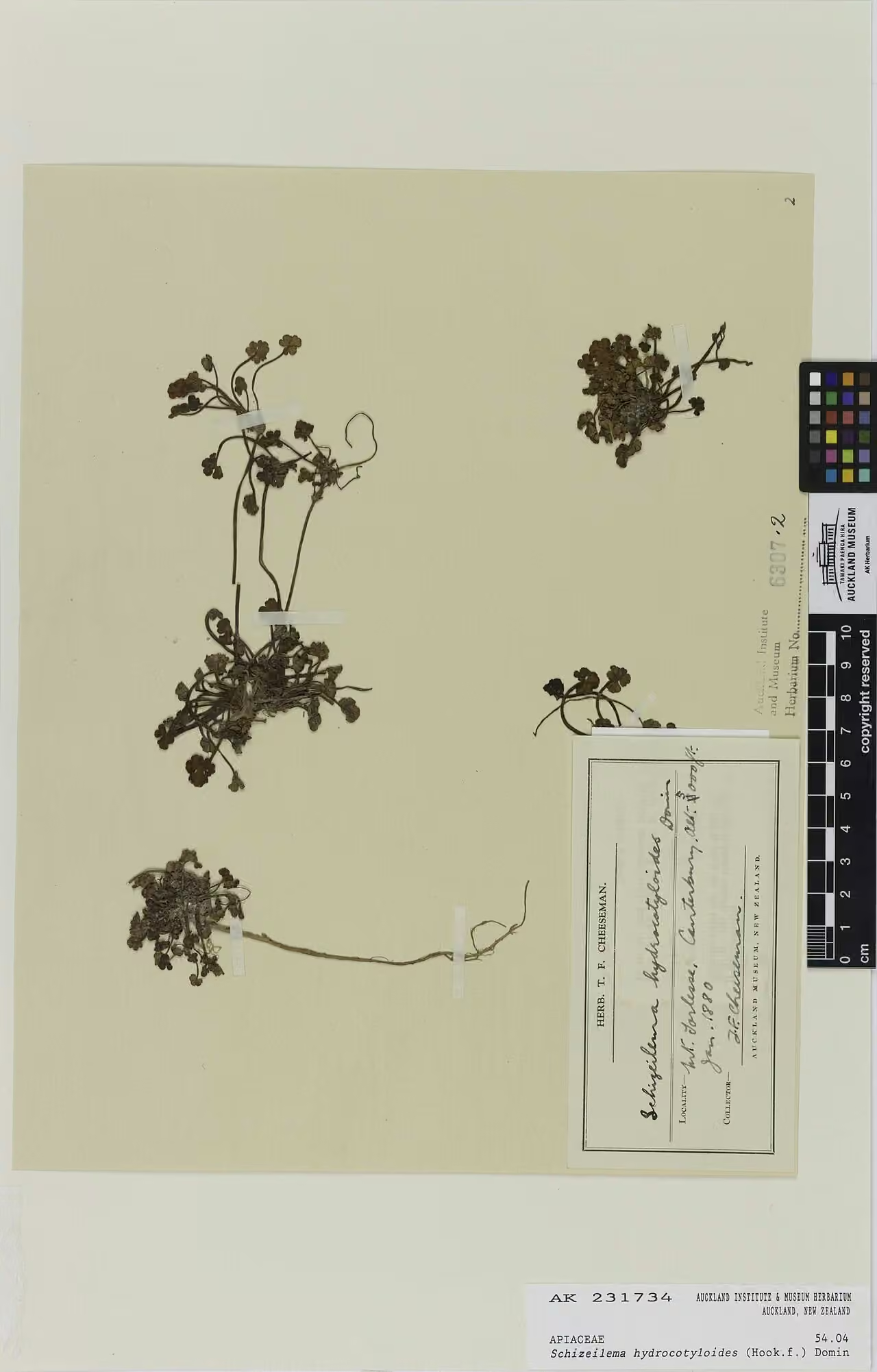
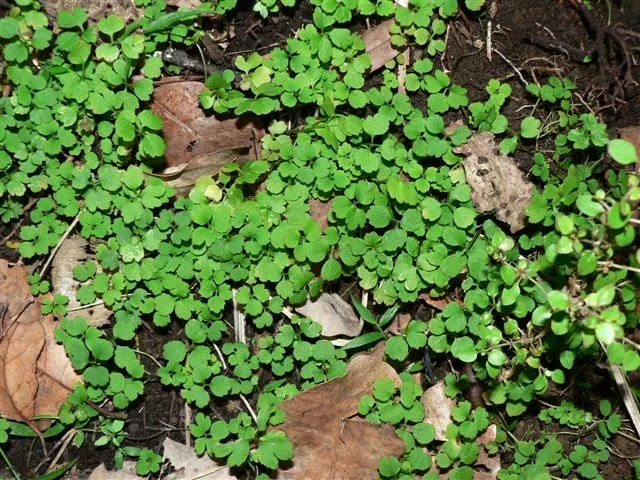
Azorella hydrocotyloides, formerly Schizeilema hydrocotyloides, is a creeping mountain herb of the carrot family endemic to New Zealand. Stout, branching stems root at the nodes and form small patches, carrying tufts of thick, leathery, kidney-shaped to rounded leaves 5-15 mm across, cut into three to five scalloped lobes. As its name suggests, the leaves resemble those of Hydrocotyle pennyworts. It grows locally in montane to subalpine forest margins, shrubland, grassland, herbfield and fellfield from the Central Volcanic Plateau southwards and is ranked Not Threatened. Explore more native ground covers in our native plant guide.
Plant Description
Azorella hydrocotyloides is a hairless perennial herb with stout, branching, creeping stems that root at the nodes and build small patches. Leaves arise in tufts at the nodes on stout stalks up to about 4 cm long that are often softly hairy; the stipules are narrow, entire and fringed with fine hairs.
The leaf blade is 5-15 mm across, kidney-shaped to rounded, thick and leathery, and divided to the middle or deeper into three to five parts with a narrow to heart-shaped notch at the base. Each segment is wedge-shaped and scalloped into three to five lobes, and the margins are thickened and slightly rolled under. One to four flower stalks about 1 cm long arise together, each carrying an umbel of (three) four to ten (up to fifteen) flowers above linear, blunt bracts. The fruit is four-angled and pale brown, usually longer than its stalk, with five-ribbed halves.
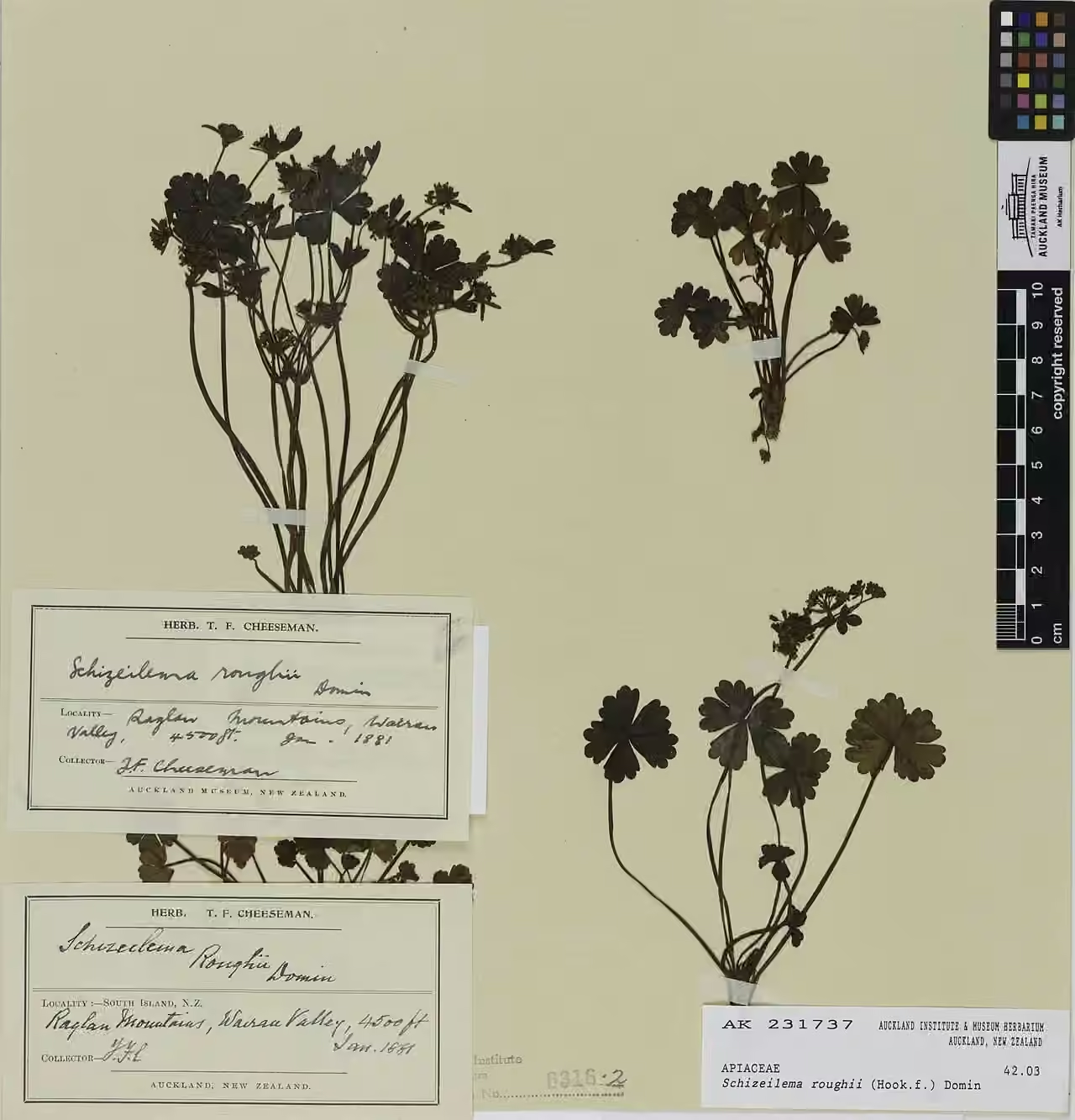
It is distinguished from Azorella roughii, the other robust divided-leaved species, by its smaller size: Azorella roughii has leaf blades 1-4 cm across on stalks 5-15 cm long. Compared with true Hydrocotyle species, its fruit halves are rounded or slightly flattened on the back rather than strongly compressed from the sides.
Quick Facts
| Scientific Name | Azorella hydrocotyloides |
|---|---|
| Height | Up to about 4-5 cm (leaf stalks up to c. 4 cm) |
| Spread | Forms small patches |
| Water Needs | Moderate; moist, well-drained soil |
| Light | Full sun to partial shade |
| Frost Tolerance | Very hardy; montane to subalpine |
| Salt Tolerance | Not recorded; an inland mountain plant, likely low |
| Growth Rate | Slow |
| Lifespan | Perennial |
Climate Best Suited to
Suits cool montane and subalpine climates with cold winters, frost and regular rainfall. It is best in southern and upland gardens and struggles with hot, humid lowland summers.
Regional Suitability
| City | Climate Suitability |
|---|---|
| Auckland | Low |
| Wellington | Medium |
| Christchurch | Medium |
| Dunedin | High |
Plant Habitat
NZPCN describes Azorella hydrocotyloides as endemic to the North and South Islands from the Central Volcanic Plateau south. Allan's Flora of New Zealand places it in montane to subalpine forest margins, shrubland, grassland, herbfield and fellfield from about latitude 40 degrees 30 minutes southwards, and calls it local rather than common.
The type was collected in Canterbury by Andrew Sinclair and Julius Haast. Its wide range of mountain habitats, from forest edges to open fellfield, suggests it is tolerant of a variety of conditions as long as they are cool and reasonably moist.
Growing Requirements
Soil Requirements
In the mountains it grows in stony to loamy soils of grassland, herbfield and fellfield.
- Gritty, free-draining soil with some organic matter
- Moist but not waterlogged
- Low to moderate fertility
Light Requirements
Its habitats range from forest margins and shrubland to open fellfield, so it accepts both sun and some shade.
- Full sun in cool southern gardens
- Partial shade in warmer districts
- Avoid dense shade
Water Requirements
Mountain sites receive regular rain and cool temperatures, so keep roots moist through summer.
- Water in dry spells
- Ensure good drainage to prevent crown rot
- A grit or stone mulch helps hold moisture
Planting and Establishing
Azorella hydrocotyloides is not commercially available, so planting is limited to specialists with legally obtained material. Grow it in a rock garden pocket, raised alpine bed or trough with gritty, humus-rich mix, in a spot that stays cool in summer.
Plant rooted pieces in spring, setting the nodes on the soil surface so they can root further, and water in well. Leave space around it free of vigorous neighbours, since it spreads only slowly.
Ecological Role
Azorella hydrocotyloides is a component of montane and subalpine plant communities from forest margins to fellfield. Its small umbels of flowers appear in summer; no study of its pollinators was found, though small flies and other insects are the usual visitors to tiny umbel flowers in New Zealand mountains.
Its creeping, rooting stems let it hold ground among grasses and other herbs, and its thick leathery leaves suit the cold, windy and frosty conditions of upland sites.
Uses & Significance
Garden Uses
A good subject for collectors of New Zealand alpine plants who want an unusual mat-former.
- Rock gardens and alpine troughs
- Edges of a cool, raised scree bed
- Native plant collections illustrating the Apiaceae
Ecological Value
It contributes to the diversity of upland plant communities across much of New Zealand.
- Endemic across a broad range of mountain habitats
- Provides small summer flowers for insects
- Part of grassland, herbfield and fellfield turf
Landscaping Uses
The scalloped, kidney-shaped leaves have an attractive, thick, leathery look that suits a naturalistic rock garden, especially when allowed to creep between flat stones. It combines well with small tussocks and cushion plants from similar altitudes.
Because the patches are small and slow to spread, use it as a detail plant rather than a ground cover for larger areas.
Seasonal Care Calendar
Spring
New leaves emerge from the tufted nodes as soils warm.
- Divide established patches
- Refresh grit mulch
Summer
Flowers and fruit appear from December to February.
- Water during dry spells
- Collect pale brown fruit when ripe
Autumn
Growth slows and any late fruit can be gathered.
- Sow seed outdoors
- Clear fallen leaves from the patch
Winter
A frost-hardy plant that sits quietly through the cold months.
- Avoid waterlogging
- No feeding required
When to Prune and How Much
No pruning is required. The creeping stems are the plant's means of spreading, so leave them intact.
Remove only dead or damaged leaves and any weeds growing into the patch.
How to Grow Azorella
No propagation technique is published for Azorella hydrocotyloides, and NZPCN lists it as not commercially available. Its stout creeping stems root at the nodes, so division should be straightforward, and it produces pale brown fruit from December to February that may be sown. The steps below are practical suggestions based on that structure rather than proven methods. Wild plants should not be dug up; collect seed only with landowner permission and, on public conservation land, Department of Conservation authorisation.
By Division
Rooted sections of stem can be removed from an established cultivated plant. Because the stems are stout, pieces handle more easily than those of the thread-stemmed species.
- In spring, choose a section of stem that has rooted at one or more nodes.
- Cut it free with a clean knife, keeping a leaf tuft attached.
- Pot into a gritty mix with the rooted node just below the surface.
- Water and keep in a cool, bright place out of strong sun.
- Plant out once new leaves and roots are established.
From Seed
Germination requirements are not known. Sowing fresh seed outdoors so it experiences winter cold is a reasonable approach for a montane species.
- Gather fruit when pale brown and separating easily from the umbel.
- Sow on a gritty seed mix and cover lightly with fine grit, labelling the pot with the date and source.
- Leave outdoors over winter and keep moist.
- Prick out seedlings into individual pots in spring.
Pests & Diseases
No pests or diseases have been recorded for Azorella hydrocotyloides. In gardens, the main problems are likely to be drought stress, rot in warm and wet conditions and competition from weeds.
Slugs and snails may chew the leaves of young plants; inspect after wet nights in spring.
Cultural Significance
No Māori name or traditional Māori use is recorded for Azorella hydrocotyloides.
Joseph Hooker described it as Pozoa hydrocotyloides in his Handbook of the New Zealand Flora (1864) from Canterbury material collected by Andrew Sinclair and Julius Haast. Thomas Kirk moved it to Azorella in 1899, Domin to Schizeilema in 1908, and Kirk's combination Azorella hydrocotyloides is the accepted name today.
Bonus Tip
To confirm you have this plant rather than a Hydrocotyle pennywort, look at a ripe fruit with a hand lens: Azorella hydrocotyloides has a four-angled, pale brown fruit whose halves are rounded on the back, while Hydrocotyle fruit halves are strongly flattened sideways and usually lopsided.
Related Plants
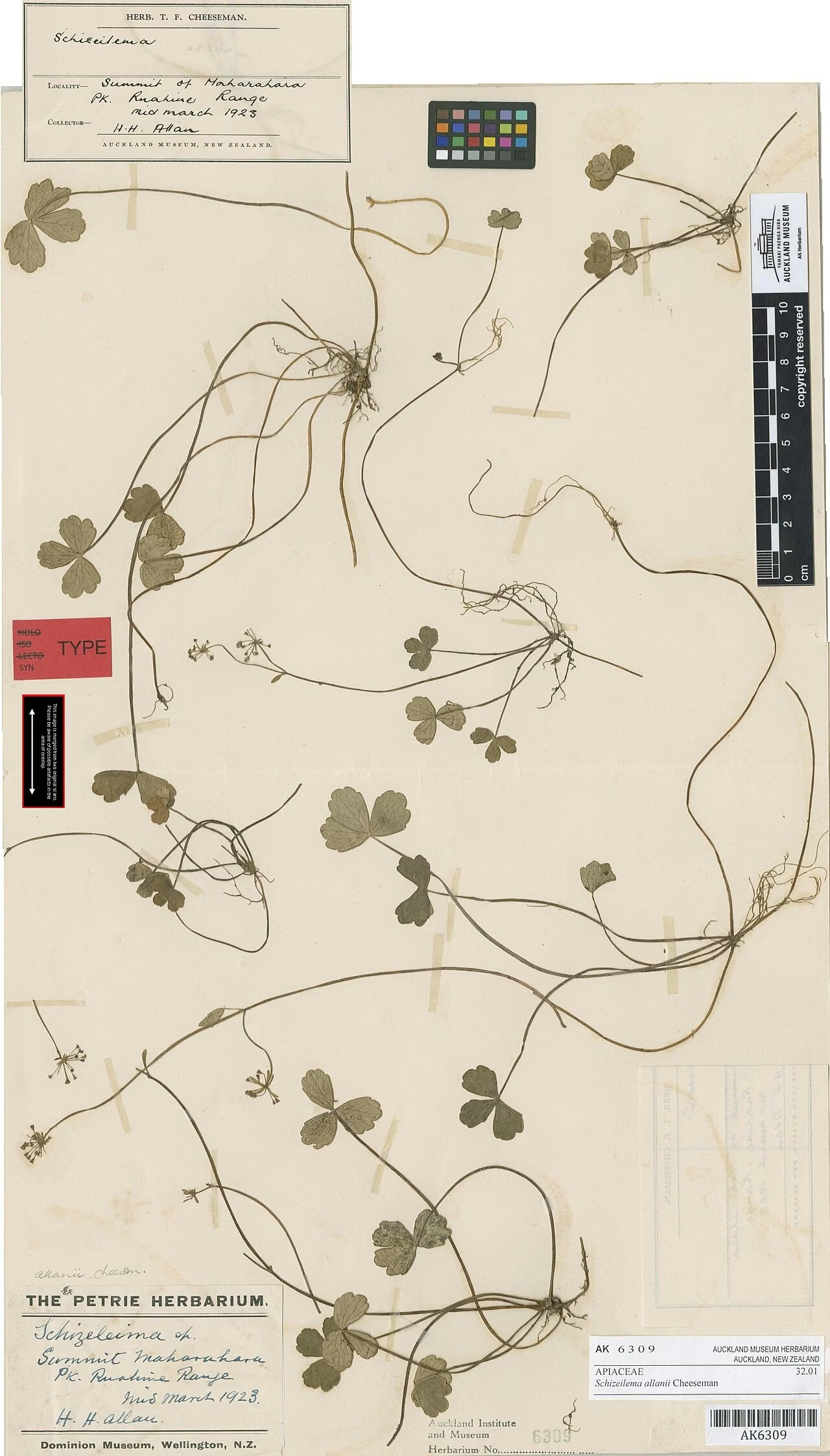
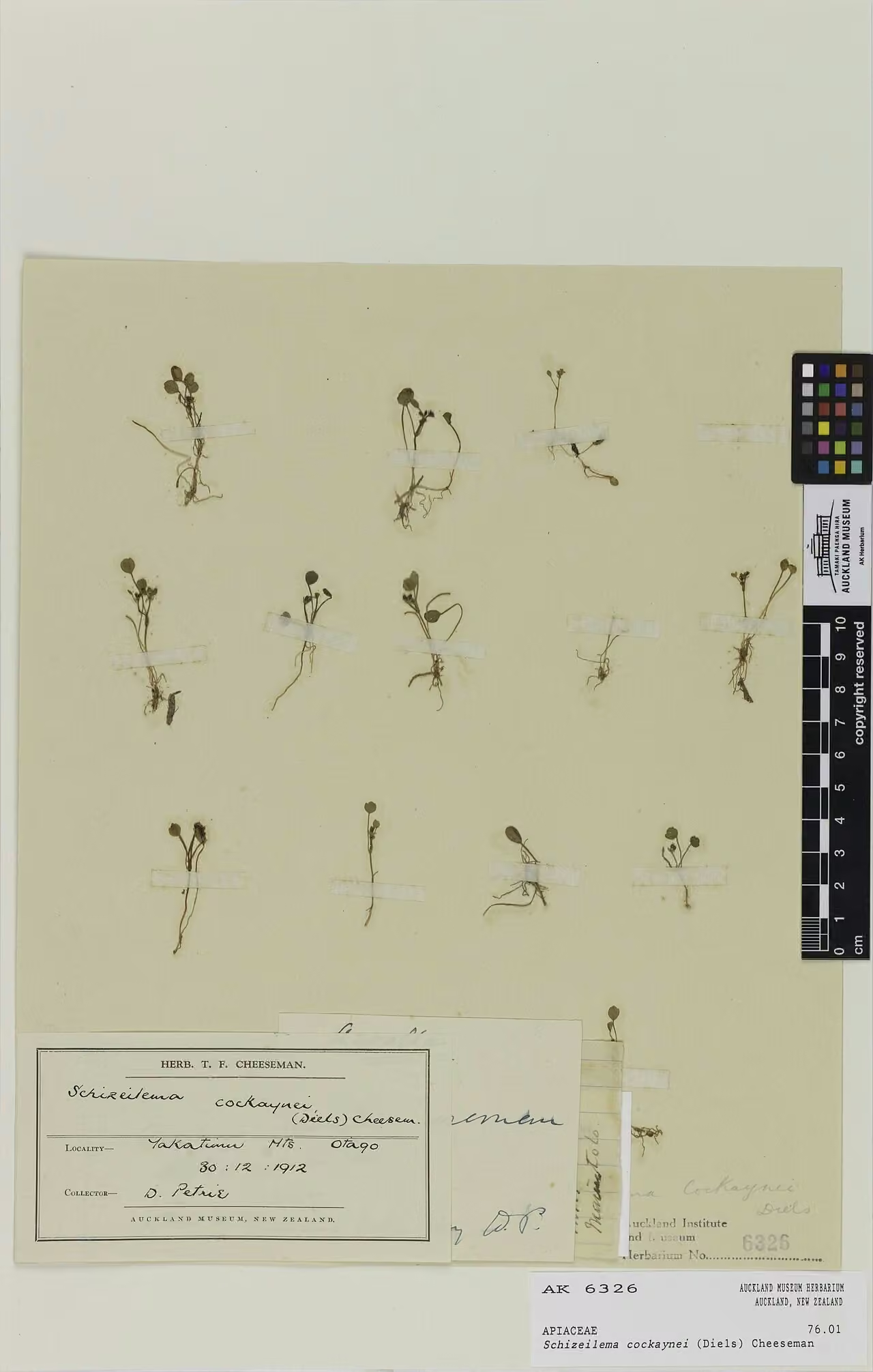
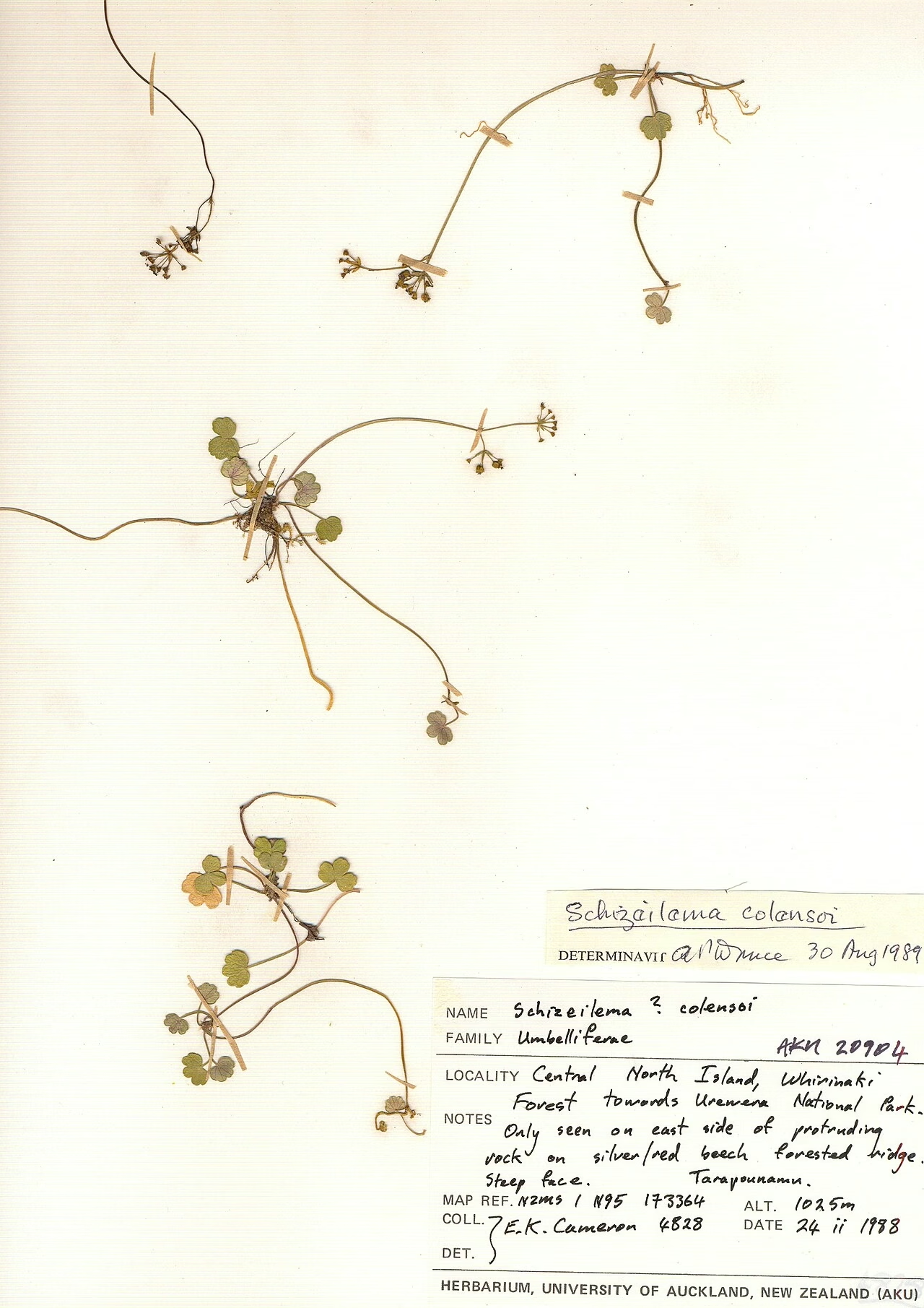
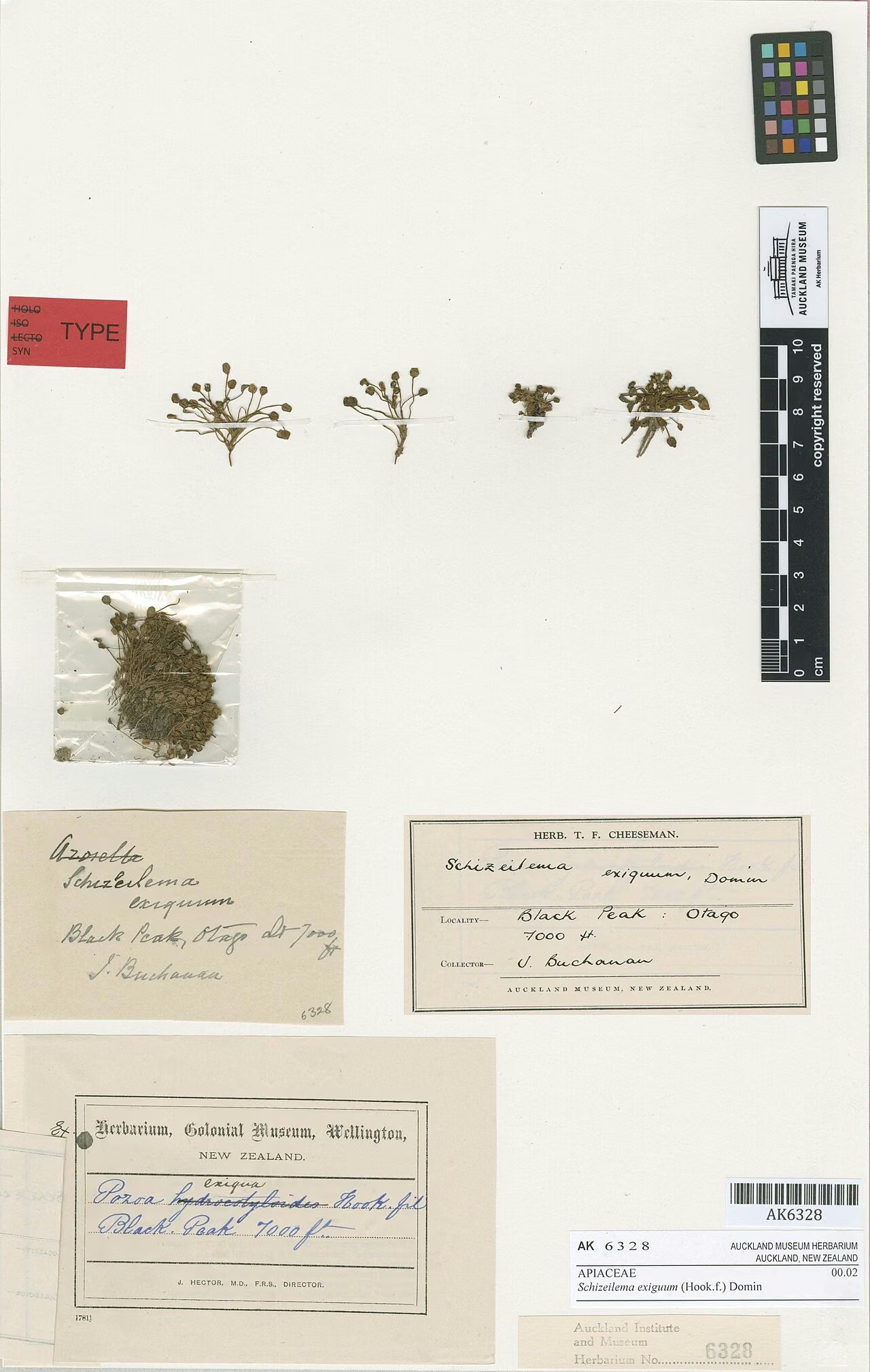
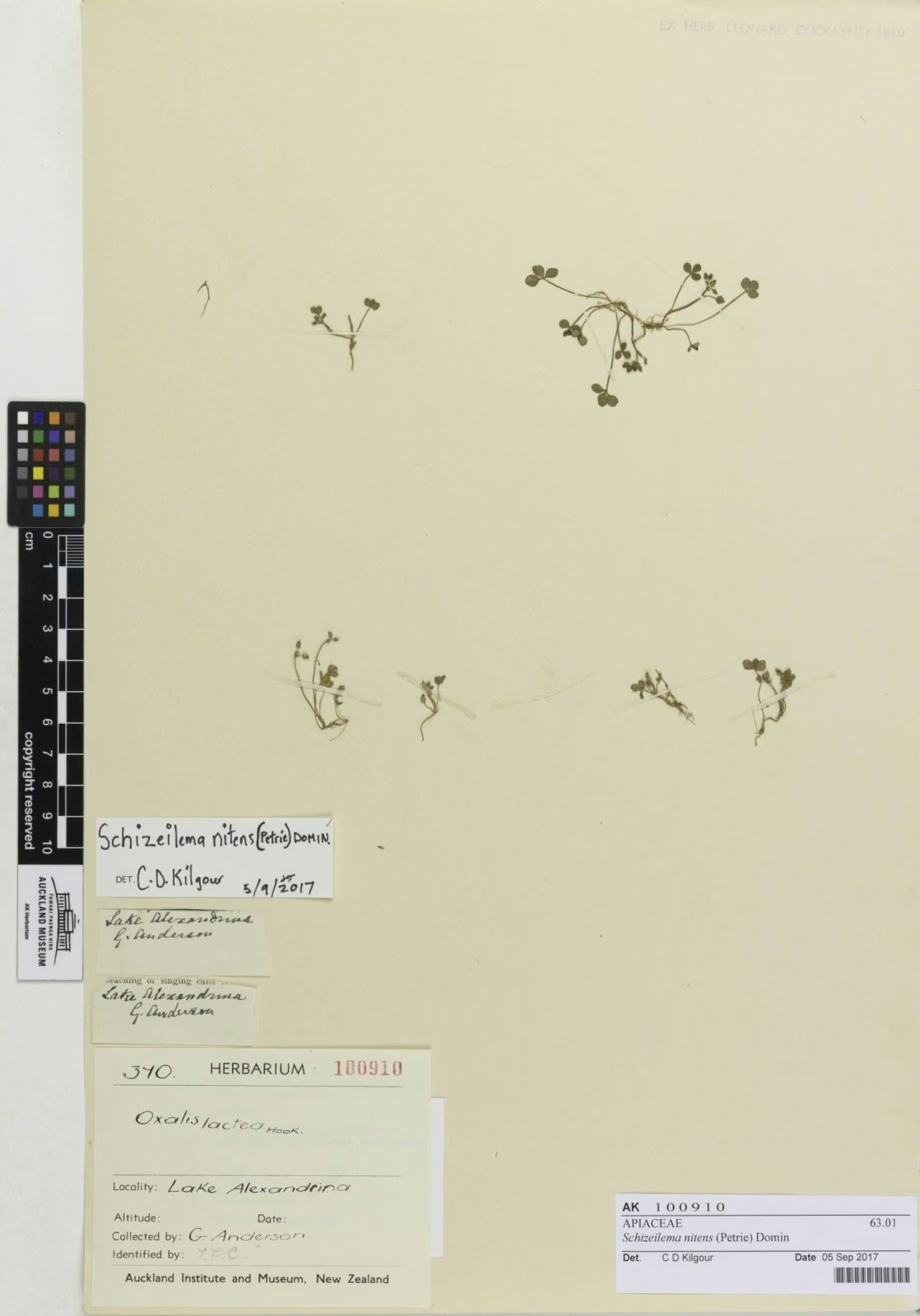
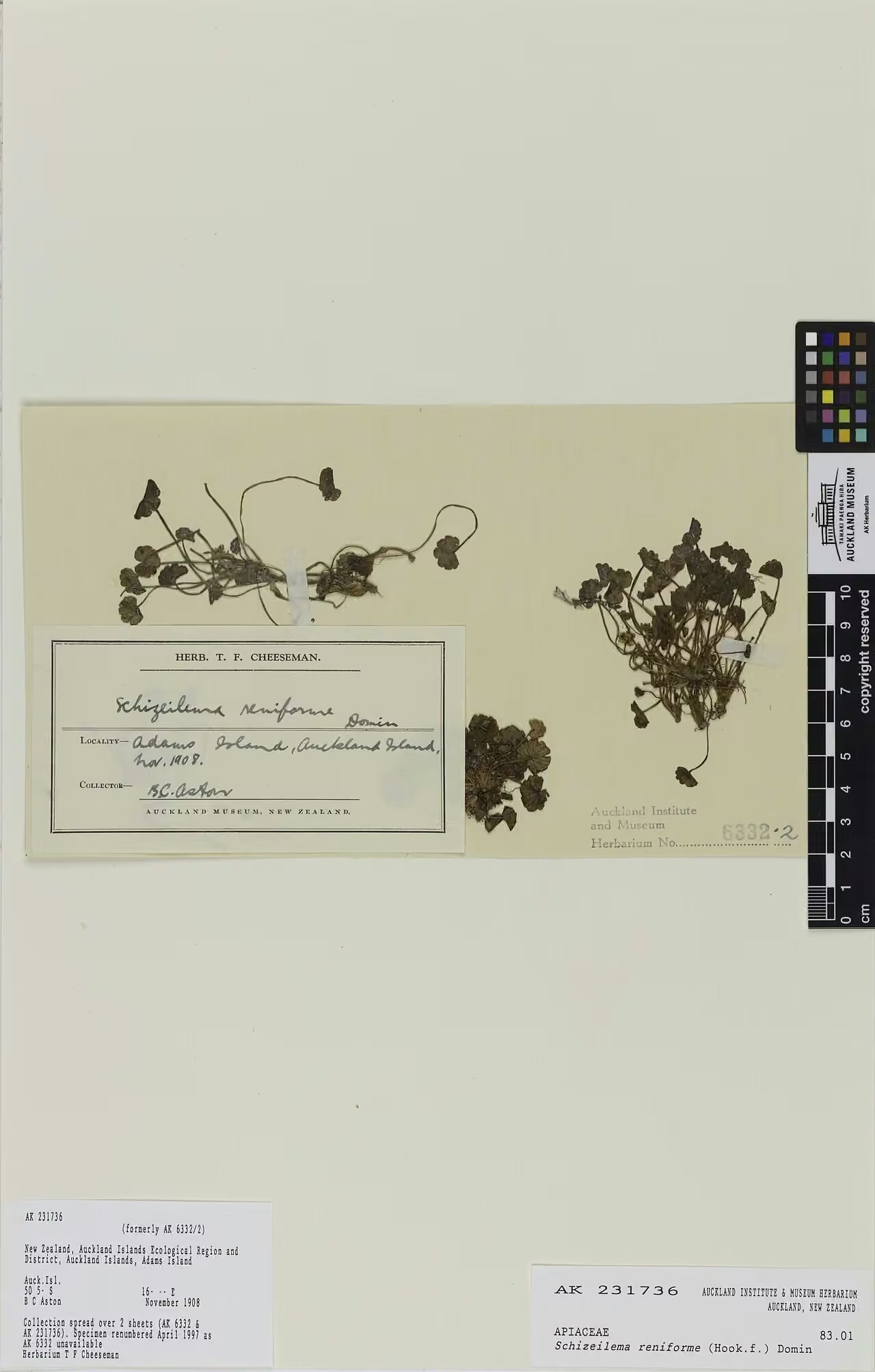
Explore other native plants that share similar characteristics or habitats with Azorella (Azorella hydrocotyloides), offering further insights into New Zealand's diverse flora. These related species provide context and opportunities for complementary planting in your garden.
Plant Conservation
Azorella hydrocotyloides is ranked Not Threatened in the 2023 New Zealand Threat Classification System assessment and has held that ranking since 2004. The 2025 Otago regional assessment lists it as Regionally At Risk - Regionally Naturally Uncommon, with Data Poor qualifiers, so it appears scarce in that region.
General pressures on mountain herbs, including weed invasion, browsing by introduced animals and climate warming, may affect local populations. Recording sightings on iNaturalist NZ helps track its local distribution.
Frequently Asked Questions
What does hydrocotyloides mean?
The name means resembling Hydrocotyle, the pennywort genus, because its rounded, lobed leaves look similar. The two genera are told apart by their fruit, which in Hydrocotyle is strongly flattened from side to side.
Where does Azorella hydrocotyloides grow?
It is endemic to the North and South Islands from the Central Volcanic Plateau south, in montane to subalpine forest margins, shrubland, grassland, herbfield and fellfield. Allan's Flora describes it as local.
When does Azorella hydrocotyloides flower?
NZPCN gives flowering and fruiting as December to February, with umbels of about four to ten flowers on short stalks.
Can Azorella hydrocotyloides be bought?
No. NZPCN lists it as not commercially available, so it is only grown in specialist native and alpine collections.
Sources and Further Reading
The botanical, growing, and conservation details for Azorella (Azorella hydrocotyloides) on this page draw on the New Zealand plant references below. Consult them for full technical records and the latest distribution data.