Native Orache
Atriplex australasica
Last updated:
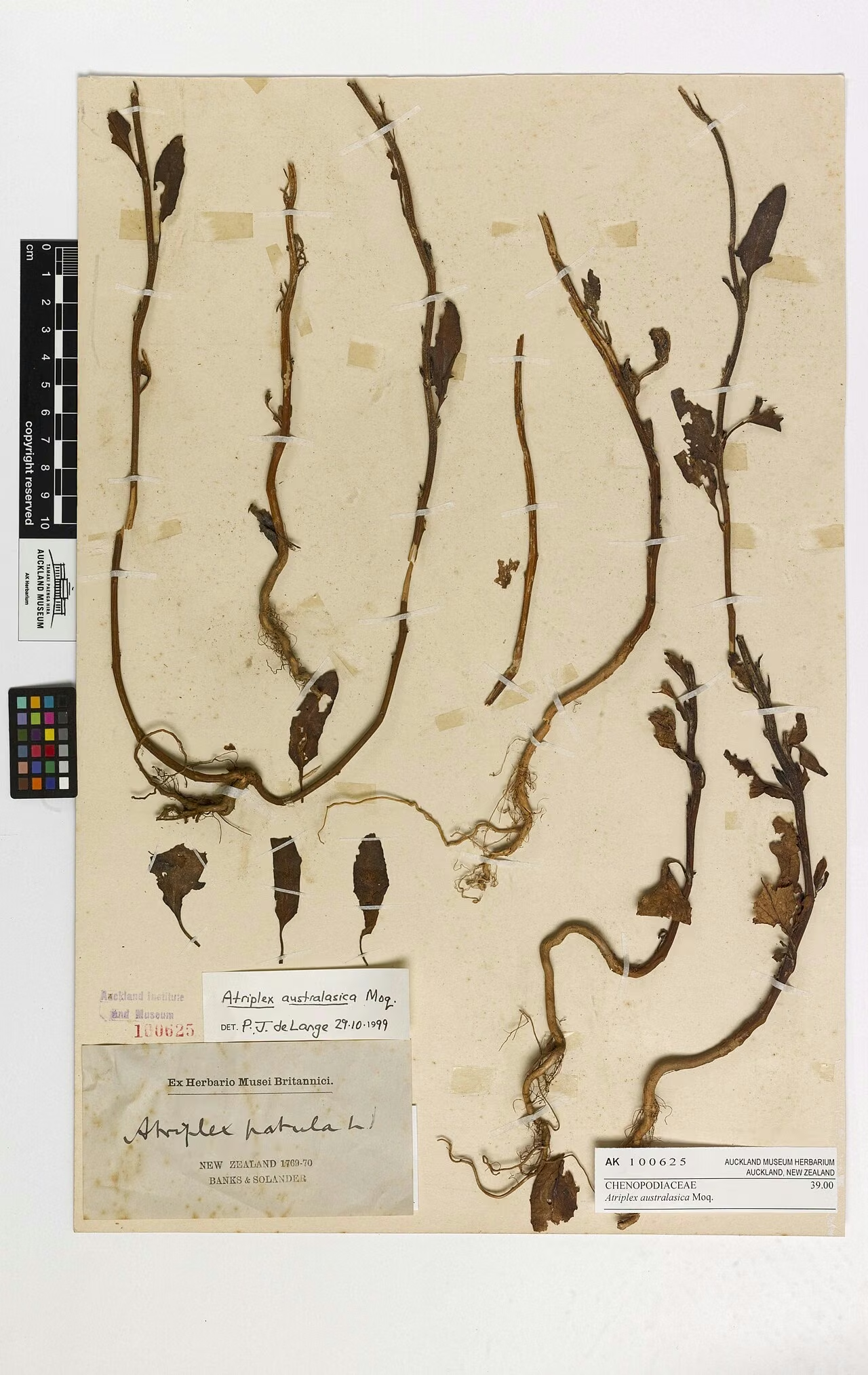
Native orache (Atriplex australasica) is a fleshy, much-branched annual saltbush that can grow up to 1 m tall and 2 m wide. Its grey-green to red-green leaves become deeply lobed or coarsely toothed, and its stems turn purple-red with age. Strictly coastal, it is abundant on the Chatham Islands, especially on beaches, clay banks and cliffs near seabird colonies, shag roosts and seal haul-outs. On the South Island it is known only from historical collections, including one made in the Marlborough Sounds in 1770. It also grows in southern Australia and Tasmania, and is ranked At Risk - Relict in New Zealand. Explore more native shrubs in our native plant guide.
Plant Description
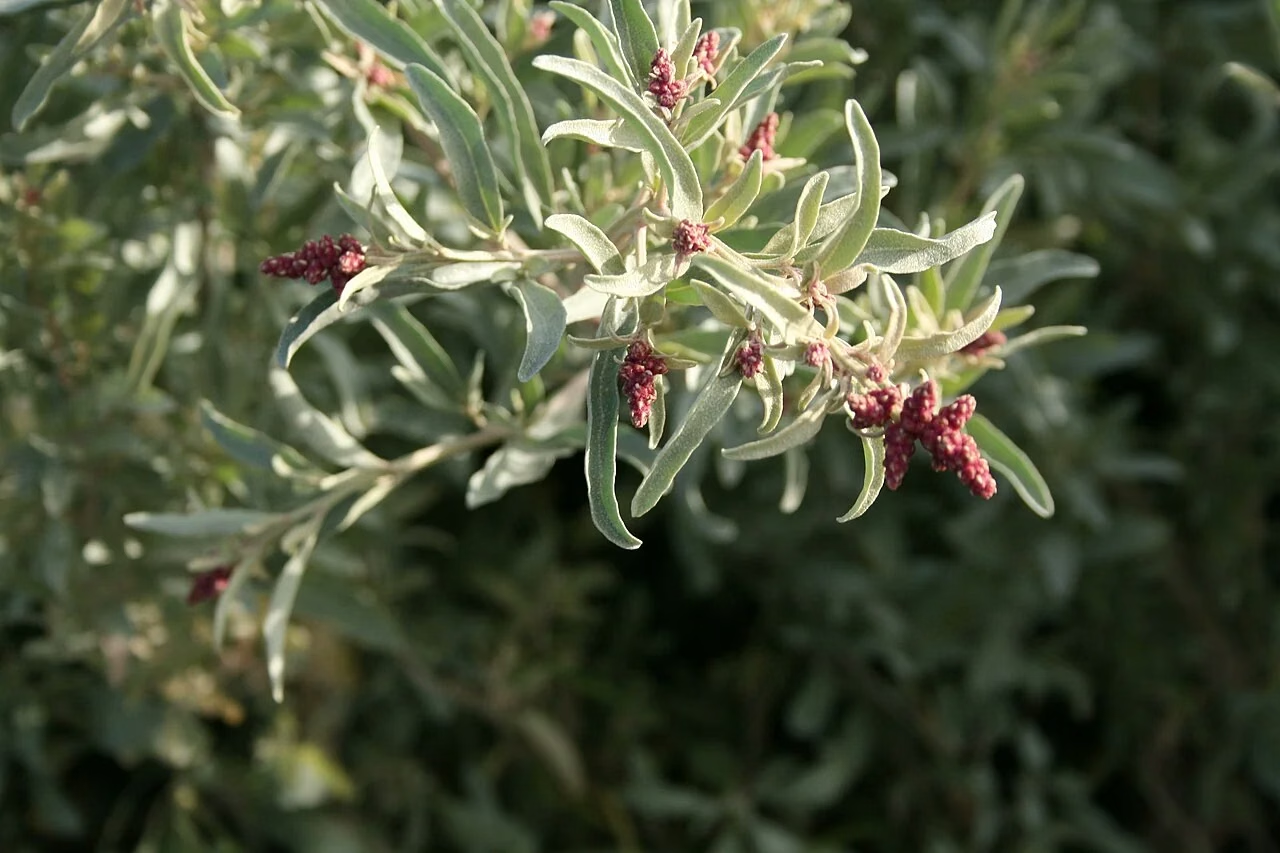
Atriplex australasica is an annual, much-branched shrubby plant up to 1 m tall and 2 m across. The stems are four-angled, woody at the base and become purple-red to maroon with age. The leaves are 20 to 100 mm long and 30 to 60 mm wide, fleshy, and grey-green to red-green. On young plants they are mostly entire or have one or two lobes near the base, while on mature plants they become deeply and irregularly lobed or coarsely toothed.
The small green flowers are clustered in dense glomerules arranged in spike-like, branching inflorescences that droop when in fruit. Each fruit is enclosed by a pair of fleshy, triangular fruiting bracteoles 3 to 4 mm long and 2 to 5 mm wide, fused near the base, entire or with one or two teeth and sometimes warty. They are grey-green to glaucous at first, becoming black and much thickened with age.
It is often confused with the naturalised orache Atriplex patula. NZPCN notes that Atriplex australasica consistently has wider, deeply toothed or lobed leaves and more robust, fleshy, glaucous foliage. The quadrangular purple-red stems and fleshy black-ripening bracteoles are further clues.
Quick Facts
| Scientific Name | Atriplex australasica |
|---|---|
| Height | Up to 1 m |
| Spread | Up to 2 m |
| Water Needs | Low to moderate |
| Light | Full sun |
| Frost Tolerance | No published data; occurs in the cool Chatham Islands climate |
| Salt Tolerance | High; strictly coastal |
| Growth Rate | Fast (annual) |
| Lifespan | Annual |
Climate Best Suited to
Suits a cool, windy, salt-laden oceanic coastal climate like that of the Chatham Islands, and also the temperate southern coasts of Australia.
Regional Suitability
| City | Climate Suitability |
|---|---|
| Auckland | Medium |
| Wellington | High |
| Christchurch | Medium |
| Dunedin | Medium |
Plant Habitat
In New Zealand native orache is abundant on the Chatham Islands. On the South Island it is known from a 1770 collection from the Marlborough Sounds, made during Cook's first voyage, and possibly from two collections made in south Canterbury in 1860 by Haast and Kirk; it has not been confirmed there since. Outside New Zealand it grows along the southern coast of Australia and in Tasmania.
It is strictly coastal. On the Chatham Islands it grows in open habitats such as sand, shell, cobble and boulder beaches bordering Te Whanga Lagoon, and on clay banks and cliff faces around the main island, particularly near shag roosts and commonly among seabird colonies and seal haul-outs.
Growing Requirements
Soil Requirements
It grows on open, disturbed coastal ground, from sand and shell to cobbles, boulders and clay banks, often enriched by seabird and seal droppings.
- Sandy, gravelly or clay coastal soils
- Tolerates salt and high nutrient levels
- Open, bare ground for seedlings to establish
Light Requirements
It is a plant of open beaches and cliffs with no shade.
- Full sun
- Open, exposed coastal sites
Water Requirements
Its fleshy leaves are adapted to salt spray and drying coastal winds.
- Water seedlings until established
- Tolerates dry, free-draining ground once growing
- Avoid waterlogged sites
Planting and Establishing
Native orache is not commercially available. As an annual, it is best grown by sowing seed directly into open, sunny, free-draining ground in a coastal garden or restoration site, or by planting young seedlings in spring.
Space plants well apart because a vigorous plant can spread up to 2 m. Keep the ground around young plants free of competing weeds and grasses, mimicking the open beach and bank habitats where it grows wild.
Ecological Role
Like other Atriplex species it is wind pollinated, with small green flowers lacking petals. It is closely associated with seabird colonies, shag roosts and seal haul-outs on the Chatham Islands, where nutrient-rich, disturbed ground suits fast-growing annual plants.
Flowering runs from November to April and fruiting from December to May. As an annual, it depends on producing seed each year, and the fleshy fruiting bracteoles enclose the seed as it ripens on the drooping inflorescences.
Uses & Significance
Garden Uses
Its main value is in coastal restoration, particularly on the Chatham Islands, rather than in ornamental gardens.
- Coastal restoration around seabird colonies
- Seaside gardens with salt spray
- Collections of rare indigenous coastal plants
Ecological Value
It is a component of the distinctive seabird-influenced coastal vegetation of the Chatham Islands.
- Colonises open, nutrient-rich coastal ground
- Part of vegetation around seabird colonies and seal haul-outs
- Retains a relict New Zealand presence of an Australasian species
Landscaping Uses
In a coastal garden its grey-green, fleshy foliage and purple-red stems can provide a bold annual filler on sandy or gravelly banks, alongside other salt-tolerant natives. It will need re-sowing each year.
On the Chatham Islands it can be encouraged in restoration plantings on lagoon edges and coastal banks by leaving open ground near existing populations so that seedlings can establish.
Seasonal Care Calendar
Spring
Seedlings establish and grow quickly on open coastal ground.
- Sow seed or plant seedlings
- Keep competing weeds down
Summer
Flowering begins from November, with clusters of tiny green flowers on spike-like inflorescences.
- Water young plants in dry weather
Autumn
Fruiting continues to May; bracteoles thicken and turn black, and inflorescences droop.
- Collect ripe fruiting heads for seed
Winter
As an annual, plants die after setting seed, leaving the next generation as seed in the ground.
- Leave some seed to fall where you want new plants
When to Prune and How Much
No pruning is needed for this annual. Plants can be cut back lightly if they sprawl over paths, but doing so reduces flowering and seed set.
Leave plants standing until seed has ripened and dropped, then remove the dead stems.
How to Grow Native Orache
NZPCN states that the propagation technique for native orache is not known, though it suggests the plant probably grows readily from fresh seed and semi-hardwood cuttings. As an annual, seed is the natural means of renewal. Because the species is At Risk in New Zealand, seed should be collected only in small quantities, with landowner and Department of Conservation agreement where required. The methods below follow general practice for coastal Atriplex species.
From Seed
Collect fruiting heads in late summer and autumn when the fleshy bracteoles have darkened and thickened. Each seed sits inside a pair of bracteoles, which can be sown whole. Fresh seed is likely to give the best results.
- Collect blackened fruiting heads between late summer and May
- Rub off the outer debris but leave the bracteoles around the seed
- Sow into trays of free-draining sandy seed mix
- Cover lightly with sand
- Keep in a sunny, sheltered spot and water lightly
- Pot up seedlings once they have several true leaves
- Plant out into open coastal ground in spring
From Semi-Hardwood Cuttings
NZPCN suggests semi-hardwood cuttings are likely to strike, although this has not been confirmed. Because the plant is annual, take cuttings during the growing season so they can root and flower before the plant's life ends.
- In early summer take 8 to 10 cm cuttings from firm side shoots
- Remove the lower leaves
- Insert into a free-draining mix of sand and pumice
- Keep warm and lightly moist in bright shade until rooted
Pests & Diseases
No specific pests are recorded. Aphids and leaf-mining insects occasionally attack Atriplex species in gardens, and seedlings may be eaten by slugs.
In the wild the threats are uncertain, according to NZPCN. Disturbance of coastal sites, grazing stock and coastal weeds could affect it, and its similarity to the naturalised Atriplex patula means it may be overlooked or misidentified.
Cultural Significance
No Māori or Moriori name or traditional use specific to Atriplex australasica is recorded in the sources consulted.
Its New Zealand history is notable: the earliest known specimen was collected in the Marlborough Sounds in 1770 during Cook's first voyage, and it was only recently rediscovered as abundant on the Chatham Islands. The name australasica means of or from Australasia.
Bonus Tip
When looking for native orache on Chatham Islands beaches, check plants near shag roosts and seal haul-outs and compare the leaves: broad, fleshy, grey-green leaves deeply toothed or lobed point to Atriplex australasica rather than the narrower-leaved introduced Atriplex patula.
Related Plants
Explore other native plants that share similar characteristics or habitats with Native Orache (Atriplex australasica), offering further insights into New Zealand's diverse flora. These related species provide context and opportunities for complementary planting in your garden.
Glossy Fern
Arachniodes aristata
Argyrotegium mackayi
Argyrotegium mackayi
Shiny-Leaved Spleenwort
Asplenium lamprophyllum
Asplenium shuttleworthianum
Asplenium shuttleworthianum
Limestone Wheatgrass
Australopyrum calcis subsp. calcis
Canterbury Limestone Wheat Grass
Australopyrum calcis subsp. optatum
Buchanan's Orache
Buchanan's Orache
Grey Saltbush
Grey Saltbush
Plant Conservation
Atriplex australasica is ranked At Risk - Relict (2023), with the qualifiers RR (Range Restricted) and SO (Secure Overseas). This reflects its apparent loss from the South Island mainland and its restriction in New Zealand to the Chatham Islands, where it is nevertheless common.
NZPCN describes its threats as uncertain. Protecting coastal habitats on the Chatham Islands, including seabird colonies and seal haul-outs, from heavy grazing and weeds, and checking South Island coastal oraches carefully for overlooked populations, would help clarify and secure its status.
Frequently Asked Questions
Where does native orache grow in New Zealand?
It is abundant on the Chatham Islands, on sand, shell, cobble and boulder beaches, clay banks and cliff faces. On the South Island it is known from a 1770 Marlborough Sounds collection and possibly from 1860 collections in south Canterbury.
How do you tell Atriplex australasica from Atriplex patula?
Atriplex australasica is often confused with the naturalised Atriplex patula, but it consistently has wider, deeply toothed or lobed leaves and more robust, fleshy, grey-green foliage.
Why is native orache found near seabird colonies?
On the Chatham Islands it is commonly found among seabird colonies, near shag roosts and at seal haul-outs, sites that are open, disturbed and enriched by animal droppings.
What is the conservation status of Atriplex australasica?
It is ranked At Risk - Relict (2023) with qualifiers RR and SO, reflecting its loss from the South Island and its secure status overseas in Australia.
Sources and Further Reading
The botanical, growing, and conservation details for Native Orache (Atriplex australasica) on this page draw on the New Zealand plant references below. Consult them for full technical records and the latest distribution data.