Asplenium
Asplenium shuttleworthianum
Last updated:
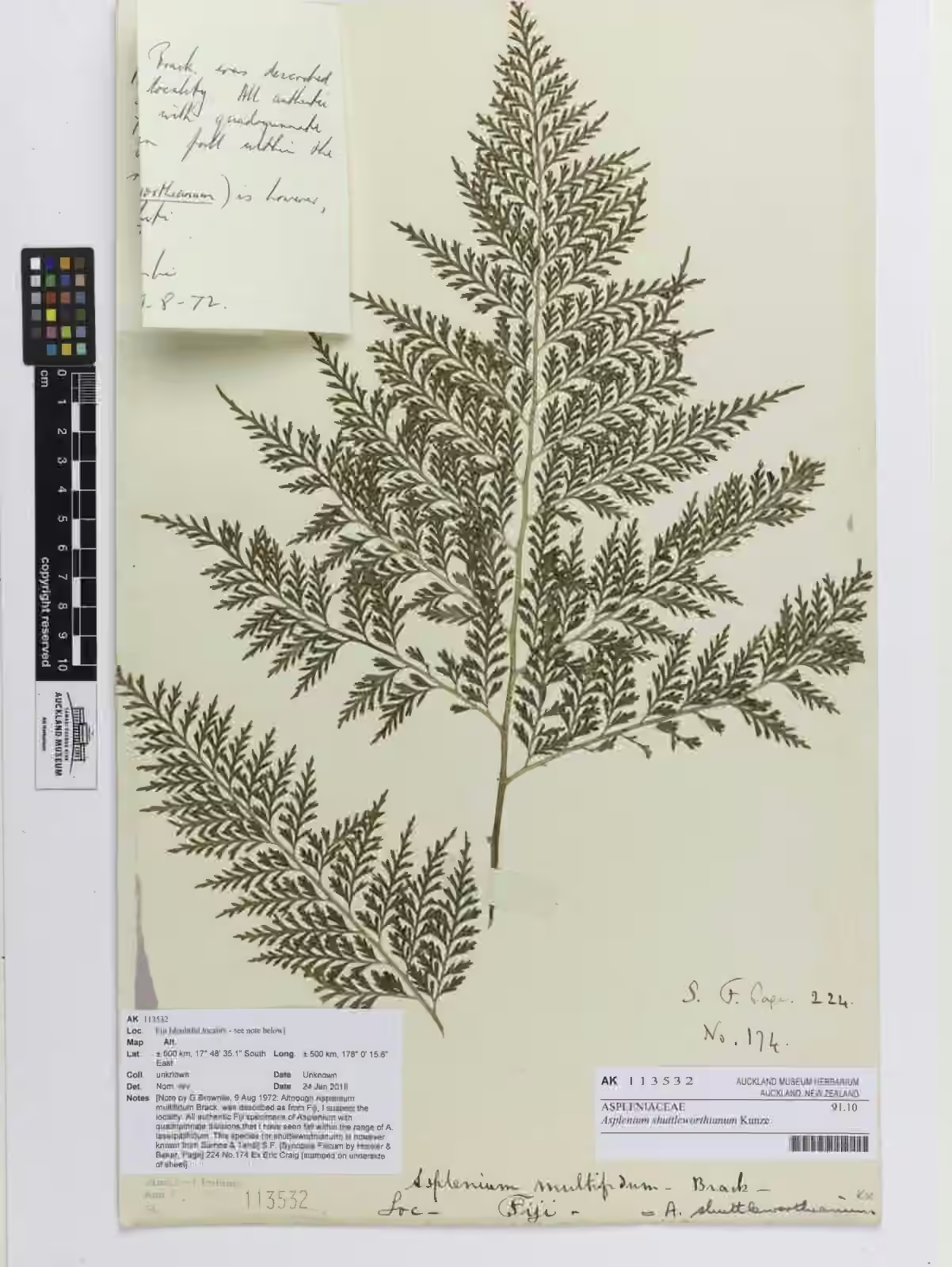
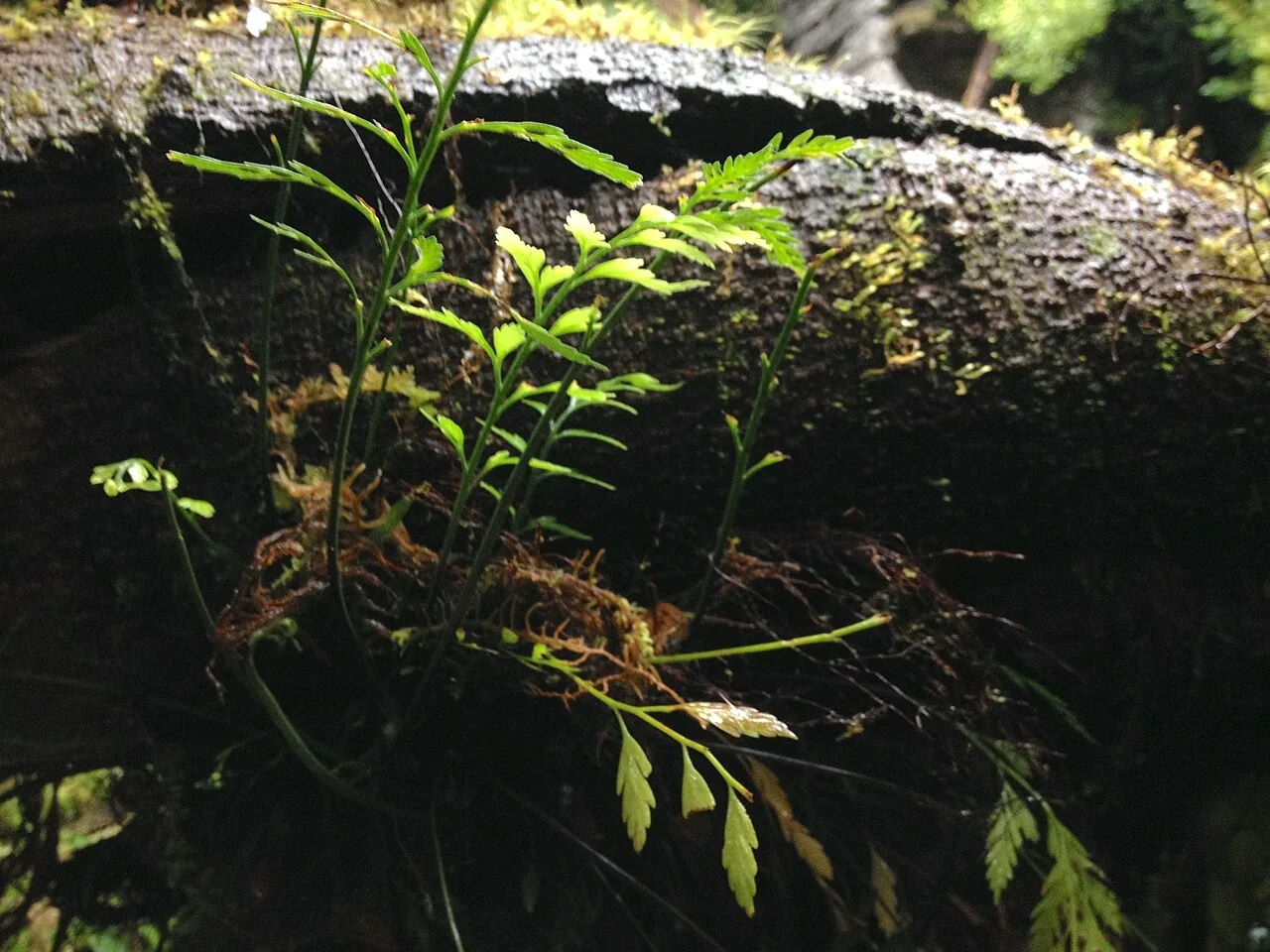
Shuttleworth's spleenwort (Asplenium shuttleworthianum) is a finely divided fern with yellow-green, leathery fronds 10 to 86 cm long that are two to four times pinnate. In New Zealand it grows only in the Kermadec Islands, on Raoul, the Meyer Islands, Napier, Macauley and Cheeseman Islands, from 40 to 200 m above sea level. It grows in crevices on coastal cliffs and rocks and under coastal forest, sometimes as an epiphyte. Elsewhere it is known from Pitcairn Island and possibly other Pacific islands, and the Kermadecs mark its southern limit. It is ranked At Risk - Naturally Uncommon and makes an attractive indoor fern. Explore more native ferns in our native plant guide.
Plant Description
Asplenium shuttleworthianum is a terrestrial or rock-dwelling fern, sometimes growing as an epiphyte, with a short, erect or creeping rhizome covered in red-brown scales. The fronds are 10 to 86 cm long with green stipes and yellow-green, leathery blades that are ovate or elliptic, narrowing to a pinnatifid tip, and two-pinnate-pinnatifid to four-pinnate. There are 7 to 17 pairs of primary pinnae, and the narrow, linear ultimate segments are up to 6 mm long.
The sori lie near the tips of the ultimate segments, which are often slightly expanded, and each is covered by a straight indusium 1 to 5 mm long, usually solitary and broad. Plants vary greatly in size, from small and stunted in exposed rocky sites to large plants in shaded forest.
It is most easily confused with Asplenium appendiculatum and with finely divided forms of other Kermadec spleenworts. The Flora of New Zealand notes that it is recognised by its two- to four-pinnate fronds with rather short sori confined to the often slightly expanded tips of the ultimate segments. NZPCN adds that spore size and frond colour and gloss also help separate it.
Quick Facts
| Scientific Name | Asplenium shuttleworthianum |
|---|---|
| Height | Fronds 0.1 to 0.86 m long |
| Spread | Tufted from a short rhizome; about as wide as the frond length |
| Water Needs | Moderate; moist but well drained |
| Light | Semi-shade; tolerates brighter, exposed rock |
| Frost Tolerance | Low; cold sensitive |
| Salt Tolerance | Moderate; grows on coastal cliffs and rocks |
| Growth Rate | Moderate |
| Lifespan | Perennial |
Climate Best Suited to
Suits a warm, humid, subtropical oceanic climate without frost. On the mainland it is only practical outdoors in the warmest frost-free coastal sites, and is better grown indoors.
Regional Suitability
| City | Climate Suitability |
|---|---|
| Auckland | Medium |
| Wellington | Low |
| Christchurch | Low |
| Dunedin | Low |
Plant Habitat
In New Zealand Shuttleworth's spleenwort is restricted to the Kermadec Islands, where it has been recorded on Raoul Island, North and South Meyer Islands, Napier Island, Macauley Island and Cheeseman Island, at altitudes of about 40 to 200 m. Overseas it is known from Pitcairn Island and possibly elsewhere in the Pacific. The Kermadecs are the southern limit of its world range.
It grows in fissures and crevices on coastal cliffs and rocks, and under coastal forest on andesite, scoria or pumice-rich ground. NZPCN also records it in scrub and on shaded rock ledges from coastal to montane elevations, growing on the ground or as an epiphyte.
Growing Requirements
Soil Requirements
In the wild it roots into rock crevices and thin volcanic soils of andesite, scoria and pumice.
- Open, free-draining mix with pumice or fine bark
- Some organic matter for moisture retention
- No waterlogging
Light Requirements
It grows both on exposed coastal rock and in shaded forest, being larger in shade.
- Bright indirect light indoors
- Semi-shade outdoors in frost-free gardens
- Shade produces the largest fronds
Water Requirements
It is adapted to a humid island climate but grows on free-draining rock and volcanic ground.
- Keep the potting mix lightly moist
- Provide humidity indoors, for example on a tray of damp pebbles
- Let the surface dry slightly between waterings
Planting and Establishing
On the mainland grow it as a pot plant in a free-draining fern mix, kept indoors or in a frost-free conservatory. Use a pot only slightly larger than the root mass and place it in bright, indirect light.
In the warmest frost-free coastal gardens of the far north it could be tried outdoors in a sheltered, shaded rock crevice or raised bed with excellent drainage, but it must be protected from cold.
Ecological Role
Like all ferns it reproduces by wind-borne spores, which allows it to reach and colonise small, isolated islands such as the Kermadecs. Its tolerance of cliff crevices and exposed rock lets it occupy sites few other plants can.
It forms part of the subtropical coastal and forest fern flora of the Kermadec Islands, contributing to the vegetation of rock faces and the forest floor on islands that are important seabird breeding sites.
Uses & Significance
Garden Uses
It is best used as an ornamental indoor fern on the New Zealand mainland.
- Indoor pot plant with lacy yellow-green fronds
- Conservatory and fern house collections
- Collections of Kermadec Islands plants
- Sheltered frost-free rock plantings in the far north
Ecological Value
It adds to the distinctive subtropical flora that sets the Kermadec Islands apart within New Zealand.
- Colonises cliff crevices and rock ledges
- Part of coastal forest understorey on the islands
- Marks the southern limit of a Pacific fern's range
Landscaping Uses
Indoors its finely cut, yellow-green fronds make a light, airy contrast to bold-leaved house plants. Display it in a hanging basket or on a plant stand where the arching fronds can be seen.
Outdoors on the mainland its use is limited to sheltered, frost-free microclimates such as a shaded courtyard wall or rock garden niche in the far north.
Seasonal Care Calendar
Spring
New fronds appear from the rhizome as temperatures rise.
- Repot if crowded
- Check for scale and mealybug
Summer
Active growth; sori develop on the frond tips.
- Water regularly and maintain humidity
- Collect spores when ripe
Autumn
Growth slows as temperatures fall.
- Move outdoor pots under cover before cold nights
Winter
Keep the plant warm and frost-free, with reduced watering.
- Avoid cold draughts
- Keep away from heaters that dry the air
When to Prune and How Much
No pruning is needed beyond removing old or damaged fronds at the base, which keeps the plant tidy and reduces hiding places for scale insects.
If scale or mealybug infest individual fronds, cutting those fronds off is often the simplest first step in control.
How to Grow Asplenium
NZPCN describes Shuttleworth's spleenwort as easily grown. The usual method for this species is from spores, and established clumps with more than one crown can also be divided. Material from the Kermadec Islands Nature Reserve can be collected only with Department of Conservation permission, so propagate from plants already in cultivation. Spore-raised plants need warmth throughout, as the species is cold sensitive at every stage.
From Spores
The short sori are found at the tips of the ultimate segments. Collect a fertile frond when the sori are mature and brown but have not yet shed, and sow the spores onto a sterile surface kept warm and humid. Prothalli usually appear within a few weeks, and young sporophytes follow over the next months.
- Cut a fertile frond with ripe sori and place it in a paper envelope
- Allow it to dry for a few days so the spores fall
- Sterilise a fine fern mix with boiling water and allow it to cool
- Sprinkle the spores thinly over the surface
- Cover with clear plastic or glass and keep warm, around room temperature, in indirect light
- Mist with boiled water to keep the surface moist
- Prick out small groups of young ferns once their first fronds form and pot them on
By Division
Plants with a short creeping rhizome sometimes form several crowns. These can be separated in warm weather, keeping roots attached to each piece.
- Remove the plant from its pot in late spring or summer
- Gently separate crowns, each with roots and fronds
- Pot into a free-draining fern mix
- Keep warm, humid and shaded until re-established
Pests & Diseases
NZPCN warns that cultivated plants are prone to scale insects and mealybug, and that infestations can become severe if not controlled. Inspect the frond undersides and bases regularly, remove badly infested fronds and treat with a horticultural oil or insecticidal soap suitable for ferns.
Cold is the other main hazard: frost or cold draughts damage the fronds. In the wild, introduced weeds and past browsing by goats on Raoul Island have affected island vegetation.
Cultural Significance
No Māori name or traditional use specific to Shuttleworth's spleenwort is recorded in the sources consulted.
The species name honours the Swiss-based English botanist Robert James Shuttleworth. The fern was once treated as a variety of Asplenium flaccidum and later of Asplenium bulbiferum before being recognised as a distinct species.
Bonus Tip
Grow it as a house fern in a bright bathroom or kitchen where humidity is naturally higher, and check the frond bases for scale every few weeks; catching infestations early is the key to keeping this fern looking good.
Related Plants
Explore other native plants that share similar characteristics or habitats with Asplenium (Asplenium shuttleworthianum), offering further insights into New Zealand's diverse flora. These related species provide context and opportunities for complementary planting in your garden.
Odd-Leaved Orchid
Aporostylis bifolia
Glossy Fern
Arachniodes aristata
Argyrotegium mackayi
Argyrotegium mackayi
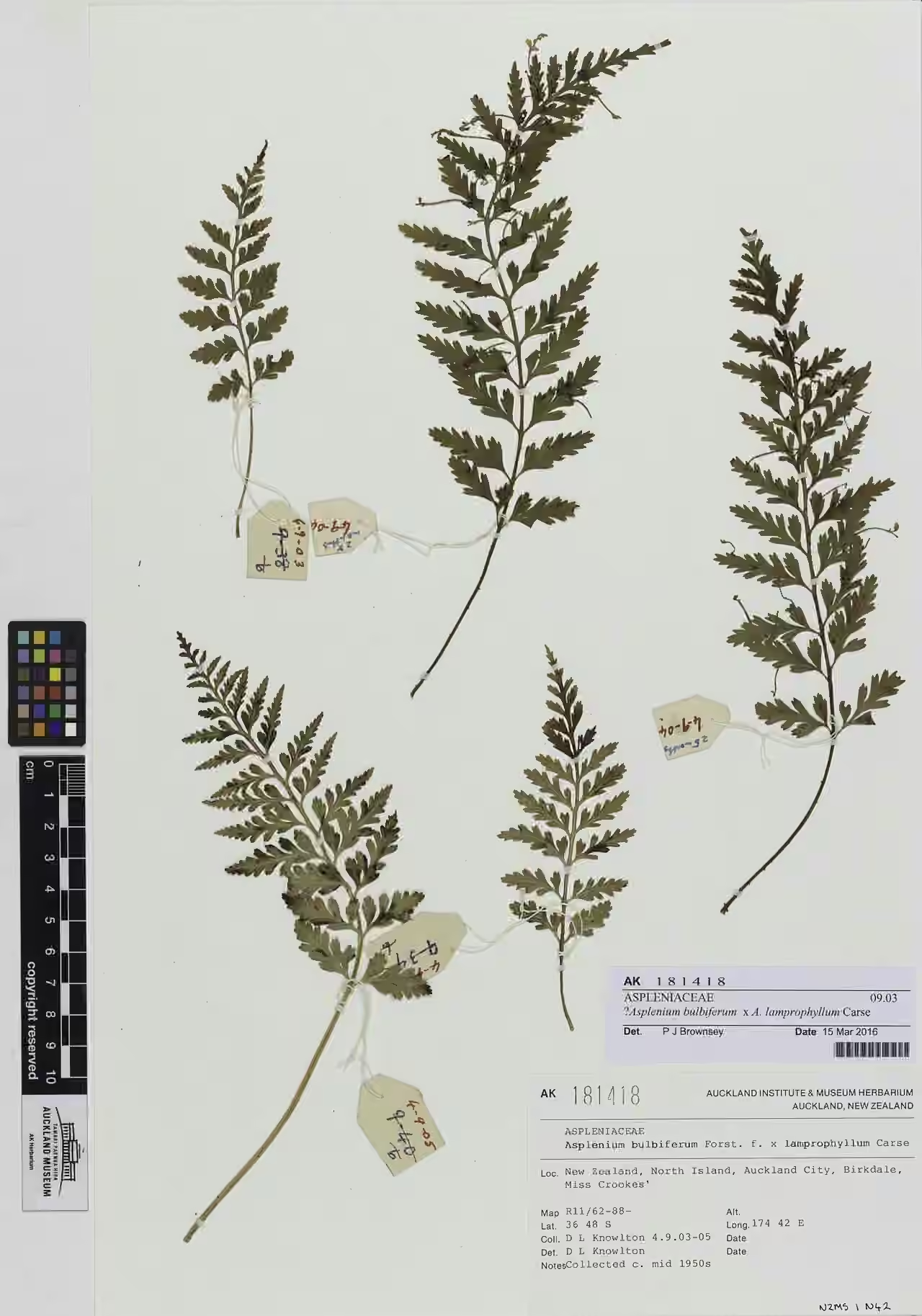
Shiny-Leaved Spleenwort
Asplenium lamprophyllum
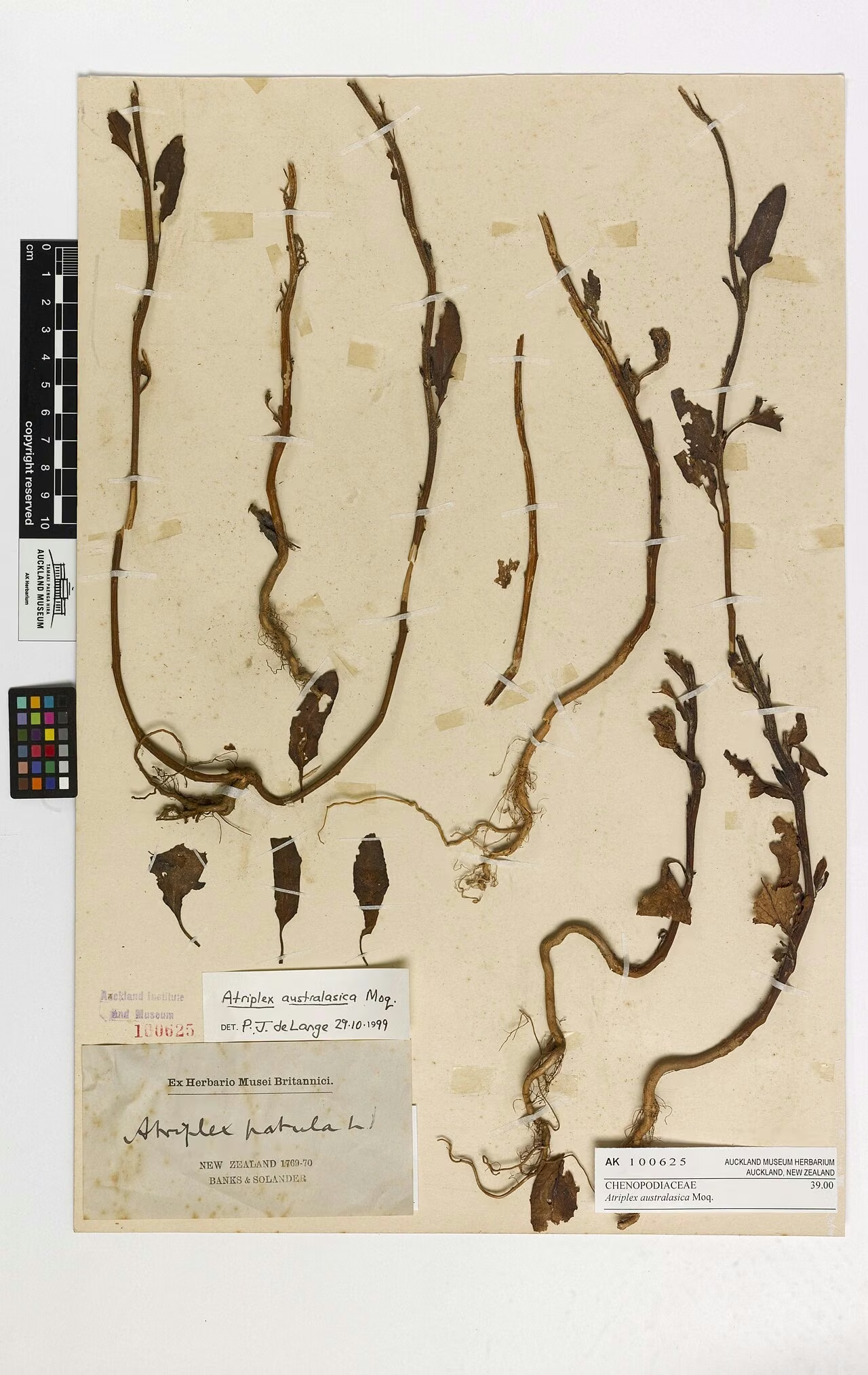
Native Orache
Atriplex australasica
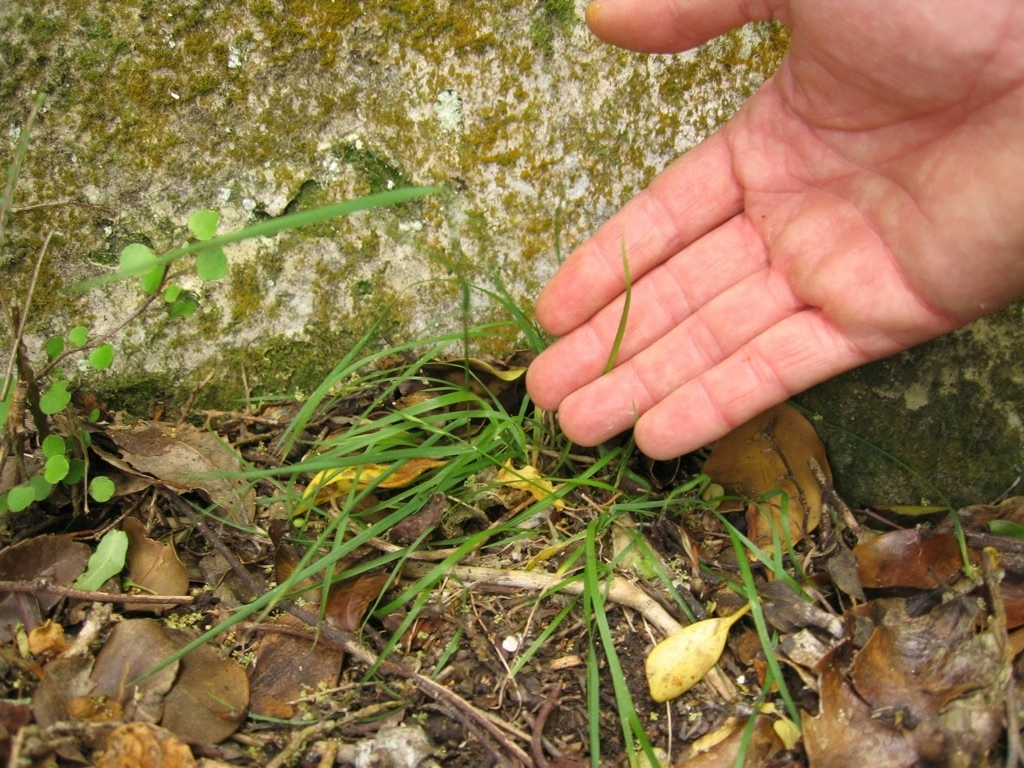
Limestone Wheatgrass
Australopyrum calcis subsp. calcis
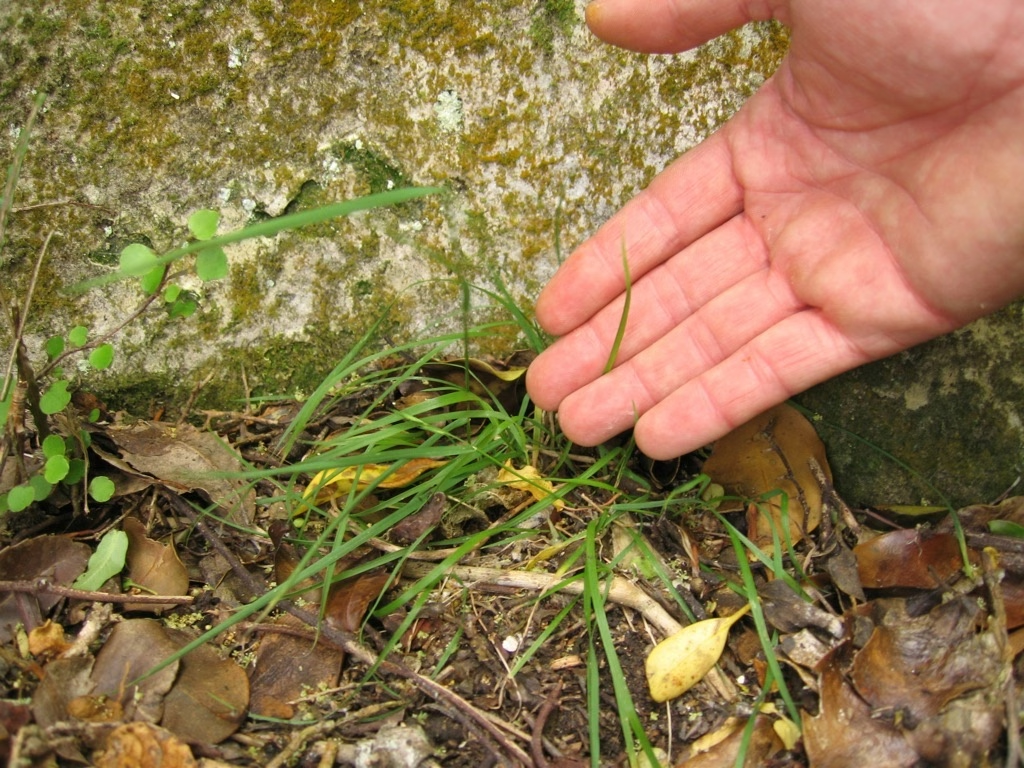
Canterbury Limestone Wheat Grass
Australopyrum calcis subsp. optatum
Ground Spleenwort
Ground Spleenwort
Plant Conservation
Asplenium shuttleworthianum is ranked At Risk - Naturally Uncommon (2023) with the qualifiers RR (Range Restricted), Sp (Sparse) and TO (Threatened Overseas). Its New Zealand population is confined to the small, remote Kermadec Islands.
The Kermadec Islands form a nature reserve managed by the Department of Conservation. Eradication of goats and rats from Raoul Island and continued weed control, together with biosecurity to stop new pests reaching the islands, protect its habitat.
Frequently Asked Questions
Where is Shuttleworth's spleenwort found in New Zealand?
Only in the Kermadec Islands, including Raoul, North and South Meyer, Napier, Macauley and Cheeseman Islands, at about 40 to 200 m altitude.
How do you recognise Asplenium shuttleworthianum?
Look for yellow-green, leathery fronds that are two to four times pinnate with narrow segments, and short sori confined to the often slightly widened tips of the ultimate segments.
Can Shuttleworth's spleenwort be grown indoors?
Yes. NZPCN says it is easily grown but cold sensitive, and is best grown indoors as a potted fern, where it makes an attractive specimen if scale and mealybug are controlled.
Sources and Further Reading
The botanical, growing, and conservation details for Asplenium (Asplenium shuttleworthianum) on this page draw on the New Zealand plant references below. Consult them for full technical records and the latest distribution data.