Buchanan's Orache
Atriplex buchananii
Last updated:
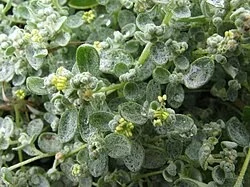
Buchanan's orache (Atriplex buchananii) is a small, low-growing annual or short-lived perennial herb, just 5 to 20 centimetres tall, with a striking whitish-grey, silvery appearance. A dense mealy coating of tiny bladders reflects intense sunlight and conserves water, letting it survive exposed, saline sites. Its small, fleshy oblong leaves often carry a salty residue, and tiny flowers appear in the leaf axils. Exceptionally salt tolerant and drought hardy, it grows on coastal turfs and gravel near the high tide mark and in inland salt pans, occurring on the North, South, Stewart and Chatham Islands. Explore more coastal native plants in our native plant guide.
Plant Description
Atriplex buchananii is a small, typically low-growing annual or short-lived perennial herb characterized by its striking whitish-grey or silvery-grey appearance. This coloration is due to a dense, mealy coating of tiny bladders on the stems and leaves, which effectively reflects intense sunlight and reduces water loss in its often-exposed habitats. The leaves are small, oblong to ovate, and somewhat fleshy, frequently bearing a visible salty residue. The stems are slender and can be either prostrate or ascending, forming compact mats or tufts.
The flowers of Buchanan's Orache are tiny and inconspicuous, appearing in the leaf axils either singly or in small clusters of 2 to 10. Being a C4 plant, it utilizes a specialized photosynthetic pathway that allows it to flourish in hot, dry, and highly saline conditions. Male flowers typically feature 3 to 5 stamens with bright sulphur-yellow filaments, while female flowers produce very small, circular seeds enclosed in protective bracteoles. Its overall form is one of extreme efficiency and resilience, perfectly suited to the harsh and specialized environments it calls home.
Quick Facts
| Scientific Name | Atriplex buchananii |
|---|---|
| Height | 5 - 20 cm |
| Spread | 10 - 30 cm |
| Water Needs | Low (Drought tolerant) |
| Light | Full sun preferred |
| Frost Tolerance | Moderate (Tolerates down to 0°C) |
| Salt Tolerance | Exceptional (Thrives in high-salt environments) |
| Growth Rate | Fast (Annual or short-lived perennial) |
| Lifespan | Annual to Short-lived Perennial |
Climate Best Suited to
Atriplex buchananii is ideally suited to arid and coastal maritime climates across New Zealand. It demonstrates exceptional tolerance to high temperatures (up to 38°C) and intense sunlight, making it perfectly adapted to exposed coastal sites and inland salt pans. While it can tolerate cool temperatures, it is less suited to regions with prolonged severe frosts or consistently high rainfall and low light. Its primary requirement is a location that mimics the dry, high-light, and salt-laden conditions of its natural habitats. It is highly drought-resistant and requires very little maintenance once established.
Regional Suitability
| City | Climate Suitability |
|---|---|
| Auckland | Suitable (In exposed coastal sites) |
| Wellington | Highly Suitable (Enjoys coastal winds and exposure) |
| Christchurch | Highly Suitable (Well-suited to drier eastern conditions) |
| Dunedin | Suitable (Thrives in coastal zones) |
| Invercargill | Suitable (Hardy enough for southern coastal areas) |
Plant Habitat
Buchanan's Orache is found across the North, South, Stewart, and Chatham Islands of New Zealand. Its natural range is focused on specialized saline environments. Coastally, it inhabits open turfs, gravel fields near the high tide mark, and offshore islands, where it often grows in guano-enriched soils or bare, guano-splattered rocks. Inland, it is a characteristic species of the salt pans and slicks found in Central Otago. These habitats are often characterized by poorly draining clay or rocky ground where few other plants can survive, highlighting its role as a specialist pioneer in extreme environments.
Growing Requirements
Soil Requirements
Prefers free-draining soil but is uniquely adapted to thrive in heavy, poorly draining saline clay and gravel.
- High salt content tolerated and often preferred
- Adaptable to thin, rocky, or clay soils
- Enjoys nutrient-rich guano-enriched sites
- Neutral to alkaline pH preferred
Light Requirements
Requires full sun. Its silvery foliage is a natural adaptation to intense light levels.
- Maximum sun exposure
- Not suitable for shaded areas
- Thrives in high-UV environments
Water Requirements
Highly drought-tolerant. Overwatering is often more detrimental than underwatering.
- Very low water needs once established
- Water approximately once a week in dry gardens
- Tolerates occasional waterlogging in natural saline clay
- Avoid consistently wet, fresh-water conditions
Planting and Establishing
To establish Atriplex buchananii in a garden, choose the sunniest, most exposed spot available, ideally one with rocky or gravelly soil. If your soil is naturally very fertile and moist, consider creating a dedicated saline patch or using a container with a lean, mineral-rich potting mix. Sowing fresh seed directly onto the soil surface in spring is often the most successful method, as it mimics its natural self-seeding habit. Alternatively, tip cuttings can be taken in early summer. Maintain moderate moisture during the initial germination and seedling phase, but once established, reduce watering significantly to encourage its natural compact and mealy form. It is a low-maintenance plant that requires very little intervention once it has found its niche.
Ecological Role
As a salt-tolerant endemic, Buchanan's Orache plays a crucial role in stabilizing soil and providing initial vegetation cover in environments where few other species can exist. Its presence on offshore islands and guano-enriched sites makes it an important part of the nutrient cycle in these bird-dominated ecosystems. In the inland salt pans of Central Otago, it is a key species in a unique and rare plant community. By colonizing bare saline ground, it creates micro-habitats for specialized invertebrates and contributes to the foundational biodiversity of New Zealand's harshest environments.
Uses & Significance
Garden Uses
Buchanan's Orache is an excellent choice for rock gardens, coastal landscaping, and specialized native plant collections. Its silvery-grey foliage provides a unique textural contrast, especially when planted alongside green-leaved natives. It is particularly valuable for "low-water" or "no-water" gardens and for sites where salt spray is a major factor.
- Exposed rockeries
- Coastal stabilization
- Low-maintenance groundcover
- Xeriscaping (drought-tolerant gardening)
- Native habitat restoration in saline areas
Ecological Value
Buchanan's Orache contributes to the biodiversity of extreme saline environments and provides habitat for specialized native fauna.
- Stabilizes bare saline soils
- Pioneer species in harsh coastal zones
- Supports specialized invertebrate life
- Component of rare inland salt pan communities
Landscaping Uses
In landscaping, Atriplex buchananii is utilized for its structural durability and striking monochromatic colour. It is an ideal plant for defining the edges of gravel paths or for mass planting in exposed coastal banks where erosion control is required. Its compact, mat-forming habit can be used to create a low-profile, textured carpet in sun-drenched areas. Landscape designers often use it to create naturalistic scenes that evoke the wild, wind-swept beauty of New Zealand's rugged coastline or the unique inland "moonscapes" of Central Otago. Its resilience makes it a practical and beautiful choice for challenging urban environments where radiant heat and salt are present.
Seasonal Care Calendar
Spring
This is the ideal time for sowing seeds. Clear any debris from the previous year to allow light to reach the soil surface. Monitor new seedlings for establishment.
- Sow fresh seeds
- Monitor seedling growth
- Clean up winter debris
Summer
The plant will thrive in the heat. Watering should be minimal, only once a week during extreme drought. Ensure the area remains free of competing weeds.
- Minimal watering (drought-tolerant)
- Maintain weed-free environment
- Ensure maximum sun exposure
Autumn
Collect mature seeds for future propagation. The plant may naturally begin to die back if it is acting as an annual. Allow some seeds to fall for self-seeding.
- Collect seeds
- Allow natural self-seeding
- Monitor plant health
Winter
Minimal care is needed. In colder regions, the plant may die back completely. Prune away dead stems in late winter to prepare for new spring growth.
- Prune dead stems in late winter
- Protect from severe, prolonged frost
- Maintain a tidy growing area
When to Prune and How Much
Pruning for Atriplex buchananii is focused on maintaining health and encouraging a tidy form. For perennial specimens, the best time to prune is in late winter or early spring, just before the first signs of new growth. Use small, sharp snips to remove any dead or diseased stems and to thin out any areas where the plant has become overly congested. This practice improves air circulation and ensures the plant's energy is directed towards healthy new foliage. If the plant is grown as an annual, simply remove the entire plant once it has finished its life cycle and dropped its seed. Minimal pruning is required for this naturally compact species.
- Remove dead stems in late winter
- Thin out congested areas
- Improve air circulation
Regularly removing any encroaching weeds is more important than heavy pruning, as this species does not compete well with more vigorous, non-saline plants.
How to Grow Buchanan's Orache
Propagating Buchanan's Orache ( Atriplex buchananii ) is a straightforward process that leverages its natural resilience and rapid growth cycle. Whether you choose to grow it from seed or from cuttings, the key to success lies in providing environmental conditions that closely mimic its specialized native habitats. This endemic species is particularly rewarding for those looking to populate challenging, high-salt garden areas.
From Seed
Growing from seed is the most common and effective method for Atriplex buchananii . It is a prolific self-seeder in the wild, and this can be easily replicated in a garden setting. Collect mature seeds in autumn; they are very small and found within the leaf axils. For best results, sow fresh seed in spring directly onto the surface of a prepared bed. The soil should be lean and mineral-rich, ideally with a high gravel or clay content. Lightly press the seeds into the soil but do not cover them deeply, as they require light to germinate. Maintain consistent moisture with a fine mist until germination occurs, which usually happens relatively quickly. Once the seedlings are established, they are extremely hardy and require very little supplemental watering.
- Collect small circular seeds in autumn.
- Sow directly onto the soil surface in spring.
- Provide a lean, mineral-rich, well-drained substrate.
- Keep surface moist until germination.
- Thin seedlings if necessary to avoid overcrowding.
- Allow established plants to self-seed naturally.
Self-seeding is a particularly effective way to maintain a population of Buchanan's Orache, especially if it is behaving as an annual in your climate.
From Cuttings
Tip cuttings can also be used to propagate Atriplex buchananii , particularly if you wish to clone a specific plant. Take 5-10 cm tip cuttings in early summer from healthy, non-flowering stems. Remove the lower leaves and insert the cuttings into a free-draining propagating mix (such as a mix of sand and perlite). Place the cuttings in a warm, bright spot but away from direct afternoon sun. Maintain high humidity around the cuttings until roots develop, which can take several weeks. Once a healthy root system is established, gradually acclimate the new plants to full sun before transplanting them into their final location.
- Take tip cuttings from healthy stems in early summer.
- Remove lower foliage and dip in rooting hormone if desired.
- Insert into a sterile, free-draining mix.
- Provide warmth and consistent humidity.
- Transition to full sun once roots are well-developed.
Additional Methods
While less common, large clumps of short-lived perennial forms can sometimes be divided in early spring. However, given the ease of growing from seed and the relatively short lifespan of individual plants, focus should remain on seed propagation for the most robust results. Ensuring the mother plant is healthy and growing in high-light conditions will result in the highest quality seeds and cuttings. Patience and minimal intervention are key when working with this specialized pioneer species. Always use sterile tools and media to prevent the introduction of pathogens during the propagation process.
Pests & Diseases
Atriplex buchananii is generally very resistant to pests and diseases, a testament to its evolution in harsh, high-salt environments that deter many common garden problems. Its main vulnerability is overwatering or excessively humid, stagnant air, which can lead to fungal damping-off in seedlings or root rot in mature plants. Ensure excellent air circulation and avoid over-fertilizing with nitrogen, as this can encourage soft growth that is more attractive to aphids. In garden settings, keep an eye out for snails and slugs, which may occasionally target young seedlings. Providing the plant with its preferred high-light, low-moisture conditions is the best way to ensure it remains healthy and robust.
Cultural Significance
While Atriplex buchananii may not have the same level of documented traditional Māori usage as larger trees like Kauri or Harakeke, it is an integral part of the ecological and cultural heritage of Aotearoa New Zealand. Its presence in the unique inland salt pans of Central Otago and on remote offshore islands represents the specialized and resilient nature of New Zealand's flora. As a plant that thrives where others perish, it can be seen as a symbol of endurance and adaptation. Protecting the rare saline ecosystems it inhabits is essential for maintaining the full spectrum of New Zealand's botanical heritage, ensuring that these small but significant plants continue to play their part in the natural narrative of the land.
Bonus Tip
To truly appreciate the unique beauty of Buchanan's Orache, try planting it in a large, shallow concrete or terracotta bowl filled with a mix of gravel and clay. This creates a miniature "salt pan" effect that highlights its silvery foliage and allows you to control its specific environmental needs perfectly. Its resilience to radiant heat makes it a great choice for a sun-drenched patio focal point.
Related Plants
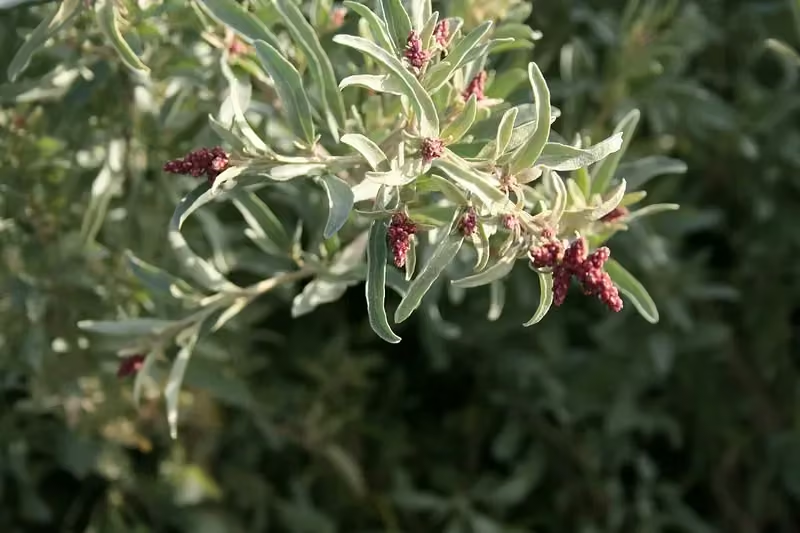
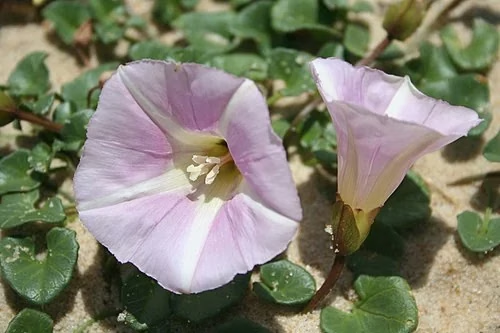
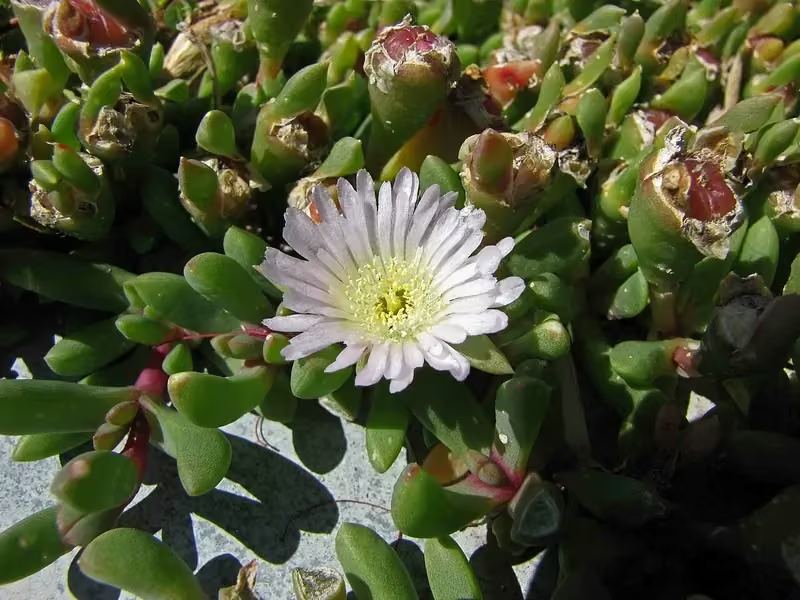
Explore other native New Zealand plants that share characteristics or habitats with Buchanan's Orache ( Atriplex buchananii ), offering further insights into our diverse and hardy flora. These related species can provide inspiration for creating a cohesive and resilient coastal or dry-land garden.


Plant Conservation
Atriplex buchananii is classified as "Not Threatened" in the New Zealand Threat Classification System. This reflects its widespread and often abundant presence in its specialized saline habitats across the country. While it is naturally resilient, it remains important to preserve the integrity of its native coastal turfs and inland salt pans, which are often vulnerable to invasive exotic weeds and habitat degradation from land development. Protecting these unique environments ensures that Buchanan's Orache and its associated plant communities continue to thrive. Gardeners can contribute to its conservation by using it in suitable landscapes and promoting the appreciation of New Zealand's hardy and specialized pioneer species.
Frequently Asked Questions
How big does Buchanan's Orache get?
It is a small herb growing 5 to 20 centimetres tall with a spread of 10 to 30 centimetres.
Where does Atriplex buchananii grow?
It grows in coastal turfs and gravel near the high tide mark and in inland salt pans across New Zealand.
Is Buchanan's Orache salt tolerant?
Yes, it has exceptional salt tolerance and thrives in high-salt coastal and inland environments.
Does Buchanan's Orache tolerate drought?
Yes, it is drought tolerant and prefers full sun with low water needs.
Sources and Further Reading
The botanical, growing, and conservation details for Buchanan's Orache (Atriplex buchananii) on this page draw on authoritative New Zealand plant references and citizen-science observation records. Consult the sources below for full technical records and the latest distribution data.