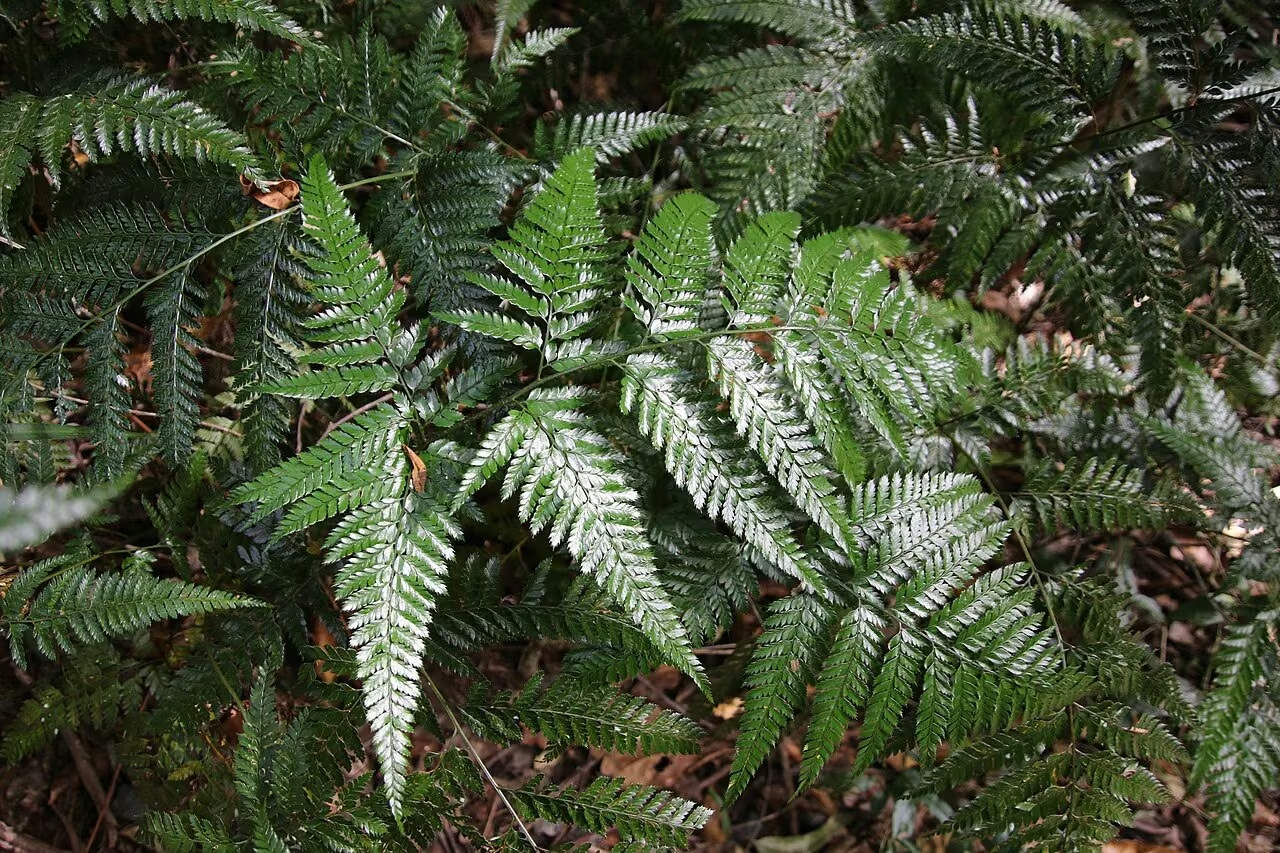
Glossy Fern
Arachniodes aristata
Last updated:
Arachniodes aristata is a robust ground fern with long-creeping, scaly rhizomes and stiff, glossy, dark green fronds up to about 1 m long that are three to four times divided with sharply toothed segments. In New Zealand it grows only on Raoul Island in the Kermadec Islands, where it is the commonest terrestrial fern of dry forest. It is also widespread from Australia, Lord Howe and Norfolk Islands across the South Pacific and into Asia. Because its New Zealand range is a single small island it is ranked At Risk - Naturally Uncommon. It grows easily from spores or rooted pieces in warm, frost-free gardens. Explore more native ferns in our native plant guide.
Plant Description
Arachniodes aristata is a terrestrial fern with long-creeping, scaly rhizomes from which fronds arise at intervals. The stipes are stiff and wiry, 20 to 86 cm long. The fronds as a whole reach about 68 to 105 cm long. The blade is broadly ovate, triangular or five-angled, 30 to 80 cm long and 20 to 50 cm wide, three-pinnate and up to four-pinnate at the base.
The fronds are dark, shining green above and paler below, with a harsh texture and scales along the midribs. The ultimate segments have sharply toothed, bristle-tipped margins. The sori are round and are covered by kidney-shaped (reniform) indusia that have dark centres.
On Raoul Island it is recognised by the combination of terrestrial habit, long-creeping rhizomes, glossy, harsh, three- to four-pinnate fronds with sharply toothed margins, scaly fronds and round sori with reniform indusia. Other large ground ferns there lack this combination, and the related shield ferns (Polystichum) have round, peltate indusia attached at the centre.
Quick Facts
| Scientific Name | Arachniodes aristata |
|---|---|
| Height | Fronds 0.7 to 1 m long |
| Spread | Spreads by long-creeping rhizomes to form patches |
| Water Needs | Low to moderate; drought tolerant once established |
| Light | Shade to semi-shade |
| Frost Tolerance | Low; cold sensitive |
| Salt Tolerance | Moderate; grows on a small oceanic island, but no tolerance data published |
| Growth Rate | Moderate |
| Lifespan | Perennial |
Climate Best Suited to
Suits a warm, subtropical to warm-temperate, frost-free climate. It is cold sensitive, so outdoors on the New Zealand mainland it is best suited to northern coastal districts.
Regional Suitability
| City | Climate Suitability |
|---|---|
| Auckland | High |
| Wellington | Low |
| Christchurch | Low |
| Dunedin | Low |
Plant Habitat
In New Zealand Arachniodes aristata is known only from Raoul Island, the largest of the Kermadec Islands, about 1000 km north-east of the North Island. Overseas it occurs in Australia, Lord Howe Island, Norfolk Island and most South Pacific islands from the Solomon Islands to Pitcairn Island, and also in Asia. The species was first described from material collected on Cook's second voyage.
On Raoul Island it is the commonest terrestrial fern of dry forest, growing among sparse leaf litter in usually shaded lowland forest under native trees, and it has also been collected from roadsides and damp banks. It is absent from the island's wet forest and swamp.
Growing Requirements
Soil Requirements
In the wild it grows in dry, free-draining volcanic forest soils with a light covering of leaf litter.
- Free-draining soil is essential
- Leaf litter or bark mulch over the root zone
- Avoid waterlogged sites
Light Requirements
It is a fern of shaded forest floor, though not of deep, wet gullies.
- Shade to semi-shade
- Protect from hot afternoon sun
- A warm, sheltered site under trees is ideal
Water Requirements
Unlike many ferns it is adapted to dry forest and tolerates drought once established.
- Water regularly until established
- Tolerates dry periods once settled
- Do not keep the soil constantly wet
Planting and Establishing
Plant in spring once the risk of cold weather has passed, choosing a warm, shaded spot with free-draining soil, for example under established trees on a north-facing slope. Set rooted rhizome pieces just below the surface, with the growing tip at soil level.
Mulch with leaf litter to mimic its forest-floor habitat and water through the first summer. In cooler districts it is best grown in a large pot in a sheltered courtyard or conservatory where it can be protected from frost.
Ecological Role
As the most common ground fern in Raoul Island's dry forest, it forms part of the forest-floor cover beneath trees such as the Kermadec pohutukawa (Metrosideros kermadecensis), helping to hold leaf litter and soil on steep volcanic slopes.
Like other ferns it reproduces by wind-borne spores, which explains its wide distribution across Pacific islands. Its creeping rhizomes allow it to spread into patches and recover from disturbance.
Uses & Significance
Garden Uses
In warm, frost-free gardens it makes a handsome, glossy and hard-wearing ground fern for dry shade.
- Ground cover in dry shade under trees
- Container fern for sheltered courtyards
- Collections of Kermadec Islands plants
- Contrast foliage among broad-leaved shrubs
Ecological Value
It is part of the distinctive subtropical flora that makes the Kermadec Islands unique within New Zealand.
- Dominant ground fern of Raoul Island dry forest
- Helps stabilise litter and soil on volcanic slopes
- Provides cover for forest-floor invertebrates
Landscaping Uses
Use it in sheltered, shaded parts of northern gardens where the soil drains well and other ferns might struggle in summer dryness. The glossy, finely toothed fronds bring texture beside broadleaved natives such as puka and kawakawa.
Its spreading habit suits a loose drift under trees rather than formal edging. Allow space for the rhizomes to wander, and plant in groups of three or more for a fuller effect.
Seasonal Care Calendar
Spring
New fronds uncurl from the creeping rhizome as temperatures rise.
- Plant or divide now
- Mulch with leaf litter
Summer
Fronds mature and sori develop on the undersides.
- Water young plants in dry spells
- Collect spores as sori darken
Autumn
Fronds remain glossy and evergreen; spores continue to be shed.
- Remove damaged fronds
- Prepare frost cover in marginal districts
Winter
Growth slows and the plant is vulnerable to cold.
- Protect from frost
- Keep pot plants on the dry side
When to Prune and How Much
No regular pruning is needed. Cut off old, brown or damaged fronds at the base in spring before the new fronds unfurl.
If the rhizomes wander beyond the area intended, cut through them with a spade and lift the unwanted pieces, which can be potted up as new plants.
How to Grow Glossy Fern
NZPCN describes Arachniodes aristata as easily grown from fresh spores and from rooted pieces of rhizome. Because the species is At Risk in New Zealand and Raoul Island is a nature reserve, material should come from plants already in cultivation rather than from the wild, and collecting on the Kermadecs requires Department of Conservation permission. Division is the quicker method; spores produce many plants but take a year or more to reach a plantable size.
From Spores
Fresh spores germinate readily. Collect a fertile frond when the sori under the kidney-shaped indusia have darkened but before they have shed, and sow onto a sterile surface kept warm and humid. Green prothalli appear within weeks, followed later by the first small fronds.
- Cut a frond section with mature, dark sori and place it in a paper envelope
- Leave for a few days in a dry place until spores drop
- Sterilise a fine seed mix or peat-free mix by pouring boiling water over it
- Sprinkle spores thinly on the cooled surface
- Cover with glass or clear plastic and place in warm, indirect light
- Keep humid and mist with boiled water if the surface dries
- Prick out small clumps of young ferns once fronds appear and grow on in pots
By Division of Rhizomes
The long-creeping rhizome can be cut into rooted pieces, each with a growing tip and a few fronds. This is best done in spring in warm weather so new roots form quickly.
- Lift a section of rhizome with roots attached
- Cut into pieces with at least one growing tip each
- Pot into free-draining mix with the rhizome just below the surface
- Keep in shade and lightly moist until new fronds appear
Pests & Diseases
No serious pests are recorded for this fern in cultivation. Slugs and snails may damage emerging fronds, and in sheltered, dry indoor conditions mealybug or scale insects can occasionally build up.
Frost and prolonged cold are the main problems in cultivation; frosted fronds turn black and die back to the rhizome. On Raoul Island, introduced weeds that invade forest are a greater concern than pests.
Cultural Significance
No Māori name or traditional use specific to Arachniodes aristata is recorded in the sources consulted. Raoul Island had a brief period of Polynesian settlement, but no association with this fern is documented.
The species was first described in 1786 by Georg Forster (authority G.Forst.) as Polypodium aristatum from material gathered during James Cook's second voyage, and was later moved to the genus Arachniodes.
Bonus Tip
This is one of the few ferns that copes with dry shade under trees once established. In a warm northern garden try it in the root zone of established trees where moisture-loving ferns such as hen and chicken fern fail.
Related Plants
Explore other native plants that share similar characteristics or habitats with Glossy Fern (Arachniodes aristata), offering further insights into New Zealand's diverse flora. These related species provide context and opportunities for complementary planting in your garden.
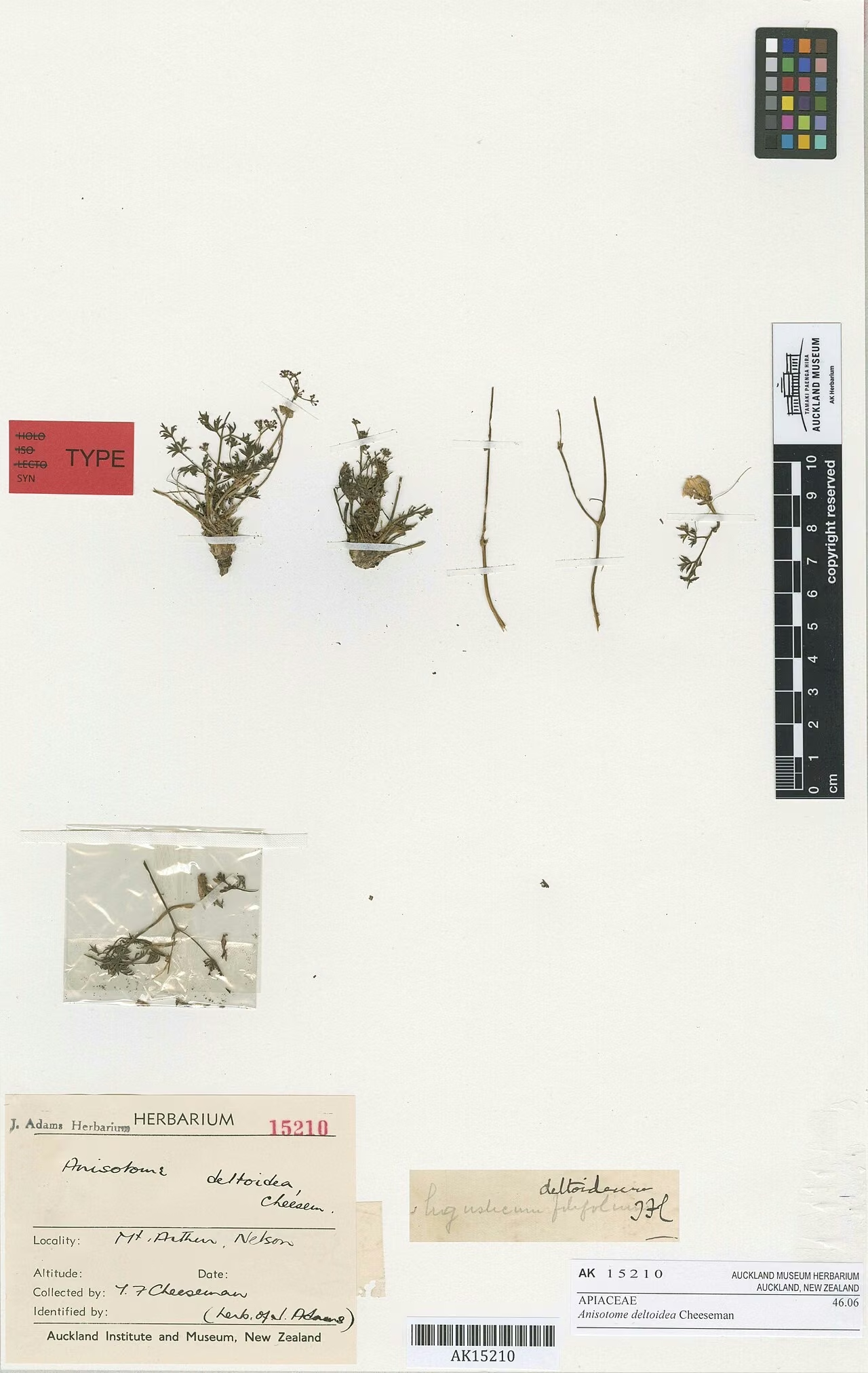
Anisotome deltoidea
Anisotome deltoidea
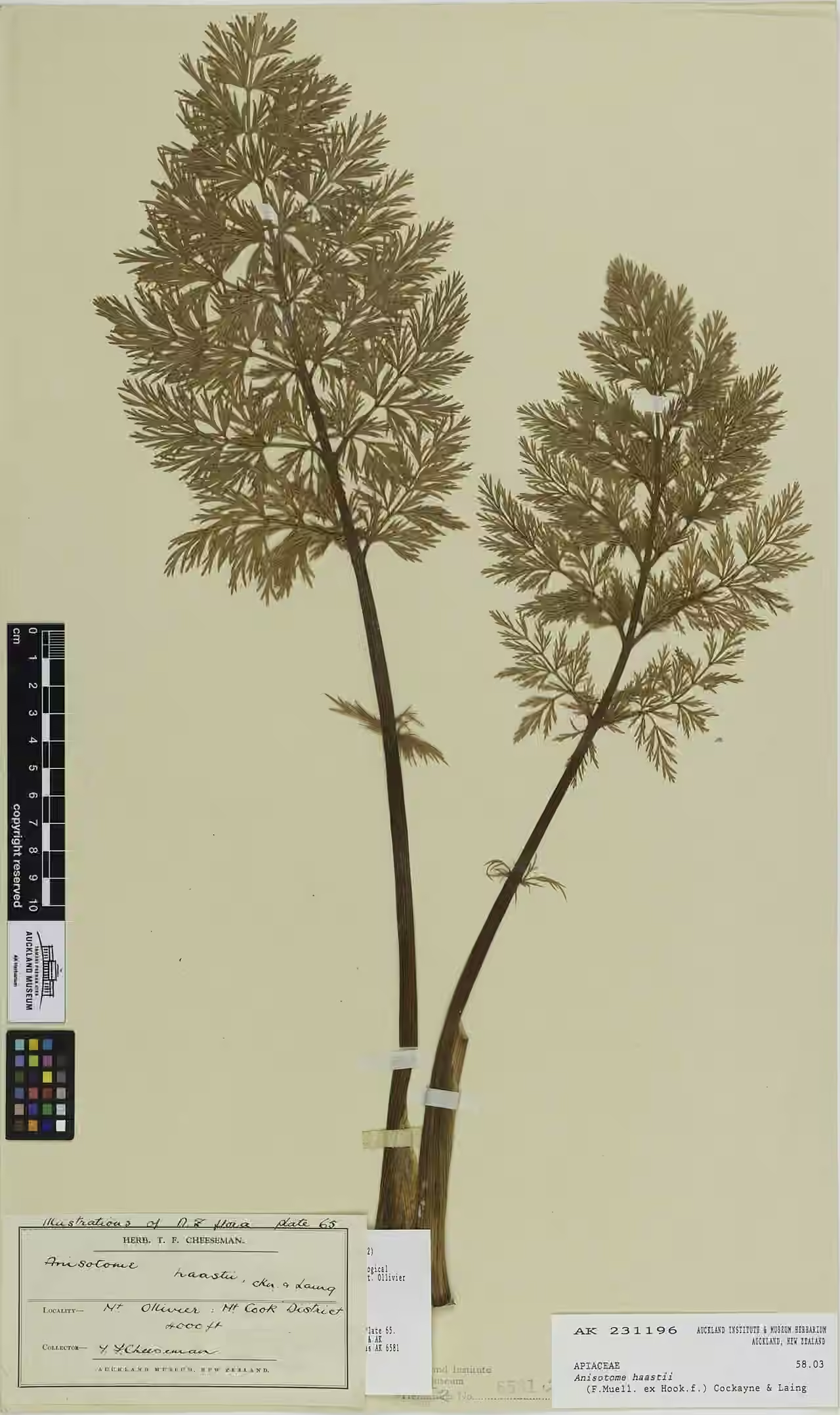
Haast's Carrot
Anisotome haastii
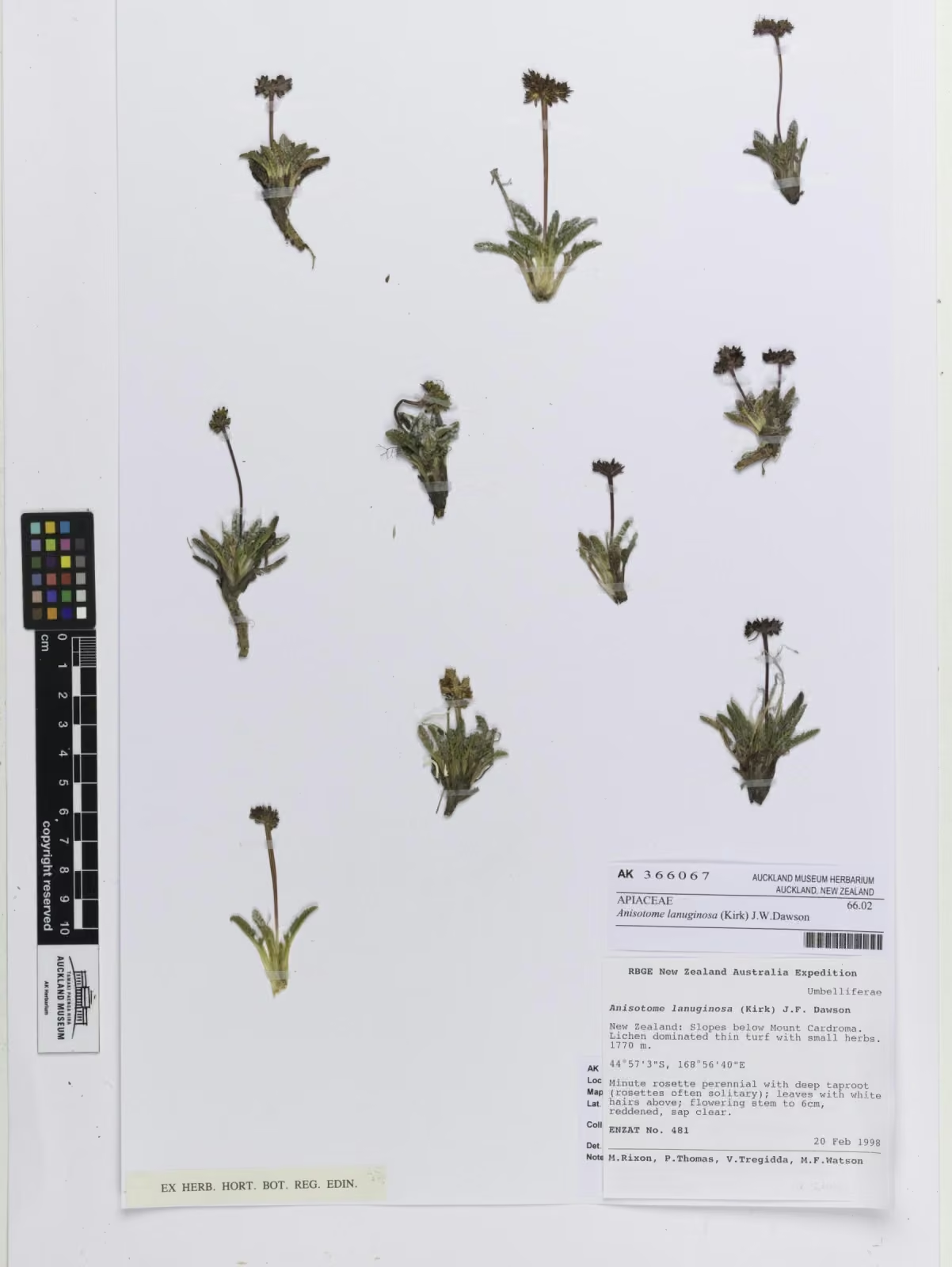
Anisotome lanuginosa
Anisotome lanuginosa
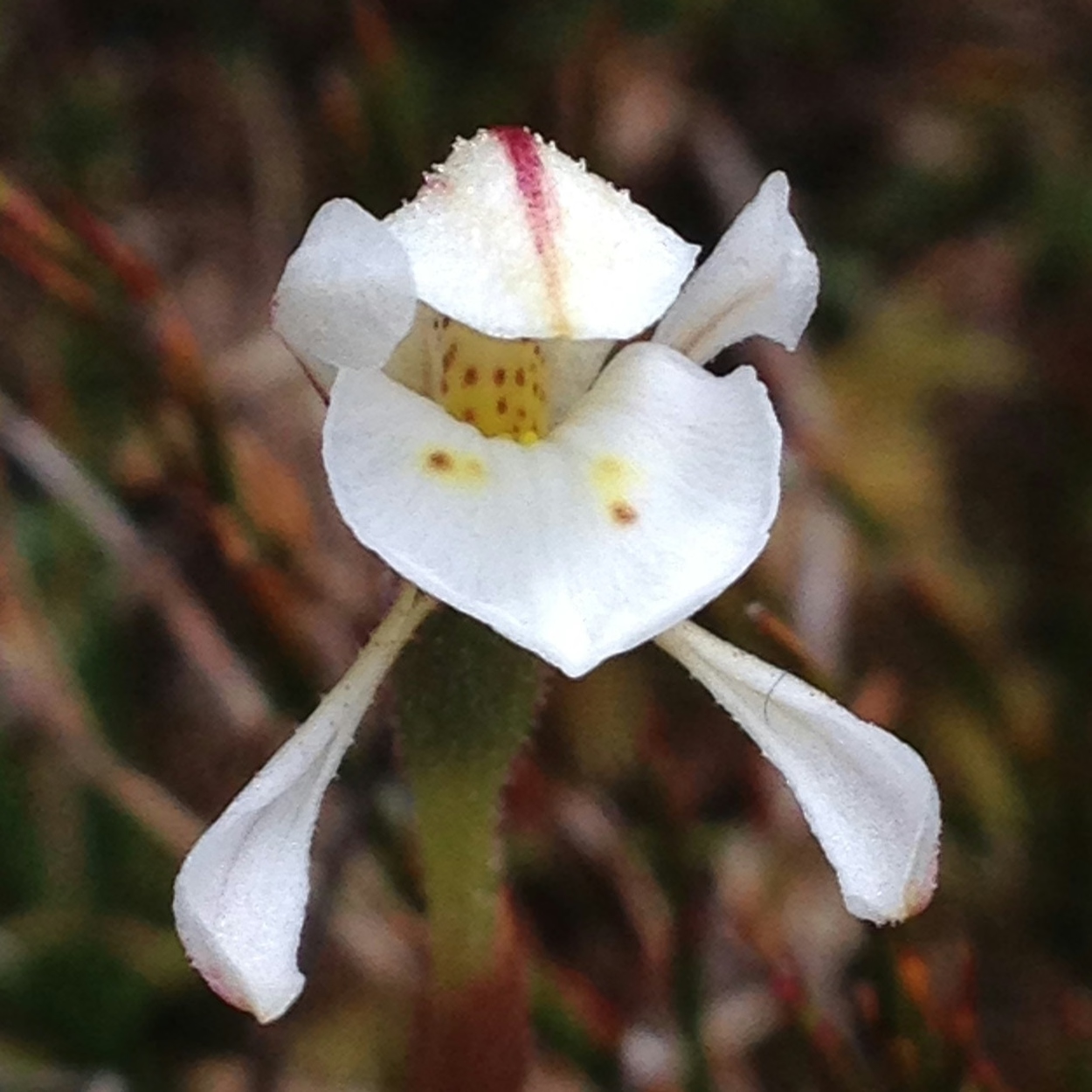
Odd-Leaved Orchid
Aporostylis bifolia
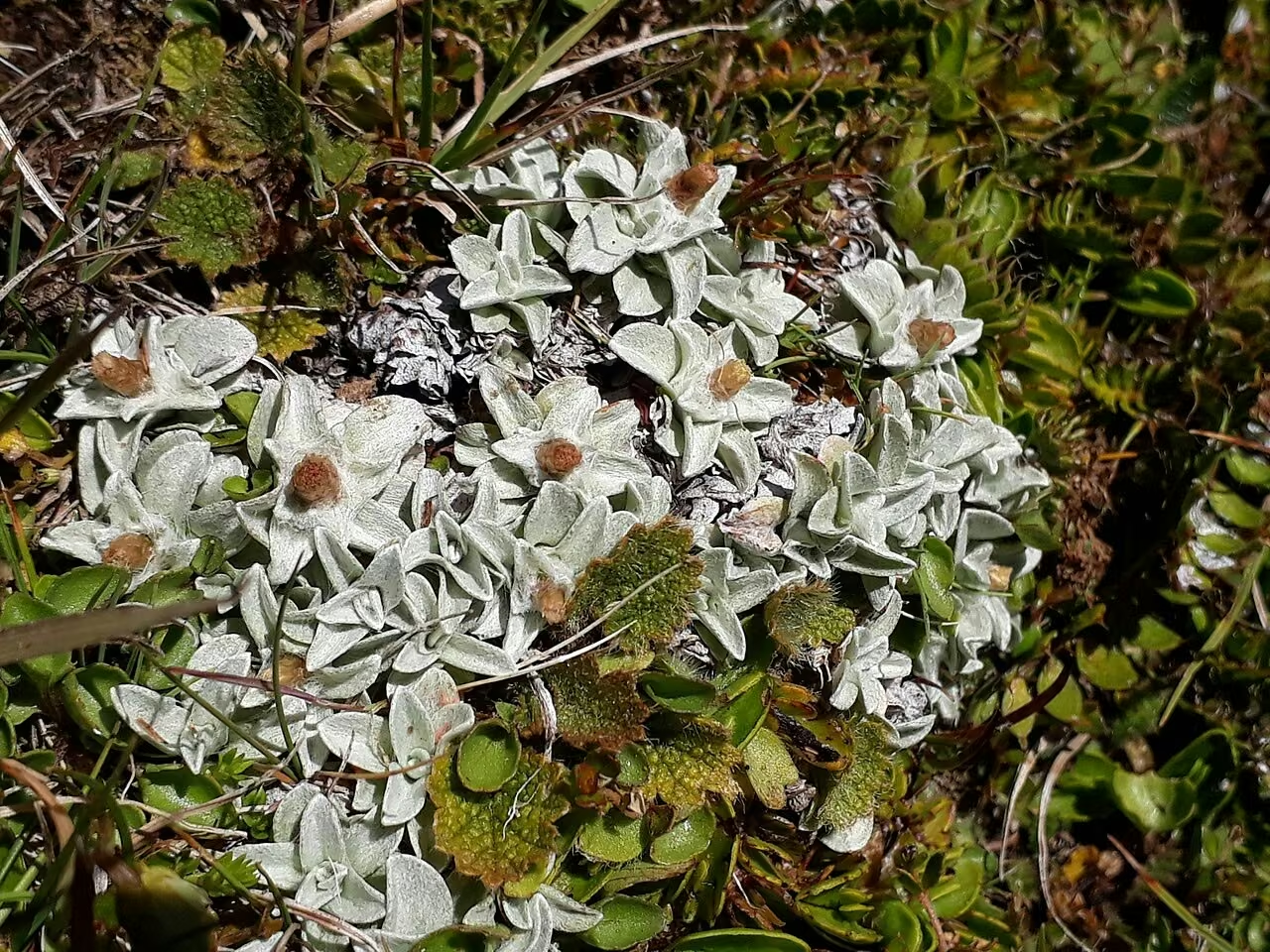
Argyrotegium mackayi
Argyrotegium mackayi
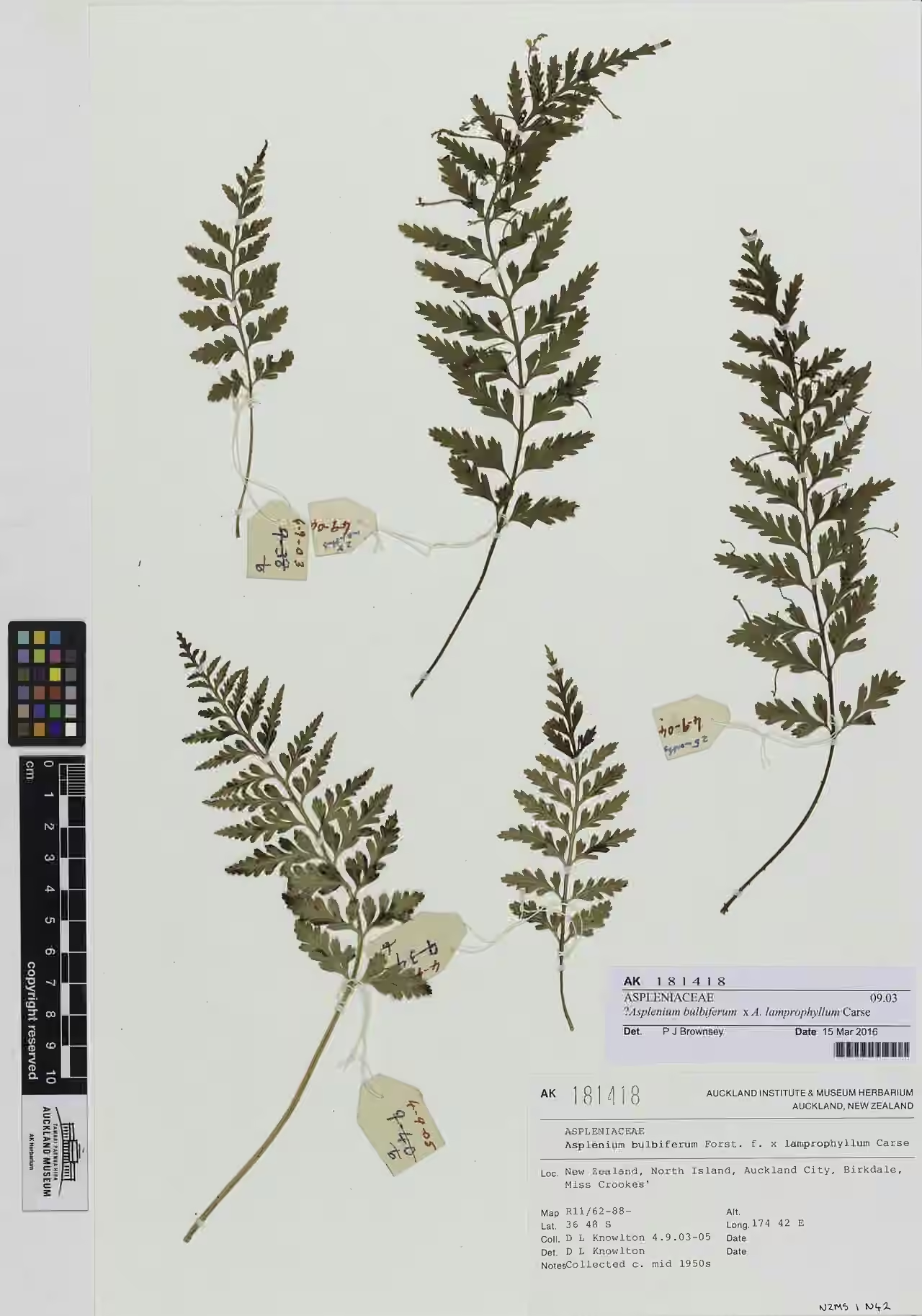
Shiny-Leaved Spleenwort
Asplenium lamprophyllum
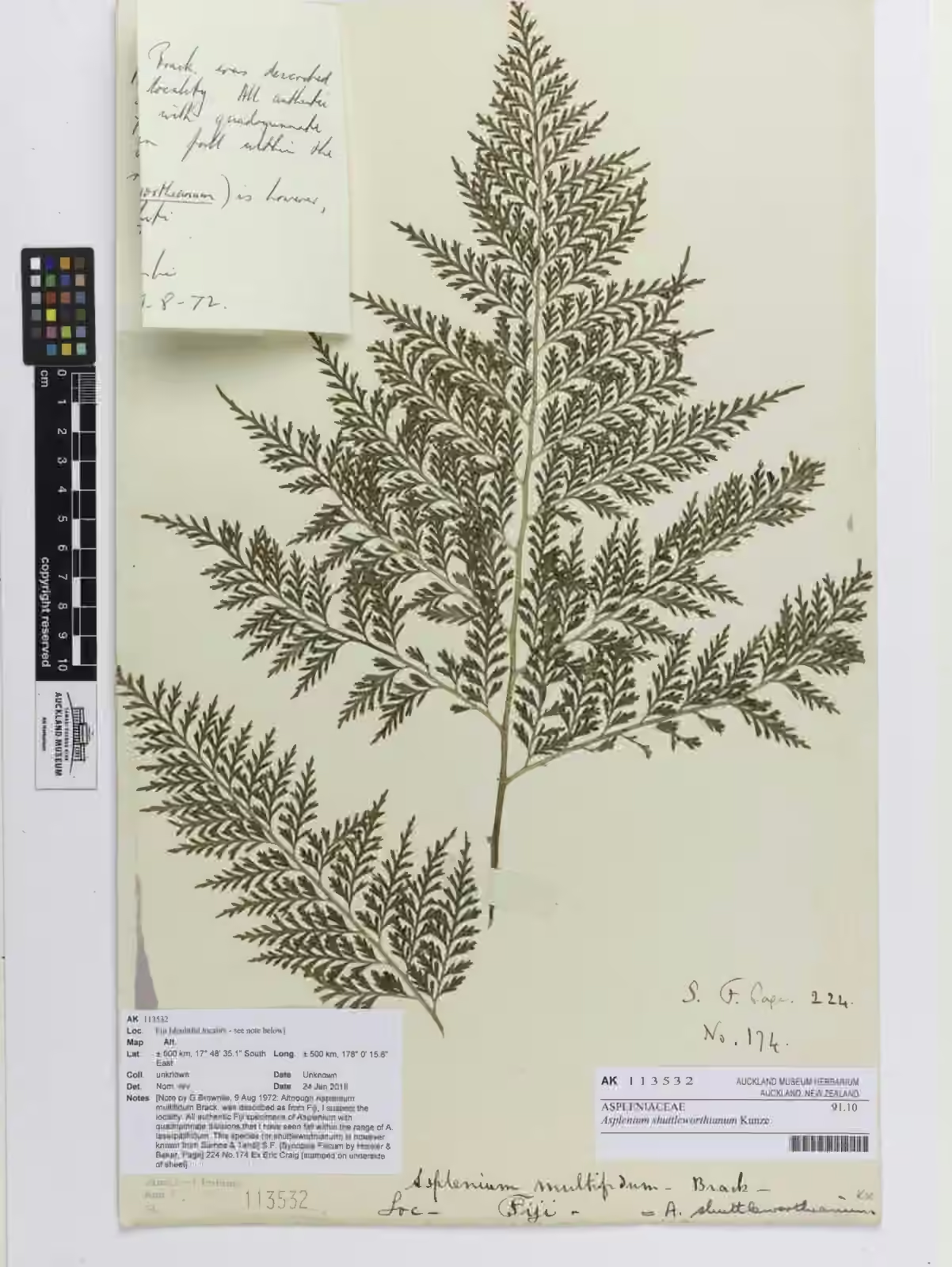
Asplenium shuttleworthianum
Asplenium shuttleworthianum
Native Orache
Atriplex australasica
Plant Conservation
Arachniodes aristata is ranked At Risk - Naturally Uncommon (2023) because its New Zealand occurrence is limited to one small island, even though it is common there and widespread overseas.
Raoul Island is part of the Kermadec Islands Nature Reserve managed by the Department of Conservation. Goats and rats have been eradicated from the island and long-term weed control continues, which benefits the forest in which this fern grows.
Frequently Asked Questions
Where does Arachniodes aristata grow in New Zealand?
Only on Raoul Island in the Kermadec Islands, where it is common in dry, usually shaded lowland forest but absent from wet forest and swamp.
How do you identify Arachniodes aristata?
Look for a ground fern with long-creeping scaly rhizomes, stiff wiry stipes, harsh dark glossy green fronds that are three to four times divided with sharply toothed margins, and round sori covered by kidney-shaped indusia with dark centres.
Can I grow Arachniodes aristata in Auckland?
Yes. NZPCN reports it is hardy in Auckland, drought tolerant once established and does well in free-draining soil in a warm, shaded site, though it is cold sensitive and rarely cultivated.
What does aristata mean?
Aristata is Latin for bearing a bristle or awn, referring to the bristle-tipped teeth on the margins of the frond segments.
Sources and Further Reading
The botanical, growing, and conservation details for Glossy Fern (Arachniodes aristata) on this page draw on the New Zealand plant references below. Consult them for full technical records and the latest distribution data.