Anisotome
Anisotome lanuginosa
Last updated:
Anisotome lanuginosa is a dwarf, densely woolly member of the carrot family endemic to New Zealand. It forms low tufts only a few centimetres tall of small pinnate leaves covered in white wool, with compact heads of cream to white flowers in summer. It is known from the high-alpine cushion herbfield of the Otago mountains, including the Old Man Range and Hector Mountains, at around 1500 m and above. It was once treated as a variety of the common Anisotome aromatica. It is ranked At Risk - Naturally Uncommon because it is sparse and confined to a narrow alpine habitat. Explore more native flowering plants in our native plant guide.
Plant Description
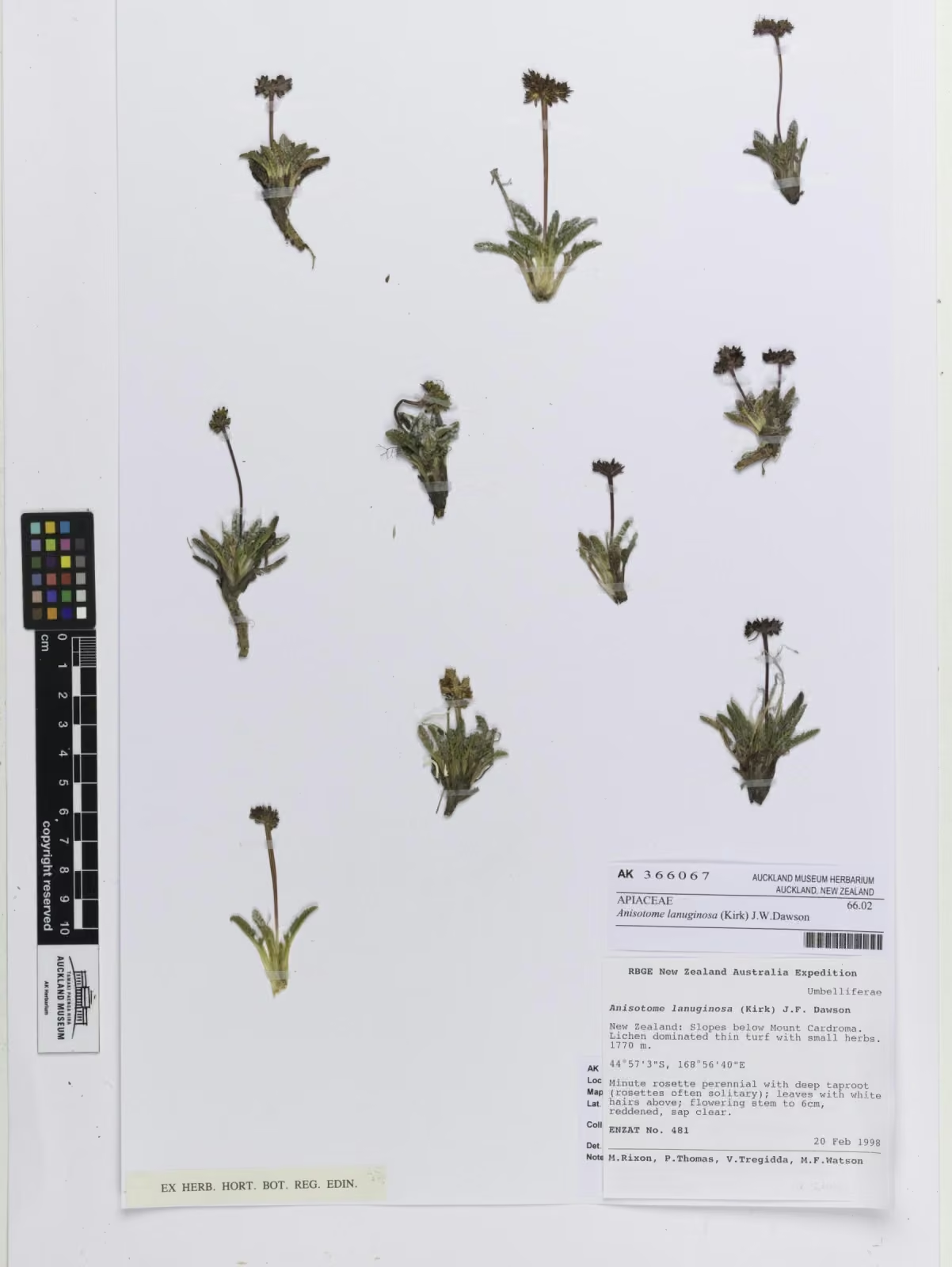
Anisotome lanuginosa is a small, stiff-stemmed perennial herb that sits low among the cushion plants of high-alpine herbfield, generally only 5 to 8 cm tall. Its leaves are up to about 2 cm long, flattened at the stalk and pinnate, with around ten pairs of closely set, overlapping and notched segments. The whole leaf is densely clothed in white wool, which gives the plant a grey-white, felted appearance quite unlike the green foliage of most Anisotome species.
The flowers are cream to white and are borne in compact, compound umbels gathered into a dense head close to the foliage. As in other Anisotome species, each fruit splits into two winged mericarps that are dispersed by the wind.
Its closest relative is Anisotome aromatica, a widespread aromatic herb of tussock grassland that has hairless or sparsely hairy, green leaves. The dense white wool, very small size and high-alpine cushion herbfield habitat separate Anisotome lanuginosa from that species and from the larger, finely dissected Anisotome haastii.
Quick Facts
| Scientific Name | Anisotome lanuginosa |
|---|---|
| Height | About 0.05 to 0.08 m |
| Spread | Small tufts; no reliable figure published |
| Water Needs | Moist alpine soil that drains freely |
| Light | Full sun, open alpine sites |
| Frost Tolerance | Very high; a high-alpine species |
| Salt Tolerance | No information available; not a coastal plant |
| Growth Rate | Very slow |
| Lifespan | Perennial |
Climate Best Suited to
Suits the harsh high-alpine climate of the Central Otago block mountains, with long snow-lie, hard frosts, strong winds, intense sunlight and short, cool summers. It is not suited to lowland climates.
Regional Suitability
| City | Climate Suitability |
|---|---|
| Auckland | Low |
| Wellington | Low |
| Christchurch | Low |
| Dunedin | Low |
Plant Habitat
Anisotome lanuginosa is endemic to New Zealand and is documented from the mountains of Otago. Allan Herbarium specimens come from the Old Man Range/Kopuwai, including its summit ridge at about 1600 m, and NZPCN photographs show it on the Old Man Range and in the Hector Mountains. iNaturalist observations come from the Central Otago and Queenstown-Lakes districts.
Its habitat is high-alpine cushion herbfield, a dwarf, tundra-like vegetation above the snow tussock grassland on the broad, windswept summits of the Central Otago ranges. Here it grows among cushion plants, mat-forming herbs and low grasses on stony soils that are snow-covered for much of the winter.
Growing Requirements
Soil Requirements
It grows in thin, stony, low-fertility alpine soils that are often moist from snowmelt yet drain freely.
- Very gritty, low-nutrient mix in cultivation
- Excellent drainage around the woolly foliage
- No added fertiliser
Light Requirements
It lives fully exposed on open summits with no shade from shrubs or tussock.
- Full sun and open sky
- Shading by taller plants is likely to weaken it
Water Requirements
Moisture comes from snowmelt in spring and from rain and fog in summer, while the stony ground ensures water never pools around the plant.
- Keep roots cool and moist during growth
- Keep the woolly leaves dry; avoid overhead watering in humid weather
- Never allow standing water
Planting and Establishing
This is a specialist plant for an alpine house or trough rather than a garden bed, and it should never be dug from the wild. Any plants in cultivation should come from seed raised by experienced alpine growers.
If grown, plant it into a deep trough of very gritty mix, set the crown slightly proud of the surface and surround it with stone chips so the woolly leaves stay dry. Cover from winter rain while allowing full light and cold.
Ecological Role
Its compact umbels flower during the brief high-alpine summer, when iNaturalist records show it is most often seen in December and January. Small flies and other insects active on the summits are likely visitors, but no pollination study specific to this species was found.
The winged fruit halves are dispersed by wind, an effective strategy on open, windswept tops. As part of the cushion herbfield community it shares a fragile habitat in which plants grow very slowly and recover slowly from damage.
Uses & Significance
Garden Uses
Garden use is limited to specialist alpine collections because of its exacting needs and rarity.
- Alpine house or covered trough culture
- Botanic garden displays of Otago high-alpine flora
- Not suitable for general garden beds
Ecological Value
It is one of the distinctive endemic herbs of the Central Otago high-alpine cushion herbfield.
- Adds to the endemic plant diversity of the Otago block mountains
- Flowers provide food for summit insects in a short season
- An indicator of intact high-alpine herbfield
Landscaping Uses
Anisotome lanuginosa has no real landscaping role. Its value lies in the wild, where its silvery woolly tufts form part of the mosaic of cushions and mats on the Old Man Range and nearby summits.
In an alpine trough it can be displayed among small grey-leaved cushion plants and gravel, where its white wool reflects the harsh light of its natural home.
Seasonal Care Calendar
Spring
Plants emerge as snow melts from the summits in late spring, with new woolly leaves appearing.
- Keep trough plants moist but well drained
- Ensure good light
Summer
Flowering takes place in the short alpine summer, with most observations of flowering plants in December and January.
- Shade the trough on very hot lowland days
- Avoid wetting the woolly leaves
Autumn
Fruits ripen and split into winged halves that are carried off by the wind.
- Collect seed from cultivated plants
- Reduce watering as growth slows
Winter
On the summits it rests under snow. In cultivation it needs cold, dry conditions.
- Protect from winter rain
- Allow full winter cold
When to Prune and How Much
No pruning is needed. Spent flower heads can be removed once seed has dispersed or been collected.
Gently pick away dead leaves from around the crown with tweezers if they start to hold moisture, as rot is the main risk for woolly alpines in cultivation.
How to Grow Anisotome
Anisotome lanuginosa is rarely, if ever, propagated, and no published propagation protocol for this species was found. It should not be removed from the wild, and seed collection from wild populations needs the agreement of the land manager because the species is sparse. The guidance below is based on general practice for alpine Anisotome species and other high-alpine umbellifers, which are raised from fresh seed given a period of winter cold.
From Seed
Fresh seed is the most reliable method for alpine members of the carrot family. Sow it as soon as it is ripe and expose the sown pots to winter cold, which is likely to be needed to break dormancy in a plant whose seed naturally overwinters under snow. Germination is expected to be slow and uneven.
- Collect ripe fruits from cultivated plants in late summer or autumn
- Sow fresh into deep pots of very gritty seed mix
- Cover the seed with a thin layer of fine grit
- Stand the pots outside in a cold, shaded spot over winter
- Keep the mix just moist and protect from heavy rain
- Move pots into good light when seedlings appear in spring
- Pot seedlings individually into deep pots only when large enough to handle, disturbing roots as little as possible
From Cuttings
Alpine plant growers overseas report attempting cuttings of this species in spring and late summer, but there is no New Zealand record of success. Small rosette cuttings would need a very open, sterile mix, cool temperatures and protection from excess moisture to avoid rot.
- Take small rosette cuttings with a short stem in spring
- Insert into pure pumice or coarse sand
- Keep cool and shaded with low humidity
- Pot on only once roots are well formed
Pests & Diseases
No pests specific to this species are documented. In cultivation the greatest threats are rot of the woolly foliage in humid or wet conditions and loss in hot lowland summers.
In the wild, high-alpine cushion herbfield on the Otago block mountains is vulnerable to trampling, vehicle tracks and grazing or browsing animals, and slow-growing herbs recover poorly from such damage.
Cultural Significance
No traditional Māori name or use specific to Anisotome lanuginosa is recorded in the sources consulted.
The taxon was first described by the botanist Thomas Kirk in 1899 as Ligusticum aromaticum var. lanuginosum, was treated by Cheeseman in 1925 as Anisotome aromatica var. lanuginosa, and was raised to species rank by J.W. Dawson in 1961.
Bonus Tip
To see this plant, visit the open summit plateau of the Old Man Range in December or January, when it is most often recorded in flower. Stay on formed tracks, as cushion herbfield is easily damaged and takes many years to recover.
Related Plants
Explore other native plants that share similar characteristics or habitats with Anisotome (Anisotome lanuginosa), offering further insights into New Zealand's diverse flora. These related species provide context and opportunities for complementary planting in your garden.
Native Carrot
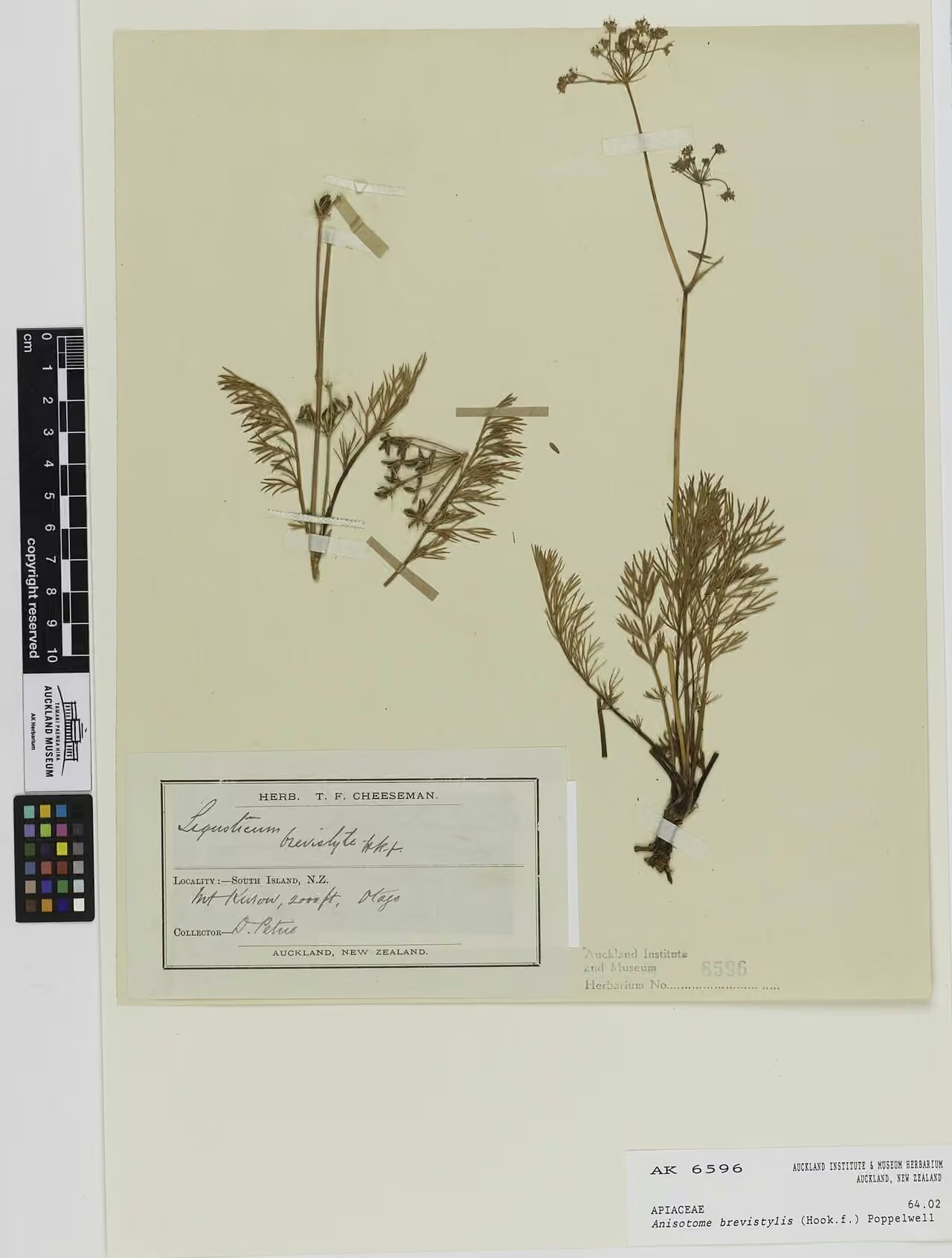
Anisotome brevistylis
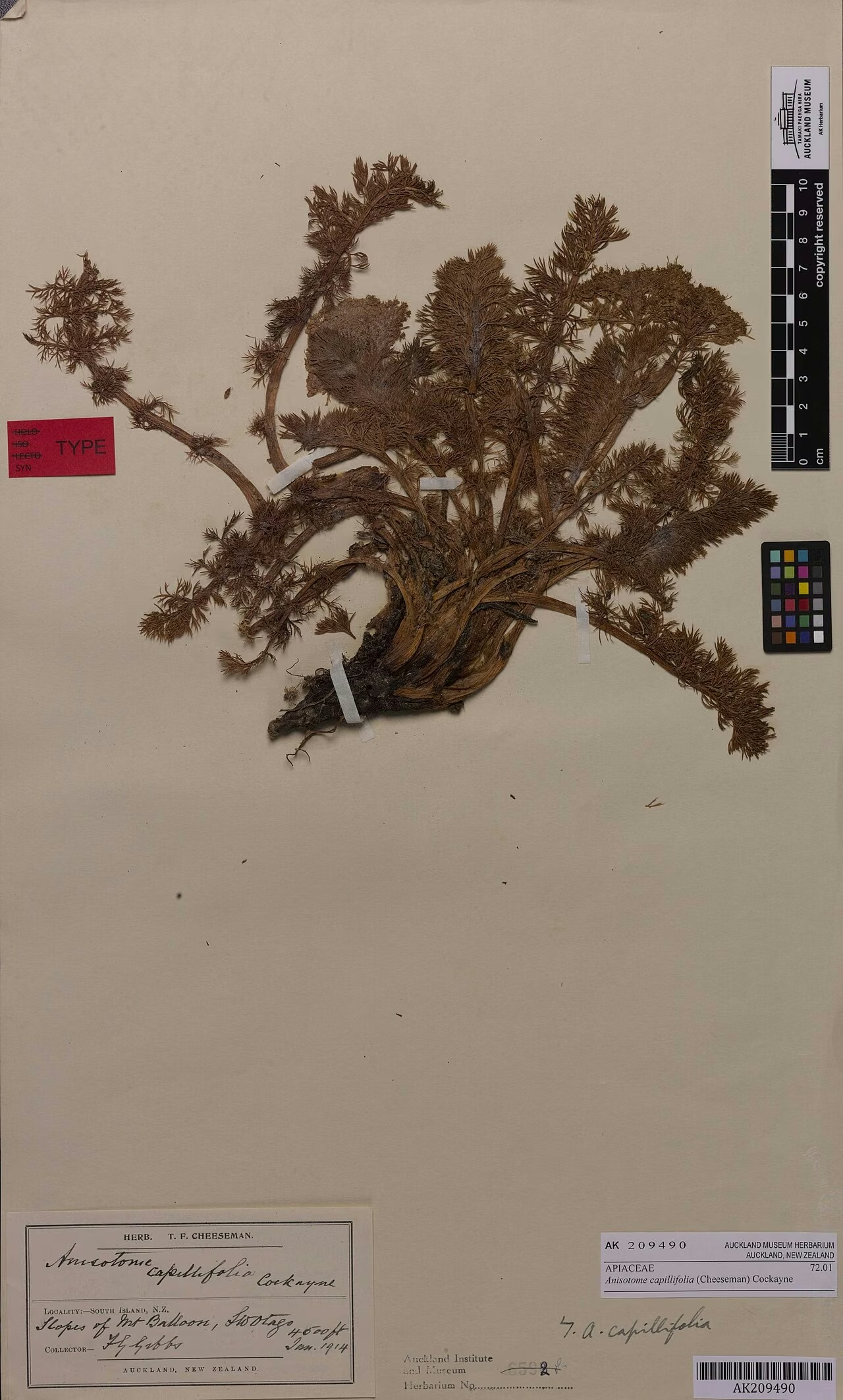
Anisotome capillifolia
Anisotome capillifolia
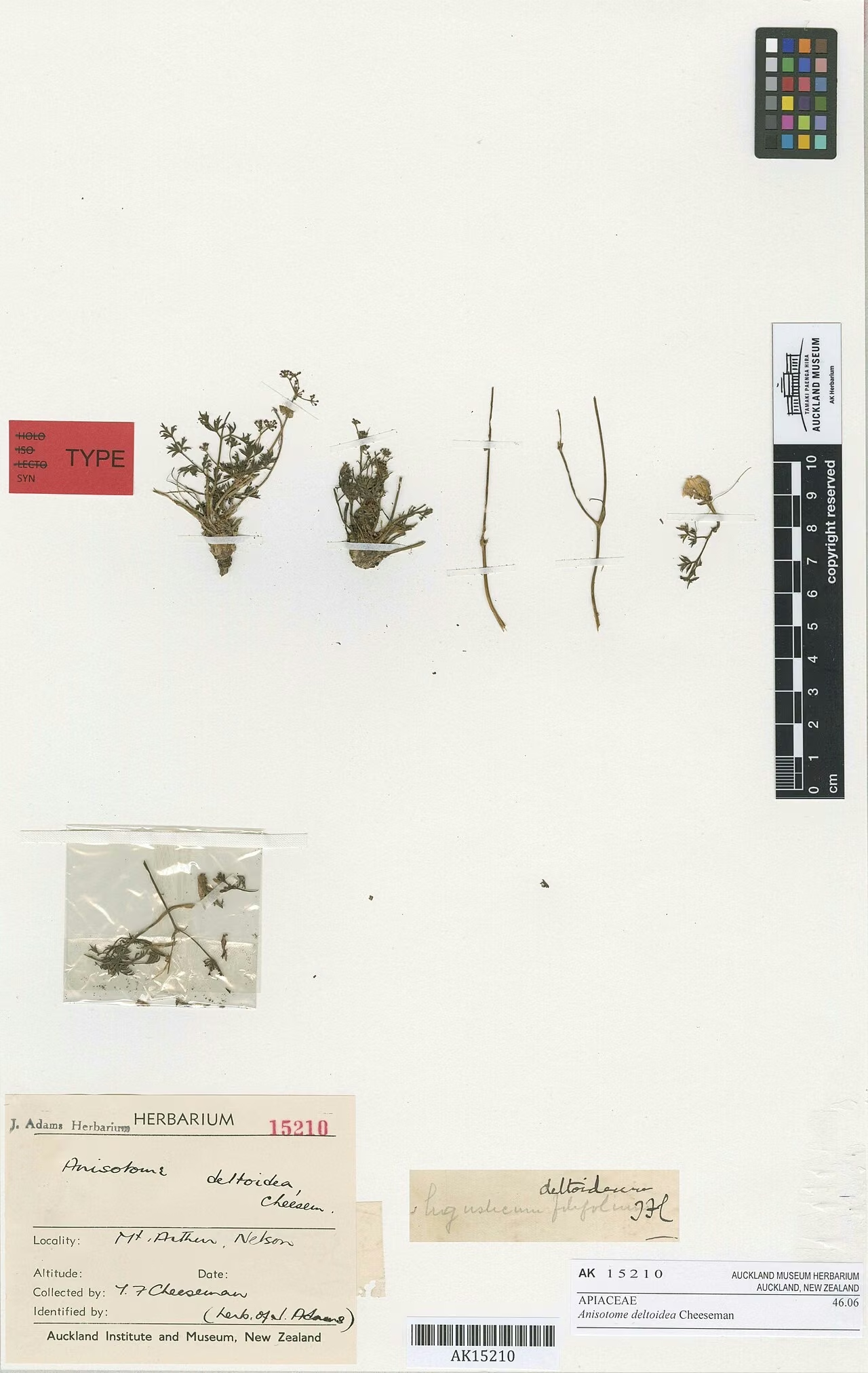
Anisotome deltoidea
Anisotome deltoidea
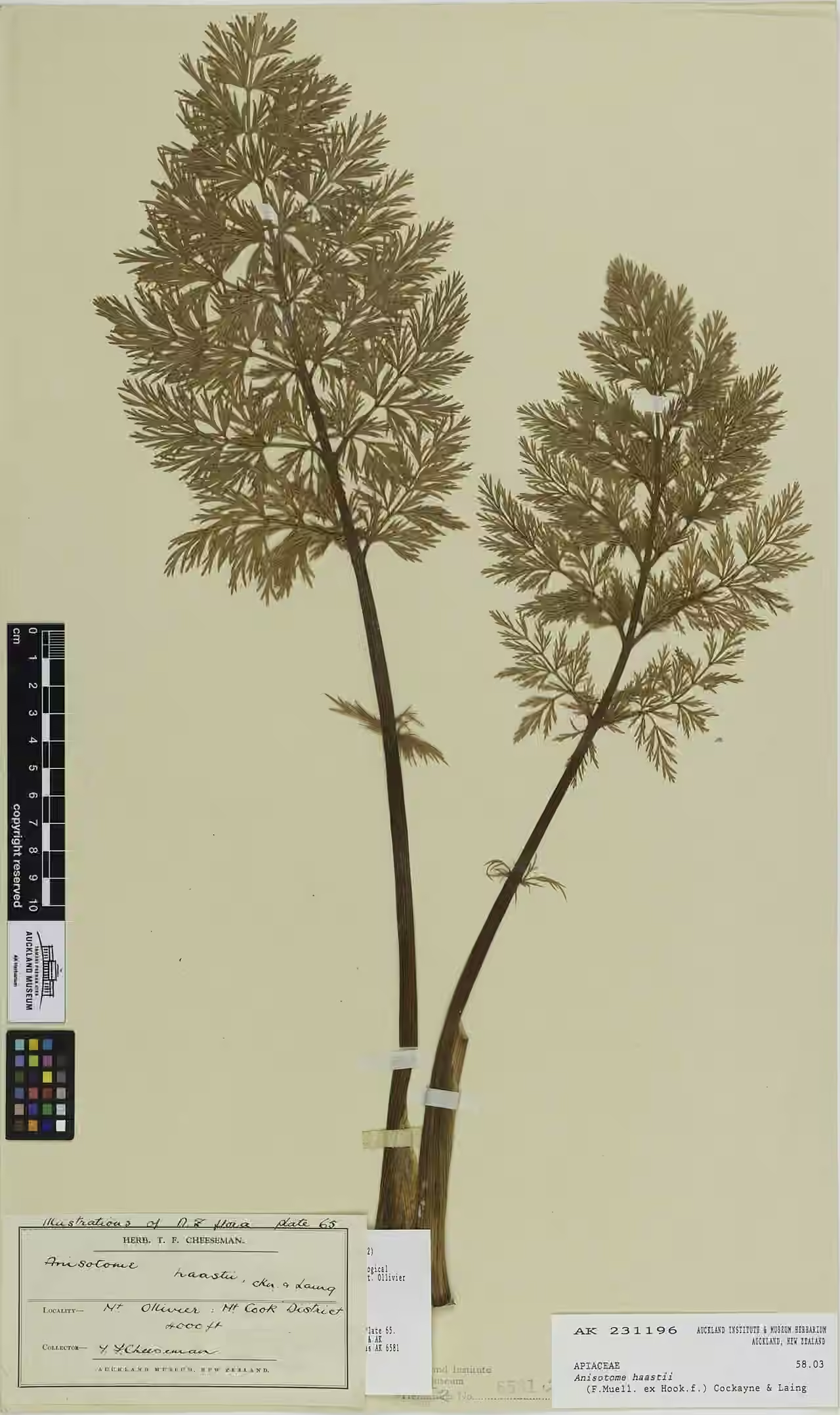
Haast's Carrot
Anisotome haastii
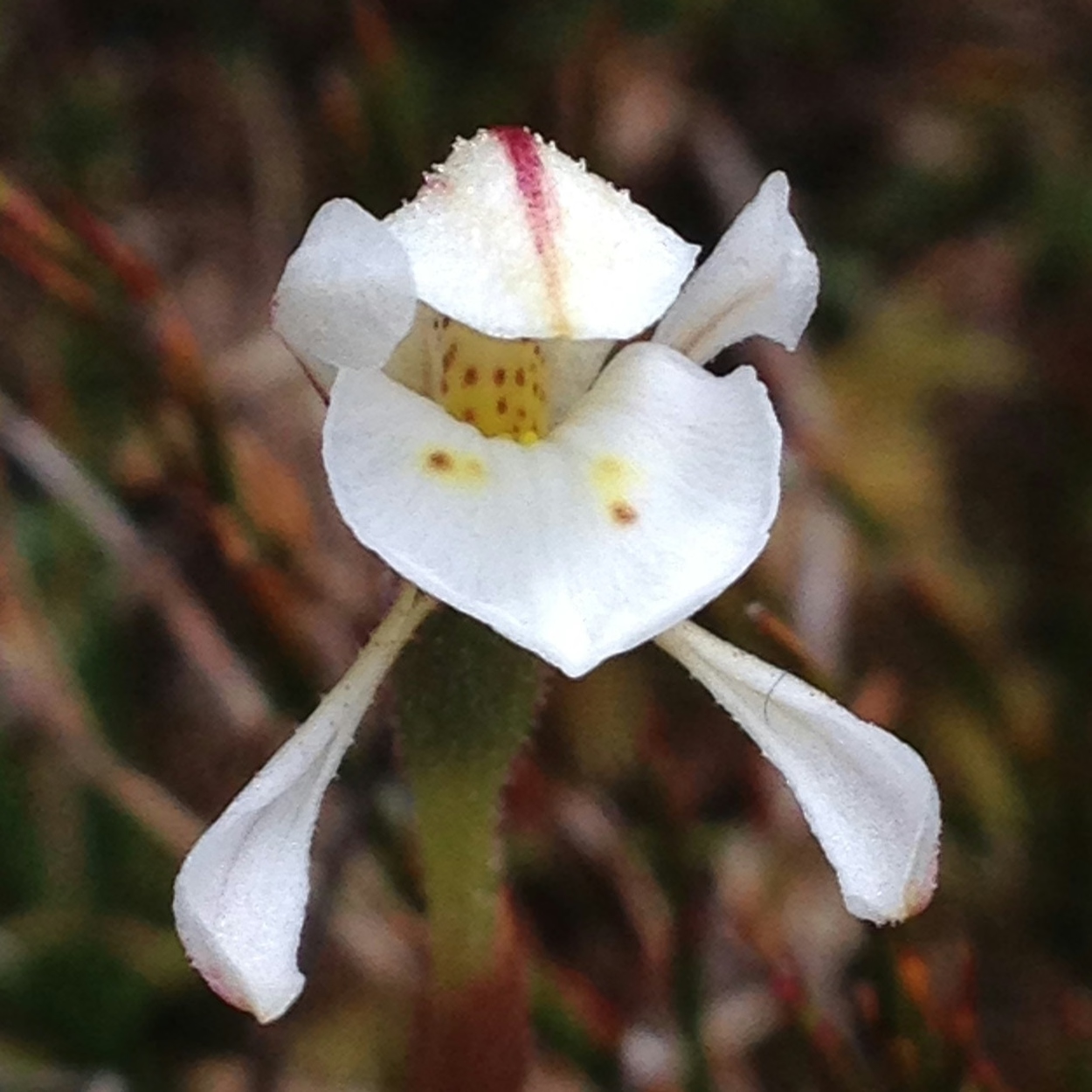
Odd-Leaved Orchid
Aporostylis bifolia
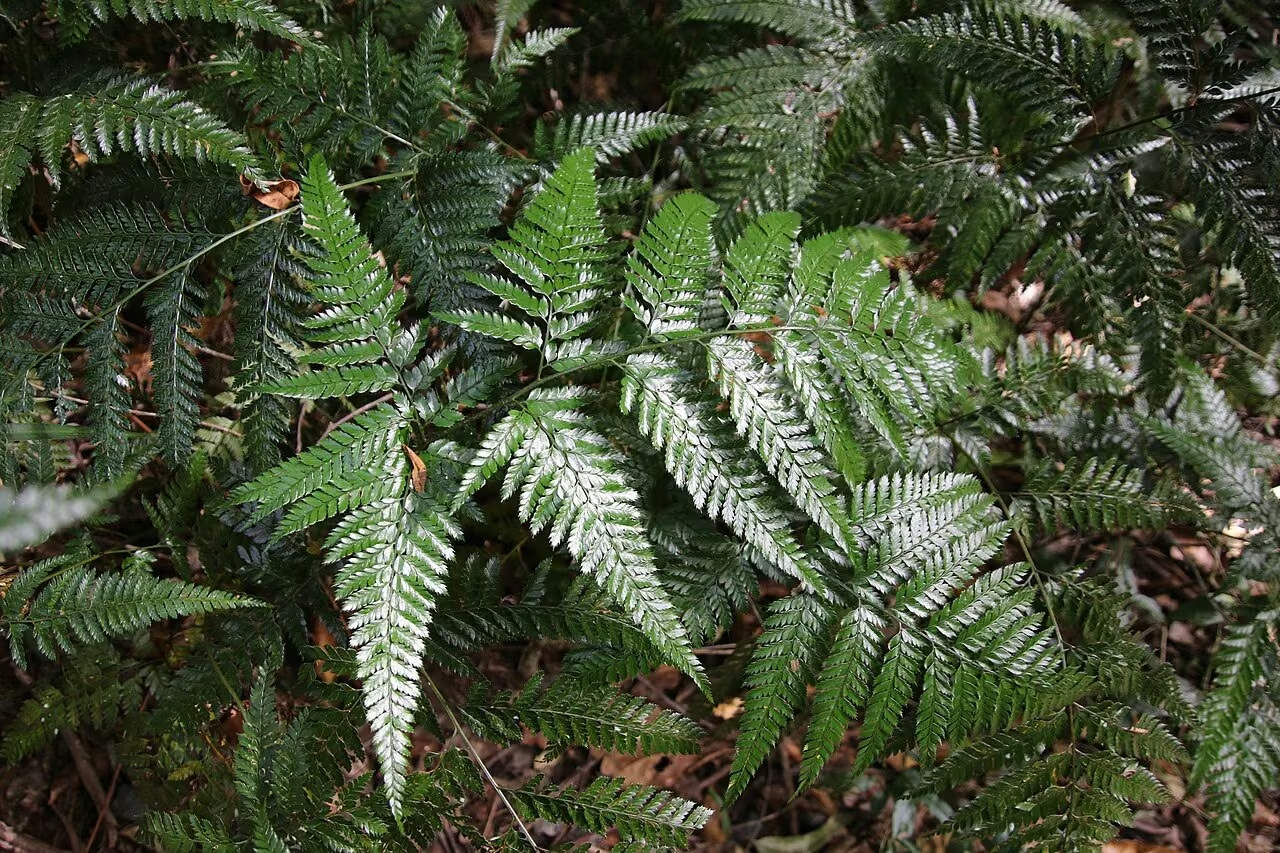
Glossy Fern
Arachniodes aristata
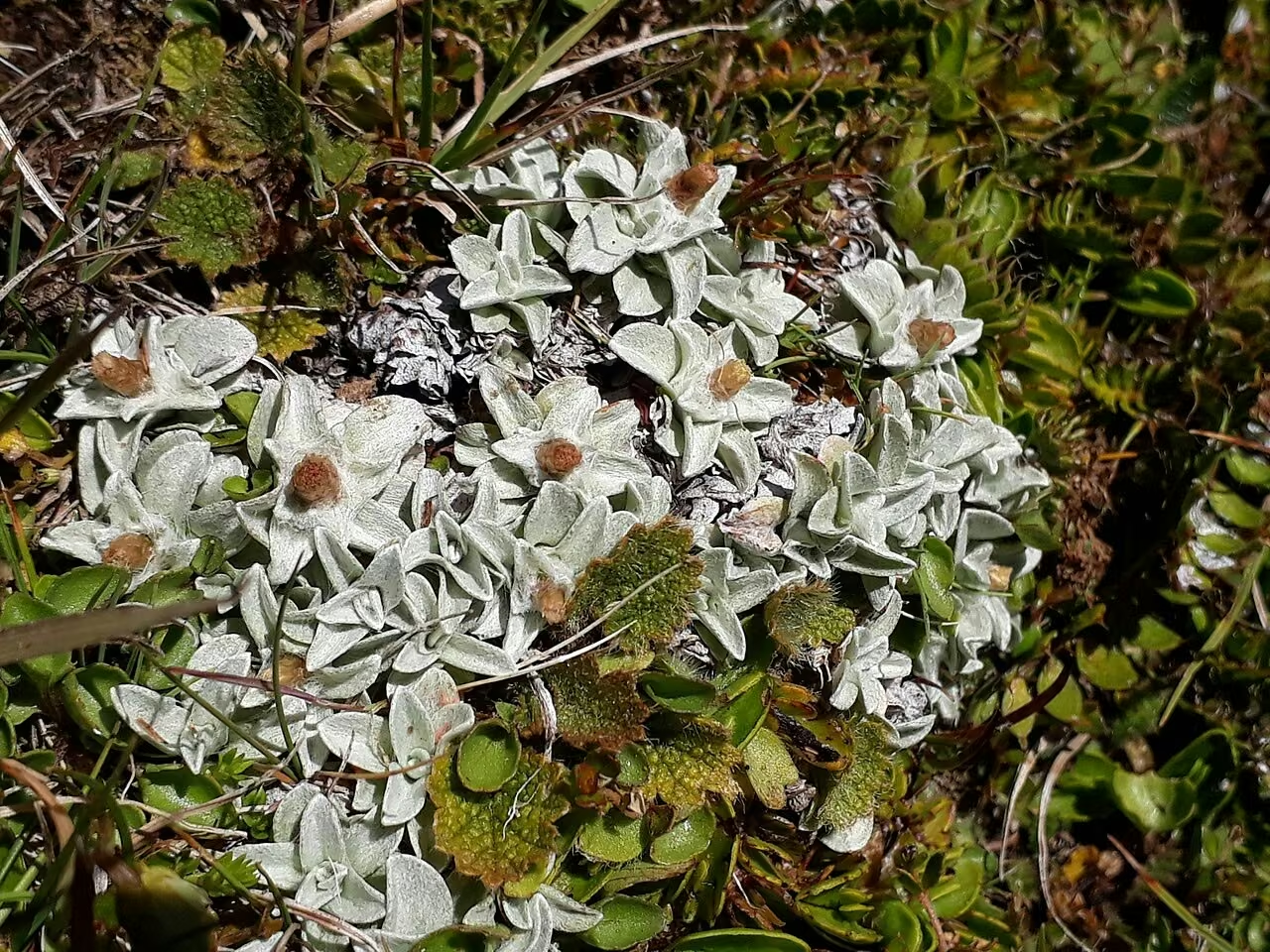
Argyrotegium mackayi
Argyrotegium mackayi
Shiny-Leaved Spleenwort
Asplenium lamprophyllum
Plant Conservation
Anisotome lanuginosa was assessed as Not Threatened in 2004 and 2009, then reassessed as At Risk - Naturally Uncommon from 2012. The 2023 assessment keeps that ranking with the qualifiers Sp (Sparse), DPS and DPT (Data Poor for size and trend). In Otago it is ranked Regionally At Risk - Regionally Naturally Uncommon (2025).
Because it is confined to a naturally small high-alpine habitat, protecting summit cushion herbfield from vehicle damage, trampling, browsing animals and invasive weeds is the main conservation need. More survey work is needed to clarify its population size and trends.
Frequently Asked Questions
What does lanuginosa mean in Anisotome lanuginosa?
Lanuginosa is Latin for woolly or downy, describing the dense white wool that covers the leaves of this small alpine herb.
Where is Anisotome lanuginosa found?
Herbarium specimens and iNaturalist records place it in the high mountains of Otago, including the Old Man Range/Kopuwai and the Hector Mountains, in alpine cushion herbfield above about 1500 m.
Is Anisotome lanuginosa threatened?
It is ranked At Risk - Naturally Uncommon (2023) with the qualifiers Sparse and Data Poor, and Otago's 2025 regional assessment lists it as Regionally Naturally Uncommon.
How is it related to Anisotome aromatica?
It was first described by Thomas Kirk as a woolly variety of Ligusticum aromaticum and later placed under Anisotome aromatica, before J.W. Dawson raised it to a separate species in 1961.
Sources and Further Reading
The botanical, growing, and conservation details for Anisotome (Anisotome lanuginosa) on this page draw on the New Zealand plant references below. Consult them for full technical records and the latest distribution data.