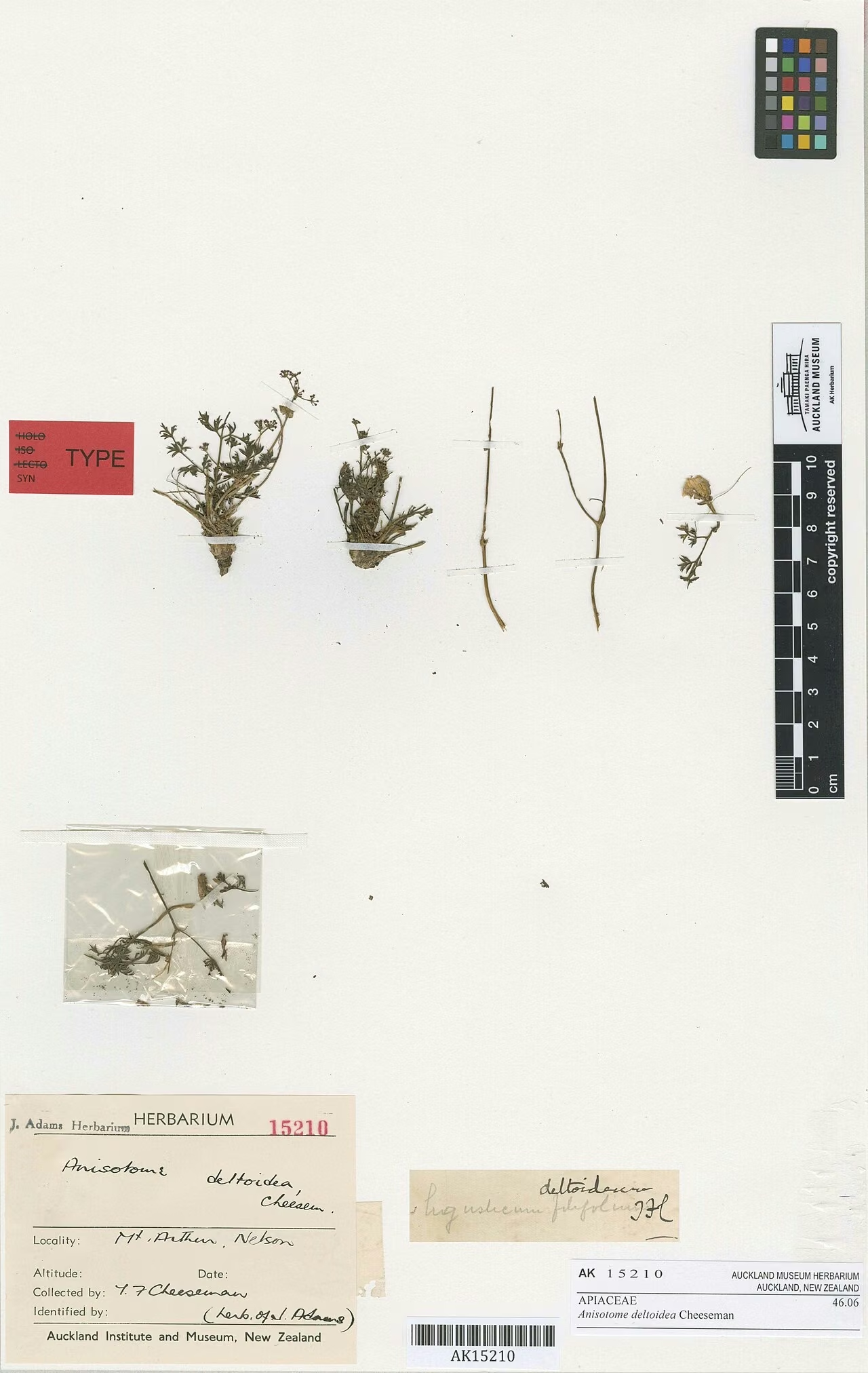
Anisotome
Anisotome deltoidea
Last updated:
Anisotome deltoidea is a small endemic alpine herb in the carrot family, confined to the mountains of north-west Nelson between latitudes 41 and 41 degrees 30 minutes south. It is a slender plant rarely more than 15 cm tall, growing from a rather stout stock, with distinctive triangular leaf blades 3 to 5 cm long divided into a few widely spaced pairs of leaflets. Tiny white or pink-flushed flowers in compound umbels 3 to 4 cm across appear in December and January. It grows in higher montane to subalpine grassland and herbfield and was first described from grassy slopes on Mount Arthur. It is ranked Not Threatened. Explore more native flowering plants in our native plant guide.
Plant Description
Anisotome deltoidea is a slender perennial herb, seldom more than 15 cm tall, arising from a rather stout stock. Its leaves have a triangular outline, with a blade 3 to 5 cm long and 1.5 to 3 cm wide bearing three to five pairs of widely spaced primary leaflets. The lowest pair of primary leaflets is the largest, up to about 6 cm long including its stalk, and is itself divided into about four pairs of smaller leaflets.
The secondary and final divisions are narrow and linear-lanceolate, or broader and finely cut, with narrow lobes ending in fine points. The flowers are minute, with white or sometimes pink-flushed petals, held in compound umbels 3 to 4 cm across. The fruit is narrowly oblong, 3 to 5 mm long, splitting into two mericarps each with five wings.
The triangular leaf outline with a few widely spaced pairs of leaflets is the best distinguishing feature, together with the plant's small size and its restricted range in north-west Nelson. Checking for a deltoid blade with three to five distant leaflet pairs, rather than a long, ladder-like leaf, is the quickest field test.
Quick Facts
| Scientific Name | Anisotome deltoidea |
|---|---|
| Height | Usually under 0.15 m |
| Spread | Small tufts from a stout stock |
| Water Needs | Moderate; moist mountain soils |
| Light | Full sun in open grassland |
| Frost Tolerance | High; subalpine species |
| Salt Tolerance | Low; inland mountain plant |
| Growth Rate | Slow |
| Lifespan | Perennial |
Climate Best Suited to
Suits the cool, wet mountain climate of north-west Nelson, with snow in winter and frequent rain. It is unlikely to do well in warm, dry or humid lowland gardens.
Regional Suitability
| City | Climate Suitability |
|---|---|
| Auckland | Low |
| Wellington | Low |
| Christchurch | Low |
| Dunedin | Medium |
Plant Habitat
Anisotome deltoidea is endemic to the South Island, restricted to north-west Nelson between latitudes 41 and 41 degrees 30 minutes south. Its type was collected by Thomas Cheeseman on grassy slopes of Mount Arthur, at 4000 to 5500 ft (about 1200 to 1700 m), an area now within Kahurangi National Park.
It grows in higher montane to subalpine grassland and herbfield, among tussocks and other alpine herbs on open mountain slopes.
Growing Requirements
Soil Requirements
In the wild it roots into mountain grassland and herbfield soils, which are usually moist, stony and low in fertility.
- Gritty, humus-rich, free-draining mix
- Moist through the growing season
- No fertiliser
Light Requirements
Grassland and herbfield are open habitats where it receives full light between taller plants.
- Full sun in cool climates
- Keep competing grasses short around it
Water Requirements
The mountains of north-west Nelson are wet, so it is accustomed to regular moisture.
- Water regularly in dry periods
- Ensure free drainage around the crown
Planting and Establishing
This species is not generally available from nurseries and wild plants should not be collected. It is a plant for specialist alpine growers with legally sourced material.
Grow it in a trough or raised alpine bed of gritty, humus-rich mix in a cool, open position, where its small size will not be swamped by larger plants.
Ecological Role
Anisotome deltoidea is a small component of the montane and subalpine grassland and herbfield of north-west Nelson, a region known for its rich alpine flora. NZPCN notes that its winged mericarps are dispersed by wind.
Its pollinators and any associated insects are not documented in the sources consulted.
Uses & Significance
Garden Uses
It is of interest mainly to collectors of New Zealand alpine plants.
- Alpine troughs and small raised beds
- Botanic garden displays of Nelson alpine flora
- Containers in cool southern gardens
Ecological Value
It is one of the regional endemics that add to the diversity of north-west Nelson's mountains.
- Endemic to north-west Nelson
- Part of the alpine grassland herb community
- Stable status in all assessments since 2004
Landscaping Uses
It is too small and specialised for general landscaping. In an alpine trough its triangular, finely cut leaves and tiny umbels can be appreciated at close range.
Pair it with other small alpine herbs rather than vigorous plants that could smother it.
Seasonal Care Calendar
Spring
New leaves emerge from the stock after snow melt.
- Keep cultivated plants moist as growth begins
- Protect new growth from slugs
Summer
Minute white or pink-flushed flowers appear in December and January, and fruit begins forming in January.
- Look for flowering plants on the Mount Arthur tops
- Water in dry spells
Autumn
Fruit ripens until March and the winged mericarps are shed by wind.
- Collect fresh seed from cultivated plants
- Sow immediately
Winter
The plant rests through the cold season.
- Keep pots cool and well drained
- Mark plant positions
When to Prune and How Much
No pruning is needed. Snip off spent flowering stems after seed has dispersed.
Tidy away dead leaves in late winter to keep the crown open and dry.
How to Grow Anisotome
No propagation notes specific to Anisotome deltoidea were found in the sources consulted, and it does not appear to be grown commercially. The approach below applies the general method for alpine Anisotome species, which are normally raised from fresh seed, to this species' documented flowering season of December to January and fruiting season of January to March. Its range lies within Kahurangi National Park, where collecting plants or seed requires authorisation from the Department of Conservation, so material should come only from plants already in cultivation. The stout stock means division is rarely worthwhile.
From Seed
Fresh seed sown in autumn and left outdoors over winter mimics the cold, snowy conditions the seed would experience in the mountains. Seedlings are small and slow at first, so grow them on in pots for at least a season before planting into a trough.
- Collect ripe, dry winged fruit between January and March
- Sow fresh into a gritty, free-draining seed mix
- Cover thinly with fine grit and leave outdoors over winter
- Keep the mix moist and expect seedlings in spring
- Prick seedlings out into deep pots while still small
Division
Mature cultivated plants that have formed more than one crown can sometimes be separated, though the stout stock makes this risky. Sowing seed is the safer option.
- Lift only multi-crowned plants in early spring
- Cut so each piece has roots and a growing point
- Replant into gritty mix and keep cool and moist until re-established
Pests & Diseases
No specific pests are recorded for this species. In cultivation, slugs and rot in warm or poorly drained conditions are the most likely problems.
In the wild it is considered secure, and no particular threats are identified in the sources consulted.
Cultural Significance
No traditional Māori name or use is recorded for Anisotome deltoidea in the sources consulted.
Thomas Cheeseman described it as Ligusticum deltoideum in 1882 from Mount Arthur, and later transferred it to Anisotome himself, which is why the full name is Anisotome deltoidea (Cheeseman) Cheeseman. The genus name means unequal sided.
Bonus Tip
The Mount Arthur tops in Kahurangi National Park, where the species was first collected, are the classic place to look for it. In midsummer, search grassy alpine slopes for small plants with triangular leaves held close to the ground and tiny umbels on short stalks, and photograph a leaf from above to show its delta shape when recording the find.
Related Plants
Explore other native plants that share similar characteristics or habitats with Anisotome (Anisotome deltoidea), offering further insights into New Zealand's diverse flora. These related species provide context and opportunities for complementary planting in your garden.
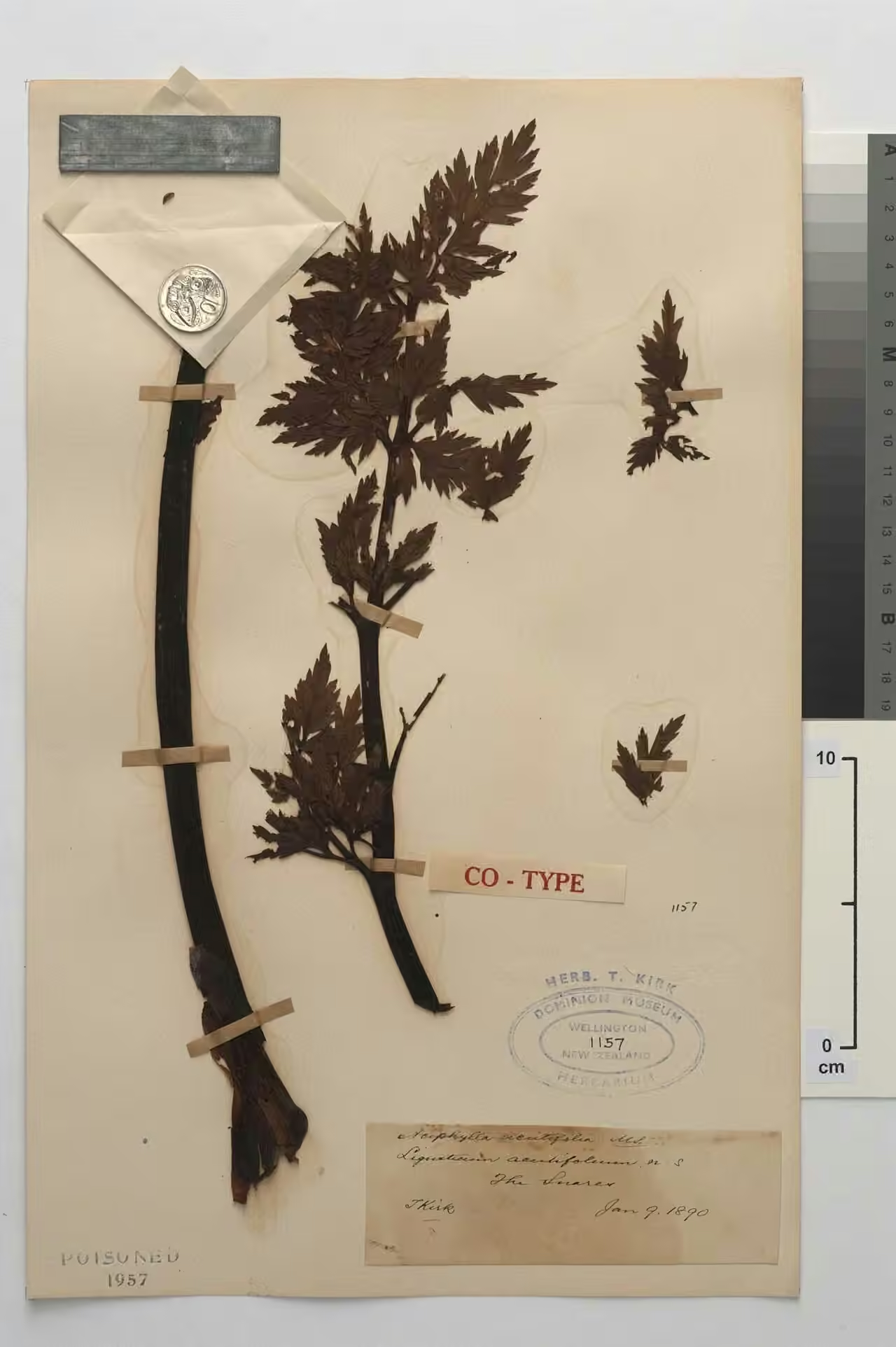
Snares Islands Anisotome
Anisotome acutifolia
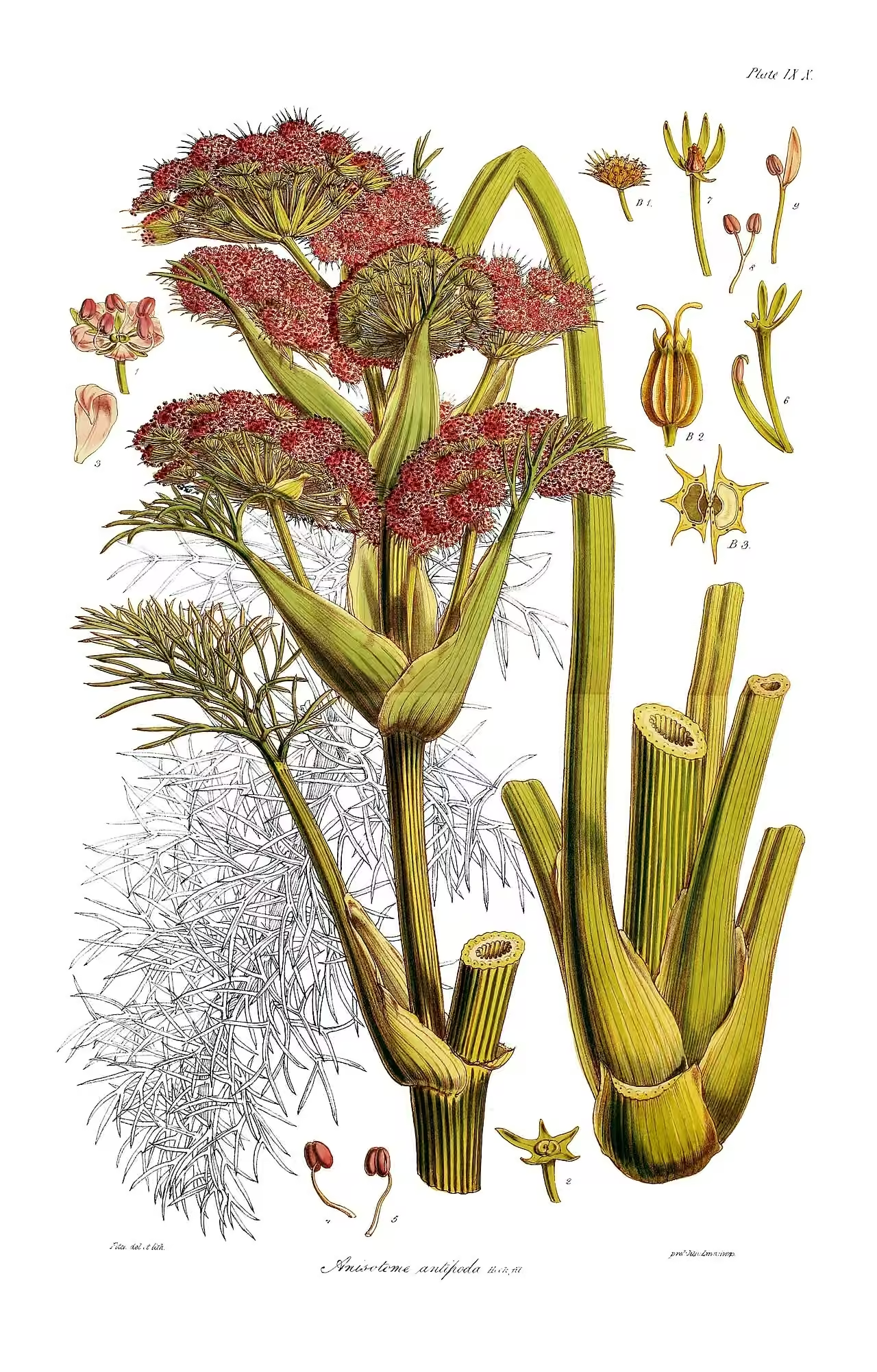
Anisotome antipoda
Anisotome antipoda
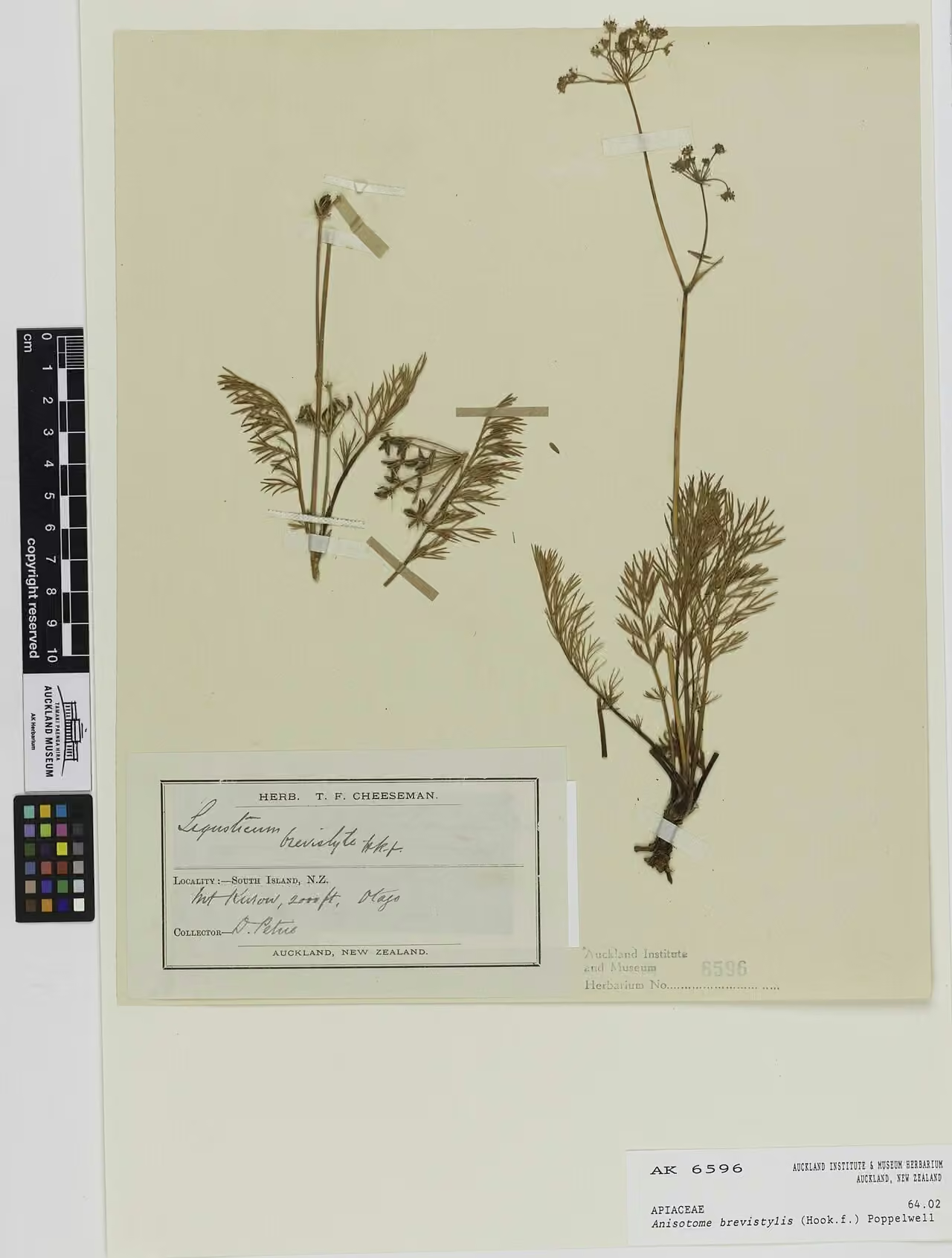
Native Carrot
Anisotome brevistylis
Anisotome capillifolia
Anisotome capillifolia
Haast's Carrot
Anisotome haastii
Anisotome lanuginosa
Anisotome lanuginosa
Odd-Leaved Orchid
Aporostylis bifolia
Glossy Fern
Arachniodes aristata
Plant Conservation
Anisotome deltoidea is ranked Not Threatened (2023), a status it has held in every national assessment since 2004.
Its range lies largely within public conservation land in north-west Nelson. Keeping alpine grasslands free of weeds and browsing animals and staying on tracks help protect it.
Frequently Asked Questions
Where is Anisotome deltoidea found?
It grows only in higher montane to subalpine grassland and herbfield in north-west Nelson, between latitudes 41 and 41 degrees 30 minutes. It was first collected on grassy slopes of Mount Arthur at about 1200 to 1700 m.
Why is it called deltoidea?
The name refers to the triangular, delta-shaped outline of its leaf blades, which are 3 to 5 cm long and 1.5 to 3 cm wide.
When does Anisotome deltoidea flower?
It flowers in December and January, producing minute white or pink-tinged flowers in compound umbels, and fruits from January to March.
Sources and Further Reading
The botanical, growing, and conservation details for Anisotome (Anisotome deltoidea) on this page draw on the New Zealand plant references below. Consult them for full technical records and the latest distribution data.