Native Carrot
Anisotome brevistylis
Last updated:
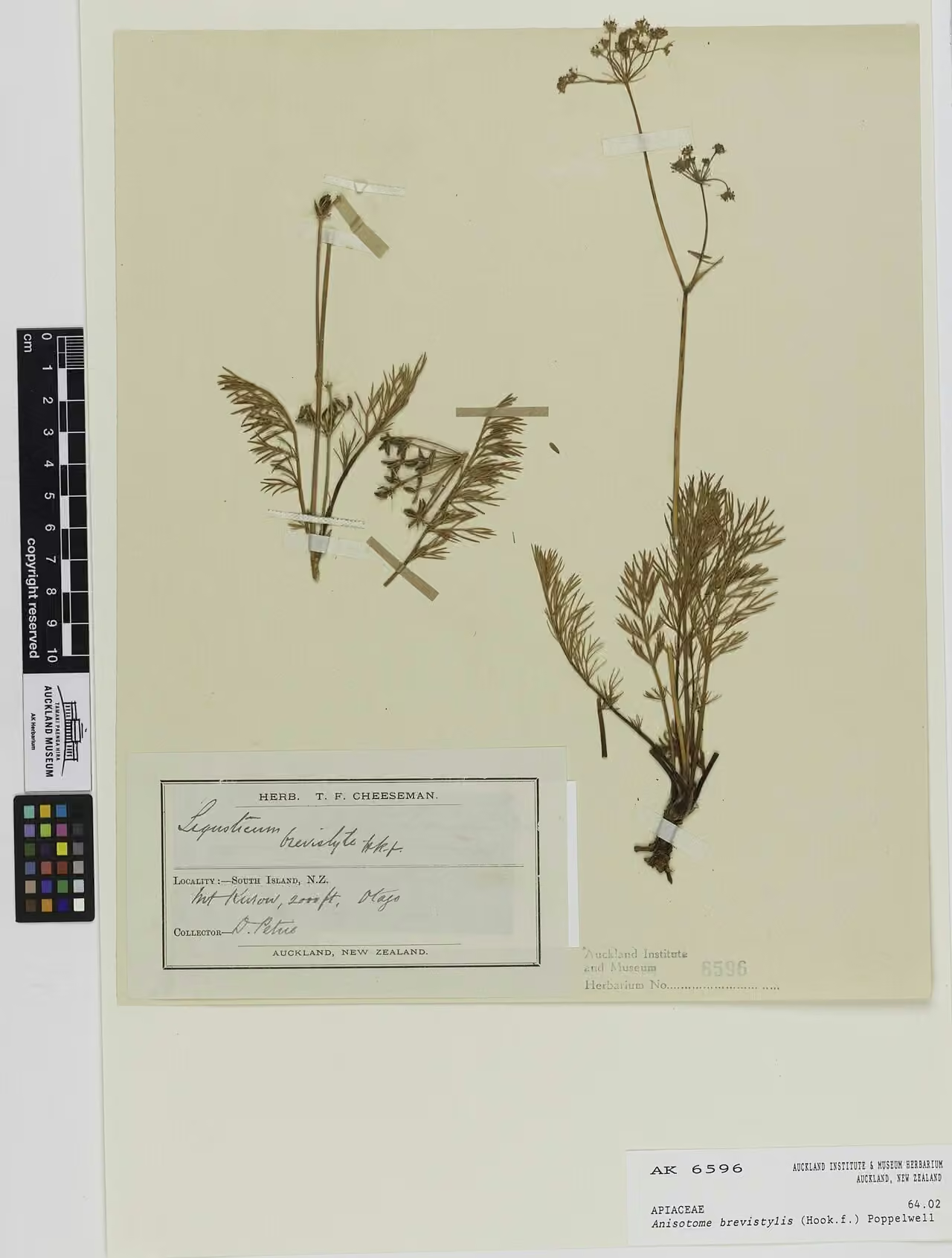
Native carrot (Anisotome brevistylis) is an endemic perennial herb in the carrot family found in montane grassland and rocky places of the South Island, from about latitude 44 degrees southwards and east of the Main Divide. It has a stout stock, stiff striated stems up to about 40 cm tall and finely divided, two to three times pinnate leaves with very narrow, almost thread-like segments. Small white flowers in compound umbels appear from November to February. It is ranked Not Threatened nationally, but in Otago it is regarded as regionally declining. Explore more native flowering plants in our native plant guide.
Plant Description
Anisotome brevistylis is a rather stout perennial herb with a stout stock and stiff, striated stems up to about 40 cm long. Its leaves are two to three times pinnate, with petioles up to about 15 cm and a blade 10 to 30 cm long. The final leaf segments are narrow-linear to almost thread-like, giving the foliage a fine, feathery look. The leaf sheaths are 2 to 3 cm long and narrow to the tip.
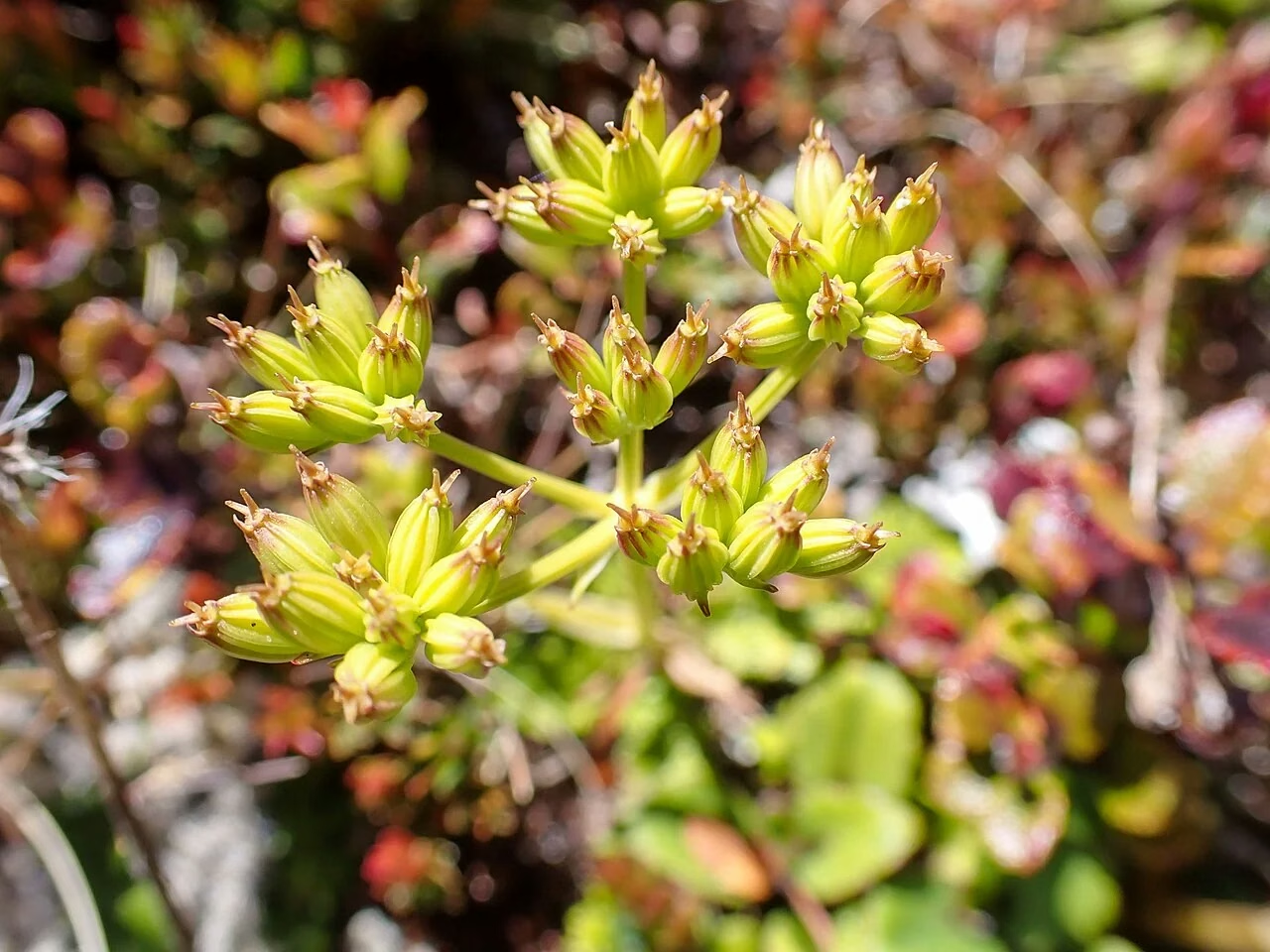
The white flowers are carried in compound umbels on slender primary rays up to 3 cm long, with linear, finely pointed bracts beneath. The fruits are 3 to 4 mm long and split into two mericarps, each with five narrow wings. The styles are under 1 mm long, the feature that gives the species its name.
Allan noted that immature specimens can be difficult to separate from Angelica decipiens and Anisotome petraea, and called for further work on living material. In the field its fine, thread-like foliage on stiff stems, its montane grassland habitat east of the divide and its short styles on mature fruit are the best guides.
Quick Facts
| Scientific Name | Anisotome brevistylis |
|---|---|
| Height | Stems up to about 0.4 m |
| Spread | Leaves 10-30 cm long from a stout stock |
| Water Needs | Low to moderate; free-draining ground |
| Light | Full sun |
| Frost Tolerance | High; montane species of the inland South Island |
| Salt Tolerance | Low; an inland plant |
| Growth Rate | Slow to moderate |
| Lifespan | Perennial |
Climate Best Suited to
Suits the continental climate of inland Otago and Canterbury, with cold winters, frequent frosts and warm, dry summers. It is poorly suited to humid northern climates.
Regional Suitability
| City | Climate Suitability |
|---|---|
| Auckland | Low |
| Wellington | Low |
| Christchurch | Medium |
| Dunedin | Medium |
Plant Habitat
Anisotome brevistylis is endemic to the South Island. Allan's Flora describes it from montane grassland and rocky places from latitude 44 degrees southwards, east of the Main Divide. The type was collected in the Otago lake district by Hector and Buchanan in 1863.
Herbarium records include Mount Cardrona in the Crown Range, the Richardson Mountains, the Otematata River at Boundary Creek and the west branch of the Awakino River, all in the drier tussock and rock country of Otago and the Waitaki.
Growing Requirements
Soil Requirements
It grows in montane tussock grassland soils and among rocks, which are typically stony, free-draining and of low to moderate fertility.
- Stony, free-draining soil
- Deep enough for a stout root
- No added fertiliser
Light Requirements
It is a plant of open tussock grassland and rocky slopes with high light levels.
- Full sun
- Avoid crowding by taller grasses
Water Requirements
Its eastern, rain-shadow habitats have relatively low rainfall and dry summers.
- Water occasionally in prolonged drought
- Avoid wet, poorly drained sites
Planting and Establishing
Native carrot is rarely available from nurseries. Where it is raised from locally sourced seed for restoration or a specialist garden, plant it in a sunny, open position in stony, free-draining soil, ideally within an inland Otago or Canterbury tussock planting.
Plant seedlings while young, before the stock and root become large, and mark their position, since the plant may die back in winter.
Ecological Role
Anisotome brevistylis is one of several Anisotome species in the herb layer of montane tussock grassland. NZPCN notes that its winged mericarps are dispersed by wind, which suits open grassland and rocky slopes.
Its pollinators and any insects that depend on it are not documented in the sources consulted, although the open white umbels of Anisotome are generally visited by small insects.
Uses & Significance
Garden Uses
It is mainly of interest for ecological restoration and native plant collections in the inland South Island.
- Tussock grassland restoration east of the divide
- Rock gardens in cold, dry districts
- Specialist collections of native Apiaceae
Ecological Value
It contributes to the diversity of the herb layer in montane tussock grassland, a habitat that has been much reduced by land development.
- Endemic to the South Island
- Regionally declining in Otago
- Part of the native herb community among tussocks
Landscaping Uses
Its feathery foliage contrasts well with the upright form of tussocks such as Festuca and Poa in a dry native grassland planting.
Use it in small groups among rocks or at the front of a tussock bed where its white umbels can be seen in early summer.
Seasonal Care Calendar
Spring
New feathery leaves appear from the stock.
- Weed around plants before grasses grow tall
- Watch for slugs on new shoots
Summer
White umbels are in flower from November to February, and fruit forms from December.
- Water only in severe drought
- Note flowering plants for seed collection
Autumn
Fruit ripens until March and is shed by the wind.
- Collect dry winged fruit for sowing
- Leave some seed to fall naturally
Winter
Above-ground growth slows or dies back in cold inland winters.
- Mark plant positions
- Keep drainage clear
When to Prune and How Much
No pruning is required. Cut old flowering stems to the base after seed has been shed or collected.
Remove dead foliage in late winter to make way for new growth.
How to Grow Native Carrot
No propagation notes specific to Anisotome brevistylis were found in the sources consulted. The methods below follow the general approach used for other South Island Anisotome species, which are usually raised from fresh seed, combined with the documented flowering season of November to February and fruiting season of December to March. Seed should be collected from local populations with landowner permission, especially in Otago, where the species is regionally declining, and never in quantities that would harm a wild population. Division is rarely successful in Anisotome because most species have a stout stock and deep root.
From Seed
The fruit splits into two winged mericarps when ripe. Fresh seed sown in autumn and given a cold winter is the usual approach for montane Apiaceae.
- Collect dry, brown fruit between January and March
- Sow fresh into a free-draining seed mix and cover lightly
- Leave the tray outdoors over winter to experience cold
- Prick out seedlings in spring into deep pots
- Plant out once a small rosette of leaves has formed
Division
Older plants with more than one crown can occasionally be split, but the stout stock makes this risky and seed is preferred. Any division should be treated as an experiment, with seed sown at the same time as a backup.
- Lift only multi-crowned cultivated plants in early spring
- Cut through the stock so each piece has roots and a growing point
- Replant into gritty soil and keep lightly moist until established
Pests & Diseases
No specific pests or diseases are recorded for this species. In cultivation, slugs and snails may damage young leaves, and plants may rot in wet, heavy soil.
In the wild, the regional decline in Otago is likely linked to pressures on montane grassland such as browsing animals, weeds and land development, although specific causes are not given in the sources consulted.
Cultural Significance
No traditional Māori name or use is recorded for Anisotome brevistylis in the sources consulted. Some other Anisotome species, such as A. aromatica, have recorded Māori names, but these should not be applied to this species.
Joseph Hooker described it in 1864 as Ligusticum brevistyle from specimens gathered by James Hector and John Buchanan in the Otago lake district. Poppelwell transferred it to Anisotome in 1915.
Bonus Tip
To confirm this species, wait until the fruit is fully mature before examining it. Immature fruit can make it look like Angelica decipiens or Anisotome petraea, but ripe fruit of A. brevistylis is 3 to 4 mm long with five narrow wings on each half and very short styles under 1 mm.
Related Plants
Explore other native plants that share similar characteristics or habitats with Native Carrot (Anisotome brevistylis), offering further insights into New Zealand's diverse flora. These related species provide context and opportunities for complementary planting in your garden.
New Zealand Anemone
Anemonastrum tenuicaule
Snares Islands Anisotome
Anisotome acutifolia
Anisotome antipoda
Anisotome antipoda
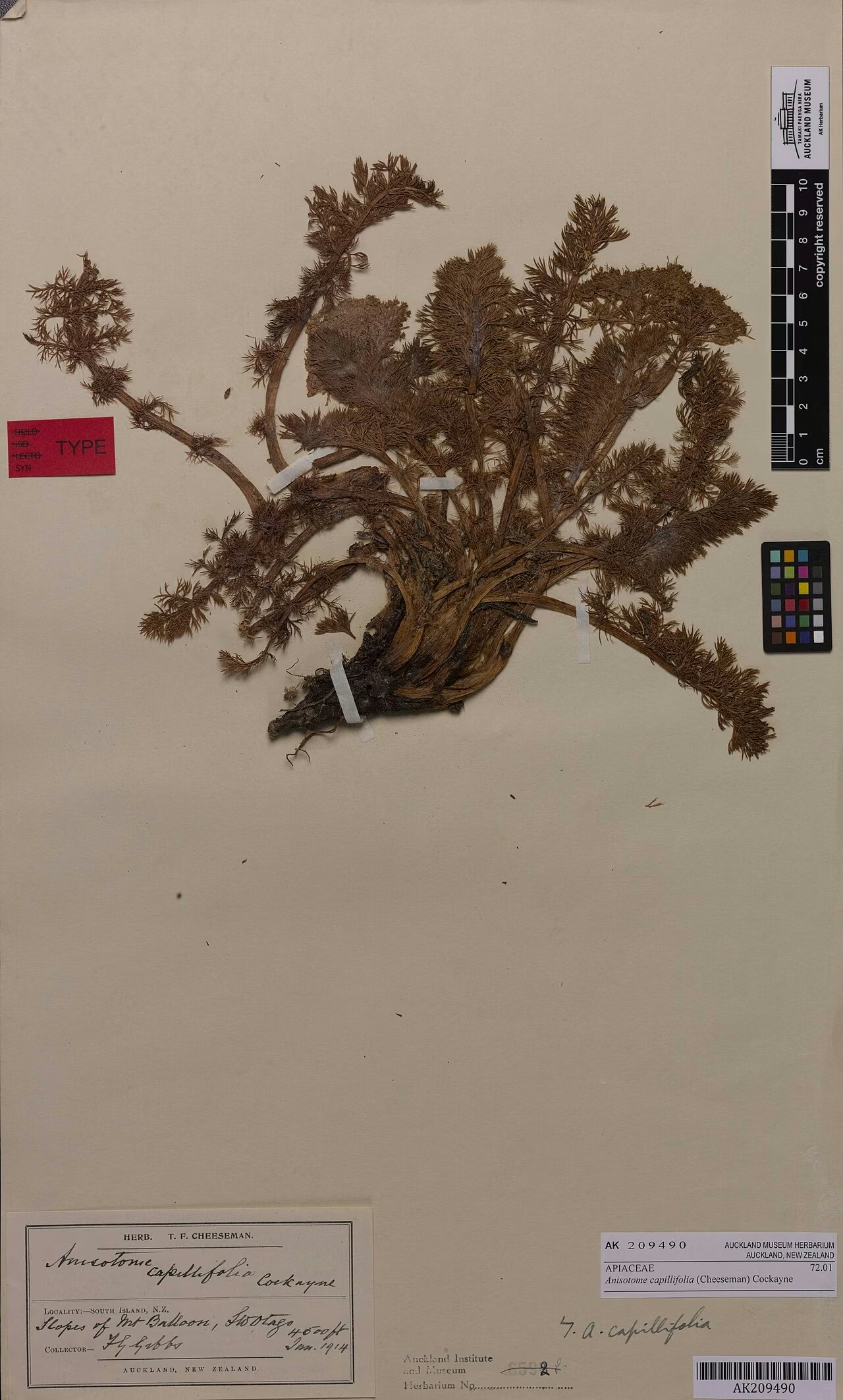
Anisotome capillifolia
Anisotome capillifolia
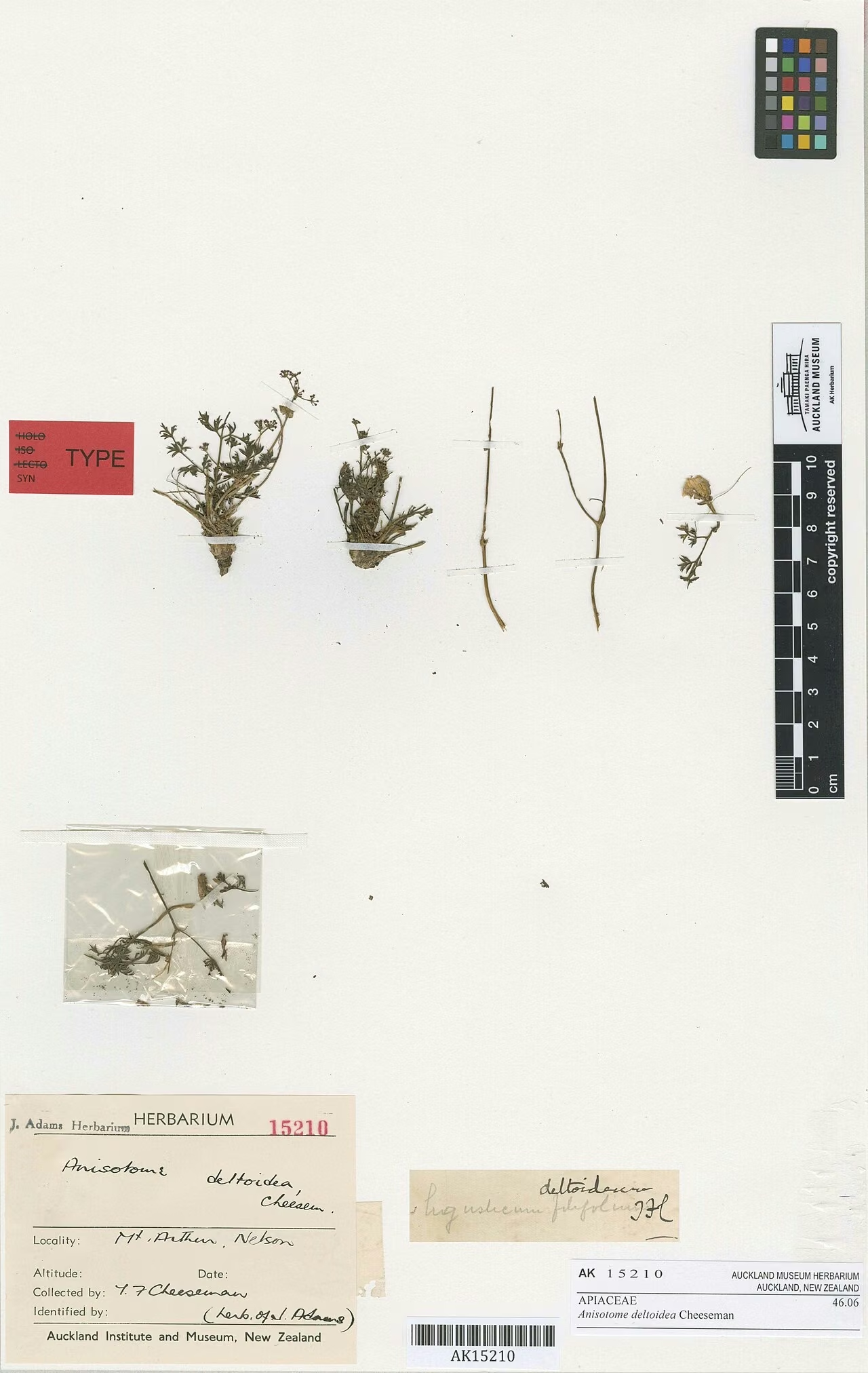
Anisotome deltoidea
Anisotome deltoidea
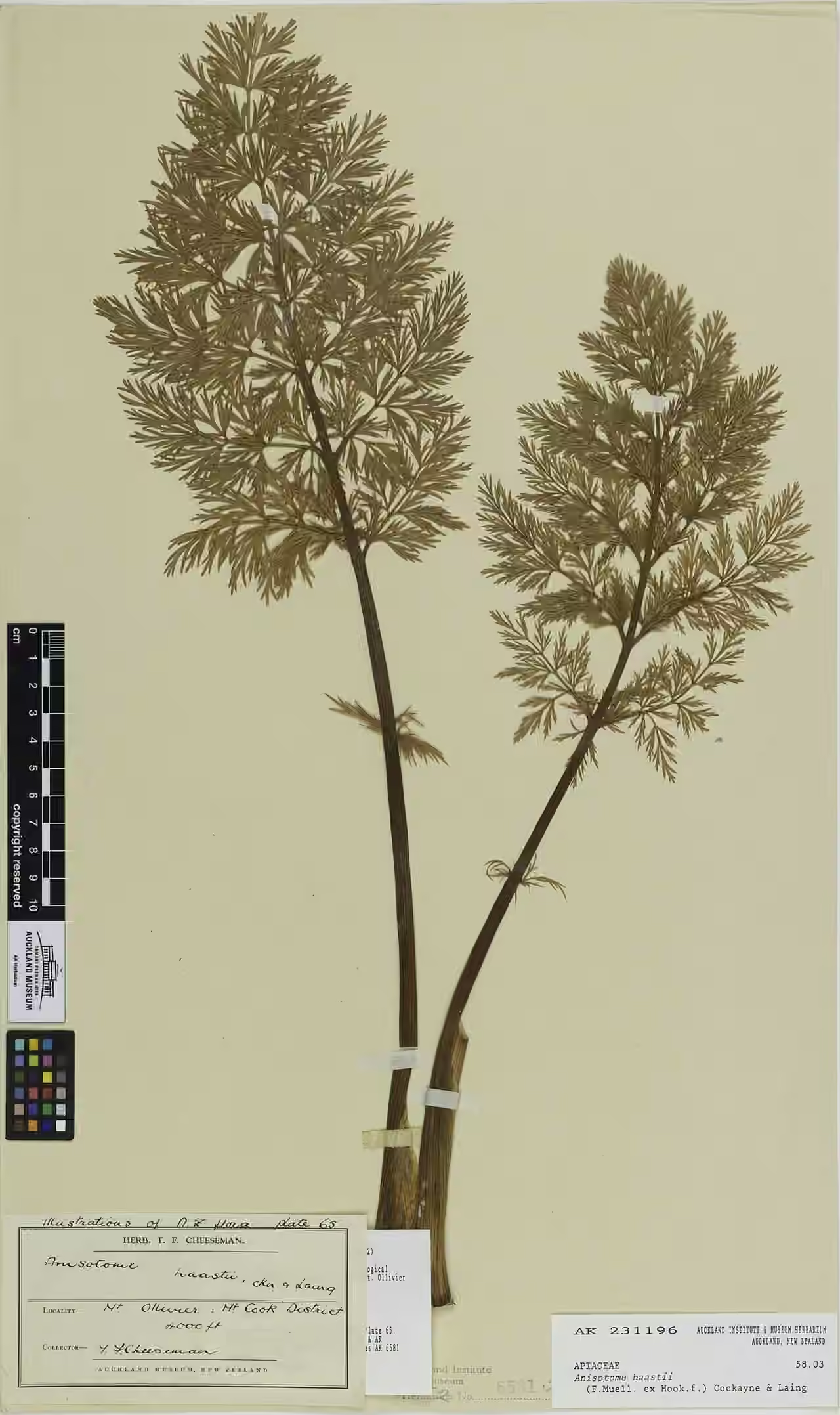
Haast's Carrot
Anisotome haastii
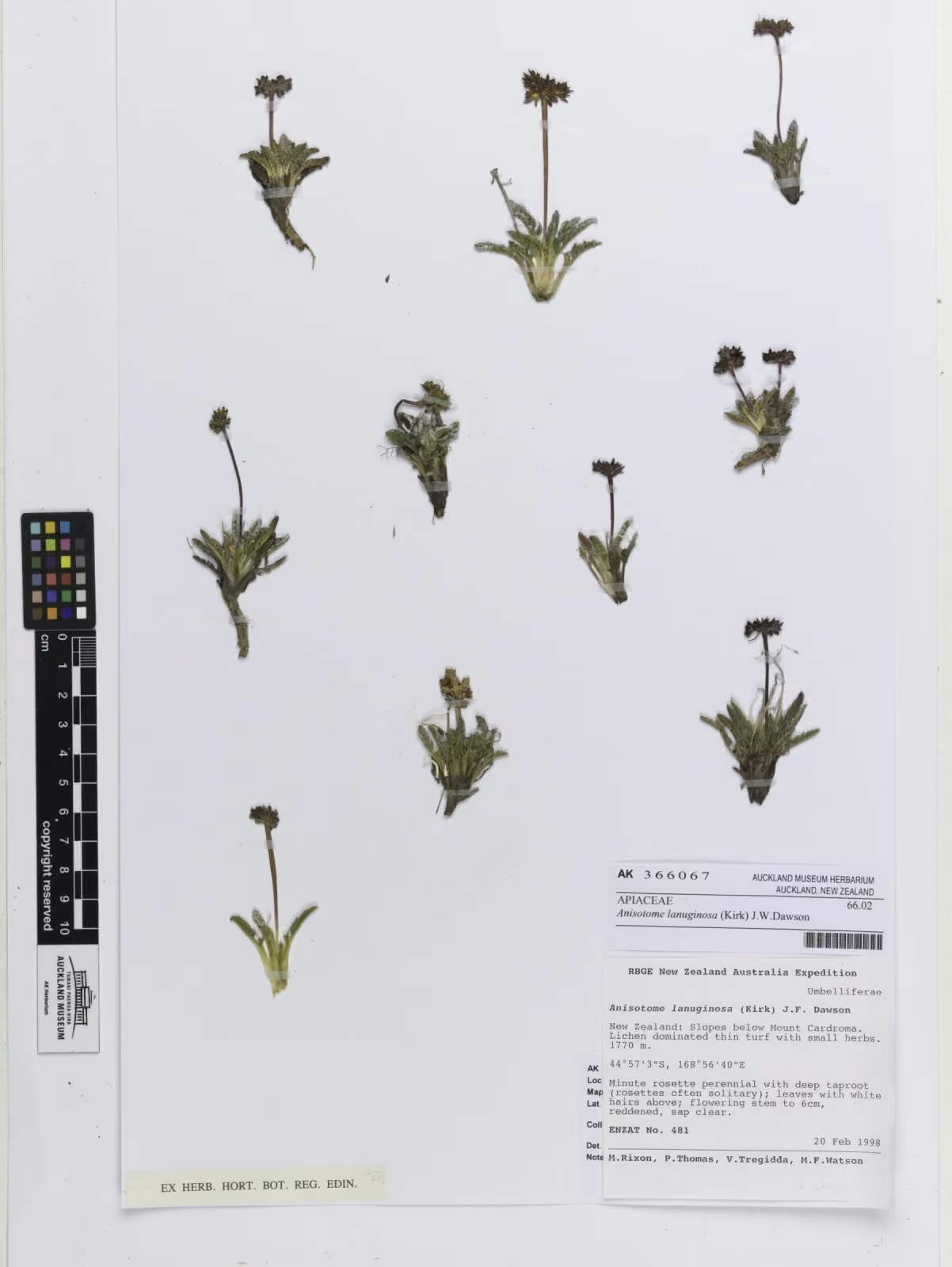
Anisotome lanuginosa
Anisotome lanuginosa
Kopoti
Kopoti
Plant Conservation
Anisotome brevistylis is ranked Not Threatened nationally (2023), a status it has held since at least 2004. However, the 2025 Otago regional assessment lists it as Regionally At Risk - Regionally Declining.
Protecting remnant montane tussock grassland and rocky habitats east of the divide, controlling weeds and browsing animals, and recording sightings help track and support its populations.
Frequently Asked Questions
Where does Anisotome brevistylis grow?
Allan's Flora gives its range as montane grassland and rocky places from latitude 44 degrees southwards, east of the Main Divide. Herbarium records include Mount Cardrona, the Richardson Mountains and the Otematata River.
Why is it called brevistylis?
The name means short style. Its fruits, 3 to 4 mm long, carry styles less than 1 mm long, a feature used to separate it from related species.
Is native carrot threatened?
Nationally it is ranked Not Threatened (2023), but the 2025 Otago regional assessment lists it as Regionally At Risk - Regionally Declining.
Is native carrot edible?
No reliable source consulted records Anisotome brevistylis as a food plant, and wild plants should not be dug or eaten. The name native carrot simply refers to its membership of the carrot family.
Sources and Further Reading
The botanical, growing, and conservation details for Native Carrot (Anisotome brevistylis) on this page draw on the New Zealand plant references below. Consult them for full technical records and the latest distribution data.