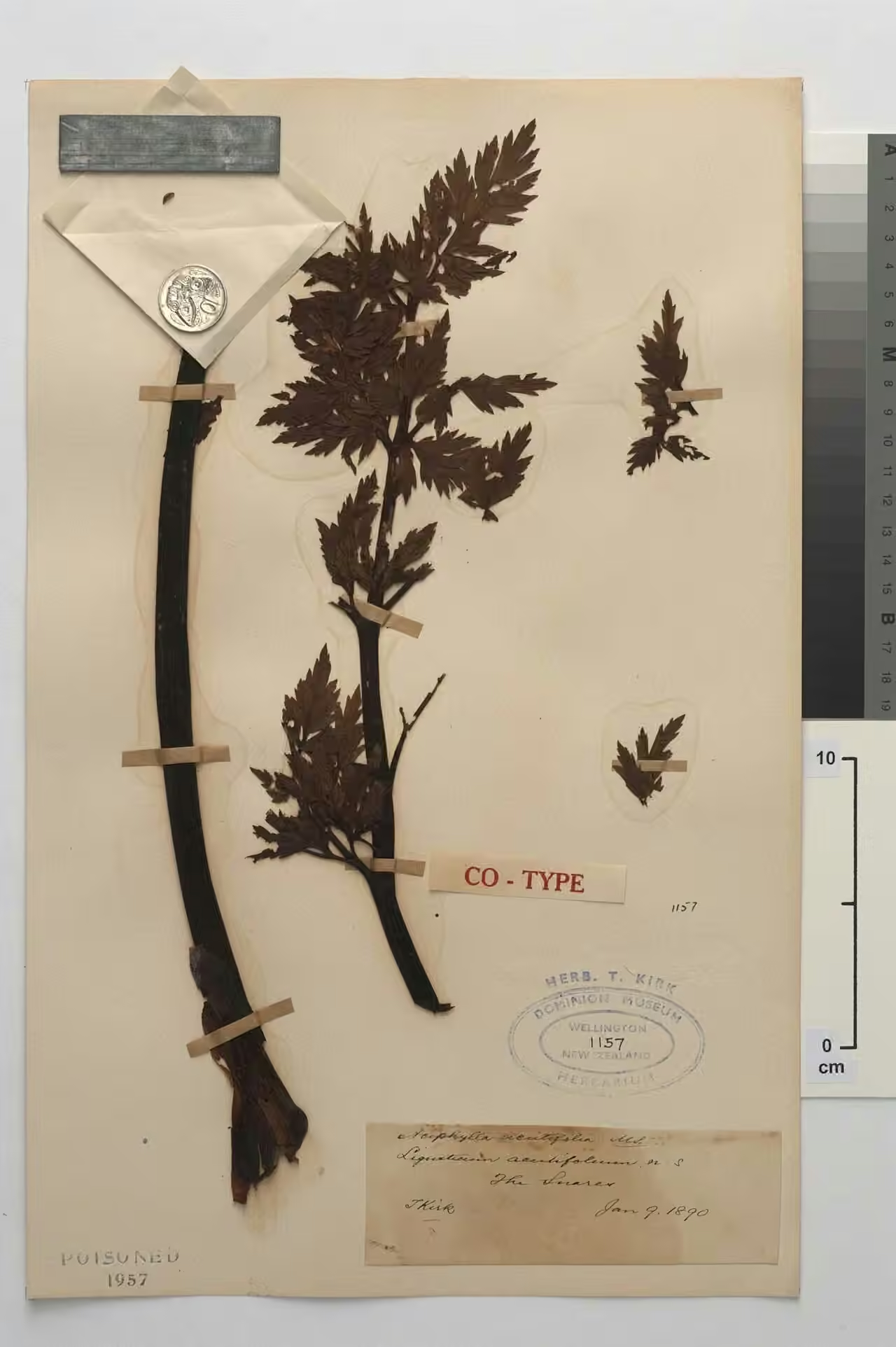
Snares Islands Anisotome
Anisotome acutifolia
Last updated:
Snares Islands anisotome (Anisotome acutifolia) is a giant herb in the carrot family that grows nowhere in the world except the Snares Islands, south of Stewart Island/Rakiura. It is a stout, stoloniferous megaherb with dark green, much-divided leaves 50 to 70 cm long and fleshy flowering stems up to 2 m tall bearing dirty white to pale pink flowers. It is the only vascular plant endemic to the Snares, where it is known from North East and Broughton Islands. With an area of occupancy thought to be under one hectare, it is ranked Threatened - Nationally Critical, although its populations appear stable. Explore more native flowering plants in our native plant guide.
Plant Description
Anisotome acutifolia is a large perennial herb that spreads by stout, fleshy stolons. Flowering plants reach up to 2 m tall and about 1 m across. Its deeply furrowed stems carry large, dark to bright green, much-divided leaves 0.5 to 0.7 m long, with six to eight rather distant but overlapping pairs of primary leaflets ending in pointed lobes.
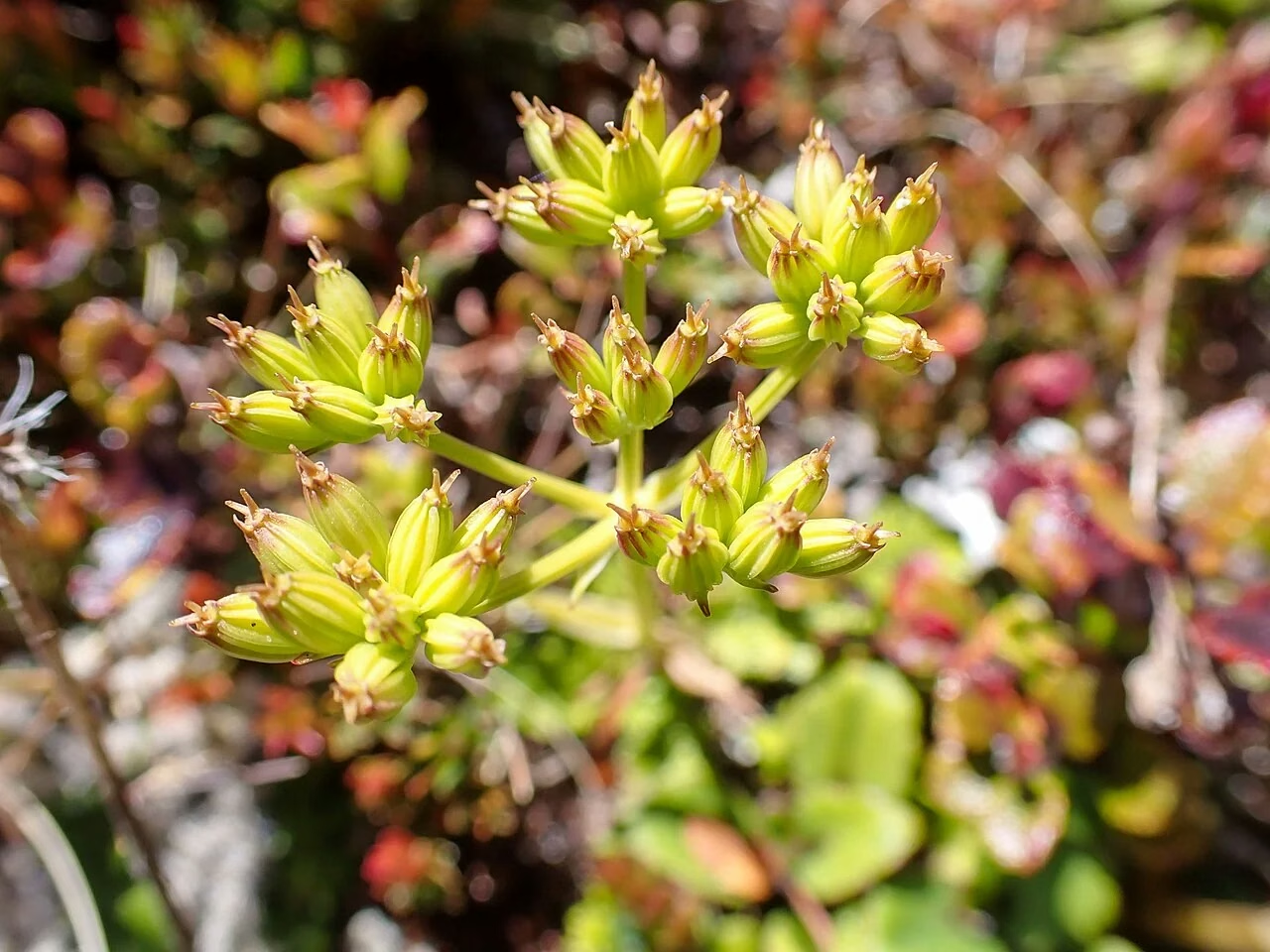
The flowers are borne in compound umbels on a pale green, fleshy flowering stem that overtops the foliage. They are small and dirty white to pale pinkish, the petals marked with a central brown stripe, and NZPCN notes they have a slight foetid odour.
The species epithet acutifolia means sharp-leaved, describing its pointed leaf segments. On the Snares it is unlikely to be confused with anything else; the other megaherb there, Stilbocarpa robusta, has large rounded, undivided leaves rather than finely divided carrot-like foliage.
Quick Facts
| Scientific Name | Anisotome acutifolia |
|---|---|
| Height | Up to 2 m in flower |
| Spread | Up to about 1 m across |
| Water Needs | High; permanently damp peat |
| Light | Semi-shade to open ground |
| Frost Tolerance | Cool, oceanic climate; frost tolerance not documented |
| Salt Tolerance | Grows in salt-laden subantarctic island conditions; no specific data |
| Growth Rate | No information available |
| Lifespan | Perennial |
Climate Best Suited to
Lives in the cool, windy, wet and cloudy oceanic climate of the Snares Islands, with mild temperatures year round. It is completely unsuited to mainland garden climates.
Regional Suitability
| City | Climate Suitability |
|---|---|
| Auckland | Low |
| Wellington | Low |
| Christchurch | Low |
| Dunedin | Low |
Plant Habitat
Anisotome acutifolia is endemic to the Snares Islands, about 100 km southwest of Stewart Island/Rakiura. NZPCN records it from North East Island and Broughton Island, and the Te Papa account notes that the megaherb herbfields it forms with Stilbocarpa robusta are limited to just two sites on the main island.
It grows at low altitude, around 60 m, in open ground on the margins of dense Olearia lyallii forest and in dense Poa foliosa tussock land. It favours semi-shaded sites on deep, permanently damp peaty soil enriched with seabird guano, reflecting the huge seabird colonies that occupy the islands.
Growing Requirements
Soil Requirements
Its soils are deep, permanently damp peats enriched by guano from the islands' seabird colonies.
- Deep peat, high in nutrients from seabirds
- Never dry
- Conditions that are impossible to replicate in ordinary gardens
Light Requirements
It grows in semi-shade at the edge of Olearia lyallii forest and within tall tussock.
- Semi-shade under a cool, cloudy sky
- Open ground at forest margins
Water Requirements
Rainfall and constant cloud keep its peat permanently moist.
- Permanently damp root zone
- High humidity from sea spray and cloud
Planting and Establishing
This species is not planted. It has never been successfully cultivated and should not be removed from the wild.
Visiting the Snares Islands requires permits from DOC, a measure designed to protect their pristine ecosystems, so the plant is seen mainly by scientists and in photographs.
Ecological Role
Anisotome acutifolia is part of a remarkably intact island ecosystem: the Snares have always been free of introduced mammals, and their 22 or so vascular plant species grow on soils heavily enriched by seabirds. Its megaherb herbfields form one of the islands' distinctive vegetation types alongside Olearia lyallii forest and Poa tussock grassland.
Its fruits are winged mericarps typical of Anisotome. Its pollinators and the role of its slightly foetid flowers in attracting insects are not documented in the sources consulted.
Uses & Significance
Garden Uses
It has no garden uses because it cannot be cultivated.
- Not available from nurseries
- Relatives such as Anisotome latifolia are occasionally grown by specialists
Ecological Value
As the only vascular plant endemic to the Snares Islands, it has very high conservation and scientific value.
- Sole vascular plant endemic of the Snares
- Part of rare megaherb herbfield on the islands
- Grows in a mammal-free island ecosystem
Landscaping Uses
It is not used in landscaping. Its value lies in its role in the natural vegetation of the Snares.
Gardeners interested in the bold carrot-family foliage of subantarctic plants should look to legally propagated relatives held by specialist growers.
Seasonal Care Calendar
Spring
New leaves expand in the cool spring of the Snares.
- No intervention takes place in the wild
- Island access is restricted
Summer
Flowering takes place in December and January, with tall fleshy stems of white to pale pink flowers.
- Summer is when scientific surveys usually visit
- Flowers have a slight foetid smell
Autumn
Fruiting occurs from January to February, with seed shed afterwards.
- Monitoring of seedling numbers is valuable
- Leave seed undisturbed
Winter
The plant persists through the mild, wet subantarctic winter.
- No action required
- Population secure from browsing mammals
When to Prune and How Much
Pruning does not apply, as the species is not in cultivation.
In the wild, old leaves and spent flowering stems break down naturally into the peat around the plant.
How to Grow Snares Islands Anisotome
NZPCN states plainly that Anisotome acutifolia is difficult, should not be removed from the wild and has never been successfully cultivated. Nothing in the sources consulted describes a successful propagation method, and the notes below are given only to explain the plant's natural means of reproduction and the general approach that would apply to related subantarctic Anisotome species. Any attempt to propagate it would require permits, would form part of a formal conservation programme and would need to replicate cool, constantly moist, nutrient-rich peat that is very difficult to provide on the mainland.
From Seed
In the wild it flowers in December and January and fruits in January and February. Like other Anisotome species it produces winged mericarps, and related subantarctic species such as Anisotome antipoda are grown from fresh seed by specialists.
- Seed would need to be collected under permit from wild plants in late summer
- Sow fresh into a cool, moist, peaty seed mix
- Keep seedlings cool, shaded and humid with good air movement
- Expect high losses, given that no cultivation attempt has yet succeeded
Stolon Division
The plant naturally spreads by stout, fleshy stolons, which allow clumps to expand vegetatively. No record exists of division being used successfully for this species.
- Natural spread occurs as stolons root and form new crowns
- Division would only ever be considered under a conservation permit
- Divisions would need cool, constantly damp peat and shelter from heat
Pests & Diseases
The Snares have always been free of introduced mammals, so browsing is not a threat. No specific insect pests or diseases are recorded for this species.
NZPCN notes that only a few seedlings have been observed. The main risks are those of any species confined to a tiny area, such as storms, slips or the arrival of introduced animals or weeds.
Cultural Significance
No traditional Māori name or use is recorded for Anisotome acutifolia in the sources consulted.
It was described by Thomas Kirk as Ligusticum acutifolium and later known as Aciphylla acutifolia (Kirk) Cockayne before being placed in Anisotome. The genus name Anisotome means unequal sided.
Bonus Tip
Most people will only ever see this plant through images, so the best way to appreciate it is through museum and Department of Conservation resources on the Snares Islands, such as Te Papa's botanical accounts. Supporting strict biosecurity for subantarctic islands, including when visiting by ship, does more for this species than anything else.
Related Plants
Explore other native plants that share similar characteristics or habitats with Snares Islands Anisotome (Anisotome acutifolia), offering further insights into New Zealand's diverse flora. These related species provide context and opportunities for complementary planting in your garden.
Anaphalioides hookeri
Anaphalioides hookeri
Anaphalioides subrigida
Anaphalioides subrigida
New Zealand Anemone
Anemonastrum tenuicaule
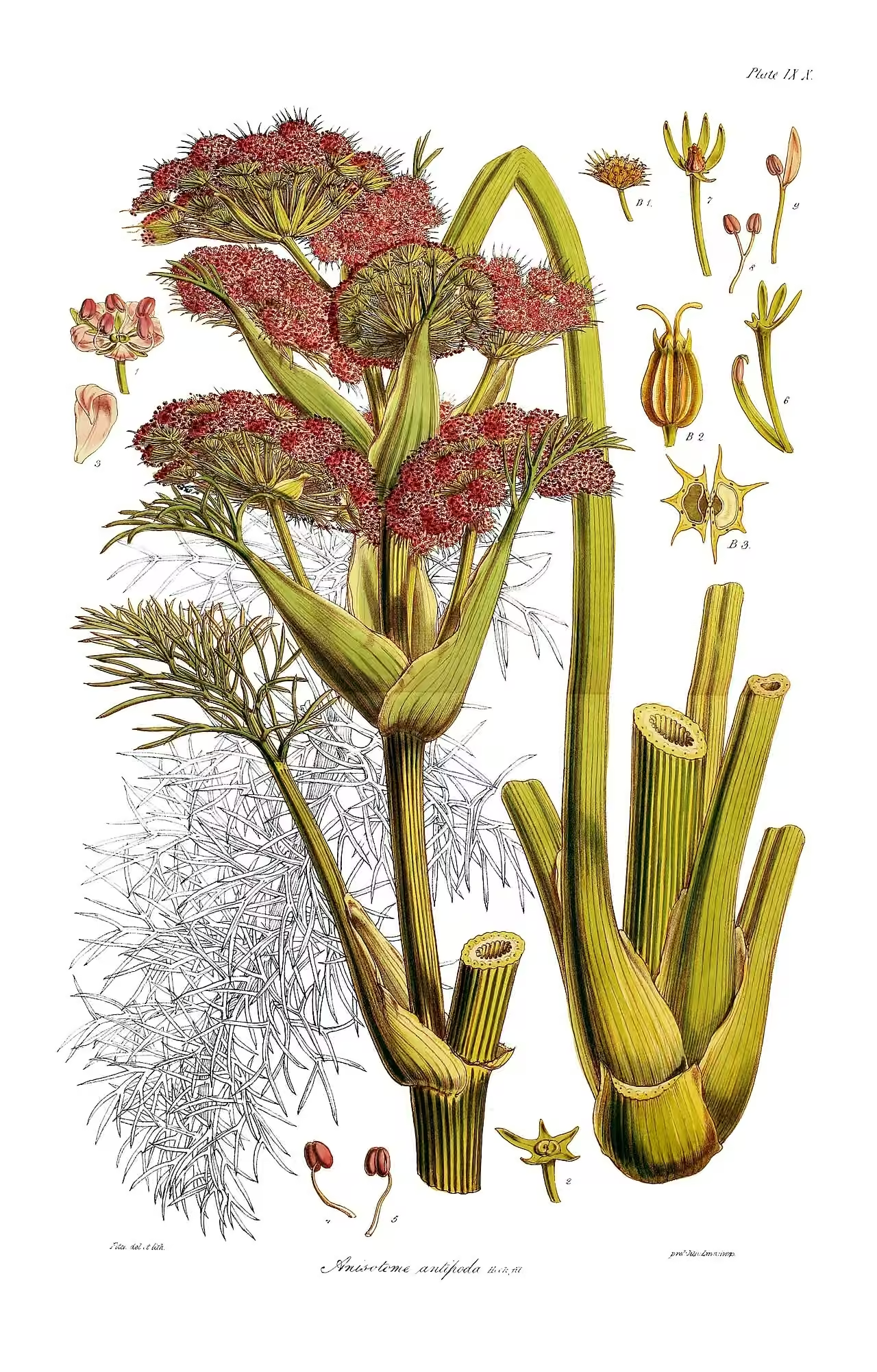
Anisotome antipoda
Anisotome antipoda
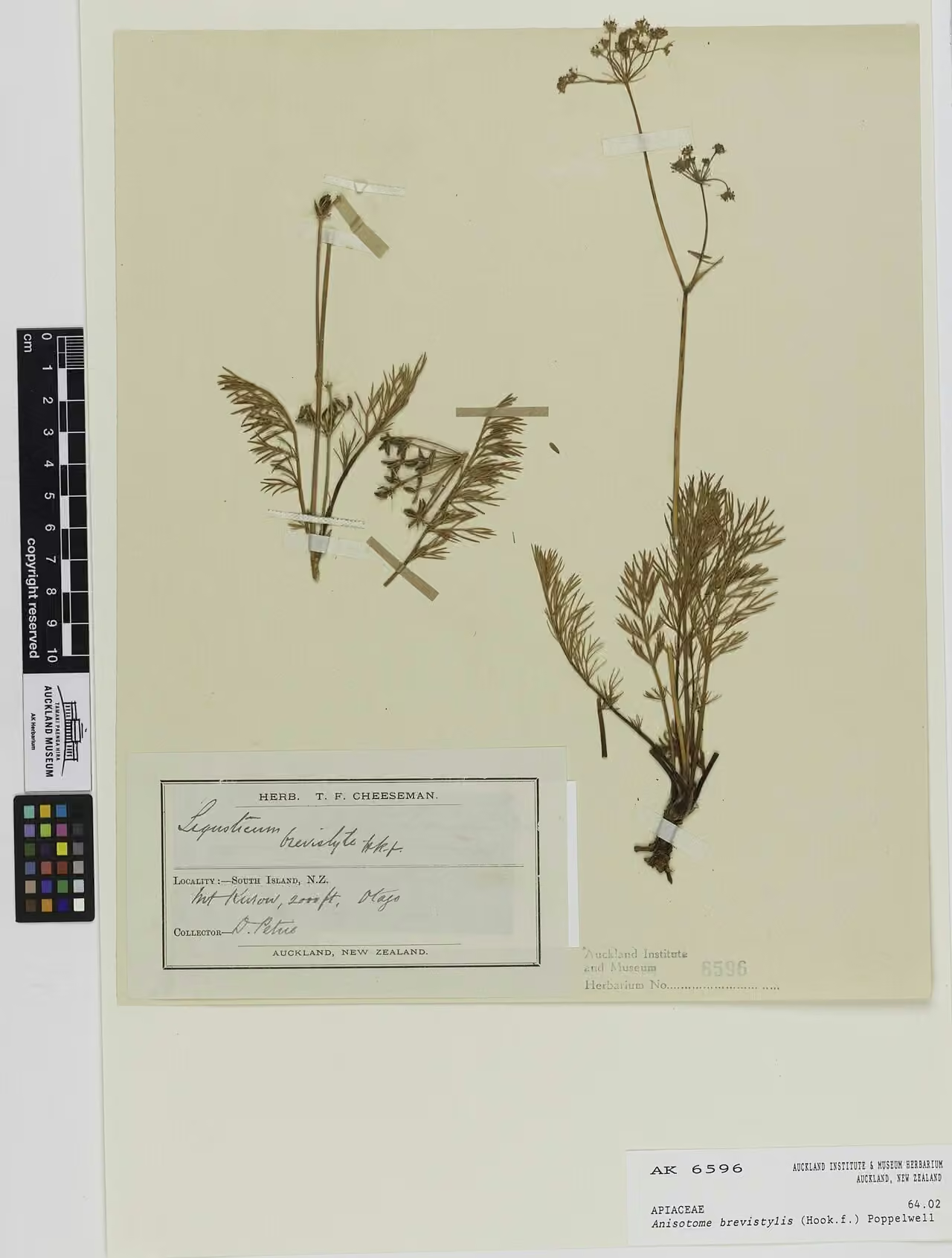
Native Carrot
Anisotome brevistylis
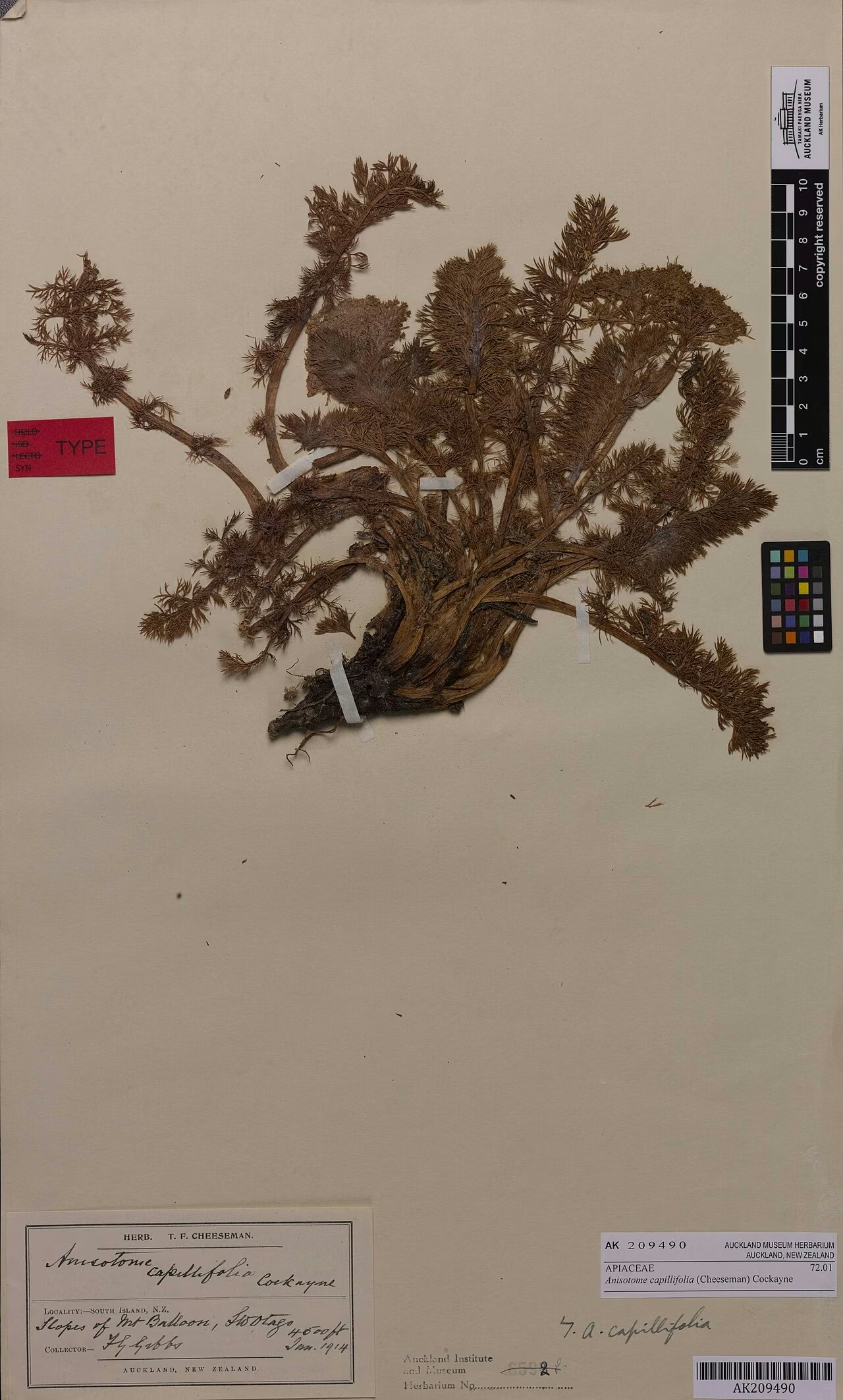
Anisotome capillifolia
Anisotome capillifolia
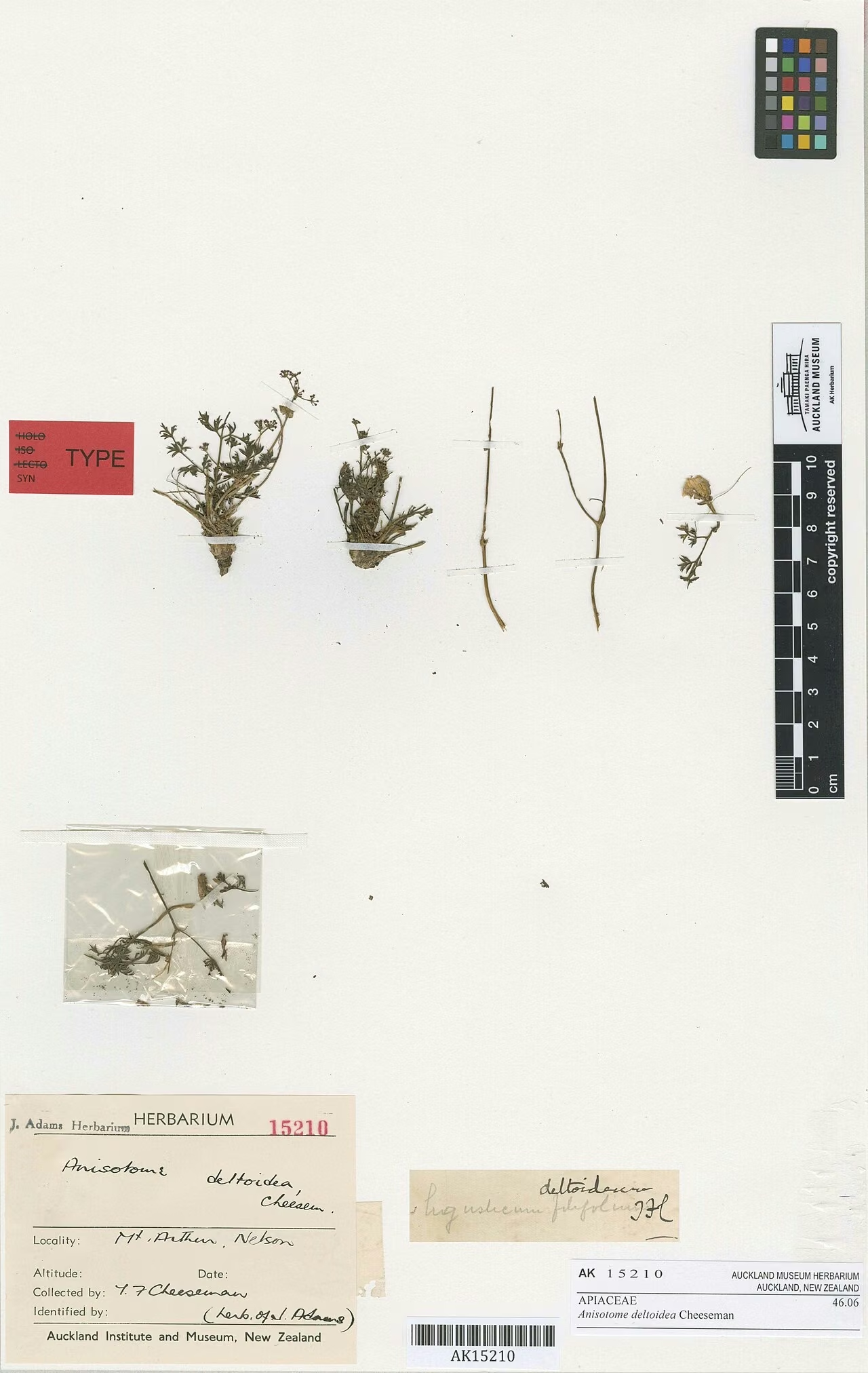
Anisotome deltoidea
Anisotome deltoidea
Kopoti
Kopoti
Plant Conservation
Anisotome acutifolia is ranked Threatened - Nationally Critical (2023) with the qualifiers Conservation Dependent, Island Endemic, One Location and Range Restricted. Around 1000 to 3000 mature plants are known, and its total area of occupancy is believed to be less than one hectare.
Visiting the Snares Islands or their surrounding waters requires DOC permits, which helps keep them free of introduced mammals, and the invasive hairy chickweed is being actively managed there. Te Papa's 2013 survey found the North East Island population appears stable.
Frequently Asked Questions
Where does Anisotome acutifolia grow?
It grows only on the Snares Islands, where it is known from North East Island and Broughton Island, at low altitude on margins of Olearia lyallii forest and in Poa tussock land.
Why is the Snares Islands anisotome Nationally Critical?
Its total area of occupancy is believed to be less than one hectare, with about 1000 to 3000 mature plants and few seedlings observed, so a single event could affect the whole species.
Can Anisotome acutifolia be grown in a garden?
No. NZPCN states that it has never been successfully cultivated and should not be removed from the wild.
What is a megaherb?
Megaherbs are very large-leaved herbaceous plants typical of the subantarctic islands. On the Snares, Anisotome acutifolia and Stilbocarpa robusta form the megaherb herbfields, which are limited to only two sites on the main island.
Sources and Further Reading
The botanical, growing, and conservation details for Snares Islands Anisotome (Anisotome acutifolia) on this page draw on the New Zealand plant references below. Consult them for full technical records and the latest distribution data.