Bent Grass
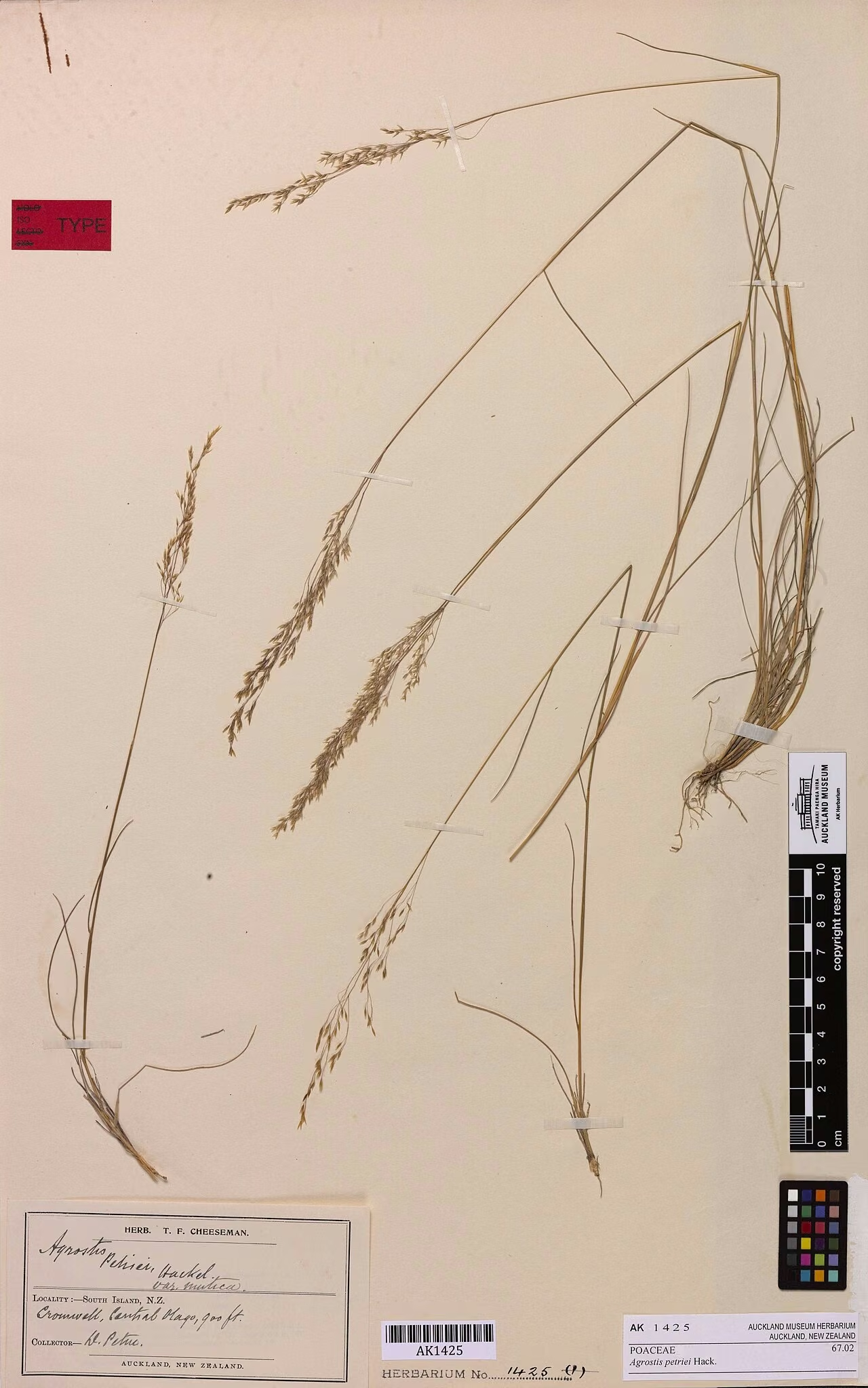
Agrostis petriei
Last updated:
Agrostis petriei is a loosely erect, bluish-green to greyish-green tussock-forming bent grass endemic to the South Island, growing 15 to 55 cm tall with stiff, wiry, rolled leaves that feel distinctly rough. It is found from Canterbury to Central Otago on dry, stony ground, cliff faces, rock outcrops and river flats within montane to subalpine tussock grassland. Unlike most native Agrostis, which favour damp places, it is a grass of arid sites, and it flowers from October to January. It is currently ranked Not Threatened but remains sparsely distributed. Explore more native grasses and flaxes in our native plant guide.
Plant Description
Agrostis petriei forms perennial, loose, tussocky clumps (15) 30 to 55 cm tall, bluish green or greyish green in colour. The leaf blades are 4 to 10.5 cm long (occasionally to 18 cm) and 0.3 to 1 mm wide, slender, stiff and wiry, and strictly rolled inward. Their surfaces are densely scabrid-papillose, so they feel rough when drawn through the fingers.
The panicle is 4 to 16 cm long and laxly oblong, with delicate, spreading branches. Spikelets are 2.5 to 3.4 mm long, pale greenish to brownish, which is relatively large for a native bent. The lemma is 2 to 2.6 mm and usually bears a straight or slightly wavy awn 2 to 3 mm long from the middle of its back, although the awn is sometimes absent. The anthers are comparatively long at 1.3 to 1.8 mm.
The combination of a tussock habit, wiry rough blue-green leaves, larger spikelets with mid-dorsal awns, and a dry, rocky habitat separates it from the softer, damp-site Agrostis species such as Agrostis personata and Agrostis imbecilla.
Quick Facts
| Scientific Name | Agrostis petriei |
|---|---|
| Height | 0.15-0.55 m |
| Spread | Loose tussock about 0.2-0.4 m |
| Water Needs | Low; a dryland grass |
| Light | Full sun |
| Frost Tolerance | High; montane to subalpine |
| Salt Tolerance | No information available; an inland species |
| Growth Rate | Moderate |
| Lifespan | Perennial |
Climate Best Suited to
Suits the dry, continental climate of inland Canterbury and Central Otago, with hot summers, cold frosty winters and low rainfall; it dislikes humid conditions.
Regional Suitability
| City | Climate Suitability |
|---|---|
| Auckland | Low |
| Wellington | Low |
| Christchurch | Medium |
| Dunedin | Medium |
Plant Habitat
Agrostis petriei is endemic to the South Island, where it occurs from Canterbury south to Central Otago, mostly in the drier eastern and inland districts.
It grows at montane to subalpine elevations on dry stony ground, cliff faces, rock outcrops and river flats within tussock grassland. NZPCN notes that it is the only indigenous Agrostis that favours arid sites, typically on rock outcrops or river flats within what it calls the ablation zone.
Growing Requirements
Soil Requirements
It grows in thin, stony, free-draining soils and rock crevices that dry out in summer.
- Gravelly, stony or rocky substrate
- Excellent drainage is essential
- Low to moderate fertility; no fertiliser needed
Light Requirements
It is a plant of open, sunny, exposed sites where taller vegetation is sparse.
- Full sun
- Open, airy positions without overhanging plants
Water Requirements
Adapted to dry rocky ground, it needs little water once established and suffers in wet, humid conditions.
- Water only to establish young plants
- Avoid poorly drained or irrigated beds
Planting and Establishing
Agrostis petriei is not widely available, but it is well suited to dryland restoration and rock gardens in inland Canterbury and Central Otago. Plant it in spring or autumn into gravelly, free-draining ground in full sun.
In wetter or more humid districts, grow it in a raised gravel bed or a large trough with a mineral mix, and expect it to be shorter lived than in its native dry country.
Ecological Role
Like other grasses it is wind pollinated, and NZPCN records that its florets are dispersed by wind and water. On river flats, floods may carry seed downstream to new gravel bars.
It forms part of the dryland tussock grassland and rock outcrop vegetation of the eastern South Island, communities that have been heavily reduced by pastoral development and invasive plants. Specific insect associations are not documented in the sources consulted.
Uses & Significance
Garden Uses
Its blue-green, wiry foliage makes it an attractive fine-textured grass for dry gardens in cold inland districts.
- Rock and gravel gardens
- Dryland restoration on river terraces and outcrops
- Contrast plant among small tussocks and cushion plants
Ecological Value
It is a distinctive endemic of the South Island drylands, one of the country's most modified and least protected ecosystems.
- The only native Agrostis specialised for arid sites
- Part of dryland rock outcrop and river flat communities
- Adds structural diversity to tussock grassland
Landscaping Uses
In a dryland garden, Agrostis petriei provides a soft, blue-grey tussock with airy panicles that catch the light in early summer. It pairs well with schist rocks, gravel mulch and other drought-tolerant natives from the same country.
Group three to five plants together to give a natural, loose drift, and keep them away from irrigated lawns and lush borders where they will be too wet and too crowded.
Seasonal Care Calendar
Spring
New growth begins and panicles start to emerge from October.
- Comb out dead foliage
- Plant new tussocks into gravelly ground
Summer
Flowering continues into January and seed ripens from December, with fruiting running to March.
- Collect ripe seed for fresh sowing
- No watering needed for established plants
Autumn
The last seed is shed by March and the tussock settles into a quieter phase.
- Sow fresh seed outdoors
- Divide larger clumps if needed
Winter
Plants sit through hard frosts; this cold is needed for flowering the following season.
- Leave plants exposed to winter cold
- Ensure drainage stays sharp in wet spells
When to Prune and How Much
No regular pruning is needed. Comb or pull out dead leaves and old flowering stems by hand in late winter to keep the tussock tidy.
Avoid cutting the tussock to the ground, since stiff wiry grasses are slow to recover and the old foliage protects the crown in winter.
How to Grow Bent Grass
NZPCN reports that Agrostis petriei is easy to grow from fresh seed and rooted pieces, but that it dislikes humidity and will not flower unless subjected to cold treatment. In practice this means raising plants is simple, while keeping them healthy is easiest in cold, dry inland districts or in a very free-draining raised bed elsewhere. Flowering is from October to January and fruiting from December to March, so fresh seed is available through summer. For restoration, use seed collected from the same district, as dryland populations in Canterbury and Central Otago may be locally adapted.
From Seed
Collect seed in summer when the panicles turn pale brown and the florets shed with a gentle shake. Fresh seed gives the best germination.
- Collect ripe panicles between December and March
- Sow fresh seed onto a gritty, free-draining seed mix
- Cover lightly with fine grit and keep evenly moist but not wet
- Place the tray outdoors in a bright, airy spot
- Pot seedlings into gritty mix once they have several leaves
- Let young plants experience a winter outdoors so they can flower
By Division
Rooted pieces can be split from established tussocks. Take divisions in spring as growth resumes.
- Lift the tussock or remove a rooted section from its edge
- Split it into pieces with several shoots and a good root mass
- Pot into a gritty mix and keep lightly moist
- Plant out once new roots fill the pot
Pests & Diseases
No specific pests or diseases are recorded. The main cause of failure in cultivation is humidity and poor drainage, which lead to rotting of the crown.
In the wild, dryland habitats are under pressure from invasive plants such as wilding conifers and exotic grasses, and from land development, which may affect some populations of this species.
Cultural Significance
No Māori name or traditional use is recorded for Agrostis petriei in the sources consulted.
The species was described by the Austrian grass specialist Eduard Hackel and named after Donald Petrie (1846 to 1925), a Scottish-born Otago botanist and school inspector who collected widely in the southern South Island mountains.
Bonus Tip
If you garden in Central Otago or the Mackenzie Basin, Agrostis petriei is one of the few native bent grasses that will thrive in your dry, stony soil without watering. Run your fingers along a leaf: the harsh, sandpapery feel is a quick field check for this species.
Related Plants
Explore other native plants that share similar characteristics or habitats with Bent Grass (Agrostis petriei), offering further insights into New Zealand's diverse flora. These related species provide context and opportunities for complementary planting in your garden.
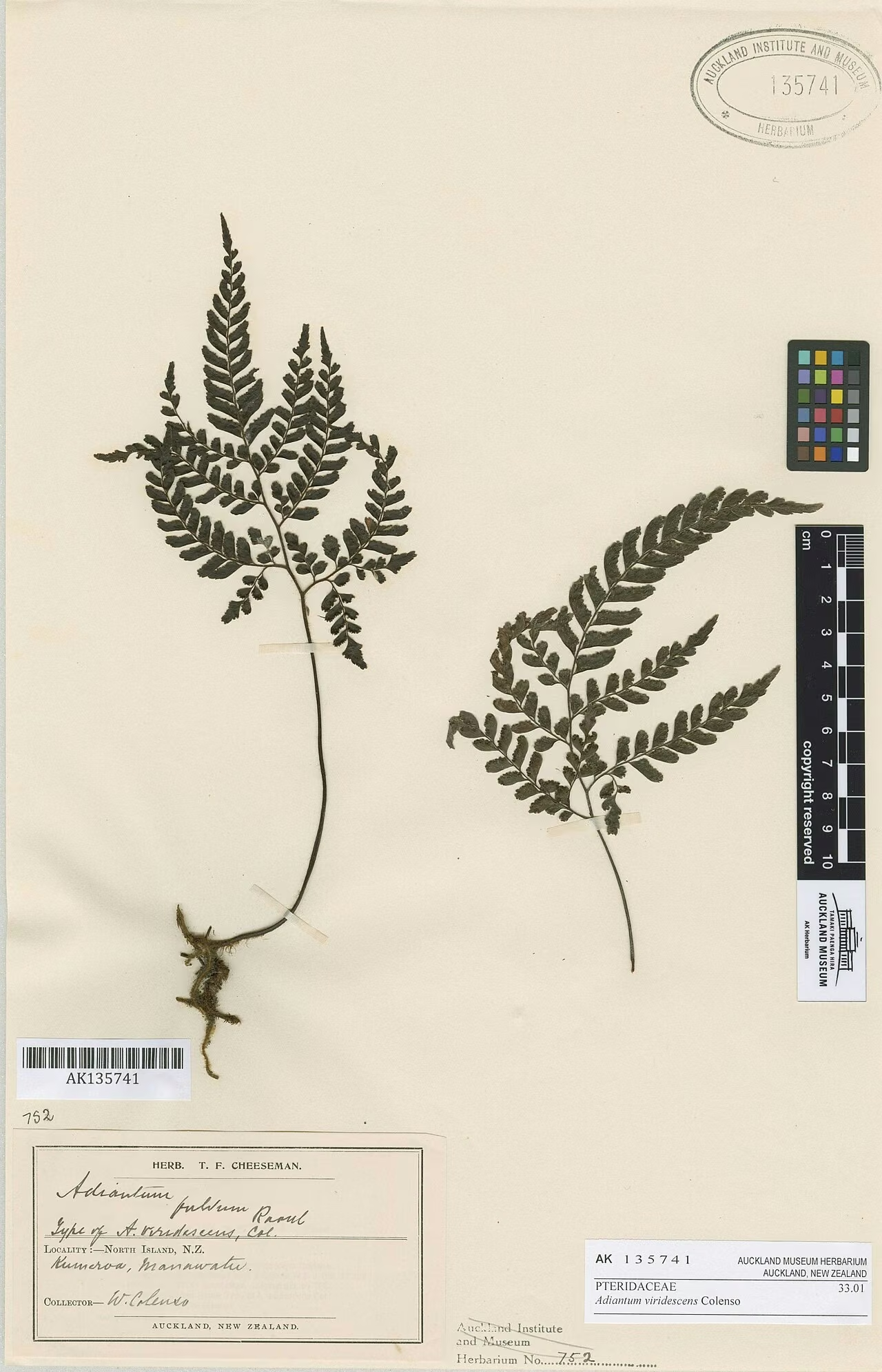
Adiantum viridescens
Adiantum viridescens
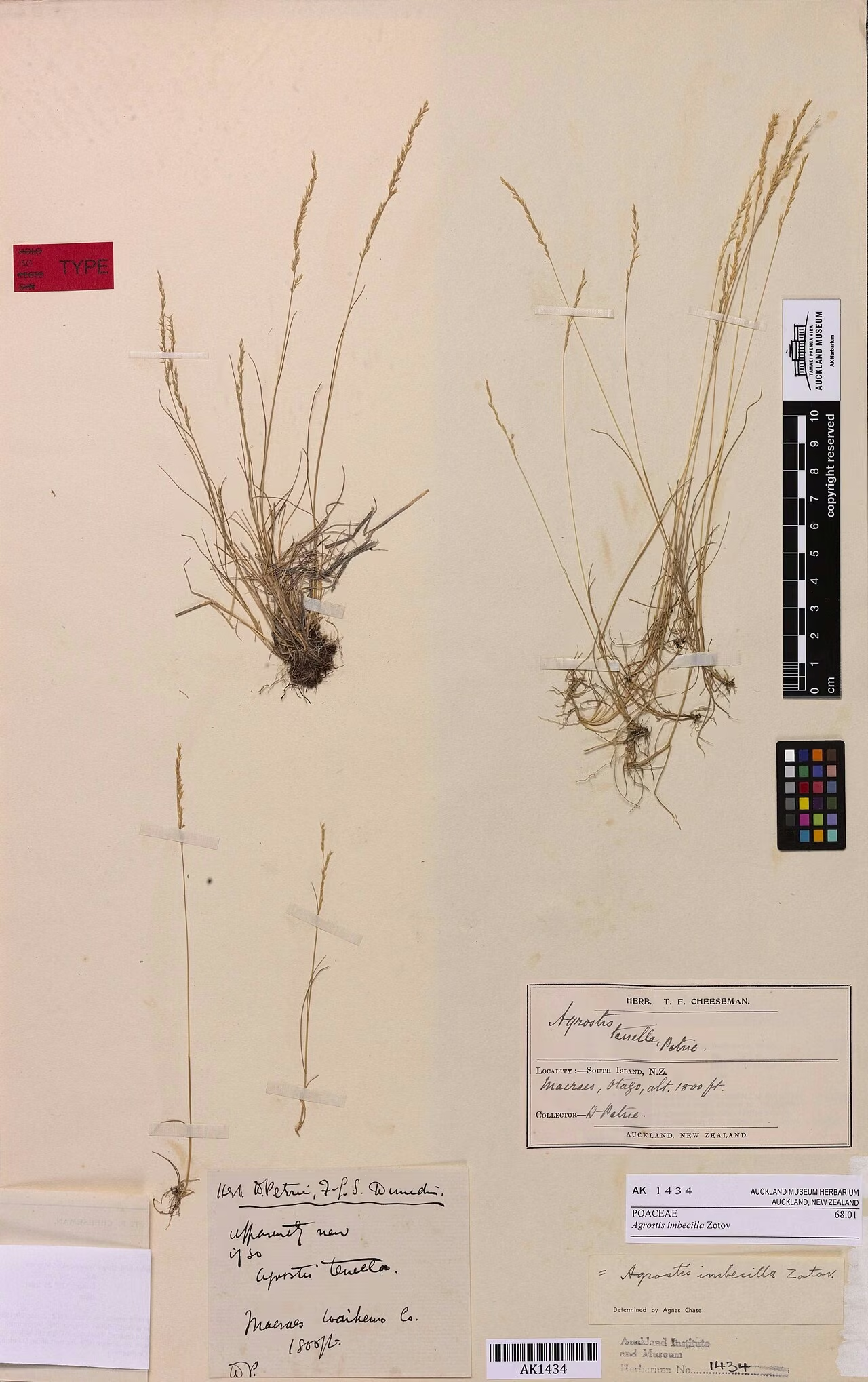
Feeble Bent
Agrostis imbecilla
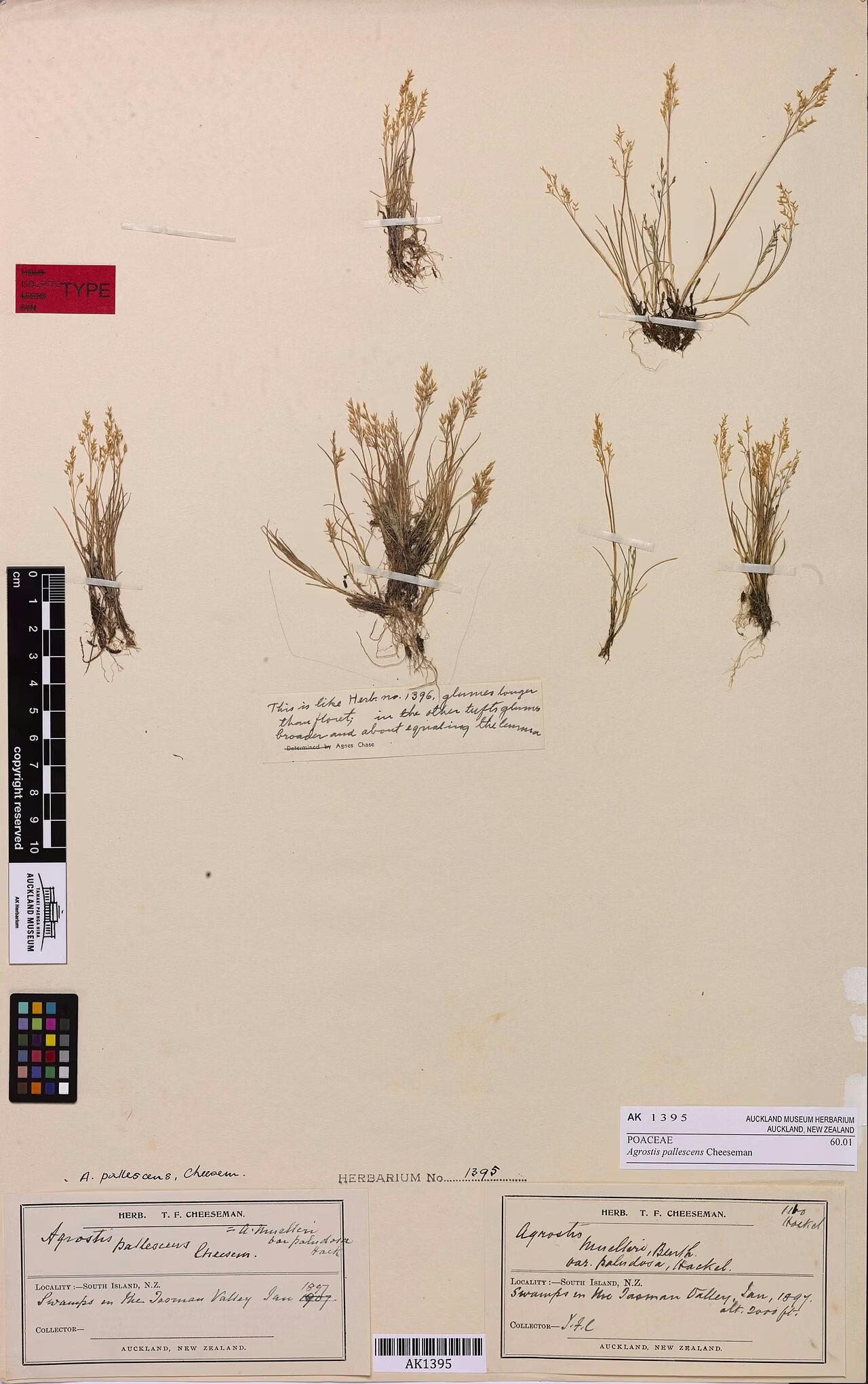
Agrostis pallescens
Agrostis pallescens
Agrostis personata
Agrostis personata
Alseuosmia turneri
Alseuosmia turneri
Lesser Joyweed
Alternanthera denticulata
Anaphalioides alpina
Anaphalioides alpina
Anaphalioides hookeri
Anaphalioides hookeri
Plant Conservation
Agrostis petriei was ranked At Risk - Naturally Uncommon from 2009 to 2017 and is currently Not Threatened (2023), with qualifiers indicating it is sparse and that its range, population size and trend are data poor. Otago's 2025 regional assessment lists it as Regionally Data Deficient.
Protecting dryland rock outcrops, river flats and tussock grassland from weeds, wilding pines and conversion to intensive farming is the best way to secure this species and its habitat.
Frequently Asked Questions
How can you tell Agrostis petriei from other native bent grasses?
NZPCN highlights its rigid, strictly inrolled, wiry blue-green to grey-green leaves, which are densely rough with tiny projections, and its preference for dry rocky sites rather than the damp ground most native Agrostis prefer.
When does Agrostis petriei flower?
It flowers from October to January and fruits from December to March, producing open, laxly oblong panicles 4 to 16 cm long with pale green to brownish spikelets.
Who is Agrostis petriei named after?
It honours Donald Petrie (1846 to 1925), a Scottish-born botanist who worked in Otago and described many New Zealand grasses and other plants.
Can Agrostis petriei be grown in a garden?
NZPCN says it is easy from fresh seed and rooted pieces but dislikes humidity and needs winter cold to flower, so it suits dry, cold inland gardens such as those of Central Otago and inland Canterbury.
Sources and Further Reading
The botanical, growing, and conservation details for Bent Grass (Agrostis petriei) on this page draw on the New Zealand plant references below. Consult them for full technical records and the latest distribution data.