Everlasting Daisy
Anaphalioides hookeri
Last updated:
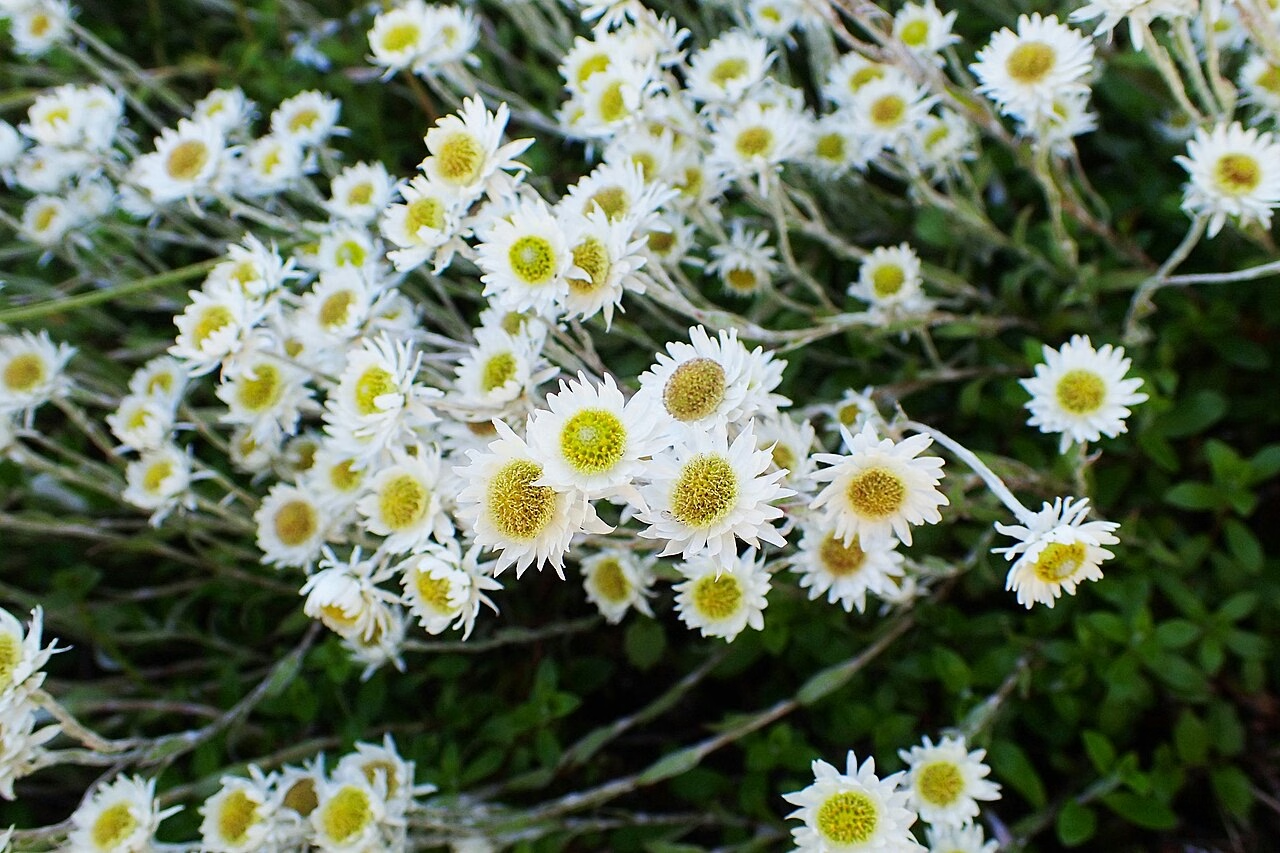
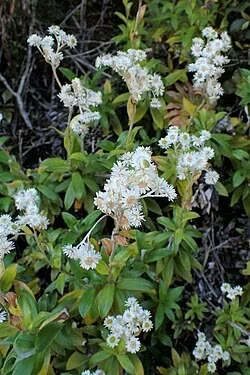
Anaphalioides hookeri is a prostrate, trailing everlasting daisy endemic to New Zealand. Its rooting branches carry small obovate leaves that are whitish beneath, and red-brown, densely hairy stalks up to about 10 cm long hold solitary white papery flower heads 12 to 23 mm across. Herbarium records place it mainly on damp coastal cliffs and banks in the far south of the South Island, from the Otago coast and Catlins to Te Waewae Bay and Fiordland, and on Stewart Island/Rakiura. It is Not Threatened nationally but is regionally uncommon in Otago. Explore more native ground covers in our native plant guide.
Plant Description
Anaphalioides hookeri is a prostrate perennial with stems 1 to 3 mm in diameter. Its branches, 15 to 20 cm long, root along their length, and the branchlets are red-brown with internodes 4 to 5 mm apart. The obovate leaves are 5 to 17.7 mm long and 2.3 to 6.2 mm wide and twist upward from the prostrate stems. Each leaf ends in a dark red point about 0.5 mm long, and the upper surface is sparsely hairy or hairless. Herbarium notes describe the shoots, leaf undersides and flower bracts as whitish.
The red-brown flowering stems are 37 to 105 mm long and densely hairy, each carrying a single flower head 12 to 23 mm across when dried. One collector noted that the flower stems first curve downward and then turn upright at the tip. The outer involucral bracts are 7 to 11 mm long and the inner 6.3 to 8.4 mm, and the flower colours are recorded as white and yellow. Each head has about 106 to 212 florets, and the achenes are small, 0.8 to 0.92 mm long and hairless, with a pappus for wind dispersal.
The widespread everlasting daisy Anaphalioides bellidioides grows in some of the same southern areas, and plants that appear to be hybrids between the two have been collected on Stewart Island. The red-brown stems and dark red leaf tips of A. hookeri, along with its cliff habitat, help separate it.
Quick Facts
| Scientific Name | Anaphalioides hookeri |
|---|---|
| Height | Prostrate; flower stalks 4-10 cm |
| Spread | Branches 0.15-0.2 m long, forming patches |
| Water Needs | Moderate; damp cliffs and banks |
| Light | Full sun to light shade |
| Frost Tolerance | Moderate to high; grows in cool southern districts |
| Salt Tolerance | Some; grows on coastal cliffs behind beaches, but no tolerance data published |
| Growth Rate | Moderate |
| Lifespan | Perennial |
Climate Best Suited to
Suits the cool, moist, windy climate of the southern South Island coast, Fiordland and Stewart Island, with mild summers and frequent rain.
Regional Suitability
| City | Climate Suitability |
|---|---|
| Auckland | Low |
| Wellington | Medium |
| Christchurch | Medium |
| Dunedin | High |
Plant Habitat
Allan Herbarium specimens record Anaphalioides hookeri from the South Otago coast, Tahakopa Bay in the Catlins, Te Waewae Bay and Bluff in Southland, and in Fiordland at Dusky Sound, Breaksea Sound, Caswell Sound, Deep Cove in Doubtful Sound and Wilmot Pass. On Stewart Island/Rakiura it has been collected near Oban and Halfmoon Bay.
Its typical habitat on these labels is damp, sheltered coastal cliffs and banks, including mudstone and sandstone cliffs at Te Waewae Bay and cliffs at the back of the beach at Tahakopa Bay, where it formed expansive patches. Some Fiordland and Stewart Island collections come from banks and track edges inland. NZPCN classes it as Facultative Upland, meaning it occasionally grows in wetlands but usually occurs on drier ground.
Growing Requirements
Soil Requirements
It grows on damp cliff faces of mudstone and sandstone and on soil banks, usually with little competition.
- Free-draining but moist mineral soil
- Tolerates thin soil on rock and clay banks
- Low to moderate fertility
Light Requirements
On open cliffs and banks it receives good light, while some specimens come from sheltered sites.
- Full sun to light shade
- Keep clear of overhanging shrubs
Water Requirements
Its cliff and bank habitats are frequently damp from seepage and southern rain, but water does not lie around the roots.
- Keep moist in summer
- Ensure drainage on slopes or raised beds
Planting and Establishing
Anaphalioides hookeri is seldom offered by nurseries. Where obtainable, plant it on a bank, wall top or rock garden in cool southern gardens, where its trailing stems can hang or spread over stone.
Plant in spring into a gritty, moist mix in full sun or light shade, and keep it watered until established. Do not collect plants from cliffs, where removing them may also destabilise the face.
Ecological Role
NZPCN records that its seeds are pappate cypselae dispersed by wind, which suits a plant of cliff faces where updrafts carry seed along the coast. Its rooting branches let it form wide patches on suitable faces.
It hybridises with Anaphalioides bellidioides where the two meet, according to herbarium records from Stewart Island. Its pollinators and associated invertebrates are not documented in the sources consulted.
Uses & Significance
Garden Uses
It is a choice plant for southern gardeners who want a native trailing daisy for banks and walls.
- Trailing over walls and rock faces
- Coastal bank plantings in Otago and Southland
- Native everlasting daisy collections
Ecological Value
It contributes to the specialised flora of southern coastal cliffs, a habitat with many small, localised plants.
- Endemic to New Zealand
- Covers and binds damp cliff and bank surfaces
- White flower heads add to the flowering diversity of southern coasts
Landscaping Uses
Use Anaphalioides hookeri where a soft, trailing native can spill over a retaining wall or a steep bank. The white papery heads on red-brown stalks stand out against dark rock.
In coastal Otago or Southland gardens, pair it with other low coastal natives on a sunny bank, keeping vigorous grasses away so the mats are not overgrown.
Seasonal Care Calendar
Spring
New shoots extend along the ground and root at the nodes.
- Plant or divide
- Weed around the mats
Summer
Flower heads appear on curved, then upright, red-brown stalks. A December specimen from Tahakopa Bay carries flowering stems, but no flowering period is published.
- Water in dry spells
- Note flowering times on cultivated plants
Autumn
Seed with its pappus is released and dispersed by wind.
- Collect seed from cultivated plants
- Trim spent flower stalks
Winter
Growth slows in the cool, wet southern winter.
- Avoid waterlogging in flat beds
- Clear leaf litter from the mats
When to Prune and How Much
Remove spent flower stalks after flowering to keep plants neat. Otherwise little pruning is needed.
Trim back trailing branches that extend beyond their space, using cut pieces with roots as new plants.
How to Grow Everlasting Daisy
No published propagation advice specific to Anaphalioides hookeri was found in the sources consulted. However, its branches root along their length, and its seeds are small wind-dispersed achenes with a pappus, so the usual methods for trailing everlasting daisies are division of rooted stems and sowing fresh seed. Treat the steps below as practical guidance based on these documented features rather than a tested protocol for this species. Material should come from cultivated plants, or be collected with permission in small quantities, because many of its sites are on fragile coastal cliffs or within Fiordland and Rakiura national parks.
By Division of Rooted Stems
Rooted branch sections give quick, reliable new plants because they already have their own roots.
Take divisions from the edge of a patch so the parent mat is left intact, and pot several pieces in case some fail to establish.
- Choose a branch that has rooted along its length
- Cut the rooted section free in spring
- Pot into a gritty, moisture-retentive mix
- Keep in light shade and moist until new shoots form
- Plant out in full sun or light shade once established
From Seed
Collect the heads as they dry and the pappus starts to open, before the wind takes the seed.
- Pick mature flower heads from cultivated plants
- Separate the seeds and sow on the surface of a fine, gritty mix
- Keep the tray cool and moist in good light
- Prick out seedlings into small pots
- Grow on before planting out in spring
Pests & Diseases
No pests or diseases are recorded specifically for Anaphalioides hookeri. In cultivation, rot from stagnant wet soil is the main danger.
On coastal cliffs, natural erosion and slips can remove populations, and invasive plants on banks and roadsides may overgrow low mats.
Cultural Significance
No Māori name or traditional use is recorded for Anaphalioides hookeri in the sources consulted.
The species honours Sir Joseph Dalton Hooker, who described New Zealand plants in his Flora Novae-Zelandiae and Handbook of the New Zealand Flora. It has carried several names over time, including Gnaphalium trinerve, Gnaphalium hookeri (given by H.H. Allan) and Anaphalis rupestris, before Arne Anderberg placed it in Anaphalioides.
Bonus Tip
On a coastal walk in the Catlins or along Te Waewae Bay, look at damp cliff faces behind the beach for trailing mats with red-brown stalks and white everlasting heads. Check the leaf tips with a hand lens: a tiny dark red point is a good clue to this species.
Related Plants
Explore other native plants that share similar characteristics or habitats with Everlasting Daisy (Anaphalioides hookeri), offering further insights into New Zealand's diverse flora. These related species provide context and opportunities for complementary planting in your garden.
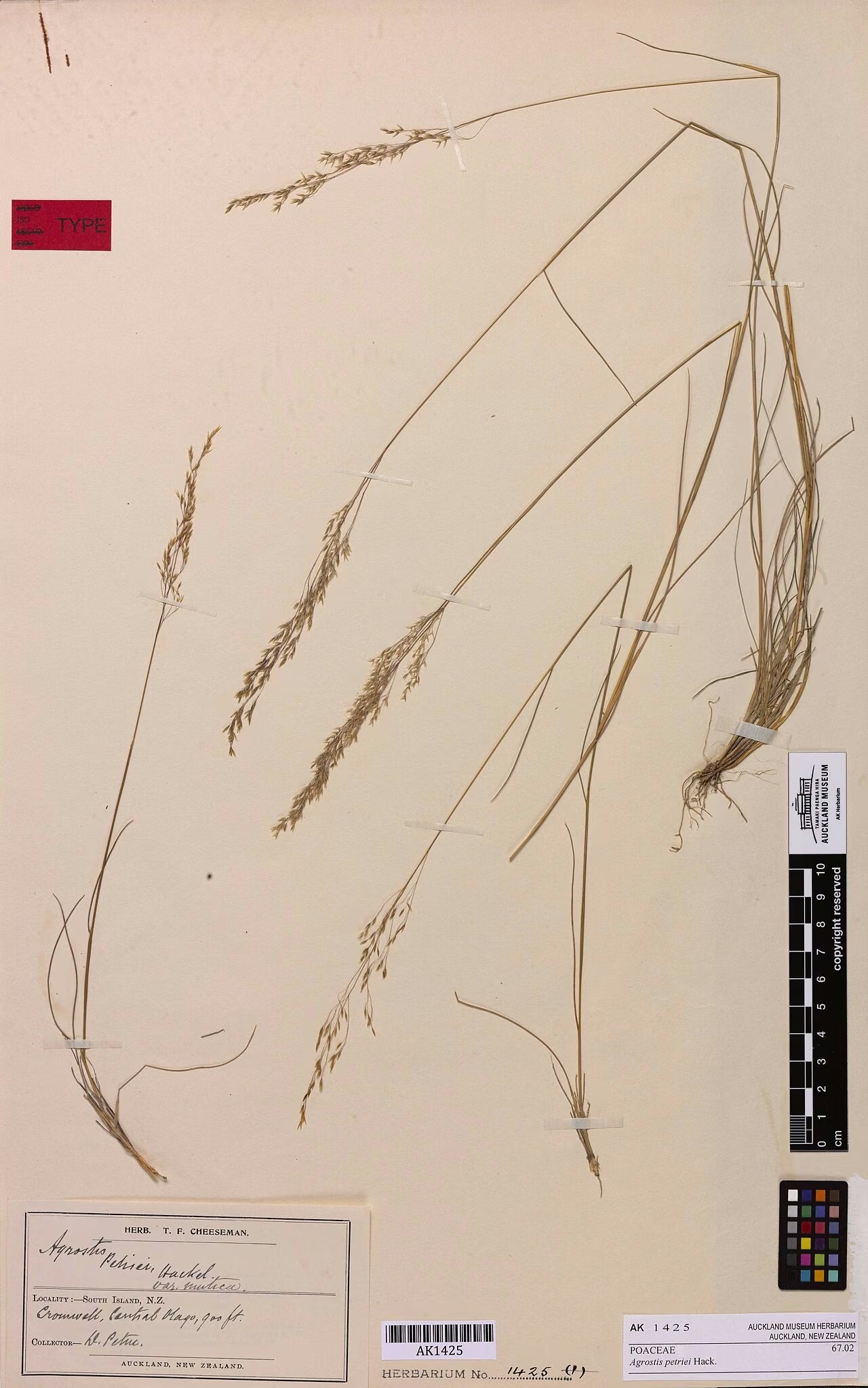
Agrostis petriei
Agrostis petriei
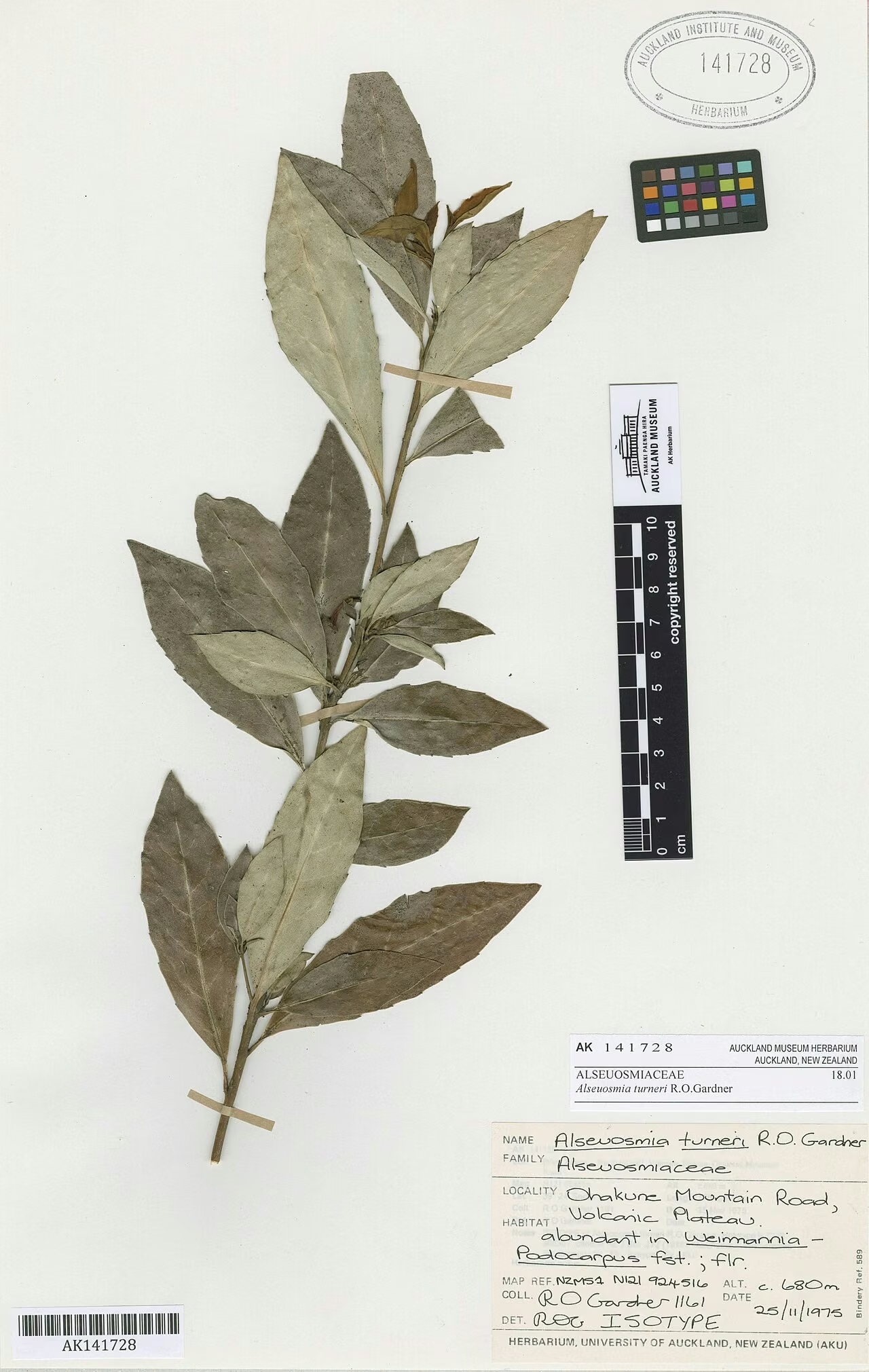
Alseuosmia turneri
Alseuosmia turneri
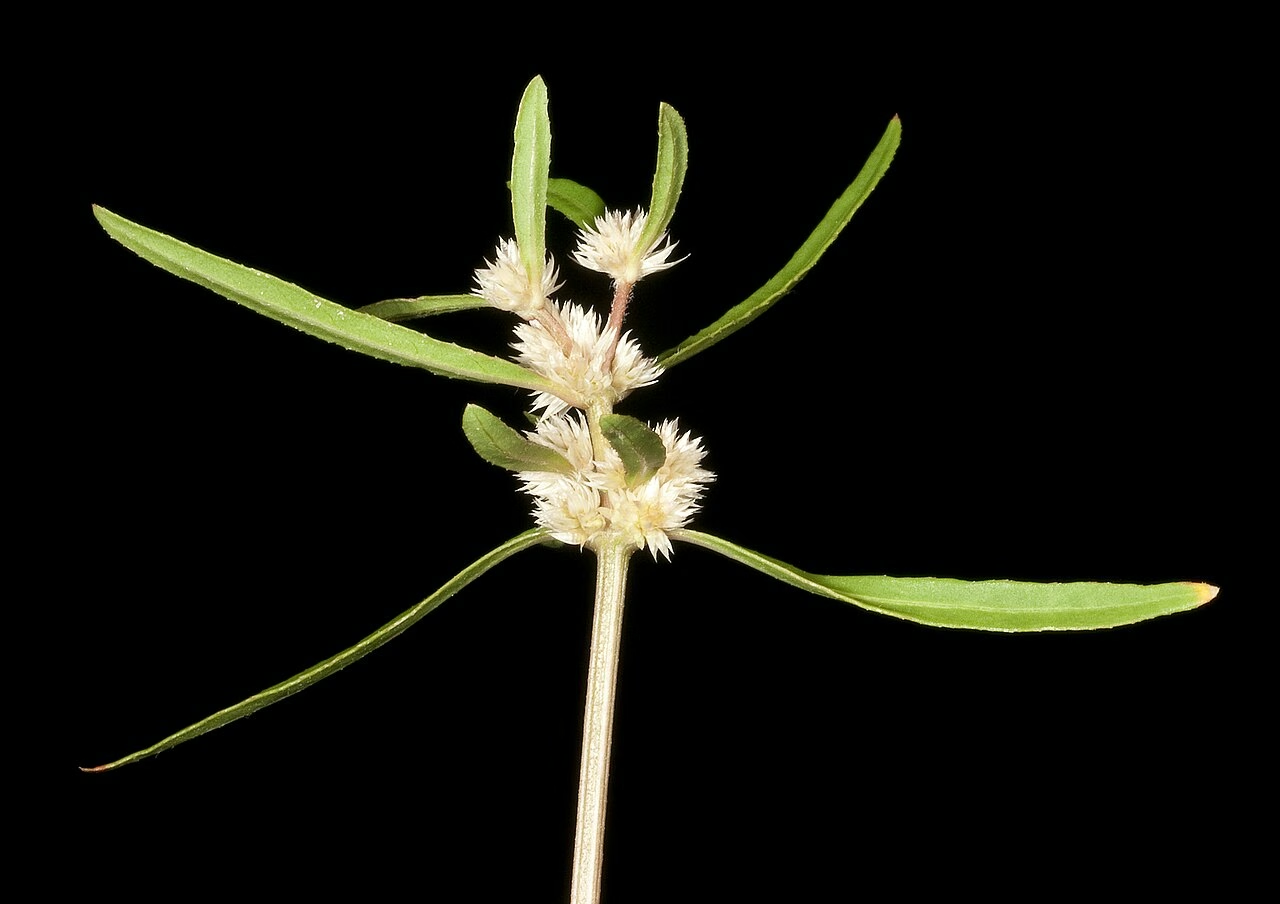
Lesser Joyweed
Alternanthera denticulata
Anaphalioides alpina
Anaphalioides alpina
Anaphalioides subrigida
Anaphalioides subrigida
New Zealand Anemone
Anemonastrum tenuicaule
Snares Islands Anisotome
Anisotome acutifolia
Puatea
Puatea
Plant Conservation
Anaphalioides hookeri has been ranked Not Threatened in every national assessment from 2004 to 2023. In Otago, the 2025 regional assessment lists it as Regionally At Risk - Regionally Naturally Uncommon, with qualifiers including range restricted and sparse.
Many of its sites fall within Fiordland and Rakiura national parks. Elsewhere, keeping coastal cliffs and banks free of invasive weeds and avoiding disturbance to cliff faces help maintain populations.
Frequently Asked Questions
Where does Anaphalioides hookeri grow?
Herbarium specimens record it on the South Otago coast, at Tahakopa Bay in the Catlins, on mudstone and sandstone cliffs at Te Waewae Bay, at Bluff, in Fiordland including Dusky and Doubtful sounds, and around Halfmoon Bay on Stewart Island/Rakiura.
How is Anaphalioides hookeri different from the common everlasting daisy?
Both are trailing everlasting daisies, but A. hookeri has red-brown branchlets and flowering stems, leaves with a small dark red tip, and grows mostly on damp southern coastal cliffs. Hybrids with Anaphalioides bellidioides have been collected on Stewart Island.
Who is Anaphalioides hookeri named after?
It honours Sir Joseph Dalton Hooker (1817 to 1911), the English botanist who sailed on the Antarctic expedition that visited New Zealand and wrote the Handbook of the New Zealand Flora.
What were the old names for Anaphalioides hookeri?
It has been known as Gnaphalium trinerve, Gnaphalium hookeri and Anaphalis rupestris before being placed in Anaphalioides.
Sources and Further Reading
The botanical, growing, and conservation details for Everlasting Daisy (Anaphalioides hookeri) on this page draw on the New Zealand plant references below. Consult them for full technical records and the latest distribution data.