Lesser Joyweed
Alternanthera denticulata
Last updated:
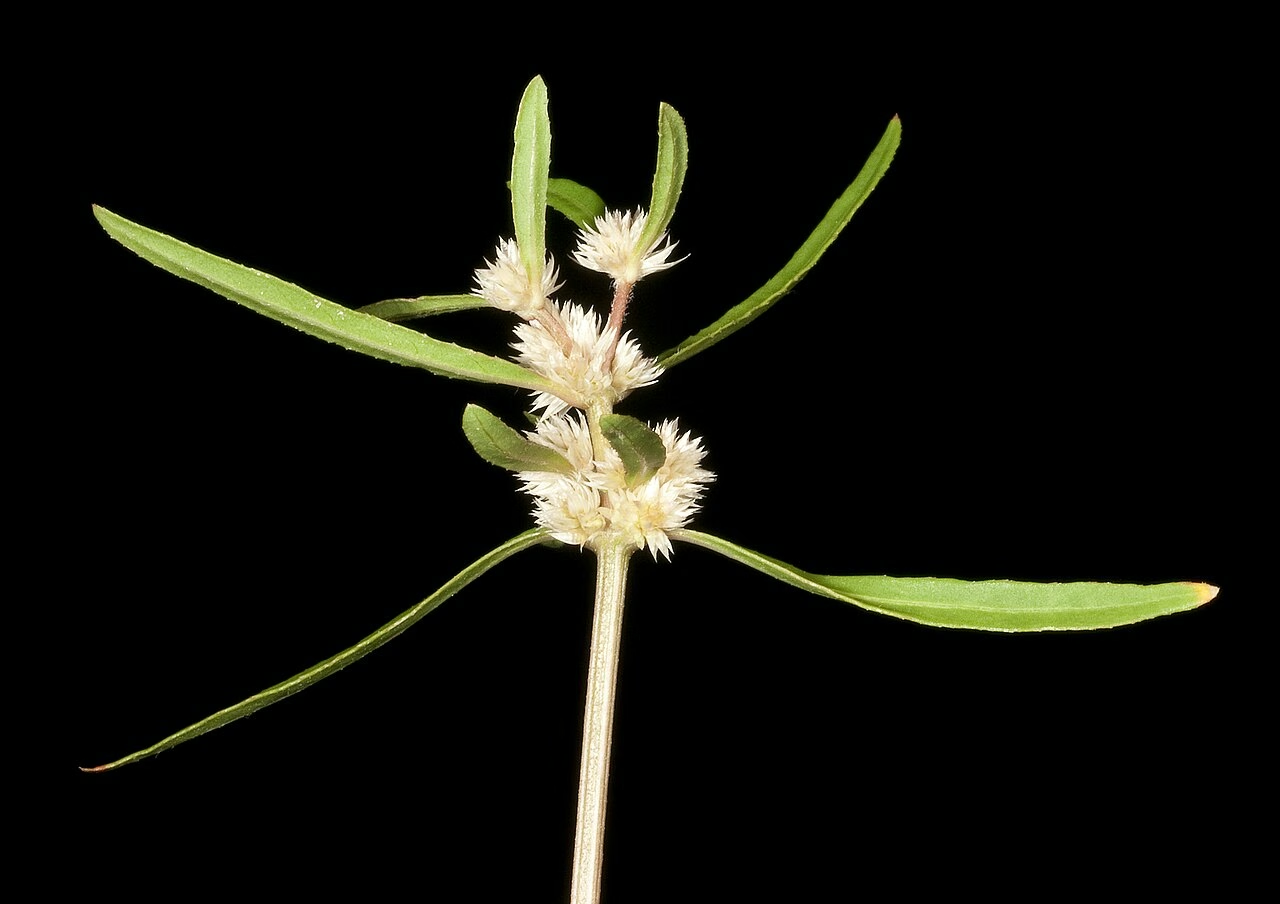
Lesser joyweed (Alternanthera denticulata) is a low, sprawling perennial herb of the amaranth family that grows in fertile coastal and lowland wetlands, lake margins, river banks and damp forest in the North Island. Its stems, 10 to 50 cm long, root at the nodes, and it has narrow leaves with finely toothed margins and small, papery white flower clusters tucked into the leaf axils. It is indigenous to both New Zealand and Australia, is ranked Not Threatened, and is easy to grow, though NZPCN warns it can become weedy. Explore more native ground covers in our native plant guide.
Plant Description
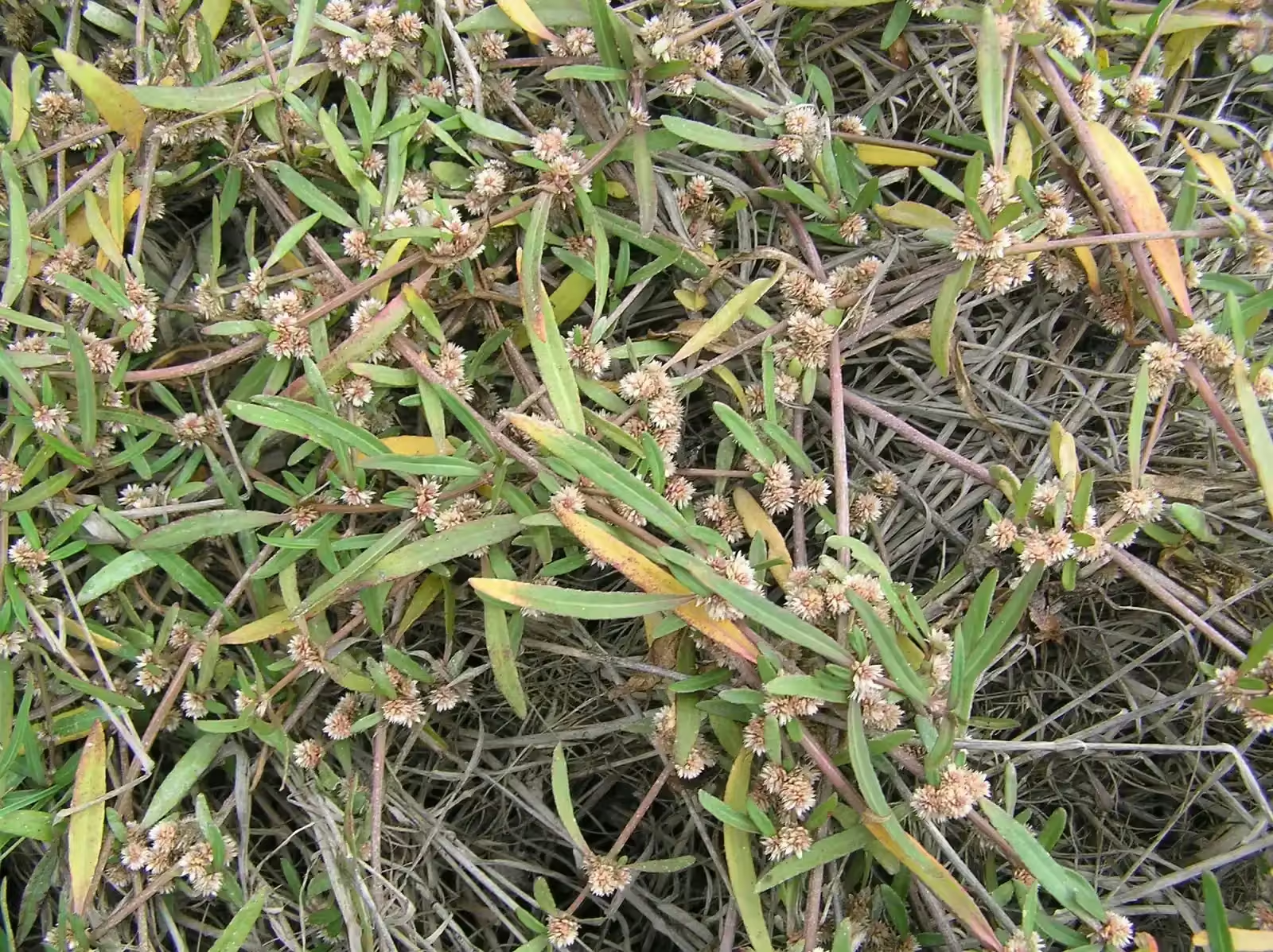
Alternanthera denticulata is a decumbent, branching perennial herb with stems 10 to 50 cm long that root at the lower nodes. The stems are green flushed pink, smooth to sparsely hairy, with woolly nodes. The leaves are (1) 2 to 4 (5) cm long and vary from narrowly lanceolate to obovate-oblong, light green to yellow-green and sometimes flushed pink, with pinkish veins. The margins carry tiny teeth, the feature behind the epithet denticulata.
The flowers are packed into dense, rounded clusters 5 to 10 mm across in the leaf axils. The tepals are white and papery, in two unequal series, the longer about 3 mm and the shorter about 2.5 mm, and there are two or three functional stamens. The fruit is a strongly flattened, light brown utricle about 1.5 by 2 mm, broadly heart-shaped with thickened edges.
It is closely related to the endemic Alternanthera nahui, from which it differs in its more gracile habit and much broader, distinctly toothed leaves. Hybrids between the two are known. Past New Zealand authors called it Alternanthera sessilis, a different species.
Quick Facts
| Scientific Name | Alternanthera denticulata |
|---|---|
| Height | Low; stems 0.1-0.5 m long, sprawling |
| Spread | Spreads by rooting stems, 0.5 m or more |
| Water Needs | High; damp to wet ground |
| Light | Full sun to partial shade |
| Frost Tolerance | Low to moderate; a warm lowland species |
| Salt Tolerance | No information available, though it reaches coastal wetlands |
| Growth Rate | Fast |
| Lifespan | Perennial |
Climate Best Suited to
Suits warm, humid, frost-light lowland climates of the northern North Island, where it grows almost year round in damp, fertile ground.
Regional Suitability
| City | Climate Suitability |
|---|---|
| Auckland | High |
| Wellington | Medium |
| Christchurch | Low |
| Dunedin | Low |
Plant Habitat
Lesser joyweed is native to Australia, New Guinea and the North Island of New Zealand. Herbarium records include Northland, and it is regionally uncommon there while the Auckland region ranks it Regionally Threatened - Regionally Increasing. NZPCN notes uncertainty over its exact status in New Zealand: most populations appear indigenous, but some may be independent naturalisations from Australia.
It grows in coastal to lowland fertile wetlands, on lake margins and river banks, around waterfalls and in damp ground within forest. It also turns up as a weed in drains, pig yards and damp urban ground, reflecting its liking for rich, wet soils.
Growing Requirements
Soil Requirements
It favours fertile, wet soils, from silty lake margins to enriched ground around drains and stock yards.
- Moist to wet, fertile soil
- Tolerates silt and organic mud
- Thrives where nutrients are high
Light Requirements
It grows both in open wetlands and in damp ground within forest, so it is adaptable to light levels.
- Full sun to partial shade
- Grows more compactly in good light
Water Requirements
This is a wetland plant that needs constant moisture and tolerates temporary flooding at lake and river margins.
- Keep soil damp or wet at all times
- Suitable for pond and stream edges
Planting and Establishing
Lesser joyweed is not sold commercially, and NZPCN describes it as rather weedy and unattractive. If used in wetland restoration within its range, plant rooted pieces along damp margins where its sprawling stems can knit the soil.
Avoid planting it in small gardens or near choice wetland plants, since it spreads quickly by rooting stems and seeds.
Ecological Role
Its small fruits are dispersed by attaching to fur, feathers and clothing, which helps it move between wetlands. Wikipedia records it as a food plant for the varied eggfly butterfly (Hypolimnas bolina nerina).
Its fast, sprawling growth and rooting stems let it occupy disturbed, nutrient-rich wet ground, which is why NZPCN also records it from drains, pig yards and damp urban sites.
Uses & Significance
Garden Uses
It has limited garden value, but can be useful as a quick native cover on wet, fertile ground in larger restoration plantings.
- Wetland edge cover within its natural range
- Bank stabilisation along slow streams
- Botanical collections of native Amaranthaceae
Ecological Value
It is part of the herbaceous margin vegetation of northern lowland wetlands.
- Rapidly covers bare wet soil
- Fruit carried between sites by birds and animals
- Recorded larval food plant for the varied eggfly butterfly
Landscaping Uses
Lesser joyweed is rarely used in landscaping because of its weedy habit. In a large naturalistic wetland it can act as a low, fast filler beneath sedges and rushes on silty margins.
Keep it to areas where its spread is welcome, and choose less vigorous native groundcovers for formal pond edges.
Seasonal Care Calendar
Spring
Growth accelerates in warm, wet soils and flowering begins.
- Cut back stems spreading into unwanted areas
- Plant rooted pieces at wetland edges
Summer
Plants flower and fruit freely; the Flora of New Zealand gives November to April as the main period.
- Keep margins wet during dry spells
- Remove stems before they root into paths
Autumn
Flowering continues, and NZPCN records flowers and fruit in every month of the year.
- Check clothing and pets for clinging fruits after walks
- Thin dense mats
Winter
Growth slows in cooler weather, but in mild northern areas plants stay green.
- Little care required
- Protect from frost in cooler districts
When to Prune and How Much
Trim sprawling stems as needed to keep the plant within bounds. It recovers quickly from cutting because stems root readily at the nodes.
Dispose of trimmings carefully, as stem pieces can root wherever they land on damp ground.
How to Grow Lesser Joyweed
NZPCN states that lesser joyweed is easily grown from rooted pieces, cuttings and seed but is inclined to become very weedy. Its stems root naturally at the nodes, so the simplest method is to detach a rooted section and replant it. Because propagation is so easy, the important decisions are where to put it and how to stop it spreading where it is not wanted. For restoration, source material from local wetlands within its North Island range, and avoid moving plants into areas where it does not already occur, given the uncertainty about whether some populations are naturalised from Australia.
By Division of Rooted Pieces
This is the fastest method, using stems that have already rooted at the nodes.
- Find a stem section with roots forming at a node
- Cut it from the parent with a few centimetres of stem either side
- Plant into wet, fertile soil or a pot standing in water
- Keep constantly moist until new shoots appear
From Cuttings
Unrooted stem cuttings root quickly in wet conditions, almost at any time of year in mild climates.
- Take 8 to 10 cm stem cuttings with at least two nodes
- Remove the lower leaves
- Insert into a wet mix or stand in water until roots form
- Pot up and keep in good light
From Seed
Seed is produced over a long season and germinates readily on damp soil.
- Collect the small flattened fruits when they turn light brown
- Sow on the surface of a moist, fertile mix
- Keep warm and wet until seedlings appear
Pests & Diseases
No serious pests or diseases are recorded for lesser joyweed in New Zealand. Its foliage is a recorded food plant for caterpillars of the varied eggfly butterfly.
The bigger practical problem is the plant itself becoming weedy in drains, ditches and damp gardens. Hand pulling and removing all stem fragments controls it.
Cultural Significance
No Māori name or traditional Māori use is recorded for Alternanthera denticulata in the sources consulted. NZPCN notes that the leaves are eaten as a vegetable by some ethnic groups.
The genus name Alternanthera refers to the alternating arrangement of fertile and sterile stamens, and denticulata means finely toothed, describing the leaf margins. For many years New Zealand botanists misidentified it as Alternanthera sessilis.
Bonus Tip
If you find a sprawling Alternanthera on a northern lake margin, check the leaves: broad leaves with clearly toothed edges point to lesser joyweed, while narrower leaves on a more robust plant may be the endemic Alternanthera nahui, which is worth recording carefully.
Related Plants
Explore other native plants that share similar characteristics or habitats with Lesser Joyweed (Alternanthera denticulata), offering further insights into New Zealand's diverse flora. These related species provide context and opportunities for complementary planting in your garden.
Agrostis pallescens
Agrostis pallescens
Agrostis personata
Agrostis personata
Agrostis petriei
Agrostis petriei
Alseuosmia turneri
Alseuosmia turneri
Anaphalioides alpina
Anaphalioides alpina
Anaphalioides hookeri
Anaphalioides hookeri
Anaphalioides subrigida
Anaphalioides subrigida
Nahui Plant
Nahui Plant
Plant Conservation
Alternanthera denticulata is ranked Not Threatened (2023) with the qualifier Secure Overseas, because it is common in Australia. Regionally, Northland (2026) lists it as Regionally Naturally Uncommon, while the Auckland region (2025) ranks it Regionally Threatened - Regionally Increasing.
No active conservation is needed. Protecting fertile lowland wetlands and lake margins benefits it along with rarer wetland plants such as Alternanthera nahui.
Frequently Asked Questions
Is lesser joyweed native to New Zealand?
Yes. NZPCN treats it as indigenous, although it is more common in Australia, where it was first described, and some New Zealand sites may represent separate natural arrivals or naturalisations from Australia.
How do you tell Alternanthera denticulata from Alternanthera nahui?
NZPCN says lesser joyweed is more slender and gracile than the endemic A. nahui and has much broader, distinctly toothed leaves. Hybrids between the two have been recorded.
Is lesser joyweed the same as Alternanthera sessilis?
No. Earlier New Zealand botanists incorrectly referred to it as A. sessilis, but New Zealand plants belong to A. denticulata.
Is Alternanthera denticulata edible?
NZPCN notes that its leaves are eaten as a vegetable by some ethnic groups. No traditional Māori use is recorded, and you should be certain of identification before eating any wild plant.
Sources and Further Reading
The botanical, growing, and conservation details for Lesser Joyweed (Alternanthera denticulata) on this page draw on the New Zealand plant references below. Consult them for full technical records and the latest distribution data.