Everlasting Daisy
Anaphalioides alpina
Last updated:
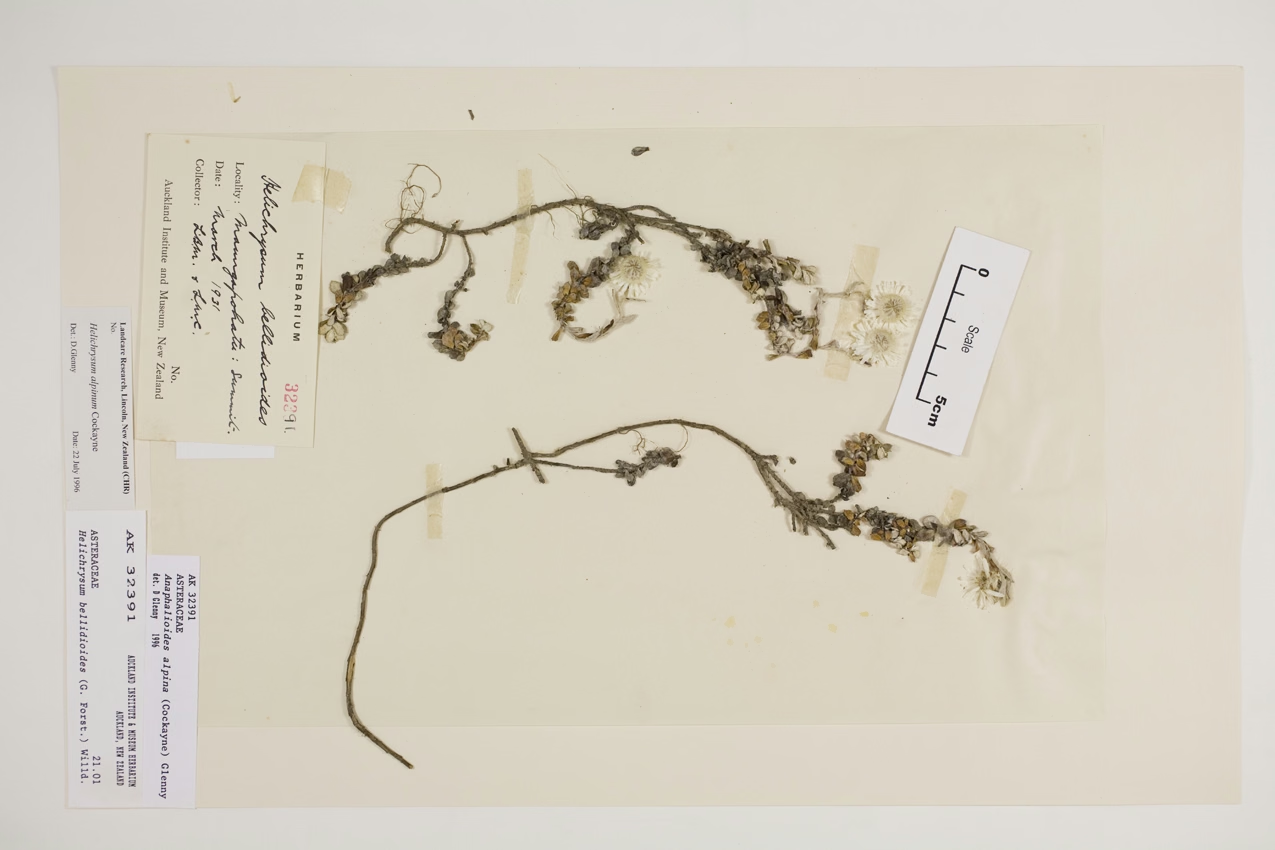
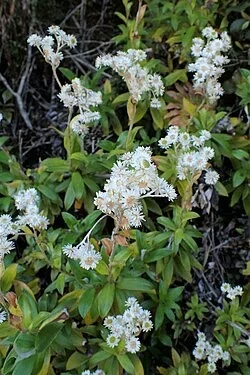
Anaphalioides alpina is a prostrate, mat-forming everlasting daisy endemic to the mountains of the central North Island and Mt Taranaki. Its trailing branches, 34 to 78 cm long, root as they spread over the ground, carrying small obovate leaves and, in summer, white papery flower heads 19 to 25 mm across with yellow centres. Herbarium collections record it on streamsides, in rock crevices and on scoria and rocky outcrops, reaching about 1900 m on Fanthams Peak. It is Not Threatened, and is occasionally sold by specialist native plant nurseries. Explore more native ground covers in our native plant guide.
Plant Description
Anaphalioides alpina is a prostrate perennial herb. Its stems are about 2 mm in diameter and its branches, 34 to 78 cm long, root into the ground as they spread. The branchlets are green, with internodes 3 to 5 mm apart. The leaves face upward and are obovate, 6.8 to 17.5 mm long and 3.4 to 8.6 mm wide, with sparse hairs on the upper surface and flat margins.
The flower heads are solitary and measure 19 to 25 mm across when dried. They have a conical receptacle 2 to 3.6 mm high and papery involucral bracts: the outer bracts 7.1 to 11.5 mm long and the inner 6 to 8.5 mm. NZPCN records the flower colours as white and yellow, the white coming from the papery bracts and the yellow from the central florets. Each head holds about 173 to 193 florets, roughly half of them female, and the small seeds (achenes) are 0.8 to 1.1 mm long with a pappus of bristles.
It belongs to the same genus as the widespread everlasting daisy Anaphalioides bellidioides. Within the North Island, its restriction to the central volcanoes and Taranaki, its long rooting branches and its fairly large flower heads are useful guides, but critical identification relies on the detailed floret and bract measurements in the Flora of New Zealand.
Quick Facts
| Scientific Name | Anaphalioides alpina |
|---|---|
| Height | Prostrate; under 0.1 m |
| Spread | Branches 0.34-0.78 m long |
| Water Needs | Moderate; well-drained but not parched |
| Light | Full sun |
| Frost Tolerance | High; an alpine species |
| Salt Tolerance | No information available; a mountain species |
| Growth Rate | Slow to moderate |
| Lifespan | Perennial |
Climate Best Suited to
Suits cold, wet mountain climates with frequent frost, snow and wind, like those of Tongariro National Park and Mt Taranaki.
Regional Suitability
| City | Climate Suitability |
|---|---|
| Auckland | Low |
| Wellington | Medium |
| Christchurch | Medium |
| Dunedin | Medium |
Plant Habitat
Anaphalioides alpina is endemic to New Zealand and confined to the central North Island ranges and Mt Taranaki (Egmont). Herbarium specimens record it at Whakapapanui Stream on Mt Ruapehu, in the Hauhungatahi Basin of Tongariro National Park, and on Mt Taranaki, including Fanthams Peak.
Specimen labels describe streamside sites, crevices in snow-covered rocks, rocky ground, and an outcrop interspersed with scoria at about 1900 m on Fanthams Peak, where it was the dominant plant. It is therefore a plant of open, rocky, subalpine to alpine ground on volcanic substrates.
Growing Requirements
Soil Requirements
It grows on rocky, gravelly volcanic ground and scoria, often where moisture seeps from snow or streams.
- Gritty, stony, free-draining mix
- Low fertility
- Moisture available below a well-drained surface
Light Requirements
Its alpine habitats are open and treeless, so it needs plenty of light.
- Full sun
- Avoid shade from taller plants that would smother the mat
Water Requirements
In the wild it often grows near streams or snowmelt but on sharply draining rock and scoria, so it needs moisture without waterlogging.
- Water in dry spells, especially in summer
- Never let the crown sit in wet, stagnant soil
Planting and Establishing
Plant Anaphalioides alpina in a rock garden, scree bed or large trough with a gritty volcanic or pumice-based mix, in full sun. Spring planting lets it establish before winter.
Give it space to spread, because its branches root as they travel. It is occasionally available from specialist native nurseries; never collect plants from the national parks where it grows.
Ecological Role
NZPCN records that its seeds are pappate cypselae dispersed by wind, so the bristly pappus carries them across open alpine ground. Its rooting branches also let a single plant build a sizeable mat over time.
Its flower heads are the type visited by small native insects in alpine herbfield, but the pollinators of this species have not been documented in the sources consulted. On scoria slopes it can be locally dominant, helping to cover and stabilise loose ground.
Uses & Significance
Garden Uses
It suits alpine and rock garden enthusiasts in cooler districts who want a native mat plant with conspicuous white flowers.
- Rock gardens and scree beds
- Alpine troughs
- Native alpine collections
Ecological Value
It is one of the characteristic flowering plants of the open, rocky alpine zone on the central North Island volcanoes and Taranaki.
- Endemic to a small group of North Island mountains
- Helps cover and stabilise scoria and rocky ground
- Provides flowers for alpine insects in summer
Landscaping Uses
Let Anaphalioides alpina trail over rocks or along the edge of a raised gravel bed, where its white everlasting heads stand out against dark volcanic stone. It looks especially fitting with pumice or scoria mulch.
Combine it with other alpine plants of the volcanic plateau, keeping taller neighbours away so the mat stays in full sun.
Seasonal Care Calendar
Spring
New growth begins as snow melts on the mountains.
- Top-dress with fresh grit
- Plant new specimens
Summer
Flowering takes place; an NZPCN photograph from Tongariro shows it in flower in February.
- Water during dry spells
- Enjoy the papery white flower heads
Autumn
Seed with its pappus is shed and carried away by the wind.
- Collect seed from cultivated plants
- Clear fallen leaves off the mat
Winter
Mats lie dormant under frost and snow in the mountains.
- Ensure drainage stays sharp
- Protect from prolonged winter wet in lowland gardens
When to Prune and How Much
No regular pruning is required. Remove spent flower stems after flowering if you want a tidier mat.
Cut back stray branches that spread beyond their allotted space, and remove any dead patches so they do not trap moisture.
How to Grow Everlasting Daisy
No propagation guidance specific to Anaphalioides alpina was found in the sources consulted, beyond NZPCN noting that it is occasionally available from specialist native plant nurseries. The methods below follow from features that are documented: its branches root along the ground, which makes division of rooted sections straightforward, and its seeds are wind-dispersed achenes with a pappus, which can be collected and sown. Expect results similar to those for other prostrate everlasting daisies, but treat them as a guide rather than a proven protocol for this species. Work only with cultivated plants, as the wild populations lie within Tongariro and Egmont national parks.
By Division of Rooted Stems
Because the trailing branches root as they grow, rooted sections can be separated from the parent with little disturbance.
- In spring, find a branch that has rooted into the soil
- Cut it from the parent plant with sharp, clean secateurs
- Lift it with as much root as possible
- Pot into a gritty mix and keep lightly moist in bright shade
- Move to full sun once it shows new growth
From Seed
The seeds are tiny achenes with a pappus that catches the wind, so collect heads just as they begin to fluff up.
- Collect seed heads from cultivated plants in late summer
- Sow on the surface of a fine, gritty seed mix
- Keep the tray cool, moist and in good light
- Prick out seedlings into individual pots once they are large enough
- Grow on in a gritty mix before planting out
Pests & Diseases
No specific pests or diseases are recorded for Anaphalioides alpina. In lowland gardens, the main risk is rot from humid summers or wet winters.
Slugs and snails may graze young plants in cultivation, so check seedlings and new divisions regularly.
Cultural Significance
No Māori name or traditional use is recorded for Anaphalioides alpina in the sources consulted.
Leonard Cockayne, who studied the vegetation of the Tongariro and Taranaki mountains, described it as Helichrysum alpinum. David Glenny later moved it to Anaphalioides, a genus whose name means resembling Anaphalis. The epithet alpina refers to its mountain habitat.
Bonus Tip
On a summer walk around Mt Ruapehu, Tongariro or Fanthams Peak, look along stream edges and among rocks for trailing mats with white papery daisies about 2 cm across. Pressing a flower head lightly shows the dry, crackly bracts that give everlasting daisies their name.
Related Plants
Explore other native plants that share similar characteristics or habitats with Everlasting Daisy (Anaphalioides alpina), offering further insights into New Zealand's diverse flora. These related species provide context and opportunities for complementary planting in your garden.
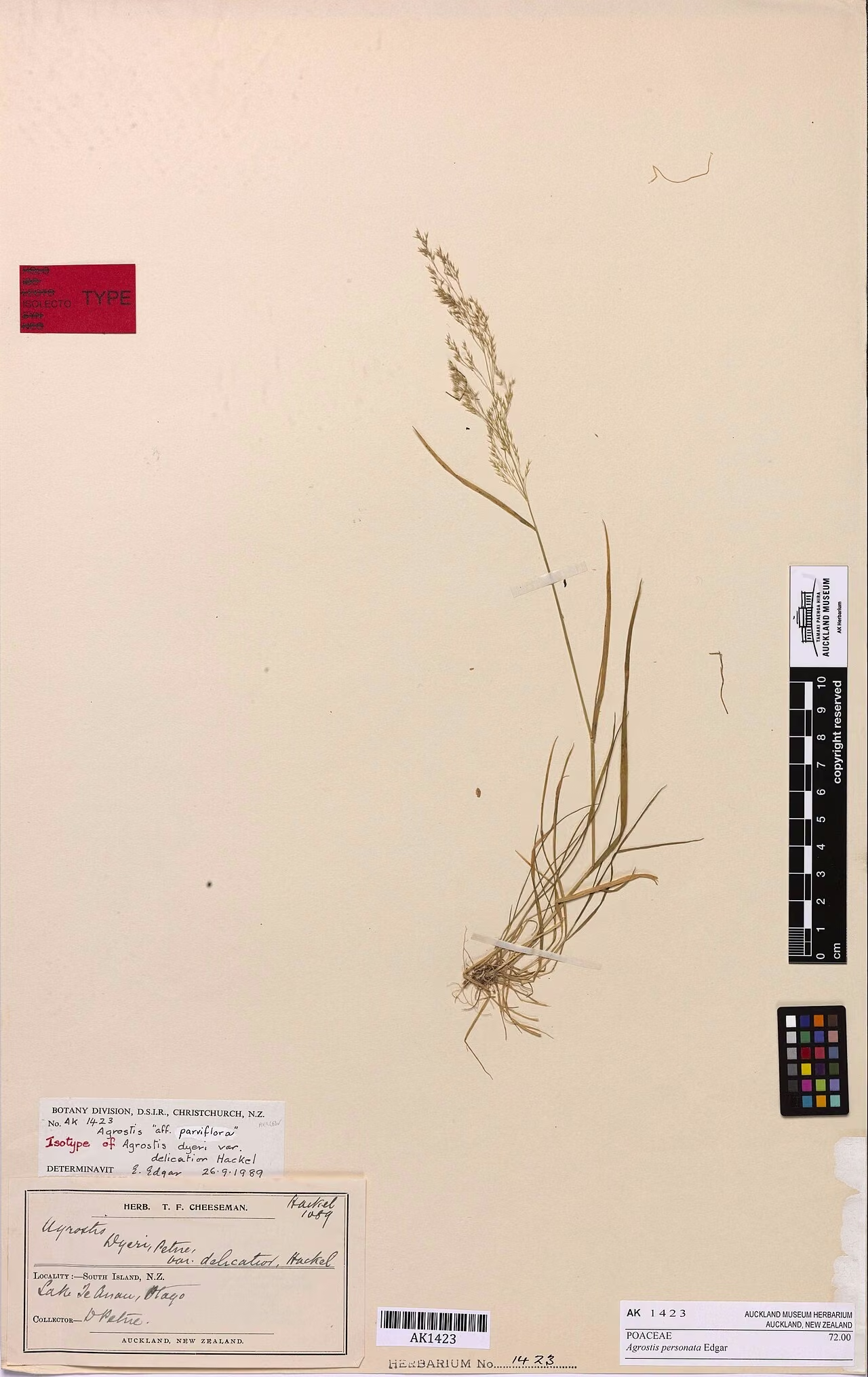
Agrostis personata
Agrostis personata
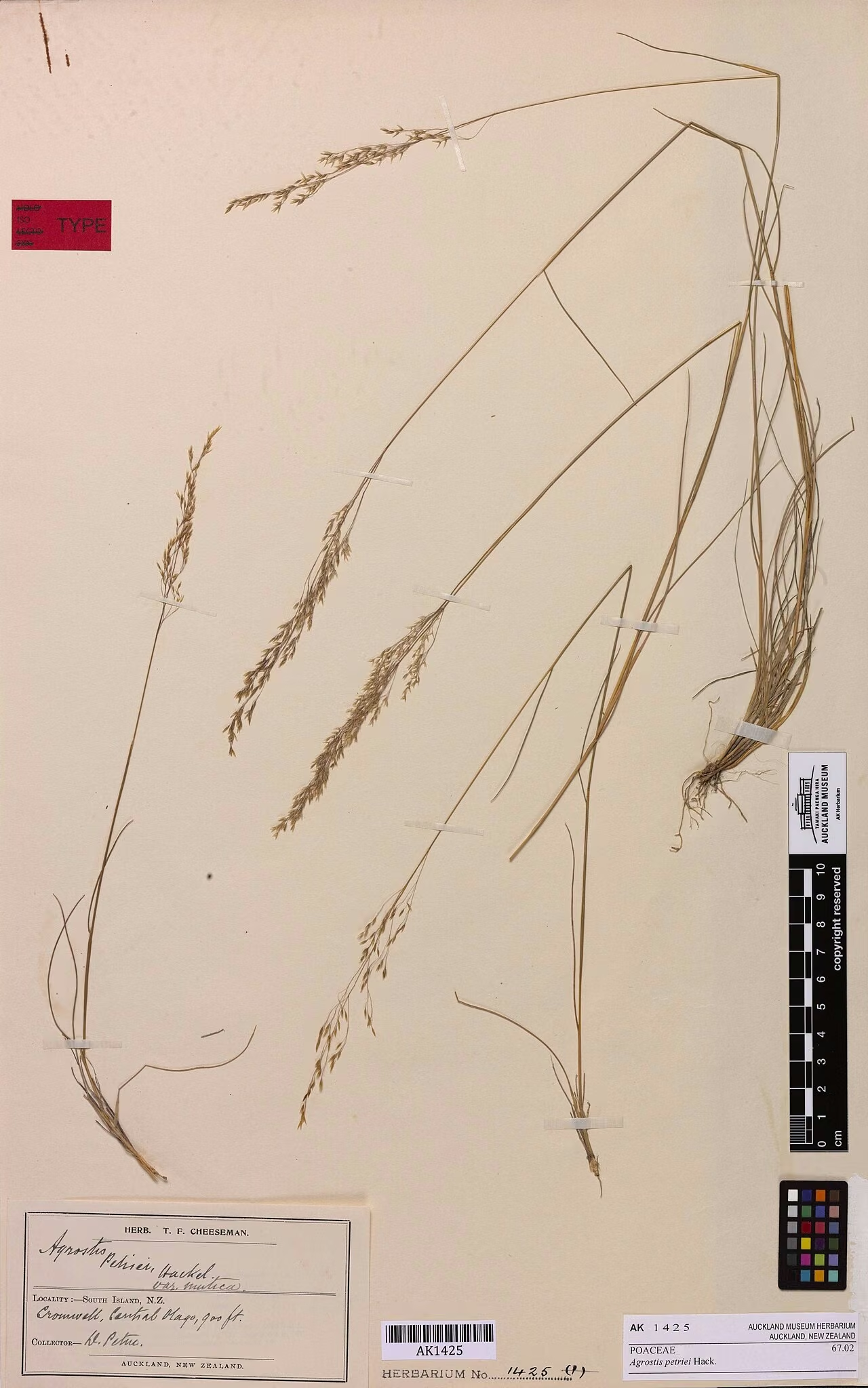
Agrostis petriei
Agrostis petriei
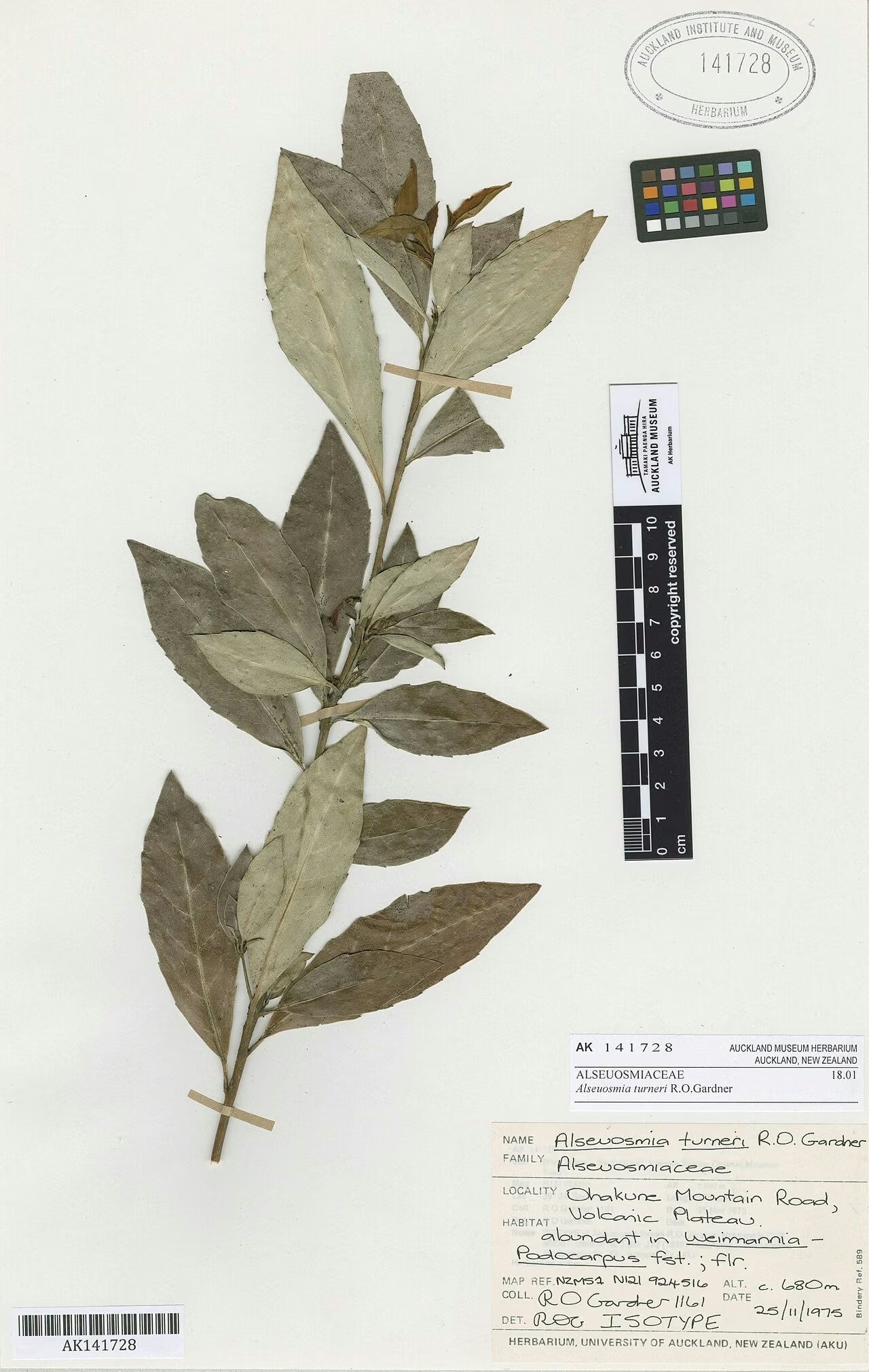
Alseuosmia turneri
Alseuosmia turneri
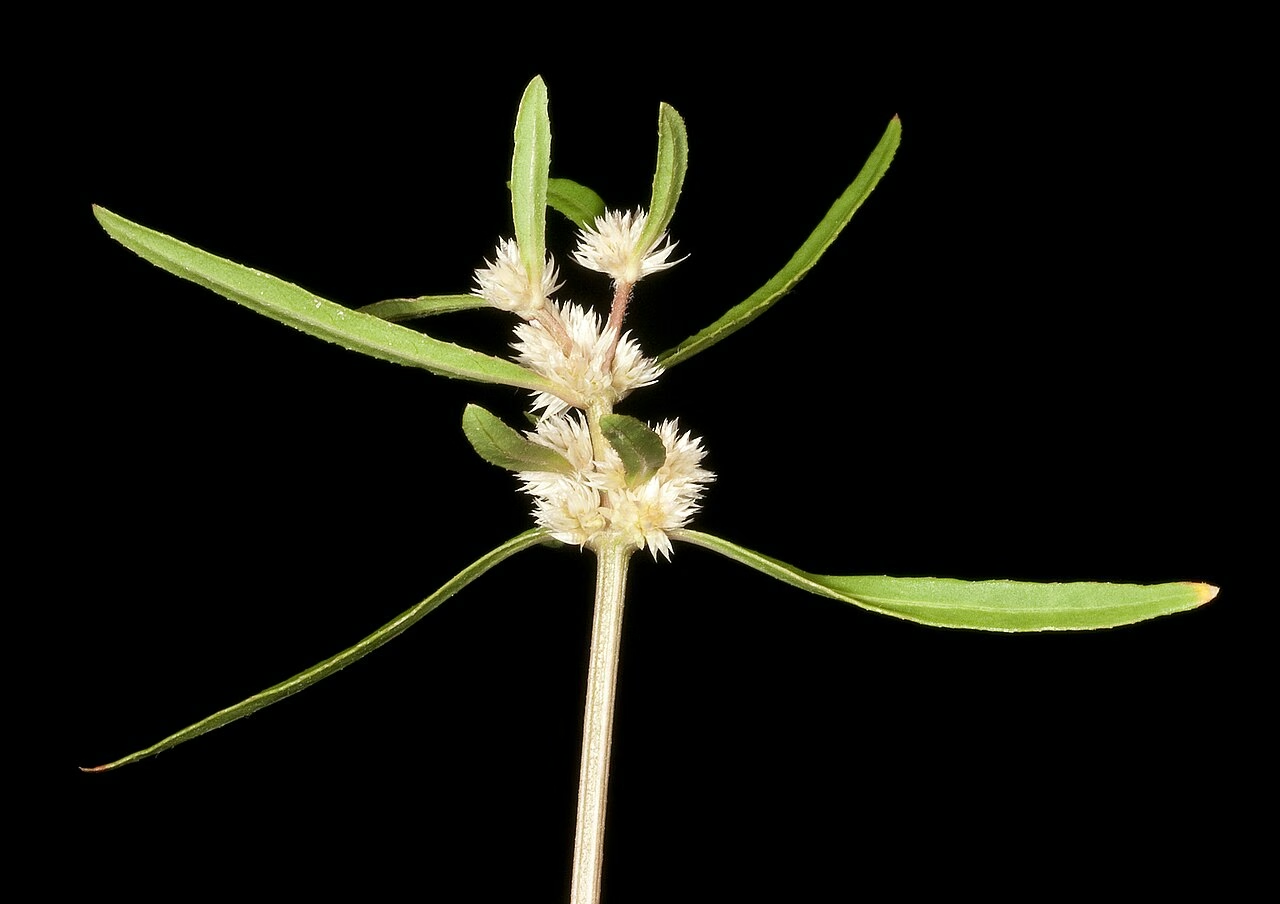
Lesser Joyweed
Alternanthera denticulata
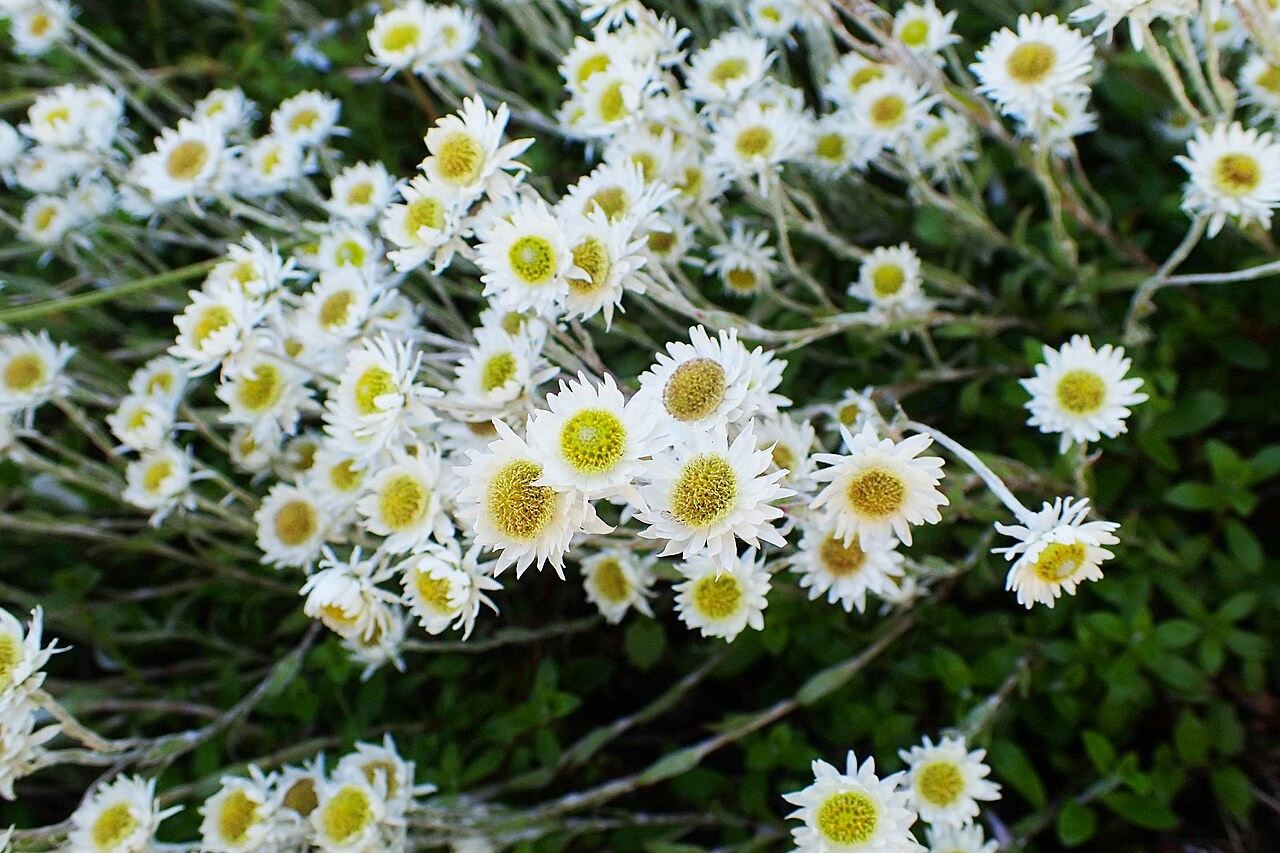
Anaphalioides hookeri
Anaphalioides hookeri
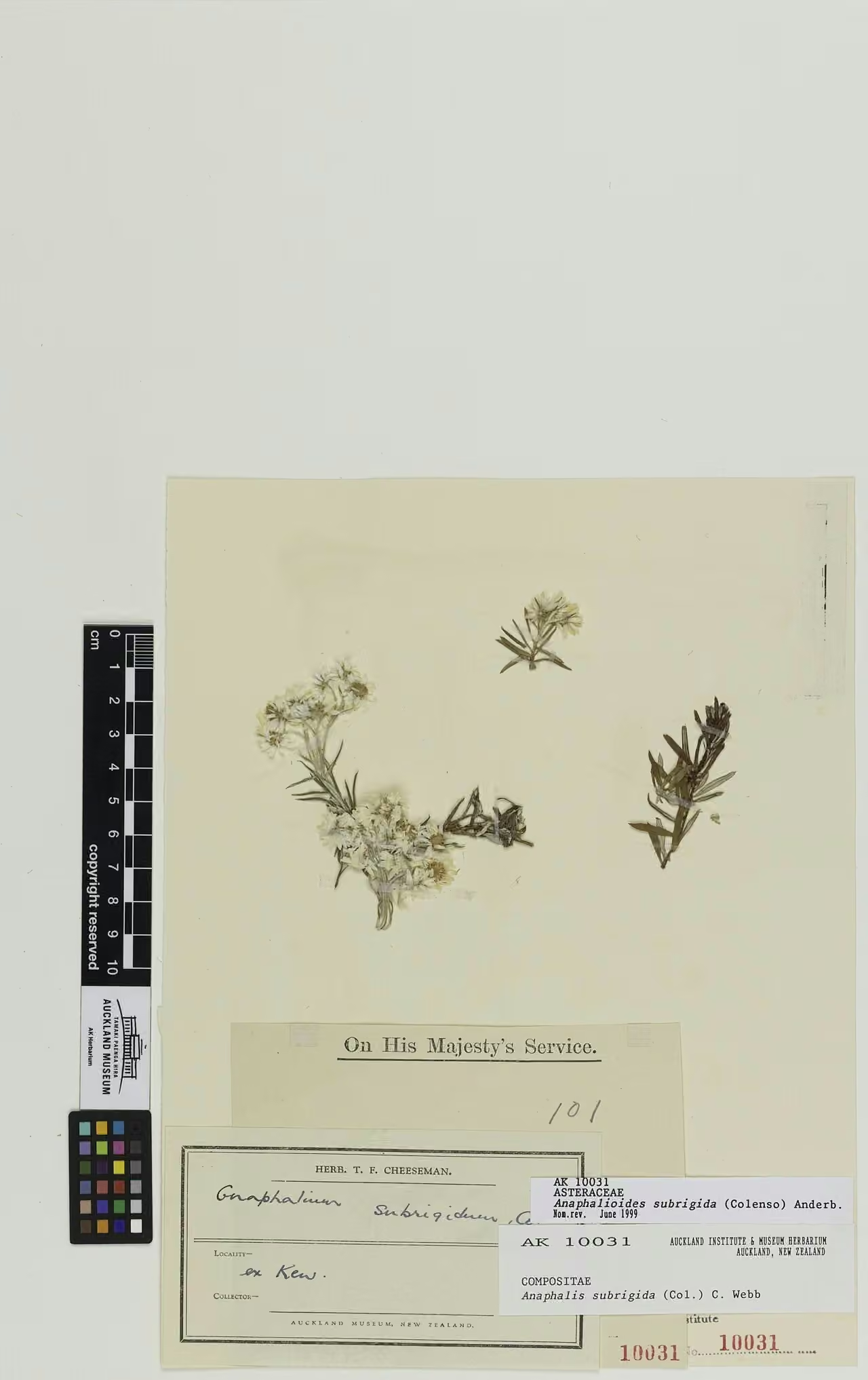
Anaphalioides subrigida
Anaphalioides subrigida
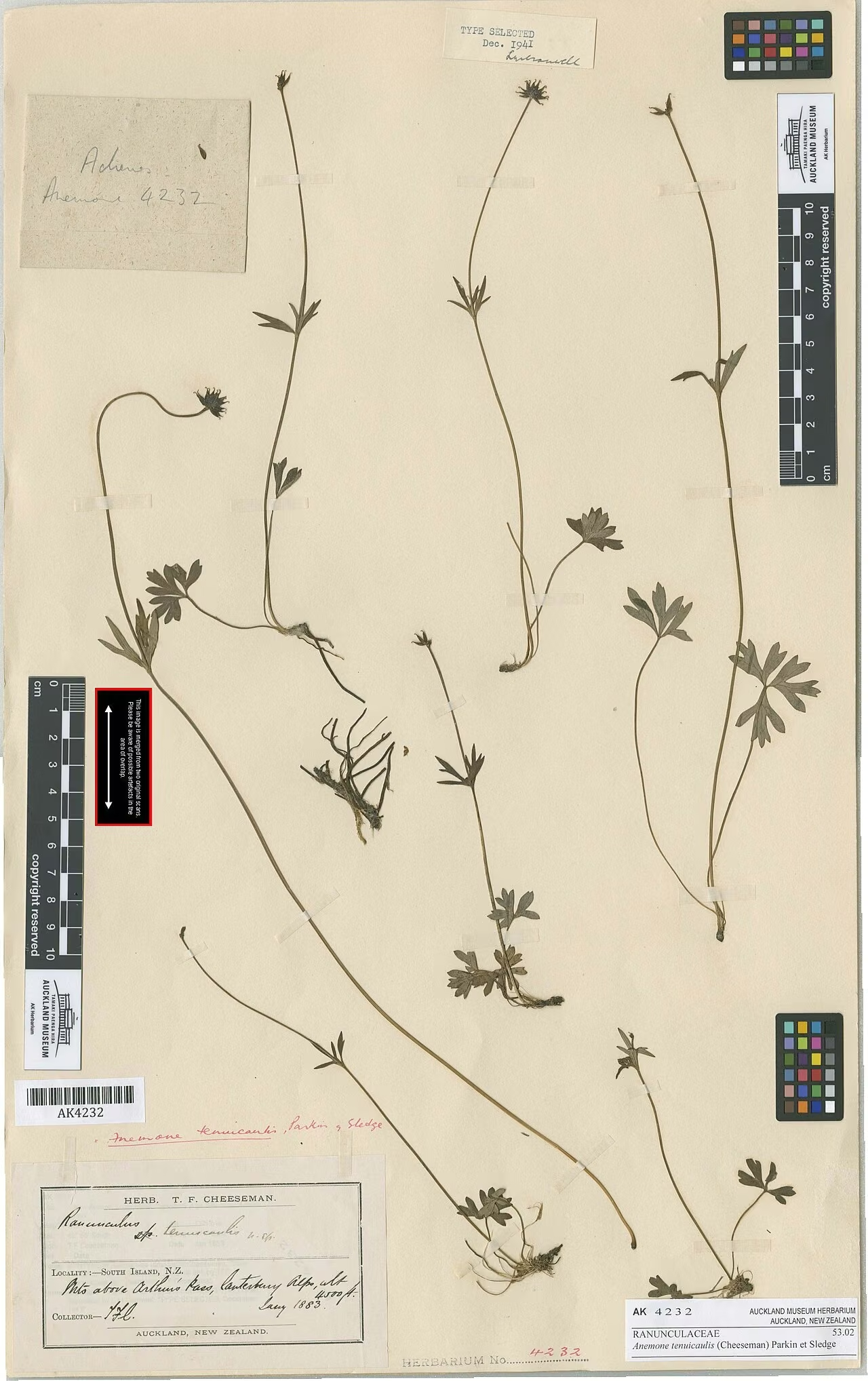
New Zealand Anemone
Anemonastrum tenuicaule
Puatea
Puatea
Plant Conservation
Anaphalioides alpina has been Not Threatened in every national assessment from 2004 to 2023. The Wellington region (2025) ranks it Regionally At Risk - Regionally Naturally Uncommon.
Its habitats lie largely within Tongariro and Egmont national parks, which protect them from development. Staying on tracks and controlling invasive plants such as heather in Tongariro help keep alpine plant communities healthy.
Frequently Asked Questions
Where does Anaphalioides alpina grow?
NZPCN gives its range as the central North Island ranges and Mt Taranaki. Herbarium specimens come from Mt Ruapehu, the Hauhungatahi area of Tongariro National Park and Fanthams Peak on Taranaki.
What does Anaphalioides alpina look like?
It is a prostrate plant with rooting branches up to about 78 cm long, small obovate leaves 7 to 18 mm long, and solitary white everlasting flower heads about 2 cm across with a yellow centre.
Was Anaphalioides alpina once called Helichrysum?
Yes. It was described by Leonard Cockayne as Helichrysum alpinum and later transferred to Anaphalioides by David Glenny.
Sources and Further Reading
The botanical, growing, and conservation details for Everlasting Daisy (Anaphalioides alpina) on this page draw on the New Zealand plant references below. Consult them for full technical records and the latest distribution data.