Adenochilus
Adenochilus gracilis
Last updated:
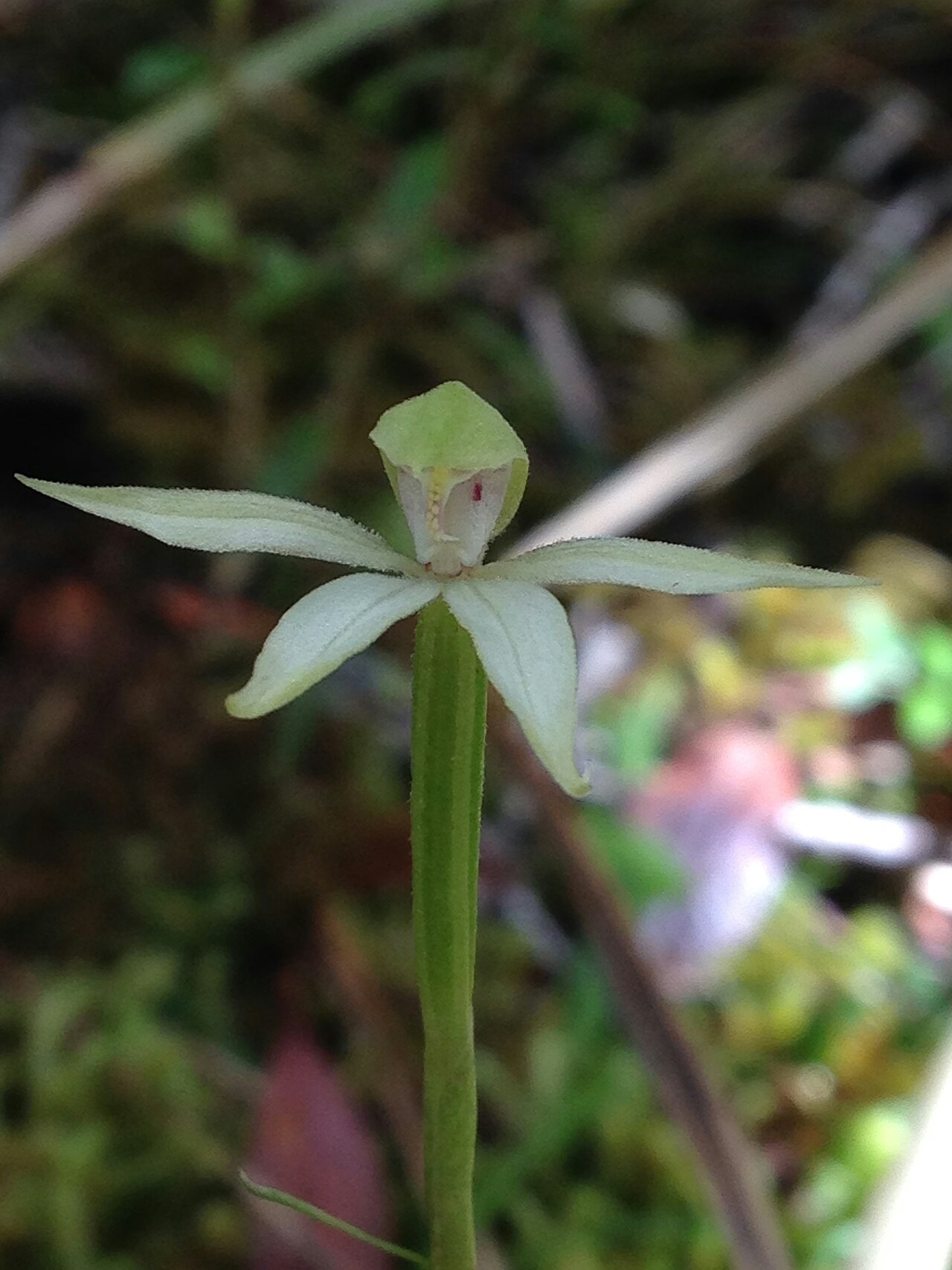
Adenochilus gracilis is a slender, terrestrial orchid endemic to New Zealand. In flower it stands up to 20 cm tall, with one ovate leaf near the base, another on the stem, and usually a single white flower 10 to 20 mm across whose hooded dorsal sepal shelters a lip barred with red to maroon and studded with yellow calli. It grows in thick moss and deep leaf litter under forest, subalpine scrub and even pine plantations from the Coromandel Range to Stewart Island/Rakiura and the Chatham Islands. It is Not Threatened nationally, but is easily overlooked and should not be dug from the wild. Explore more native flowering plants in our native plant guide.
Plant Description
Adenochilus gracilis is a gracile, deciduous terrestrial orchid that grows from a long, thin, horizontal rhizome rather than a tuber. Each plant produces a petiolate, egg-shaped to oblong leaf 10 to 30 mm long and a similar leaf on the slender, erect flowering stem. Both leaves are hairless, but the outer surfaces of the flower and stem carry short glandular hairs.
The flower is usually solitary, rarely paired, and 10 to 20 mm across. The greenish dorsal sepal is concave and forms a hood that almost hides the lip, while the whitish lateral sepals spread widely. The three-lobed labellum curves downward and has transverse red to maroon stripes, with rows of yellow, rounded calli in the centre. The column is long and curved with membranous, upturned wings.
It is most often confused with Caladenia species, which also have white flowers with ornamented lips. Caladenia grows from tubers and has narrow, hairy leaves, whereas Adenochilus has a rhizome and broad, hairless leaves.
Quick Facts
| Scientific Name | Adenochilus gracilis |
|---|---|
| Height | Up to 0.2 m in flower |
| Spread | Single shoots spreading slowly by rhizome |
| Water Needs | Moist; deep moss and leaf litter |
| Light | Shade to part shade under forest and scrub |
| Frost Tolerance | High; reaches subalpine scrub |
| Salt Tolerance | No information available |
| Growth Rate | Slow |
| Lifespan | Perennial, deciduous above ground |
Climate Best Suited to
Suits cool, moist climates from montane forest in the north to lowland and subalpine sites in the south. It needs a shaded, humid ground layer that does not dry out.
Regional Suitability
| City | Climate Suitability |
|---|---|
| Auckland | Low |
| Wellington | Medium |
| Christchurch | Medium |
| Dunedin | High |
Plant Habitat
Adenochilus gracilis is endemic to New Zealand. It occurs in the North Island from the Coromandel Range south, throughout the South Island, on Stewart Island/Rakiura and on the Chatham Islands. In the north it is a montane plant, while further south it ranges from lowland to alpine elevations.
It grows in thick mats of moss or deep drifts of semi-decomposed leaf litter under forest and subalpine scrub, and in sphagnum moss around wetland margins. NZPCN notes that it is frequently found in exotic forests, particularly pine plantations, where needle litter provides a similar substrate.
Growing Requirements
Soil Requirements
It roots in a loose, spongy layer of moss or partly decomposed litter rather than in mineral soil.
- Deep moss mats or leaf and needle litter
- Sphagnum around wetland edges
- Acidic, humus-rich and permanently moist
Light Requirements
It grows on the floor of forest and scrub, so it is adapted to filtered light.
- Dappled shade to moderate shade
- Protected from direct afternoon sun
Water Requirements
Its moss and litter habitat stays damp, and NZPCN rates it as a facultative wetland plant, equally likely to be found in wetland and non-wetland habitats.
- Moist but airy rooting medium
- Sensitive to drying of the moss layer
Planting and Establishing
Adenochilus gracilis should not be planted or transplanted. NZPCN states that it is difficult and should not be removed from the wild, and ground orchids depend on soil fungi that are lost when they are dug up.
The best way to support it is to protect existing moss and litter layers in forest and scrub where it grows, and to leave plants undisturbed in pine plantations and reserves.
Ecological Role
Like other orchids, it produces minute, dust-like seeds that are dispersed by wind and need mycorrhizal fungi to germinate and grow. Its spreading rhizome allows it to persist in the litter layer between flowering seasons.
Its pollinators have not been documented in the sources consulted. Its regular occurrence in pine plantations shows that it can colonise modified forest when a deep litter layer forms.
Uses & Significance
Garden Uses
It is not a garden plant and is not available from nurseries.
- Enjoy it in the wild on forest walks in spring and summer
- Record sightings for orchid groups and iNaturalist
- Protect moss carpets in bush blocks where it grows
Ecological Value
It is part of the diverse ground orchid flora of New Zealand's forests and scrub and the only species in its genus found in New Zealand.
- Endemic to New Zealand
- Indicator of an intact, moist moss and litter layer
- Can persist in plantation forest, adding native diversity
Landscaping Uses
This orchid has no role in landscaping. On properties where it occurs naturally, leave moss and leaf litter in place under trees and avoid raking, spraying or trampling the forest floor.
Retaining a deep litter layer under native plantings may in time provide habitat for ground orchids that arrive naturally as wind-blown seed.
Seasonal Care Calendar
Spring
Leaves appear and flowering begins from October.
- Look for single white flowers in mossy forest
- Keep to tracks to protect the moss layer
Summer
Flowering continues and fruit begins to form from December.
- Photograph rather than pick flowers
- Note flowering dates on iNaturalist
Autumn
Fruit ripens through to May and releases fine seed on the wind; flowering ends by March.
- Leave seed capsules to disperse
- No intervention needed
Winter
The plant dies back to its rhizome within the moss and litter.
- Avoid disturbing the forest floor where it grows
When to Prune and How Much
No pruning is needed or appropriate. The above-ground parts die back naturally after fruiting.
Leave old flowering stems and capsules in place so the seed can disperse.
How to Grow Adenochilus
NZPCN describes propagation of Adenochilus gracilis as difficult and states that it should not be removed from the wild. Like other terrestrial orchids it depends on specific mycorrhizal fungi throughout its life, so plants dug from the wild usually die and seed sown on ordinary potting mix will not grow. The methods below explain how orchids of this kind are propagated in principle, mainly to show why home propagation is impractical. Specialist laboratory culture of orchid seed on sterile media, or with a compatible fungus, is the only realistic way to raise new plants, and that work should be left to researchers and conservation programmes working with authorised material.
From Seed
The seeds are minute and wind dispersed, and fruit matures from December to May. In the wild, seeds germinate only when infected by a suitable fungus in the moss or litter layer.
- Do not collect wild capsules without authorisation
- Laboratory culture requires sterile technique and a nutrient or fungal medium
- Seedlings need a long period in culture before deflasking
- Deflasked plants need a mossy, humus-rich medium with the correct fungus
By Rhizome Division
Because it spreads by a thin rhizome, an established clump can in theory be separated into pieces. In practice disturbance often kills these plants, and wild plants must not be dug up.
- Only consider this for plants already in an authorised collection
- Lift with the surrounding moss and litter intact while dormant
- Replant immediately into the same medium at the same depth
Pests & Diseases
No specific pests are documented for Adenochilus gracilis in the sources consulted. Ground orchids in general can be grazed by slugs, snails and introduced browsing animals.
The bigger risk is habitat disturbance: trampling, clearance of the forest floor, drying of moss layers and harvesting of plantation forest can remove local populations.
Cultural Significance
No traditional Māori name or use is recorded for Adenochilus gracilis in the sources consulted.
Joseph Dalton Hooker described the species in 1853 in Flora Novae-Zelandiae. The genus name comes from Greek words meaning 'gland' and 'lip', probably referring to the calli on the labellum, and gracilis means slender.
Bonus Tip
Pine plantations are a surprisingly good place to look for this orchid. Search deep, mossy needle litter in shaded parts of older stands between October and March for a single white flower with a red-barred lip hiding under a greenish hood.
Related Plants
Explore other native plants that share similar characteristics or habitats with Adenochilus (Adenochilus gracilis), offering further insights into New Zealand's diverse flora. These related species provide context and opportunities for complementary planting in your garden.
Stewart Island Speargrass
Aciphylla traillii
Chatham Island Speargrass
Aciphylla traversii
Aciphylla trifoliolata
Aciphylla trifoliolata
Turoa Onamata
Ackama nubicola
Adiantum fulvum
Adiantum fulvum
Adiantum viridescens
Adiantum viridescens
Feeble Bent
Agrostis imbecilla
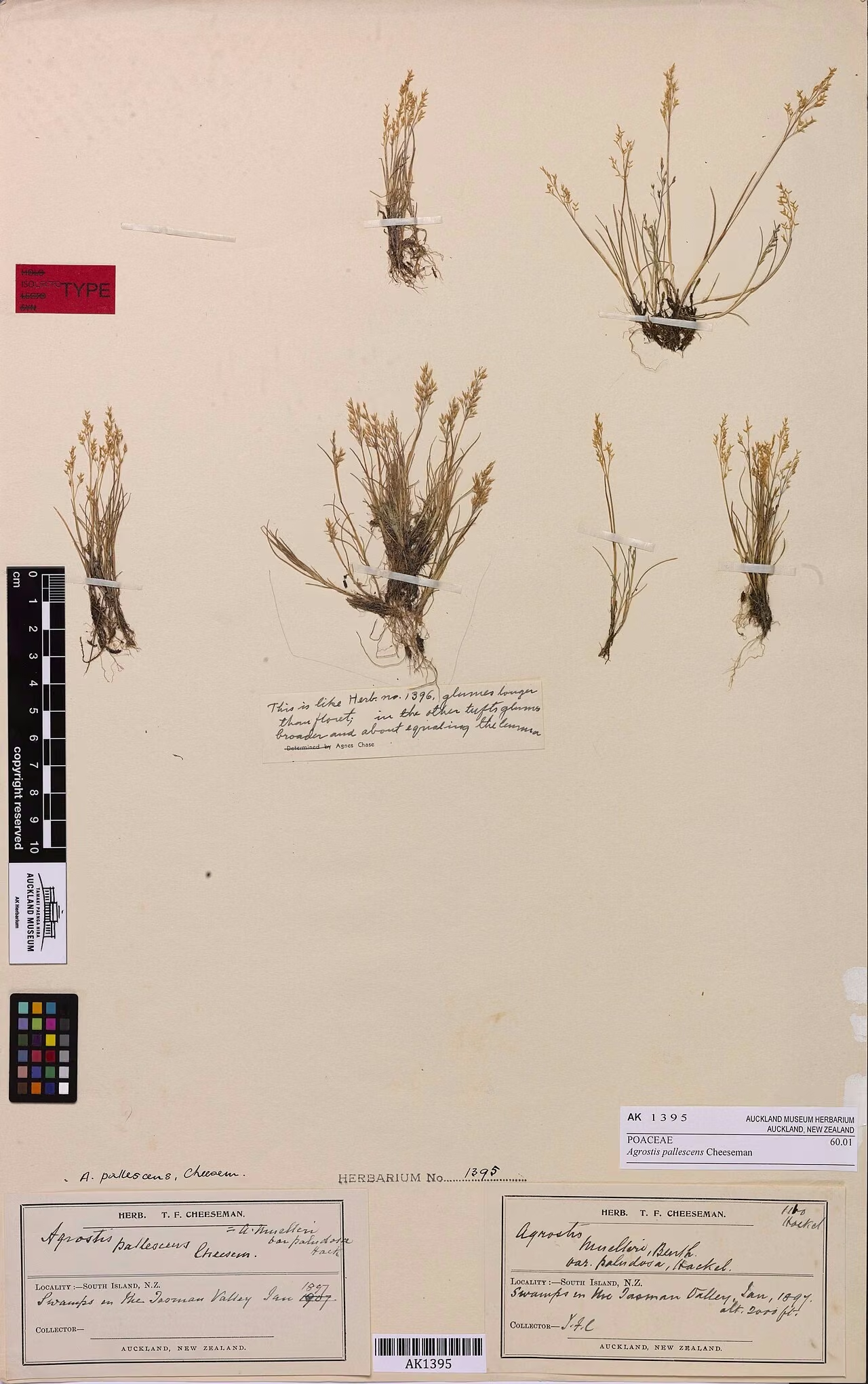
Agrostis pallescens
Agrostis pallescens
Plant Conservation
Adenochilus gracilis is ranked Not Threatened (2023) and has held that ranking since 2004. Regionally, it is At Risk - Regionally Naturally Uncommon in the Wellington region but Regionally Not Threatened in Otago.
Protecting the moss and litter layer of native forest and scrub, keeping stock out of bush remnants, and not digging plants all help it persist.
Frequently Asked Questions
What does Adenochilus gracilis look like?
It is a slender orchid up to 20 cm tall with a single white flower, a greenish hood-like dorsal sepal, wide-spreading white lateral sepals and a lip marked with red to maroon bars and yellow calli.
How do you tell Adenochilus from Caladenia?
Adenochilus spreads by a thin rhizome rather than tubers and has separate broad, ovate, hairless leaves, while Caladenia species grow from tubers and have narrow, hairy leaves.
When does Adenochilus gracilis flower?
NZPCN records flowering from October to March, with fruit following from December to May; in the north it flowers in montane areas.
Can Adenochilus gracilis be grown in a garden?
NZPCN describes it as difficult and says it should not be removed from the wild. Like most native ground orchids it depends on its natural moss and litter environment.
Sources and Further Reading
The botanical, growing, and conservation details for Adenochilus (Adenochilus gracilis) on this page draw on the New Zealand plant references below. Consult them for full technical records and the latest distribution data.