Chatham Island Speargrass
Aciphylla traversii
Last updated:
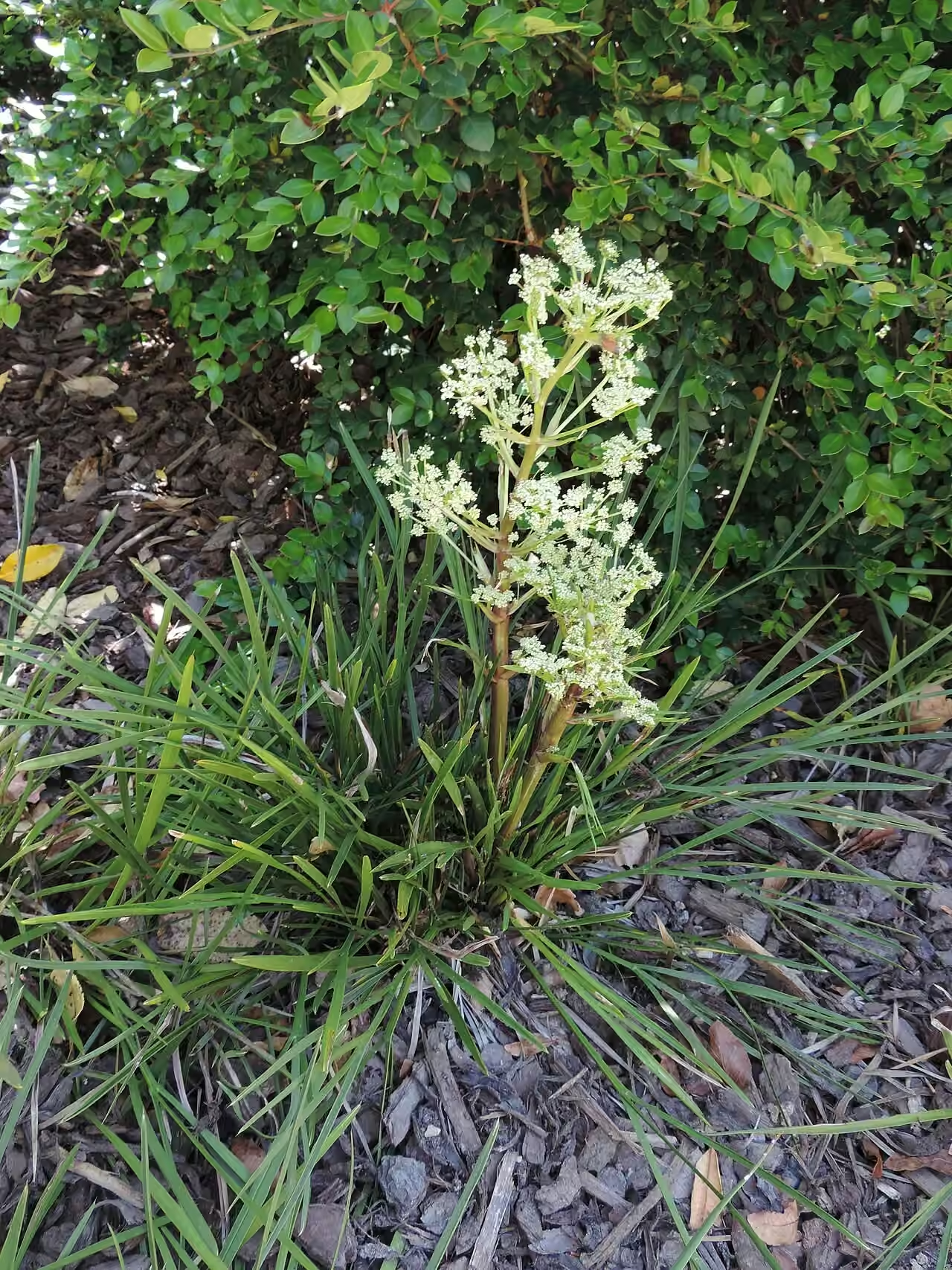
Chatham Island speargrass or taramea karupuru (Aciphylla traversii) is a stout, tufted member of the carrot family found only on the Chatham Islands. It grows 25 cm to 1 m tall, with dark green, pinnate leaves up to 75 cm long edged in pale yellow, and every part bleeds a yellow resin when damaged. Male and female plants carry open panicles of creamy white or greenish-yellow flowers from November to February. It grows on peat bogs and sandy or peaty ground on Rēkohu and Rangihaute, and is ranked At Risk - Declining because of browsing animals and shading by regenerating scrub. Explore more native flowering plants in our native plant guide.
Plant Description
Aciphylla traversii is a stout, tufted perennial herb 25 cm to 1 m tall, with a swollen, turnip-like taproot and stems up to about 5 cm across near the base. The numerous leaves are dark green to brownish green, 15 to 75 cm long, pinnate with two to four pairs of narrow-linear leaflets, and have smooth white to yellow margins. All parts of the plant exude a yellow resin when damaged.
The species is dioecious. Flowers are carried in open panicles up to 1 m tall and 0.4 m wide; male flowers are creamy white and female flowers greenish or pale yellow. The flowering stems are robust, with a fibrous outer layer and a white pith that eventually hollows out. The fruits are 8 to 10 mm long and about 6 mm wide, ripening tan to brown, with three to five winged ribs.
It shares the Chatham Islands with Aciphylla dieffenbachii, the soft speargrass. That species has much more divided, flaccid, blue-green leaves and white latex rather than yellow resin, so the two are easy to separate once these features are known.
Quick Facts
| Scientific Name | Aciphylla traversii |
|---|---|
| Height | 0.25-1 m; flowering panicles up to 1 m |
| Spread | Clump width not recorded; panicles up to 0.4 m wide |
| Water Needs | Moist to wet; tolerates boggy ground |
| Light | Full sun, open sites |
| Frost Tolerance | Tolerant of frost |
| Salt Tolerance | No specific information; grows in the windy maritime Chatham climate |
| Growth Rate | Moderate |
| Lifespan | Perennial |
Climate Best Suited to
Suits the cool, windy, moist oceanic climate of the Chatham Islands, with mild winters, light frosts and no prolonged dry season. On the mainland it is best in cool, reliably moist districts.
Regional Suitability
| City | Climate Suitability |
|---|---|
| Auckland | Low |
| Wellington | Medium |
| Christchurch | Medium |
| Dunedin | High |
Plant Habitat
Chatham Island speargrass is endemic to the Chatham Islands, where it occurs on Rēkohu (Chatham Island) and Rangihaute (Pitt Island). A 1968 report from Māngere Island has no supporting herbarium specimen and is considered unreliable.
It is a plant of peat bogs and open sandy or peaty soils, most often found on the margins of bogs and around peat lakes. It frequently grows beside trails through restiad peat bogs and colonises recently burned peat, both sites where the vegetation is kept open.
Growing Requirements
Soil Requirements
In the wild it grows in acidic peat and sandy peat soils, often waterlogged for part of the year.
- Peaty or sandy soil
- Tolerates wet ground better than most speargrasses
- Low to moderate fertility
Light Requirements
It needs open conditions and declines when regenerating shrubs and trees shade it out.
- Full sun
- Keep surrounding vegetation low
- Good airflow around the plant
Water Requirements
Its bog-margin habitat stays moist year round, and it copes with wet soil that would rot many other Aciphylla species.
- Do not let the soil dry out
- Suited to the edges of ponds and bog gardens
Planting and Establishing
Plant in an open, sunny position in moist peaty or sandy soil, away from shrubs that will grow over it. It is a good subject for a bog garden margin or the edge of a damp hollow.
Because of its taproot it transplants poorly, so plant it young from a pot and leave it in place. Wear gloves when handling it; the resin is sticky and the leaflet tips are sharp.
Ecological Role
Chatham Island speargrass is part of the open restiad bog community of the Chatham Islands. Its separate male and female plants depend on insects to move pollen, although the specific pollinators are not documented in the sources consulted.
Its dependence on open ground means it benefits from disturbance such as tracks and past fires, and it loses ground as scrub and forest regenerate. Rodents eat its seed and seedlings, and possums browse its flowers and seedlings.
Uses & Significance
Garden Uses
It is an architectural plant for cool, damp gardens and a useful species for Chatham Islands bog restoration.
- Bog gardens and wetland margins
- Restoration of Chatham Islands peatland
- Feature plant for its stiff, yellow-edged leaves and tall panicles
- Collections of Chatham Islands endemic plants
Ecological Value
It is one of the characteristic endemic plants of Chatham Islands peat bogs, a habitat type that has been greatly reduced by fire, drainage and farming.
- Found only on the Chatham Islands
- Tall flowering panicles provide summer flowers in open bogs
- Indicator of open, healthy restiad bog margins
Landscaping Uses
Use it as a bold accent where its rigid dark leaves and tall cream panicles can stand clear of other plants, for example at the edge of a pond or in a damp gravel bed with low sedges and restiads.
Group several plants if you want seed, since both male and female plants are needed. Keep paths away from it so people do not brush against the sharp leaves.
Seasonal Care Calendar
Spring
New leaves emerge and flowering stems begin to rise.
- Weed around the base to keep it open
- Check for slug and rodent damage to young growth
Summer
Flowering runs from November to February, with open panicles up to 1 m tall.
- Keep the soil moist during dry spells
- Note which plants are male and which are female
Autumn
Fruits ripen from January to June, turning tan to brown.
- Collect ripe fruit from cultivated female plants for sowing
- Cut back neighbouring plants that are starting to shade it
Winter
Growth slows, but the evergreen leaves remain.
- Remove old flowering stems once hollow and dry
- Ensure drainage is not completely blocked in heavy rain
When to Prune and How Much
Little pruning is needed. Cut old flowering stems at the base once they have dried and shed their seed, and remove dead outer leaves.
Wear gloves and long sleeves, as the leaflets are sharp-tipped and damaged tissue releases sticky yellow resin.
How to Grow Chatham Island Speargrass
Chatham Island speargrass is usually raised from fresh seed, which is how nurseries that stock it produce plants. Because the species is dioecious, female plants set viable seed only when a male plant is flowering nearby, so growers keep plants of both sexes. Fruits ripen over a long period from January to June. Wild plants on the Chatham Islands should not be dug up or stripped of seed; any seed for restoration there should be collected locally with landowner and Department of Conservation agreement. Seedlings form a taproot quickly and do not like root disturbance, so sow into deep containers and transplant them while still small.
From Seed
Sow seed as soon as it is ripe and brown. Speargrass seed generally germinates better after a period of cool, moist conditions, so autumn sowing outdoors is effective.
- Collect brown, fully ripe fruits from a fertilised female plant
- Sow fresh on the surface of a moist, peat-rich seed mix in deep trays
- Cover lightly with sand or fine grit
- Keep outdoors in a cool, sheltered spot and do not let the mix dry out
- Pot seedlings individually into deep pots once they have two or three true leaves
- Plant out within a year to avoid the taproot circling the pot
By Division
Large plants sometimes form several crowns, but division is rarely used because the taproot is easily damaged. Seed is much more reliable.
- Lift a multi-crowned plant in early spring
- Cut through the crown so each part keeps a share of root
- Pot into moist peaty mix and keep sheltered until re-established
Pests & Diseases
In the wild, NZPCN lists browsing by domestic stock and feral mammals, seed and seedling predation by rodents, and possums browsing flowers and seedlings as the main animal threats.
In gardens, slugs and snails can damage seedlings, and plants may rot in warm, stagnant conditions despite their tolerance of wet soil. Good airflow helps.
Cultural Significance
NZPCN gives taramea karupuru as a name for this species; taramea is the general Māori name for speargrasses. No specific Moriori or Māori uses of Aciphylla traversii are recorded in the sources consulted.
The species was first named by Ferdinand von Mueller as Gingidium traversii and moved to Aciphylla by Joseph Hooker. The epithet honours William Thomas Locke Travers (1819 to 1903), an Irish-born naturalist, lawyer and politician in New Zealand.
Bonus Tip
If you crush a leaf and it bleeds yellow resin, you have Aciphylla traversii; Aciphylla dieffenbachii, the other Chatham speargrass, produces a white latex instead. This simple test separates them even when they are not flowering.
Related Plants
Explore other native plants that share similar characteristics or habitats with Chatham Island Speargrass (Aciphylla traversii), offering further insights into New Zealand's diverse flora. These related species provide context and opportunities for complementary planting in your garden.
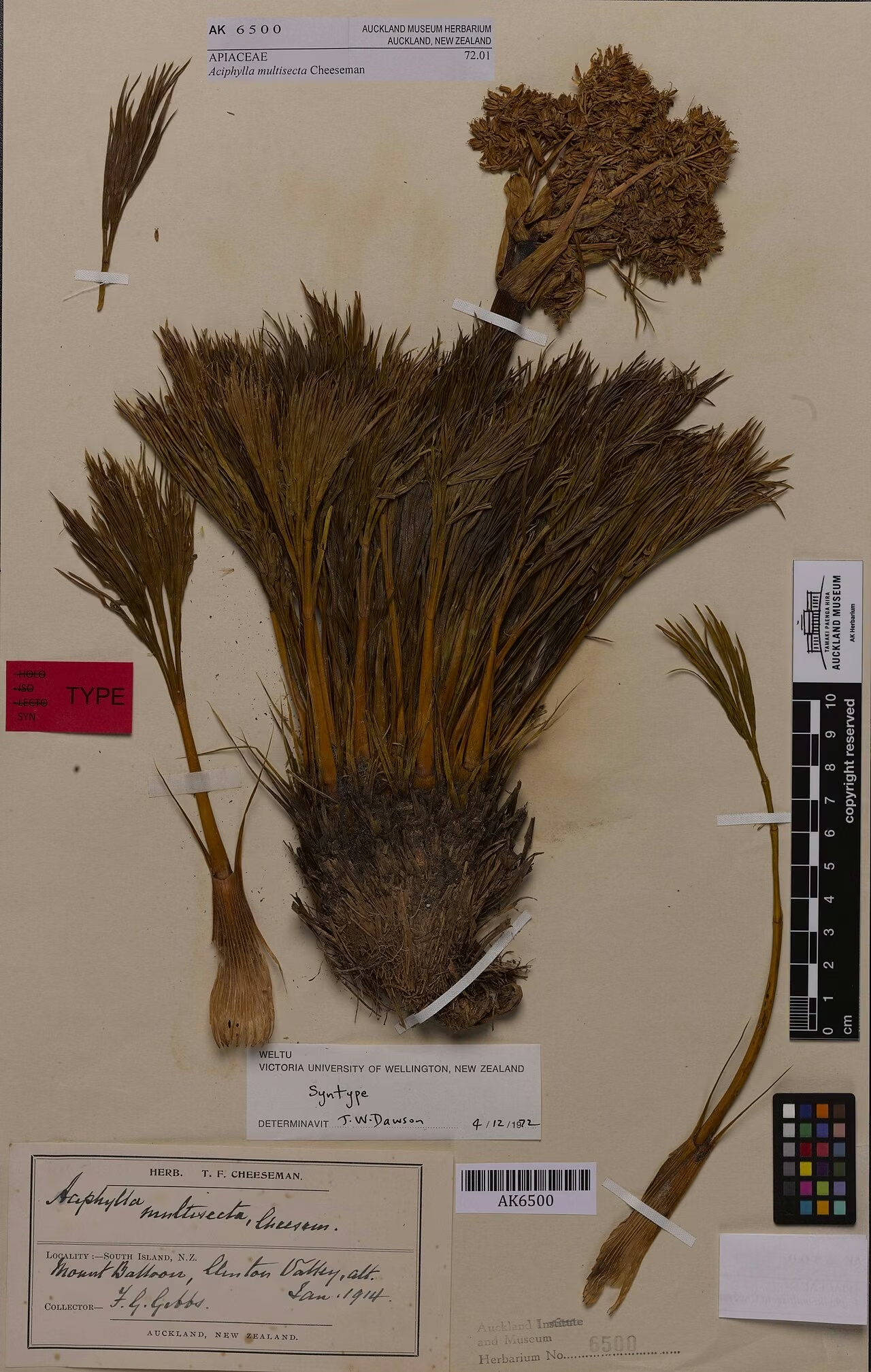
Aciphylla multisecta
Aciphylla multisecta
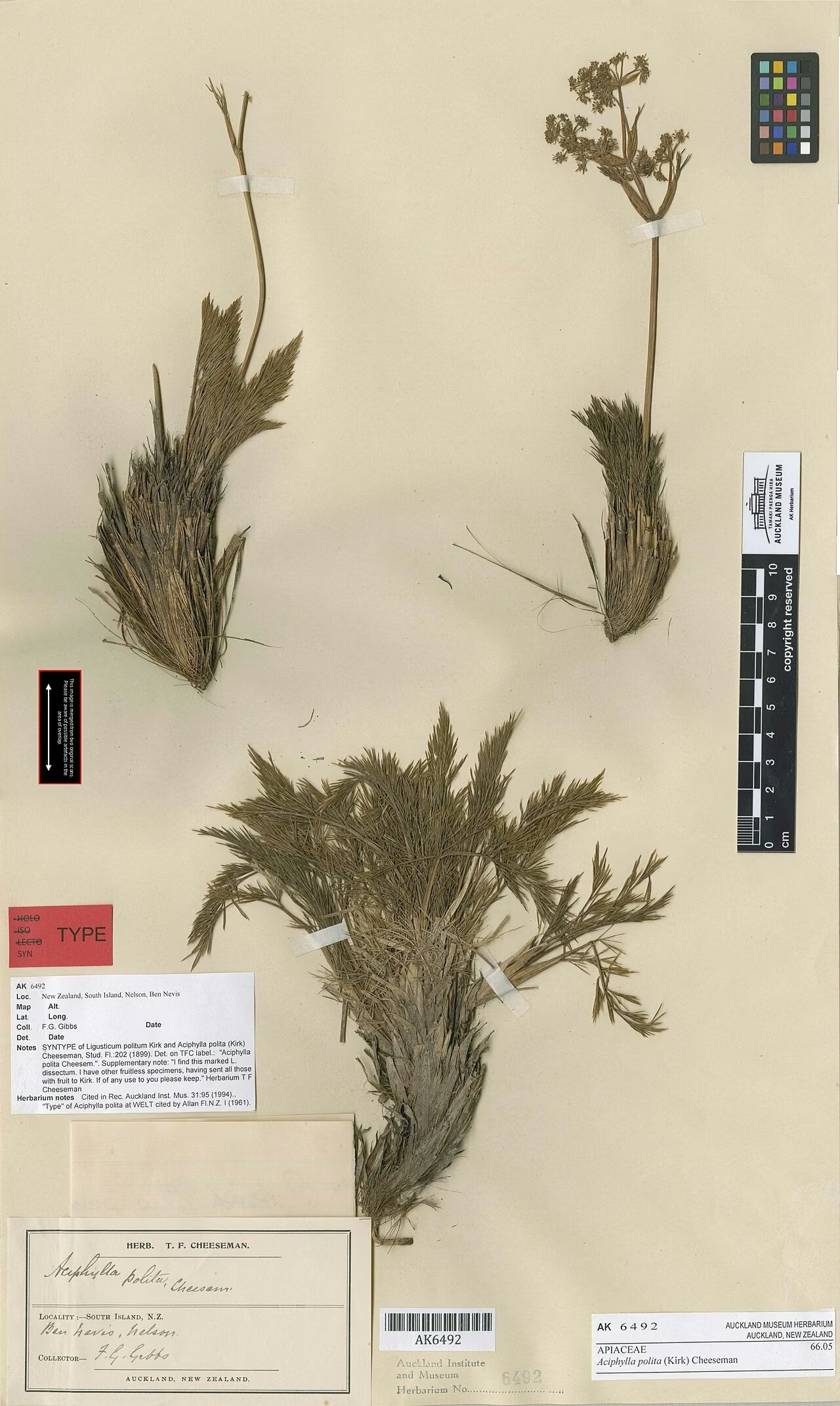
Aciphylla polita
Aciphylla polita
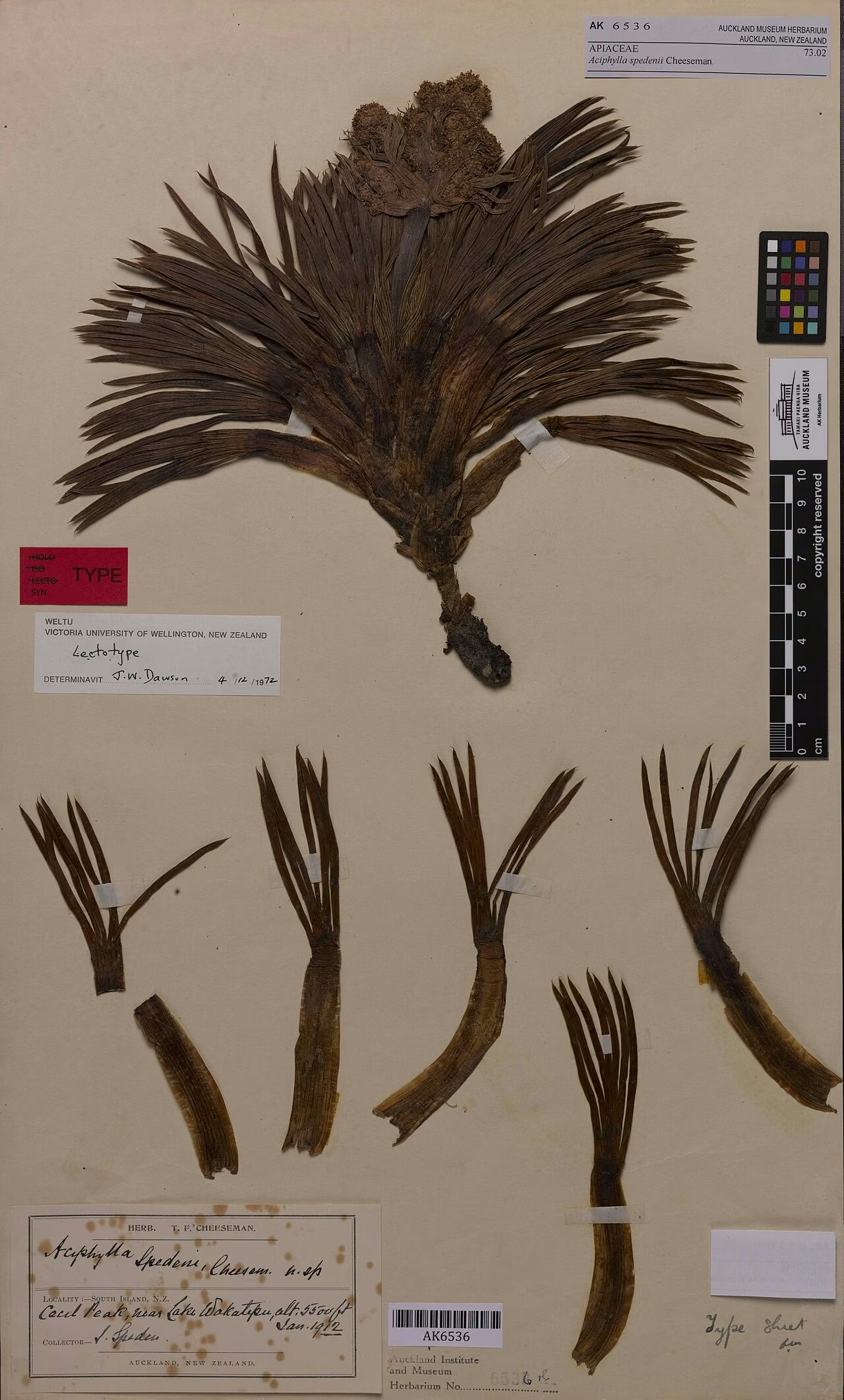
Aciphylla spedenii
Aciphylla spedenii
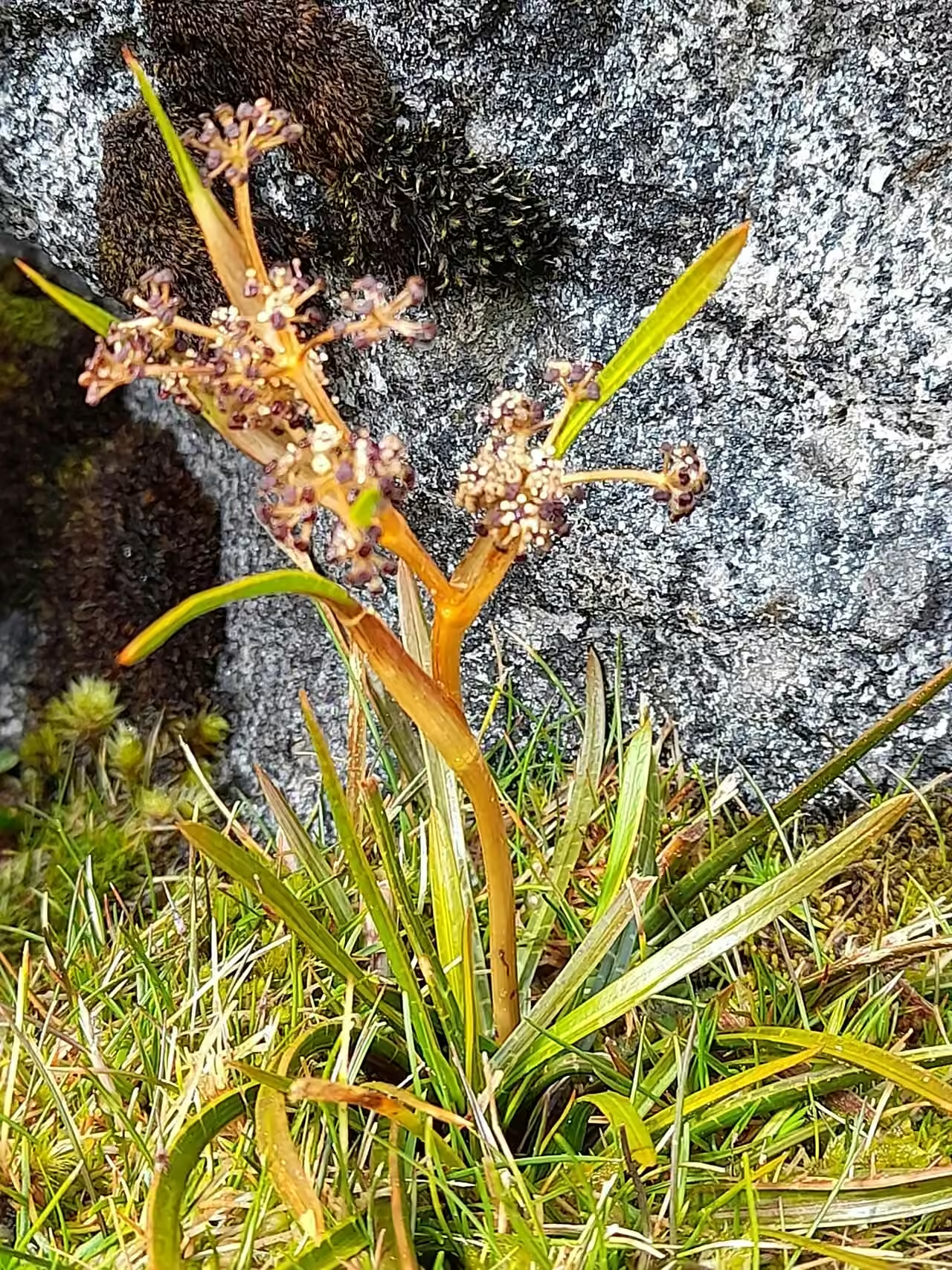
Stewart Island Speargrass
Aciphylla traillii
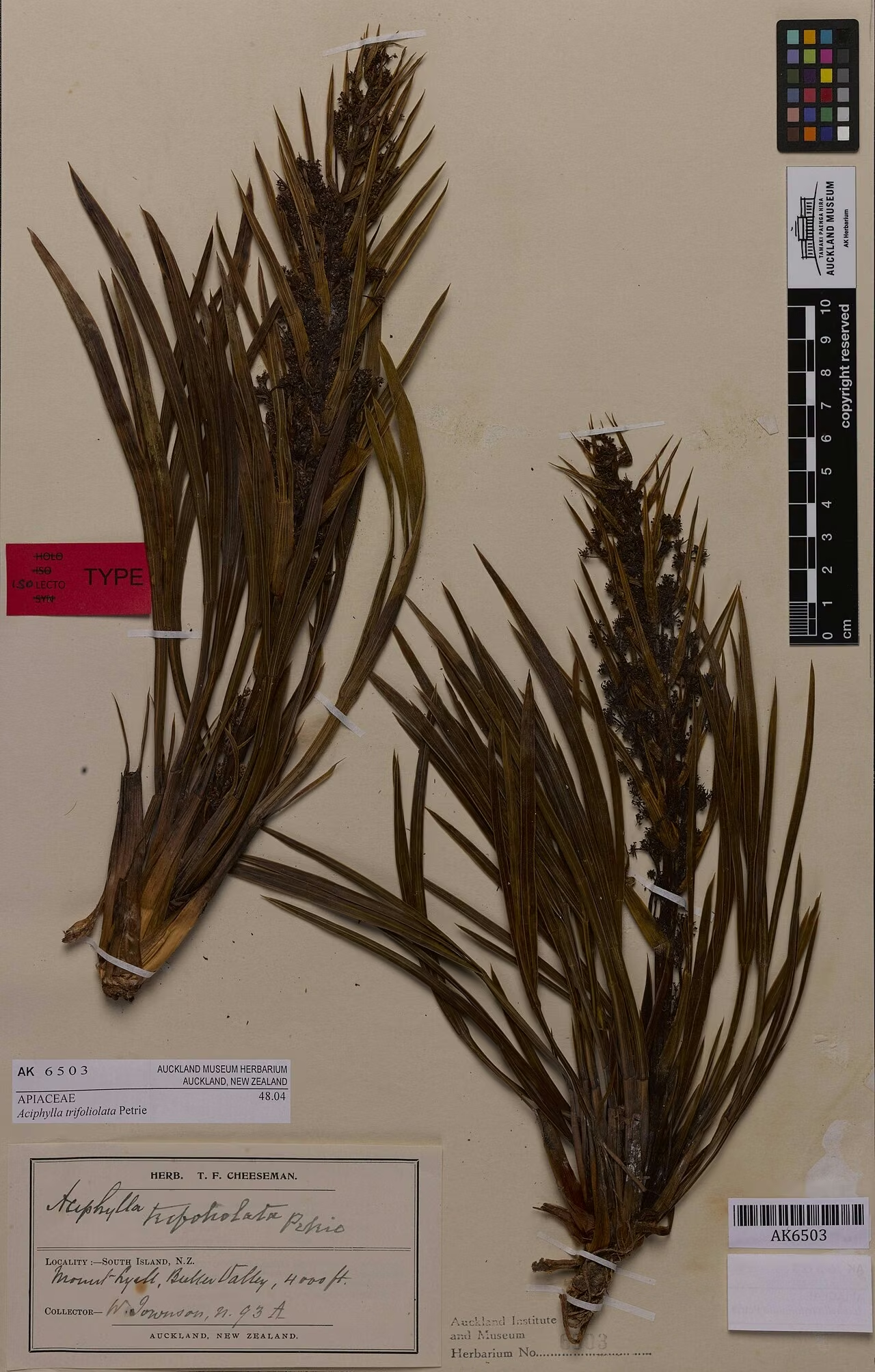
Aciphylla trifoliolata
Aciphylla trifoliolata
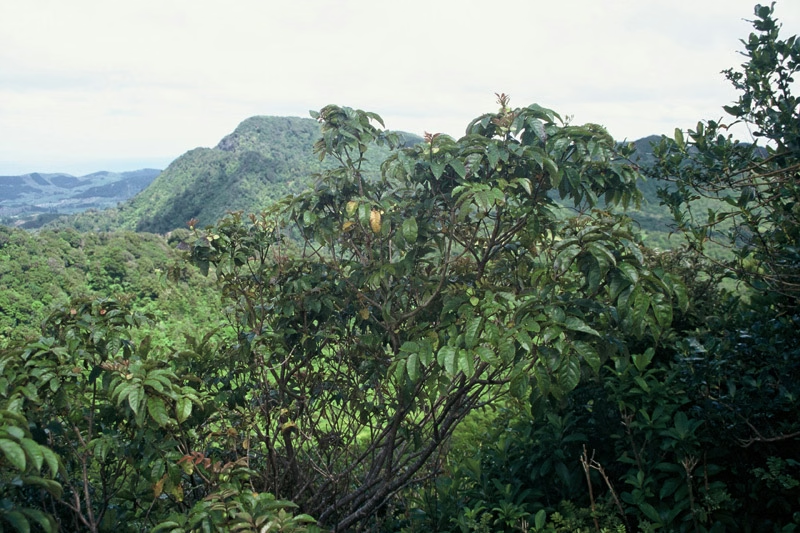
Turoa Onamata
Ackama nubicola
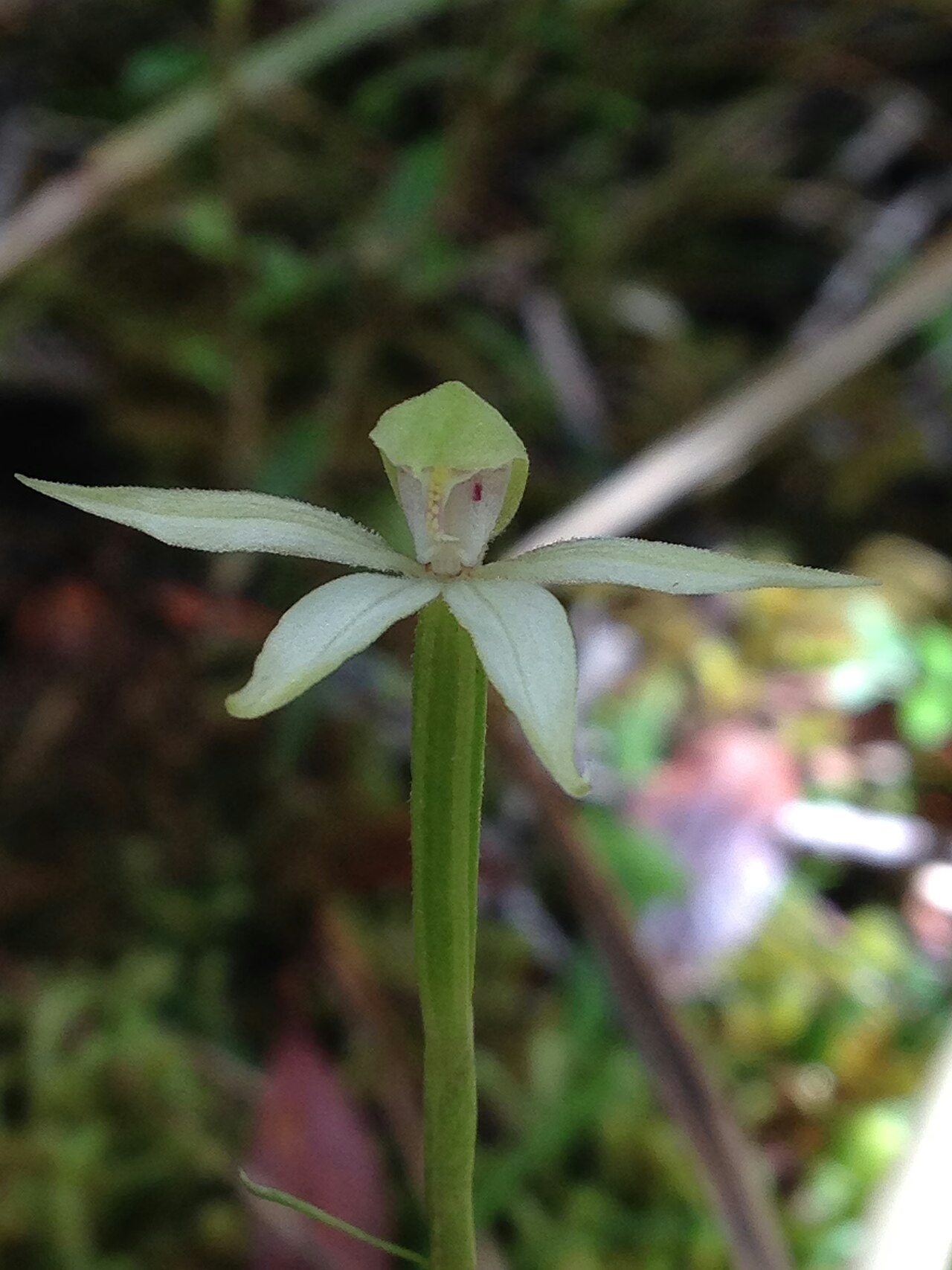
Adenochilus gracilis
Adenochilus gracilis
Adiantum fulvum
Adiantum fulvum
Plant Conservation
Aciphylla traversii is ranked At Risk - Declining (2023) with the qualifiers Conservation Dependent, Island Endemic and Range Restricted. Its decline is driven by browsing animals, rodents and possums, and by shading as scrub regenerates around bogs.
Fencing peatland remnants from stock, controlling possums and rodents, and keeping bog margins open all help. Planting nursery-raised stock in Chatham Islands restoration sites can also bolster populations.
Frequently Asked Questions
Where does Chatham Island speargrass grow?
It is endemic to the Chatham Islands, on Rēkohu (Chatham Island) and Rangihaute (Pitt Island), mostly on bog margins, around peat lakes and along tracks through restiad peat bogs.
How do you tell Aciphylla traversii from Aciphylla dieffenbachii?
Both grow on the Chathams. A. traversii has less divided, erect, rigid dark green leaves and oozes yellow resin, while A. dieffenbachii has finely divided, floppy blue-green leaves and a white latex.
Why is Chatham Island speargrass declining?
NZPCN lists browsing by stock and feral mammals, rodents eating seed and seedlings, possums browsing flowers and seedlings, and shading by regenerating shrubs and trees as the threats.
Can you grow Aciphylla traversii on the mainland?
Yes, it is offered by some native nurseries and does best in cool, moist, open sites with peaty or sandy soil, tolerating wet ground better than most speargrasses.
Sources and Further Reading
The botanical, growing, and conservation details for Chatham Island Speargrass (Aciphylla traversii) on this page draw on the New Zealand plant references below. Consult them for full technical records and the latest distribution data.