Stewart Island Speargrass
Aciphylla traillii
Last updated:
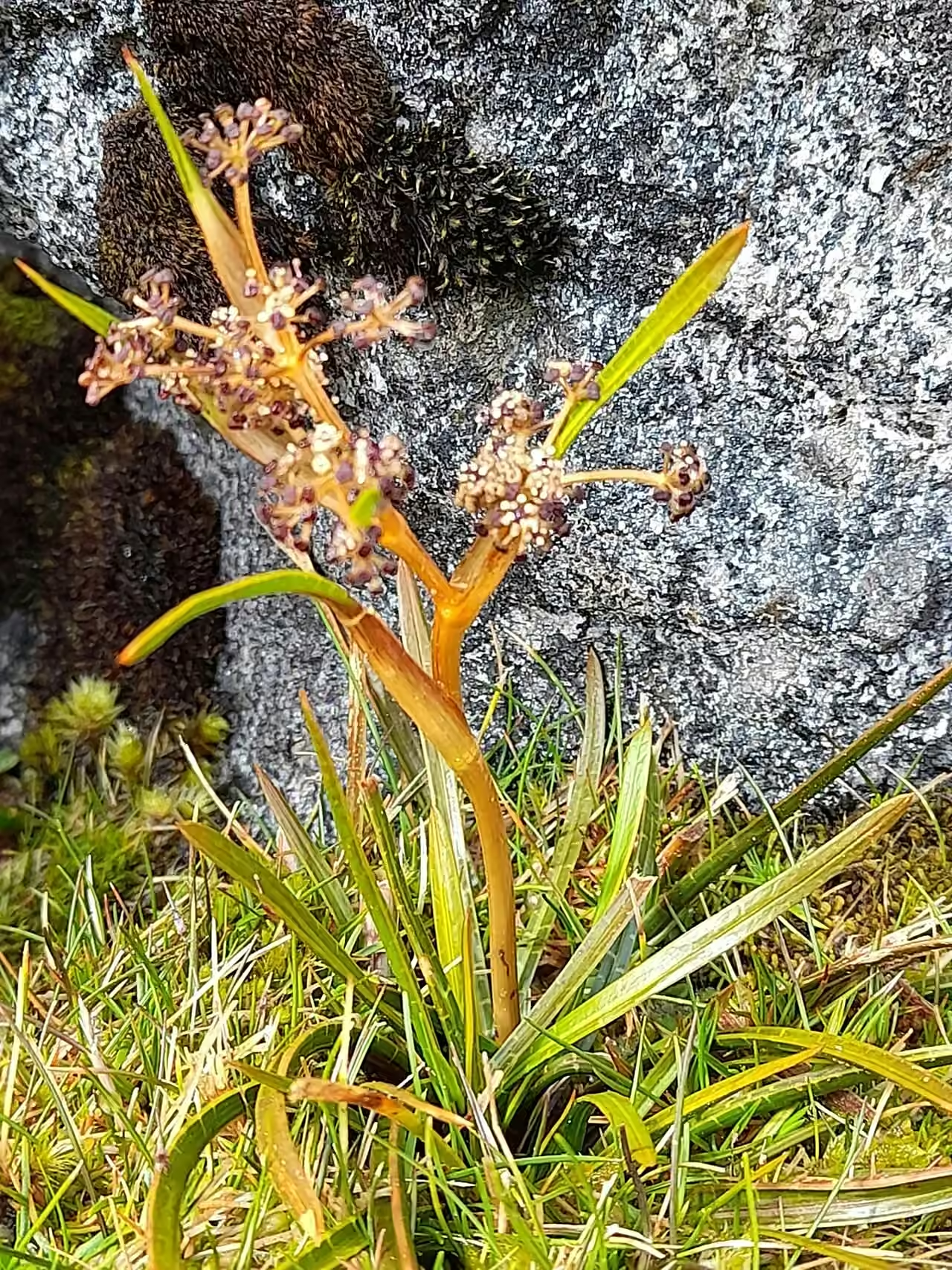
Stewart Island speargrass (Aciphylla traillii) is a small, tufted member of the carrot family endemic to Stewart Island/Rakiura. It forms clumps only about 20 cm tall, including its flowers, with narrow leaves up to 15 cm long that are usually simple or carry just one or two pairs of side pinnae. It grows in wet meadow grassland and herbmoor at 600 to 970 m on Mt Anglem/Hananui, Little Mt Anglem and The Paps. It is locally common there but ranked At Risk - Naturally Uncommon because its range is so small, and it is not commercially available. Explore more native flowering plants in our native plant guide.
Plant Description
Aciphylla traillii forms small tufts up to 20 cm tall including the inflorescence, growing from a slender stock with a stout taproot. The leaves are about 15 cm long and become rigid when dry. The leaf blade usually consists of a single narrow pinna, sometimes with one or two pairs of secondary pinnae, so the plant looks more like a tuft of stiff grass than a typical spiny speargrass.
Male and female flowers are on separate plants. The flowering stems are about 80 to 100 mm long, with slender umbels on male plants and very small umbellules on female plants. The flowers are cream to brown. The fruit is about 3 mm long, with mericarps bearing five winged ribs.
The plant most likely to be confused with it on Rakiura is Aciphylla cartilaginea, which has more divided and more robust leaves.
Quick Facts
| Scientific Name | Aciphylla traillii |
|---|---|
| Height | Up to 0.2 m including flowers |
| Spread | Small tufts, about 0.1-0.2 m |
| Water Needs | High; wet meadow and herbmoor |
| Light | Full sun, open alpine grassland |
| Frost Tolerance | High; montane to low-alpine |
| Salt Tolerance | No information available |
| Growth Rate | Slow |
| Lifespan | Long-lived perennial |
Climate Best Suited to
Suits the cool, wet, cloudy and windy climate of the Rakiura uplands, with frequent mist and no real dry season. Warm or dry lowland climates do not suit it.
Regional Suitability
| City | Climate Suitability |
|---|---|
| Auckland | Low |
| Wellington | Low |
| Christchurch | Low |
| Dunedin | Low |
Plant Habitat
Aciphylla traillii is endemic to Stewart Island/Rakiura. It is recorded from Mt Anglem/Hananui, the island's highest peak, from Little Mt Anglem and from The Paps. The lectotype was collected on Mt Anglem in December 1883.
It grows from the montane to low-alpine zones at about 600 to 970 m above sea level, where NZPCN describes it as locally common in wet meadow grassland and herbmoor.
Growing Requirements
Soil Requirements
Its herbmoor and wet meadow habitat has wet, peaty, acidic soils that are low in nutrients.
- Peaty, organic soil
- Constantly moist
- Low fertility
Light Requirements
It grows in open, low vegetation above the forest, so it receives full light whenever cloud allows.
- Full sun to bright overcast
- Not tolerant of being overtopped by shrubs
Water Requirements
The Rakiura tops are wet for much of the year, and the plant's meadow habitat stays moist throughout.
- Keep cultivated plants evenly moist
- Cool roots matter as much as moisture
Planting and Establishing
Stewart Island speargrass is not commercially available and is not a realistic garden plant. Its entire range lies within Rakiura National Park, where collecting plants or seed is not permitted.
Any cultivated material would need a cool, moist, peaty but gritty mix in a deep pot, kept out of hot sun and drying wind.
Ecological Role
As a small dioecious herb, it relies on insects carrying pollen from male to female plants, although the specific pollinators on Rakiura have not been documented in the sources consulted. Its winged mericarps suit wind dispersal across open alpine ground.
It is part of the distinctive upland flora of Rakiura, which includes several other species found only on the island's peaks.
Uses & Significance
Garden Uses
It has no real role in home gardens because it is not available and depends on cool, wet alpine conditions.
- Botanic garden or specialist alpine collections only
- Of interest to those studying Rakiura's endemic flora
- Best seen in the wild on the Hananui tops
Ecological Value
It contributes to the endemic alpine flora that makes Rakiura botanically distinctive.
- Found nowhere else in the world
- Locally common component of wet meadow and herbmoor
- Provides summer flowers on the island's peaks
Landscaping Uses
This species is not used in landscaping. Its small, grassy tufts would only be displayed in an alpine or bog garden collection alongside other Rakiura upland plants.
For a speargrass accent in a garden, choose one of the Aciphylla species sold by native nurseries instead.
Seasonal Care Calendar
Spring
New leaves grow from the tufts as the Rakiura tops warm.
- No intervention needed in the wild
- Keep cultivated plants cool and moist
Summer
Flowering runs from December to January, with cream to brownish umbels on short stems.
- Look for flowering tufts in wet meadow on Hananui
- Stay on the track to avoid trampling
Autumn
Fruit ripens from January to March and the winged seed is shed.
- Leave wild seed undisturbed
- Ensure cultivated plants have good air movement
Winter
The tufts rest through the cold, wet alpine winter.
- No action required
- Avoid stagnant water around cultivated crowns
When to Prune and How Much
No pruning is required. On cultivated plants, old dead leaves can be gently pulled from the base of the tuft.
Cut off spent flowering stems after any seed has been collected.
How to Grow Stewart Island Speargrass
NZPCN records Aciphylla traillii as not commercially available, and no published propagation protocol for it was found in the sources consulted. The notes below describe the general approach used for small alpine Aciphylla species, offered as guidance rather than a proven method for this one. Because the species is dioecious, seed is produced only where male and female plants grow together, and because its whole range is inside Rakiura National Park, wild seed or plants may only be collected under a Department of Conservation permit. Like other speargrasses it has a stout taproot and dislikes being moved, so young plants should be potted individually and transplanted as little as possible.
From Seed
Fruit ripens from January to March. Seed of alpine speargrasses generally germinates best after cold, moist conditions over winter, so autumn sowing outdoors is the usual approach.
- Collect ripe fruits from a fertilised female plant in late summer
- Sow fresh into deep pots of moist, gritty, peat-based mix
- Cover lightly and leave outdoors in a cool, shaded spot over winter
- Prick out seedlings singly in spring, keeping the taproot intact
- Grow on in cool, humid but well-ventilated conditions
By Division
Older plants with several crowns can sometimes be split, but each piece must keep part of the root system. Expect some losses.
- Lift an established multi-crowned cultivated plant in early spring
- Separate crowns with a clean knife, keeping roots attached
- Pot into a moist, gritty mix and keep cool and shaded
- Leave undisturbed until new growth appears
Pests & Diseases
No specific pests or diseases are recorded for Aciphylla traillii. Cultivated alpine speargrasses are prone to crown rot when warm, humid air combines with wet soil.
On Rakiura, introduced browsing animals such as white-tailed deer are present, but their impact on this species is not documented in the sources consulted.
Cultural Significance
No traditional Māori name or use is recorded specifically for Aciphylla traillii in the sources consulted. Speargrasses in general are known as taramea in te reo Māori.
Thomas Kirk described the species in 1883, after the type was collected on Mt Anglem. The epithet honours Charles Traill, a Stewart Island resident.
Bonus Tip
If you climb Mt Anglem/Hananui in December or January, look in the wet tussock meadow on the upper slopes for small, grassy tufts with short cream or brownish flower stems; these are easy to overlook as grass until you notice the umbels typical of the carrot family.
Related Plants
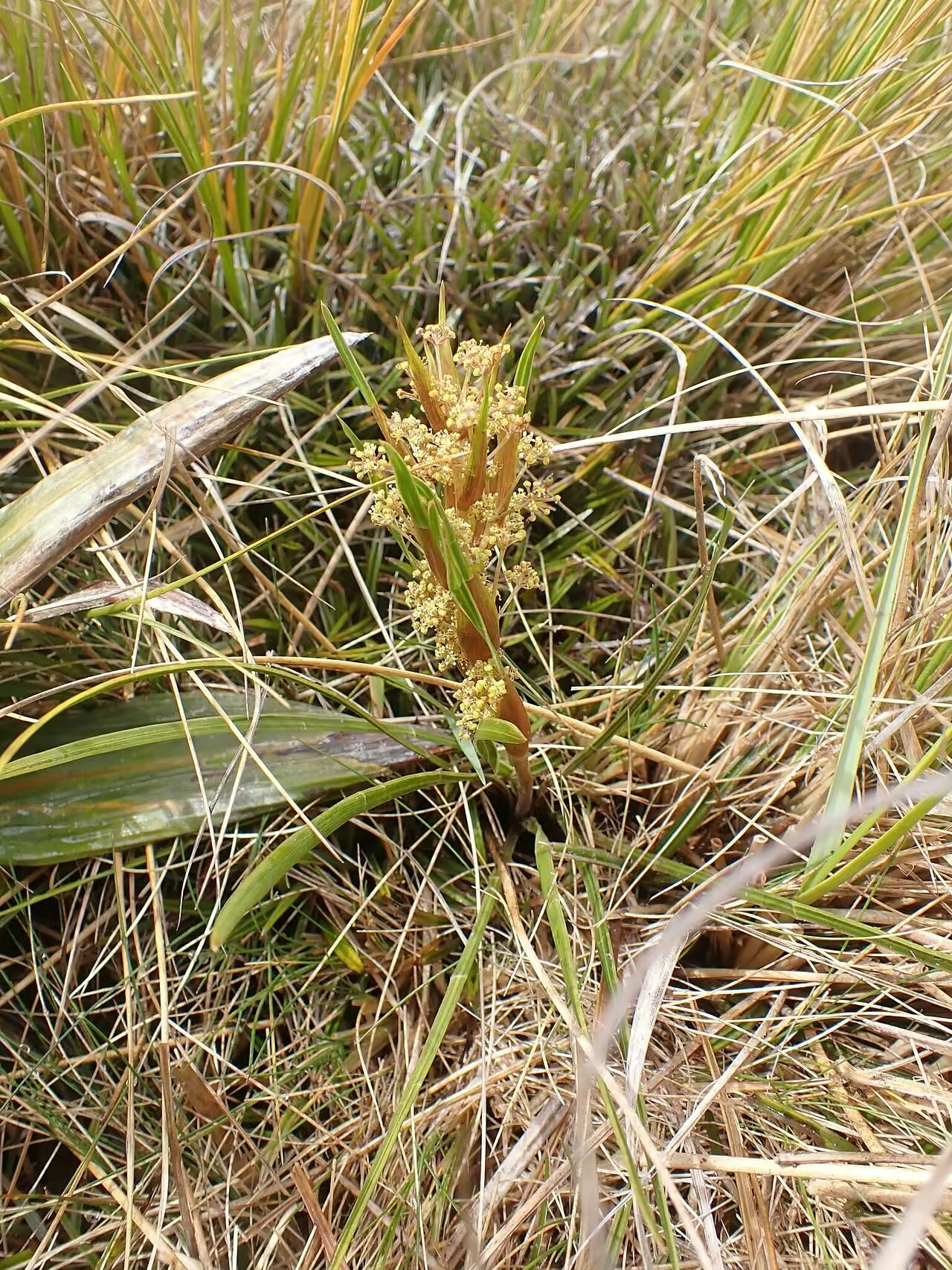
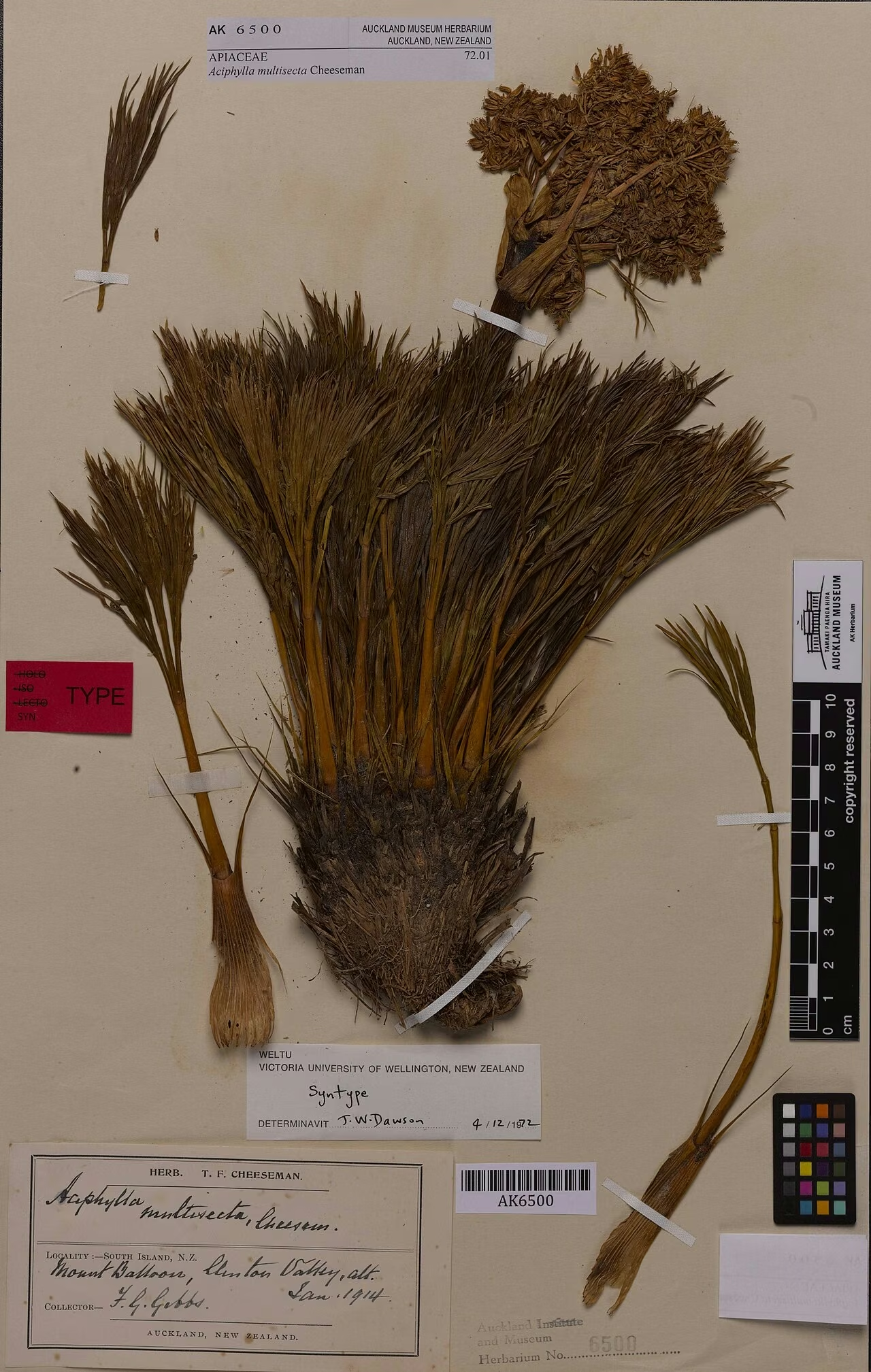
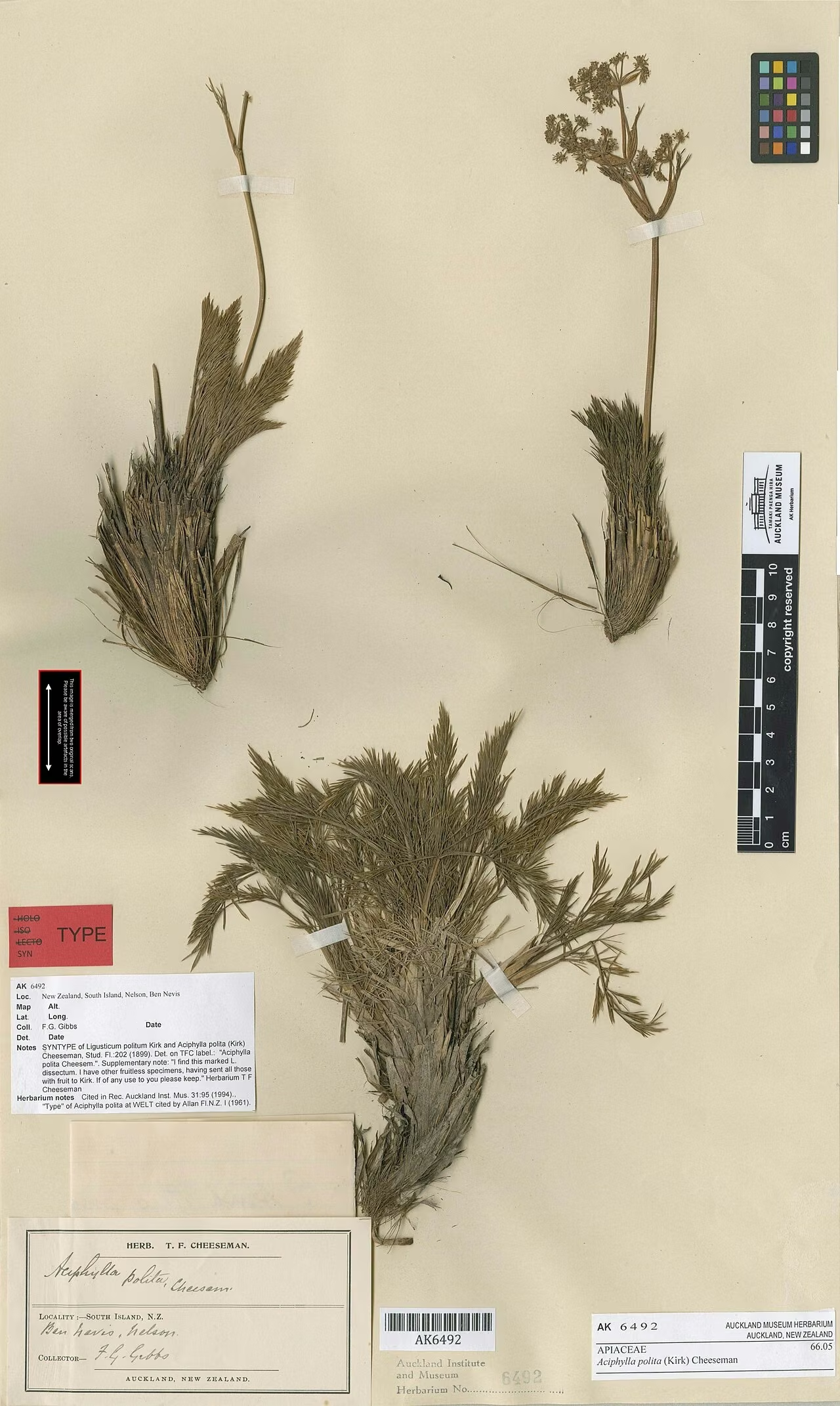
Explore other native plants that share similar characteristics or habitats with Stewart Island Speargrass (Aciphylla traillii), offering further insights into New Zealand's diverse flora. These related species provide context and opportunities for complementary planting in your garden.
Aciphylla lyallii
Aciphylla lyallii
Aciphylla multisecta
Aciphylla multisecta
Aciphylla polita
Aciphylla polita
Aciphylla spedenii
Aciphylla spedenii
Chatham Island Speargrass
Aciphylla traversii
Aciphylla trifoliolata
Aciphylla trifoliolata
Turoa Onamata
Ackama nubicola
Adenochilus gracilis
Adenochilus gracilis
Plant Conservation
Aciphylla traillii is ranked At Risk - Naturally Uncommon (2023) with the qualifier Range Restricted. It is locally common within its habitat, and its listing reflects its confinement to a few peaks in northern Rakiura rather than a known decline.
Its range lies within Rakiura National Park. Staying on tracks, controlling browsing animals and reporting sightings help keep it secure.
Frequently Asked Questions
Where can you see Stewart Island speargrass?
It grows on the montane and low-alpine tops of Rakiura, on Mt Anglem/Hananui, Little Mt Anglem and The Paps, between about 600 and 970 m.
How is Aciphylla traillii different from Aciphylla cartilaginea?
At a glance they can be confused, but A. traillii has simple leaves or leaves with only one or two pairs of secondary pinnae, while A. cartilaginea has more divided, more robust leaves.
Is Stewart Island speargrass sharp?
It is a small plant whose leaves become rigid when dry, so it is much less formidable than the large speargrasses of the South Island high country.
Can I buy Aciphylla traillii for my garden?
NZPCN records it as not commercially available, and wild plants within Rakiura National Park must not be collected.
Sources and Further Reading
The botanical, growing, and conservation details for Stewart Island Speargrass (Aciphylla traillii) on this page draw on the New Zealand plant references below. Consult them for full technical records and the latest distribution data.