Speargrass
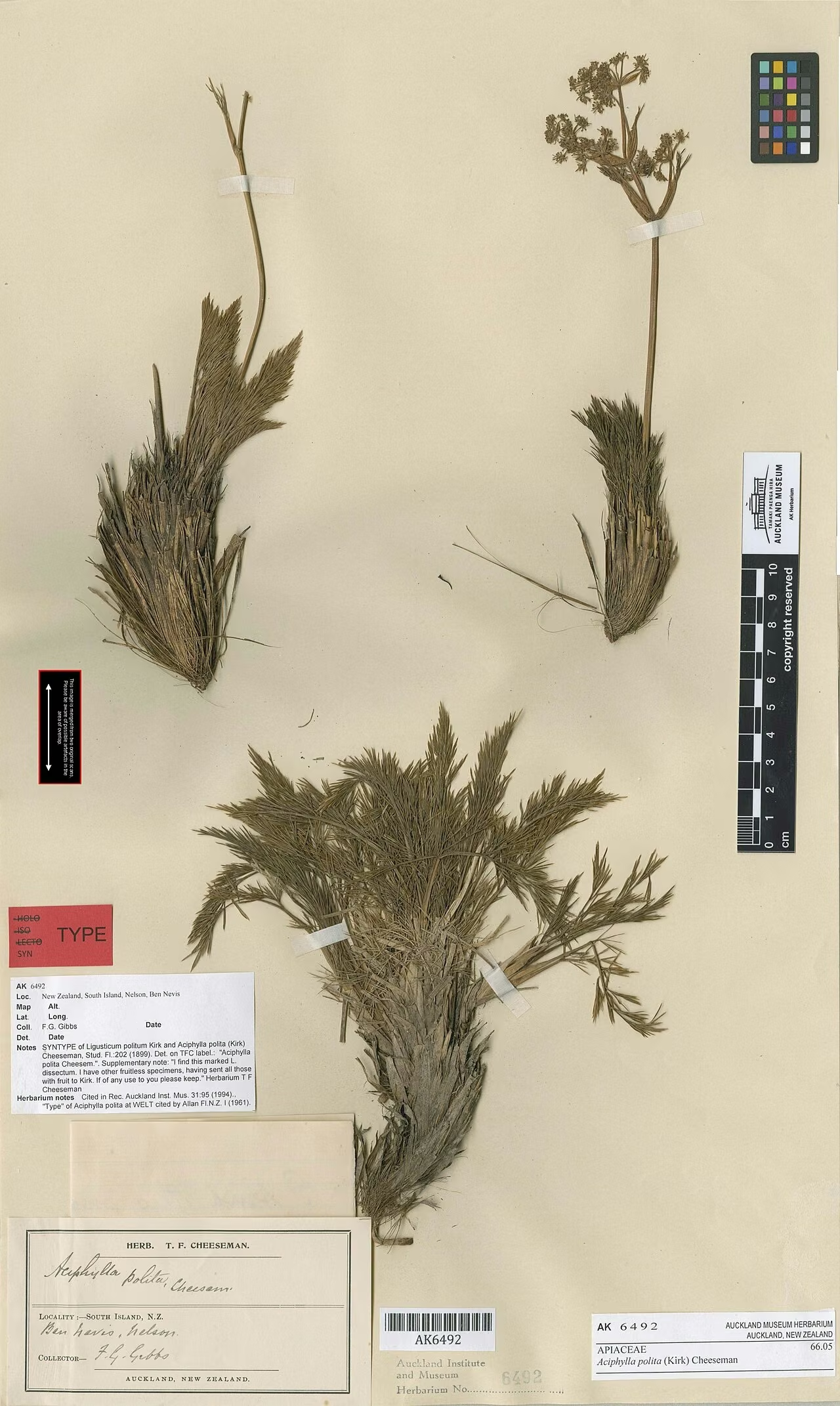
Aciphylla polita
Last updated:
Aciphylla polita is a small speargrass endemic to the mountains of the northern South Island, especially North-west Nelson and Kahurangi National Park, where it grows at about 900 to 1700 m. It forms neat tufts of finely divided leaves up to 15 cm long, and its slender flowering stems are usually shorter than 20 cm, topped with clusters of cream to white flowers. Herbarium records place it in alpine grassland, herbfield in steep gullies and crevices in granite cliffs. Its name polita means smooth or polished. It has been ranked Not Threatened in every national assessment since 2004. Explore more native flowering plants in our native plant guide.
Plant Description
Aciphylla polita is a small, tufted herb with erect stems up to about 20 cm tall, usually less. Its leaves are up to 15 cm long and are two or three times pinnate (rarely only once pinnate), so the foliage is finely divided into narrow, stiff segments.
Like other speargrasses, it has male and female flowers on separate plants. Male plants have very slender stems about 15 cm tall including the inflorescence, while female plants carry stiff, slender stems. The flowers are cream to white, and the fruit is about 3 mm long, splitting into winged mericarps that blow away in the wind.
Its small size and twice to thrice divided leaves set it apart from the larger, bolder speargrasses of Nelson. The epithet polita means smooth or polished; the sources consulted do not explain which feature of the plant the name refers to.
Quick Facts
| Scientific Name | Aciphylla polita |
|---|---|
| Height | Usually under 0.2 m including flower stems |
| Spread | Small tuft, about 0.1-0.2 m |
| Water Needs | Moist, well drained |
| Light | Full sun |
| Frost Tolerance | High; subalpine to alpine |
| Salt Tolerance | No information available |
| Growth Rate | Slow |
| Lifespan | Perennial |
Climate Best Suited to
It suits the cool, high-rainfall mountain climate of North-west Nelson, with winter snow and cool summers. It is not suited to warm lowland conditions.
Regional Suitability
| City | Climate Suitability |
|---|---|
| Auckland | Low |
| Wellington | Low |
| Christchurch | Low |
| Dunedin | Low |
Plant Habitat
Aciphylla polita is endemic to New Zealand. Its lectotype was collected on Ben Nevis in the Nelson mountains in December 1896, and Wikipedia's species list gives its range as North-west Nelson at 900 to 1700 m. Herbarium specimens come from Kahurangi National Park, including Mount Luna in the Arthur Range, Mount Goul in the Gouland Range, Lake Sylvester in the Cobb Valley and Mount Brilliant in the Scarlett Range, and NZPCN illustrates it on the summit of Mount Peel.
Recorded habitats include alpine grassland, herbfield in steep gullies and crevices in granite cliffs. Older accounts also mention the Tararua Range in the North Island, but that record is not reflected in current species lists.
Growing Requirements
Soil Requirements
It grows in thin mountain soils over granite and other rocks, in grassland, herbfield and cliff crevices.
- Gritty, free-draining mix in cultivation
- Low fertility
- Some depth for the root system
Light Requirements
Its alpine grassland and cliff habitats are open and sunny.
- Full sun
- Avoid shading by taller plants
Water Requirements
North-west Nelson's mountains receive high rainfall, so it is used to regular moisture with free drainage.
- Keep moist in the growing season
- Do not allow water to sit around the crown
Planting and Establishing
Aciphylla polita is rarely, if ever, offered for sale, and no cultivation experience is recorded in the sources consulted. A specialist could try it in a deep trough or crevice garden with gritty mix, in a cool, sunny position.
Its small size would suit a trough better than most speargrasses. Wild plants should not be dug up.
Ecological Role
NZPCN records that its winged schizocarps are dispersed primarily by wind. The cream to white umbels are likely to be visited by insects, but its pollinators have not been studied.
In Kahurangi's alpine grasslands and herbfields it grows with snow tussocks and many other northern South Island endemics, part of one of New Zealand's richest regions for alpine plants.
Uses & Significance
Garden Uses
Its use would be limited to specialist alpine collections.
- Alpine troughs and crevice gardens
- Collections of Nelson mountain plants
Ecological Value
It is one of a number of speargrasses endemic to the northern South Island mountains, an important centre of diversity for Aciphylla.
- Endemic to New Zealand
- Part of Kahurangi's alpine grassland and herbfield flora
- A small species occupying cliff crevices as well as grassland
Landscaping Uses
Aciphylla polita is not used in landscaping. In an alpine trough, its fine, tufted foliage and white flower clusters would make a delicate contrast with cushion plants and small mountain daisies.
Place it where its stiff leaf tips will not catch hands.
Seasonal Care Calendar
Spring
Growth begins as snow clears from the tops.
- No action needed for wild plants
Summer
Its flowering season is not given in the sources consulted; the lectotype was collected in December, and cream to white flower clusters appear on slender stems.
- Photograph flowering plants and note male or female
- Record sightings on iNaturalist NZ
Autumn
Small winged fruits about 3 mm long ripen and are dispersed by wind.
- Leave wild seed in place
Winter
Plants are dormant under snow on the Nelson ranges.
- No action needed
When to Prune and How Much
No pruning is required. On any cultivated plant, remove old flower stems at the base once seed has dispersed.
Dead leaves can be cleared from the tuft with gloves or tweezers.
How to Grow Speargrass
No published propagation method for Aciphylla polita was found in NZPCN, the Flora of New Zealand or other sources consulted, and it does not appear to be in general cultivation. The guidance below is the general method for small alpine speargrasses. Seed is only produced on female plants pollinated by a nearby male. Most of its range lies in Kahurangi National Park, where seed collection requires authorisation from the Department of Conservation, and plants should never be dug up. Because the sexes are separate, a conservation or display collection would need several plants of known origin.
From Seed
The fruit is about 3 mm long and winged, so it disperses quickly when ripe. Speargrass seed is usually sown fresh and given a winter outdoors to break dormancy. Check female heads every few days once they begin to brown, since the light fruits are easily lost.
- Collect ripe, brown fruit from a female plant, with permission
- Sow fresh in a deep pot of gritty seed mix and cover lightly with grit
- Leave the pot outdoors in a cold, sunny place over winter
- Keep evenly moist and watch for seedlings in spring
- Pot seedlings into deep individual pots while still small
By Division
Established tufts may form several crowns, which could be separated with care, but there is no recorded experience of dividing this species.
- Divide only cultivated plants, in early spring
- Cut away a crown with roots attached
- Replant in gritty mix and keep cool and moist until established
Pests & Diseases
No pests or diseases are recorded for Aciphylla polita. Browsing by introduced animals such as deer, goats and hares affects speargrasses in many mountain areas.
In cultivation, rot in poorly drained or humid conditions would be the main risk.
Cultural Significance
No traditional Māori name or use specific to Aciphylla polita is recorded in the sources consulted.
Thomas Kirk first described the plant, and Thomas Cheeseman later placed it in Aciphylla, giving the current name Aciphylla polita (Kirk) Cheeseman. The lectotype dates from a collection on Ben Nevis in December 1896.
Bonus Tip
On the Mount Arthur, Cobb Valley or Mount Peel tracks in Kahurangi National Park, look for this speargrass in short alpine grassland and rock crevices. It is easy to overlook among tussocks, but its cream-white flower heads on slender stems stand out when it is flowering.
Related Plants
Explore other native plants that share similar characteristics or habitats with Speargrass (Aciphylla polita), offering further insights into New Zealand's diverse flora. These related species provide context and opportunities for complementary planting in your garden.
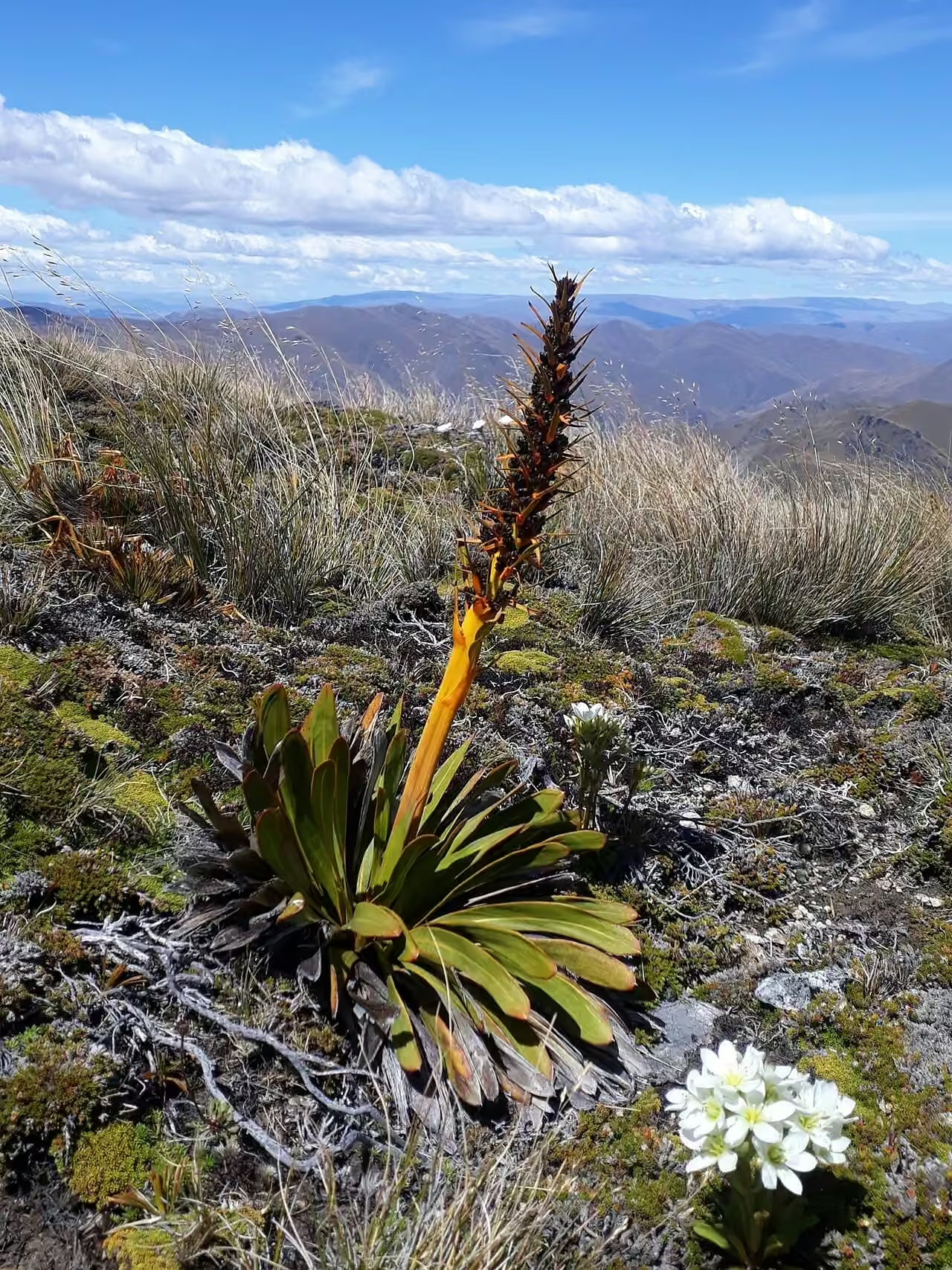
Aciphylla kirkii
Aciphylla kirkii
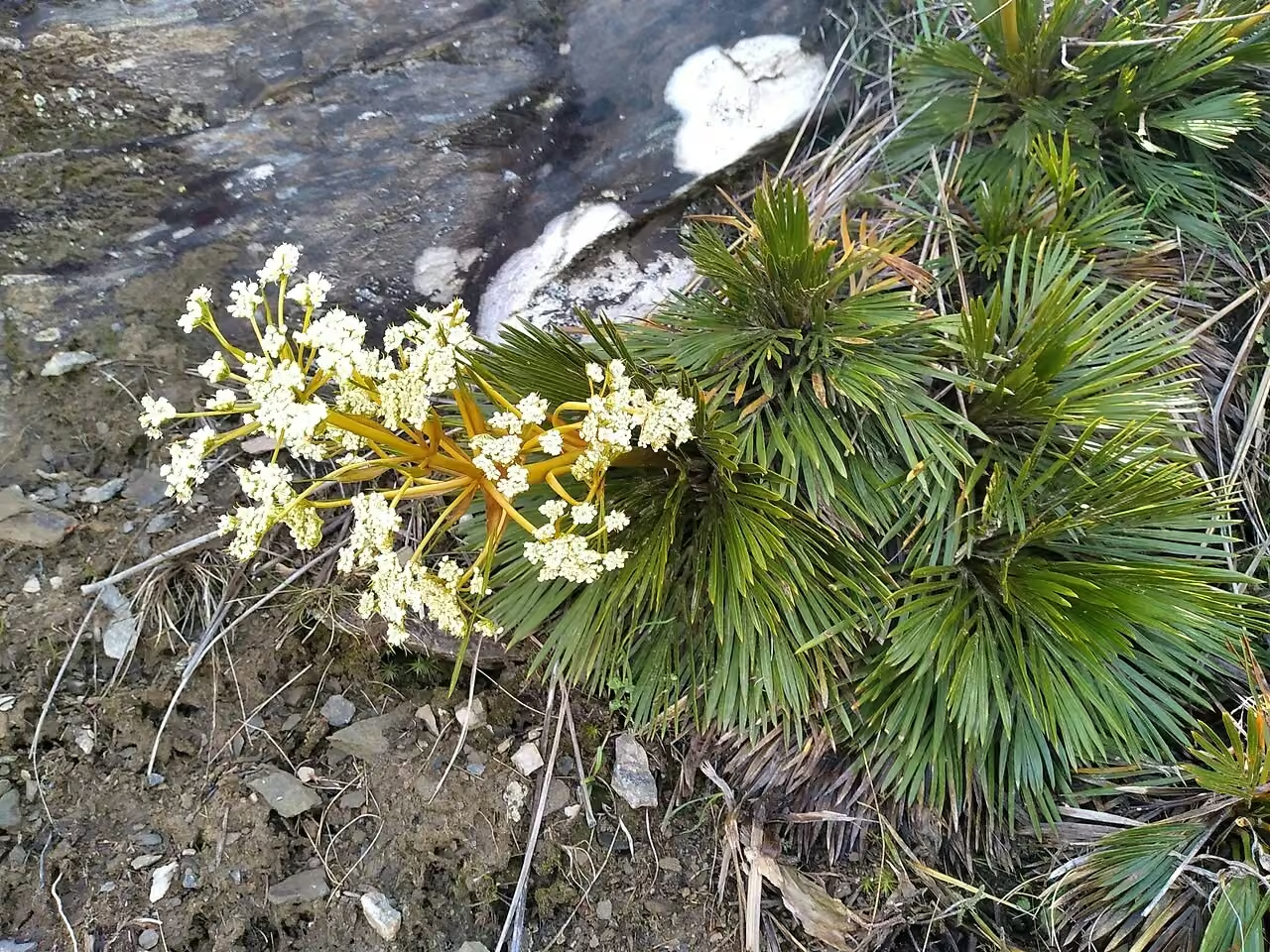
Aciphylla lecomtei
Aciphylla lecomtei
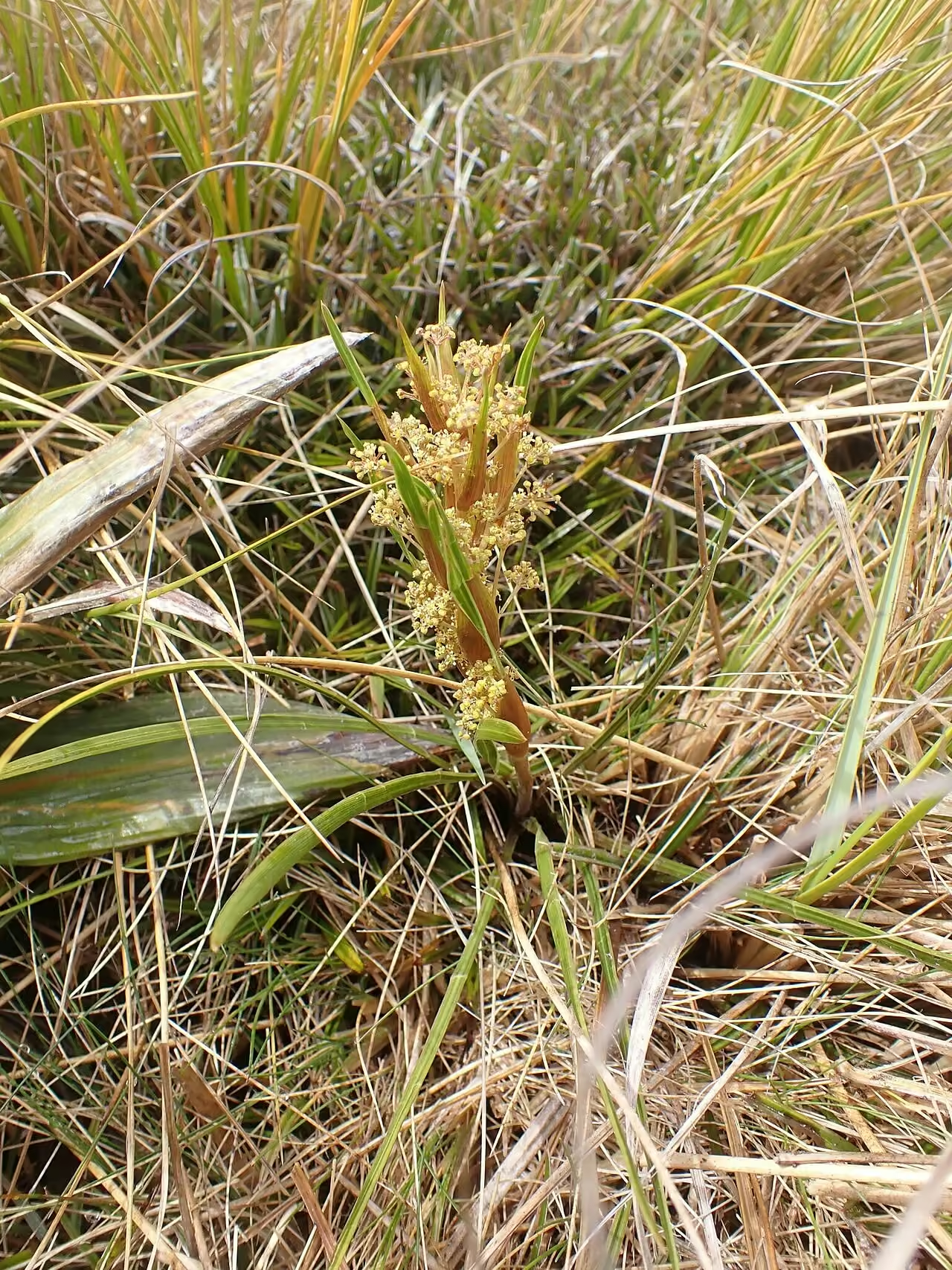
Aciphylla lyallii
Aciphylla lyallii
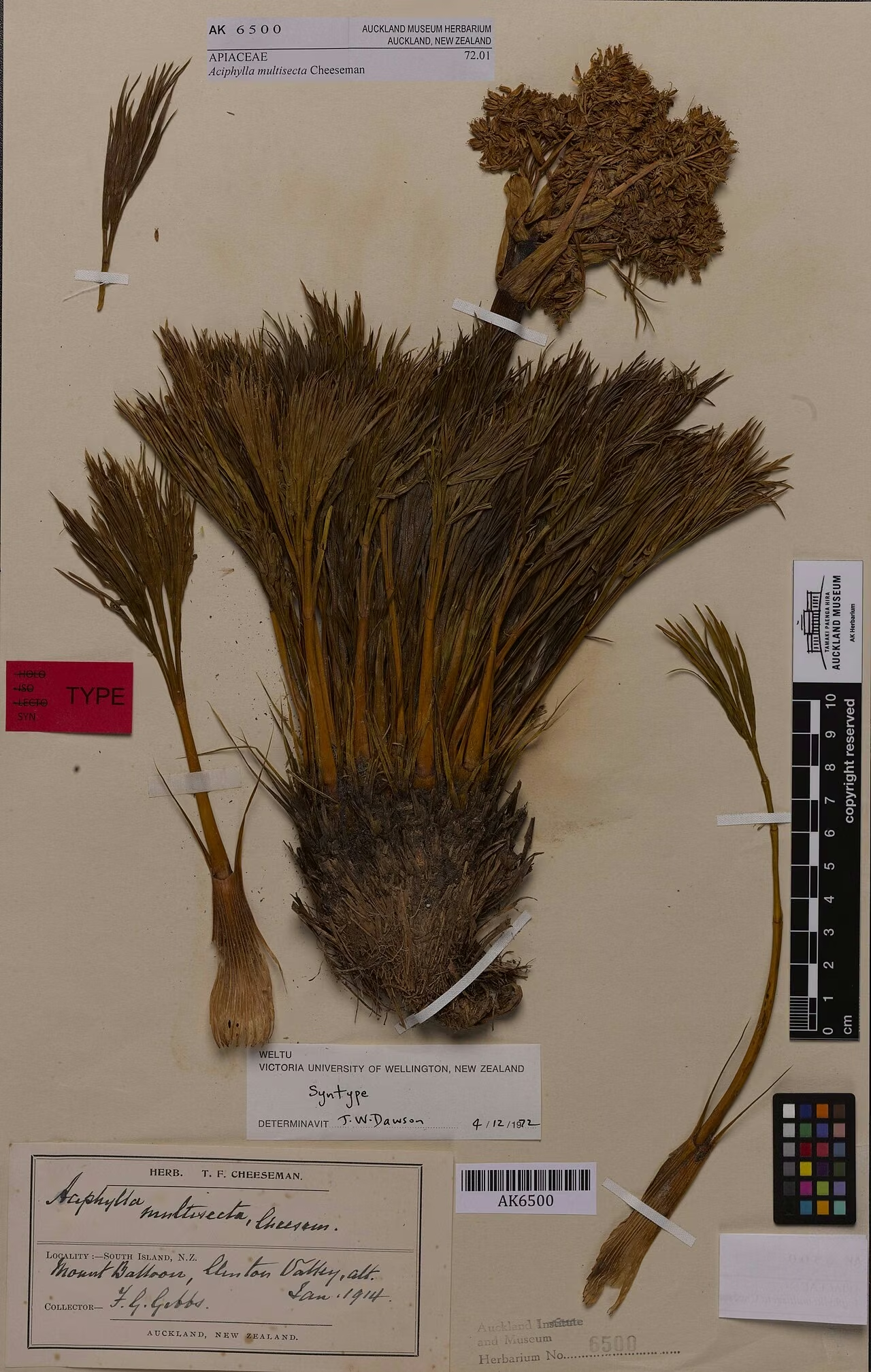
Aciphylla multisecta
Aciphylla multisecta
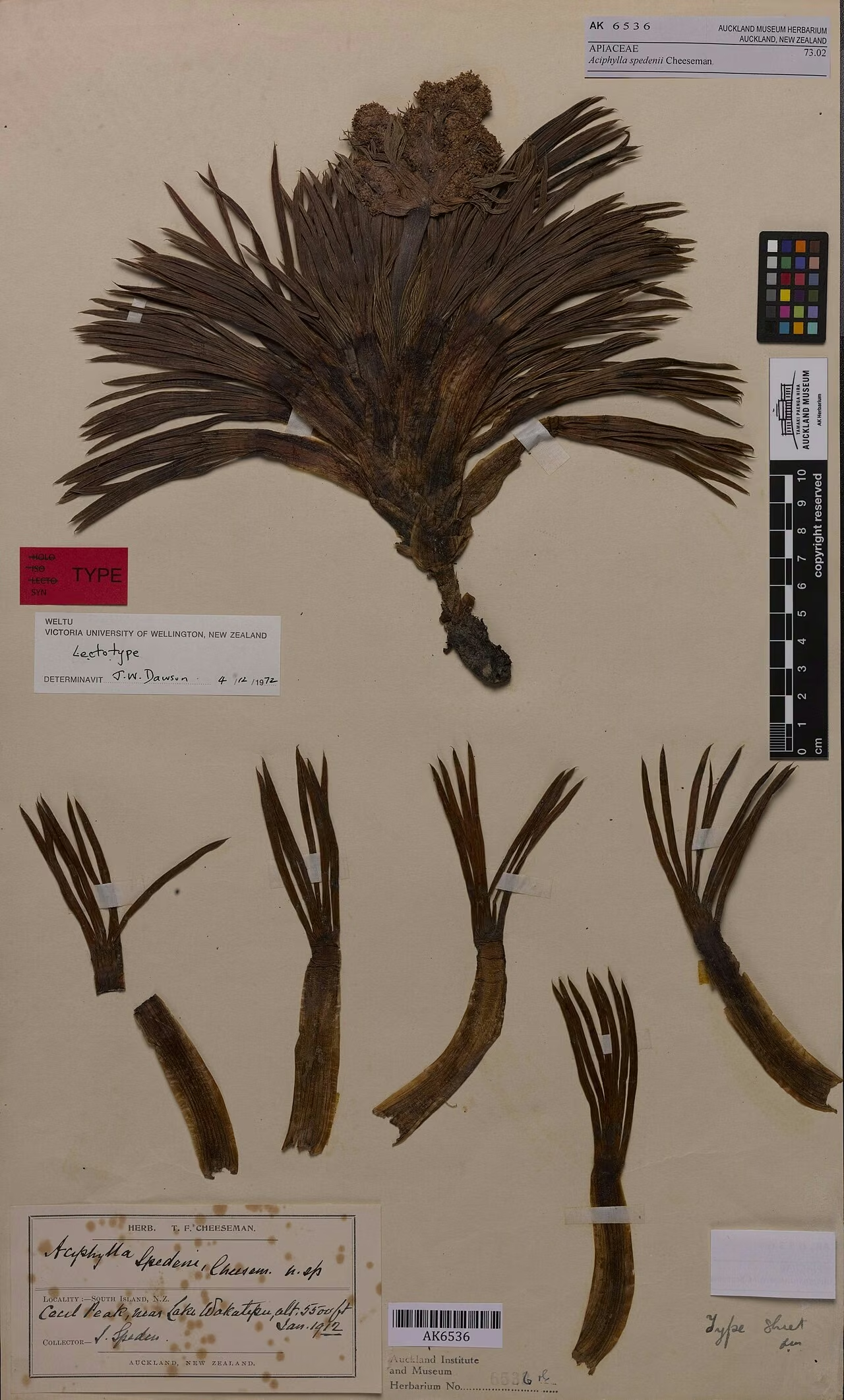
Aciphylla spedenii
Aciphylla spedenii
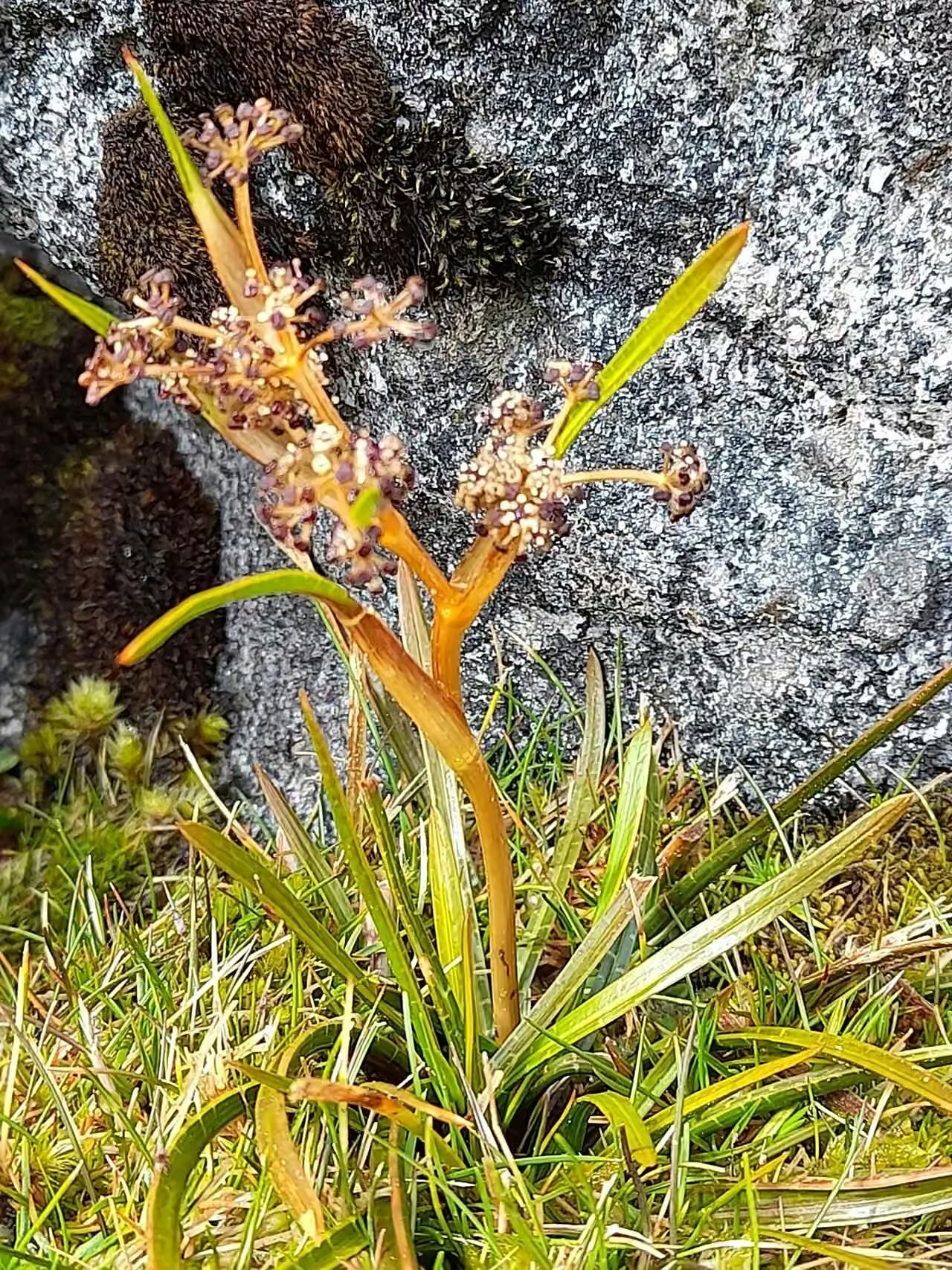
Stewart Island Speargrass
Aciphylla traillii
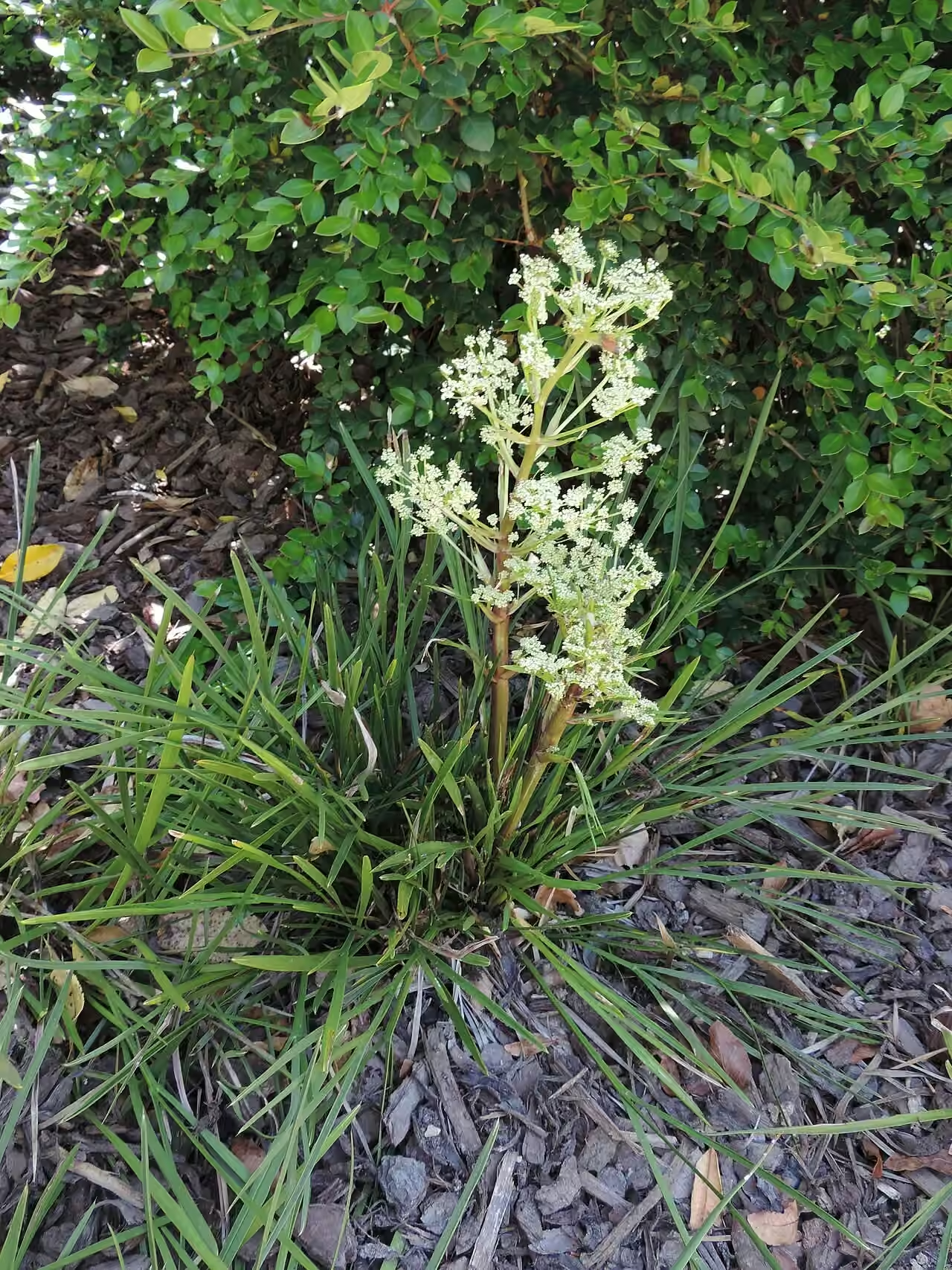
Chatham Island Speargrass
Aciphylla traversii
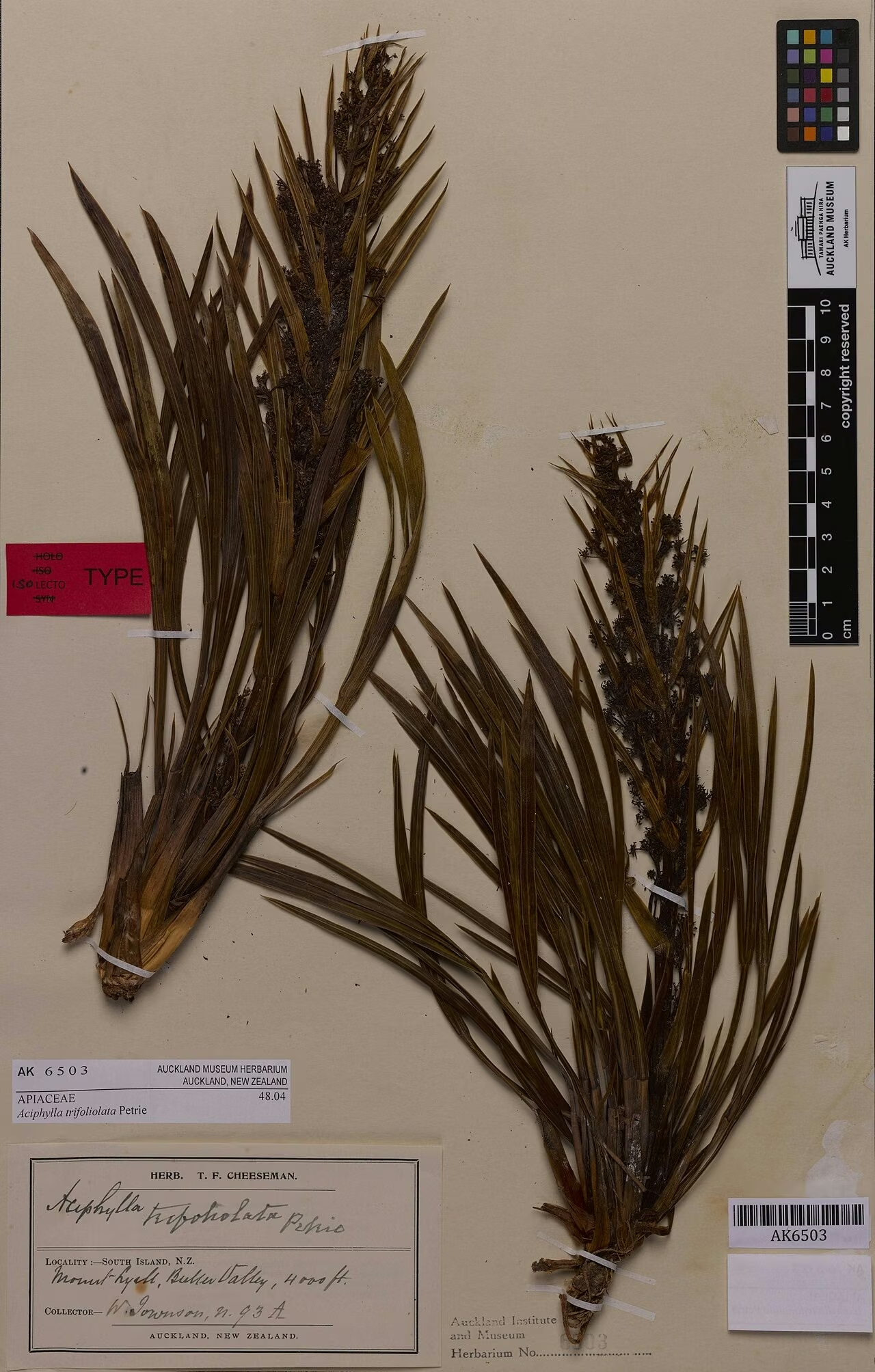
Aciphylla trifoliolata
Aciphylla trifoliolata
Plant Conservation
Aciphylla polita is ranked Not Threatened (2023) and has held that ranking in every assessment since 2004.
Most known sites lie within Kahurangi National Park, where its habitat is protected. Control of introduced browsers and avoiding damage to fragile alpine vegetation help keep it secure.
Frequently Asked Questions
Where does Aciphylla polita grow?
It grows in the mountains of North-west Nelson at about 900 to 1700 m, with herbarium records from Kahurangi National Park including the Arthur Range, Gouland Range, Cobb Valley and Mount Peel.
How big is Aciphylla polita?
It is one of the smallest speargrasses, a tufted plant with leaves up to 15 cm long and erect flowering stems up to 20 cm tall, though usually shorter.
What colour are the flowers of Aciphylla polita?
NZPCN records the flowers as cream to white, carried in small clustered umbels at the top of slender stems above the leaf tuft.
Sources and Further Reading
The botanical, growing, and conservation details for Speargrass (Aciphylla polita) on this page draw on the New Zealand plant references below. Consult them for full technical records and the latest distribution data.