Speargrass
Aciphylla multisecta
Last updated:
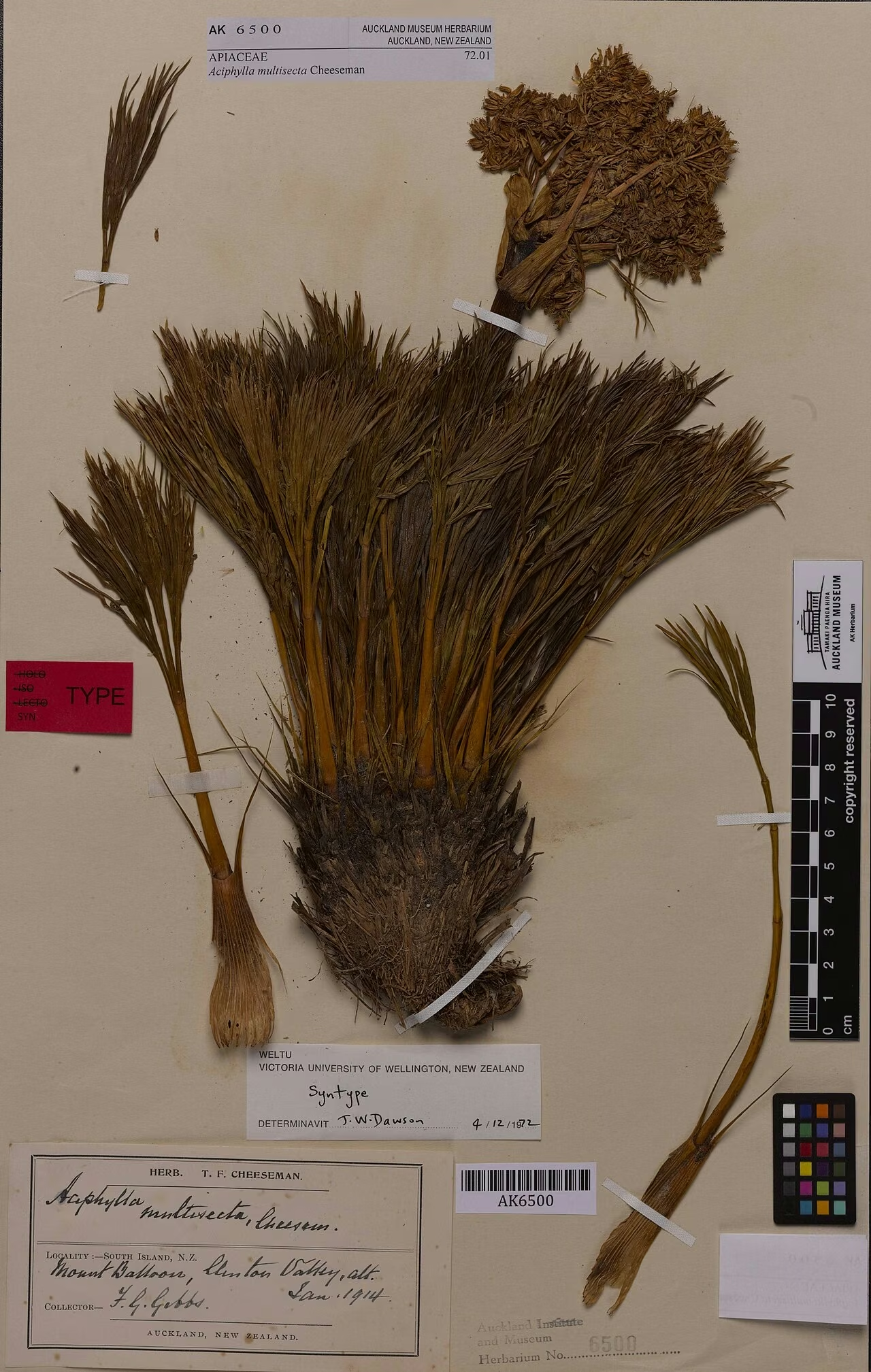
Aciphylla multisecta is a small speargrass with unusually finely cut leaves, as its name, meaning many divisions, suggests. It forms tufts or patches up to about 25 by 40 cm, with rigid leaves 6 to 10 cm long divided three times into thread-like, needle-tipped segments. It is a plant of high alpine country above 1300 m in the South Island, from central Canterbury and Westland south to Fiordland, where it grows on rock ledges, cliff faces, in and around seepages and below late snow banks. It is known from very few collections and is ranked At Risk - Declining. Explore more native flowering plants in our native plant guide.
Plant Description
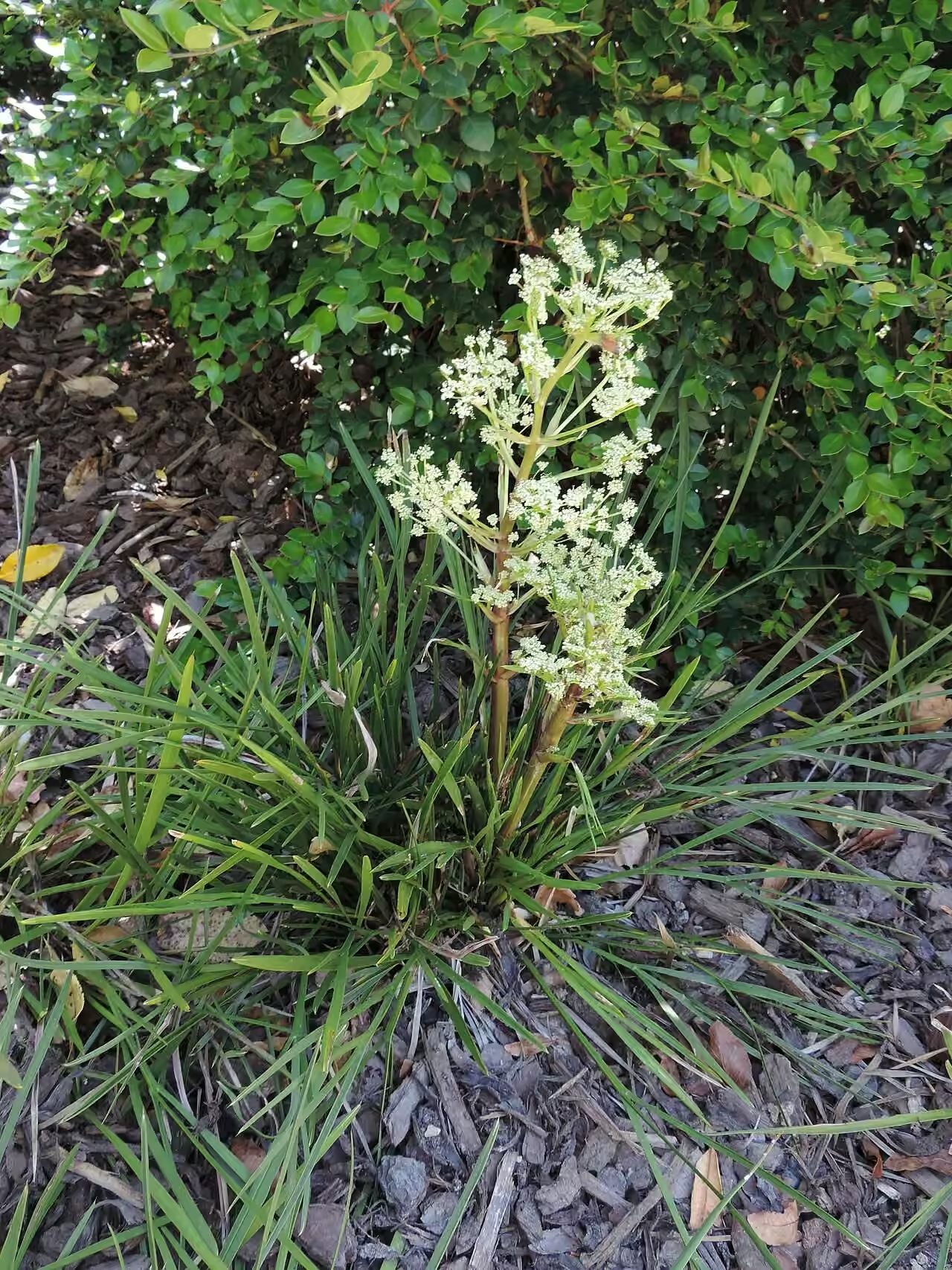
Aciphylla multisecta is a small but stout tufted herb with a simple or branched rootstock, forming clumps or patches up to about 25 by 40 cm. Its rigid leaves are only 6 to 10 cm long but are three times divided (3-pinnatisect), ending in fine, filiform tertiary segments with pungent tips. The effect is a dense, bristly tuft quite unlike the broad daggers of the large speargrasses.
Male and female flowers are on separate plants. Female plants bear stems up to about 30 cm tall carrying rounded (globose) panicles of umbels about 8 to 10 cm across. The fruit is narrow, about 3 mm long, with mericarps bearing four or five wings.
NZPCN regards its closest relatives as Aciphylla divisa and A. dissecta. Its tiny, triply divided leaves and its high, wet, rocky habitat help separate it from other small South Island speargrasses.
Quick Facts
| Scientific Name | Aciphylla multisecta |
|---|---|
| Height | Up to 0.3-0.4 m including flower stems |
| Spread | Patches up to about 0.25 x 0.4 m |
| Water Needs | High; seepages and snowmelt sites |
| Light | Full sun |
| Frost Tolerance | Very high; high alpine species |
| Salt Tolerance | No information available |
| Growth Rate | Slow |
| Lifespan | Long-lived perennial |
Climate Best Suited to
It lives in the coldest, snowiest part of the alpine zone, where snow lies late into summer and meltwater keeps ledges wet. It is unsuited to lowland climates.
Regional Suitability
| City | Climate Suitability |
|---|---|
| Auckland | Low |
| Wellington | Low |
| Christchurch | Low |
| Dunedin | Low |
Plant Habitat
Aciphylla multisecta is endemic to the South Island, ranging from central Canterbury and Westland south to Fiordland. The type specimen was collected on Mount Balloon, in the Fiordland mountains near the Milford Track, by Gibbs in January 1914.
It grows at high altitude, above about 1300 m, on rock ledges and cliff faces, in or around seepages, and below melting snow banks. NZPCN notes that it is known from very few collections and does not seem to be common where it has been found.
Growing Requirements
Soil Requirements
It roots into thin, wet mineral soil and gravel on rock ledges and in seepage zones.
- Gritty, stony substrate
- Constant moisture from seepage or snowmelt
- Very low fertility
Light Requirements
Its high alpine ledges and cliffs are open and unshaded.
- Full sun
- No competition from taller vegetation
Water Requirements
Seepages and late snowmelt keep its rooting zone cold and wet through the short growing season.
- Cold running water rather than stagnant wet
- Never dries out during growth
Planting and Establishing
This species is not suitable for planting. NZPCN describes it as difficult and states that it should not be removed from the wild.
Gardeners interested in finely divided speargrasses should look for nursery-grown plants of more widespread species rather than attempting this one.
Ecological Role
Its winged fruits are dispersed by wind, which can carry them between scattered ledges and seepages. Flowering occurs early for a speargrass, in November and December, as the snow retreats. Pollinators have not been documented in the sources consulted.
It is part of the specialised flora of high-alpine seepages and snowbank sites, habitats that depend on reliable snow cover and meltwater.
Uses & Significance
Garden Uses
It has no garden use: it is difficult to grow and should be left in the wild.
- Best appreciated in the high mountains
- A subject for botanical study rather than cultivation
Ecological Value
As a sparse, range-restricted species of high-alpine wet rock, it contributes to the distinctive diversity of the South Island's upper mountain flora.
- Endemic to the South Island
- Known from very few collections
- Ranked At Risk - Declining and Conservation Dependent
Landscaping Uses
Aciphylla multisecta is not used in landscaping and should not be.
Its fine, bristly texture would only be reproducible in a specialist alpine house, and other speargrasses are far better suited to that role.
Seasonal Care Calendar
Spring
In late spring, growth begins as snow banks start to melt off its ledges.
- Wild plants need no intervention
- Avoid trampling seepages when off track
Summer
Flowering runs from November to December, earlier than most speargrasses.
- Look for rounded female flower heads 8 to 10 cm across
- Photograph and record sightings
Autumn
Fruit forms from November to January, so by autumn the seed has largely been dispersed.
- Leave seed undisturbed in the wild
Winter
Plants are buried beneath deep snow on high alpine ledges.
- No action required
When to Prune and How Much
Pruning does not apply, since this species is not grown in gardens and wild plants should be left untouched.
If a plant were held for conservation purposes, only dead leaves and spent stems would be removed.
How to Grow Speargrass
NZPCN describes Aciphylla multisecta as difficult to propagate and says plainly that it should not be removed from the wild. No published protocol for raising it was found, so the methods below are the general techniques used for alpine speargrasses and would only be relevant to authorised conservation work by experienced growers. Its natural habitat, constantly fed by cold seepage and meltwater, is very hard to reproduce in cultivation, which probably explains why it is rarely grown. Any seed collection on public conservation land would require Department of Conservation approval.
From Seed
Fruit forms between November and January. The narrow fruits are only about 3 mm long and carry four or five wings, so they disperse quickly once ripe. Seed of alpine Apiaceae generally needs a period of winter cold before germinating.
- Collect ripe fruit only under authorisation and from female plants
- Sow fresh on a deep pot of gritty mix kept constantly moist
- Expose the pot to cold over winter
- Grow seedlings on in cool, bright conditions with running moisture
- Pot singly into deep containers while small
By Division
The rootstock may be branched, so a clump could in theory be split, but this would only ever be considered for a plant already held in a conservation collection.
- Separate a crown with roots attached in early spring
- Replant immediately into wet, gritty mix
- Keep cold, moist and lightly shaded until new growth appears
Pests & Diseases
No specific pests are recorded for Aciphylla multisecta. Its cliff and ledge habitat probably gives some protection from browsing animals, though chamois and tahr range into the high alpine zone in parts of its range.
Any attempt at cultivation would most likely fail through rot or drying, since the cold, wet conditions it needs are difficult to maintain.
Cultural Significance
No traditional Māori name or use specific to Aciphylla multisecta is recorded in the sources consulted.
W.R.B. Oliver described the species, based on a specimen collected on Mount Balloon in Fiordland by Gibbs in January 1914. Its name combines the Latin multi, many, and secta, cut or divided.
Bonus Tip
If you are climbing in the Fiordland or Southern Alps high country and see a small, bristly speargrass on a wet ledge or below a snow bank, photograph it and share the record on iNaturalist NZ. Because this species is known from so few collections, a single well-documented observation can add meaningfully to what is known about it.
Related Plants
Explore other native plants that share similar characteristics or habitats with Speargrass (Aciphylla multisecta), offering further insights into New Zealand's diverse flora. These related species provide context and opportunities for complementary planting in your garden.
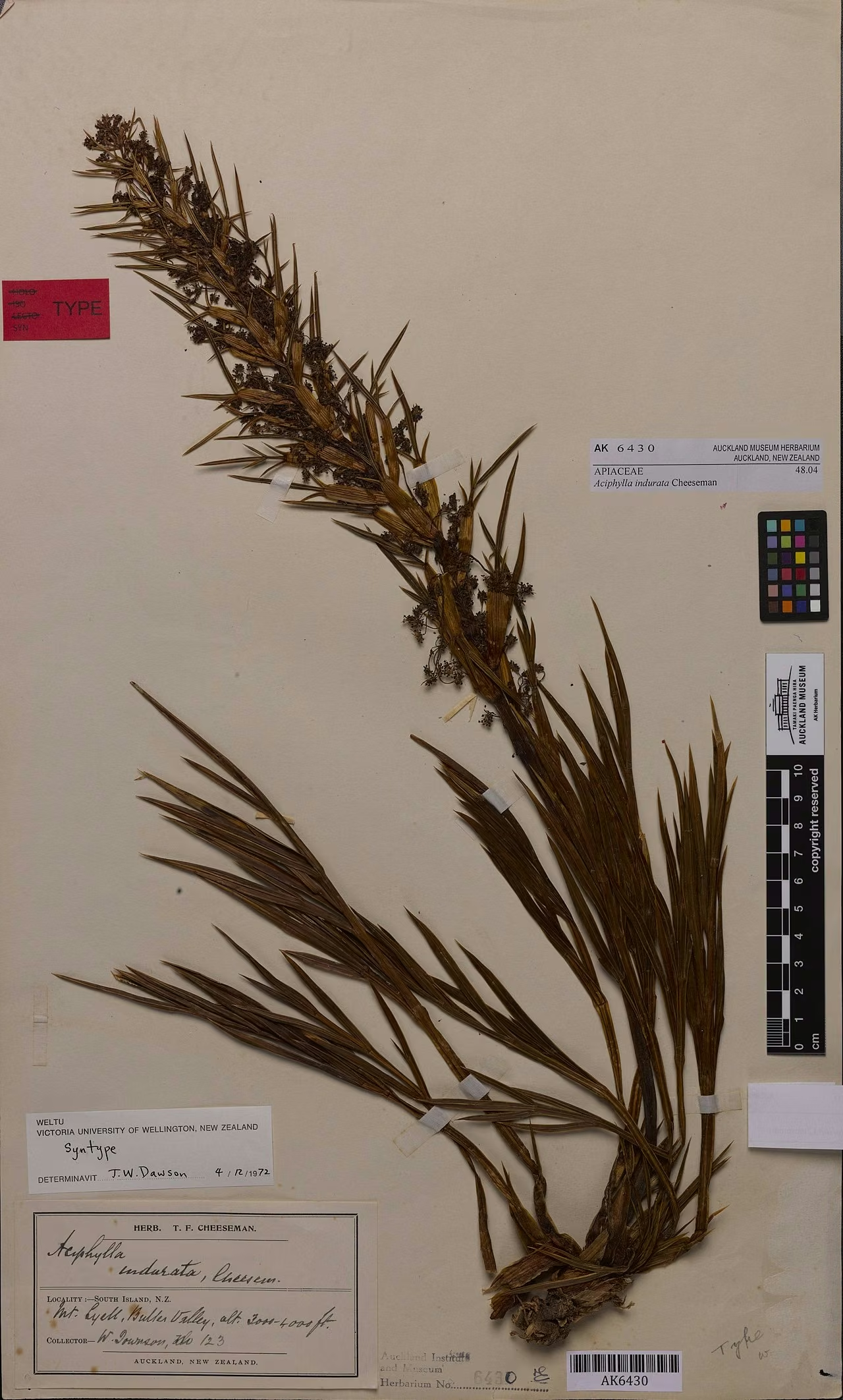
Aciphylla indurata
Aciphylla indurata
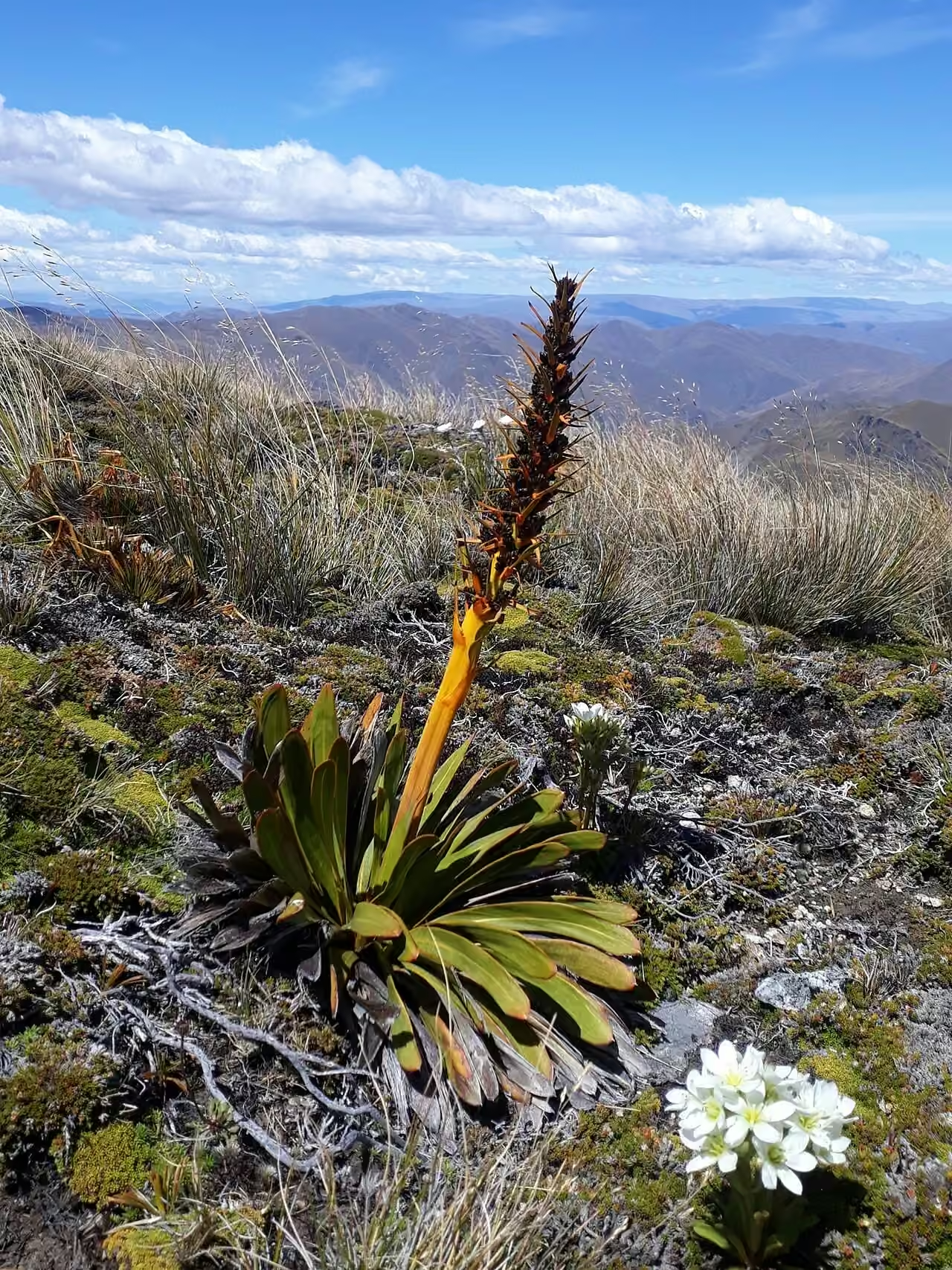
Aciphylla kirkii
Aciphylla kirkii
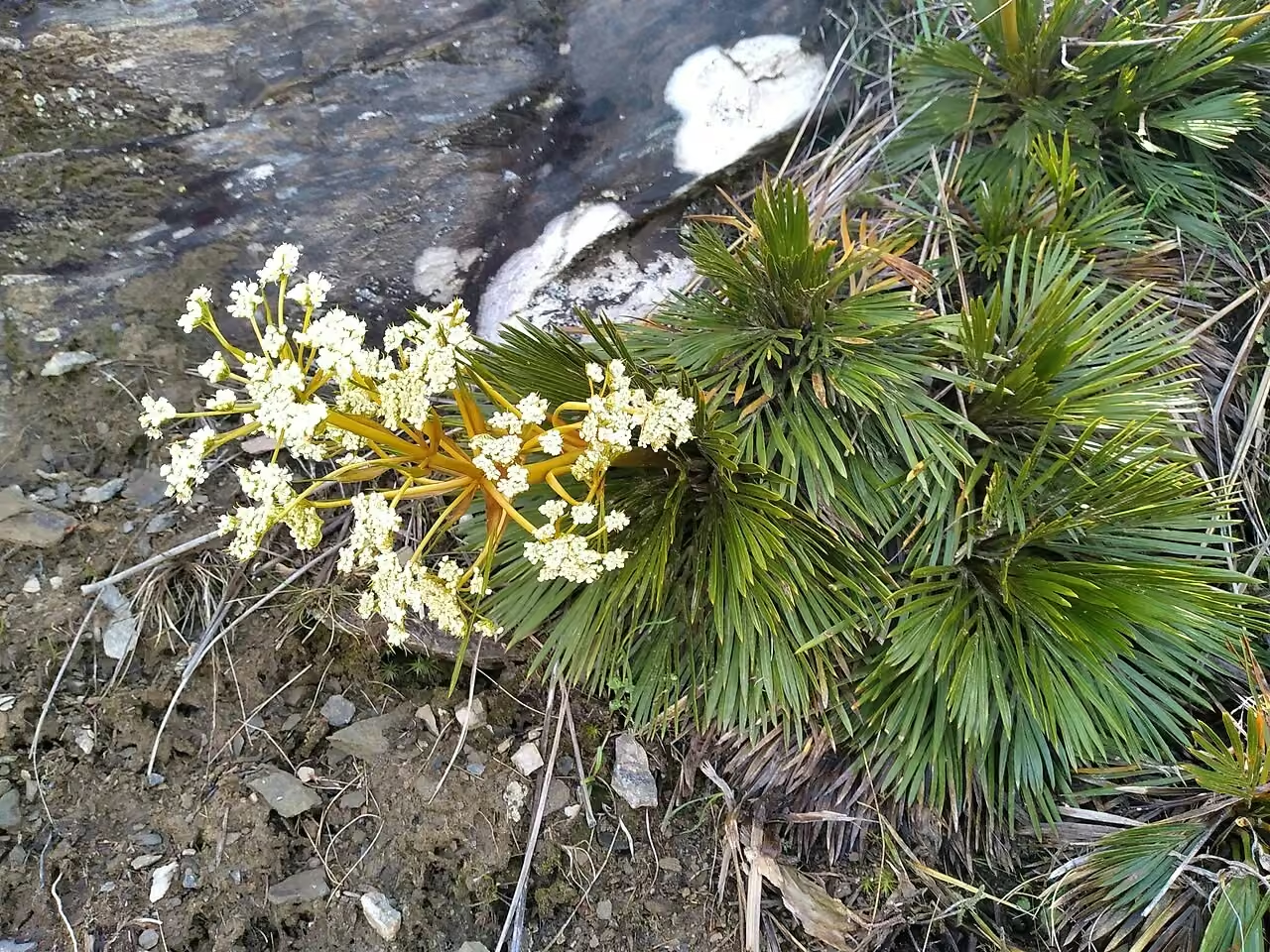
Aciphylla lecomtei
Aciphylla lecomtei
Aciphylla lyallii
Aciphylla lyallii
Aciphylla polita
Aciphylla polita
Aciphylla spedenii
Aciphylla spedenii
Stewart Island Speargrass
Aciphylla traillii
Chatham Island Speargrass
Aciphylla traversii
Plant Conservation
Aciphylla multisecta is ranked At Risk - Declining (2023) with the qualifiers Sparse, Conservation Dependent, Data Poor: Size, Data Poor: Trend and Range Restricted. It was ranked Naturally Uncommon in 2009 and 2012 before being reassessed as Declining in 2017.
NZPCN comments that it is unlikely to be directly threatened, but it is known from very few collections and appears uncommon where found. Its dependence on snowmelt habitats, control of alpine browsers and further survey work are all relevant to its future.
Frequently Asked Questions
What does multisecta mean in Aciphylla multisecta?
Multisecta means many divisions, referring to the leaves, which are three times divided (3-pinnatisect) into fine, thread-like segments with sharp tips.
Where is Aciphylla multisecta found?
It occurs in the South Island from central Canterbury and Westland south to Fiordland, above about 1300 m, on rock ledges and cliff faces, around seepages and below snow melts. Its type locality is Mount Balloon in Fiordland.
Can you grow Aciphylla multisecta?
NZPCN describes it as difficult to propagate and states that it should not be removed from the wild, so it is not a practical garden plant.
What speargrasses is Aciphylla multisecta related to?
NZPCN considers it most closely related to Aciphylla divisa and Aciphylla dissecta, two other speargrasses with finely divided leaves.
Sources and Further Reading
The botanical, growing, and conservation details for Speargrass (Aciphylla multisecta) on this page draw on the New Zealand plant references below. Consult them for full technical records and the latest distribution data.