Speargrass
Aciphylla lyallii
Last updated:
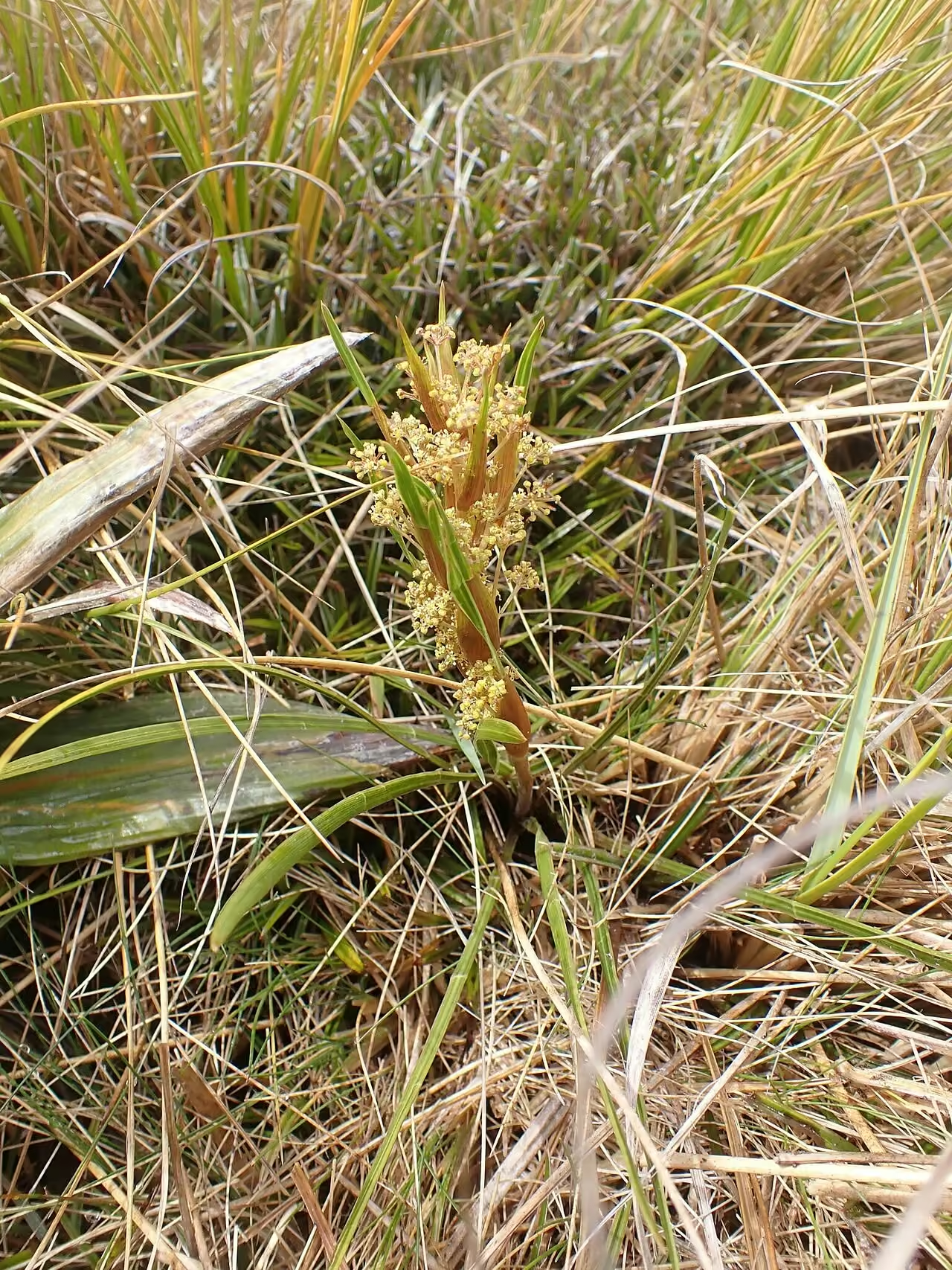
Aciphylla lyallii is a sparse-leaved speargrass of the wetter South Island mountains, most common in Fiordland and absent from Nelson. It forms loose tufts of pinnate leaves up to about 30 cm long, each with two pairs of long, stiff primary pinnae, and its female flowering stems can stand up to 90 cm tall. Unusually for a speargrass, it favours permanently wet ground within low-alpine tussock-herbfield at about 1100 to 1400 m. NZPCN notes it is often overlooked. It is ranked Not Threatened nationally, though it is considered regionally uncommon in Otago. Explore more native flowering plants in our native plant guide.
Plant Description
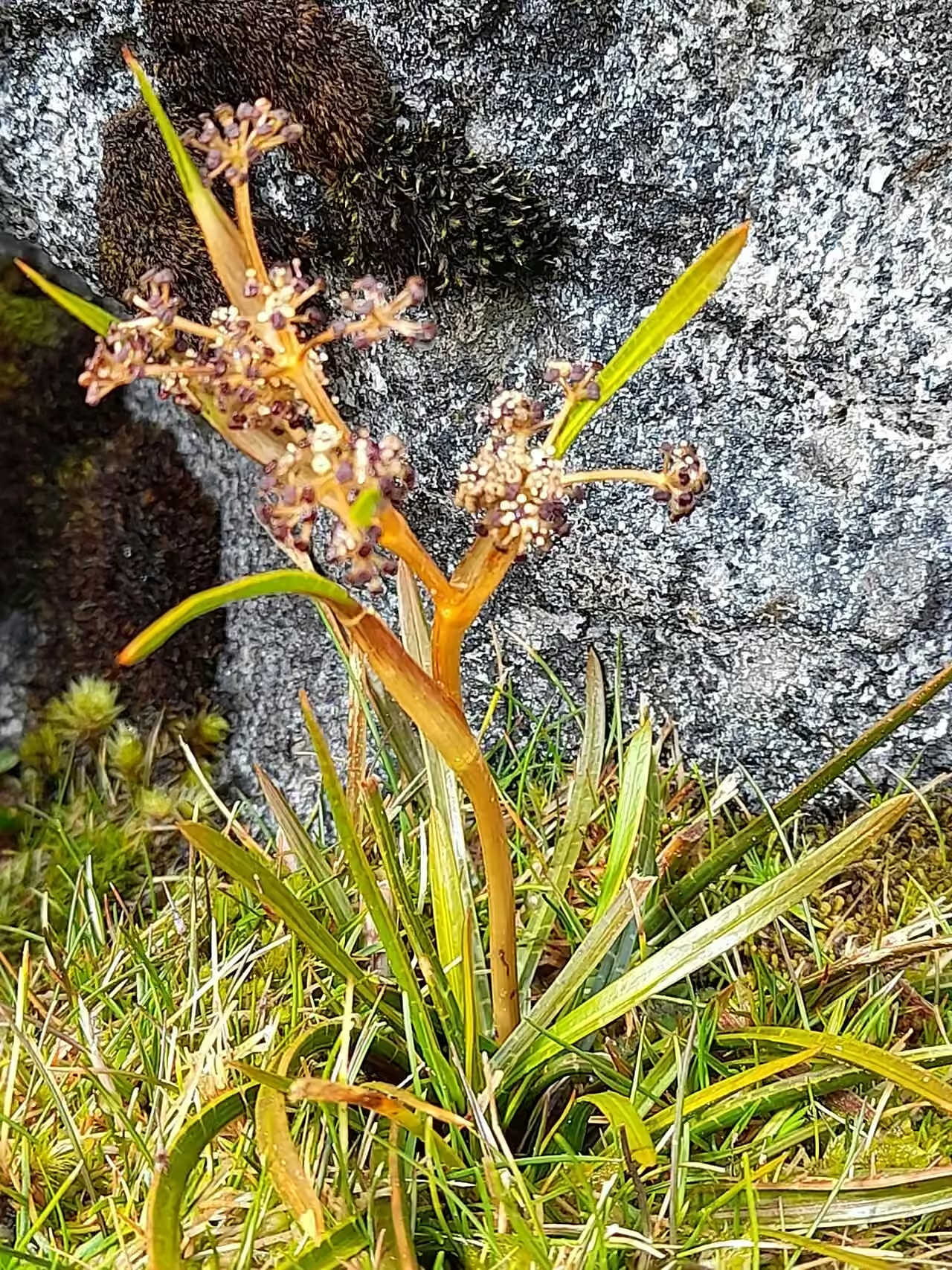
Aciphylla lyallii is a variable, sparse-leaved, tufted herb with a rather stout stock that may be simple or branched. Its pinnate leaves reach about 30 cm long and arise from sheaths about 50 by 10 mm with pale, membranous margins. The stipules taper to pungent tips. There are usually two pairs of primary pinnae, each up to about 100 mm long, with thickened, smooth margins. Young plants may produce simple, undivided leaves.
Male and female flowers grow on separate plants. Male flowering stems are slender to stout and up to about 40 cm tall including the inflorescence, while female stems are grooved and can reach about 90 cm. The small umbellules, up to about 10 mm across, sit on slender unequal rays, and in female plants erect bracts partly hide the umbels. The fruit is about 5 mm long with five-winged mericarps.
NZPCN separates it from other speargrasses of similar size by the large sheaths that almost entirely envelop the seeds, and by its concave petiole with acute margins, compared with the convex petiole of the A. montana group.
Quick Facts
| Scientific Name | Aciphylla lyallii |
|---|---|
| Height | Leaves to 0.3 m; female flower stems to 0.9 m |
| Spread | Sparse tuft, about 0.3-0.4 m |
| Water Needs | High; grows in permanently wet ground |
| Light | Full sun to light shade |
| Frost Tolerance | High; low-alpine species |
| Salt Tolerance | No information available |
| Growth Rate | Slow |
| Lifespan | Long-lived perennial |
Climate Best Suited to
It suits the cool, very wet, cloudy mountain climate of Fiordland and the western South Island. It would struggle in warm or dry climates.
Regional Suitability
| City | Climate Suitability |
|---|---|
| Auckland | Low |
| Wellington | Low |
| Christchurch | Low |
| Dunedin | Low |
Plant Habitat
Aciphylla lyallii is endemic to the South Island, where it occurs throughout the wetter mountain regions. It is common in Fiordland and extends into surrounding areas, but is absent from Nelson.
It grows in the low-alpine zone at about 1100 to 1400 m, favouring permanently wet sites within tussock-herbfield, such as seepages and boggy flushes. Its sparse foliage blends into the tussock, and NZPCN describes it as often overlooked.
Growing Requirements
Soil Requirements
It grows in wet, often peaty alpine soils that remain saturated for much of the year.
- Moisture-retentive, peaty but open mix in cultivation
- Cool roots at all times
- Low fertility
Light Requirements
Tussock-herbfield is open country, though the Fiordland climate is often cloudy and misty.
- Full sun in cool climates
- Light shade where summers are warm
Water Requirements
Unlike many speargrasses that need sharp drainage, this species is adapted to constantly wet ground.
- Never allow it to dry out
- Moving, aerated water is better than stagnant waterlogging
- Cool conditions are as important as moisture
Planting and Establishing
Aciphylla lyallii is rarely cultivated. If plants raised from legitimately collected seed are available, they need a cool, constantly moist position such as the edge of a bog garden or a pot stood in a tray of water in a cool, sunny place.
Plant in spring, keeping the crown just above the wet zone, and avoid disturbing the roots once established.
Ecological Role
Its winged schizocarps are dispersed primarily by wind. The small umbels are typical of insect-visited Apiaceae, though the particular pollinators have not been recorded in the sources consulted.
As a plant of wet flushes in tussock-herbfield, it grows alongside mosses, sedges and other moisture-loving alpine herbs, adding to the diversity of these specialised wetland patches.
Uses & Significance
Garden Uses
It is mainly of interest to specialist growers of alpine and wetland plants.
- Alpine bog gardens in cool, wet districts
- Botanic garden displays of Fiordland flora
- Not suited to dry rock gardens
Ecological Value
It is a characteristic, though easily missed, plant of wet low-alpine ground in Fiordland.
- Endemic to the South Island
- A component of alpine wetland and seepage vegetation
- Regionally uncommon in Otago
Landscaping Uses
In an alpine bog garden, its tall female flowering stems rising from sparse tufts provide vertical accents among low mosses and herbs.
Keep it away from paths, as the stipules and pinnae end in sharp points.
Seasonal Care Calendar
Spring
Growth resumes as snow melts and the wet flushes begin to run.
- Ensure cultivated plants are well watered
- Plant out new stock
Summer
Flowering is from December to January, with female stems rising up to 90 cm.
- Keep constantly moist
- Shade lightly in hot weather
Autumn
Fruit ripens from December to March and is dispersed by wind.
- Collect fruit from female plants as it browns
- Sow seed fresh
Winter
Plants are dormant beneath snow and cold in the wild.
- Keep roots moist but not frozen solid in pots
- No feeding required
When to Prune and How Much
No pruning is needed. Cut spent flower stems at the base after seed is shed or collected.
Old dead leaves may be removed carefully to prevent them rotting against the crown.
How to Grow Speargrass
Published propagation guidance specific to Aciphylla lyallii was not found in NZPCN or the Flora of New Zealand. Like other speargrasses it is best raised from seed, with the difference that its seedlings will need to be kept much wetter than those of rock-dwelling species. Seed is only set on female plants that have been pollinated from a male. Collection of seed on public conservation land, which covers most of its Fiordland range, requires authorisation from the Department of Conservation, and wild plants should not be dug up.
From Seed
Fruit ripens between December and March. The large sheathing bracts that wrap the female seed heads can make it hard to judge ripeness, so check that the mericarps are brown and come away easily. Sowing fresh and giving a cold winter is the standard approach for alpine Apiaceae.
- Collect ripe fruit from a female plant in late summer
- Sow fresh in a deep pot of moisture-retentive, gritty peat-based mix
- Stand the pot in a shallow saucer of water outdoors through winter
- Keep the mix consistently wet as seedlings emerge in spring
- Pot seedlings singly into deep pots while young
By Division
Plants with a branched stock may carry more than one crown, which can be separated with care on cultivated specimens.
- Lift the plant in early spring
- Separate a crown with its own roots using a sharp knife
- Replant at once into wet mix and keep cool and shaded until established
Pests & Diseases
No specific pests are recorded for Aciphylla lyallii. In cultivation, the challenge is balancing constant moisture with cool temperatures, since warm wet conditions encourage rot.
In the wild, deer in Fiordland and other introduced browsers eat speargrass foliage and flowering stems.
Cultural Significance
No traditional Māori name or use specific to Aciphylla lyallii is recorded in the sources consulted.
Joseph Dalton Hooker described the species in 1864 and named it after David Lyall (1817-1895), a Scottish naval surgeon and naturalist who collected plants in Fiordland and elsewhere in New Zealand while serving on the survey ship HMS Acheron.
Bonus Tip
When searching for Aciphylla lyallii in Fiordland, skip the dry ridges and look in wet seepages and boggy flushes within the tussock. Its sparse leaves are easy to miss, so the tall grooved female flower stems in December and January are the best clue.
Related Plants
Explore other native plants that share similar characteristics or habitats with Speargrass (Aciphylla lyallii), offering further insights into New Zealand's diverse flora. These related species provide context and opportunities for complementary planting in your garden.
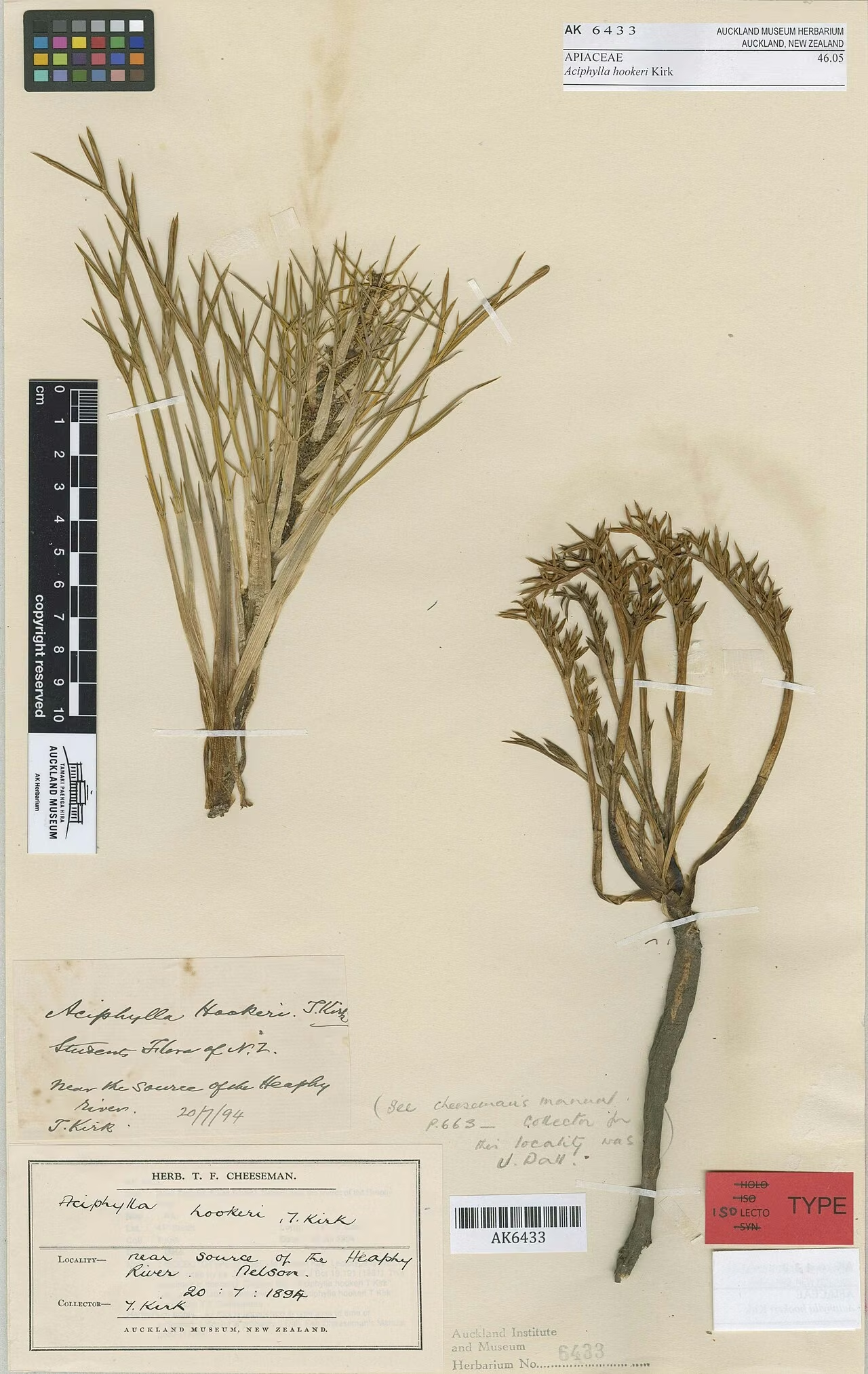
Aciphylla hookeri
Aciphylla hookeri
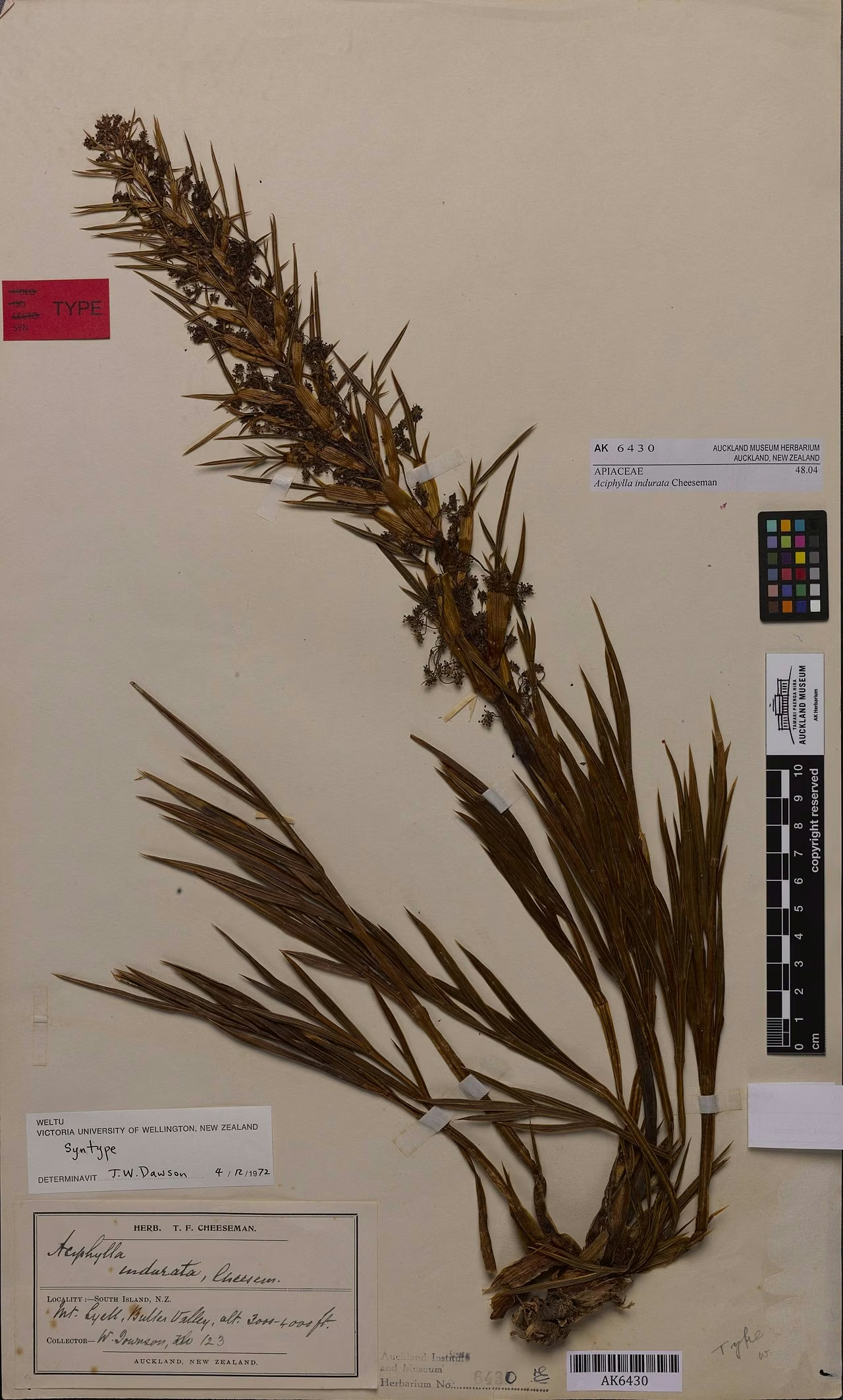
Aciphylla indurata
Aciphylla indurata
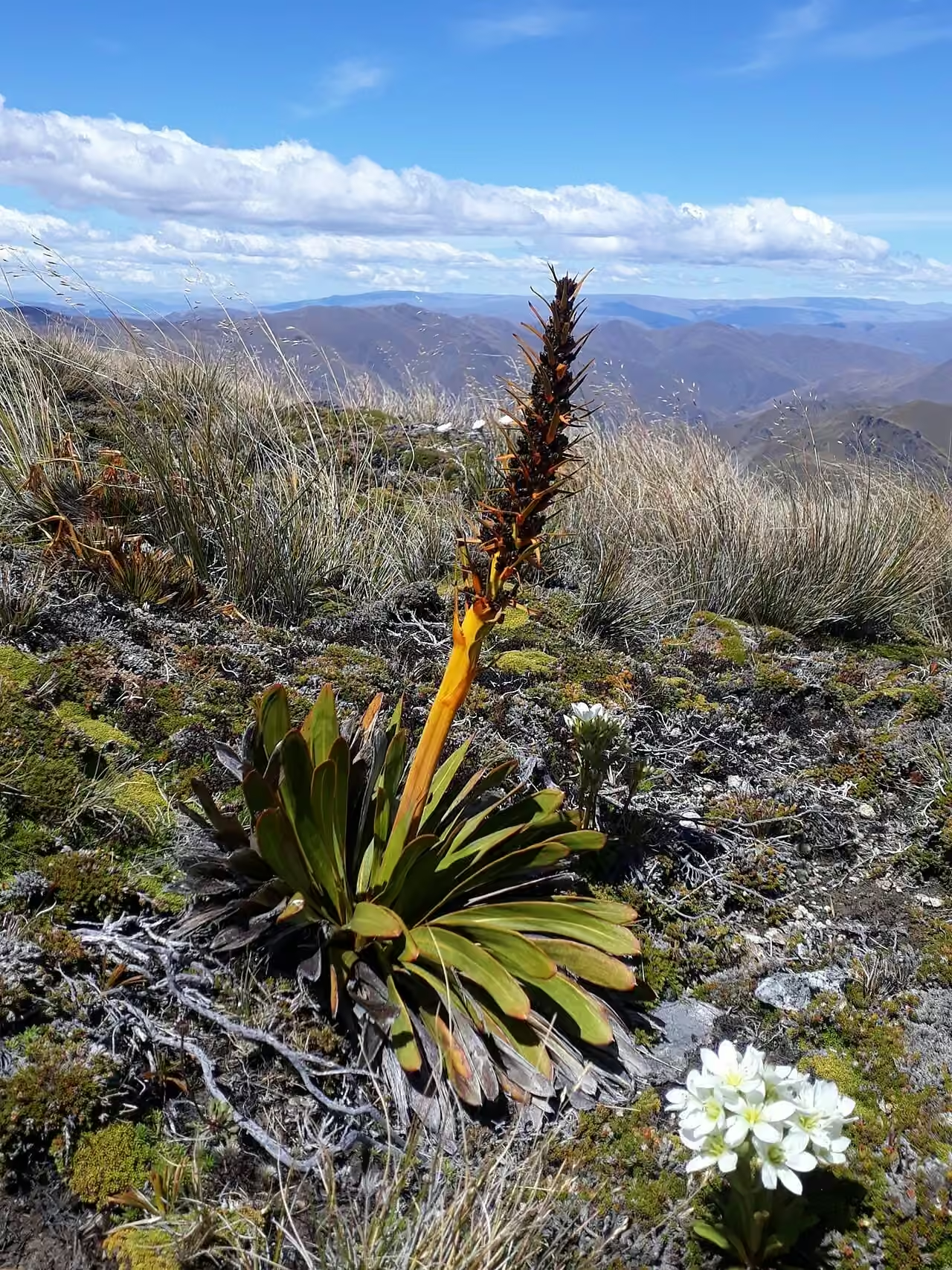
Aciphylla kirkii
Aciphylla kirkii
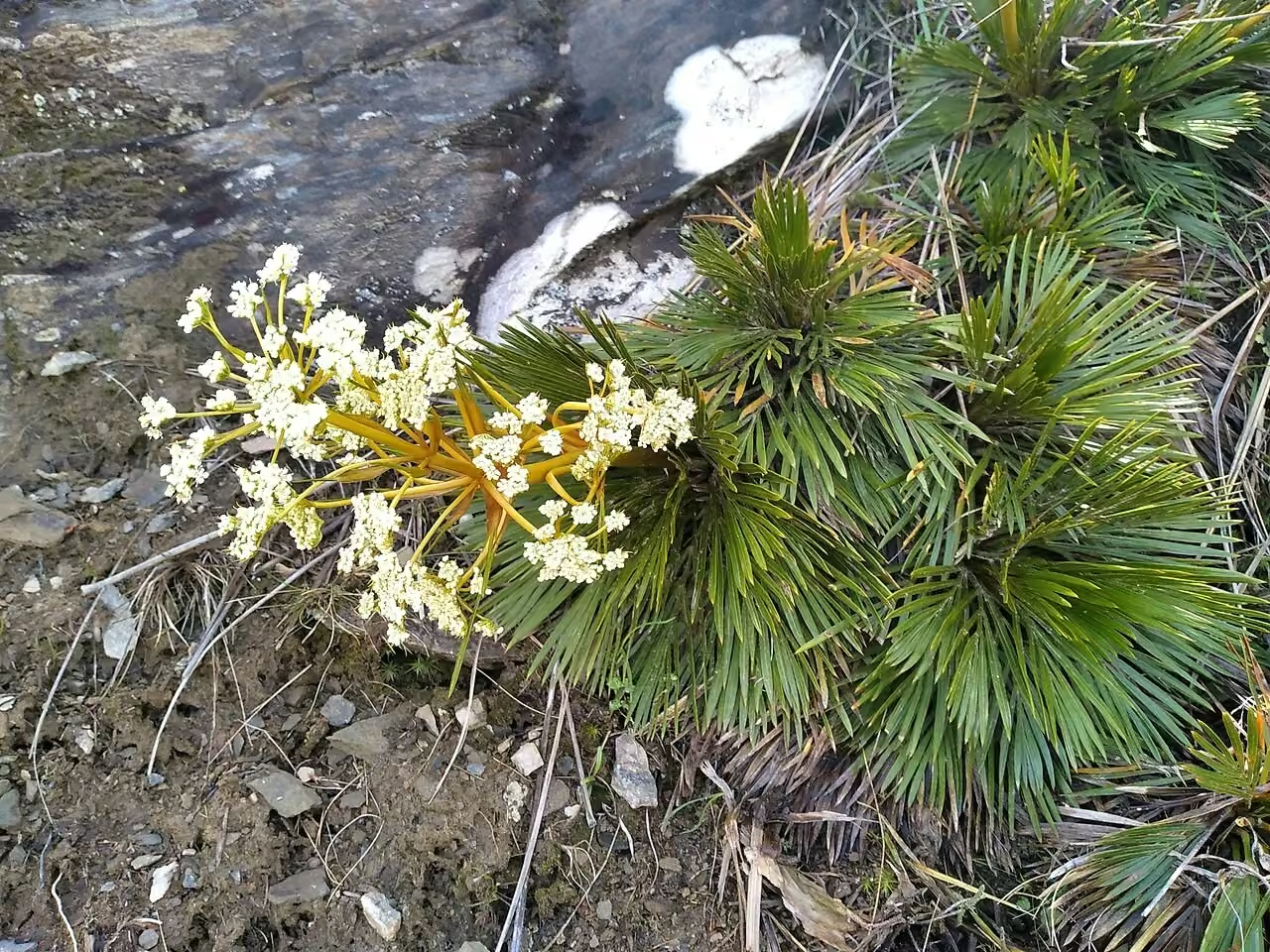
Aciphylla lecomtei
Aciphylla lecomtei
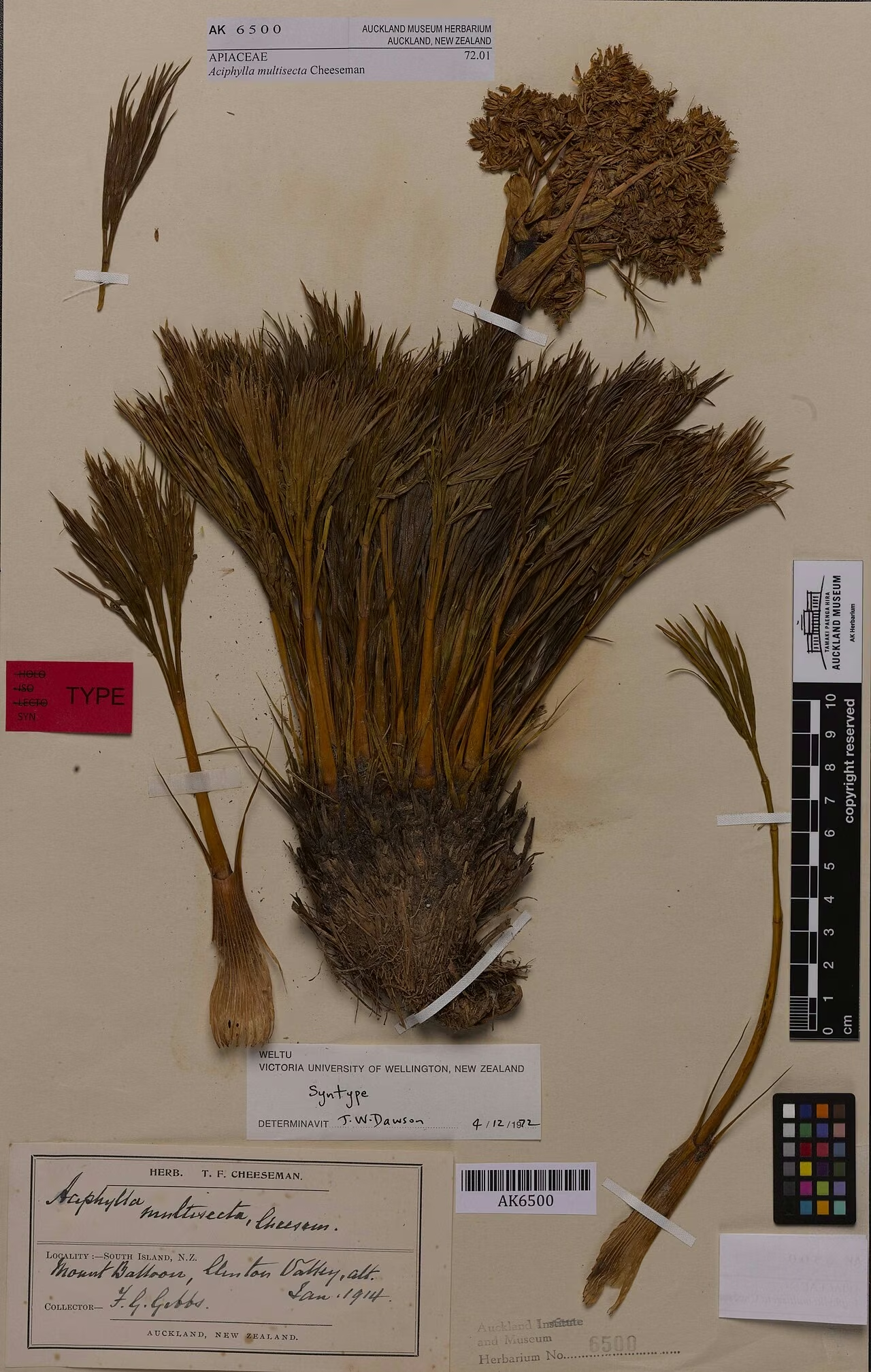
Aciphylla multisecta
Aciphylla multisecta
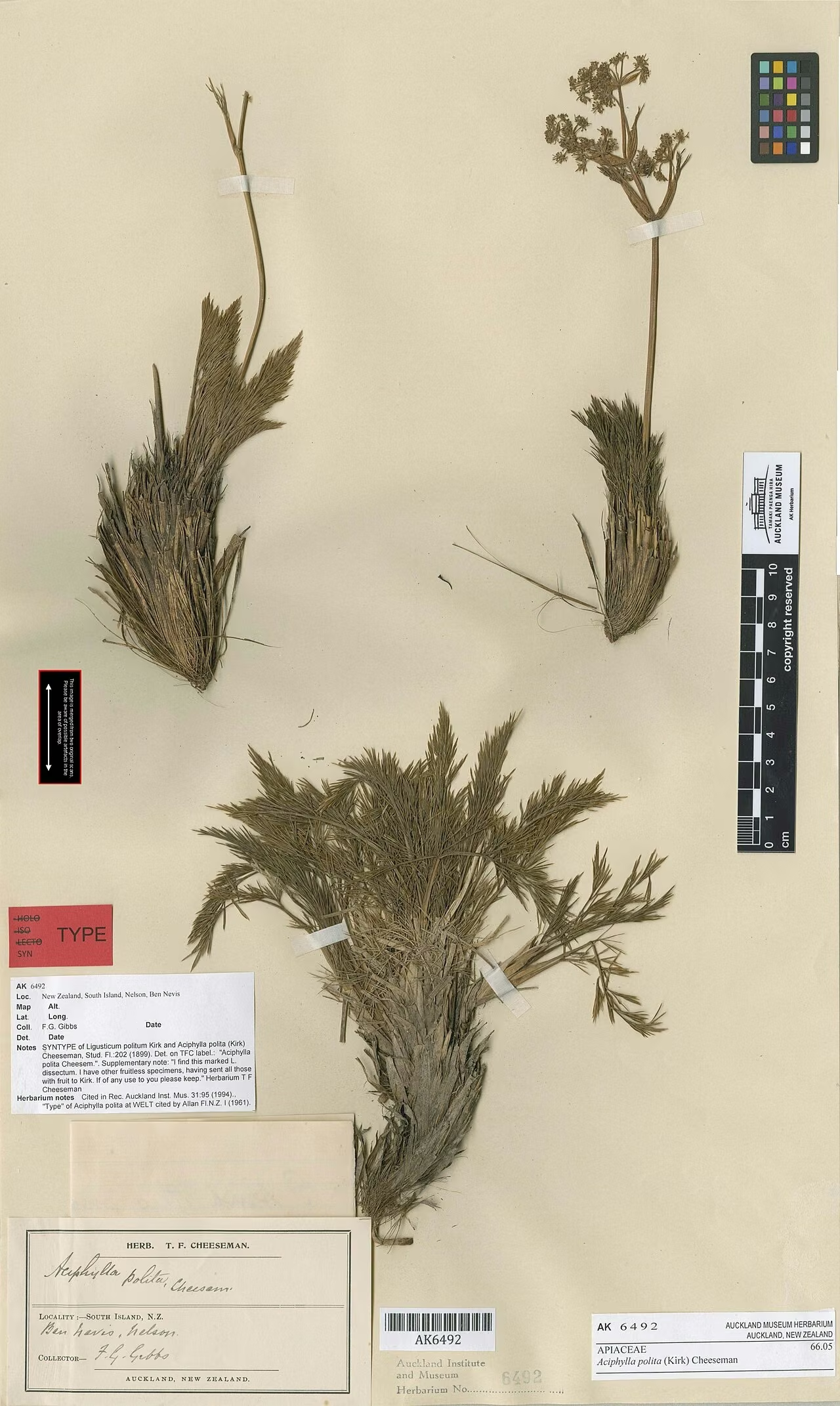
Aciphylla polita
Aciphylla polita
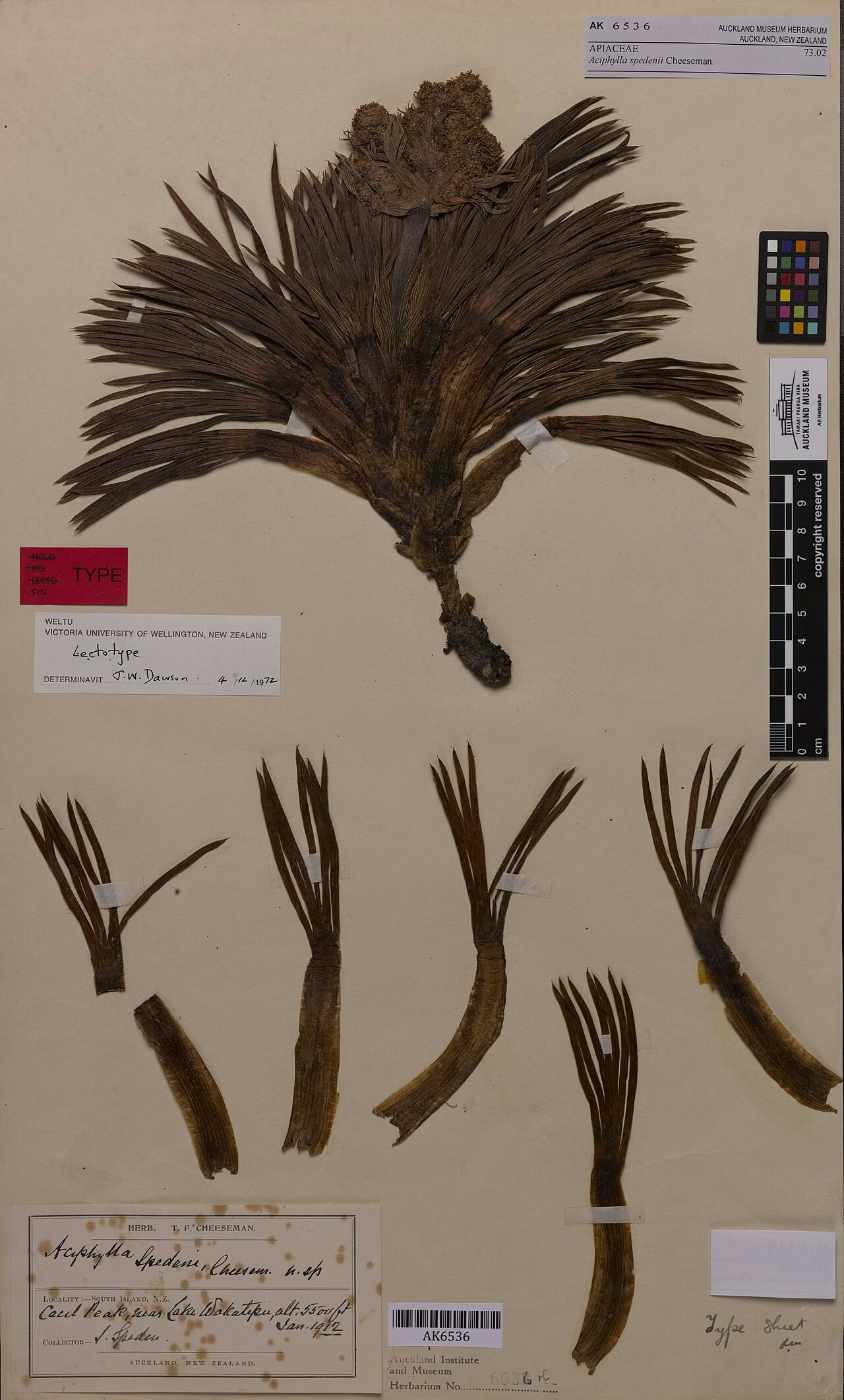
Aciphylla spedenii
Aciphylla spedenii
Stewart Island Speargrass
Aciphylla traillii
Plant Conservation
Aciphylla lyallii is ranked Not Threatened (2023) with the qualifiers Data Poor: Size and Data Poor: Trend, and has been Not Threatened in every national assessment since 2004. The 2025 Otago regional list ranks it as Regionally Naturally Uncommon.
Much of its stronghold in Fiordland lies within Fiordland National Park. Deer control and avoiding trampling of fragile alpine wetlands help protect its habitat.
Frequently Asked Questions
Where does Aciphylla lyallii grow?
It grows throughout the wetter mountain regions of the South Island, especially Fiordland, but not in Nelson, in permanently wet patches of low-alpine tussock-herbfield at roughly 1100 to 1400 m.
How can you recognise Aciphylla lyallii?
NZPCN highlights its large sheaths and bracts that almost entirely envelop the developing seed heads, a concave rather than convex petiole with acute margins, and two pairs of long primary pinnae up to 100 mm.
Is Aciphylla lyallii the same as Aciphylla montana?
No. A. montana was once treated as a synonym of A. lyallii, but John Dawson's 1979 research showed they are distinct species. Aciphylla cuthbertiana, however, is now regarded as the same as A. lyallii.
Sources and Further Reading
The botanical, growing, and conservation details for Speargrass (Aciphylla lyallii) on this page draw on the New Zealand plant references below. Consult them for full technical records and the latest distribution data.