Speargrass
Aciphylla lecomtei
Last updated:
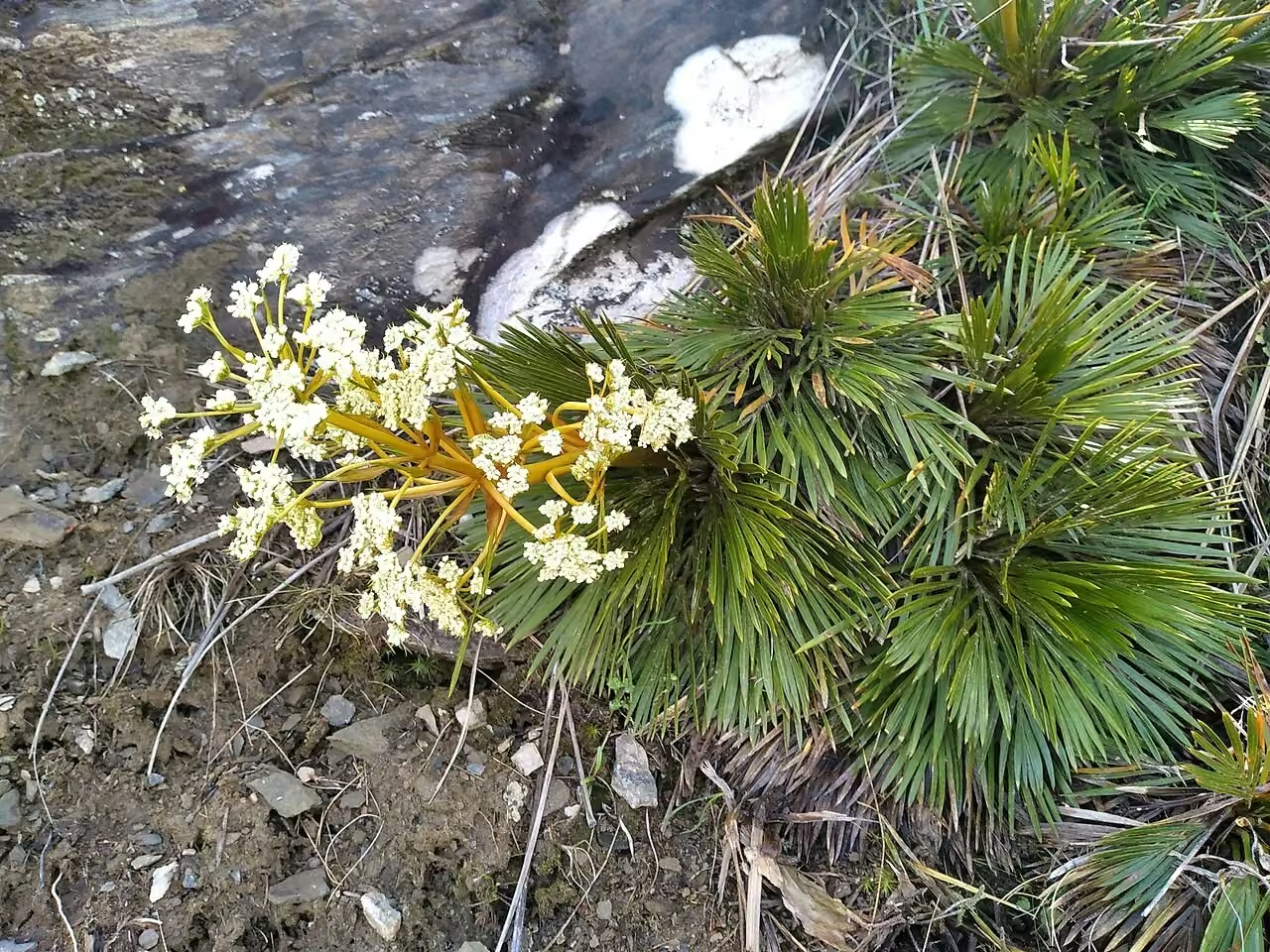
Aciphylla lecomtei is a speargrass found only on The Remarkables, the Hector Mountains and the Garvie Mountains in the southern South Island. It forms clumps of leathery, yellowish-green rosettes about 25 to 35 cm across, sometimes 25 or more together, with once-pinnate leaves bearing usually four pairs of stiff leaflets. It grows at 1400 to 1900 m in steep rock crevices, ledges and hollows on outcrops and cliff faces, and sends up pale yellow to brown flowering stems up to about 52 cm long. First described in 1979, it is ranked At Risk - Declining. Explore more native flowering plants in our native plant guide.
Plant Description
Aciphylla lecomtei grows as leaf rosettes about 25 cm in diameter according to the Flora of New Zealand (NZPCN gives up to 350 mm), often in groups of 25 or more. The leaves are leathery (coriaceous), yellowish green and up to 25 cm long. They are once-pinnate with usually four pairs of leaflets held more or less in one plane, giving each leaf a flat, fan-like look.
Male and female flowers are on separate plants. Female inflorescences reach 520 mm or more and male inflorescences about 420 mm, both with pale yellow to brown stems. The mericarps are about 4.1 by 2 mm, dull and pale brown.
It is distinguished from related speargrasses such as Aciphylla similis and A. montana var. montana by its leaflet number and by its preference for cliffs and rock outcrops rather than open grassland or herbfield.
Quick Facts
| Scientific Name | Aciphylla lecomtei |
|---|---|
| Height | Flowering stems up to about 0.5 m |
| Spread | Rosettes 0.25-0.35 m across, in clumps |
| Water Needs | Moderate; free-draining |
| Light | Full sun |
| Frost Tolerance | Very high; alpine species |
| Salt Tolerance | No information available |
| Growth Rate | Slow |
| Lifespan | Long-lived perennial |
Climate Best Suited to
In the wild it endures a cold, dry, continental alpine climate with heavy frosts and snow. It has also proved adaptable, surviving for a decade in the warm, humid Waikato when given sun and sharp drainage.
Regional Suitability
| City | Climate Suitability |
|---|---|
| Auckland | Low |
| Wellington | Low |
| Christchurch | Medium |
| Dunedin | Medium |
Plant Habitat
Aciphylla lecomtei is endemic to the South Island, where it is known only from The Remarkables, the Hector Mountains and the Garvie Mountains, ranges lying between Queenstown, Lake Wakatipu and northern Southland. The holotype was collected in the Hector Mountains on 5 March 1978.
It grows in the alpine zone at 1400 to 1900 m, usually on rock: in steep crevices, on ledges and in hollows of rock outcrops and cliff faces. These positions put it beyond the reach of most browsing animals.
Growing Requirements
Soil Requirements
It roots into rock crevices and small pockets of mineral soil on schist outcrops.
- Sharply draining, gritty mix
- Deep root run between rocks or in a tall pot
- Low fertility
Light Requirements
Its cliff and outcrop sites are open and exposed to full sun.
- Full sun
- Sunny position was key to its success in Hamilton
Water Requirements
Water drains rapidly from its rocky habitat, so it is used to brief wetting followed by quick drying.
- Water regularly during growth but never leave it waterlogged
- Excellent drainage matters more than frequent watering
Planting and Establishing
NZPCN's record of plants thriving for ten years in Hamilton shows that Aciphylla lecomtei can be grown well away from the mountains, provided it has a sunny, free-draining site. A raised rock garden, crevice bed or large pot of gritty mix is ideal.
Plant nursery-raised stock in spring, setting it between rocks so the crown is dry and the roots can run deep. Do not take plants from the wild: it is a Declining species.
Ecological Role
Its winged mericarps are dispersed by wind, which suits a plant spread across cliff ledges. Pollinating insects for this species have not been documented in the sources consulted.
NZPCN notes that accessible plants may be browsed by animals, suggesting that its current concentration on ledges and cliffs reflects pressure from introduced browsers as well as its natural preference for rock.
Uses & Significance
Garden Uses
It is one of the speargrasses with a proven record in cultivation, making it suitable for keen alpine and rock gardeners.
- Rock gardens and crevice beds
- Large containers of gritty mix
- Conservation collections of threatened Otago plants
Ecological Value
It is a narrow endemic of three southern ranges and part of the specialised cliff flora of the Otago mountains.
- Found only on The Remarkables, Hector and Garvie Mountains
- Ranked At Risk - Declining
- Indicates the impact of browsing on alpine plants
Landscaping Uses
Set it into a vertical crevice or on a ledge of a rock garden to echo its cliff habitat, where the flat yellowish-green rosettes can be seen from the side. Groups of rosettes build into a striking clump over time.
Keep it away from paths and children's play areas because of its sharp leaflets.
Seasonal Care Calendar
Spring
New rosette growth begins as the snow clears from the ledges.
- Plant or repot in spring
- Begin regular watering
Summer
Flowering takes place from December to February, with pale yellow to brown inflorescences up to 52 cm long.
- Water during dry spells
- Identify female plants for seed
Autumn
Fruit ripens from January to April.
- Collect ripe mericarps from female plants
- Sow fresh seed
Winter
Plants lie dormant on frozen cliff faces in the wild.
- Keep crowns dry in wet winters
- No fertiliser required
When to Prune and How Much
Pruning is unnecessary. Remove old flowering stems at the base after the seed has dispersed or been collected.
Pull away dead leaves with gloved hands so that moisture does not collect around the rosettes.
How to Grow Speargrass
Aciphylla lecomtei has been successfully cultivated, first by Jim LeComte, after whom it is named, and later in Hamilton where it grew for ten years in a sunny, free-draining soil. NZPCN does not, however, set out a specific propagation method, so the guidance below follows general practice for speargrasses. Because the sexes are on separate plants, seed requires a female plant growing with a male. Its habit of forming groups of many rosettes means that division of cultivated clumps is a realistic second option. Wild plants must not be removed, as the species is ranked At Risk - Declining.
From Seed
Fruit ripens from January to April and the dull, pale brown mericarps are about 4 mm long. Fresh seed sown outdoors and exposed to winter cold is the usual approach for alpine speargrasses.
- Collect brown fruit from a pollinated female plant in late summer or autumn
- Sow fresh in a deep pot of gritty seed mix and top with fine grit
- Leave outside over winter in a cold, sunny spot and keep lightly moist
- Prick out seedlings into deep individual pots in spring
- Grow on in full sun with excellent drainage
By Division
Mature cultivated plants form clusters of rosettes, and well-rooted rosettes can be separated from the clump.
- Lift or expose the clump in early spring
- Cut away a rosette with a good piece of root attached
- Pot into gritty mix and keep in light shade until established, then move to full sun
Pests & Diseases
NZPCN records that accessible plants may be browsed by animals; in its mountain range these include introduced deer, goats, chamois and hares.
In gardens, the main risk is rot where drainage is poor. No particular insect pests are recorded for this species.
Cultural Significance
No traditional Māori name or use specific to Aciphylla lecomtei is recorded in the sources consulted.
It was described by J.W. Dawson in the New Zealand Journal of Botany in 1979, from a holotype collected in the Hector Mountains, and named for James Ronald LeComte (1927-1987), a botanist who devoted much of his work to Aciphylla.
Bonus Tip
When growing this species, imitate a cliff ledge: plant it on the side of a raised bed or between upright stones so the rosettes tilt and shed water. That arrangement, combined with full sun, is what allowed it to persist for a decade in Hamilton, far from its alpine home.
Related Plants
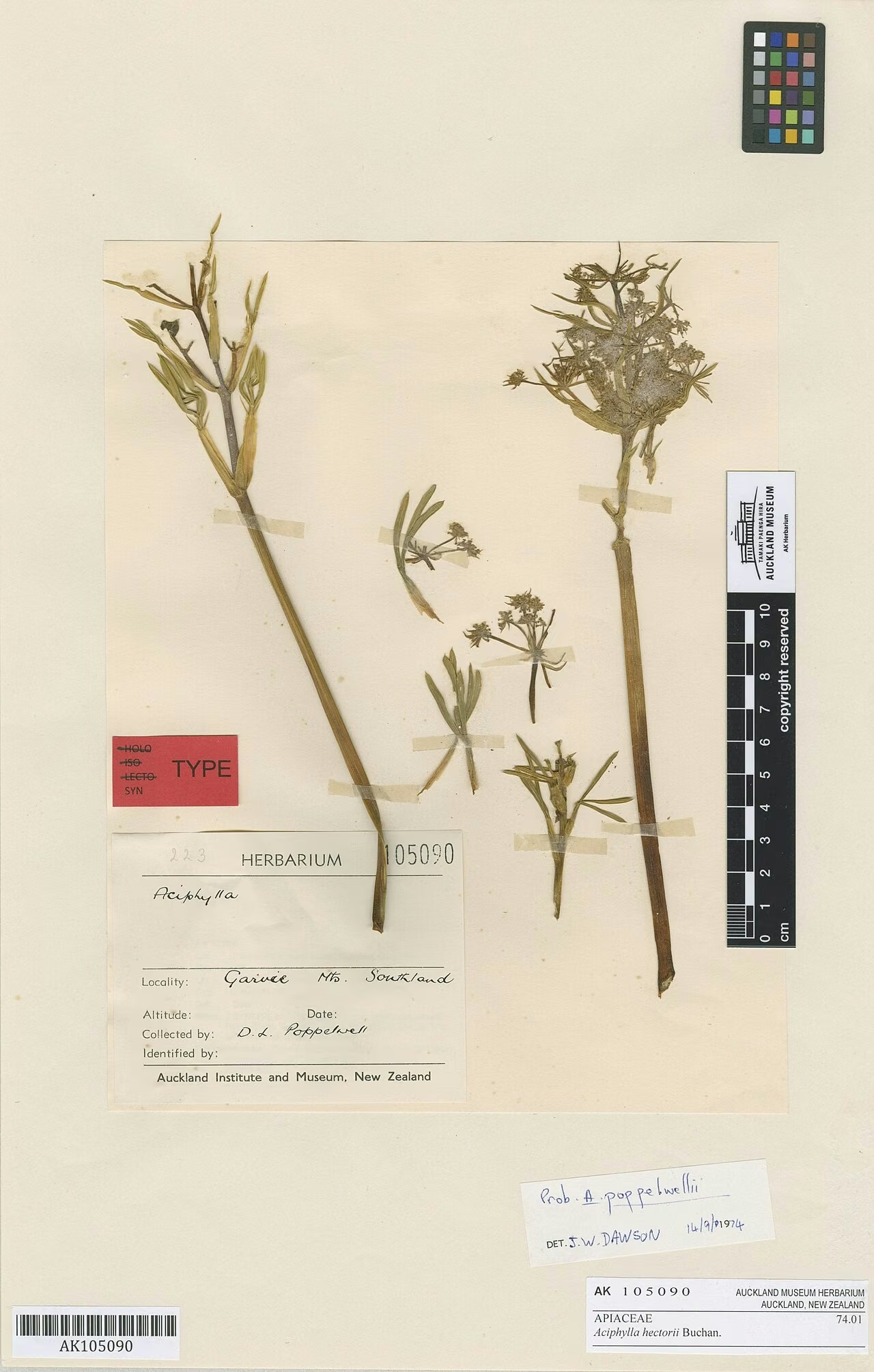
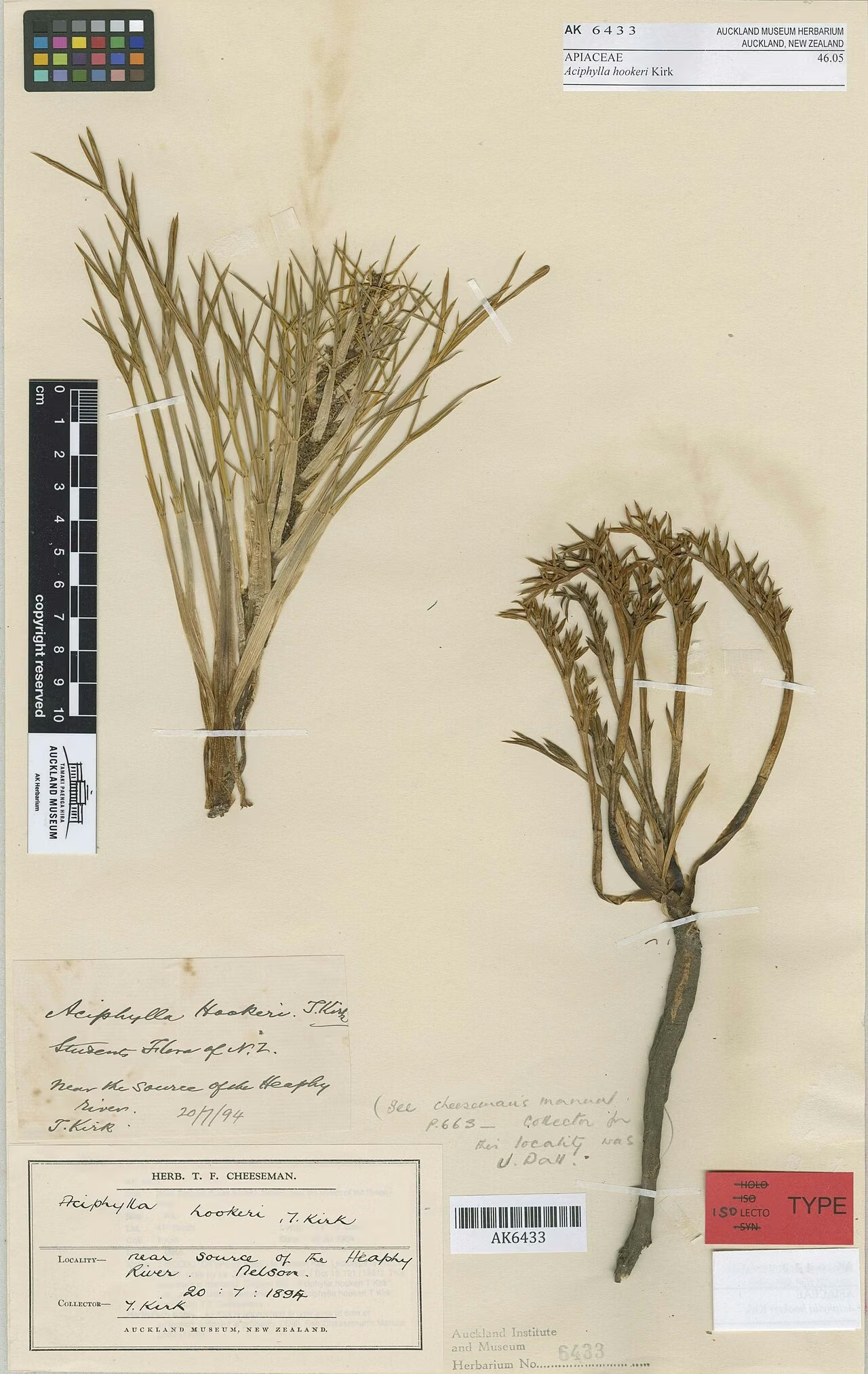
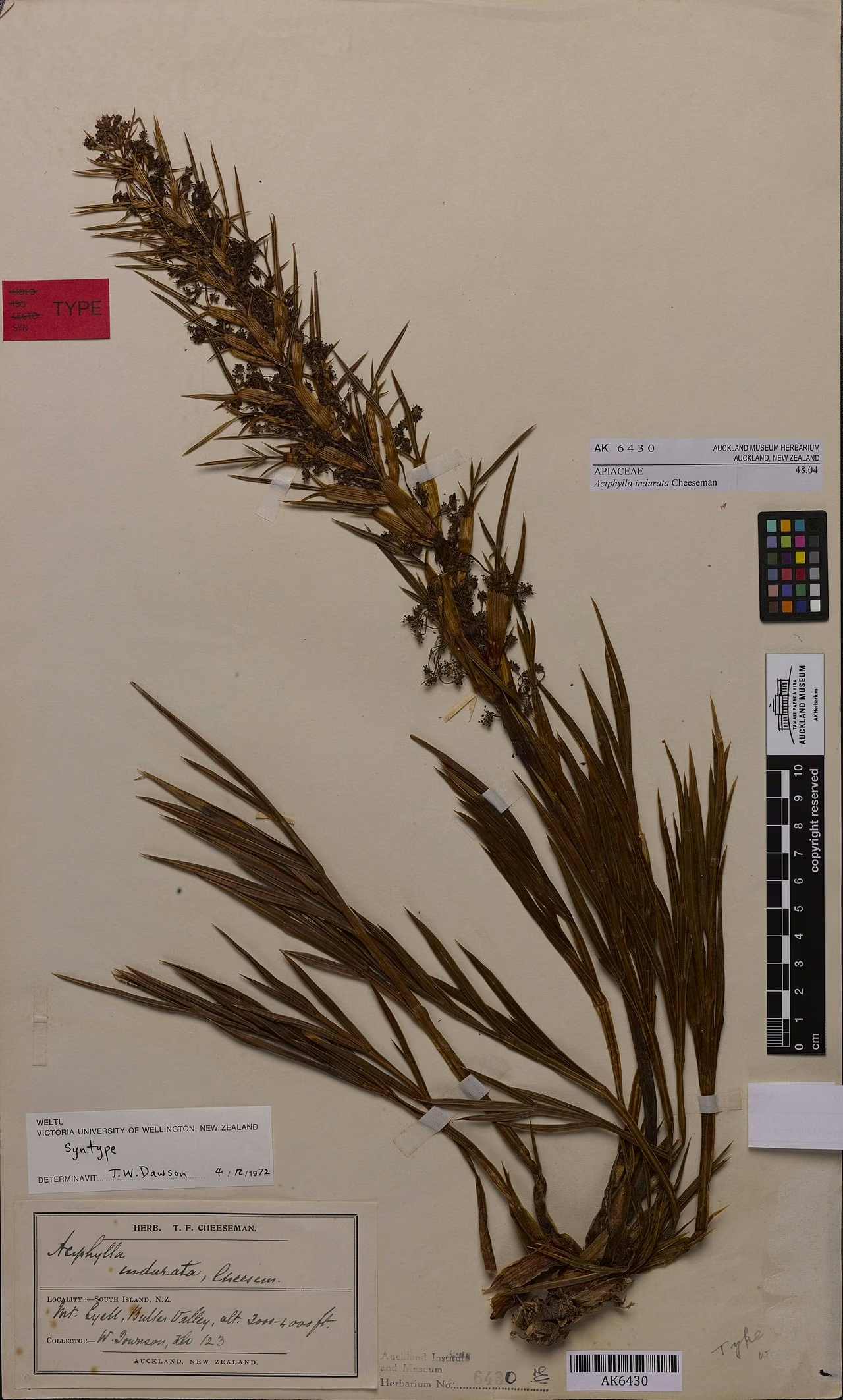
Explore other native plants that share similar characteristics or habitats with Speargrass (Aciphylla lecomtei), offering further insights into New Zealand's diverse flora. These related species provide context and opportunities for complementary planting in your garden.
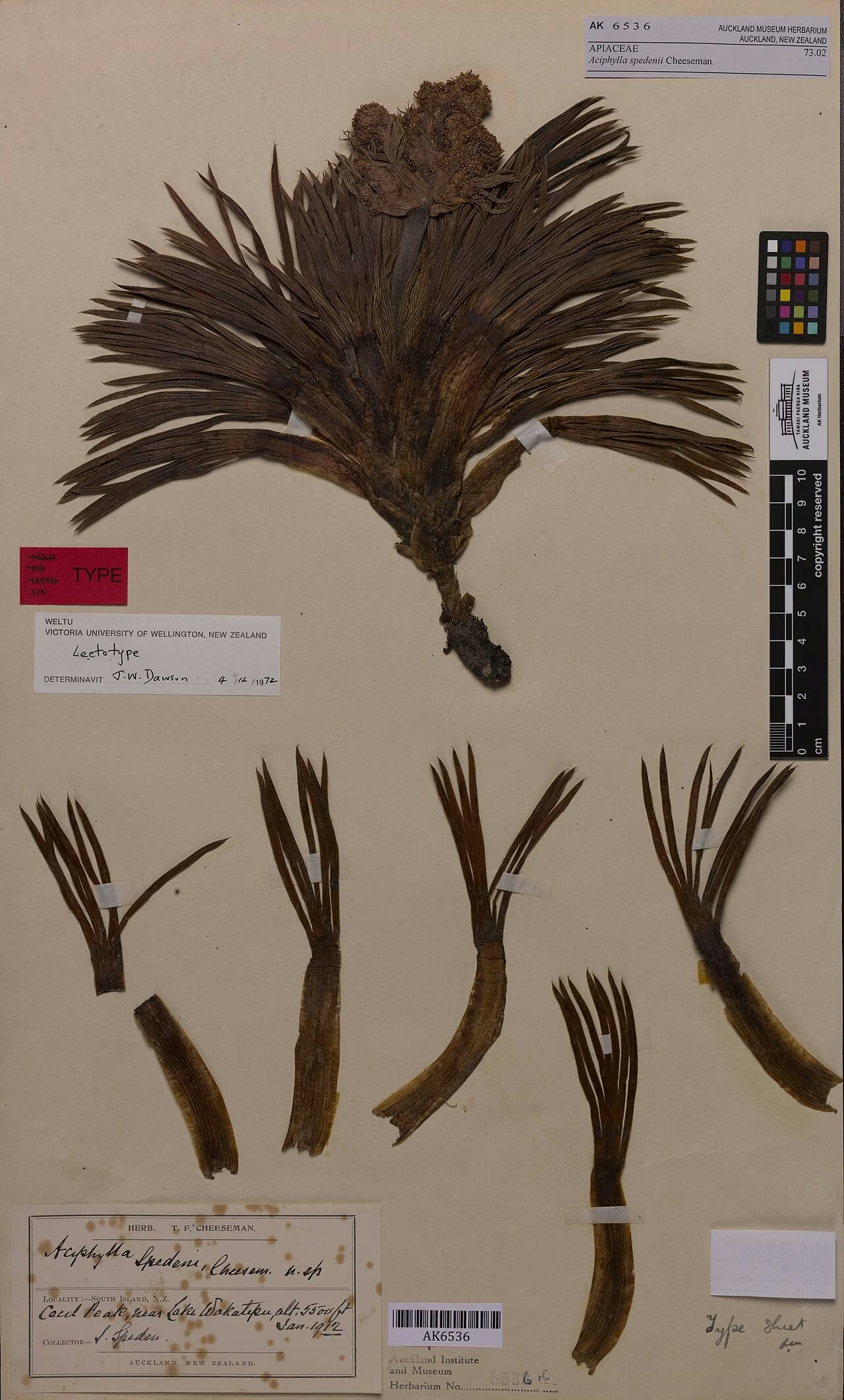
Plant Conservation
Aciphylla lecomtei is ranked At Risk - Declining (2023) with the qualifiers Data Poor: Size, Data Poor: Trend and Range Restricted. It was listed as Naturally Uncommon in 2009 and 2012 before being reassessed as Declining in 2017, and the 2025 Otago regional assessment also ranks it as Regionally Declining.
Browsing of accessible plants is the recorded threat. Control of deer, goats and chamois on The Remarkables, Hector and Garvie Mountains, together with cultivation of plants of known origin, would help secure it.
Frequently Asked Questions
Where does Aciphylla lecomtei grow?
It is restricted to The Remarkables, the Hector Mountains and the Garvie Mountains, where it grows at 1400 to 1900 m on rock in steep crevices, ledges and hollows of outcrops and cliffs.
Why is Aciphylla lecomtei ranked At Risk - Declining?
It has a small, range-restricted distribution and was moved from Naturally Uncommon to Declining in 2017. NZPCN notes that plants within reach may be browsed by animals, which confines it largely to inaccessible rock faces.
Can Aciphylla lecomtei be grown in a garden?
Yes, with care. NZPCN records that it has been grown successfully for ten years in Hamilton in a sunny, free-draining soil, showing it can cope with a much warmer climate than its alpine home.
Who is Aciphylla lecomtei named after?
It honours James Ronald (Jim) LeComte (1927-1987), a New Zealand botanist who specialised in Aciphylla and grew this species. John Dawson described it in 1979.
Sources and Further Reading
The botanical, growing, and conservation details for Speargrass (Aciphylla lecomtei) on this page draw on the New Zealand plant references below. Consult them for full technical records and the latest distribution data.