Speargrass
Aciphylla kirkii
Last updated:
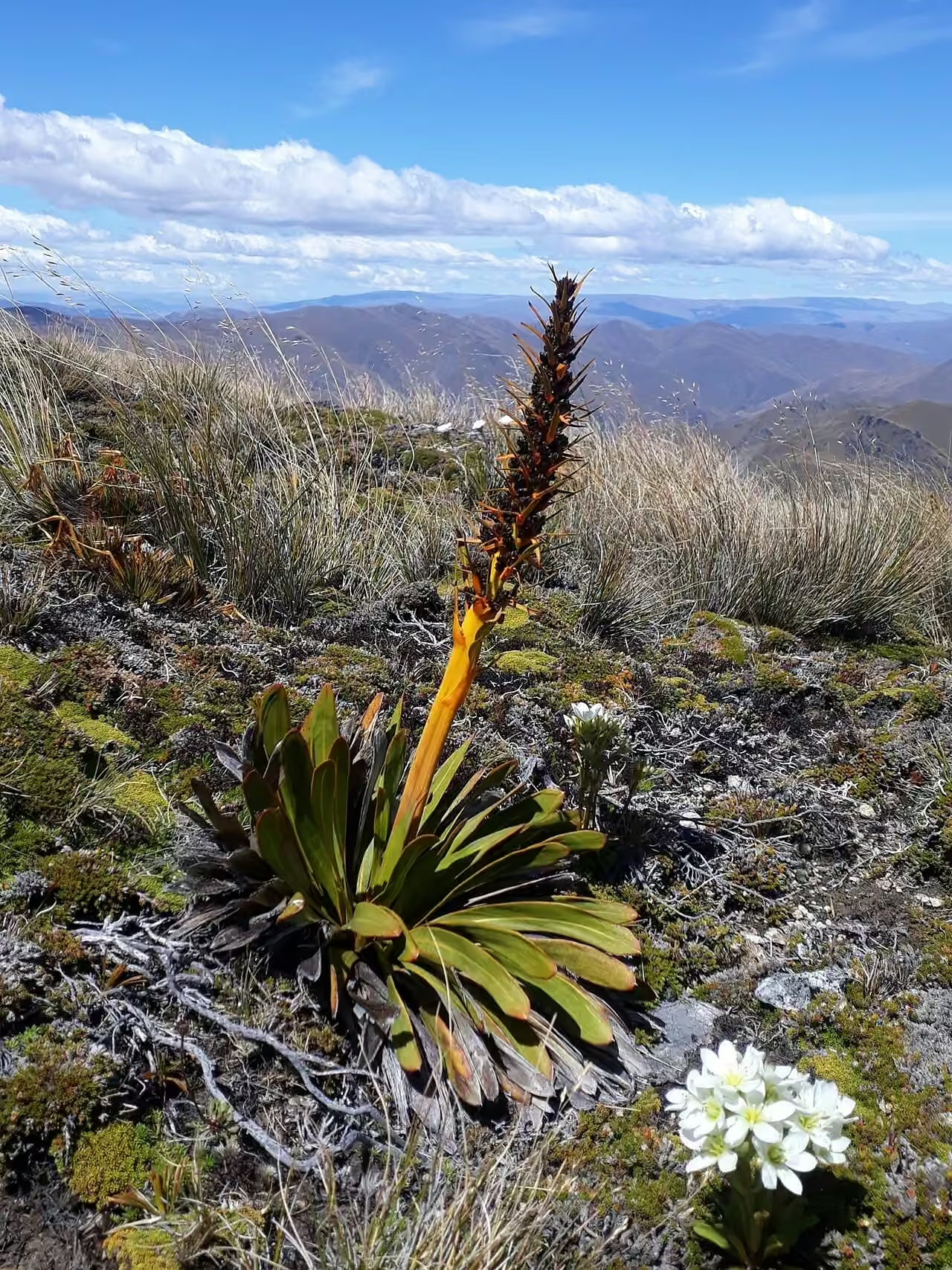
Aciphylla kirkii is a small, rigid speargrass endemic to the mountains of central and western Otago, east of the Southern Alps. It forms stiff tufts up to about 30 cm tall, with sharp-pointed leaves up to 20 cm long in rich green to yellow-green. In summer it sends up short spikes of dark or cream flowers guarded by bright orange, spiky bracts, which make it one of the more colourful small speargrasses. It grows from about 1300 m upward in snow tussock grassland, herbfield, fellfield and cushionfield. Nationally it is ranked Not Threatened, but it is regarded as regionally uncommon in Otago. Explore more native flowering plants in our native plant guide.
Plant Description
Aciphylla kirkii forms rigid tufts up to about 30 cm tall including the inflorescence. Its leaves are up to 20 cm long and about 2 cm wide, rich green to yellow-green, and divided into stiff, leathery (coriaceous) pinnae with thickened margins and pungent, needle-like tips.
Male and female flowers are on separate plants. Male flowering stems are stout and grooved, while female stems are more flexuous, and both reach up to about 300 mm. The flowers, dark or cream in colour, are held in spikes and surrounded by bright orange spiky bracts. The fruit is about 5 mm long and each mericarp has four or five wings.
Aciphylla hectorii shares part of its Otago range and is the species most likely to cause confusion. A. hectorii has only one pair of rigid, finely crenulate-serrulate pinnae, while the orange bracts and thick-edged pinnae help identify A. kirkii.
Quick Facts
| Scientific Name | Aciphylla kirkii |
|---|---|
| Height | Up to 0.3 m including flower spike |
| Spread | Compact tuft, about 0.2-0.3 m |
| Water Needs | Moderate; moist in spring, drier in summer |
| Light | Full sun |
| Frost Tolerance | Very high; low to high alpine |
| Salt Tolerance | No information available; an inland alpine plant |
| Growth Rate | Slow |
| Lifespan | Long-lived perennial |
Climate Best Suited to
It is adapted to the harsh continental alpine climate of inland Otago, with deep winter cold, snow lie, strong winds and dry, sunny spells in summer. It is not suited to mild, humid lowland gardens.
Regional Suitability
| City | Climate Suitability |
|---|---|
| Auckland | Low |
| Wellington | Low |
| Christchurch | Low |
| Dunedin | Low |
Plant Habitat
Aciphylla kirkii is endemic to the South Island and is confined to central and western Otago, on ranges east of the Southern Alps. Its type locality is Mount Alta, near Wānaka.
It grows in the low to high alpine zone, from about 1300 m upward, in snow tussock grassland, herbfield, fellfield and cushionfield. These are open, exposed habitats with stony soils and long winter snow cover.
Growing Requirements
Soil Requirements
It grows in thin, stony alpine soils derived from schist and greywacke on the Otago ranges.
- Very free-draining, gritty mix in cultivation
- Deep container or bed for the taproot
- Lean, low-nutrient conditions
Light Requirements
Its alpine grassland and fellfield habitat is fully exposed to sun and wind.
- Full sun
- Good air movement around the plant
Water Requirements
Central Otago mountains are drier than the western ranges, with moisture from snowmelt in spring.
- Water regularly in spring and early summer
- Allow the surface to dry between waterings later in summer
- Avoid winter wet around the crown
Planting and Establishing
Aciphylla kirkii is a plant for experienced alpine gardeners in cold districts. Grow it in a deep trough, scree bed or raised bed of coarse grit with a little loam, in full sun.
Plant young, pot-grown specimens in spring and avoid moving them later, since the taproot is easily damaged. Gloves and eye care are advisable when working near the needle-tipped leaves.
Ecological Role
Its colourful flower spikes attract insects in summer, though the specific pollinators of this species are not recorded in the sources consulted. The winged mericarps are dispersed primarily by wind across the open tussock and fellfield.
It is one of several speargrasses that contribute to the distinctive alpine flora of Otago's block mountains. Large flightless speargrass weevils (Lyperobius) are known to feed on Aciphylla, but no record specific to A. kirkii was found.
Uses & Significance
Garden Uses
Its compact size and orange-bracted flowers make it an attractive specimen for an alpine collection.
- Scree and crevice gardens in cold, inland districts
- Alpine troughs
- Botanic garden displays of Otago alpine plants
Ecological Value
It is part of the alpine plant community of central and western Otago, one of New Zealand's centres of speargrass diversity.
- Endemic to Otago's mountains
- Contributes to tussock grassland and cushionfield diversity
- Regionally uncommon, so local populations are significant
Landscaping Uses
Plant it among schist boulders and gravel to recreate an Otago fellfield, combining it with cushion plants and small tussocks. The yellow-green leaves and orange bracts stand out against grey stone.
Place it towards the back of a scree bed or where it will not be brushed against, as the pinna tips are sharp.
Seasonal Care Calendar
Spring
Leaves grow as the snow melts off the tussock grasslands.
- Water cultivated plants as growth begins
- Refresh grit mulch around the crown
Summer
Flowering runs from December to February, with orange-bracted spikes on male and female plants.
- Enjoy the flowers in December and January
- Keep cultivated plants watered in long dry spells
Autumn
Fruit ripens from December to April and is carried away on the wind.
- Gather ripe fruit from female plants
- Sow seed promptly
Winter
Plants are dormant, usually beneath snow in the wild.
- Shelter troughs from persistent rain
- No feeding or watering needed
When to Prune and How Much
Aciphylla kirkii needs no pruning. Cut spent flower spikes off at the base once the fruit has been dispersed or collected.
Remove any dead, browned leaves from the crown using gloves to keep it clean and dry.
How to Grow Speargrass
Neither NZPCN nor the Flora of New Zealand give a propagation method for Aciphylla kirkii, so the approach below follows standard practice for small alpine speargrasses. These plants are almost always raised from seed, because their taproots resent disturbance. Seed is only produced on female plants pollinated by a nearby male. Collect from cultivated plants where possible; collecting on public conservation land requires a Department of Conservation authorisation, and digging up wild plants should be avoided entirely, especially as the species is regionally uncommon in Otago.
From Seed
Fruit ripens between December and April. The four- or five-winged mericarps detach readily in wind, so watch female heads closely and harvest them as they turn brown. Sowing fresh and leaving pots outside through an Otago-style winter gives seeds the cold period that typically triggers spring germination in alpine Apiaceae.
- Pick dry, brown fruiting heads from a female plant
- Sow fresh seed in a deep pot filled with gritty seed-raising mix
- Cover thinly with fine grit and label with the date
- Keep the pot outdoors in a cold, sunny spot over winter, moist but not soggy
- Pot seedlings singly into deep tubes as soon as they can be handled
By Division
Mature cultivated plants occasionally produce offset crowns. Separating them is possible but risky, and is best reserved for vigorous, well-established plants.
- Lift the plant carefully in early spring
- Cut away an offset crown with its own roots
- Replant both parts in gritty mix and keep cool and moist until new growth shows
Pests & Diseases
No specific pests are recorded for Aciphylla kirkii. In gardens, poor drainage and humid conditions cause crown and root rot, the most common reason for losses.
In the wild, hares, deer and other introduced browsers eat speargrass foliage and flower stems, which can reduce flowering and seed set.
Cultural Significance
No traditional Māori name or use specific to Aciphylla kirkii is recorded in the sources consulted. The taramea perfume prepared by Ngāi Tahu came from larger speargrasses, particularly Aciphylla aurea.
John Buchanan described the species in 1887 and named it after Thomas Kirk (1828-1898), the New Zealand botanist and natural sciences lecturer who wrote The Forest Flora of New Zealand.
Bonus Tip
To find Aciphylla kirkii in flower, walk the tops of Otago ranges such as those around Wānaka between December and February and look for small, stiff tufts with orange spiky bracts showing among the snow tussocks. The bright bracts are visible from some distance and separate it quickly from the plain-flowered speargrasses nearby.
Related Plants
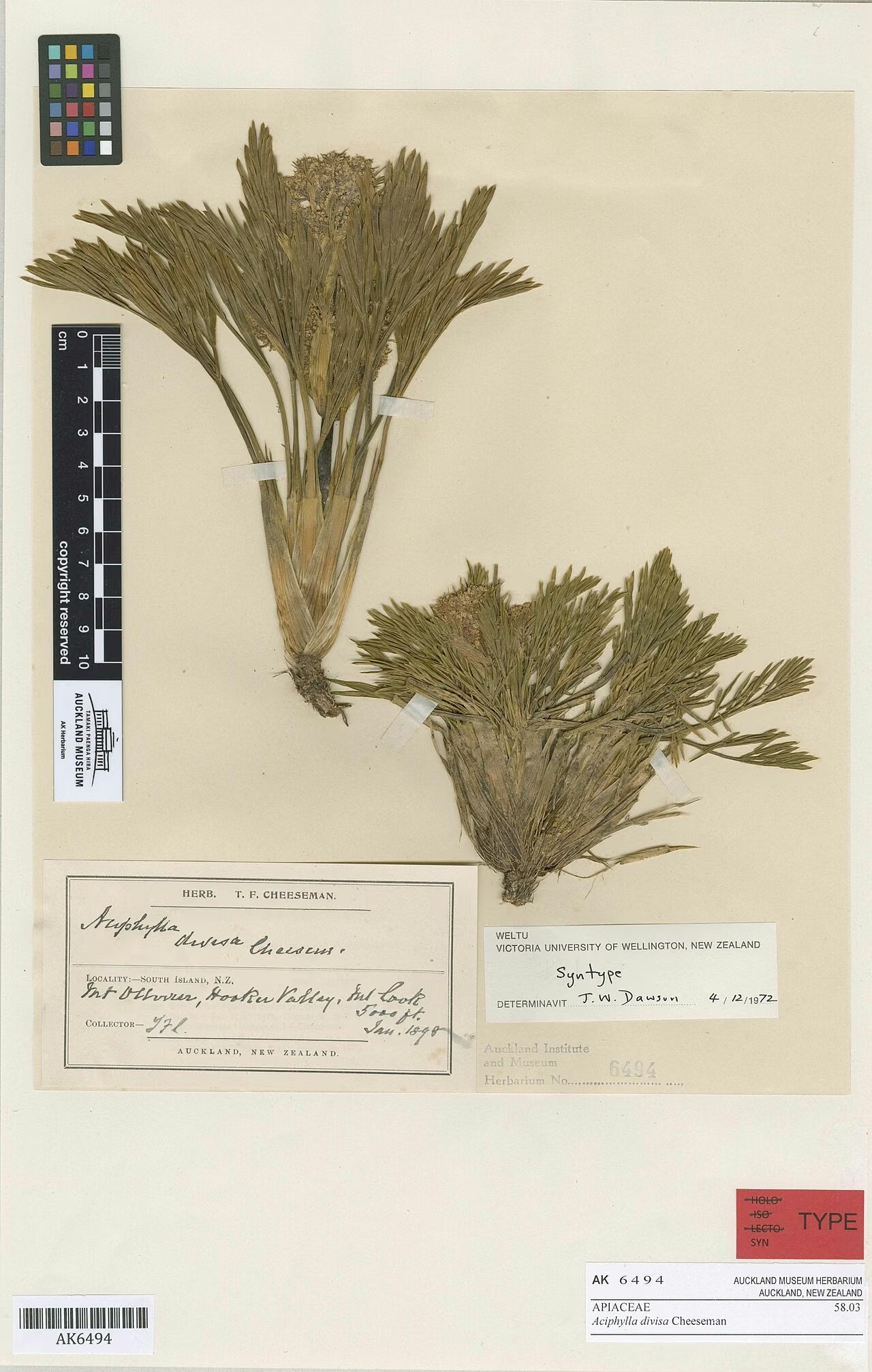
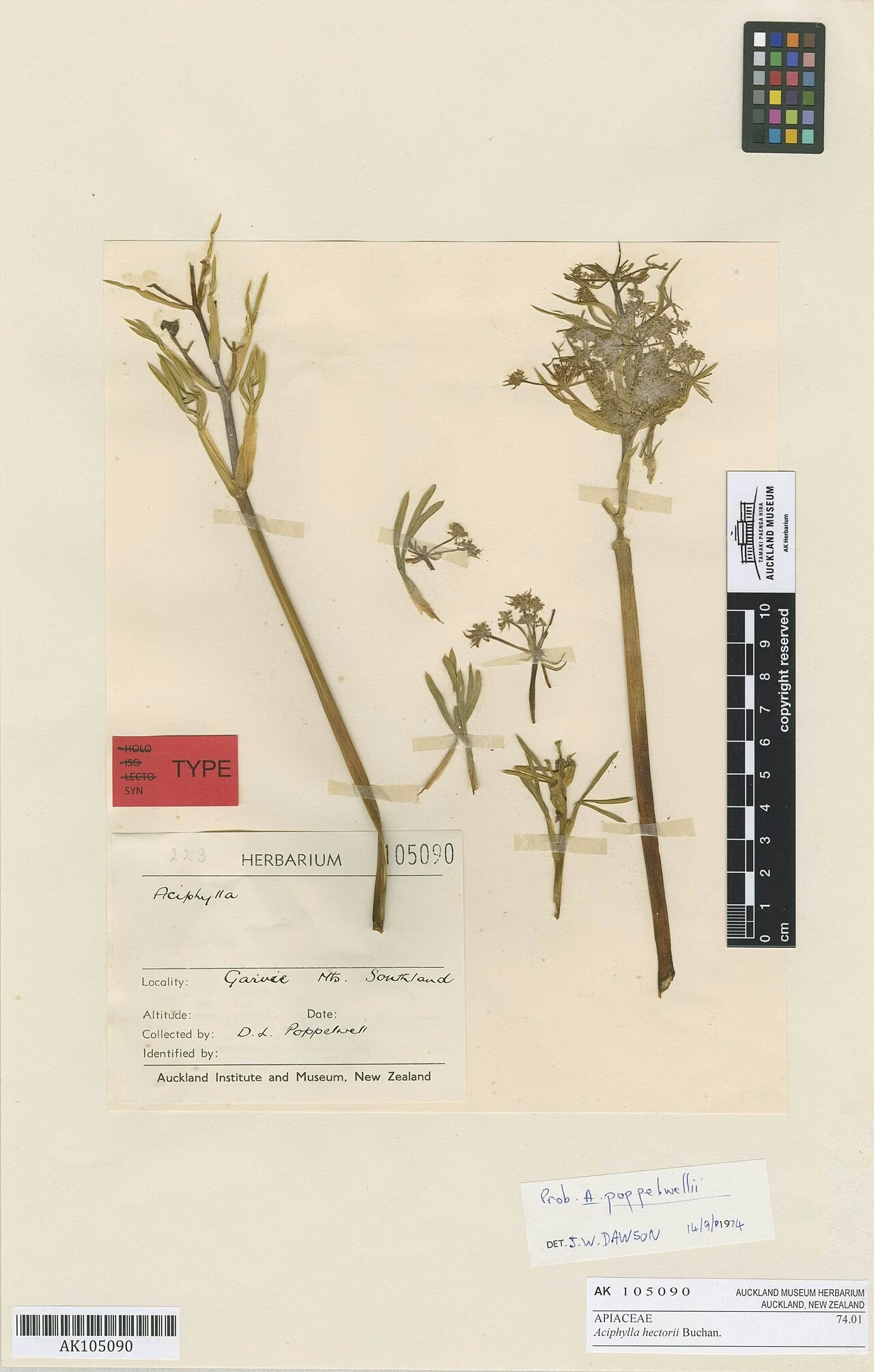
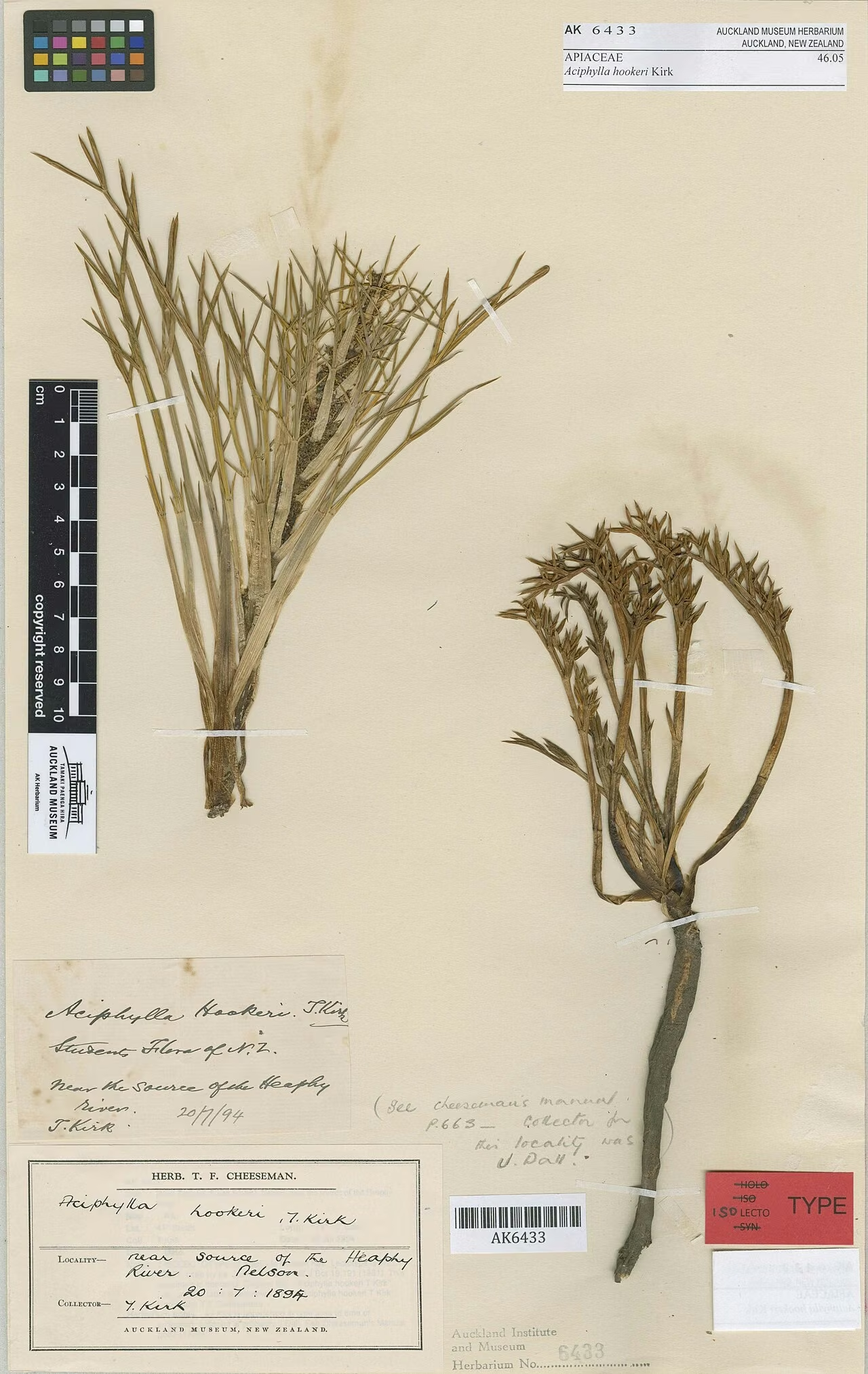
Explore other native plants that share similar characteristics or habitats with Speargrass (Aciphylla kirkii), offering further insights into New Zealand's diverse flora. These related species provide context and opportunities for complementary planting in your garden.
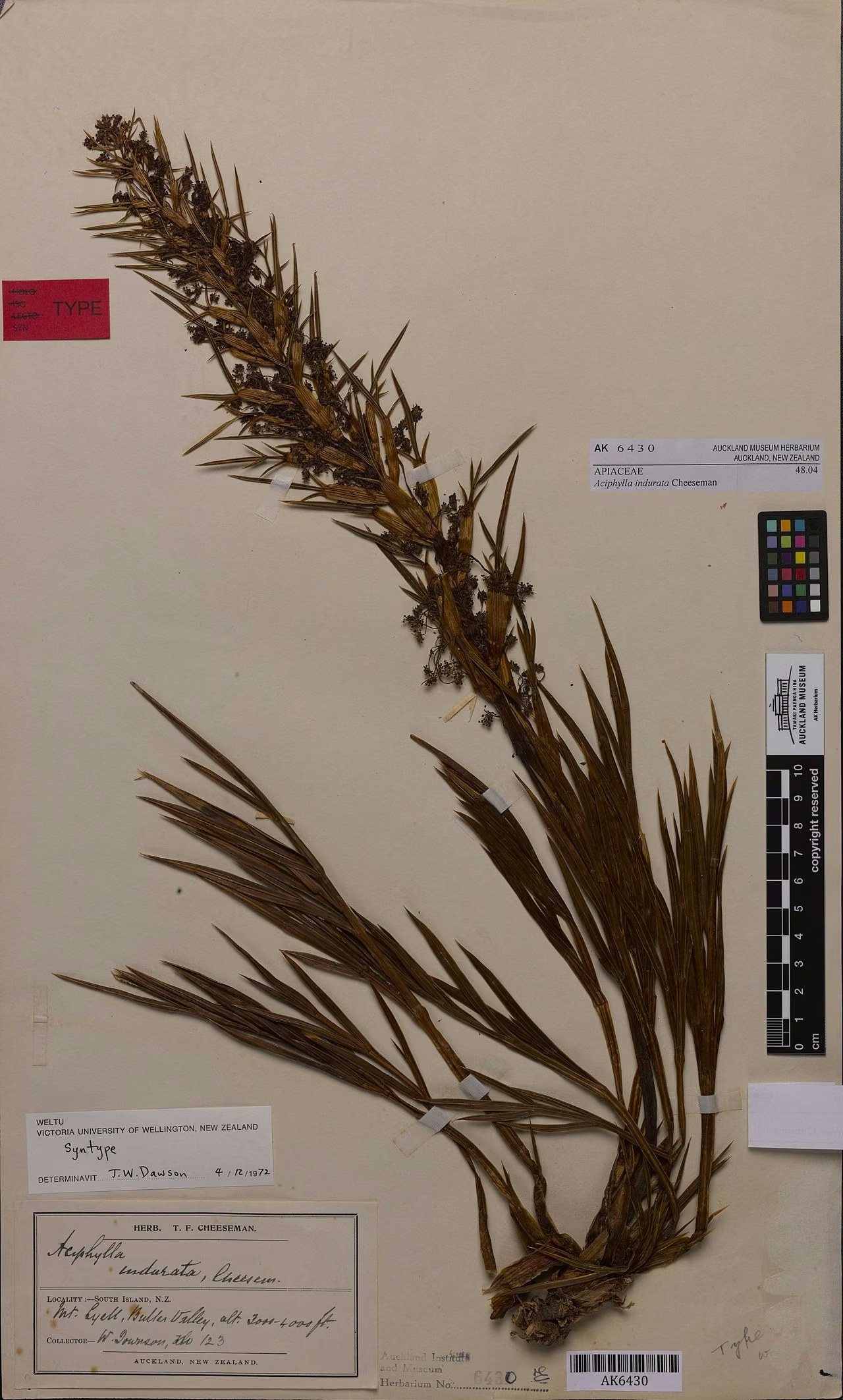
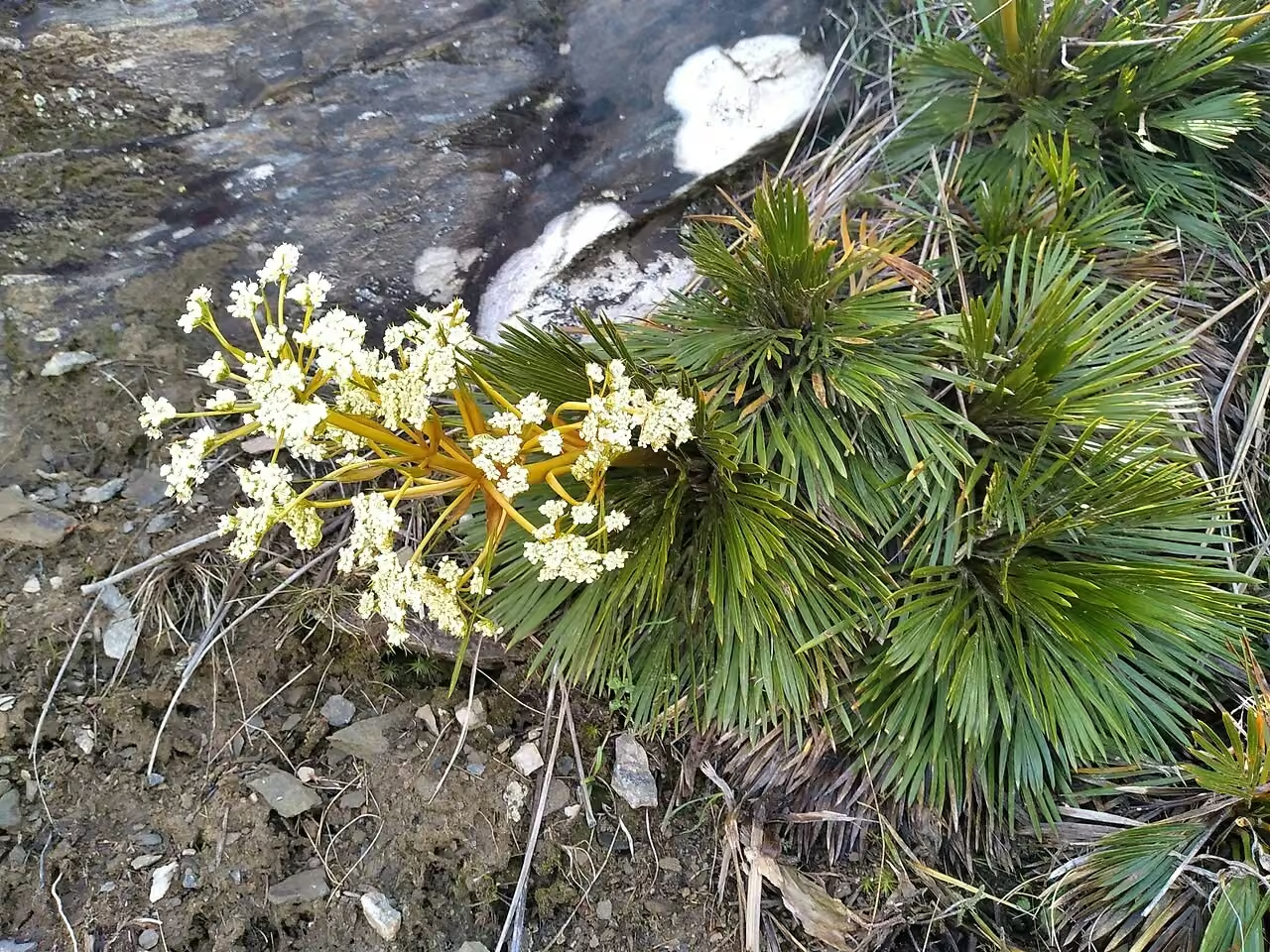
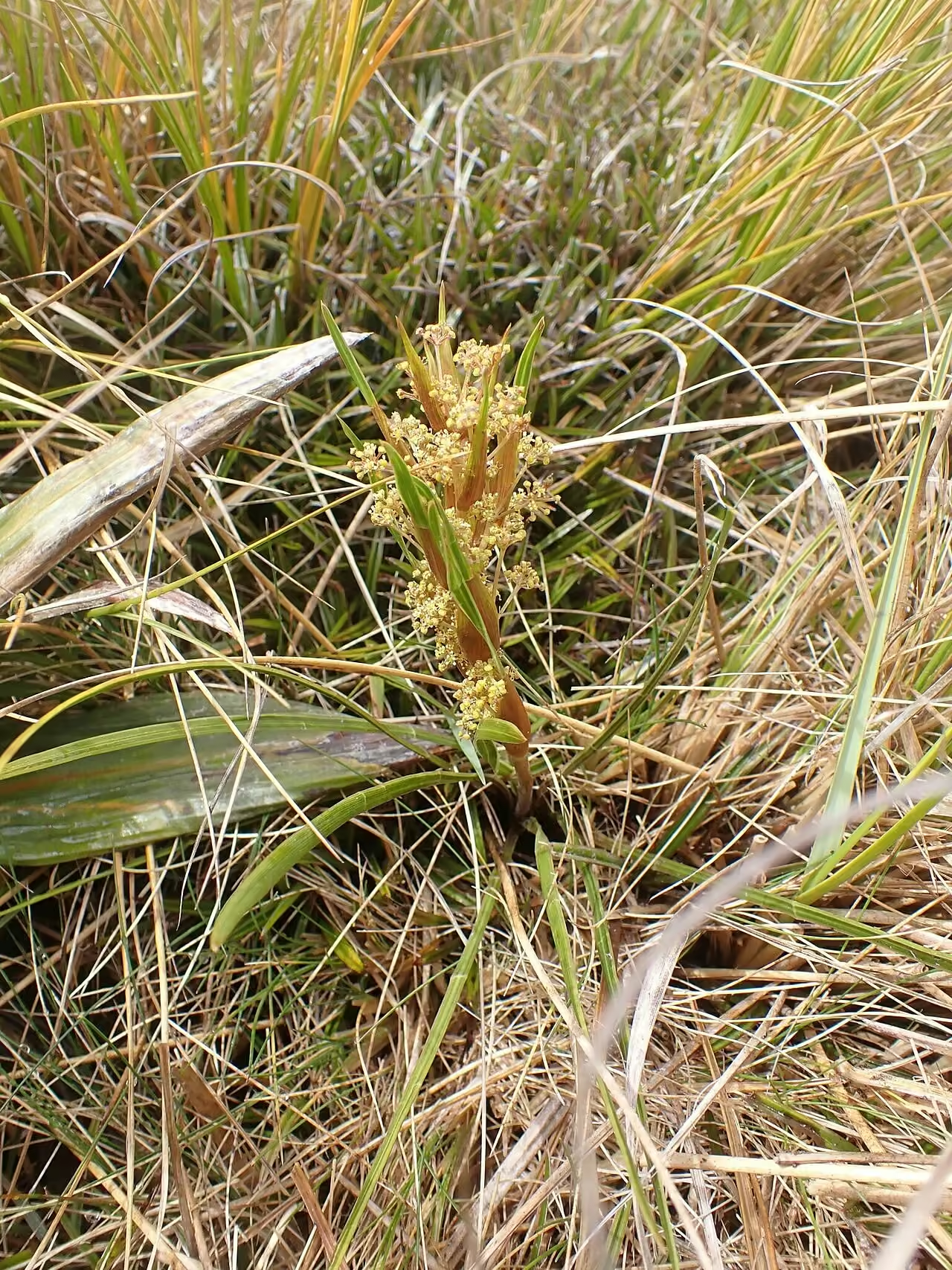
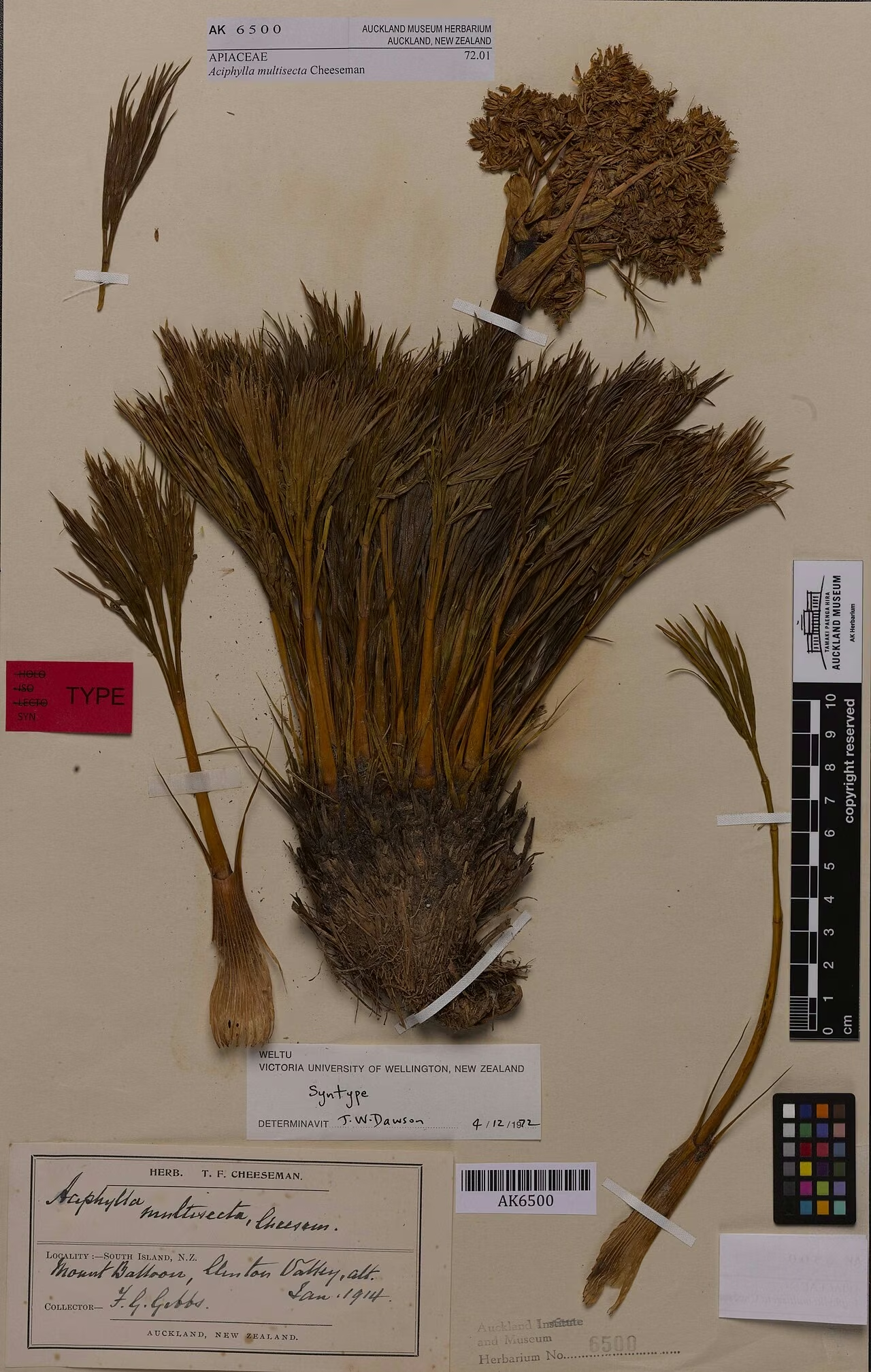
Plant Conservation
Aciphylla kirkii is ranked Not Threatened (2023) with the qualifiers Data Poor: Size and Data Poor: Trend, so its population size and trend are uncertain. The 2025 Otago regional assessment lists it as Regionally At Risk - Regionally Naturally Uncommon.
Browsing by introduced mammals and changes to alpine grasslands are general pressures on speargrasses. Pest control in the high country and recording sightings on iNaturalist NZ help improve knowledge of its status.
Frequently Asked Questions
What does Aciphylla kirkii look like?
It is a stiff, spiky tuft up to about 30 cm tall with rich green to yellow-green leaves whose rigid pinnae have thickened margins and needle tips, and flower spikes framed by bright orange spiky bracts.
Where can you see Aciphylla kirkii?
It grows in the alpine zone of central and western Otago, east of the Southern Alps, in snow tussock grassland, herbfield, fellfield and cushionfield from about 1300 m upward. The type specimen came from Mount Alta.
Is Aciphylla kirkii easily confused with other speargrasses?
Yes. NZPCN notes it can be mistaken for Aciphylla hectorii, which overlaps with it in Otago. A. hectorii has a single pair of finely toothed pinnae, whereas A. kirkii has stiff, thick-edged pinnae and conspicuous orange flower bracts.
When does Aciphylla kirkii flower?
It flowers from December to February, and its winged fruits ripen between December and April before being dispersed by the wind.
Sources and Further Reading
The botanical, growing, and conservation details for Speargrass (Aciphylla kirkii) on this page draw on the New Zealand plant references below. Consult them for full technical records and the latest distribution data.