Speargrass
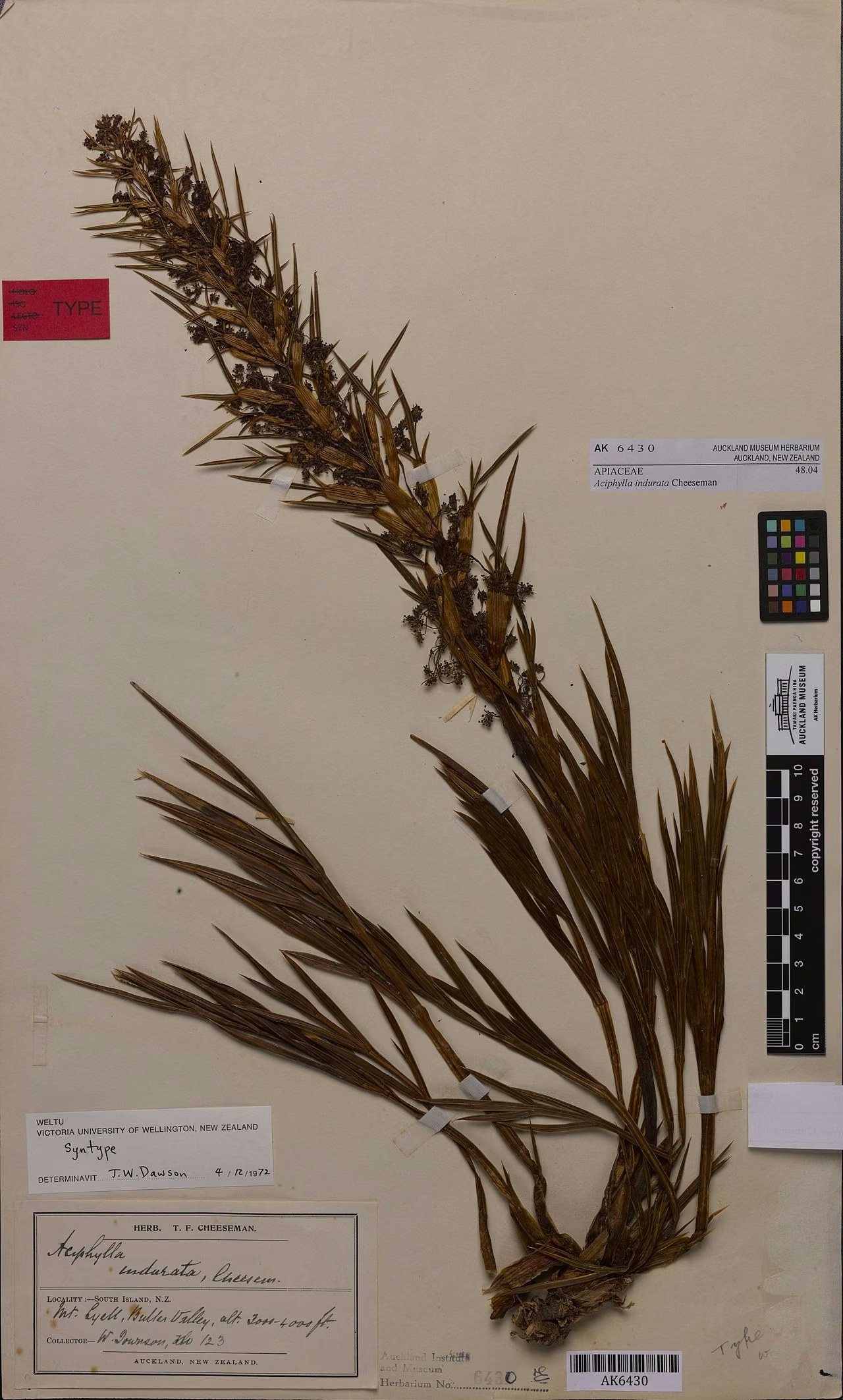
Aciphylla indurata
Last updated:
Aciphylla indurata is a little-known speargrass from the mountains of south-west Nelson and Westland in the South Island, recorded between about 900 and 1300 m. It has a stout, deeply descending taproot, leaves about 30 cm long divided into three-leafleted pinnae, and stout flowering stems up to about 60 cm tall. Described by Thomas Cheeseman in 1914 from Mount Lyell, it is accepted as a species by the Flora of New Zealand and ranked Naturally Uncommon in 2024, but NZPCN treats it as a synonym of the larger Aciphylla colensoi. Very little has been published about its ecology or cultivation. Explore more native flowering plants in our native plant guide.
Plant Description
Aciphylla indurata has a stout rootstock, either simple or branched, sitting on a taproot that descends deeply into the ground. The leaves are about 30 cm long and pinnate, with the pinnae themselves divided into three leaflets (3-foliolate). The name indurata means hardened, referring to the stiff, rigid texture of the plant.
As in all speargrasses, male and female flowers are on separate plants. The flowering stem is stout and reaches up to about 60 cm. Male plants carry a stout, oblong inflorescence up to about 30 cm long, while the female inflorescence is more compact. The fruit is about 3 to 4 mm long.
Distinguishing it in the field is difficult. It overlaps with Aciphylla colensoi, A. hookeri and A. horrida, and some of the specimens Cheeseman cited when describing it have since been annotated as hybrids between those species, which is one reason NZPCN does not keep it separate.
Quick Facts
| Scientific Name | Aciphylla indurata |
|---|---|
| Height | Flowering stems up to about 0.6 m |
| Spread | No published figure; leaves about 0.3 m long |
| Water Needs | Moist; a high-rainfall mountain plant |
| Light | Full sun |
| Frost Tolerance | High; subalpine to low-alpine |
| Salt Tolerance | No information available |
| Growth Rate | Slow |
| Lifespan | Long-lived perennial |
Climate Best Suited to
It comes from the very wet, cool ranges of the western South Island, with heavy rainfall and winter snow. Dry or warm climates would not suit it.
Regional Suitability
| City | Climate Suitability |
|---|---|
| Auckland | Low |
| Wellington | Low |
| Christchurch | Low |
| Dunedin | Low |
Plant Habitat
Aciphylla indurata is endemic to the South Island. The lectotype was collected on Mount Lyell by W. Townson, and other original specimens came from Mount Lyell, the Brunner Range and the Paparoa Range, all in the Buller and north Westland area. Wikipedia's species list summarises its range as Westland at 900 to 1300 m.
Its habitat is subalpine to low-alpine country on these western ranges. Detailed descriptions of the plant communities it grows in were not found in the sources consulted.
Growing Requirements
Soil Requirements
Published habitat detail is scant, but its deep taproot points to deep, stony mountain soils in high-rainfall country.
- Deep, gritty, free-draining mix if ever cultivated
- Room for a long taproot
- Low fertility
Light Requirements
Like its relatives in subalpine and low-alpine vegetation, it grows in open, sunny sites above the bushline.
- Full sun
- Open, uncrowded position
Water Requirements
The Paparoa and Brunner Ranges receive very high rainfall, so the plant is adapted to constant moisture.
- Keep moist through the growing season
- Good drainage around the crown is essential
Planting and Establishing
Aciphylla indurata is not known to be in cultivation and is not available from nurseries. Given its uncertain status and Naturally Uncommon ranking, it should not be collected from the wild.
For gardeners wanting a stout speargrass, nursery-grown Aciphylla colensoi or A. aurea are the practical alternatives.
Ecological Role
Like other speargrasses, its fruit splits into winged mericarps that are dispersed mainly by wind. Its pollinators and any associated insects have not been studied.
The presumed hybrids among its type specimens suggest that several Aciphylla species meet and interbreed on the Buller and Paparoa ranges, an interesting area for studying how speargrass species form and mix.
Uses & Significance
Garden Uses
It has no established garden use because it is not in cultivation.
- Of interest to botanists and Aciphylla specialists
- Grow A. colensoi or A. aurea instead for a similar bold look
Ecological Value
Whether it is treated as a species or as a form of A. colensoi, it is part of the speargrass diversity of the western South Island ranges.
- Endemic to the South Island
- Ranked Naturally Uncommon by the Flora of New Zealand
- Important for understanding hybridisation in Aciphylla
Landscaping Uses
This taxon is not used in landscaping. Its stout flowering stems and stiff, divided leaves would make it a bold feature plant in the same way as other medium-sized speargrasses.
Anyone wanting that effect should use widely grown speargrasses from nursery stock and leave A. indurata in the wild.
Seasonal Care Calendar
Spring
New leaves are expected as the high country thaws, though its seasonal growth has not been documented.
- No action needed for wild plants
- Report sightings with photographs
Summer
Its flowering season is not recorded in the sources consulted; most speargrasses in the region flower in early to mid summer.
- Note the sex of flowering plants when recording them
- Photograph leaves and inflorescences for identification
Autumn
Winged fruits about 3 to 4 mm long are shed and carried by the wind.
- Leave wild seed undisturbed
- Record fruiting plants if seen
Winter
Plants are dormant under snow and cold on the western ranges.
- No action needed
When to Prune and How Much
No pruning applies to wild plants. In the unlikely event of cultivation, spent flowering stems can be removed at the base after the fruit is shed.
Dead leaves around the crown could be cleared with gloved hands to reduce the risk of rot.
How to Grow Speargrass
There is no published propagation information for Aciphylla indurata, and it does not appear to be held in cultivation. NZPCN's general dispersal note for the group, that winged schizocarps are dispersed primarily by wind, is the only reproductive information available. The guidance below therefore describes how speargrasses in general are raised, and would only apply to authorised conservation work. Seed collection on public conservation land needs permission from the Department of Conservation, and wild plants should never be dug, both because the taxon is ranked Naturally Uncommon and because the deep taproot makes transplanting almost always fatal.
From Seed
Seed would only be produced on female plants growing within reach of a male. Speargrass seed is normally sown fresh and given winter cold before germinating in spring.
- Collect ripe, brown fruit from a female plant under authorisation
- Sow fresh into a deep pot of gritty mix and cover lightly with grit
- Place outdoors in a cold, sunny spot over winter and keep moist
- Move seedlings into individual deep pots while young to protect the taproot
- Record provenance carefully, since the taxon's status is uncertain
By Division
The Flora notes the stock may be branched, so a mature plant could in theory be divided, but there is no record of this being tried and losses would be likely.
- Only consider division on a plant already in cultivation
- Separate crowns in early spring with roots attached
- Keep divisions cool, moist and shaded until established
Pests & Diseases
No pests or diseases are recorded for this taxon. Introduced browsing animals such as deer, goats and hares eat other speargrasses and could affect it as well.
In cultivation, rot from poor drainage would be the main risk, as with other Aciphylla.
Cultural Significance
No traditional Māori name or use specific to Aciphylla indurata is recorded in the sources consulted. Larger speargrasses, including Aciphylla colensoi, were known to Ngāi Tahu as taramea, and their aromatic resin was gathered for perfume, but no record ties that practice to this particular taxon.
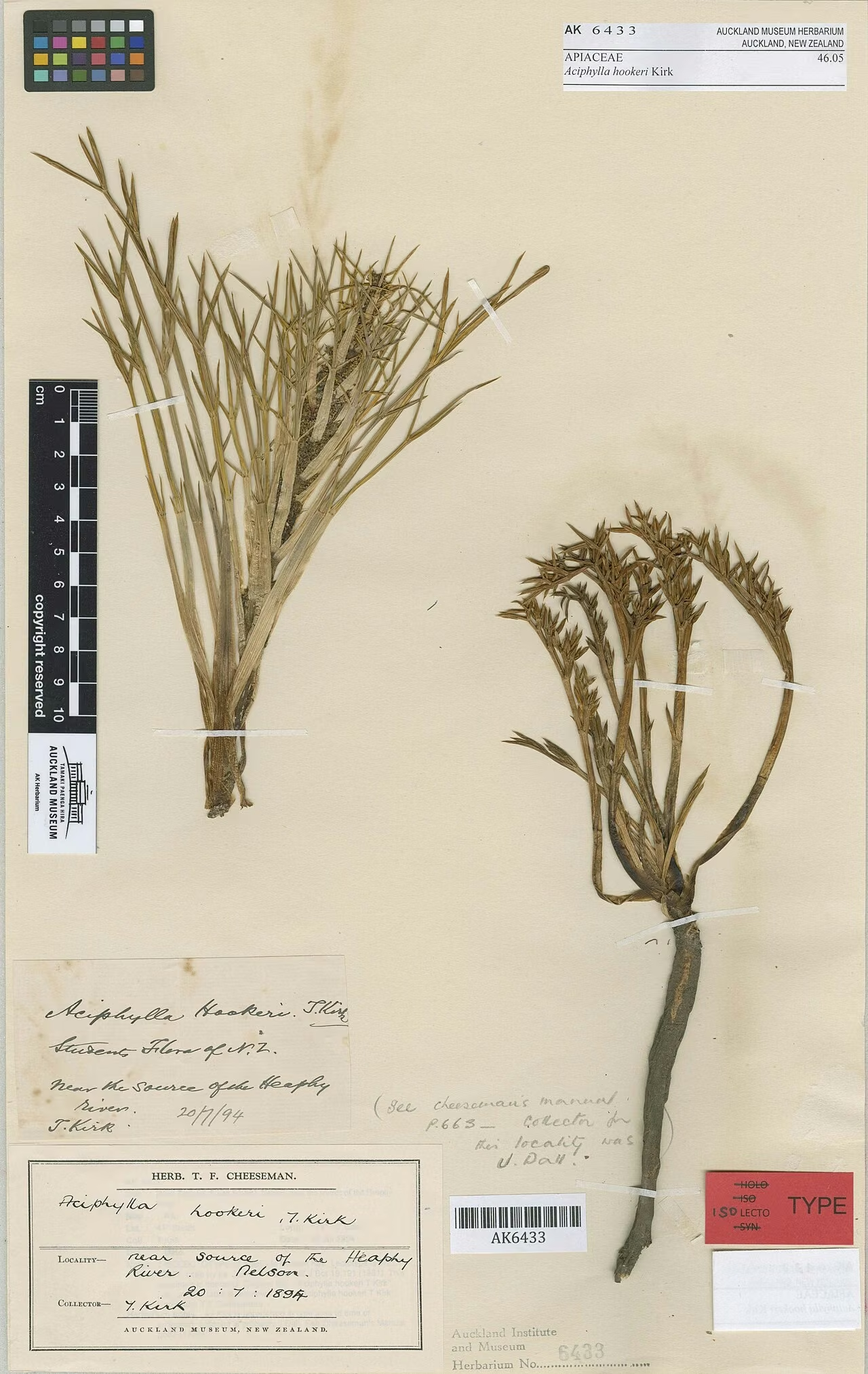
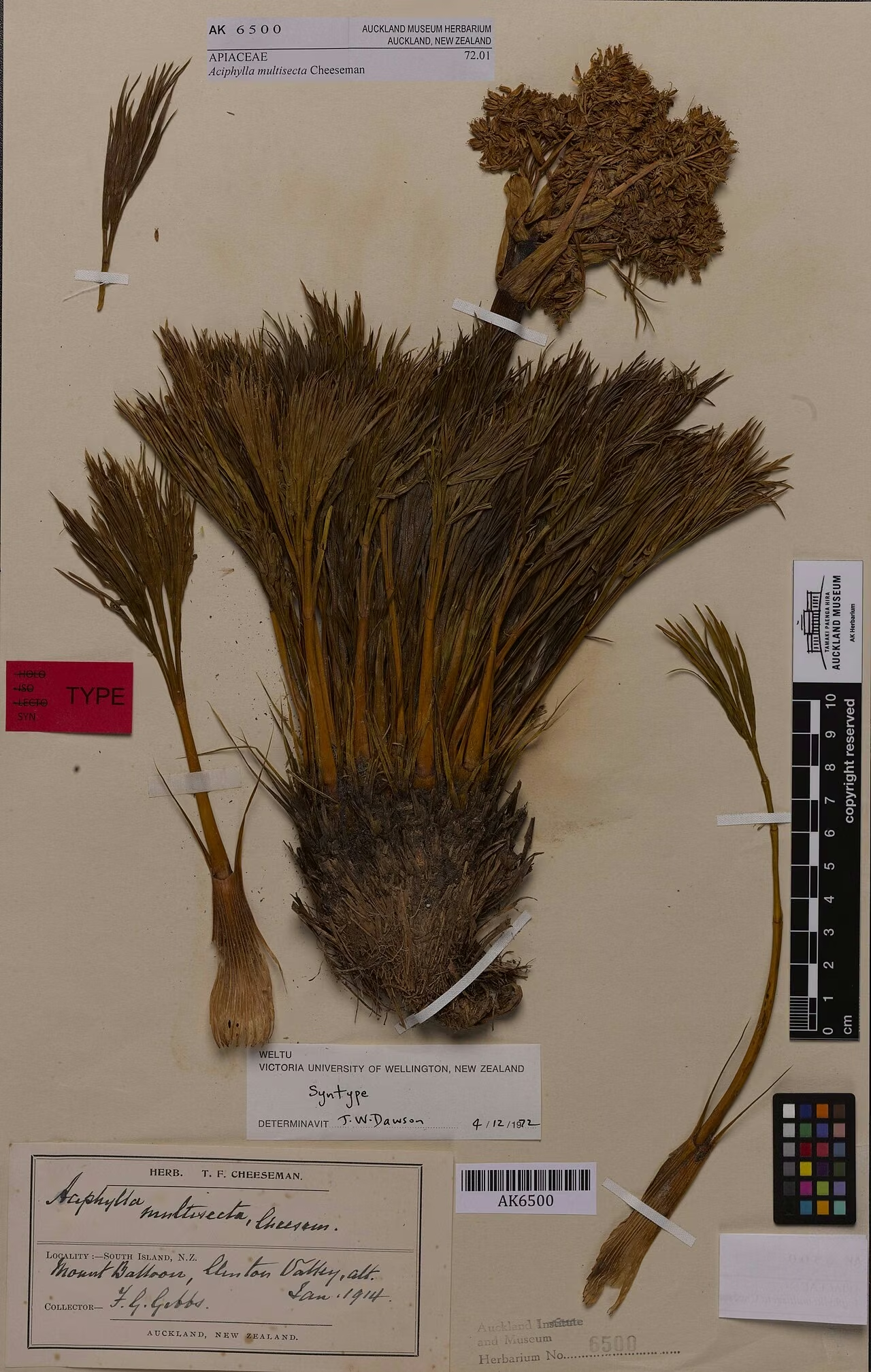
Thomas Cheeseman described the species in 1914 from material collected by W. Townson on Mount Lyell and nearby ranges, and W.R.B. Oliver later chose the Mount Lyell specimen as the lectotype in 1956.
Bonus Tip
If you photograph a speargrass on the Paparoa or Brunner Ranges, post it to iNaturalist NZ with close-ups of a whole leaf, the leaf sheath and the inflorescence. Good records from the type area are exactly what is needed to settle whether Aciphylla indurata is a distinct species, a form of A. colensoi or a hybrid swarm.
Related Plants
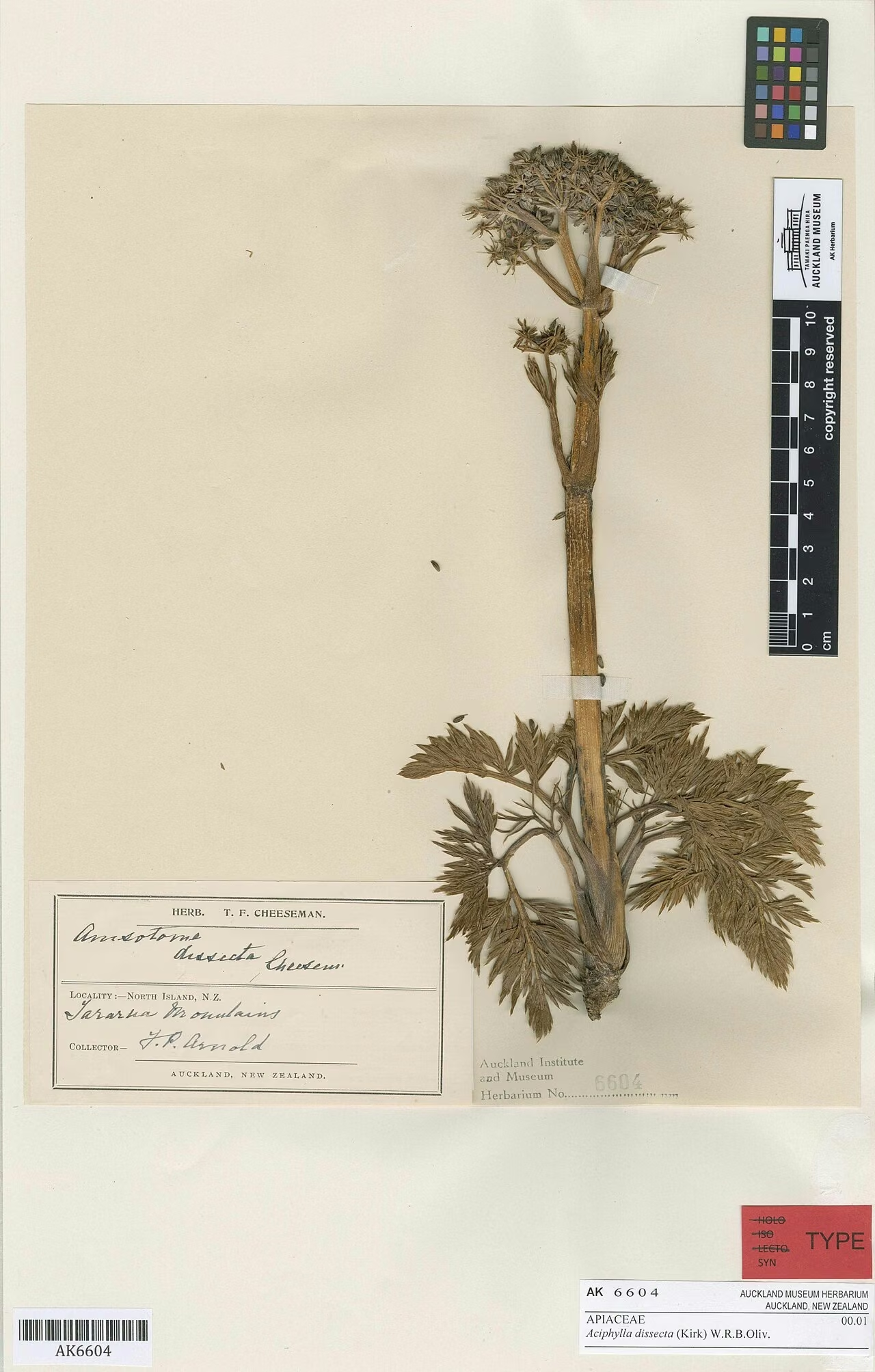
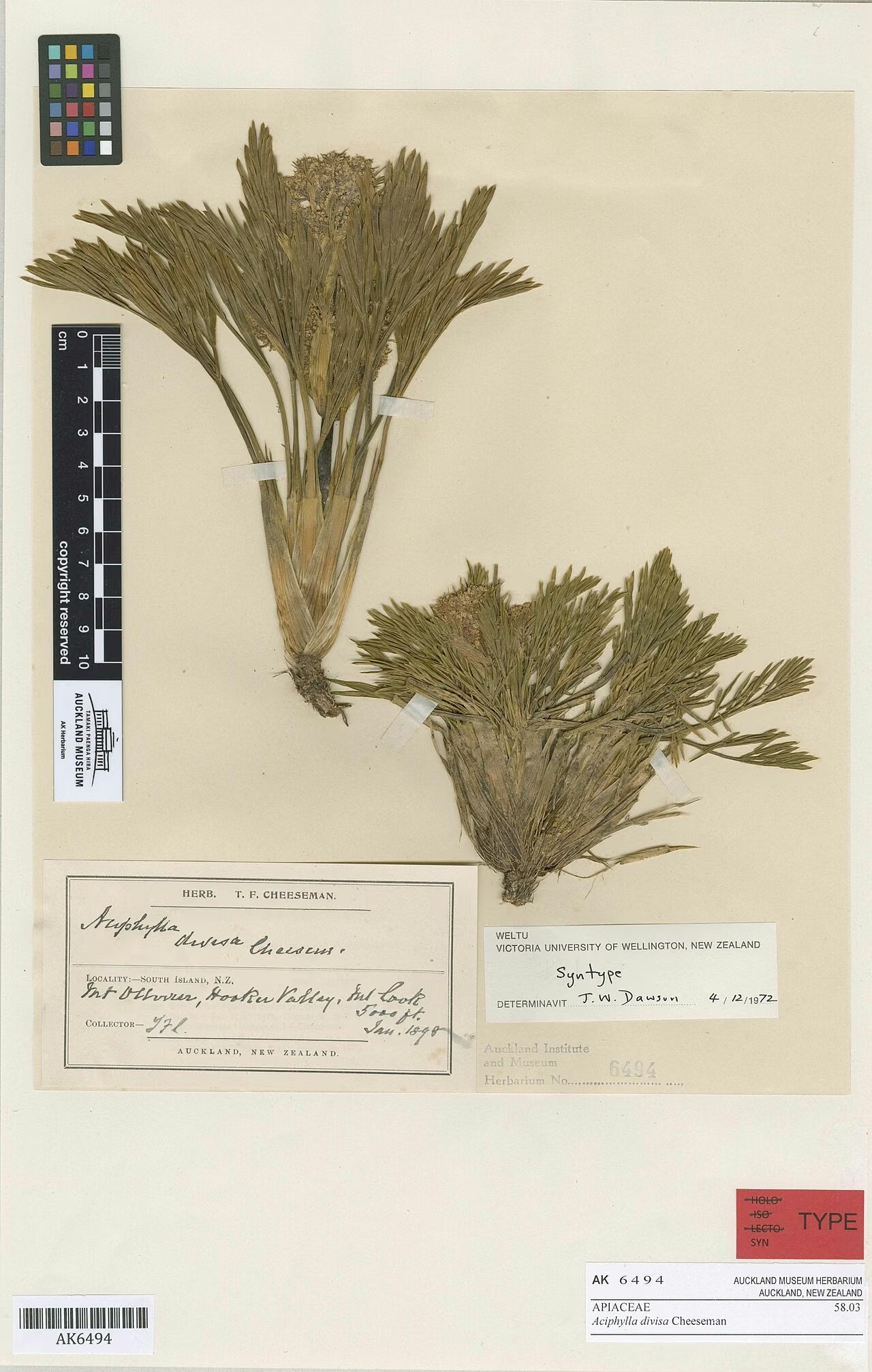
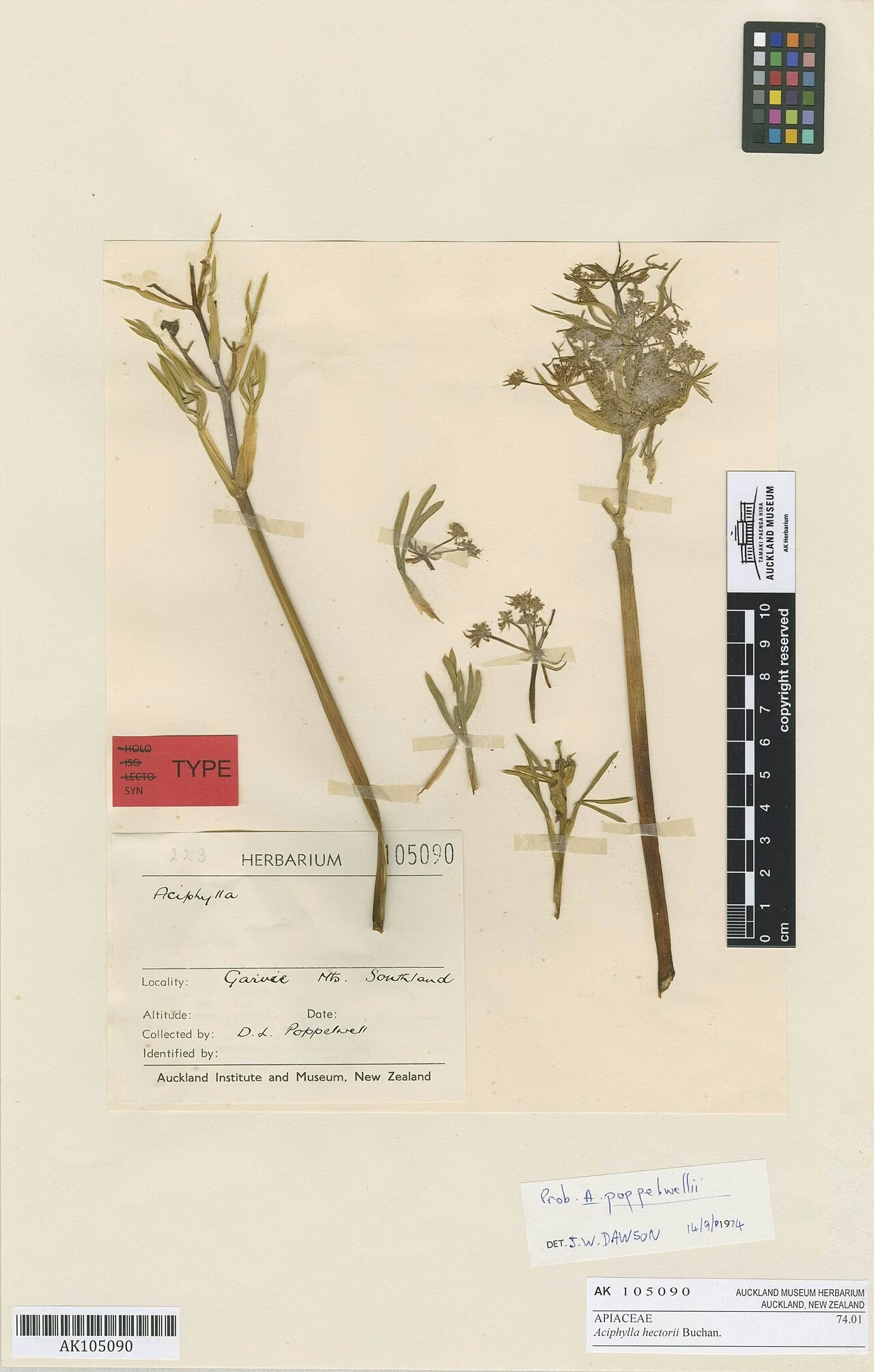
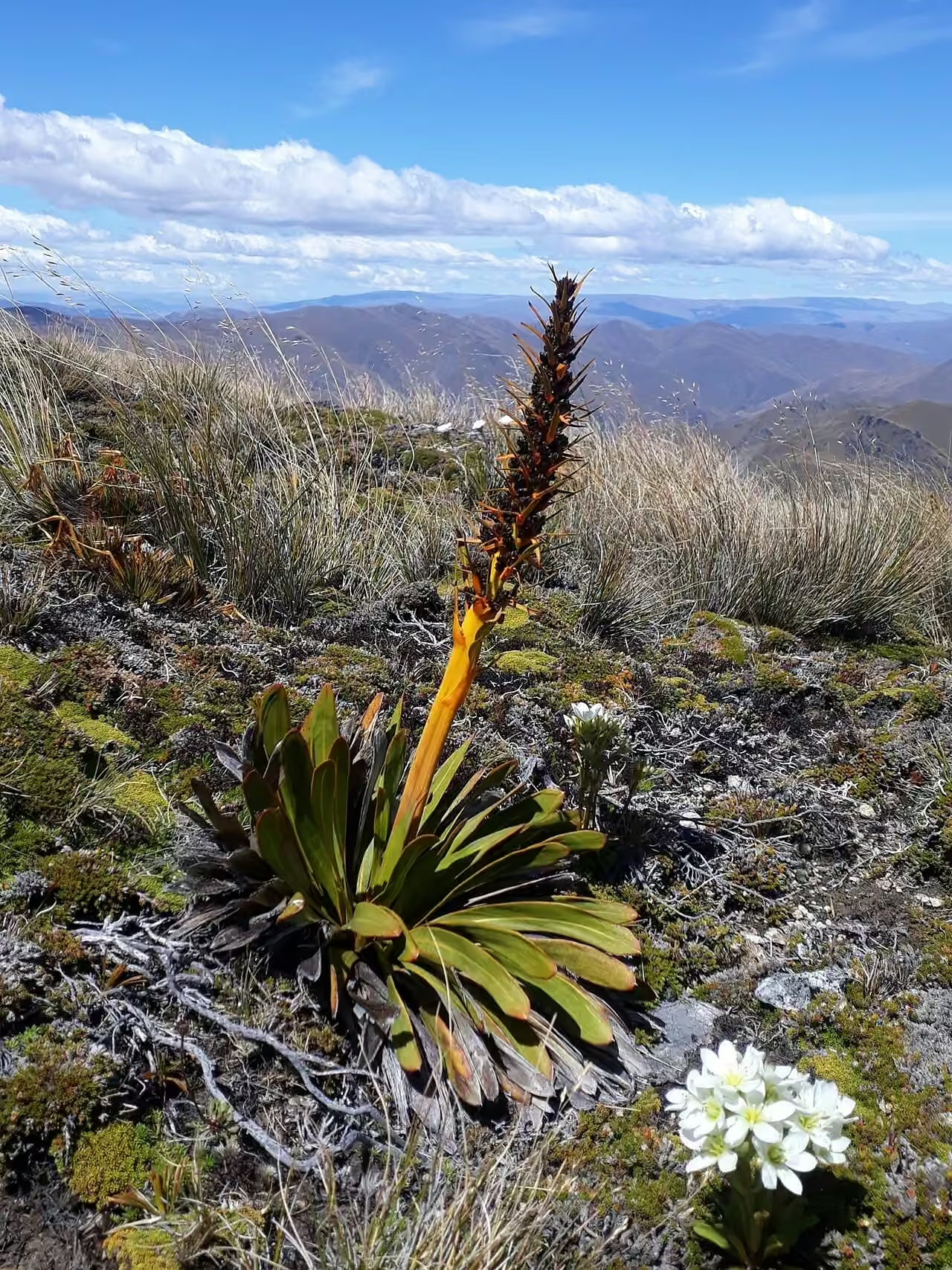
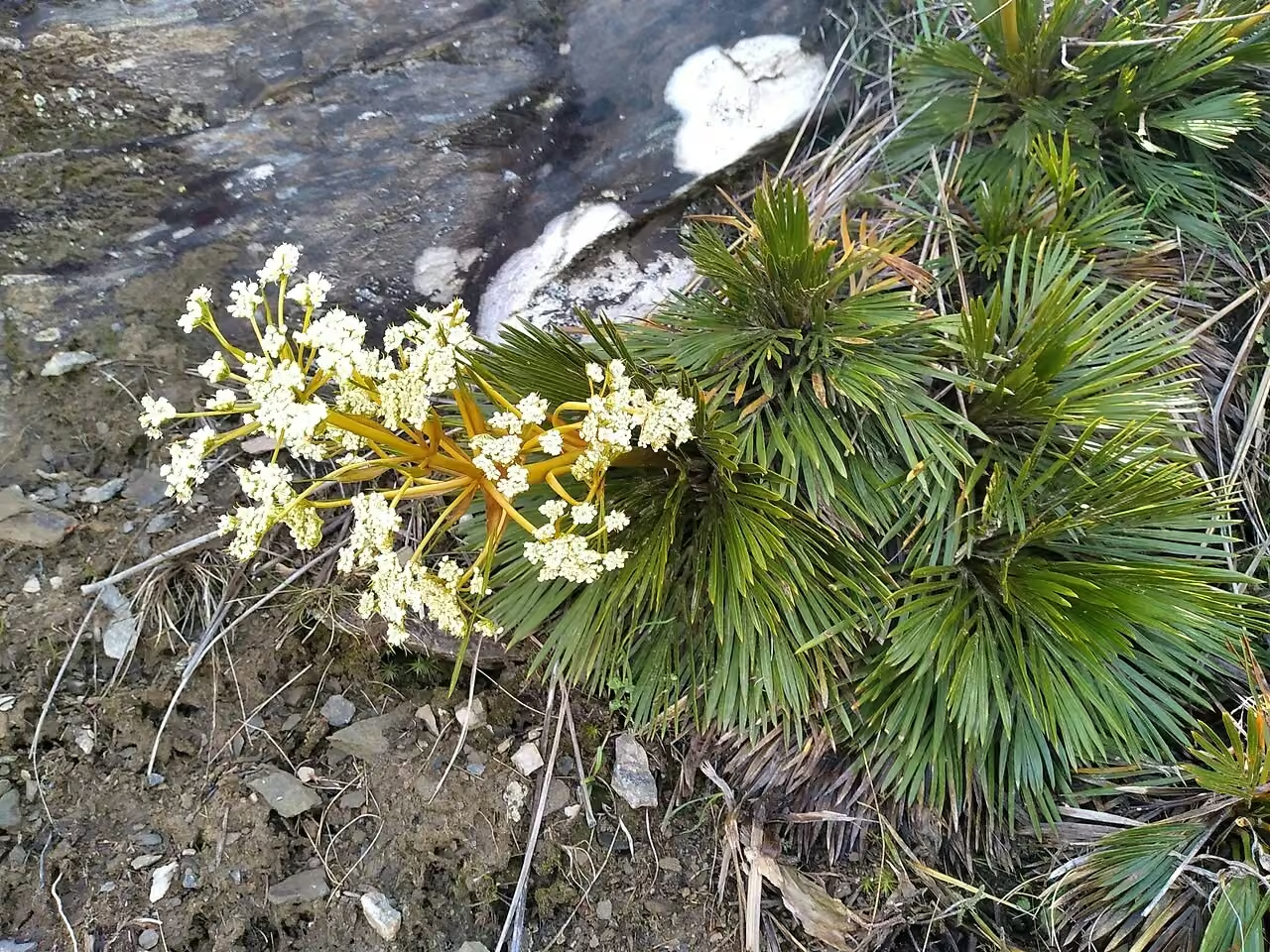
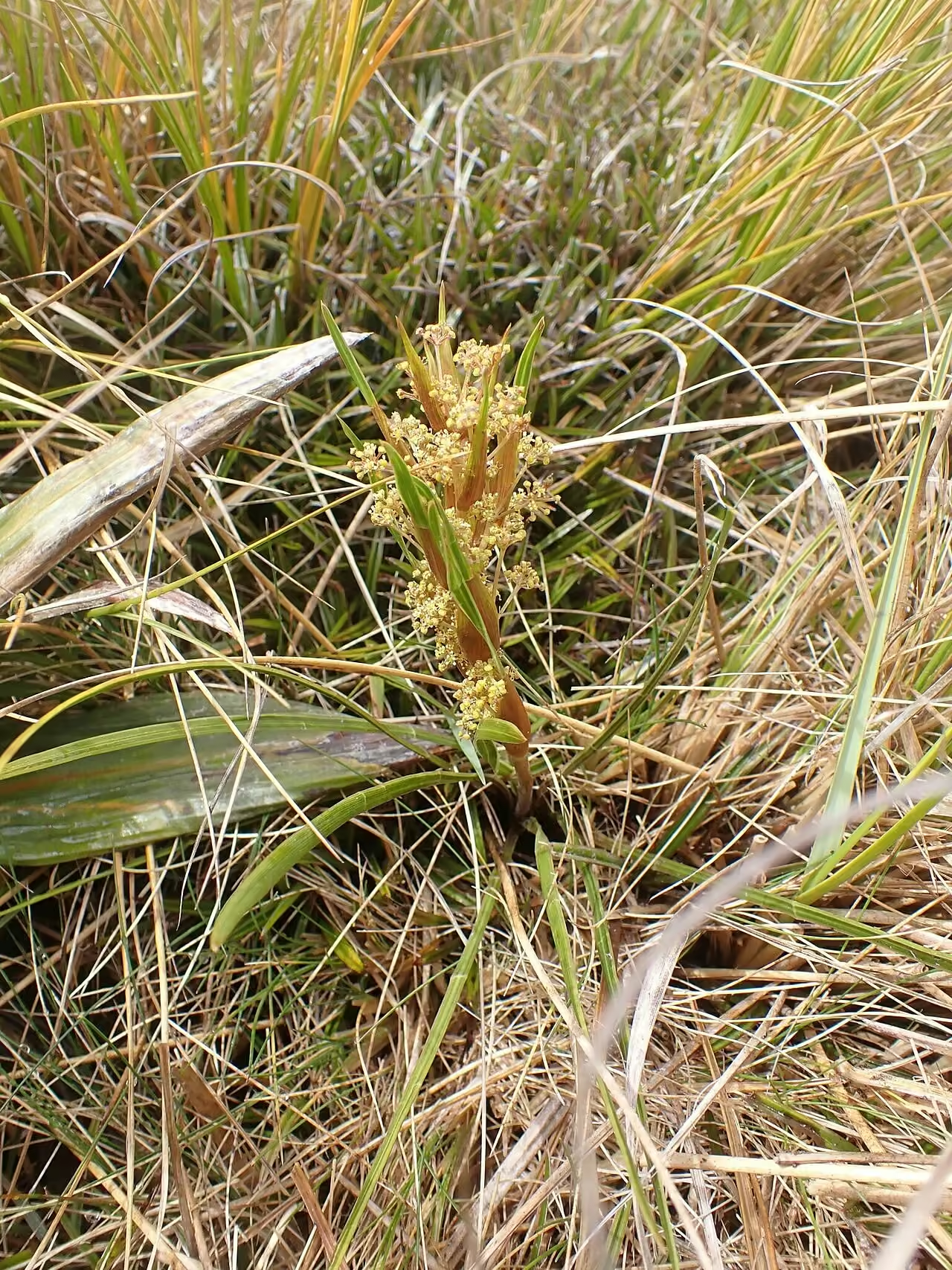
Explore other native plants that share similar characteristics or habitats with Speargrass (Aciphylla indurata), offering further insights into New Zealand's diverse flora. These related species provide context and opportunities for complementary planting in your garden.
Plant Conservation
The Flora of New Zealand lists Aciphylla indurata as Naturally Uncommon in the 2024 assessment, after earlier rankings of Data Deficient in 2013 and 2018. NZPCN, which treats it within A. colensoi, does not rank it separately.
Part of the Paparoa Range lies within Paparoa National Park, which protects some of its known habitat. Control of browsing animals and further field and herbarium study are the main needs.
Frequently Asked Questions
Is Aciphylla indurata a separate species from Aciphylla colensoi?
Opinions differ. The Flora of New Zealand accepts A. indurata as an endemic species, while NZPCN lists it as a synonym of A. colensoi, and some of the original specimens are thought to be hybrids.
Where does Aciphylla indurata grow?
It is recorded from the ranges of south-west Nelson and Westland, including Mount Lyell, the Brunner Range and the Paparoa Range, in subalpine to low-alpine country at about 900 to 1300 m.
What is the conservation status of Aciphylla indurata?
The Flora of New Zealand lists it as Naturally Uncommon in the 2024 assessment; it was previously ranked Data Deficient in 2013 and 2018 because too little was known about it.
Sources and Further Reading
The botanical, growing, and conservation details for Speargrass (Aciphylla indurata) on this page draw on the New Zealand plant references below. Consult them for full technical records and the latest distribution data.