Speargrass
Aciphylla hookeri
Last updated:
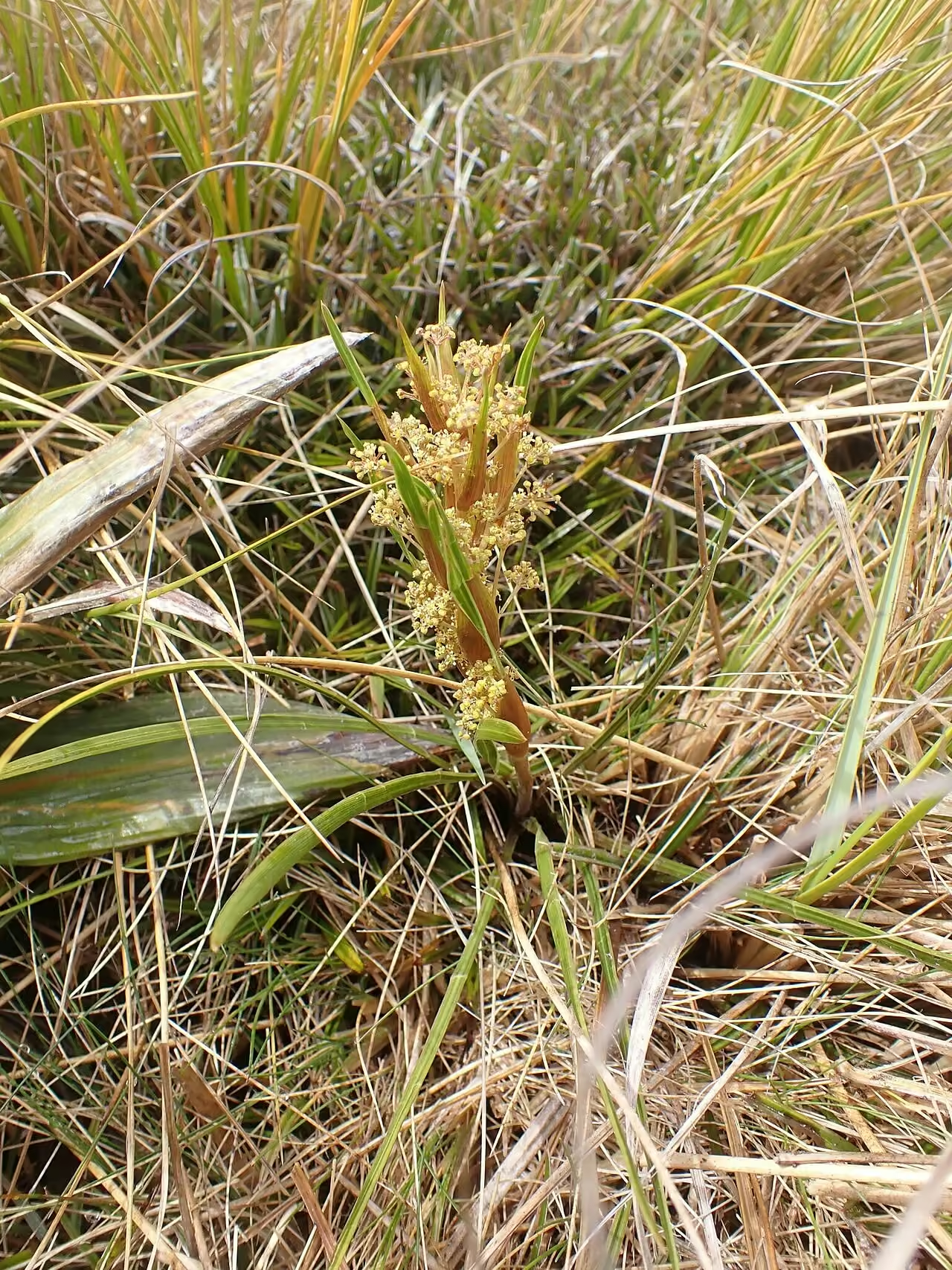
Aciphylla hookeri is a small, sparse-leaved speargrass endemic to the South Island. It forms a loose tuft up to about 30 cm tall from a stout taproot, with leaves around 20 cm long divided into short, keeled, sharp-pointed segments. It grows in low-alpine snow tussock-herbfield at roughly 900 to 1400 m, from North-west Nelson south to Arthur's Pass, mostly on the western side of the main divide, where NZPCN describes it as uncommon. Flowering stems carry a narrow spike-like panicle of small umbels in early summer. It is ranked Not Threatened, although its population size and trend are poorly known. Explore more native flowering plants in our native plant guide.
Plant Description
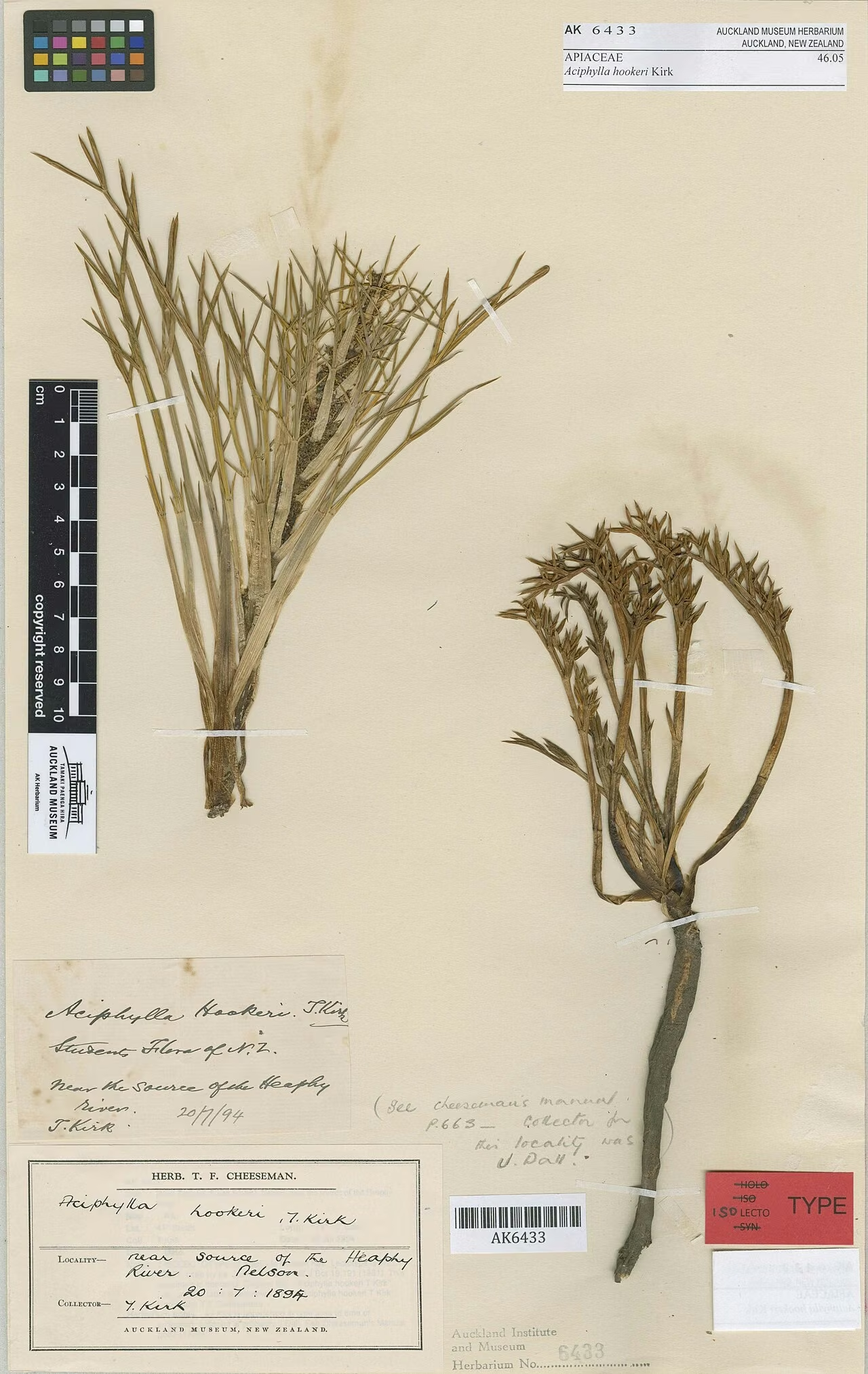
Aciphylla hookeri is a tufted, sparse-leaved herb up to about 30 cm tall. The stock is usually simple and sits on a stout taproot. The leaves reach about 20 cm long and are once to twice pinnate, arising from thin sheaths about 7 cm long. The petiole is around 4 cm long with crenulate-serrulate margins, and short stipules about 10 mm long sit at the sheath.
The primary pinnae are up to about 2 cm long, each with one or two pairs of pinnules. Every segment is keeled, grooved and ends in a pungent point, giving the plant a fine, prickly look rather than the bold daggers of the giant speargrasses. Male and female flowers are borne on separate plants on stems up to 30 cm tall that are leafy below and end in a narrow panicle about 15 cm long. The fruit is 4 to 5 mm long, and each mericarp carries three to five wings.
Its closest look-alike is Aciphylla anomala, also of North-west Nelson, which has longer and thicker petioles and leaflets and shorter stipules on the flower bracts.
Quick Facts
| Scientific Name | Aciphylla hookeri |
|---|---|
| Height | Up to 0.3 m including flower stem |
| Spread | Sparse tuft, about 0.2-0.3 m |
| Water Needs | Moist, well drained |
| Light | Full sun |
| Frost Tolerance | High; low-alpine species |
| Salt Tolerance | No information available; a mountain plant |
| Growth Rate | Slow |
| Lifespan | Long-lived perennial |
Climate Best Suited to
It suits the cool, wet, snowy climate of the western South Island mountains. Warm, dry or humid lowland climates do not suit it.
Regional Suitability
| City | Climate Suitability |
|---|---|
| Auckland | Low |
| Wellington | Low |
| Christchurch | Low |
| Dunedin | Low |
Plant Habitat
Aciphylla hookeri is endemic to the South Island, ranging from North-west Nelson to Arthur's Pass, mostly on the wetter western side of the ranges. Its type specimens came from near the source of the Heaphy River and the Mount Buckland area in Kahurangi country.
It grows in low-alpine snow tussock-herbfield between about 900 and 1400 m, where NZPCN describes it as uncommon. These sites receive heavy rainfall and winter snow.
Growing Requirements
Soil Requirements
It grows in the moist, often peaty mineral soils of high-rainfall tussock-herbfield.
- Deep, free-draining gritty mix in cultivation
- Plenty of depth for the stout taproot
- Low to moderate fertility
Light Requirements
Its herbfield habitat is open, with only snow tussocks for company.
- Full sun or very light shade
- Avoid crowding by vigorous companions
Water Requirements
Western South Island ranges are among the wettest parts of the country, so it expects regular moisture.
- Do not allow cultivated plants to dry out in summer
- Ensure excess water drains away in winter
Planting and Establishing
Aciphylla hookeri is not a common nursery plant and suits specialist alpine growers. Grow it in a deep container or a raised scree bed of gritty, moisture-retentive mix in a cool, sunny position.
Plant in spring so that roots establish before winter, and set the crown just above soil level. Handle with gloves, as the many small leaf segments are sharp.
Ecological Role
The small flowers in its narrow panicle are typical of insect-visited Apiaceae, though the pollinators of this species have not been documented in the sources consulted. After flowering, the winged fruits split and are dispersed primarily by wind.
As part of western snow tussock-herbfield, it shares its habitat with tussocks, mountain daisies and other alpine herbs. Speargrass weevils (Lyperobius) feed on Aciphylla in general, but no records tying them to this species were found.
Uses & Significance
Garden Uses
It is a collector's plant for alpine enthusiasts rather than a general garden subject.
- Raised scree beds and alpine troughs in cool regions
- Alpine house collections
- Displays of Kahurangi and Arthur's Pass flora
Ecological Value
It adds to the diversity of speargrasses in the northern South Island, one of the richest areas for the genus.
- Endemic to the South Island
- A component of low-alpine snow tussock-herbfield
- Uncommon within its range, so local populations matter
Landscaping Uses
Its fine, prickly foliage looks best against smooth stones or alongside soft-leaved alpine plants such as Celmisia, where its texture stands out.
Use it as a small accent in an alpine bed rather than in mass plantings, and place it where it will not be brushed by passers-by.
Seasonal Care Calendar
Spring
Growth resumes as the snow retreats from the herbfield.
- Plant or repot in early spring
- Start regular watering
Summer
Flowering occurs from December to February, occasionally into March.
- Keep moist in dry weather
- Watch for flower stems emerging
Autumn
Fruit ripens from January to April and is shed on the wind.
- Collect seed from female plants as fruit browns
- Clear away fallen leaves around the crown
Winter
Plants sit dormant beneath snow in the wild.
- Protect from winter waterlogging
- No feeding required
When to Prune and How Much
Pruning is not required. Remove flowering stems at their base once seed has been shed or collected.
Dead leaves around the base can be removed with long tweezers or gloved hands to keep the crown airy.
How to Grow Speargrass
No species-specific propagation guidance for Aciphylla hookeri was found in NZPCN or the Flora of New Zealand. It can be expected to behave like other small speargrasses, which are normally raised from seed because their taproots make them hard to divide or transplant. Male and female flowers are on separate plants, so only female plants grown near a male will set viable seed. Wild plants should not be dug up; seed collection on public conservation land also requires authorisation from the Department of Conservation.
From Seed
Fruits ripen between January and April. The winged mericarps are light, so pick fruiting heads as they dry rather than waiting for them to fall. Sowing fresh and exposing pots to winter cold mimics the snow-covered period the seed experiences in the wild.
- Harvest dry, brown fruiting heads from a female plant
- Rub the mericarps free and sow them straight away in a deep pot of gritty seed mix
- Cover with a thin layer of fine grit
- Leave the pot outdoors in a cold position over winter, keeping it moist
- Transplant seedlings into individual deep pots when they have two or three true leaves
By Division
Because the stock is usually simple, division is rarely possible. Only occasionally does an older plant produce a separate crown that can be cut away with roots attached.
- Check in early spring whether a cultivated plant has more than one crown
- Separate a crown with a sharp knife, keeping as much root as possible
- Pot into gritty mix and keep cool, moist and lightly shaded until new leaves appear
Pests & Diseases
No particular pests are recorded for Aciphylla hookeri. The usual problem in cultivation is root or crown rot where drainage is poor or summers are warm and humid.
Wild plants can be browsed by introduced herbivores such as deer and hares, which take flowering stems and reduce seed set.
Cultural Significance
No traditional Māori name or use specific to Aciphylla hookeri is recorded in the sources consulted.
The species was described by Thomas Kirk and named after Sir Joseph Dalton Hooker (1817-1911), the English botanist who sailed on the Antarctic expedition of HMS Erebus and Terror and later wrote the first comprehensive floras of New Zealand.
Bonus Tip
On tramps through Kahurangi National Park in summer, look for Aciphylla hookeri among snow tussocks above the bushline. Its narrow, spike-like flower panicle, about 15 cm long, rising from a small sparse tuft, is the easiest way to pick it out from the larger, bolder speargrasses.
Related Plants
Explore other native plants that share similar characteristics or habitats with Speargrass (Aciphylla hookeri), offering further insights into New Zealand's diverse flora. These related species provide context and opportunities for complementary planting in your garden.
Aciphylla crosby-smithii
Aciphylla crosby-smithii
Aciphylla dissecta
Aciphylla dissecta
Aciphylla divisa
Aciphylla divisa
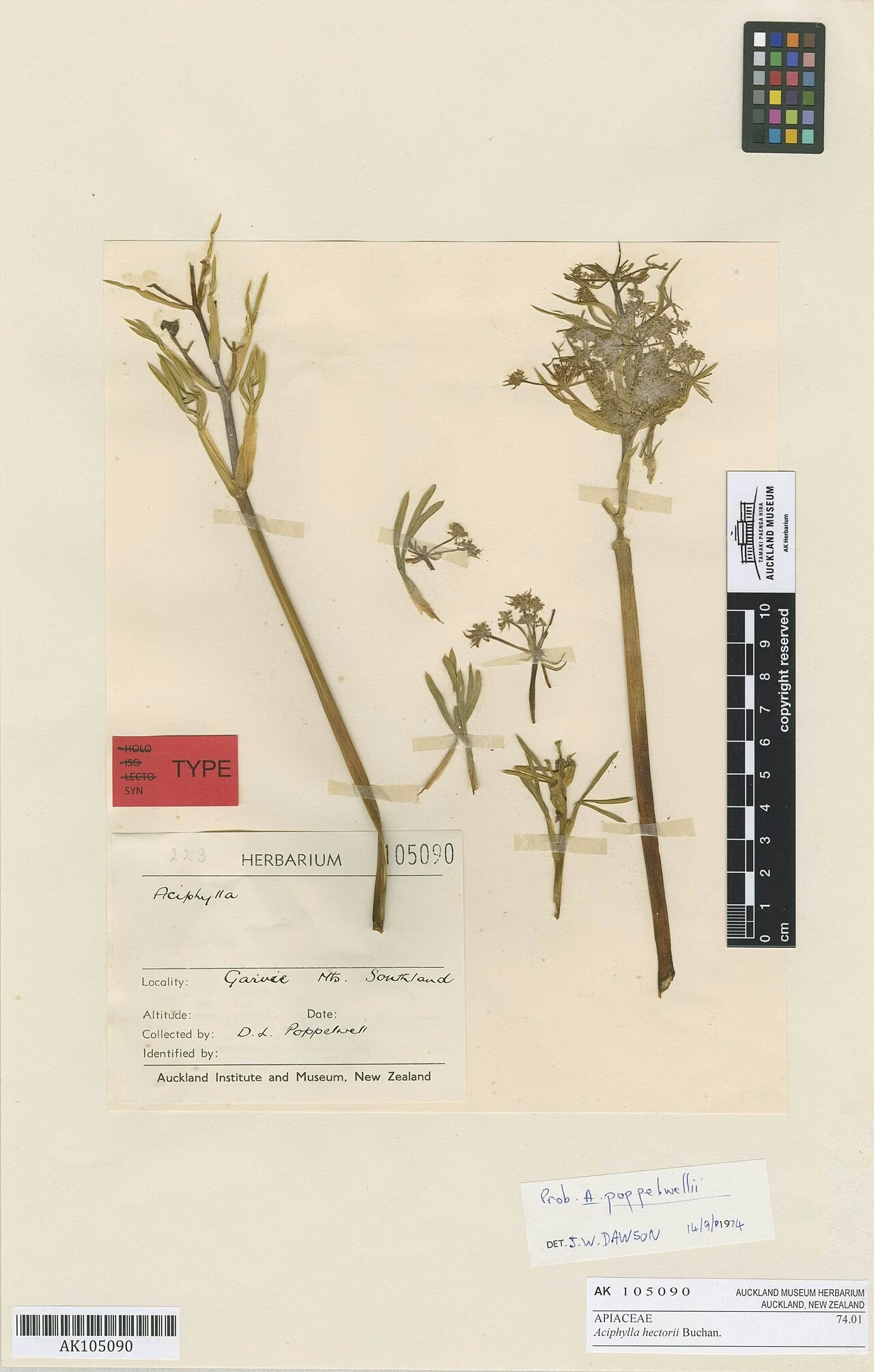
Aciphylla hectorii
Aciphylla hectorii
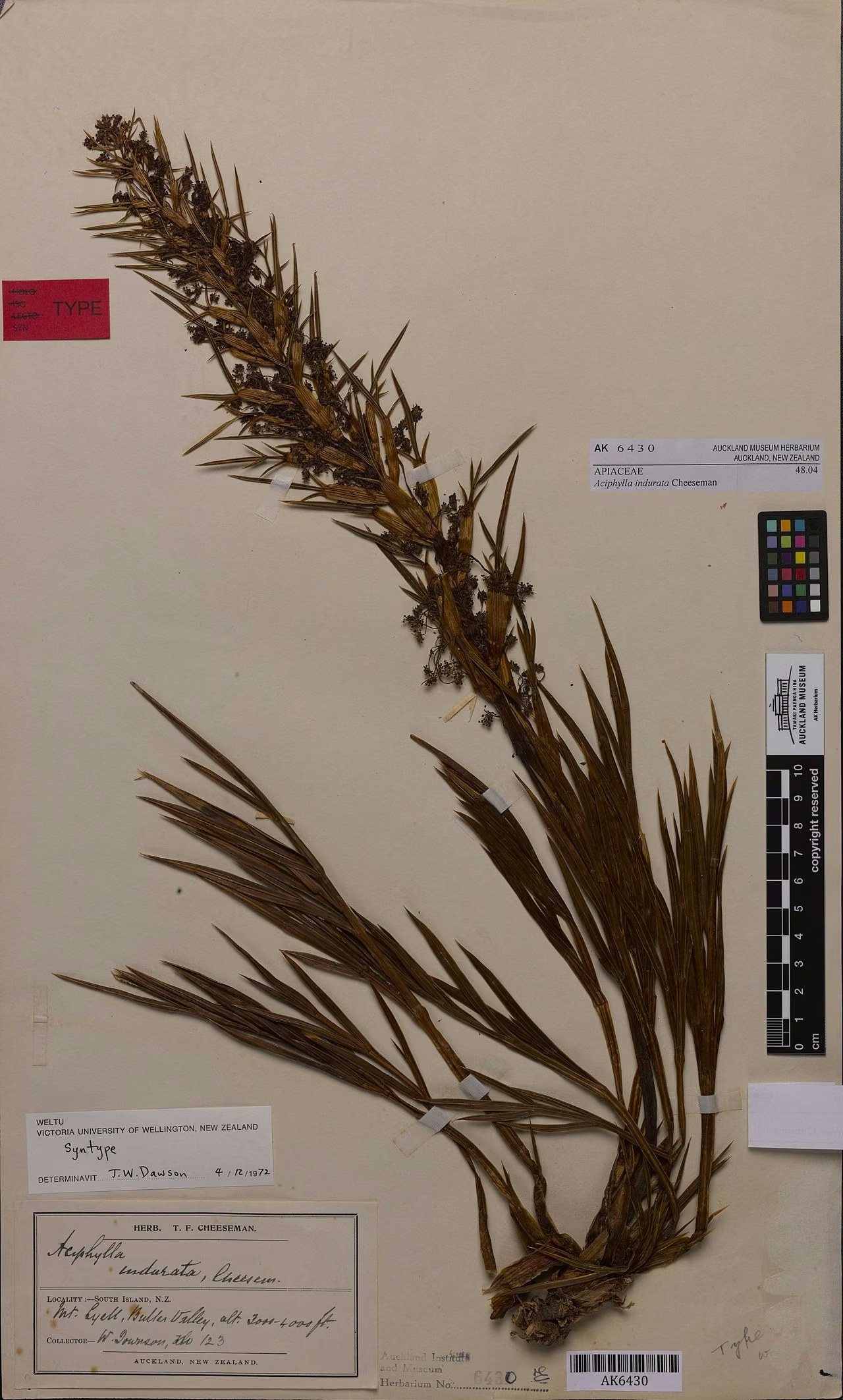
Aciphylla indurata
Aciphylla indurata
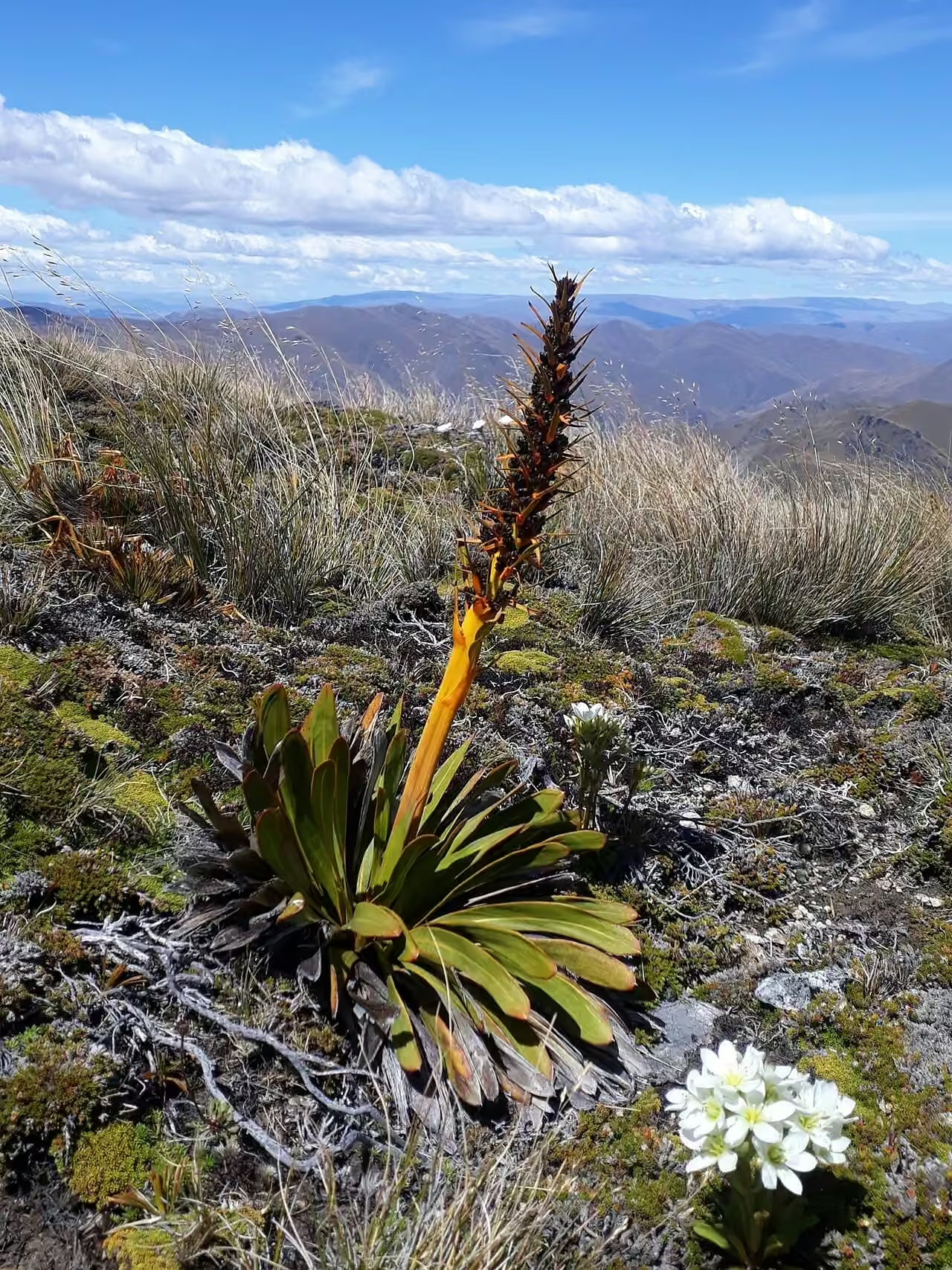
Aciphylla kirkii
Aciphylla kirkii
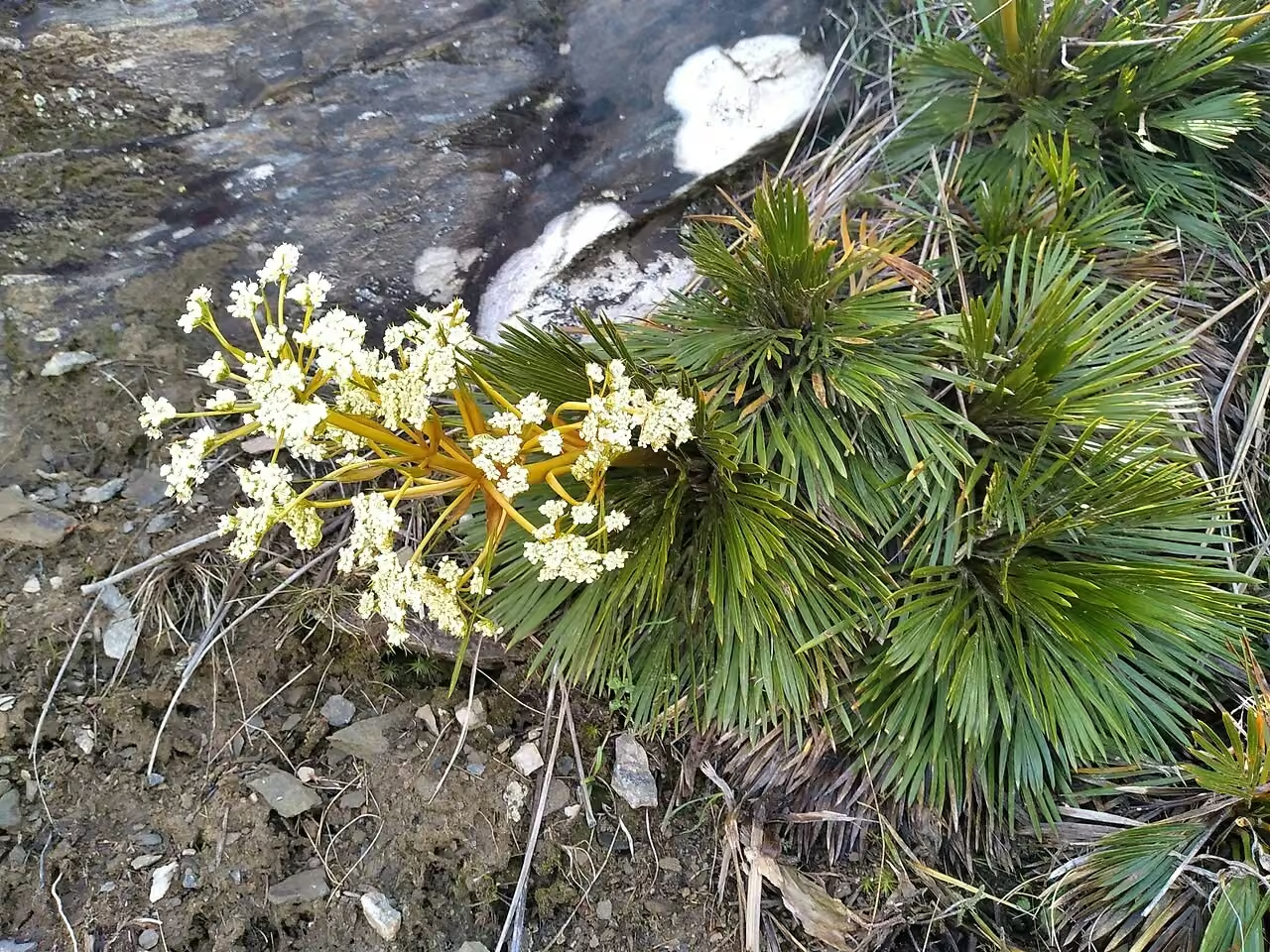
Aciphylla lecomtei
Aciphylla lecomtei
Aciphylla lyallii
Aciphylla lyallii
Plant Conservation
Aciphylla hookeri is ranked Not Threatened (2023) with the qualifiers Data Poor: Size and Data Poor: Trend, so there is little information on how many plants exist or whether numbers are changing. It has been assessed as Not Threatened in every listing since 2004.
Much of its range lies within Kahurangi and Arthur's Pass National Parks. Ongoing control of deer and other browsers, and records of sightings shared on iNaturalist NZ, would help improve knowledge of this uncommon speargrass.
Frequently Asked Questions
Where is Aciphylla hookeri found?
It is found in the South Island mountains from North-west Nelson to Arthur's Pass, mostly on the western side, in low-alpine snow tussock-herbfield between about 900 and 1400 m.
How do you identify Aciphylla hookeri?
Look for a sparse tuft up to 30 cm tall with leaves about 20 cm long, once or twice pinnate, whose short segments are keeled, grooved and needle-tipped, and a narrow panicle of flowers about 15 cm long.
What is the difference between Aciphylla hookeri and Aciphylla anomala?
NZPCN separates them by the petioles and leaflets, which are longer and thicker in A. anomala, and by the stipules on the flower bracts, which are shorter in A. anomala.
Sources and Further Reading
The botanical, growing, and conservation details for Speargrass (Aciphylla hookeri) on this page draw on the New Zealand plant references below. Consult them for full technical records and the latest distribution data.