Speargrass
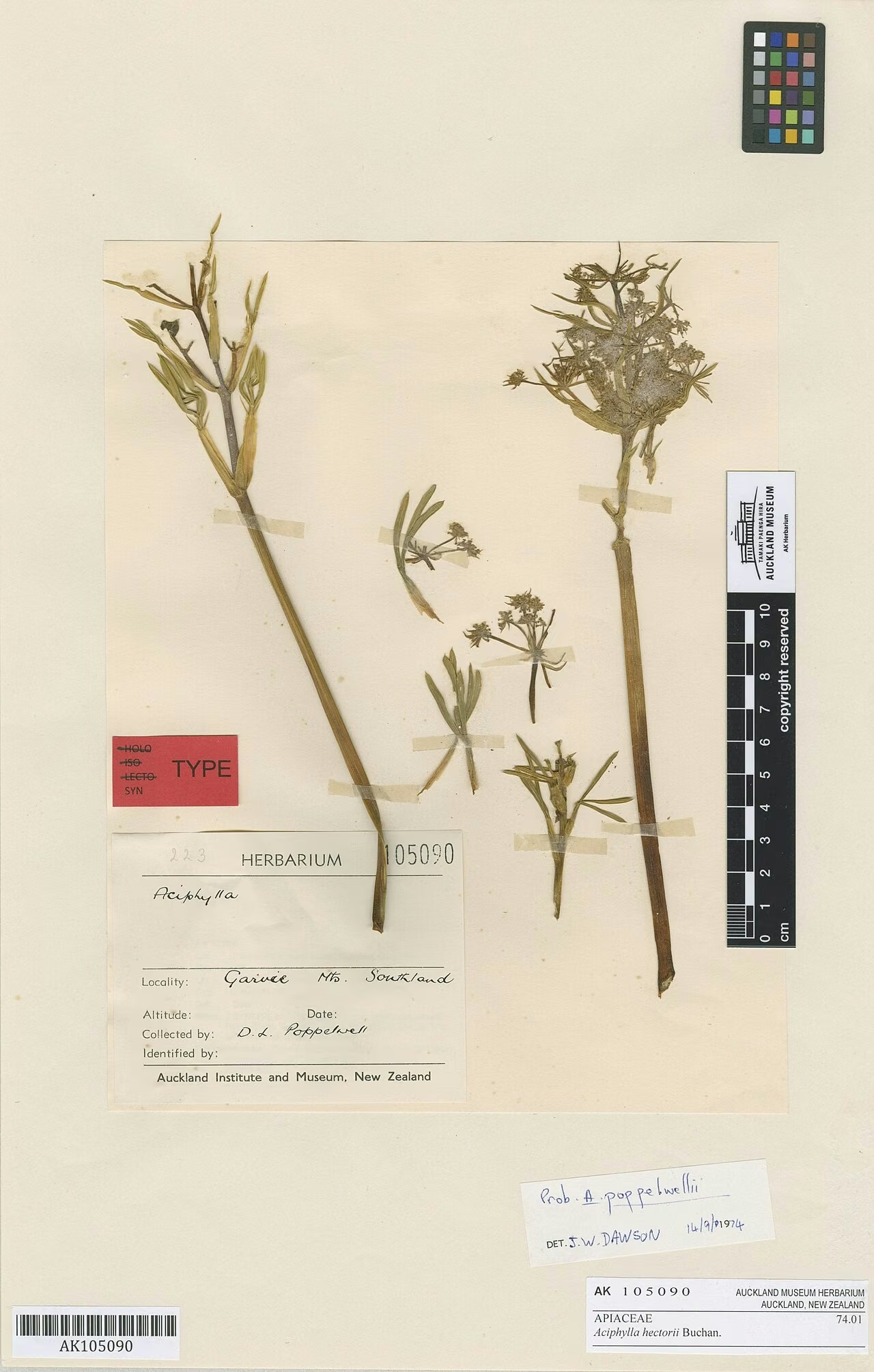
Aciphylla hectorii
Last updated:
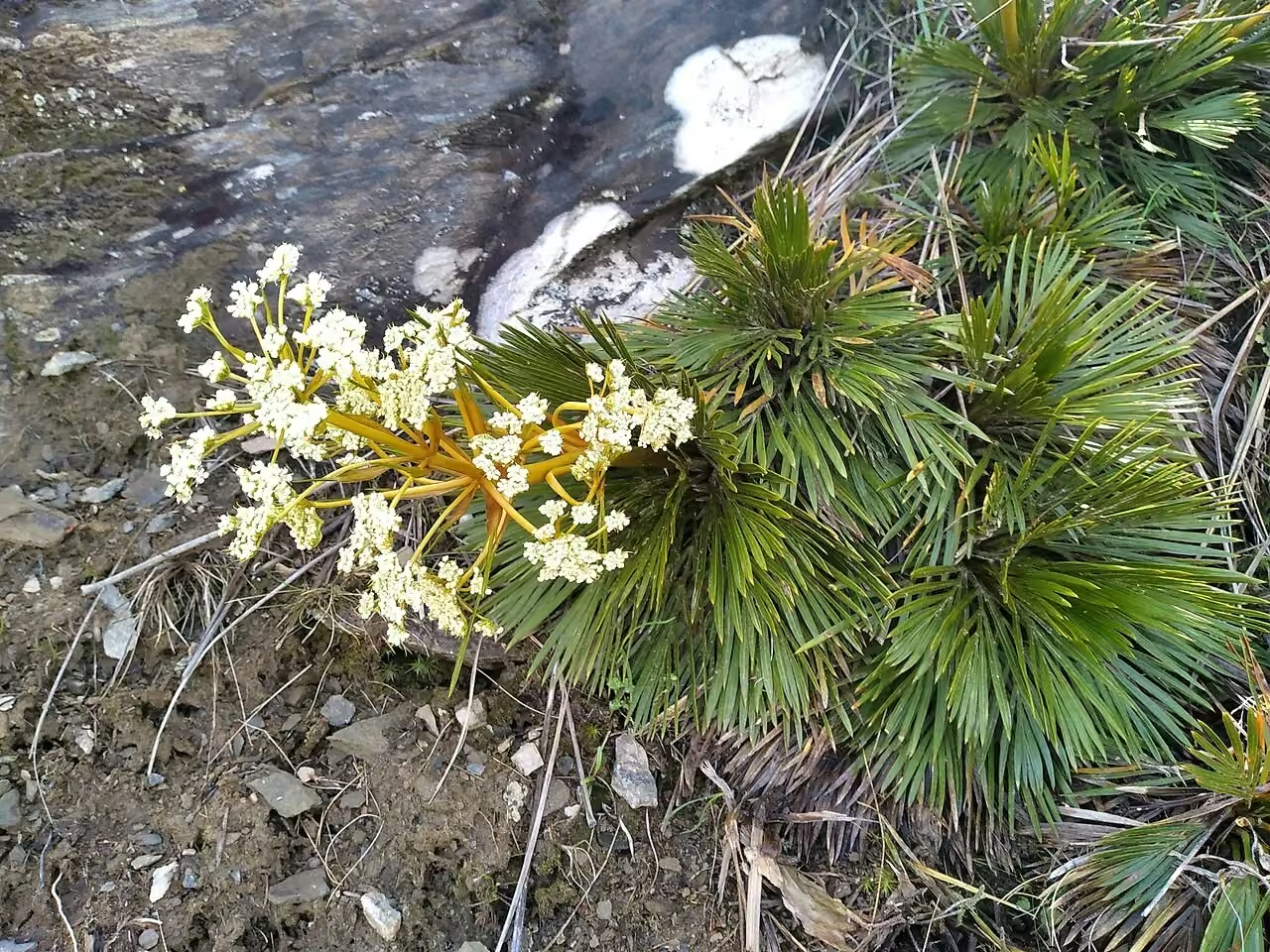
Aciphylla hectorii is a small, tufted speargrass endemic to the South Island, reaching only about 25 cm tall including its flower stems. Each stiff leaf carries a single pair of rigid, needle-tipped pinnae with finely toothed margins. It grows in higher montane to subalpine herbfield, snow tussock-herbfield and fellfield between about 1000 and 1800 m in central and western Otago and south Westland, where it favours rock crevices. Like all Aciphylla it is a member of the carrot family, with separate male and female plants. Nationally it is ranked Not Threatened, though it is regarded as regionally uncommon in Otago. Explore more native flowering plants in our native plant guide.
Plant Description
Aciphylla hectorii is a small tufted herb from a stout rootstock. Its leaves are rigid and bear just one pair of pinnae, each tapering to a sharp, pungent tip, and the pinna margins are finely crenulate-serrulate (minutely scalloped and toothed). The whole plant reaches about 25 cm tall when in flower.
Male and female flowers are produced on separate plants. Male flowering stems are 20 to 30 cm long with sparse to dense flower clusters, while female plants carry grooved stems up to 30 cm long with dense inflorescences of small umbels. The fruit is about 4 mm long and splits into two mericarps, each bearing three to five papery wings.
The most likely confusion is with Aciphylla kirkii, which shares part of its range in Otago. The single pair of rigid, finely toothed pinnae is the most useful feature for recognising A. hectorii. NZPCN notes that the names A. poppelwellii and A. verticillata may also refer to this species.
Quick Facts
| Scientific Name | Aciphylla hectorii |
|---|---|
| Height | Up to 0.25 m (female flower stems to 0.3 m) |
| Spread | Small tuft, roughly 0.1-0.2 m |
| Water Needs | Moist but sharply drained |
| Light | Full sun |
| Frost Tolerance | High; subalpine species |
| Salt Tolerance | No information available; an inland mountain plant |
| Growth Rate | Slow |
| Lifespan | Long-lived perennial |
Climate Best Suited to
It suits a cold continental mountain climate with hard winter frosts, snow cover and cool summers. It is poorly suited to mild, humid lowland gardens.
Regional Suitability
| City | Climate Suitability |
|---|---|
| Auckland | Low |
| Wellington | Low |
| Christchurch | Low |
| Dunedin | Low |
Plant Habitat
Aciphylla hectorii is endemic to the South Island, where it is found in central and western Otago and south Westland. Wikipedia's species list and NZPCN both give an altitudinal range of about 1000 to 1800 m.
It grows in higher montane to subalpine herbfield, snow tussock-herbfield and fellfield, and it particularly favours rock crevices, where its taproot can reach moisture deep among the stones while the crown stays free of standing water.
Growing Requirements
Soil Requirements
In the wild it roots into rock crevices and thin, stony mountain soils.
- Very gritty, free-draining mix if grown in a trough
- Deep root run for the taproot
- Low fertility; avoid rich compost
Light Requirements
It grows among low herbfield and tussock in open, unshaded mountain sites.
- Full sun
- Do not let taller plants overshadow it
Water Requirements
Mountain snowmelt and rain keep the crevices moist in the growing season, yet water drains away quickly.
- Keep evenly moist from spring to autumn
- Never leave the crown sitting wet
Planting and Establishing
This is a plant for specialist alpine growers rather than ordinary gardens. If nursery-raised plants are available, grow them in a deep pot, trough or crevice garden filled with a gritty mix so that the long taproot has room to go down.
Plant with the crown slightly above the surrounding grit and wear gloves, since the pinna tips are sharp. Move young plants only once, because Aciphylla resent root disturbance.
Ecological Role
Its seeds are carried by wind: the fruit splits into winged mericarps that are blown across the open fellfield. The small umbels of flowers attract insects, though the particular pollinators of this species are not recorded in the sources consulted.
Aciphylla species in general are host plants for large flightless speargrass weevils (Lyperobius), but whether any weevil depends on A. hectorii specifically is not documented.
Uses & Significance
Garden Uses
Its small size makes it one of the few speargrasses that could suit a trough or crevice garden, though it is rarely offered in nurseries.
- Alpine troughs and crevice gardens
- Alpine house collections
- Botanic garden displays of Otago mountain flora
Ecological Value
It is part of the distinctive speargrass flora of the southern South Island mountains.
- A South Island endemic found nowhere else
- Contributes to the plant diversity of rocky fellfield
- Regionally uncommon in Otago, so wild populations are worth protecting
Landscaping Uses
In a rock garden, set it in a narrow gap between flat stones, echoing the crevices it occupies in the wild. Its stiff, spiky outline contrasts well with low cushion plants and mat-forming alpine daisies.
Because the leaves are sharp, keep it away from path edges and the front of beds where people might brush against it.
Seasonal Care Calendar
Spring
New leaves emerge from the crown as the snow melts.
- Begin regular watering of cultivated plants
- Top up grit around the crown
Summer
Flowering runs from December to January, with male and female plants producing separate flower stems.
- Keep the root zone moist during dry spells
- Note which plants are female if you want seed
Autumn
Fruit ripens from January to March, when the winged mericarps are shed.
- Collect ripe fruit from cultivated female plants
- Sow seed promptly
Winter
In the wild it lies dormant under snow and frost.
- Protect trough plants from prolonged winter wet
- No feeding needed
When to Prune and How Much
No pruning is needed. Spent flowering stems can be cut off at the base once fruit has been shed or collected.
Old dead leaves can be pulled away carefully with gloves to keep the crown dry and reduce the risk of rot.
How to Grow Speargrass
No propagation protocol written specifically for Aciphylla hectorii was found in the sources consulted, and it is seldom grown. The notes below follow the general approach alpine growers use for small Aciphylla species. Because male and female flowers are on separate plants, seed can only be expected from a female plant that has had a male nearby. Seed raised from cultivated plants or collected with permission is the right starting point; wild plants should not be dug up, both for conservation reasons and because the deep taproot rarely survives transplanting.
From Seed
Fruit ripens from January to March. Each fruit splits into two winged mericarps, which are light and easily lost to the wind, so heads should be checked often as they turn brown. Seed of alpine Apiaceae is generally best sown fresh and left outdoors over winter, so that natural cold breaks dormancy before spring germination.
- Collect brown, dry fruit from a female plant in late summer
- Sow on the surface of a deep pot of gritty seed mix and cover lightly with fine grit
- Stand the pot outside in a cold, sunny spot through winter
- Keep the mix just moist and watch for seedlings in spring
- Pot seedlings individually into deep pots while small, before the taproot lengthens
By Division
Older plants with a branched rootstock occasionally form more than one crown. Separating these is possible but carries a real risk of losing the plant, so it is only worth trying on a vigorous cultivated specimen.
- Lift the plant in early spring, just as growth begins
- Cut through the rootstock so each piece has its own crown and roots
- Replant at once in gritty mix and keep shaded and moist until established
Pests & Diseases
No specific pest problems are recorded for this species. In cultivation the main cause of loss is crown and root rot in warm, wet or poorly drained conditions.
In the wild, Aciphylla foliage and flower stems may be browsed by introduced animals such as hares, deer and chamois, which can prevent plants from setting seed.
Cultural Significance
No traditional Māori name or use specific to Aciphylla hectorii is recorded in the sources consulted. Taramea perfume was made from the resin of larger speargrasses, especially Aciphylla aurea, rather than small species such as this one.
The species was described by John Buchanan and named for Sir James Hector, who led the geological survey of Otago in the 1860s and became the first director of the Colonial Museum.
Bonus Tip
If you are looking for this plant in Otago, search in rock crevices rather than open tussock: its small, one-paired leaves are easy to overlook until the flowering stems rise in December. Check the pinna margins with a hand lens for the fine teeth that help separate it from Aciphylla kirkii.
Related Plants
Explore other native plants that share similar characteristics or habitats with Speargrass (Aciphylla hectorii), offering further insights into New Zealand's diverse flora. These related species provide context and opportunities for complementary planting in your garden.
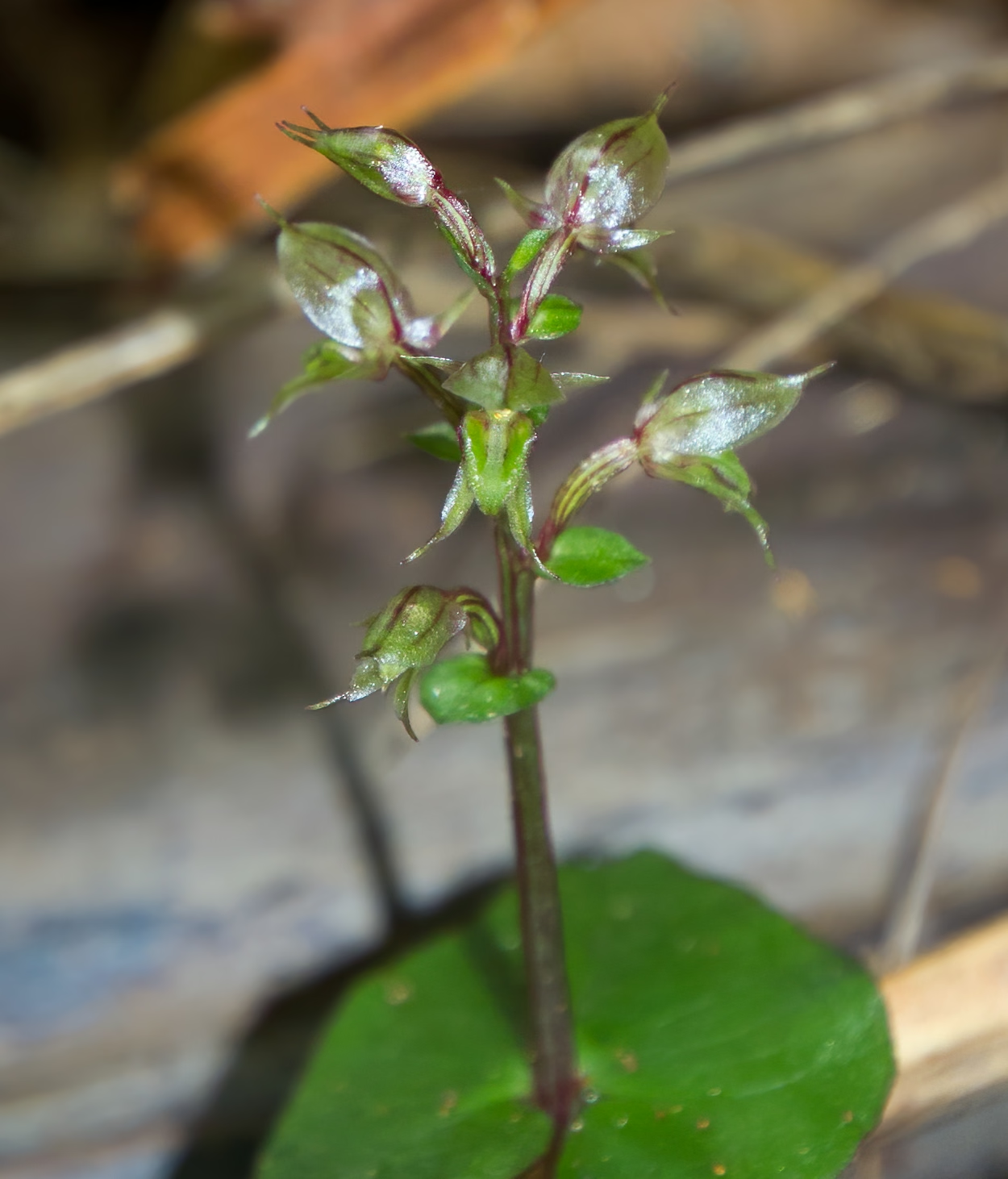
Heart-Leaved Orchid
Acianthus sinclairii
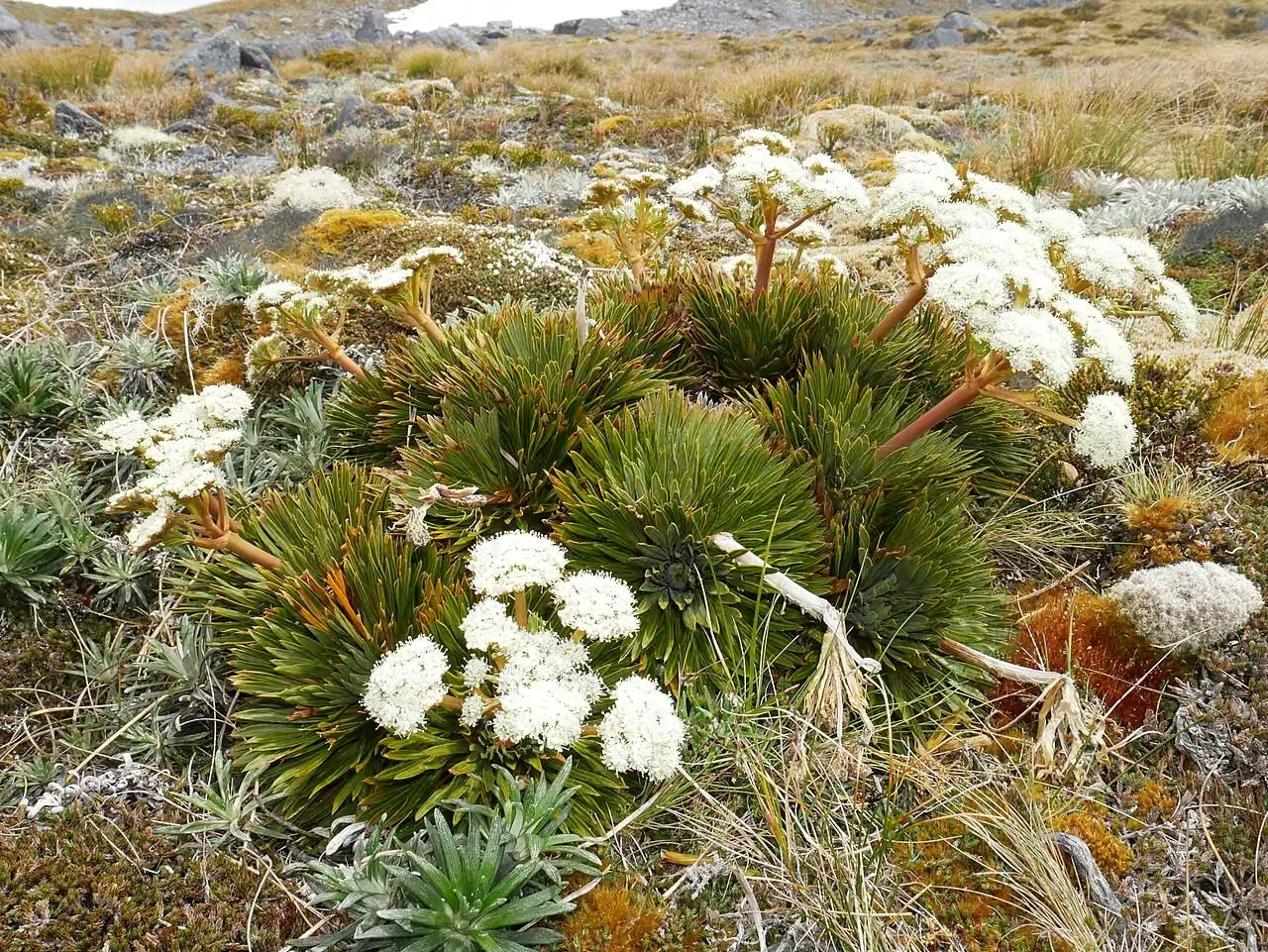
Aciphylla crosby-smithii
Aciphylla crosby-smithii
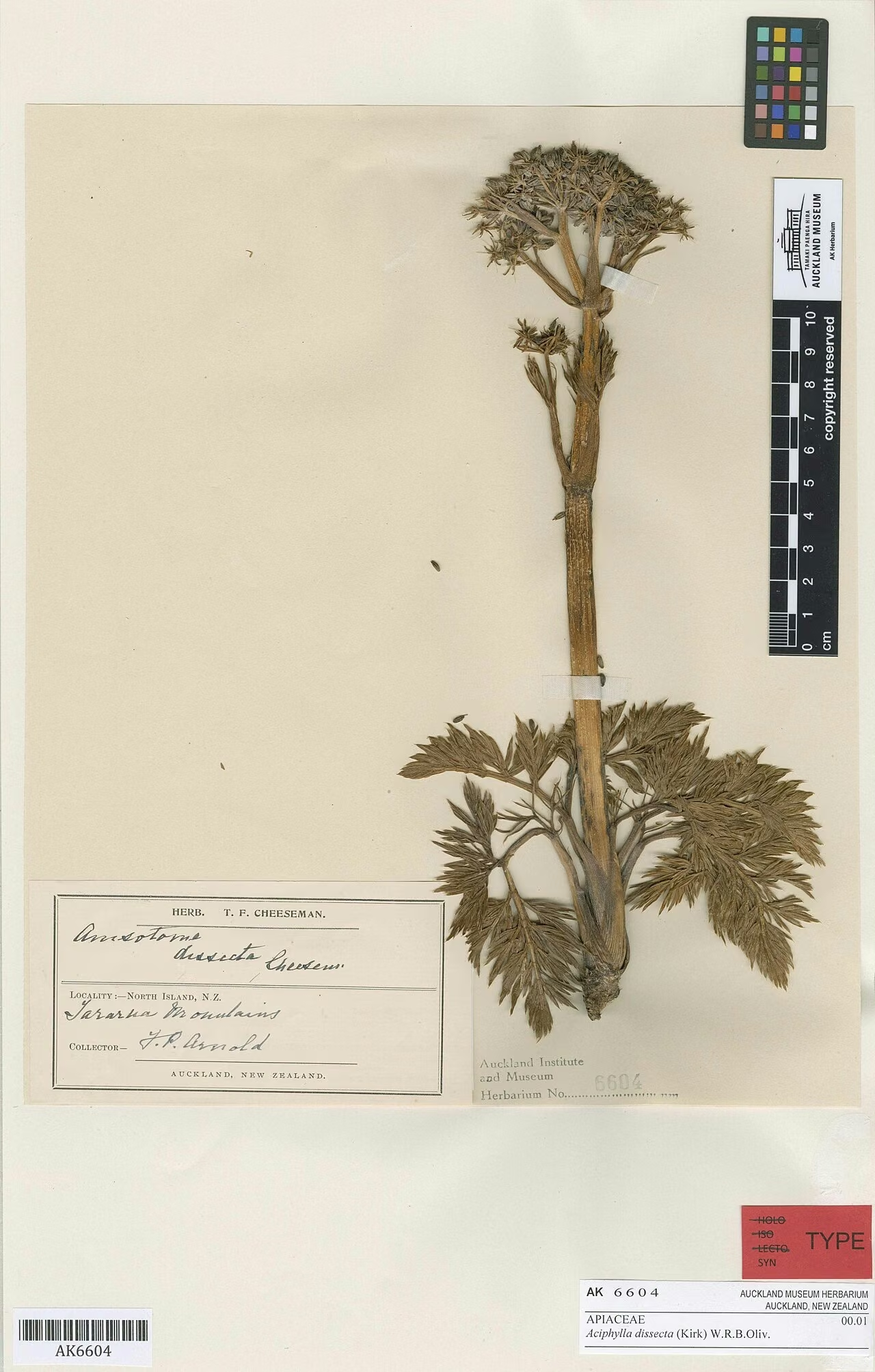
Aciphylla dissecta
Aciphylla dissecta
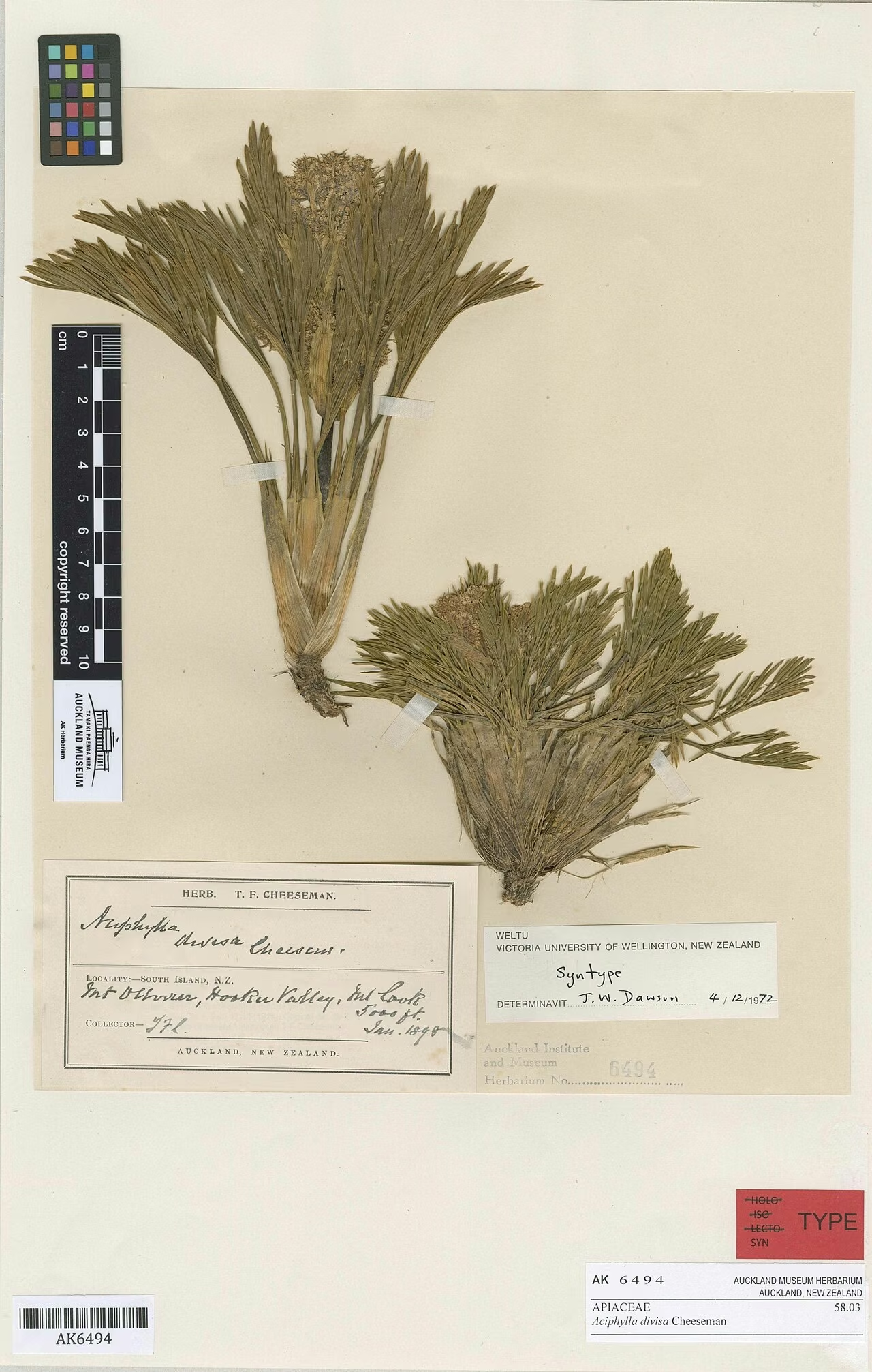
Aciphylla divisa
Aciphylla divisa
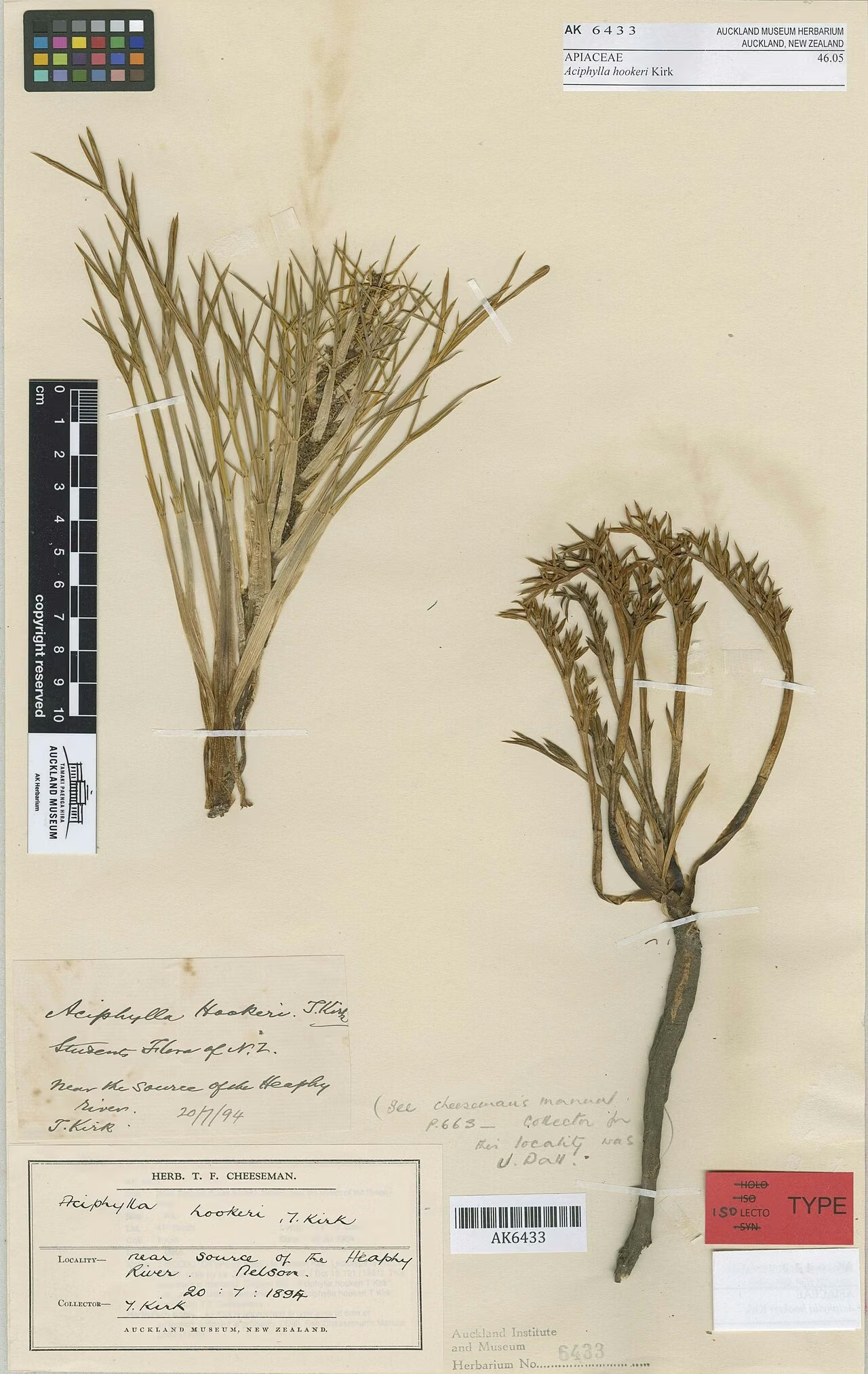
Aciphylla hookeri
Aciphylla hookeri
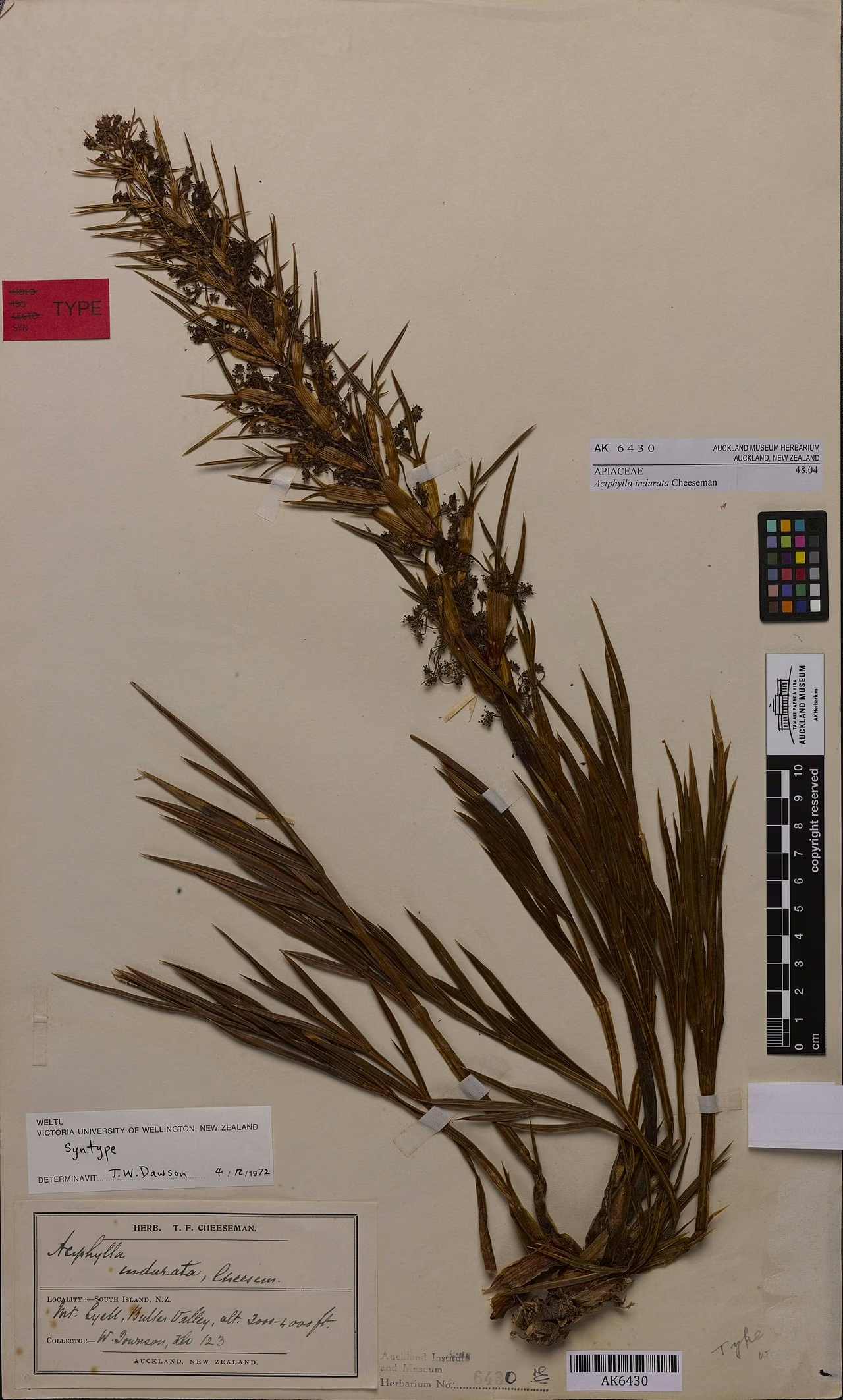
Aciphylla indurata
Aciphylla indurata
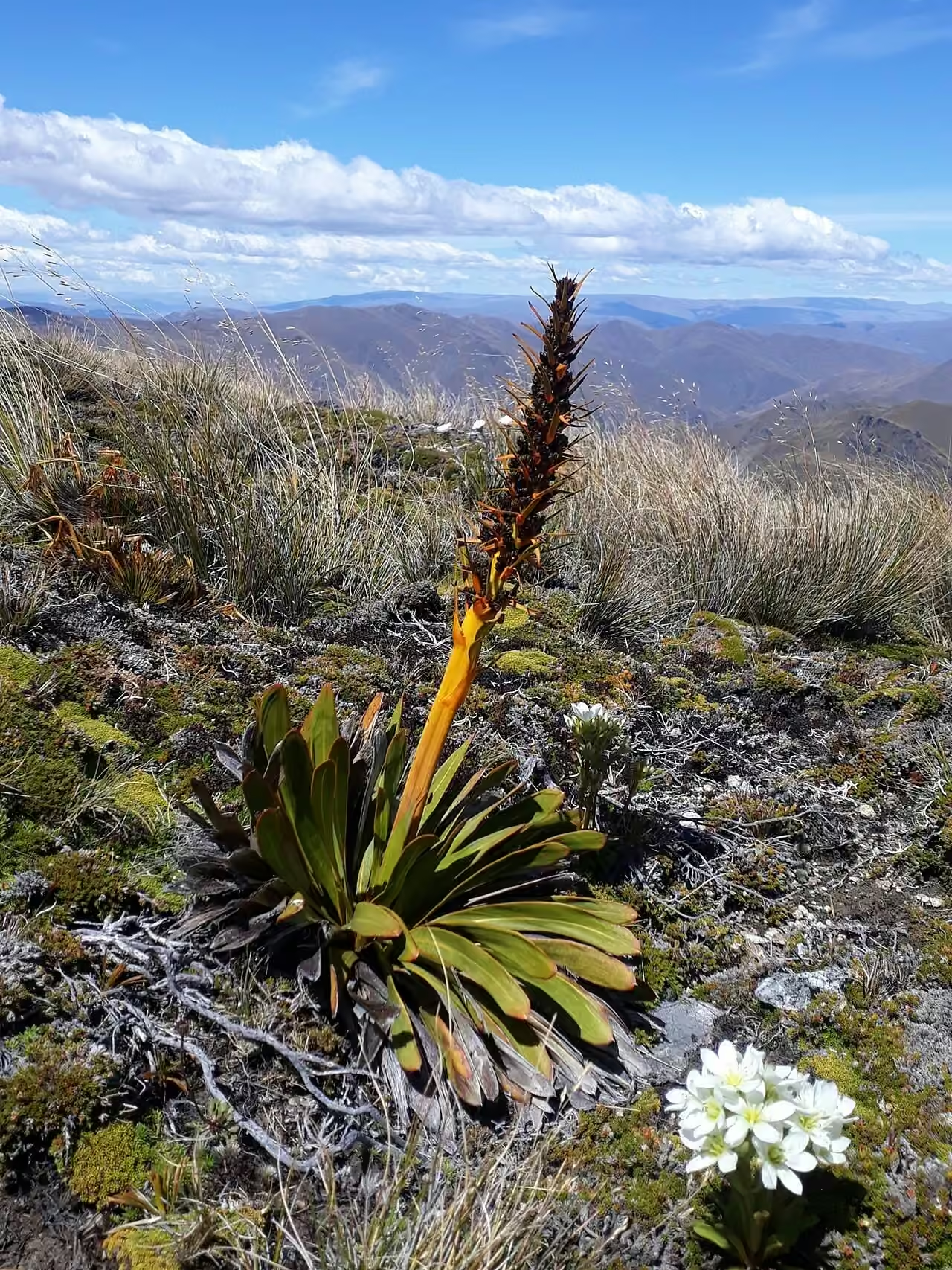
Aciphylla kirkii
Aciphylla kirkii
Aciphylla lecomtei
Aciphylla lecomtei
Plant Conservation
Aciphylla hectorii is ranked Not Threatened (2023), with the qualifiers Data Poor: Size and Data Poor: Trend, meaning its population size and trend are not well known. In the 2025 Otago regional assessment it is listed as Regionally At Risk - Regionally Naturally Uncommon.
Browsing by introduced herbivores is a general pressure on speargrasses. Supporting deer, chamois and hare control in mountain areas, and recording sightings on iNaturalist NZ, both help fill the data gaps for this species.
Frequently Asked Questions
Where does Aciphylla hectorii grow?
It grows in the mountains of central and western Otago and south Westland, at about 1000 to 1800 m, in herbfield, snow tussock-herbfield and fellfield, usually tucked into rock crevices.
How tall does Aciphylla hectorii get?
It is one of the small speargrasses, forming a tuft up to about 25 cm tall including the flowering stem, with female flower stems reaching about 30 cm.
How do you tell Aciphylla hectorii from Aciphylla kirkii?
NZPCN warns the two are easily confused because their ranges overlap in Otago. A. hectorii has only one pair of rigid pinnae per leaf with finely crenulate-serrulate margins, whereas A. kirkii has stiff pinnae with thickened margins and bright orange spiky bracts around its flowers.
Who is Aciphylla hectorii named after?
The species honours Sir James Hector, the 19th-century geologist and naturalist who led the Otago geological survey and later the Colonial Museum in Wellington.
Sources and Further Reading
The botanical, growing, and conservation details for Speargrass (Aciphylla hectorii) on this page draw on the New Zealand plant references below. Consult them for full technical records and the latest distribution data.