Speargrass
Aciphylla crosby-smithii
Last updated:
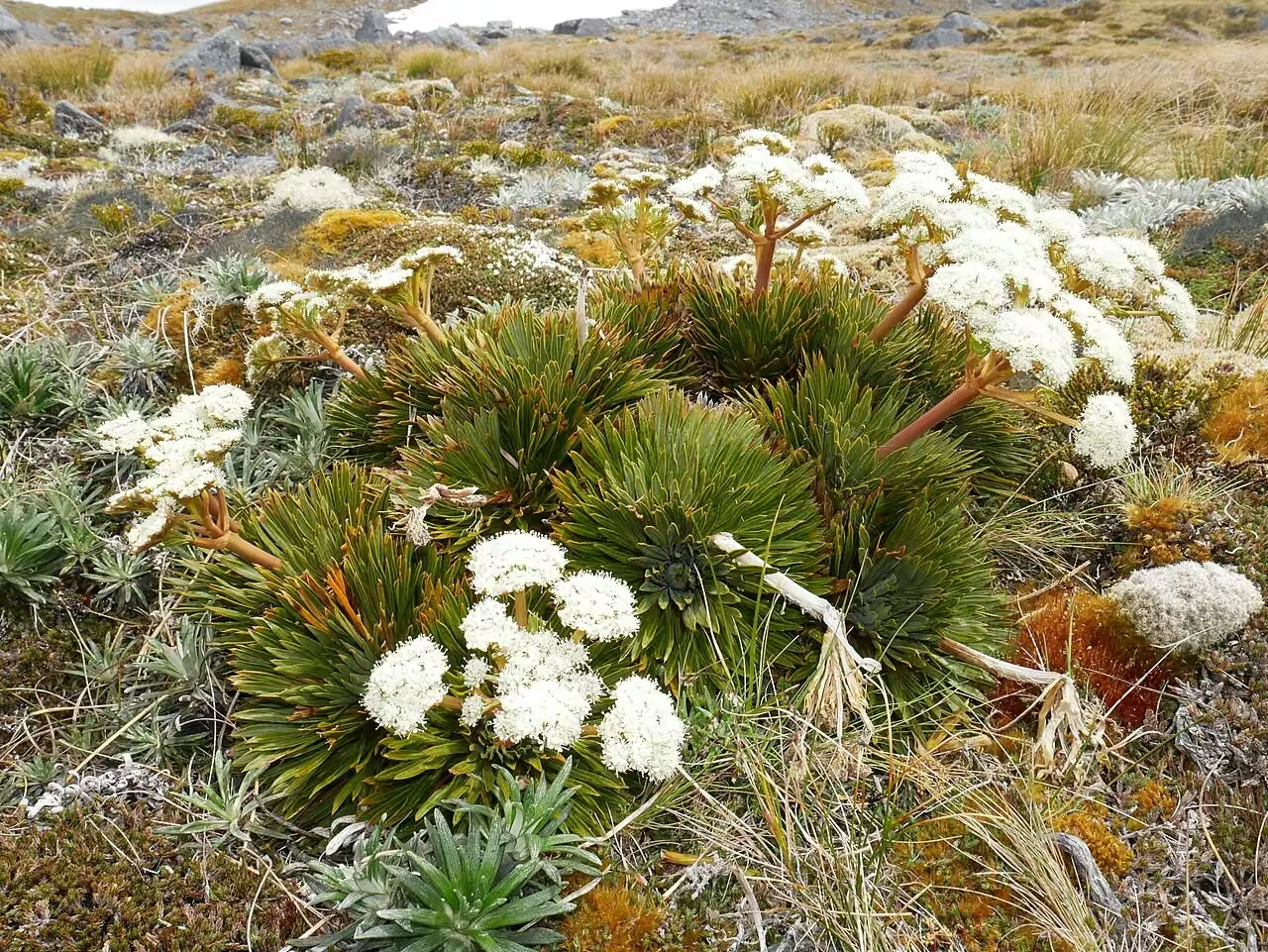
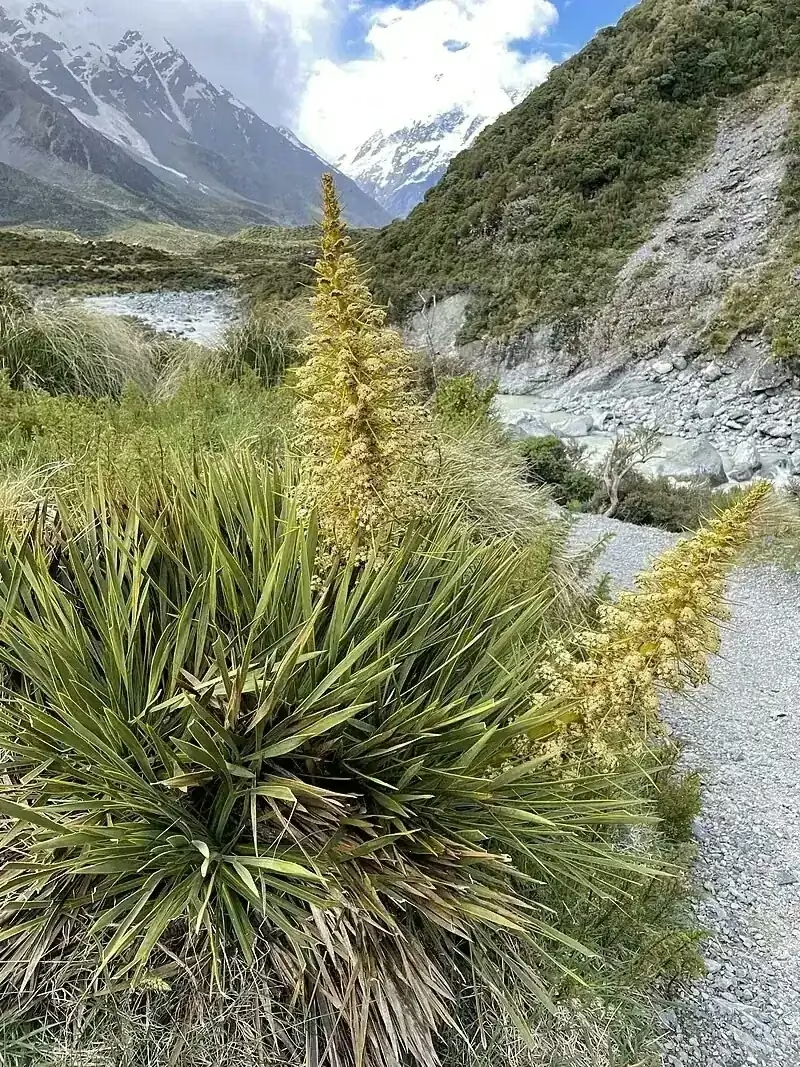
Aciphylla crosby-smithii is a small, cushion-forming speargrass endemic to the mountains of southern Fiordland. Many crowded rosettes of stiff, sharp-pointed leaves with yellow thickened margins and red midribs build up dense masses up to 60 cm across, and in summer the plant sends up stout grooved stems to about 40 cm topped with rounded heads of small flowers. It grows on exposed rocky slopes and in short snow tussock herbfield between about 1400 and 1600 m. Known from a small, range-restricted population, it is ranked At Risk - Naturally Uncommon. Leaves running up the base of the flowering stem help identify it. Explore more native flowering plants in our native plant guide.
Plant Description
Aciphylla crosby-smithii is a robust herb in the carrot family (Apiaceae). Flora of New Zealand describes very stout, woody, many-headed stems bearing crowded rosettes up to 15 cm across, which together form dense, cushion-like masses up to 60 cm in diameter. In flower the plant reaches about 40 cm tall.
The leaves are stiff and once-pinnate, with 2 to 3 pairs of linear-oblong leaflets about 25 to 35 mm long and 3 to 4 mm wide. They have red midribs and thickened yellow margins, and taper to sharp, needle-like points. The grooved flowering stems are about 230 to 270 mm long and 20 to 50 mm thick, ending in a globose head of compound umbels on fine rays. The fruits split into narrowly elliptic mericarps about 4 to 5 mm long, each with five evenly winged ribs.
NZPCN singles out the leaves that continue along the basal part of the flowering stem as the distinctive feature separating it from the similar cushion speargrasses Aciphylla spedenii and A. congesta.
Quick Facts
| Scientific Name | Aciphylla crosby-smithii |
|---|---|
| Height | Up to 40 cm in flower |
| Spread | Cushions up to 60 cm across |
| Water Needs | Moist; very high rainfall habitat |
| Light | Full sun, exposed |
| Frost Tolerance | Very high; low alpine species |
| Salt Tolerance | Not recorded; an inland alpine plant |
| Growth Rate | Slow |
| Lifespan | Long-lived perennial |
Climate Best Suited to
Adapted to Fiordland's cold, very wet and windy low alpine climate, with heavy snow and frequent cloud; it is not suited to warm lowland climates.
Regional Suitability
| City | Climate Suitability |
|---|---|
| Auckland | Low |
| Wellington | Low |
| Christchurch | Low |
| Dunedin | Medium |
Plant Habitat
This speargrass is endemic to the South Island (Te Waipounamu), where it is known from southern Fiordland, with a possible occurrence in western Otago. The type specimen came from Mount Cleughearn in Fiordland.
It is a low alpine plant of about 1400 to 1600 m above sea level, growing on exposed rocky slopes and in short snow tussock herbfield, where its compact cushion form resists wind and snow.
Growing Requirements
Soil Requirements
In the wild it grows among rocks in thin, stony alpine soils that are constantly moist from Fiordland's rainfall yet drain quickly.
- Very gritty, stony, free-draining mix
- Constant moisture without waterlogging
- Low fertility
Light Requirements
It grows on open, exposed slopes in full light.
- Full sun with cool temperatures
- Good air movement
Water Requirements
Southern Fiordland receives very high rainfall, so plants never dry out for long, but water drains rapidly through rocky ground.
- Keep evenly moist in cultivation
- Ensure sharp drainage to avoid rot
Planting and Establishing
No cultivation information specific to this species was found in the sources consulted, and it is rarely, if ever, seen in gardens. Any attempt is best left to experienced alpine growers working with legally sourced material.
Based on its habitat, it would need a cool, moist, stony scree bed or deep pot in full light, ideally in the far south of the country.
Ecological Role
Like other speargrasses it has separate male and female plants. Its winged mericarps are suited to wind dispersal, as NZPCN records for related species.
Speargrasses are hosts for specialist native invertebrates, including speargrass weevils, as noted by Te Papa, although the insects associated with this particular species are not documented in the sources consulted.
Uses & Significance
Garden Uses
This is a plant of conservation and botanical interest rather than a practical garden plant.
- Specialist alpine collections only
- Botanical study of Fiordland's endemic flora
- Not recommended for general gardens
Ecological Value
It is a range-restricted part of Fiordland's distinctive alpine flora.
- Endemic to a small area of southern Fiordland
- Speargrasses support specialist invertebrates
- Cushions shelter smaller alpine plants and insects
Landscaping Uses
In the wild, its dense, golden-edged cushions punctuate rocky alpine slopes, especially when the rounded flower heads rise above them in summer.
For a speargrass effect in a garden, choose a widely cultivated species instead; this rare plant is best appreciated in its natural setting.
Seasonal Care Calendar
Spring
New leaves grow from the rosettes as snow retreats from the low alpine zone.
- Flower stems begin to develop on mature plants
Summer
Flowering runs from November to February, with globose flower heads on stout grooved stems.
- Look for flowering cushions on Fiordland's tops
- Watch your footing: the leaves are sharp
Autumn
Fruiting runs from December to March, when the winged fruits are shed.
- Leave wild seed undisturbed
Winter
The cushions sit under snow through the alpine winter.
- No action required
When to Prune and How Much
No pruning is needed. On any cultivated plant, old flower stems can be cut out once they have dried, using thick gloves.
Avoid cutting into the cushion itself, as damaged rosettes may rot.
How to Grow Speargrass
No propagation protocol for Aciphylla crosby-smithii was found in the sources consulted, and the plant should never be collected from the wild. The notes below describe how Aciphylla species are generally raised by alpine specialists, not proven methods for this species. Seed is the usual route, and because the species has separate male and female plants, seed is produced only on females that have been pollinated by a nearby male. Its stout, many-headed stems mean that rosettes can in principle be separated from an established cultivated plant, but this risks losing the parent. Whichever method is tried, expect slow growth: alpine speargrasses can take several years to reach flowering size.
From Seed
Aciphylla seed generally germinates best when sown fresh and given a cold, moist winter. Fruits of this species ripen between December and March.
- Collect ripe fruits only from cultivated female plants
- Sow fresh in deep pots of gritty mix to allow for a long taproot
- Leave outdoors over winter to chill
- Grow seedlings on slowly in cool conditions before transplanting
By Division of Rosettes
Where a cultivated plant has built up several rosettes, an outer rosette with its own roots may be separated, though success with speargrasses is often low.
- Wear thick gloves and eye protection
- Separate an outer rosette with roots attached in spring
- Pot into a deep, gritty mix and keep cool and moist
- Do not disturb until new growth shows it has established
Pests & Diseases
No specific pests are recorded for this species in the sources consulted. Introduced browsing animals such as deer can damage speargrasses in alpine areas, and specialist native weevils feed on the genus.
In cultivation, rot in warm, humid or poorly drained conditions is the most likely cause of failure.
Cultural Significance
Te Papa notes that the larger speargrasses are known as taramea and smaller ones as papaī, with the scented sap of taramea valued for perfume. No traditional Māori use specific to Aciphylla crosby-smithii is recorded in the sources consulted.
The species was described by Donald Petrie. It is named after J. Crosby Smith, who collected the type specimen on Mount Cleughearn in Fiordland on 3 January 1914.
Bonus Tip
When looking for this speargrass in Fiordland, check the flowering stem: if leaves continue up its lower part, you are probably looking at Aciphylla crosby-smithii rather than the similar A. congesta or A. spedenii.
Related Plants
Explore other native plants that share similar characteristics or habitats with Speargrass (Aciphylla crosby-smithii), offering further insights into New Zealand's diverse flora. These related species provide context and opportunities for complementary planting in your garden.
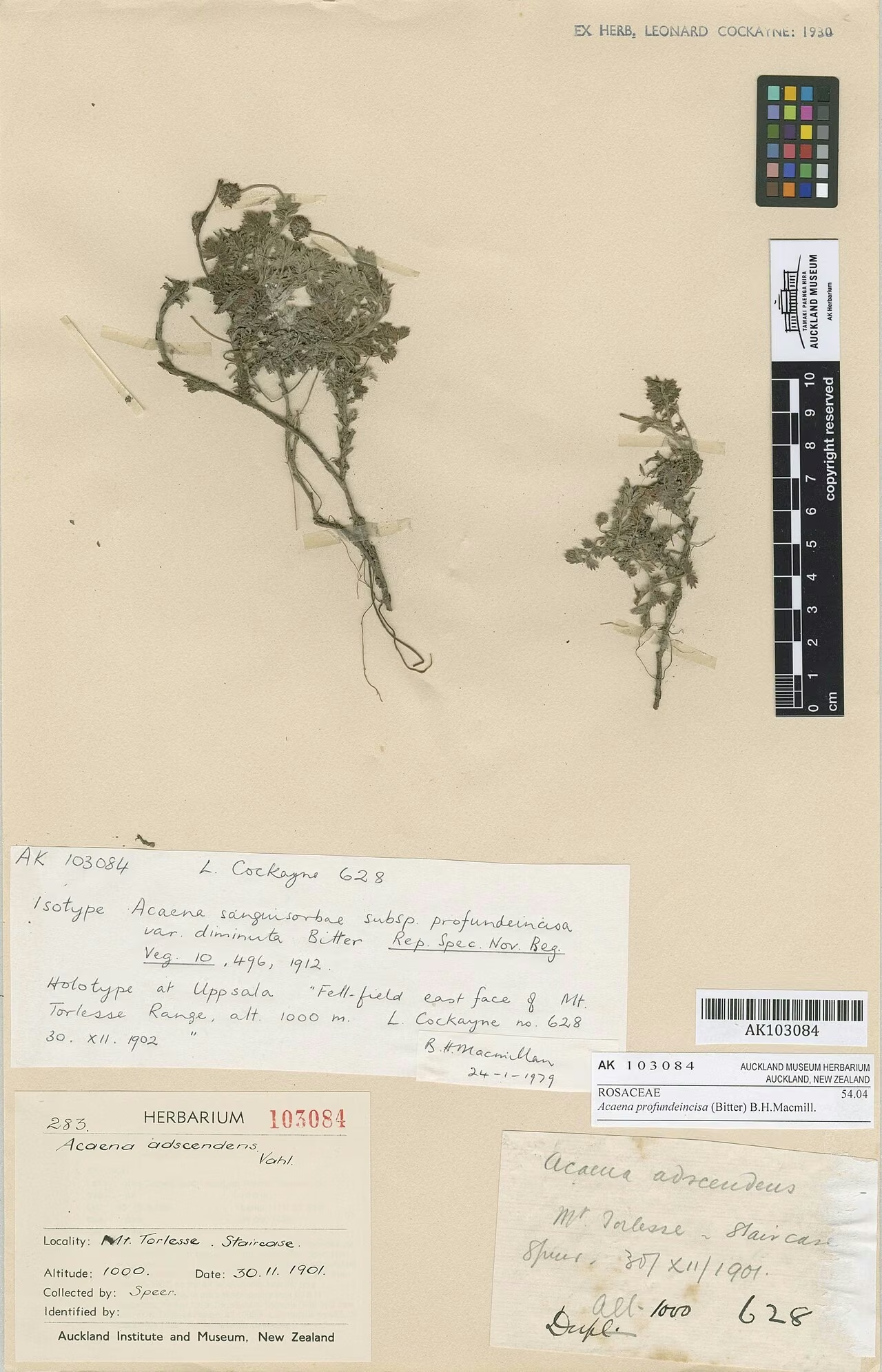
Acaena profundeincisa
Acaena profundeincisa
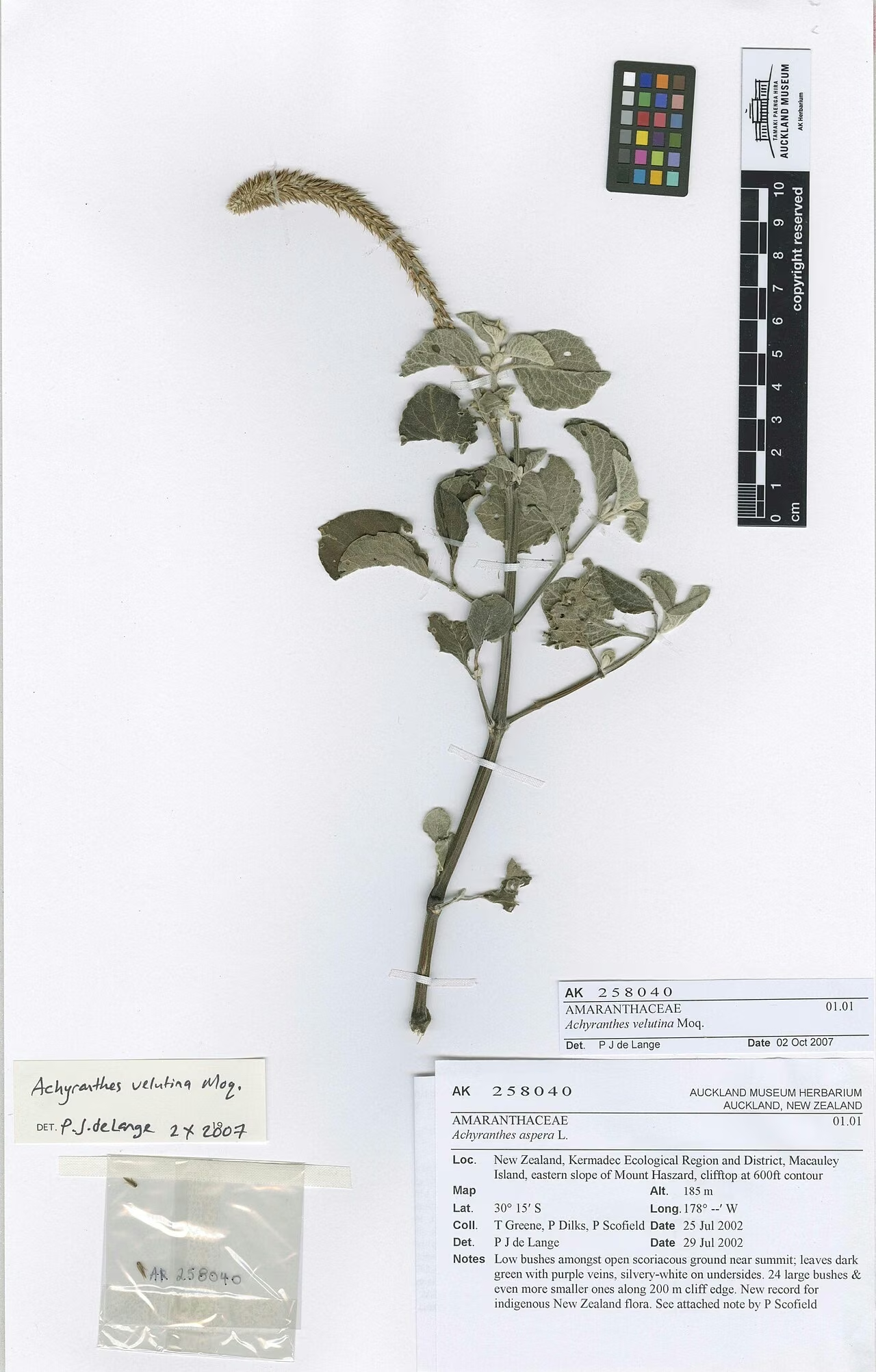
Devil's Horsewhip
Achyranthes velutina
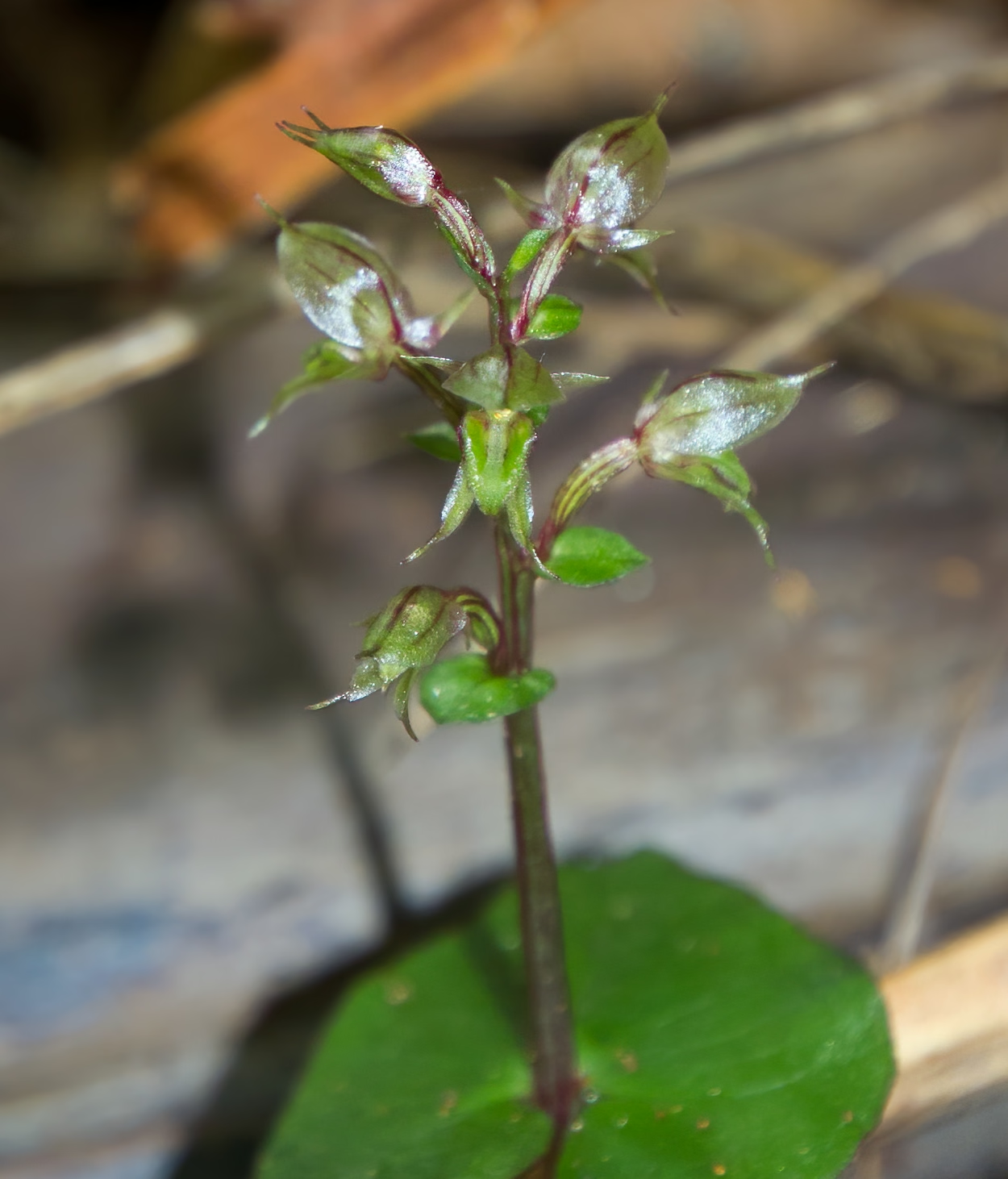
Heart-Leaved Orchid
Acianthus sinclairii
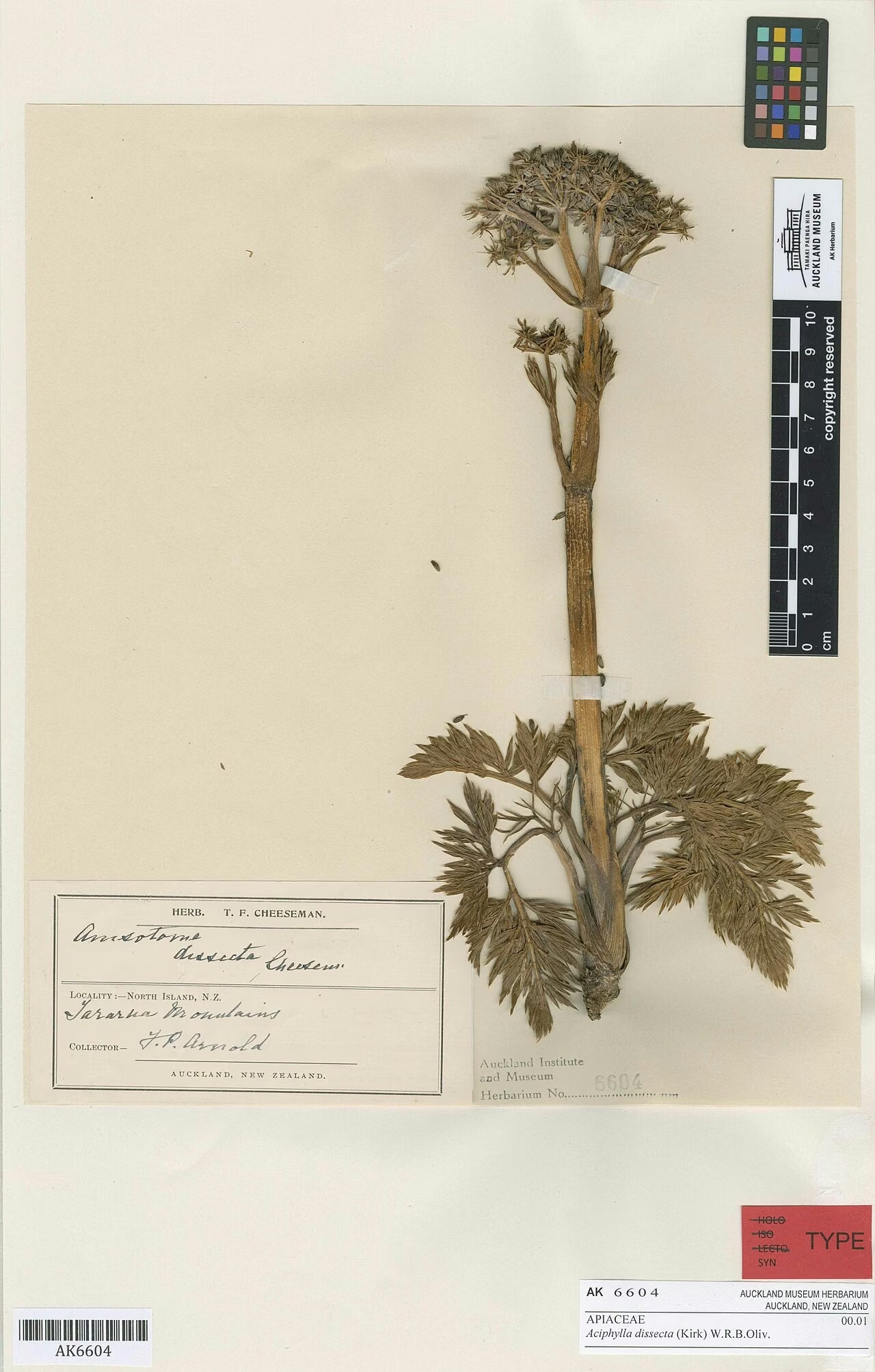
Aciphylla dissecta
Aciphylla dissecta
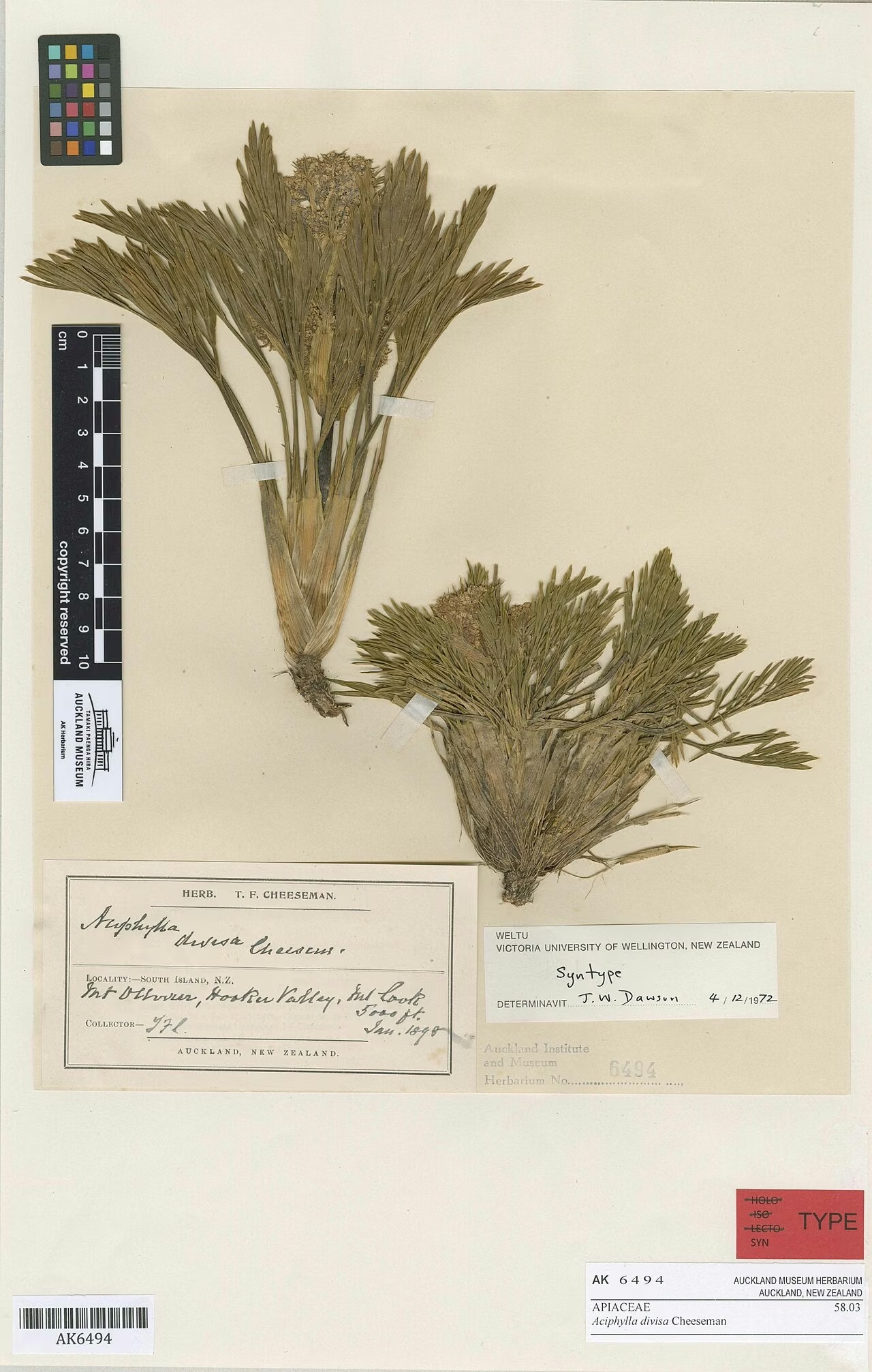
Aciphylla divisa
Aciphylla divisa
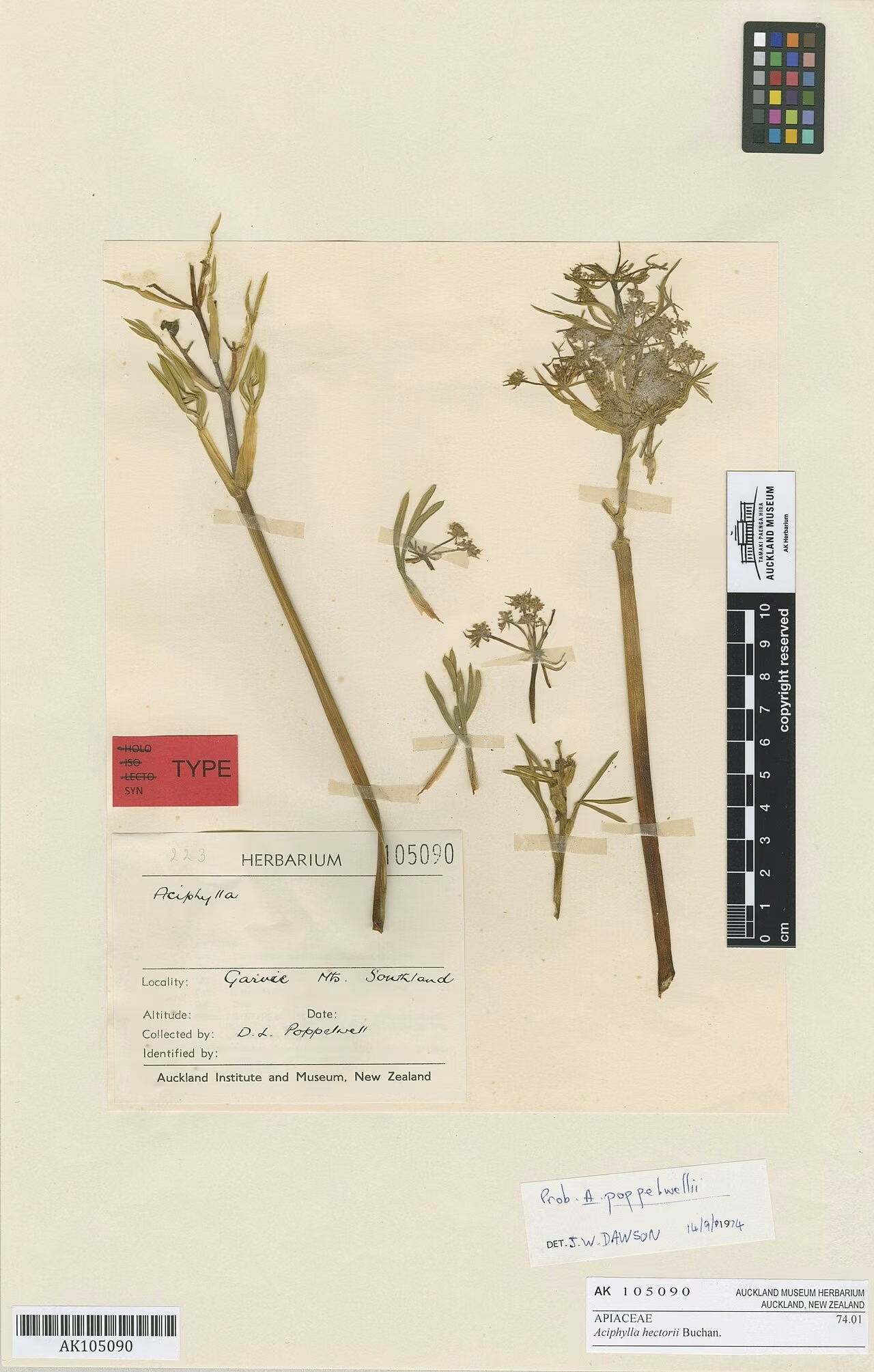
Aciphylla hectorii
Aciphylla hectorii
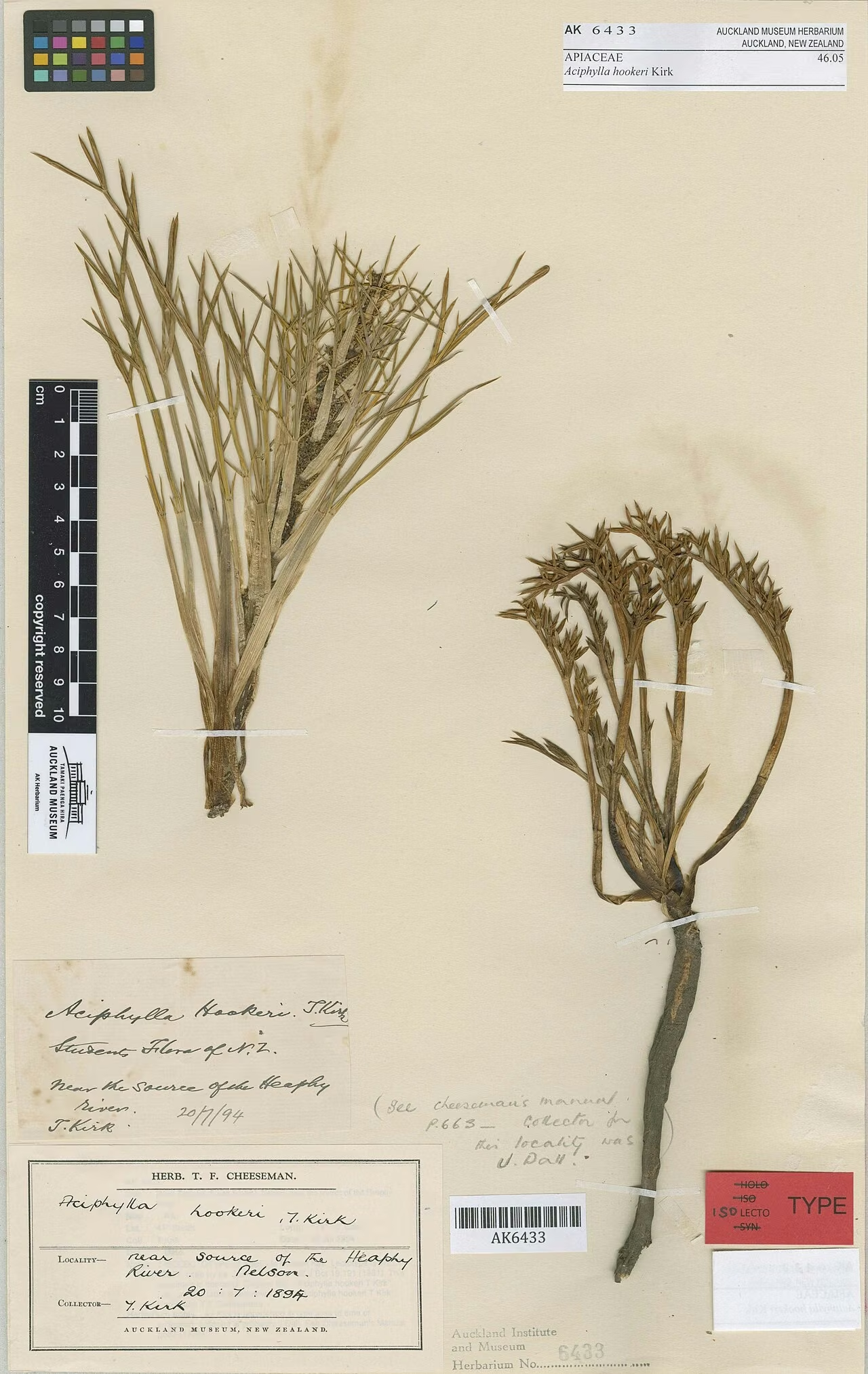
Aciphylla hookeri
Aciphylla hookeri
Golden Speargrass
Golden Speargrass
Plant Conservation
Aciphylla crosby-smithii is ranked At Risk - Naturally Uncommon (2023), with qualifiers for a small population, a restricted range, and poor data on its distribution and trend. Its rarity reflects a naturally tiny range rather than a documented decline.
Its habitat lies within Fiordland National Park. Controlling deer and other browsing animals, and further survey to better understand its distribution, would help secure it.
Frequently Asked Questions
Where does Aciphylla crosby-smithii grow?
It is endemic to southern Fiordland, possibly extending into western Otago, on exposed rocky slopes and short snow tussock herbfield at 1400 to 1600 m.
How do you identify Aciphylla crosby-smithii?
NZPCN notes that leaves extending along the lower part of the flowering stem are distinctive, separating it from Aciphylla spedenii and A. congesta.
Who was Aciphylla crosby-smithii named after?
It is named after J. Crosby Smith, who collected the type specimen on Mount Cleughearn in Fiordland on 3 January 1914.
Is Aciphylla crosby-smithii rare?
Yes, it is ranked At Risk - Naturally Uncommon because it has a small population confined to a restricted area of Fiordland.
Sources and Further Reading
The botanical, growing, and conservation details for Speargrass (Aciphylla crosby-smithii) on this page draw on the New Zealand plant references below. Consult them for full technical records and the latest distribution data.