Heart-Leaved Orchid
Acianthus sinclairii
Last updated:
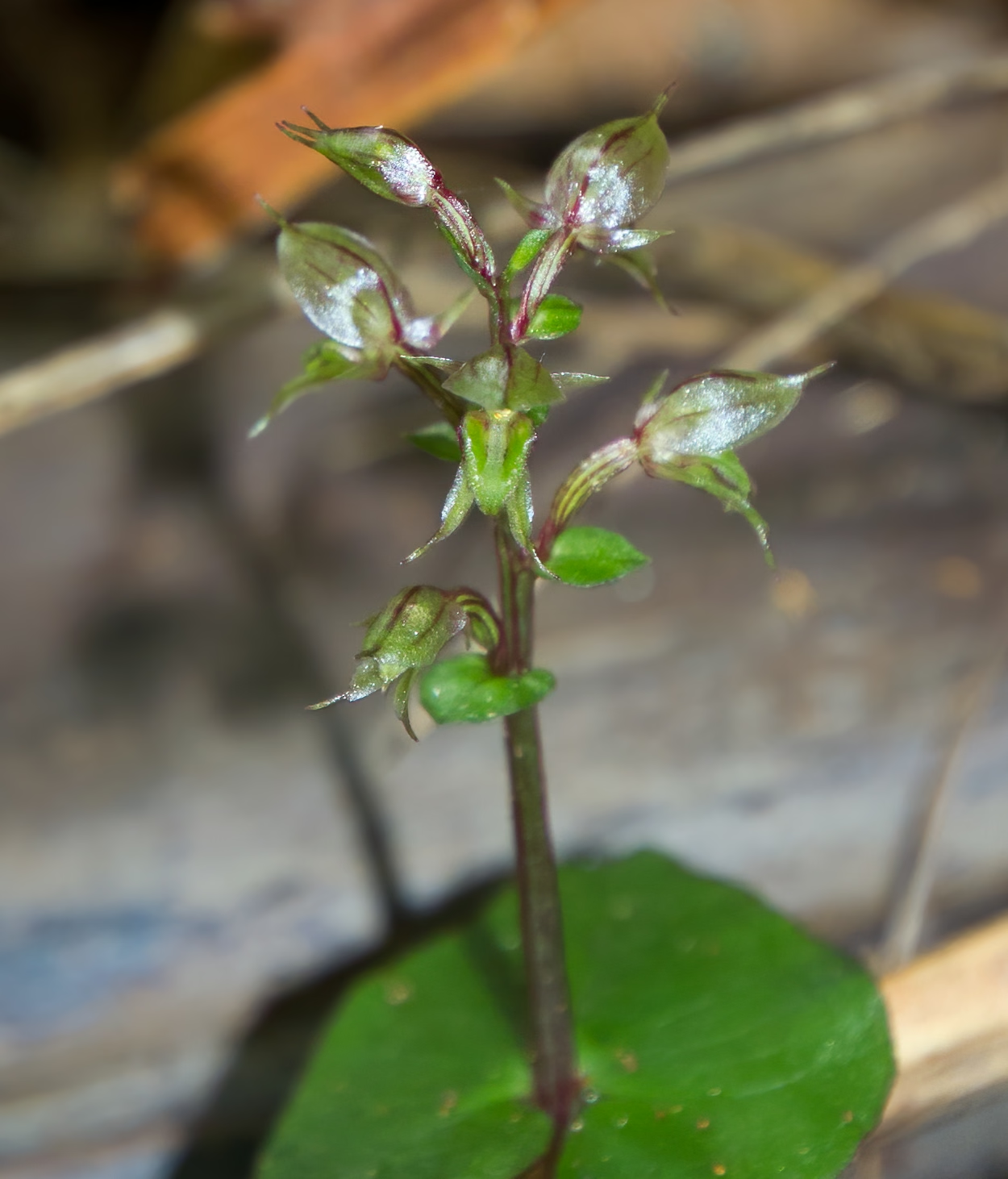
Acianthus sinclairii, the heart-leaved orchid or pixie cap, is a small endemic ground orchid found throughout New Zealand, from Raoul Island and the Three Kings Islands to Stewart Island and the Chathams. It stands only 2 to 10 cm tall in flower, with a single heart-shaped leaf part way up a slender reddish stem and a short spike of up to ten translucent green flowers tinged maroon. It grows in shaded shrubland and forest from the coast to about 1100 m, often near streams and seepages, and is one of the commonest native orchids, frequently forming dense colonies in deep leaf litter under kānuka. Explore more native flowering plants in our native plant guide.
Plant Description
Acianthus sinclairii is a small, deciduous terrestrial orchid that grows each year from an underground tuber. At flowering it stands up to about 10 cm tall, and the stem often lengthens further while the seed capsules ripen. The erect, slender stem is flushed red or purple.
A single stalkless leaf, 10 to 35 mm long, sits about halfway up the stem. It is ovate with a pointed tip and a heart-shaped base, green and sometimes marked with maroon. The raceme, up to 50 mm long, carries 1 to 10 flowers, each 6 to 8 mm long, translucent green or purplish with a dull red labellum. The dorsal sepal is broad and concave, forming a hood, while the lateral sepals are narrow and tail-tipped. The labellum is broadly ovate with a recurved tip and two rounded calli at its base.
NZPCN separates it from spider orchids (Nematoceras), which have single or paired flowers, and from Cyrtostylis, whose leaf sits at ground level and whose petals are not so much shorter than the lateral sepals. Townsonia deflexa has stalked leaves, only 1 to 4 flowers and a winged column.
Quick Facts
| Scientific Name | Acianthus sinclairii |
|---|---|
| Height | 2-10 cm in flower, taller in fruit |
| Spread | Single plants about 3 cm; forms colonies |
| Water Needs | Moist during the growing season |
| Light | Light to heavy shade |
| Frost Tolerance | Moderate; grows to about 1100 m |
| Salt Tolerance | Low; found in coastal forest but not exposed sites |
| Growth Rate | Seasonal; dormant as a tuber over summer |
| Lifespan | Perennial (tuberous) |
Climate Best Suited to
Tolerates a wide range of New Zealand climates, from subtropical Raoul Island to cool Stewart Island, provided it has shade and moisture during its autumn to spring growing season.
Regional Suitability
| City | Climate Suitability |
|---|---|
| Auckland | High |
| Wellington | High |
| Christchurch | Medium |
| Dunedin | Medium |
Plant Habitat
This orchid is endemic to New Zealand and widespread: it occurs on Raoul Island in the Kermadecs, Manawatāwhi/Three Kings Islands, throughout the North Island, on the South Island (rare east of Marlborough but extending west to Fiordland), on Stewart Island/Rakiura and on the Chatham Islands.
It grows from the coast to montane areas up to about 1100 m, in lightly to heavily shaded shrubland and forest, and only rarely in sunny sites. It is often found near streams or forest seepages and along track sides, frequently with Cyrtostylis or Pterostylis alobula, and can be locally abundant.
Growing Requirements
Soil Requirements
NZPCN notes it thrives in deep, moist leaf litter, such as that which builds up under kānuka.
- Loose, leafy, humus-rich mix
- Add kānuka or other fine leaf litter
- Free-draining but moisture-retentive
Light Requirements
A forest-floor orchid, it prefers semi-shade to full shade and is rarely seen in sun.
- Semi-shade under shrubs or trees
- Avoid direct afternoon sun
Water Requirements
It needs steady moisture while in leaf from autumn to spring, then rests as a tuber over summer.
- Do not let it dry out in the growing season
- Reduce watering once leaves die back
- Keep tubers from baking dry in summer
Planting and Establishing
Plant or repot tubers in late summer or early autumn, before growth begins, setting them a few centimetres deep in a leafy, humus-rich mix. A shallow pan or pot works well and makes the colony easy to watch.
In the garden, choose a shaded, sheltered spot under shrubs or among kānuka where leaf litter accumulates naturally and the ground stays moist through winter.
Ecological Role
Wikipedia's account of the genus reports that Australian Acianthus species are pollinated by fungus gnats, which probe the labellum for nectar and pick up the pollinia. Studies of the pollinators of this New Zealand species were not found in the sources consulted, though a similar gnat-based system is likely.
Like all orchids, its dust-like seed depends on mycorrhizal fungi to germinate, which is why it grows best in undisturbed leaf litter. Colonies spread both by seed and by the production of new tubers.
Uses & Significance
Garden Uses
A charming small orchid for shade gardens and pots, and one of the easier native orchids to grow.
- Pots and shallow pans in a shadehouse
- Shaded leaf-litter gardens under kānuka
- Woodland and fern garden edges
Ecological Value
It is part of the native orchid flora of the forest floor and indicates healthy leaf-litter habitat.
- Flowers likely visited by fungus gnats
- Supports orchid mycorrhizal fungi
- Adds diversity to shaded forest floors
Landscaping Uses
Its small size means it is best placed where it can be seen up close, such as beside a shaded path or in a pot on a bench.
Plant it with other small native ground orchids such as Pterostylis and Corybas under a canopy of kānuka or mānuka to recreate its natural community.
Seasonal Care Calendar
Spring
Flowering continues into spring, ending by about October, and seed capsules ripen as the stems lengthen.
- Keep moist while in growth
- Watch for elongating fruiting stems
Summer
Leaves die back and the plant rests as an underground tuber.
- Reduce watering but do not bake dry
- Repot in late summer if needed
Autumn
New heart-shaped leaves emerge from the tubers as the weather cools and becomes moist.
- Resume regular watering
- Top up leaf litter
Winter
The main flowering season, with green and maroon flowers from about May onwards.
- Look for flowering colonies on shaded track sides
- Protect from slugs
When to Prune and How Much
No pruning is needed. Leave the leaves and flowering stems to die back naturally so the tuber can rebuild its reserves.
Leave seed capsules to ripen and split, as this helps the colony spread.
How to Grow Heart-Leaved Orchid
NZPCN states that Acianthus sinclairii is easily grown from division of whole plants, and this is the practical method for gardeners. Each plant grows from an underground tuber, and established colonies multiply by producing new tubers. Orchid seed is extremely fine and needs a partner fungus to germinate, so seed raising is generally a specialist laboratory technique, though seed sometimes establishes naturally in pots of leafy mix. Never dig plants from the wild; obtain them from other growers or from a native orchid group.
By Division of Tubers
Divide colonies while they are dormant in summer, when the tubers can be handled without damaging the leaves. Pots that have become crowded can be split into several smaller groups.
- Wait until the leaves have died back in summer
- Tip out the pot and gently separate the small tubers
- Replant in fresh, leafy, free-draining mix a few centimetres deep
- Keep barely moist until autumn growth begins, then water regularly
From Seed
Seed is produced in capsules that ripen from about April to December. Because the seed needs mycorrhizal fungi to germinate, the simplest approach is to let capsules shed into pots that already hold healthy plants and their associated fungi.
- Let seed capsules ripen and split naturally on the plant
- Allow seed to fall onto the surface of established pots
- Keep pots shaded and moist through the growing season
- Look for new seedlings among the parent plants in later seasons
Pests & Diseases
Slugs and snails readily eat the leaves and flowers, and are the main problem in cultivation.
Drying out during the growing season, or disturbing the leaf litter, can weaken colonies. No specific diseases are recorded in the sources consulted.
Cultural Significance
No traditional Māori name or use specific to this orchid is recorded in the sources consulted.
Joseph Dalton Hooker described the species in 1853 in the botany of the Antarctic voyage, naming it after his friend Andrew Sinclair (about 1796 to 1861), a Scottish surgeon and naturalist who was Colonial Secretary of New Zealand. The genus name comes from Latin acus, pointed, and Greek anthos, flower.
Bonus Tip
If you have kānuka on your property, check the deep leaf litter beneath it in winter: heart-leaved orchids often appear there on their own, and simply leaving the litter undisturbed is the best way to encourage a colony.
Related Plants
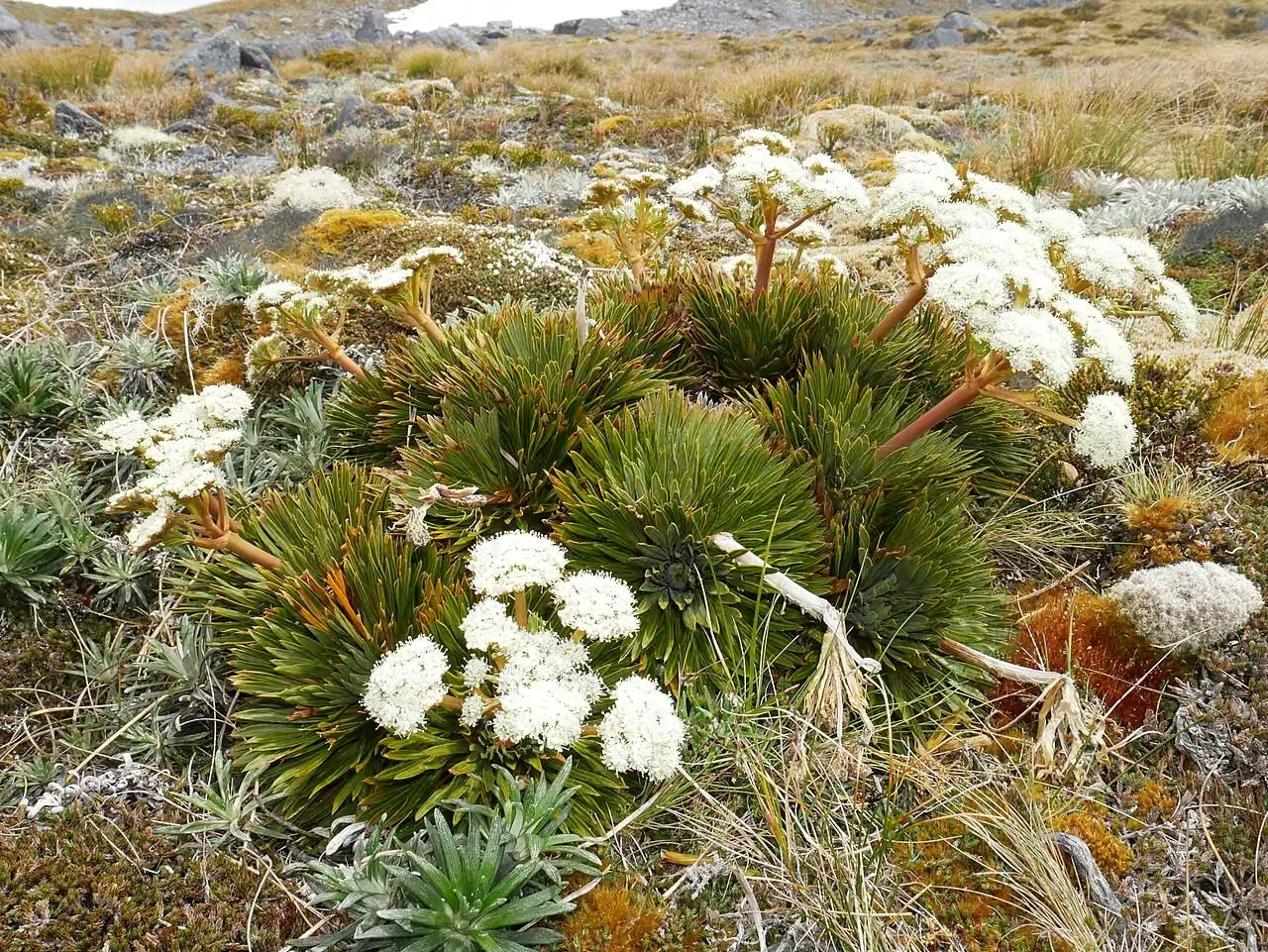
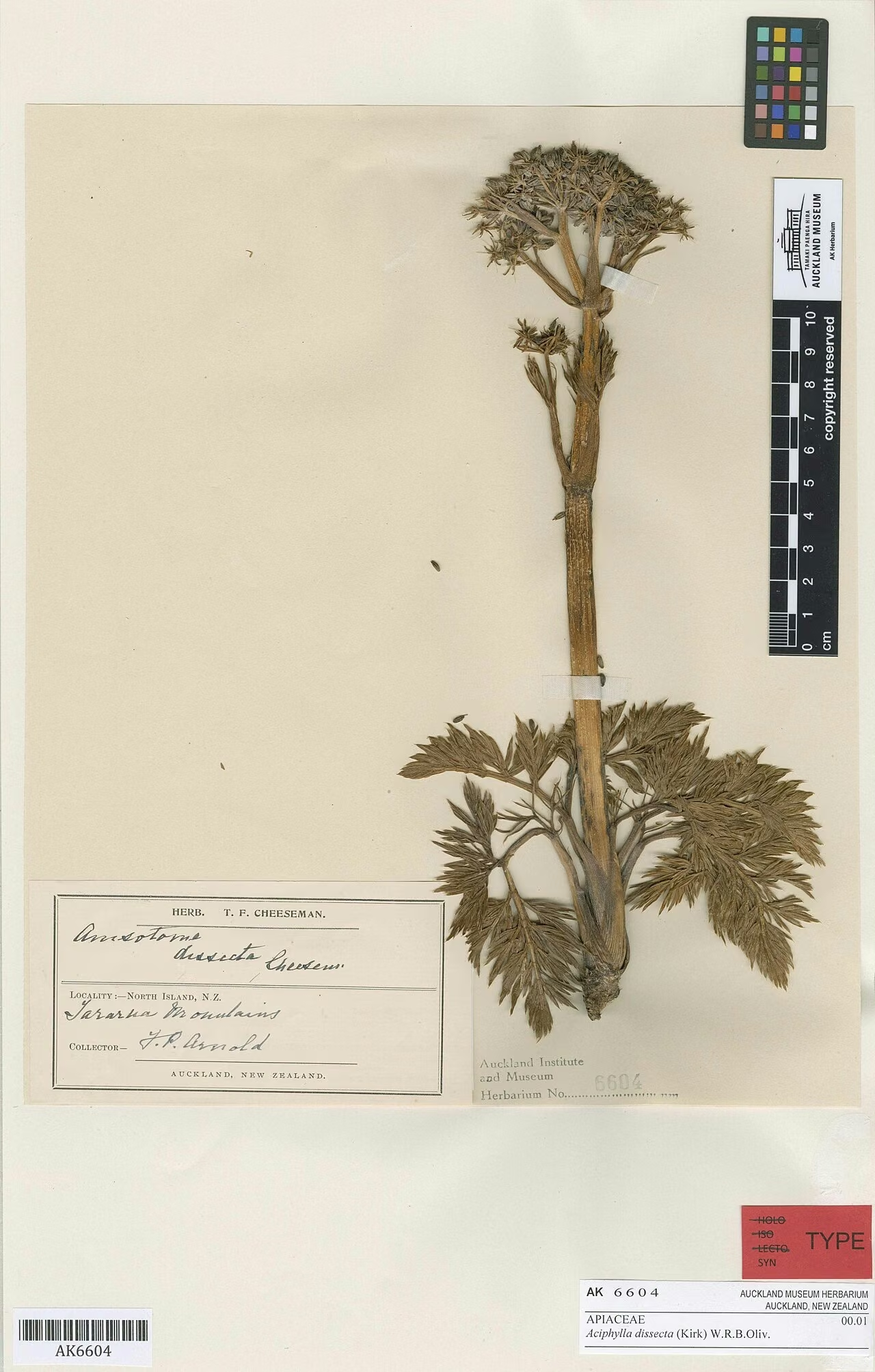
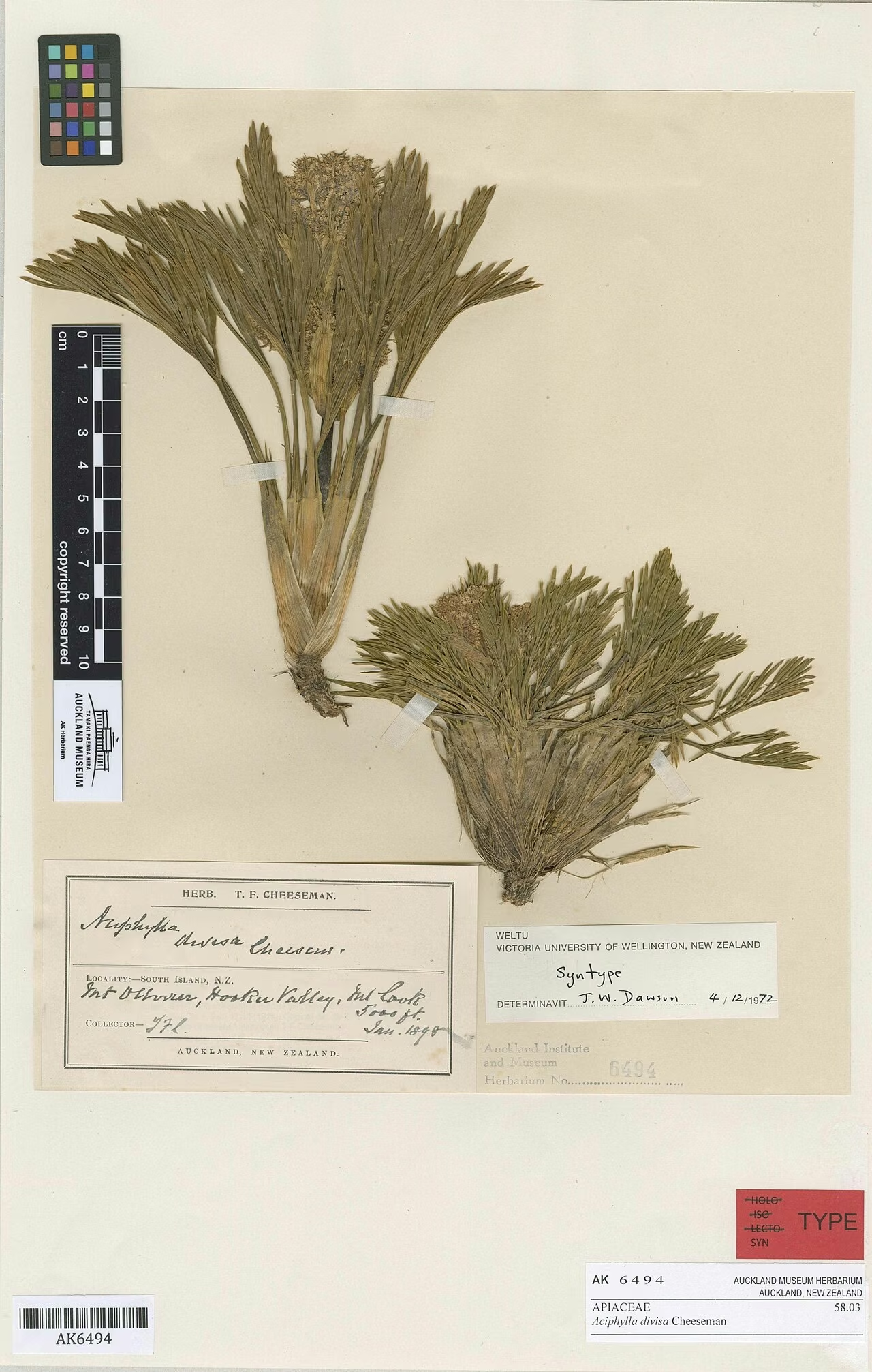
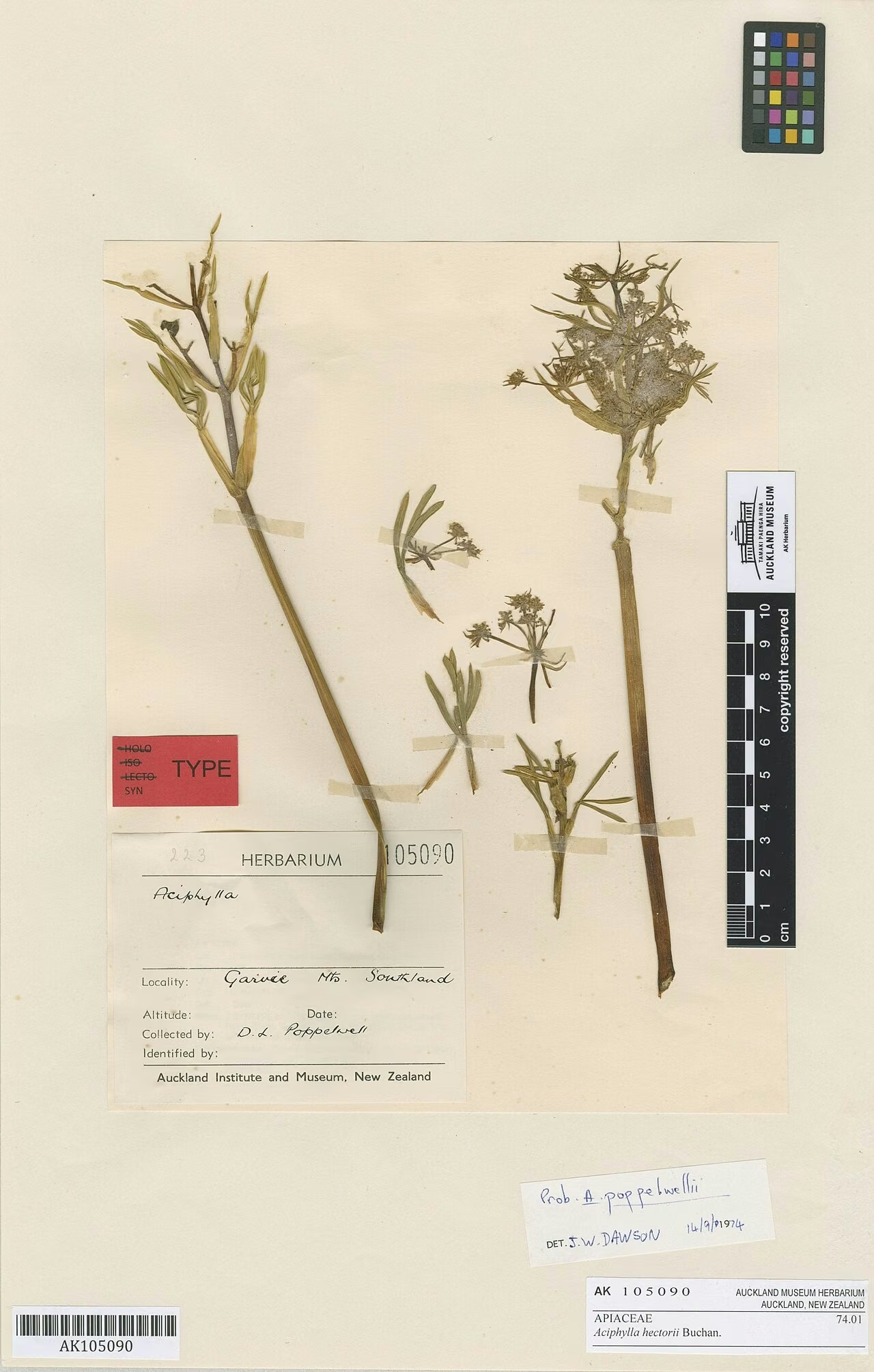
Explore other native plants that share similar characteristics or habitats with Heart-Leaved Orchid (Acianthus sinclairii), offering further insights into New Zealand's diverse flora. These related species provide context and opportunities for complementary planting in your garden.
Plant Conservation
Acianthus sinclairii is ranked Not Threatened (2023) and is common, sometimes locally abundant. It is Regionally Not Threatened in Auckland, Northland and Wellington, and Regionally Data Deficient in Otago.
Its main needs are intact shaded forest and shrubland with undisturbed leaf litter. Keeping stock out of bush remnants and leaving leaf litter in place helps it persist.
Frequently Asked Questions
Why is Acianthus sinclairii called the pixie cap or heart-leaved orchid?
It has a single heart-shaped leaf set part way up the stem, and its small hooded flowers suggest a pixie's cap.
When does the heart-leaved orchid flower?
NZPCN records flowering from January to October, and the Native Orchid Group gives May to October as the main season, so it is chiefly a winter orchid.
Can you grow Acianthus sinclairii in a pot?
Yes. NZPCN says it grows easily from division of whole plants and does very well in containers, provided it is not allowed to dry out while in growth.
How do you tell Acianthus sinclairii from Corybas when not in flower?
The Native Orchid Group notes its leaf is thinner and heart-shaped, and in flower it bears several flowers with an acute dorsal sepal rather than one.
Sources and Further Reading
The botanical, growing, and conservation details for Heart-Leaved Orchid (Acianthus sinclairii) on this page draw on the New Zealand plant references below. Consult them for full technical records and the latest distribution data.