Hebe
Veronica tumida
Last updated:
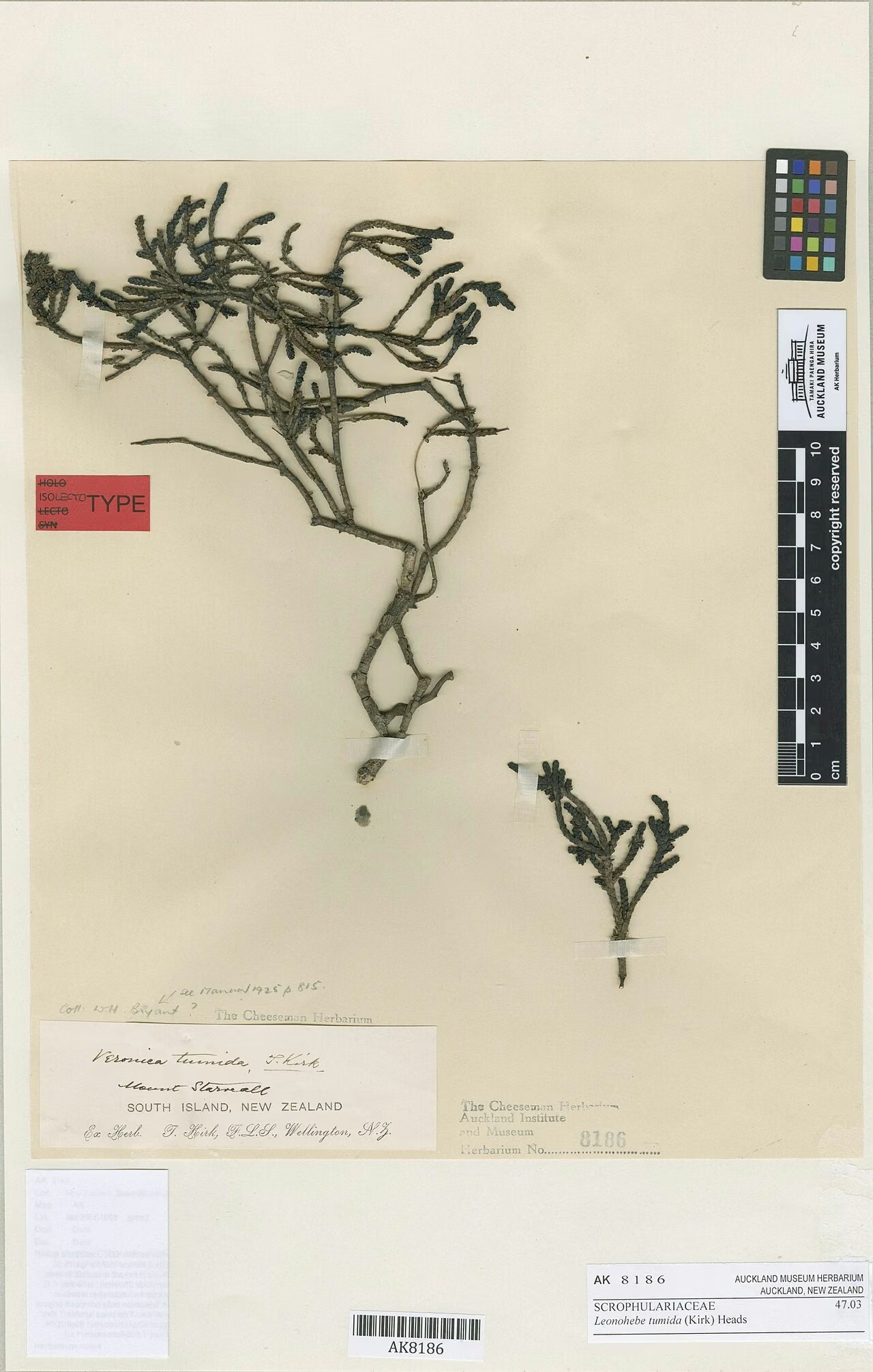
Veronica tumida, formerly Hebe tumida and Leonohebe tumida, is a tiny semi-whipcord hebe endemic to the mountains of the northern South Island. It forms a low subshrub up to about 20 cm tall whose stems are hidden by minute, triangular scale leaves with swollen, rounded backs, giving each shoot a knobbly look. It grows on alpine rock outcrops and scree between about 1280 and 1800 m in ranges such as the Richmond, Bryant, Travers, St Arnaud and Raglan ranges. Clusters of small white flowers appear from November to February. It is ranked At Risk - Naturally Uncommon. Explore more native shrubs in our native plant guide.
Plant Description
Veronica tumida is a semi-whipcord subshrub to 0.2 m tall with decumbent to ascending, hairless stems. The leaves are opposite and decussate, joined in pairs so that they encircle the stem, and so crowded and overlapping that the shoot looks like a chain of scales. Each leaf is 1 to 1.5 mm long and 1.5 to 2.5 mm wide, triangular with a rounded tip and pale hairy margins. The back of every leaf is keeled with a rounded swelling, which gives the four rows of leaves a knobbly appearance.
The flowers are white, with four corolla lobes 1.5 to 2 mm long, and are borne in crowded clusters of two to eight in short lateral spikes 2 to 9 mm long near the twig tips. Male and female flowers usually occur on different plants, although some populations may include hermaphrodite plants alongside females. The capsules are 1.5 to 3.2 mm long and release flattened, smooth, pale brown seeds that are dispersed by wind.
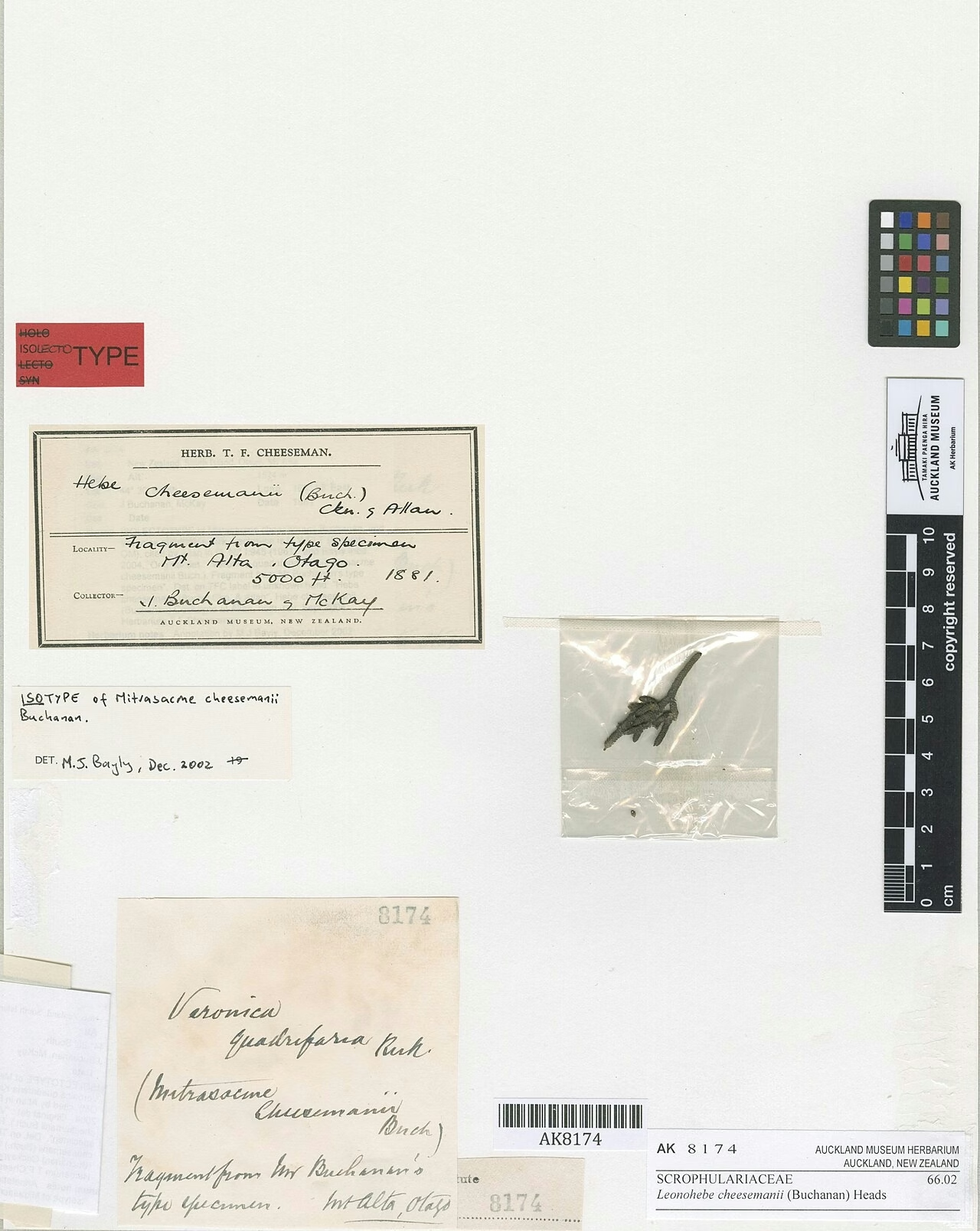
It is one of four semi-whipcord hebes, with V. hookeri, V. quadrifaria and V. tetrasticha. V. quadrifaria has flat-faced square shoots and V. tetrasticha has grooves from inrolled leaf margins, while V. hookeri has longer, tapering leaves. Where their ranges meet, V. tumida may intergrade with V. quadrifaria and V. hookeri, so some plants are hard to assign.
Quick Facts
| Scientific Name | Veronica tumida |
|---|---|
| Height | Up to 0.2 m |
| Spread | Small decumbent clumps; no published spread figure found |
| Water Needs | Moderate; sharp drainage essential |
| Light | Full sun |
| Frost Tolerance | High; grows at 1280 to 1800 m |
| Salt Tolerance | No information available; an inland alpine plant |
| Growth Rate | Slow |
| Lifespan | Long-lived perennial subshrub |
Climate Best Suited to
Suits a cold alpine climate with heavy frosts, winter snow and cool, bright summers. Warm, humid lowland conditions are unsuitable.
Regional Suitability
| City | Climate Suitability |
|---|---|
| Auckland | Low |
| Wellington | Low |
| Christchurch | Medium |
| Dunedin | Medium |
Plant Habitat
Veronica tumida is confined to the northern South Island. NZPCN lists it from the Bryant, Richmond, Gordon, Travers, St Arnaud and Raglan ranges and from the mountains between the Leatham and Waihopai rivers in Marlborough. The Flora of New Zealand records it from Nelson, Westland and Marlborough at altitudes of about 1280 to 1800 m.
Its habitat is alpine rock outcrops and, less often, scree. Plants wedge into cracks and ledges on exposed rock, where there is little competition but strong wind, intense light and deep winter cold.
Growing Requirements
Soil Requirements
It grows in thin mineral soil trapped among rock. No specific soil or rock-type preference is documented for this species.
- Very gritty, free-draining mix
- Low fertility; no strong fertiliser
- Gravel or stone mulch around the collar
- Avoid any risk of waterlogging
Light Requirements
A plant of open alpine rock that needs bright light to stay compact.
- Full sun in cool districts
- Some afternoon shade where summers are hot
- Not suited to shade
Water Requirements
Keep roots evenly moist in summer while ensuring water never sits around the stem.
- Water in dry summer spells
- Keep drier in winter
- Pots must drain freely
Planting and Establishing
Grow it in an alpine trough, crevice garden or deep pot filled with a mix of coarse grit and a little loam. Tuck it between stones so the roots can run into cool, moist pockets while the shoots stay dry. Plant in spring after hard frosts in lowland gardens.
Obtain plants only from nurseries or specialist growers; this species is uncommon and wild plants on rock outcrops should be left in place.
Ecological Role
Flowering runs from November to February and fruit from January to April. Small white hebe flowers like these are generally visited by flies, native bees and moths, but no pollinator studies specific to V. tumida were found. Seeds are carried by wind across rock and scree.
The swollen, overlapping scale leaves are thought to help conserve water and protect shoots in exposed alpine sites. As a long-lived plant of rock crevices it forms part of specialised alpine communities on the northern South Island ranges.
Uses & Significance
Garden Uses
A collector's plant for alpine enthusiasts.
- Troughs and crevice gardens
- Alpine house or cold frame collections
- Displays of New Zealand semi-whipcord hebes alongside V. quadrifaria and V. tetrasticha
Ecological Value
It is part of a small, endemic lineage of semi-whipcord hebes and contributes to the plant life of northern South Island alpine rock.
- Midsummer flowers for alpine insects
- Contributes to cover on exposed rock ledges
- A naturally uncommon endemic worth protecting where it grows
Landscaping Uses
Its knobbly olive-green shoots look best at eye level in a raised trough, set against grey stone. Combine it with small cushion plants and fine tussocks from similar altitudes.
Avoid planting it near vigorous groundcovers that could swamp its slow growth.
Seasonal Care Calendar
Spring
Growth resumes and flower buds form.
- Topdress with fresh grit
- Plant new specimens
Summer
Main flowering season from November to February.
- Water in dry weather
- Take cuttings from firm new growth
- Watch for capsules ripening on female plants
Autumn
Fruit ripens until April.
- Collect and sow ripe seed
- Remove fallen leaves from around the plant
Winter
Fully hardy to cold but vulnerable to persistent winter wet in lowland gardens.
- Shelter pots from heavy rain
- Avoid feeding
When to Prune and How Much
Pruning is not needed. Remove any dead shoots in spring by cutting back to live growth; avoid cutting into bare old wood, which regrows poorly on small alpine hebes.
How to Grow Hebe
No specific propagation notes for Veronica tumida were found in NZPCN or the Flora of New Zealand, so the methods below are those generally used for small alpine hebes. Because plants are usually either male or female, cuttings are the dependable way to multiply a plant, while seed requires plants of both sexes flowering together. Use only cultivated stock, since this species is naturally uncommon and its wild populations on rock outcrops are small.
From Cuttings
Firm young shoots taken in summer generally root for semi-whipcord hebes. Their fine stems are prone to rotting, so keep the medium open and the air moving.
- Select shoot tips 2 to 3 cm long from a healthy cultivated plant
- Strip the scale leaves from the bottom few millimetres
- Insert into a mix of pumice or perlite with a little seed-raising mix
- Place in a cool, shaded, humid spot such as a cold frame
- Check for roots after about two months
- Pot into gritty alpine mix and harden off in full light
From Seed
Fruit ripens between January and April. Collect capsules as they turn brown from female plants that grew near males.
- Sow fresh seed on the surface of fine gritty seed mix
- Cover with a thin layer of fine grit
- Stand the tray outside over winter for natural chilling
- Keep moist but never waterlogged
- Prick out seedlings into individual pots once they have several leaf pairs
Pests & Diseases
No pests or diseases specific to this species are recorded. In cultivation the main risk is collar and root rot in wet, poorly drained mixes or humid climates. General hebe problems such as downy mildew are possible in damp, stagnant air.
Slugs may graze young plants in pots. In the wild, browsing animals have not been identified as a key threat for this alpine rock plant.
Cultural Significance
No Māori name or traditional use is recorded for Veronica tumida. Thomas Kirk described the species, choosing the epithet tumida, Latin for swollen, for its distinctive convex leaves.
The plant was later moved to Hebe and then to Leonohebe, a genus proposed for whipcord and semi-whipcord hebes, before New Zealand hebes were merged into Veronica.
Bonus Tip
To confirm the identification, roll a shoot between your fingers under a hand lens: in V. tumida each leaf has a rounded swelling on its back, so the shoot feels and looks knobbly rather than flat-faced as in V. quadrifaria.
Related Plants
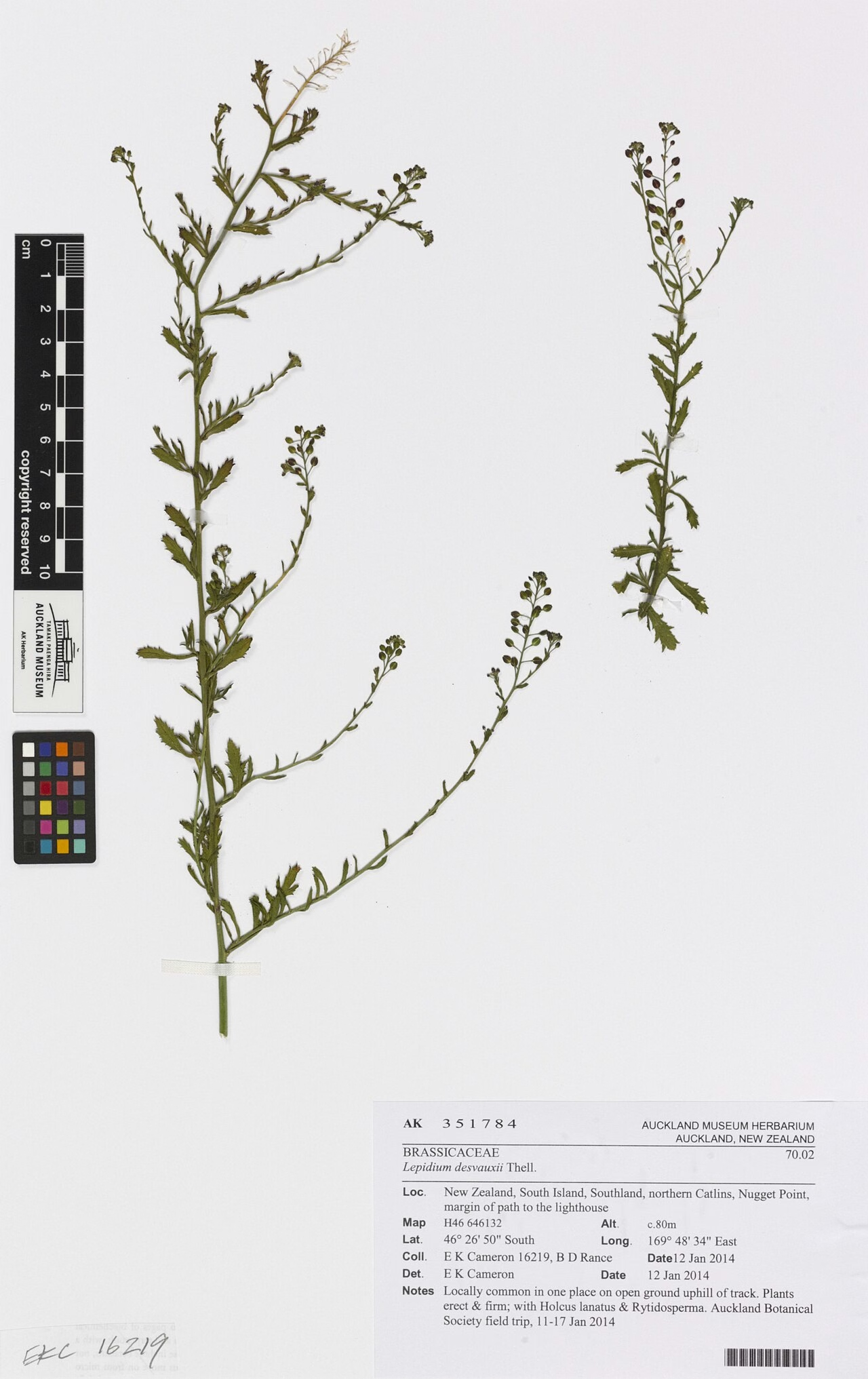
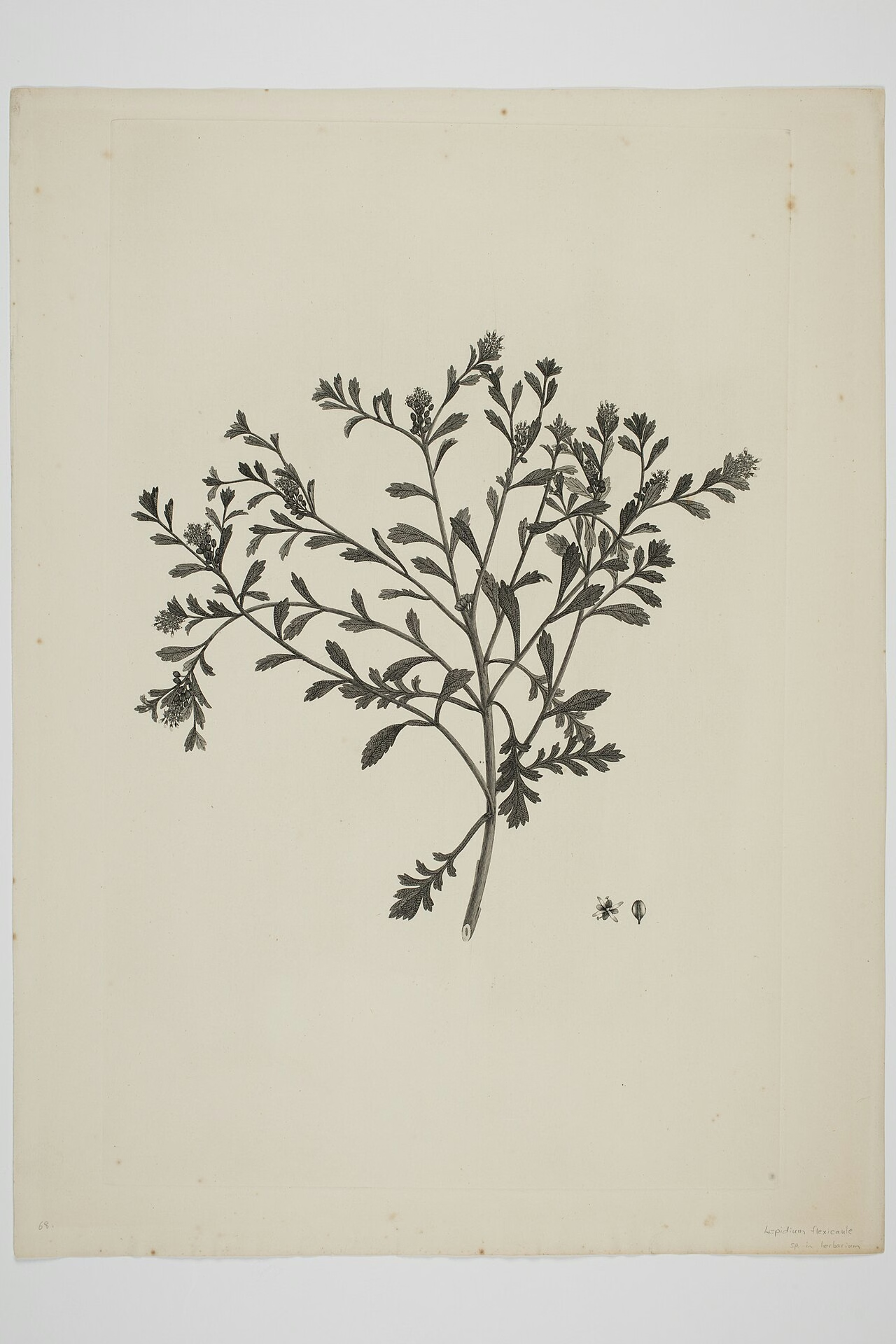
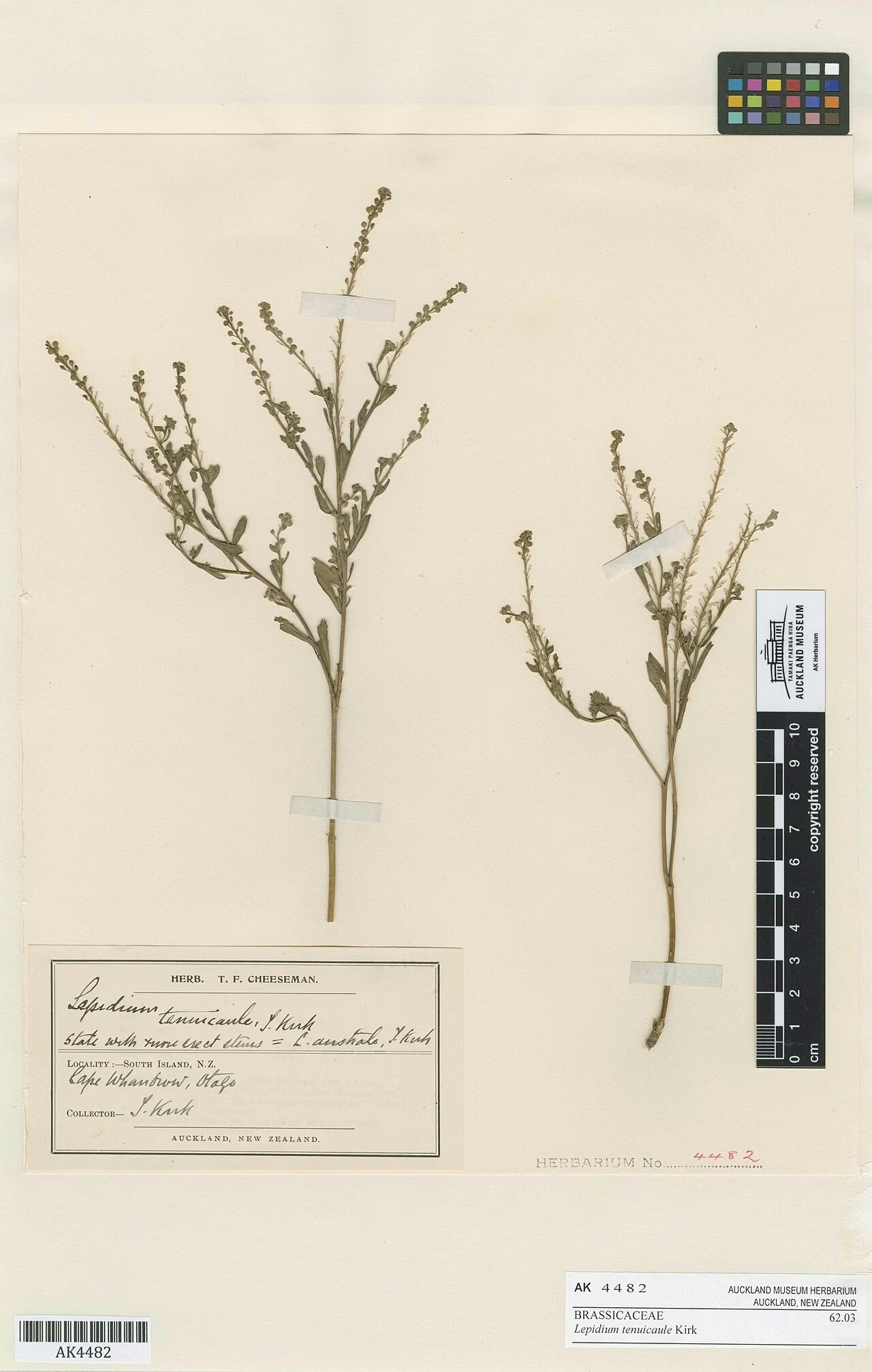
Explore other native plants that share similar characteristics or habitats with Hebe (Veronica tumida), offering further insights into New Zealand's diverse flora. These related species provide context and opportunities for complementary planting in your garden.
Plant Conservation
Veronica tumida is ranked At Risk - Naturally Uncommon (2023), with qualifiers Sp (sparse), DPS (data poor: size) and DPT (data poor: trend). The listing reflects its naturally restricted alpine range rather than a known decline.
Much of its range lies within conservation land, including Nelson Lakes National Park (Travers and St Arnaud ranges) and Mount Richmond Forest Park. Recording sightings on iNaturalist helps fill gaps in knowledge of population size and trend.
Frequently Asked Questions
Why is it called Veronica tumida?
Tumida is Latin for swollen. It refers to the tumidly swollen, convex backs of the tiny scale leaves, which are the best way to recognise this species.
Is Veronica tumida a hebe?
Yes. It was named Hebe tumida and later Leonohebe tumida, but New Zealand hebes are now included in Veronica, so its accepted name is Veronica tumida.
Where is Veronica tumida found?
It is endemic to the northern South Island mountains, including the Bryant, Richmond, Gordon, Travers, St Arnaud and Raglan ranges and peaks between the Leatham and Waihopai rivers.
Is Veronica tumida threatened?
It is ranked At Risk - Naturally Uncommon because it naturally occupies a small area of alpine rock in the northern South Island. Its population size and trend are poorly known.
Sources and Further Reading
The botanical, growing, and conservation details for Hebe (Veronica tumida) on this page draw on the New Zealand plant references below. Consult them for full technical records and the latest distribution data.