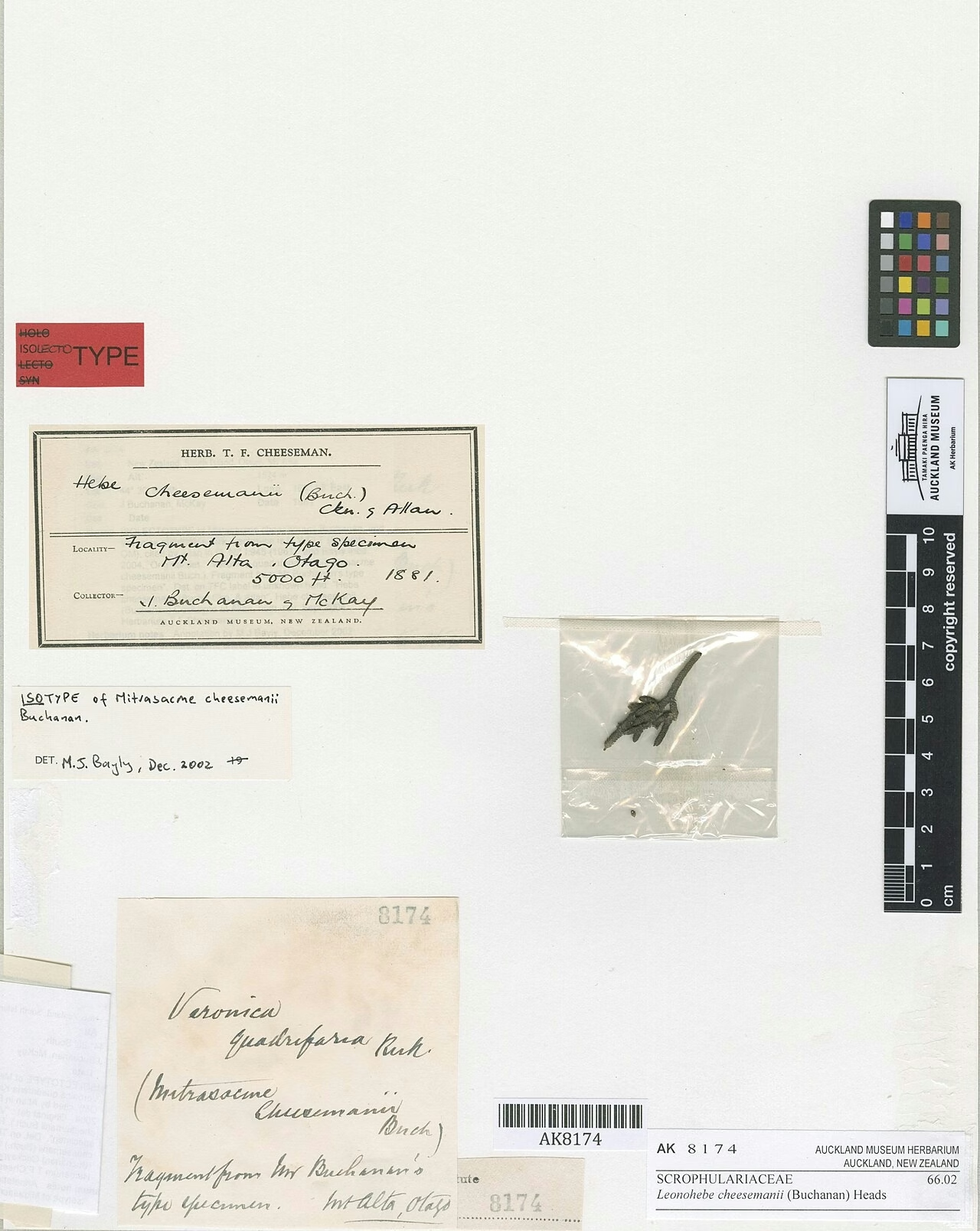
Hebe
Veronica quadrifaria
Last updated:
Veronica quadrifaria, long known as Hebe cheesemanii and Leonohebe cheesemanii, is a tiny alpine hebe endemic to the eastern mountains of the South Island. It is a semi-whipcord subshrub no more than about 30 cm tall, with branchlets clothed in minute scale-like leaves arranged in four neat rows, so each shoot looks square in cross-section. It grows on alpine rock outcrops and scree from the Black Birch Range in Marlborough to the Kirkliston Range in South Canterbury, at roughly 765 to 1900 m. Small white flowers appear in midsummer, with male and female flowers on separate plants. It is ranked Not Threatened. Explore more native shrubs in our native plant guide.
Plant Description
Veronica quadrifaria is a semi-whipcord shrub up to 0.3 m tall with decumbent or ascending, hairless stems. The leaves are opposite and decussate, joined in pairs around the stem and so densely crowded and overlapping that the stem itself is hidden. Each leaf is a tiny deltoid scale only 0.8 to 1.7 mm long and 1.5 to 3 mm wide, dull pale to dark green and slightly leathery, with a fringe of pale hairs on the margin that shows under a hand lens. Because the leaves sit in four strict ranks, each branchlet looks square with four flat faces, which is what the epithet quadrifaria (in four rows) describes.
Flowers are borne in short lateral spikes 3 to 7.5 mm long carrying two to six crowded flowers near the branch tips. Plants are dioecious: male flowers are slightly larger, 4 to 5.5 mm across, while female flowers are 3 to 4.5 mm across. The corolla is white with four white or occasionally pink lobes, and the anthers are magenta. The fruit is a small flattened capsule 1.6 to 2.5 mm long containing smooth brown seeds about 1 mm long, which are dispersed by wind.
It belongs to a group of four semi-whipcord hebes with V. hookeri, V. tetrasticha and V. tumida. Semi-whipcords differ from true whipcord hebes by their dull green scale leaves that persist on old stems, separate male and female plants and laterally flattened capsules. Within the group, V. quadrifaria is recognised by its flat-faced square stems, although some collections from near Hanmer Springs and the Black Birch Range are hard to place.
Quick Facts
| Scientific Name | Veronica quadrifaria |
|---|---|
| Height | Up to 0.3 m |
| Spread | Low decumbent clumps; no published spread figure found |
| Water Needs | Moderate; free-draining but not parched |
| Light | Full sun |
| Frost Tolerance | High; alpine species to about 1900 m |
| Salt Tolerance | No information available; an inland alpine plant |
| Growth Rate | Slow |
| Lifespan | Long-lived perennial subshrub |
Climate Best Suited to
A plant of cold, high-light alpine climates with hard winter frosts, snow cover and cool summers. It is poorly suited to warm, humid lowland gardens.
Regional Suitability
| City | Climate Suitability |
|---|---|
| Auckland | Low |
| Wellington | Low |
| Christchurch | Medium |
| Dunedin | Medium |
Plant Habitat
Veronica quadrifaria is endemic to the South Island. Its main range runs along the eastern mountains near the Main Divide, from the Black Birch Range in Marlborough south through the western Canterbury mountains to the Kirkliston Range in South Canterbury, with a few scattered sites in Westland. It has been recorded from about 765 m up to 1900 m altitude.
It grows on alpine rock outcrops and scree, typically in crevices and on ledges where its roots can reach moisture among stable rock while the shoots sit in full sun and wind. These are harsh, open sites with little competition from taller plants.
Growing Requirements
Soil Requirements
In the wild it roots into thin, stony mineral soil in rock crevices and among scree. In cultivation it needs an extremely free-draining, gritty mix.
- Use a mix with at least half coarse grit or scoria
- Avoid rich, heavy or waterlogged soil
- Low fertility suits it; skip strong fertiliser
- A gravel mulch keeps the collar dry
Light Requirements
This is an open alpine plant that expects full sun and bright, clear light.
- Full sun all day if summers are cool
- In warmer districts give light afternoon shade
- Never plant under trees or in deep shade
Water Requirements
It needs steady moisture at the roots but sharp drainage at the surface, much as rock crevices provide.
- Water during dry spells in summer
- Do not let pots sit in saucers of water
- Reduce watering in winter
Planting and Establishing
Plant into a raised scree bed, rock garden pocket, trough or deep clay pot filled with gritty alpine mix. Set the plant so the woody base sits just above the surrounding grit, then wedge stones around it to keep the roots cool. Spring planting gives it a full season to settle before winter.
Because plants are either male or female, a single specimen will not set seed. Buy only nursery-raised plants and never dig plants from the wild; wild plants on scree rarely survive transplanting.
Ecological Role
The small white flowers open in December and January and are visited by the flies, native bees and moths that pollinate many alpine hebes, although specific pollinator studies for this species were not found. Fruit ripens from December to February and the small flat seeds are carried by wind across rock and scree.
Its dense, overlapping scale leaves reduce water loss and protect growing tips from wind, ice and intense ultraviolet light, a growth form shared by several unrelated alpine plants. On scree it helps stabilise patches of rock and can shelter seedlings of other alpine herbs.
Uses & Significance
Garden Uses
A specialist plant for alpine and rock gardeners rather than general gardens.
- Alpine troughs and scree beds
- Crevice gardens alongside other alpine natives
- Collections of New Zealand whipcord and semi-whipcord hebes
- Cold, inland gardens in Canterbury and Otago
Ecological Value
Within its alpine range it contributes to the sparse plant cover on rock and scree.
- Nectar and pollen for alpine insects in midsummer
- Helps stabilise loose scree
- Part of the distinctive semi-whipcord hebe lineage found only in New Zealand
Landscaping Uses
In a rock garden its tight, square, olive-green shoots contrast well with silver cushion plants such as Raoulia and with fine tussocks. Plant it where it can be seen close up, near a path edge or at the front of a trough, since its beauty is in the geometric pattern of the leaves.
Group it with other South Island alpine species that share the same need for gritty, sunny conditions, rather than with lush lowland shrubs that would smother it.
Seasonal Care Calendar
Spring
New growth begins as temperatures rise. Check plants after winter and topdress grit if it has washed away.
- Plant or repot in spring
- Take cuttings from fresh growth later in spring
Summer
Flowering occurs in December and January, with capsules ripening soon after.
- Water in dry spells
- Provide afternoon shade in hot districts
- Collect seed from female plants as capsules brown
Autumn
Growth slows. Sow fresh seed so it can be chilled over winter.
- Clear fallen leaves from the cushions
- Ease off watering
Winter
Fully frost hardy, but winter wet is the main danger in lowland gardens.
- Shelter pots from prolonged rain
- Keep the collar free of soggy mulch
When to Prune and How Much
No pruning is needed. The plant grows slowly into a compact clump and cutting into old wood is unlikely to regrow well. Simply trim off any shoots that die back after a hard winter or drought, cutting back to healthy green growth.
How to Grow Hebe
Veronica quadrifaria is seldom propagated outside specialist alpine collections, and the NZPCN fact sheet gives no specific propagation notes for it. The methods below are those generally used for small alpine hebes. Cuttings are the most reliable way to reproduce a known male or female plant, while seed can only be obtained if a male and a female plant have flowered together. Always use cultivated stock rather than collecting from wild populations on rock and scree.
From Cuttings
Semi-ripe or firm new shoots root reasonably readily for most hebes, and the short branchlets of semi-whipcords make neat cutting material. Use a very open medium, because the fine stems rot quickly if kept wet and warm.
- In late spring or early summer, take shoot tips 2 to 4 cm long from healthy cultivated plants
- Remove the scale leaves from the lowest few millimetres of stem
- Insert into a mix of half fine pumice or perlite and half seed-raising mix
- Keep in a cool, bright, humid position out of direct sun
- Check for roots after six to ten weeks and pot on into gritty alpine mix
- Grow on in a sunny, airy spot for a season before planting out
From Seed
Seed is only produced on female plants pollinated by a nearby male. The capsules ripen between December and February and should be gathered as they turn brown, before the small flat seeds blow away.
- Collect ripe capsules from a female plant growing near a male
- Sow seed fresh on the surface of a fine gritty seed mix
- Cover very lightly with fine grit
- Leave the tray outdoors over winter so seed receives natural cold
- Prick out seedlings when large enough to handle and grow on slowly in pots
Pests & Diseases
No pests or diseases specific to Veronica quadrifaria are recorded. In cultivation the main cause of loss is root and collar rot from wet, poorly drained soil, especially in humid lowland climates. Hebe downy mildew and leaf spot, which affect garden hebes, are less likely on this small alpine plant in an airy position but could occur in damp, still conditions.
Slugs and snails can graze soft new growth on young plants in pots. In the wild, browsing animals have not been identified as a major threat for this species.
Cultural Significance
No traditional Māori use or Māori name is recorded for Veronica quadrifaria. Its interest is mainly botanical: the plant has carried several names, first being described by John Buchanan as Mitrasacme cheesemanii in honour of the botanist Thomas Cheeseman, then moved to Hebe and later to Leonohebe before all hebes were transferred to Veronica.
Because the name Veronica cheesemanii was already taken by another New Zealand species, this plant took Kirk's epithet quadrifaria, meaning in four rows, which describes its neatly four-ranked scale leaves.
Bonus Tip
If you are unsure whether you have this species or V. tetrasticha, look at a shoot end-on with a hand lens: V. quadrifaria shows four flat faces giving a square outline, whereas V. tetrasticha shows grooves between ridges because its leaf margins roll inward.
Related Plants
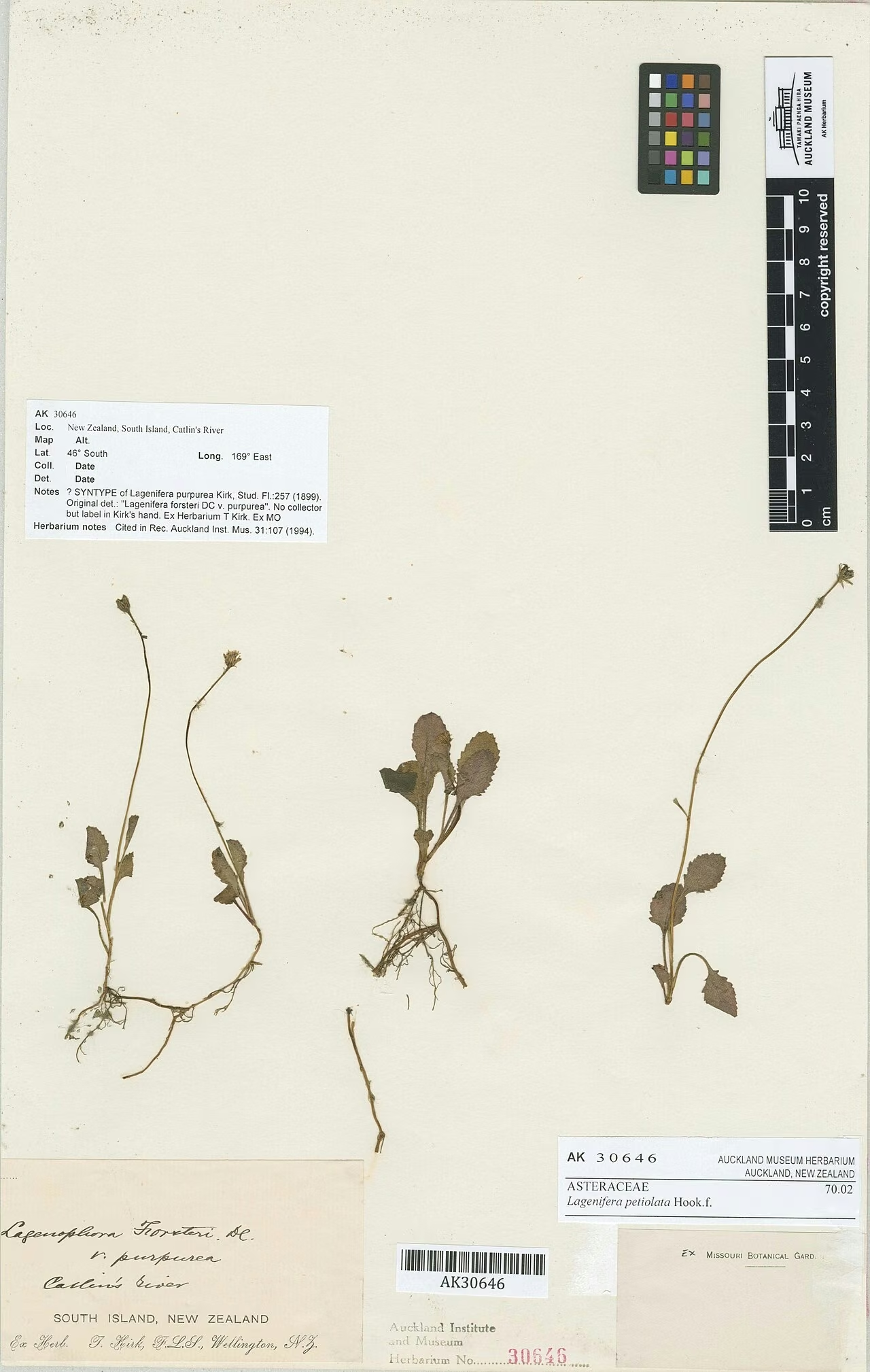
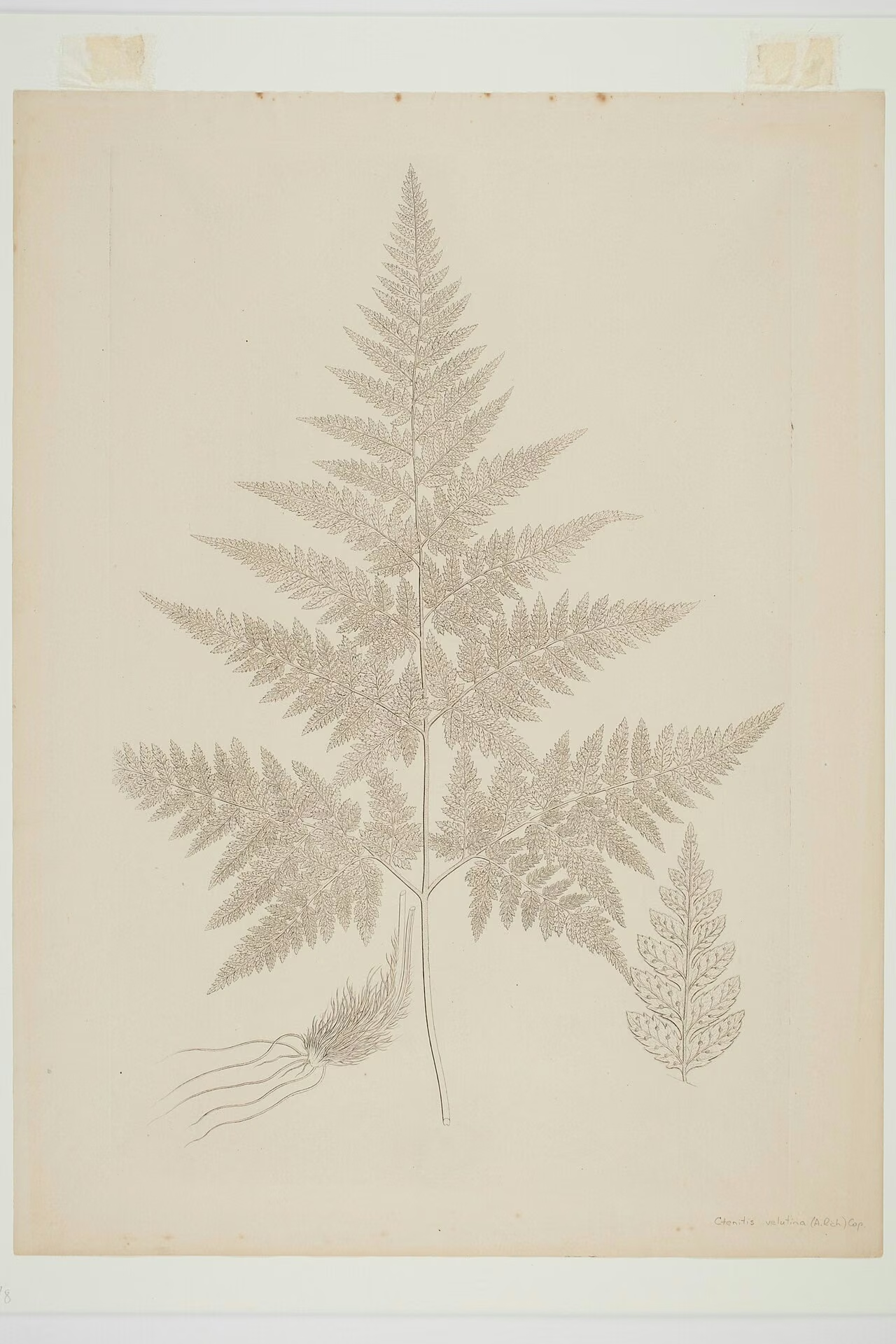
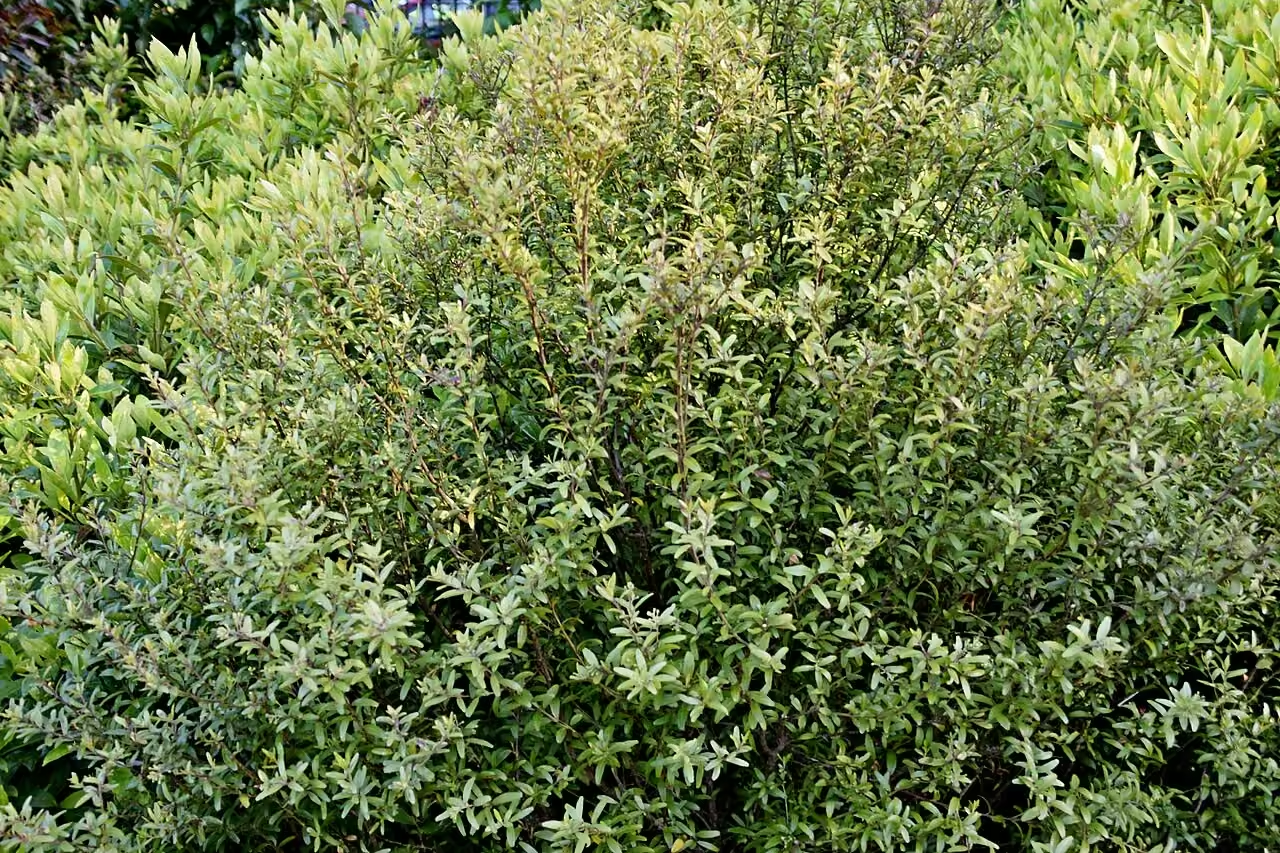
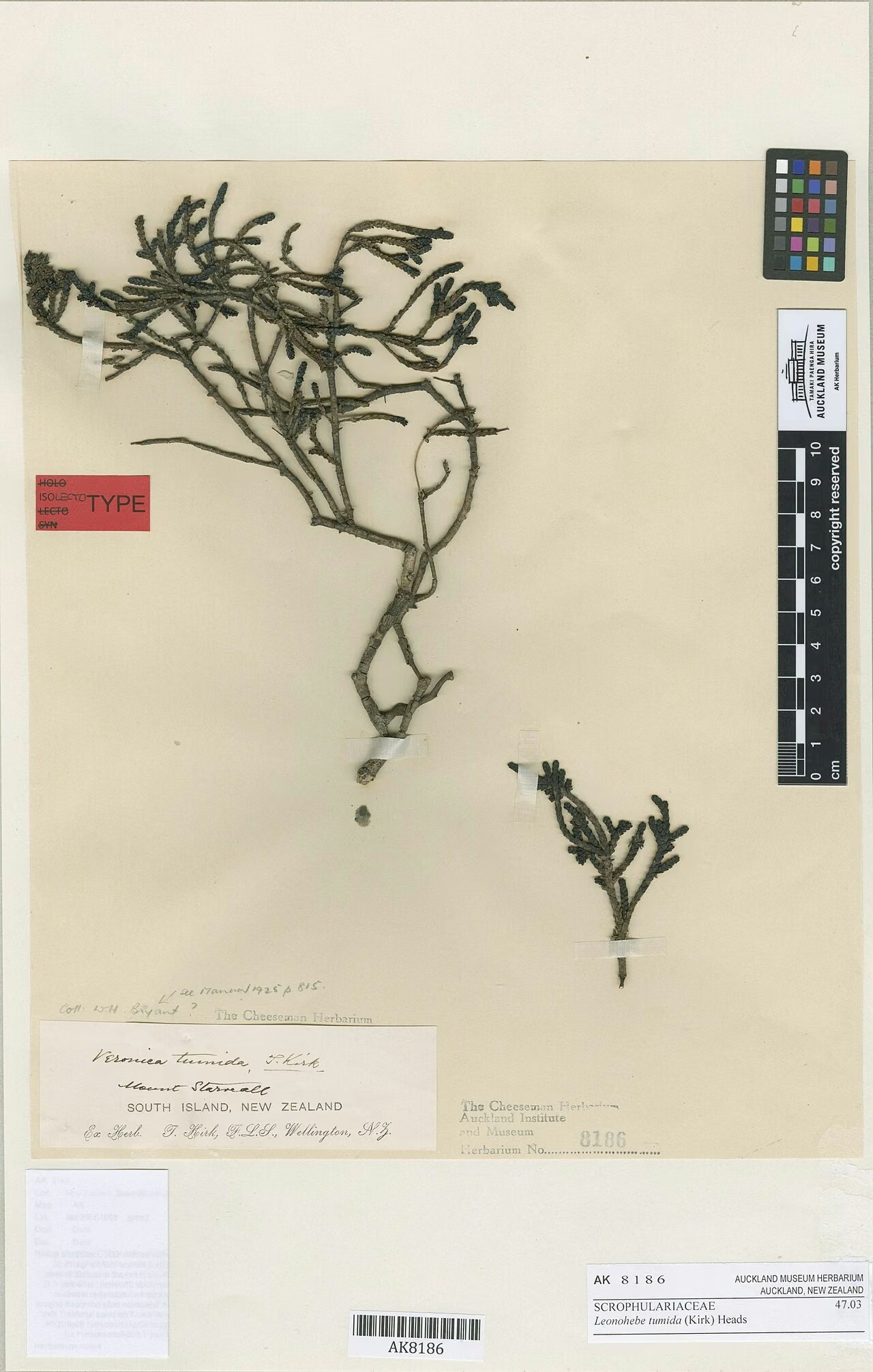
Explore other native plants that share similar characteristics or habitats with Hebe (Veronica quadrifaria), offering further insights into New Zealand's diverse flora. These related species provide context and opportunities for complementary planting in your garden.
Plant Conservation
Veronica quadrifaria is ranked Not Threatened under the New Zealand Threat Classification System (2023). Its rocky alpine habitat is largely on conservation land and is little affected by grazing or development.
Long-term risks for alpine rock plants include climate warming, which could shift suitable habitat upward, and the spread of weeds into alpine zones. Leaving wild plants undisturbed and recording sightings on iNaturalist helps botanists track its distribution.
Frequently Asked Questions
What is the current name for Veronica quadrifaria?
The accepted name is Veronica quadrifaria Kirk. Leonohebe cheesemanii, Hebe cheesemanii and Mitrasacme cheesemanii are all older names for the same alpine plant.
Is Veronica quadrifaria the same as Veronica cheesemanii?
No. Veronica cheesemanii Benth. is a separate species formerly called Parahebe cheesemanii. The plant once named Hebe cheesemanii had to take the name Veronica quadrifaria when hebes were moved into Veronica.
How do you tell Veronica quadrifaria from other semi-whipcord hebes?
Its leafy stems have four very flat faces. Veronica tetrasticha has inrolled leaf margins giving grooved stems, Veronica tumida has swollen leaf backs, and Veronica hookeri has longer tapering leaves.
Where does Veronica quadrifaria grow?
It grows on alpine rock outcrops and scree in the South Island, mainly east of the Main Divide from Marlborough to South Canterbury, with scattered sites in Westland.
Sources and Further Reading
The botanical, growing, and conservation details for Hebe (Veronica quadrifaria) on this page draw on the New Zealand plant references below. Consult them for full technical records and the latest distribution data.