Coastal Cress
Lepidium flexicaule
Last updated:
Coastal cress (Lepidium flexicaule) is a sprawling perennial herb in the cabbage family that sends out trailing stems up to 40 cm long from a fleshy taproot. It grows in coastal turf, on rock stacks, headlands, cliff faces and among boulders, mainly on the South Island's west coast between Cape Farewell and Greymouth, with single known sites in South Taranaki and the Chatham Islands. Historic North Island records from Auckland, Coromandel, the Firth of Thames and Wellington have not been repeated. It also occurs in western Tasmania. Coastal cress is ranked Threatened - Nationally Endangered, threatened by weeds, development and browsing. Explore more native ground covers in our native plant guide.
Plant Description
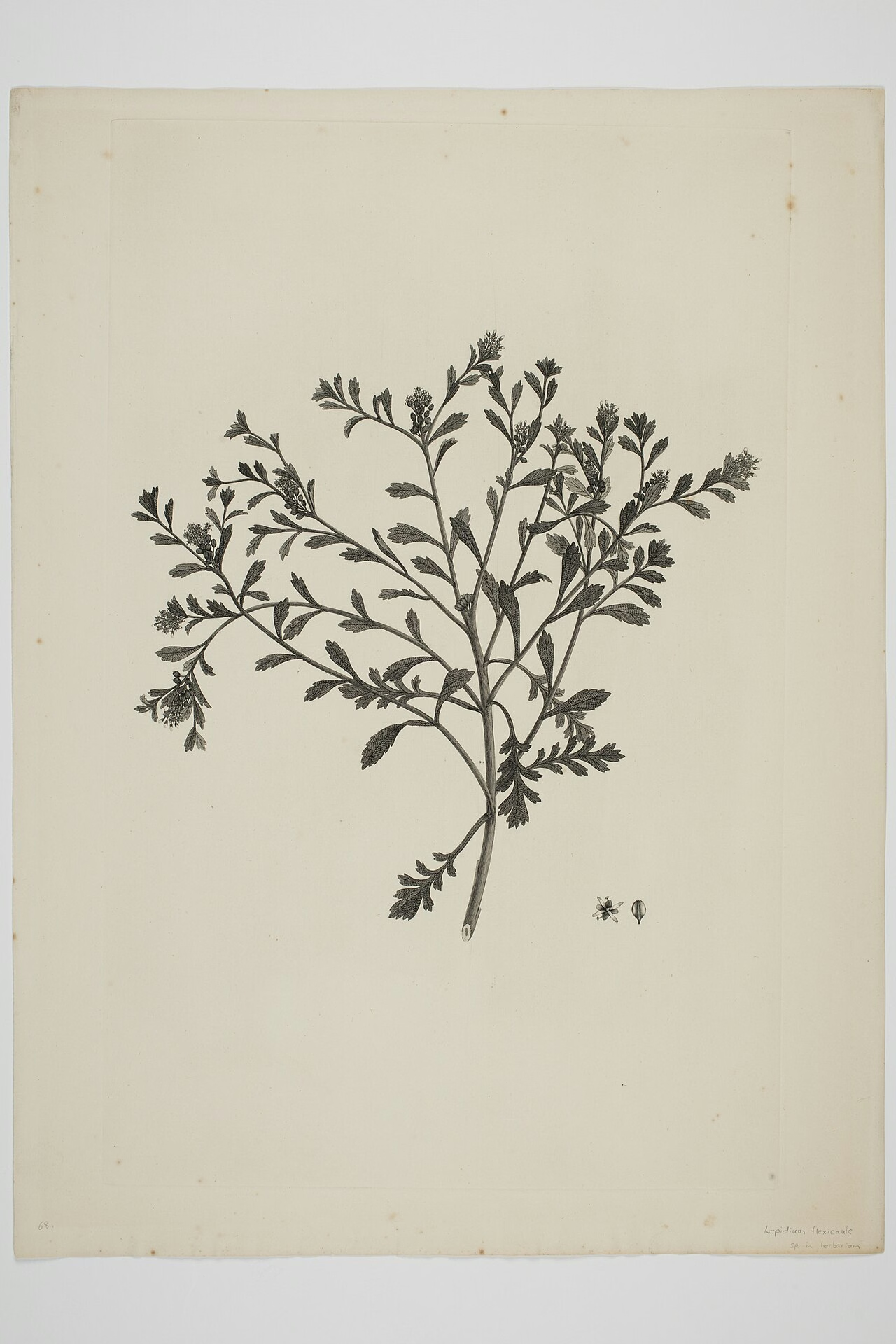
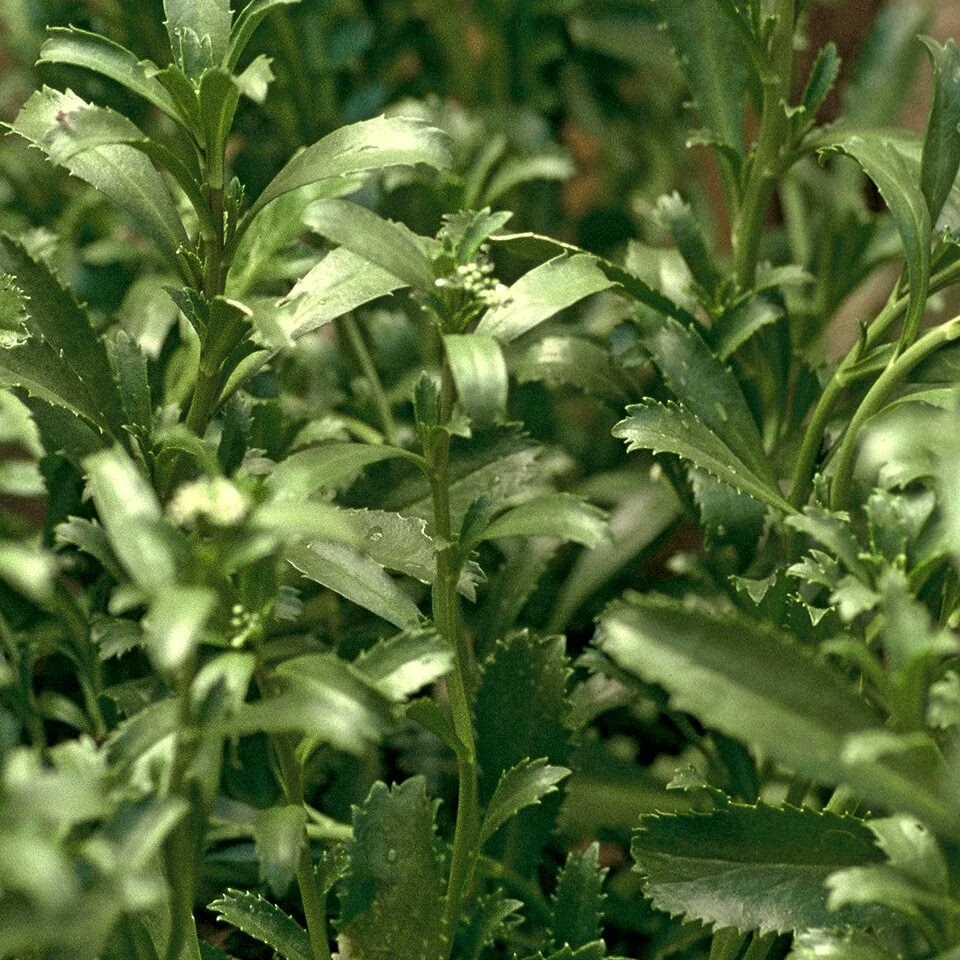
Lepidium flexicaule is a decumbent perennial herb with a fleshy taproot. From the crown it produces from one to eight, occasionally many, trailing stems up to 400 mm long that become woody at the base. The basal leaves are 30 to 150 mm long and 10 to 45 mm wide, hairless, dark green to yellow-green and deeply lobed to fully pinnate. Like other cresses, the plant has a peppery smell when bruised.
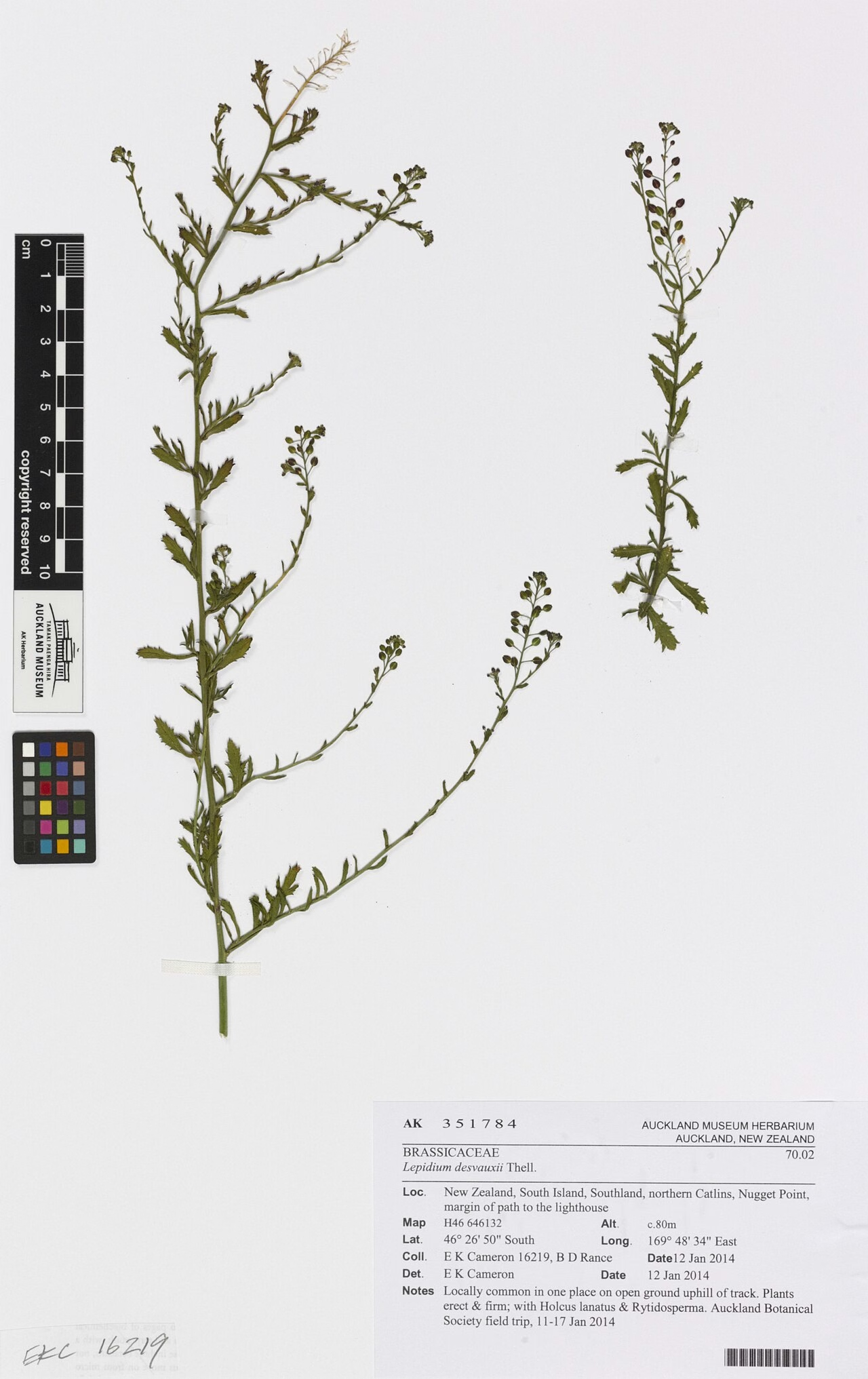
Flowers appear from November to January. They are small, with white petals shorter than the green sepals, and are followed from December to March by crowded, ovate seed pods 3 to 4 mm long and 2 to 3 mm wide. The flowering stems arise opposite the leaves, a feature NZPCN uses to separate it from the bushier L. desvauxii.
It is most often confused with winter cress (Lepidium didymum) and L. squamatum, two weedy cresses with similar foliage that grow in the same kinds of places. Those species have net-veined or warty pods that split into two entire halves, whereas coastal cress has smooth, crowded, ovate pods.
Quick Facts
| Scientific Name | Lepidium flexicaule |
|---|---|
| Height | Low and trailing; stems lie close to the ground |
| Spread | Trailing stems up to 0.4 m long |
| Water Needs | Moderate to high; best in permanently damp soil |
| Light | Full sun |
| Frost Tolerance | Moderate; a coastal plant of mild climates |
| Salt Tolerance | High; grows in coastal turf and on sea cliffs |
| Growth Rate | Fast |
| Lifespan | Perennial |
Climate Best Suited to
Suits mild, moist, oceanic coastal climates with regular rain, as on the South Island's west coast. It is unsuited to hot, dry inland sites.
Regional Suitability
| City | Climate Suitability |
|---|---|
| Auckland | Medium |
| Wellington | High |
| Christchurch | Medium |
| Dunedin | Medium |
Plant Habitat
Coastal cress was historically collected around Auckland, Coromandel, the Firth of Thames and Wellington, but in the North Island it is now known only from one South Taranaki site discovered in 2003. In the South Island it occurs from Cape Farewell to Greymouth. It was gathered on the Chatham Islands in the 1860s and rediscovered at one site there in 2004. Outside New Zealand it grows on the west coast of Tasmania, where it is uncommon and may also be threatened.
It is a strictly coastal plant, usually growing in coastal turf but also on rock stacks, outcrops, headlands, cliff faces and among boulders.
Growing Requirements
Soil Requirements
NZPCN advises that it does best in permanently damp, fertile soil.
- Moist, fertile loam or sandy loam
- Add compost to poor soils
- Good drainage at the crown to avoid rot
- Tolerates salt-laden coastal soil
Light Requirements
A plant of open coastal turf and rock that needs plenty of light.
- Full sun
- Avoid shading by taller plants or weeds
- Exposure to sea wind is tolerated
Water Requirements
It prefers soil that never dries out completely.
- Water regularly in dry weather
- Mulch lightly to keep roots moist
- Do not let pots dry out in summer
Planting and Establishing
Plant in a sunny, open spot in moist, fertile soil, such as a coastal garden bed, rock garden pocket or a large pot. Allow room for the stems to trail over rocks or the edge of a container.
Grow it away from other native cresses such as L. banksii and L. oleraceum, because NZPCN notes it readily hybridises with them in cultivation. Keeping species apart preserves pure seed for restoration work.
Ecological Role
The small white flowers open from November to January and are probably visited by small flies and other insects, though no pollination studies for this species were found. Seed pods ripen from December to March.
Its coastal turf and rock habitats are easily overrun by introduced grasses and herbs. As a brassica, it is also food for introduced cabbage pests, which compounds the pressure on small wild populations.
Uses & Significance
Garden Uses
A rewarding conservation plant for coastal gardens and native plant collections.
- Trailing over rocks or retaining walls near the sea
- Large pots and troughs
- Ex situ conservation of a Nationally Endangered species
- Coastal restoration plantings from appropriate local seed
Ecological Value
Every surviving population is important for the species' future in New Zealand.
- Part of threatened coastal turf communities
- Food plant for native and introduced insects
- Genetic reservoir for one of New Zealand's rarer cresses
Landscaping Uses
The glossy, deeply cut leaves form a loose rosette with stems radiating outward, making an attractive low plant for the front of a coastal border or between boulders. It pairs well with other coastal turf plants such as native ice plant and shore groundcovers.
Keep surrounding plants low so the cress is not smothered, and place it where it is easy to check for caterpillars.
Seasonal Care Calendar
Spring
New leaves expand from the taproot and flowering stems begin to form.
- Sow seed or plant out seedlings
- Start checking for caterpillars and aphids
Summer
Flowering runs from November to January, with pods following.
- Keep soil moist
- Collect seed as pods ripen
- Watch for cabbage white caterpillars
Autumn
Pods continue to ripen until March and growth slows.
- Sow fresh seed
- Remove old flowering stems
Winter
A quieter season; plants persist as leafy rosettes in mild sites.
- Protect from slugs and snails
- Avoid waterlogging around the crown
When to Prune and How Much
Little pruning is needed. Remove spent flowering stems after seed has been collected to keep the plant tidy and encourage new leafy growth, and cut out any stems damaged by pests or disease.
How to Grow Coastal Cress
NZPCN describes coastal cress as easy to grow from fresh seed, and it is less susceptible to diseases than related species. Because it hybridises readily with Lepidium banksii and L. oleraceum in cultivation, seed should only be collected from plants grown in isolation from other native cresses, or from wild plants under permit. Do not collect from wild populations without permission, since it is Nationally Endangered and every plant matters.
From Seed
Pods ripen from December to March. Fresh seed germinates readily, and young plants grow quickly in fertile, moist mix.
- Collect pods once they turn brown, from plants grown away from other Lepidium species
- Shake out the small seeds
- Sow on the surface of a moist, fertile seed mix
- Cover lightly with fine mix or vermiculite
- Keep evenly moist in a bright, sheltered place
- Prick out seedlings when they have two or three true leaves
- Pot on into a rich potting mix and plant out once roots fill the pot
From Cuttings
Short shoots from the trailing stems can be rooted to reproduce a particular plant, for example to keep a known wild-origin line in cultivation. This is less straightforward than seed but avoids hybridisation.
- Take shoot tips 5 to 8 cm long in spring or early summer
- Remove the lower leaves
- Insert into a free-draining propagating mix
- Keep humid and shaded until roots appear
- Pot on and grow in full sun
Pests & Diseases
NZPCN notes that coastal cress is susceptible to many of the pests and diseases of introduced brassicas. In gardens, watch for caterpillars of the cabbage white butterfly and diamondback moth, aphids and whitefly, and treat infestations promptly by hand removal or with a horticultural soap.
Slugs and snails damage seedlings, and in the wild, browsing animals such as rabbits and livestock eat the leaves. It is reported to be less disease-prone than its close relatives.
Cultural Significance
No Māori name or traditional use is recorded specifically for Lepidium flexicaule. Related coastal cresses, notably Cook's scurvy grass (L. oleraceum), were eaten by early European sailors to prevent scurvy, but there is no record of coastal cress being used this way.
The species was first named by Thomas Kirk; the epithet flexicaule means bent or flexible stem, describing its trailing, curving stems.
Bonus Tip
If you grow several native cresses, keep coastal cress well away from other Lepidium species, or isolate it under insect mesh while flowering, because it hybridises readily with L. banksii and L. oleraceum and seed from mixed plantings is unsuitable for restoration.
Related Plants
Explore other native plants that share similar characteristics or habitats with Coastal Cress (Lepidium flexicaule), offering further insights into New Zealand's diverse flora. These related species provide context and opportunities for complementary planting in your garden.
Plant Conservation
Lepidium flexicaule is ranked Threatened - Nationally Endangered (2023). Its qualifiers indicate it is conservation dependent (CD), subject to extreme fluctuations (EF) and partial decline (PD), data poor on trend (DPT) and threatened overseas (TO).
The main threats are weed encroachment, coastal development, browsing and brassica pests and diseases. Weed control around wild plants, fencing or exclosures, and cultivating plants of known wild origin for re-establishment all help secure the species.
Frequently Asked Questions
Where does coastal cress grow in New Zealand?
Most populations are on the South Island west coast from Cape Farewell to Greymouth. There is one site on the South Taranaki coast, found in 2003, and one rediscovered on the Chatham Islands in 2004.
Why is Lepidium flexicaule endangered?
NZPCN lists habitat loss through weed encroachment and development, browsing animals, and susceptibility to the pests and diseases of introduced brassicas as its main threats.
What plants are confused with coastal cress?
It is often confused with the weedy winter cress Lepidium didymum and with L. squamatum, which have similar foliage but net-veined or warty seed pods that split into two entire halves.
Is coastal cress easy to grow?
Yes. NZPCN says it is easy from fresh seed, less disease-prone than related cresses, and does best in permanently damp, fertile soil in full sun.
Sources and Further Reading
The botanical, growing, and conservation details for Coastal Cress (Lepidium flexicaule) on this page draw on the New Zealand plant references below. Consult them for full technical records and the latest distribution data.