Velvet Fern
Lastreopsis velutina
Last updated:
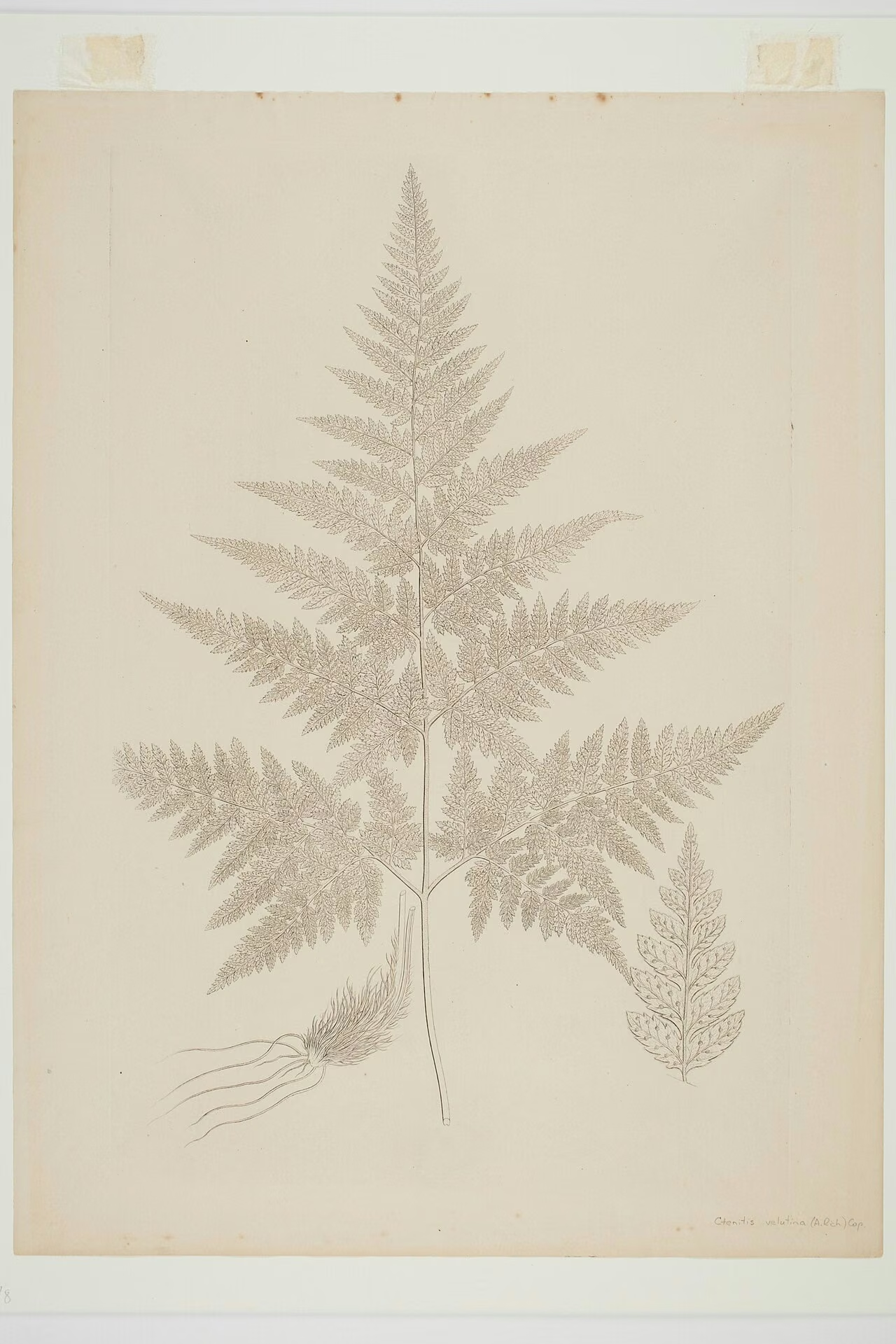
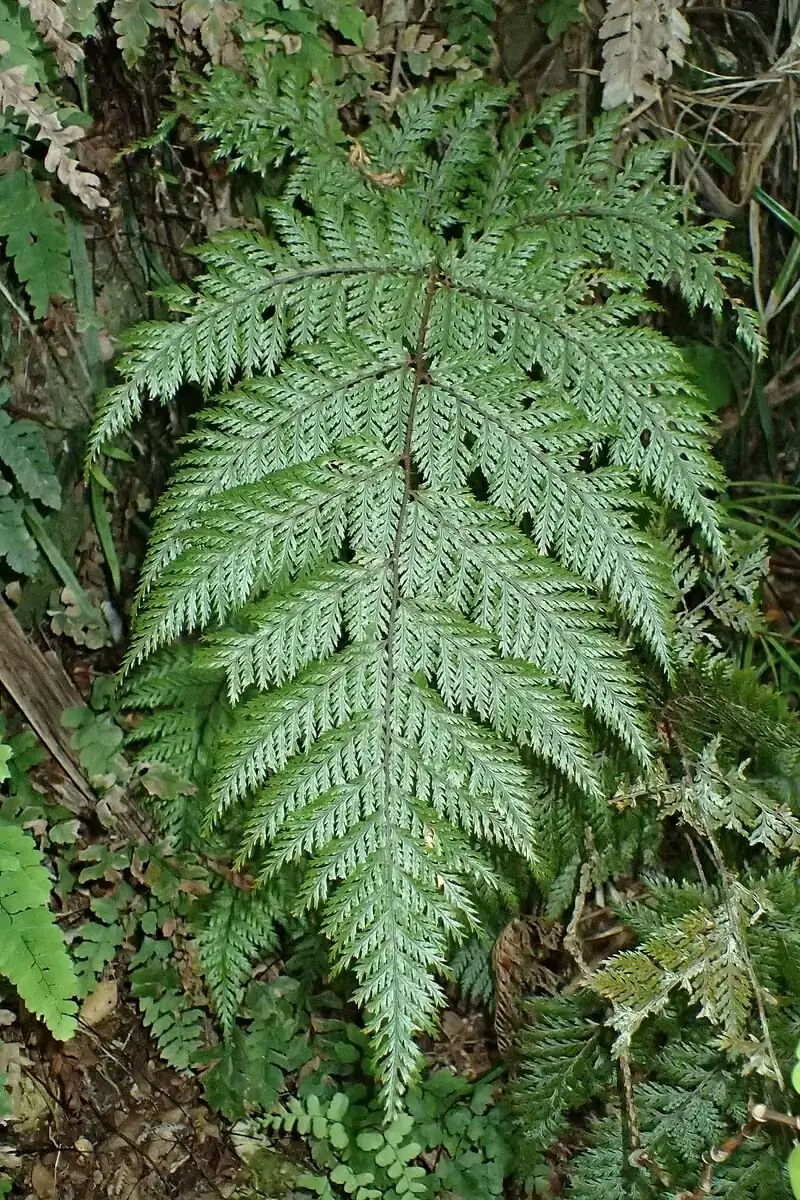
Velvet fern (Lastreopsis velutina) is a ground fern endemic to New Zealand, named for the soft, velvety feel of its fronds. An erect rhizome produces a tuft of broad, finely divided, three to four times pinnate fronds 24 to 96 cm long, covered on every surface with tiny reddish-brown hairs. It grows in drier broadleaved, podocarp, beech, kānuka and coastal forest and under mānuka scrub, from Te Paki to Wellington and from Golden Bay to Dunedin. It is ranked Not Threatened but is sparse, and is regionally uncommon or threatened in several regions. Explore more native ferns in our native plant guide.
Plant Description
Velvet fern has an erect, or rarely prostrate, rhizome clothed in golden-brown scales, from which a tuft of fronds arises. Fronds are 240 to 960 mm long, borne on red-brown, hairy stipes. The blade is three to four times pinnate and broadly ovate, often broader than long, with 10 to 20 pairs of primary pinnae, the longest up to 275 mm.
Its defining feature is the dense covering of soft, needle-like red-brown hairs on all surfaces of the frond, which gives the thin, dark brownish-green fronds a velvety texture. The sori on the underside are covered by small kidney-shaped indusia bearing yellow club-shaped glands.
New Zealand has four Lastreopsis species that look broadly similar. Velvet fern is separated from them by the combination of an erect rhizome, three to four times divided fronds and, above all, the soft hairs covering the whole frond. Lastreopsis hispida, for example, has a long creeping rhizome and stiff bristles on its stipes rather than soft velvet.
Quick Facts
| Scientific Name | Lastreopsis velutina |
|---|---|
| Height | 0.25-1 m (frond length 24-96 cm) |
| Spread | 0.5-1 m |
| Water Needs | Moderate; moist but not waterlogged |
| Light | Shade to partial shade |
| Frost Tolerance | Low to moderate; a lowland forest fern |
| Salt Tolerance | Low; tolerates coastal forest shelter but not direct salt spray |
| Growth Rate | Moderate |
| Lifespan | Long-lived perennial |
Climate Best Suited to
Suits mild lowland climates in both main islands, generally below 525 m. It favours sheltered forest rather than open, frosty or exposed sites.
Regional Suitability
| City | Climate Suitability |
|---|---|
| Auckland | High |
| Wellington | High |
| Christchurch | Medium |
| Dunedin | Medium |
Plant Habitat
Velvet fern is endemic to New Zealand. In the North Island it occurs from Te Paki to Wellington but is absent from most of Taranaki and the central North Island. In the South Island it ranges from Golden Bay to Dunedin. It grows from near sea level up to 525 m near Havelock North, and to 400 m in the Motueka Gorge near Nelson.
It is found in drier broadleaved, podocarp, beech, kānuka and coastal forest, and under mānuka scrub, on forest floors, well-drained hillsides, rocky slopes and alluvial terraces. It grows on greywacke, limestone and volcanic substrates.
Growing Requirements
Soil Requirements
It favours well-drained forest soils, including rocky and limestone-derived ground, rather than wet or boggy sites.
- Free-draining, humus-rich soil
- Tolerates rocky and limestone soils
- Add leaf litter or compost for moisture retention
Light Requirements
As a forest-floor fern, it grows under the canopy of broadleaved, beech, kānuka and mānuka vegetation.
- Shade to dappled light
- Protect from hot afternoon sun
Water Requirements
It occupies the drier types of forest, so it needs steady moisture but not saturated soil.
- Keep moist during establishment
- Avoid waterlogged ground
Planting and Establishing
Plant velvet fern in a sheltered, shaded or semi-shaded site with free-draining soil enriched with leaf mould, such as a woodland bed, a shaded slope or beneath established shrubs.
Set the rhizome at the same level it was growing in the pot, mulch with leaf litter and water regularly through the first summer.
Ecological Role
Velvet fern forms part of the ground layer of drier lowland forests and scrub, where its broad fronds help shade the forest floor and contribute leaf litter.
Like other ferns it spreads by wind-blown spores rather than seed, and it has no flowers. Specific animal associations are not documented in the sources consulted.
Uses & Significance
Garden Uses
Its soft texture and finely divided fronds make it an attractive and unusual fern for shaded native gardens.
- Woodland and shade gardens
- Underplanting for kānuka or broadleaf trees
- Sheltered banks and rocky slopes
Ecological Value
It is a sparse endemic fern whose populations are uncommon in several regions, so restoring it in local plantings adds genuine conservation value.
- Endemic to New Zealand
- Regionally Critical in Otago
- Part of drier lowland forest understoreys
Landscaping Uses
Use velvet fern where visitors can touch it, such as beside a shaded path, so its distinctive soft fronds can be appreciated. Its broad, lacy outline contrasts well with strap-leaved plants and glossy-leaved shrubs.
Group several plants under a light tree canopy to form a soft, textured ground layer, keeping them away from exposed, windy corners that would damage the thin fronds.
Seasonal Care Calendar
Spring
New fronds unfurl from the crown, covered in reddish hairs.
- Apply leaf mulch
- Protect new fronds from slugs
Summer
Fronds reach full size; drier forest conditions are normal for this fern but young plants need watering.
- Water during droughts
- Maintain shade
Autumn
Mature fronds carry sori on their undersides.
- Check for ripe spores
- Top up mulch
Winter
Fronds persist through mild winters but can be damaged by hard frost.
- Shelter from frost
- Leave old fronds to protect the crown
When to Prune and How Much
Remove only dead or damaged fronds, cutting them at the base of the stipe. Old fronds can be left until new growth emerges in spring, as they help protect the crown.
Do not cut into the rhizome or remove healthy green fronds, as this weakens the plant.
How to Grow Velvet Fern
Velvet fern reproduces by spores, and because its rhizome is usually erect rather than creeping, it does not spread into large clumps that can be easily divided. Spores are the main way to raise new plants, though a plant that has developed more than one crown can occasionally be split. The sources consulted do not give a specific propagation protocol or spore season for this species, so the methods below follow standard practice for terrestrial ferns. As the species is uncommon or threatened in several regions, use spores or plants from local, legally sourced material.
From Spores
The sori sit under small kidney-shaped indusia on the lower surface of the frond. Collect a fertile pinna when the sori turn dark brown and the indusia begin to shrivel.
- Place a fertile frond section on clean paper for a day or two to drop spores
- Sow spores thinly onto sterilised, fine, moist potting mix
- Cover the container with glass or plastic to keep humidity high
- Keep in bright indirect light at room temperature
- Mist to keep moist as green prothalli develop
- Prick out young sporophytes into small pots once they have a few fronds
- Grow on in shade for a year before planting out
By Division
Division is only possible where an older plant has formed a second crown. Separating it carries risk, so leave single-crowned plants intact.
- Lift the plant in spring
- Cut cleanly between crowns, keeping roots on each piece
- Replant in shaded, humus-rich soil and keep moist
Pests & Diseases
No serious pests are recorded for velvet fern. Slugs and snails may damage young fronds, and fronds can scorch in hot sun or drying winds.
In the wild, browsing by stock, deer and goats, along with forest clearance, can reduce populations.
Cultural Significance
No Māori name or traditional use is recorded for velvet fern in the sources consulted.
The epithet velutina comes from the Latin velutinus, velvety, describing the soft hairy fronds. The genus name Lastreopsis means resembling Lastrea, an older fern genus. It was first described by Achille Richard and later placed in Lastreopsis by Mary Tindale.
Bonus Tip
If you see a lacy, dark brownish-green fern on a dry forest slope and are not sure which Lastreopsis it is, gently stroke the frond. A soft, velvety feel means velvet fern; the other species feel smooth or bristly.
Related Plants
Explore other native plants that share similar characteristics or habitats with Velvet Fern (Lastreopsis velutina), offering further insights into New Zealand's diverse flora. These related species provide context and opportunities for complementary planting in your garden.
Plant Conservation
Lastreopsis velutina is ranked Not Threatened (2023) with the Sparse qualifier. Regionally it is ranked Regionally Naturally Uncommon in Northland, Auckland and Wellington, and Regionally Critical in Otago, near its southern limit.
Protecting remnants of drier lowland forest and scrub from clearance and browsing animals is the main conservation need. Including locally sourced velvet fern in restoration plantings within its range helps reinforce sparse populations.
Frequently Asked Questions
How do you identify velvet fern?
Run your fingers over a frond: Lastreopsis velutina is covered on all surfaces with numerous soft reddish-brown hairs that give a distinctly velvety feel, which no other New Zealand Lastreopsis has.
Where does Lastreopsis velutina grow?
It is found in the North Island from Te Paki to Wellington, though absent from most of Taranaki and the central North Island, and in the South Island from Golden Bay to Dunedin.
Is velvet fern rare?
Nationally it is Not Threatened with a Sparse qualifier, but it is ranked Regionally Naturally Uncommon in Northland, Auckland and Wellington and Regionally Critical in Otago.
Can velvet fern be grown in a garden?
It can be grown in a sheltered, shaded spot with moist but well-drained soil, reflecting the drier forest floors and well-drained hillsides it occupies in the wild.
Sources and Further Reading
The botanical, growing, and conservation details for Velvet Fern (Lastreopsis velutina) on this page draw on the New Zealand plant references below. Consult them for full technical records and the latest distribution data.