Bushy Peppercress
Lepidium desvauxii
Last updated:
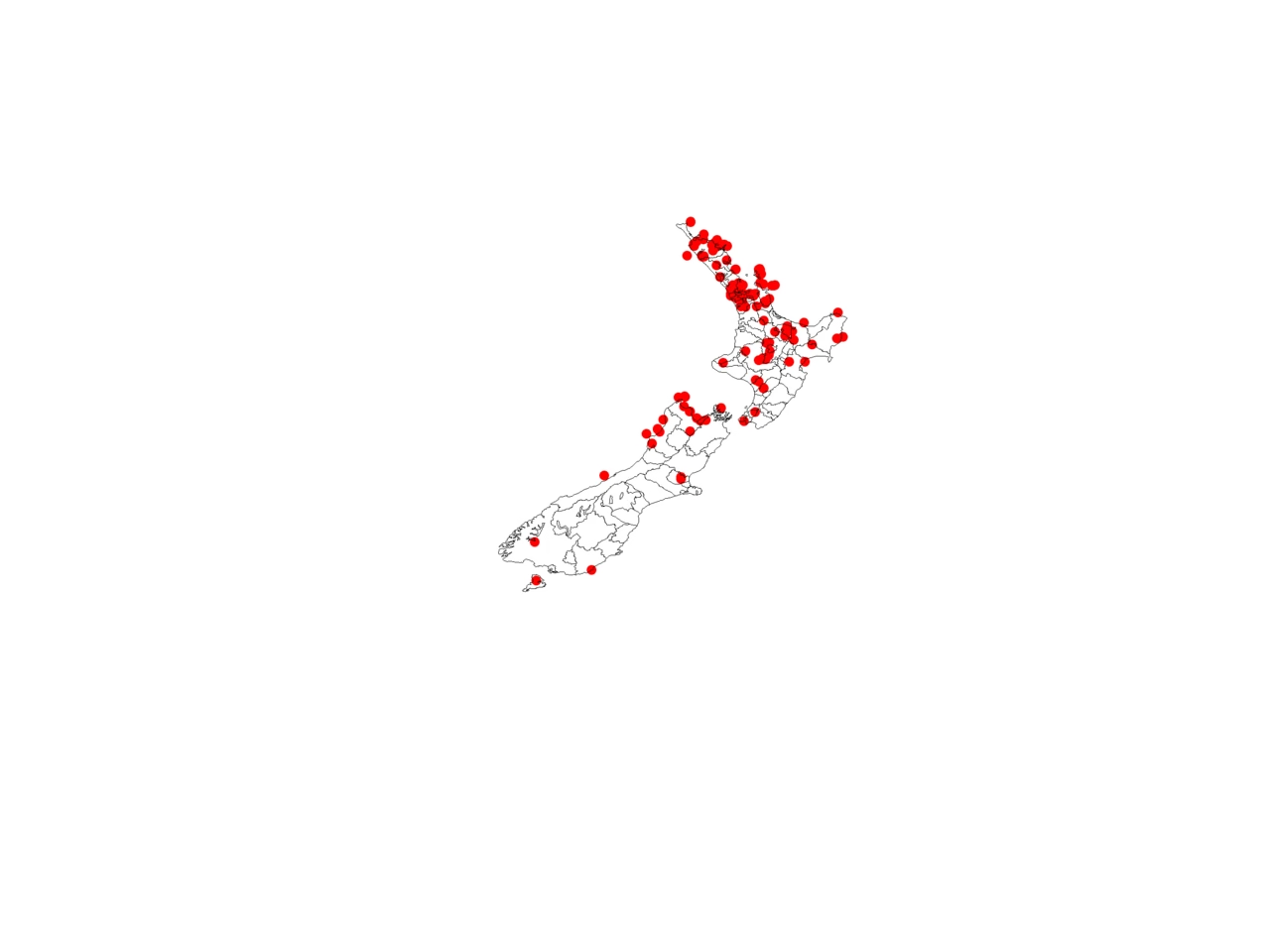
Bushy peppercress (Lepidium desvauxii), also called narrow-leaved cress, is a short-lived, shrubby herb in the cabbage family that grows 20 to 45 cm tall from a woody taproot. Every part smells strongly of cress when crushed. In New Zealand it is found mainly in coastal turf, cliffs, sand, stream banks and boulder fields of the South, Stewart and Chatham islands, with a North Island record from Motuihe Island. It also grows in southern Australia. Its New Zealand status is debated: coastal populations may be native, but inland roadside plants are probably introduced. It is ranked Not Threatened. Explore more native flowering plants in our native plant guide.
Plant Description
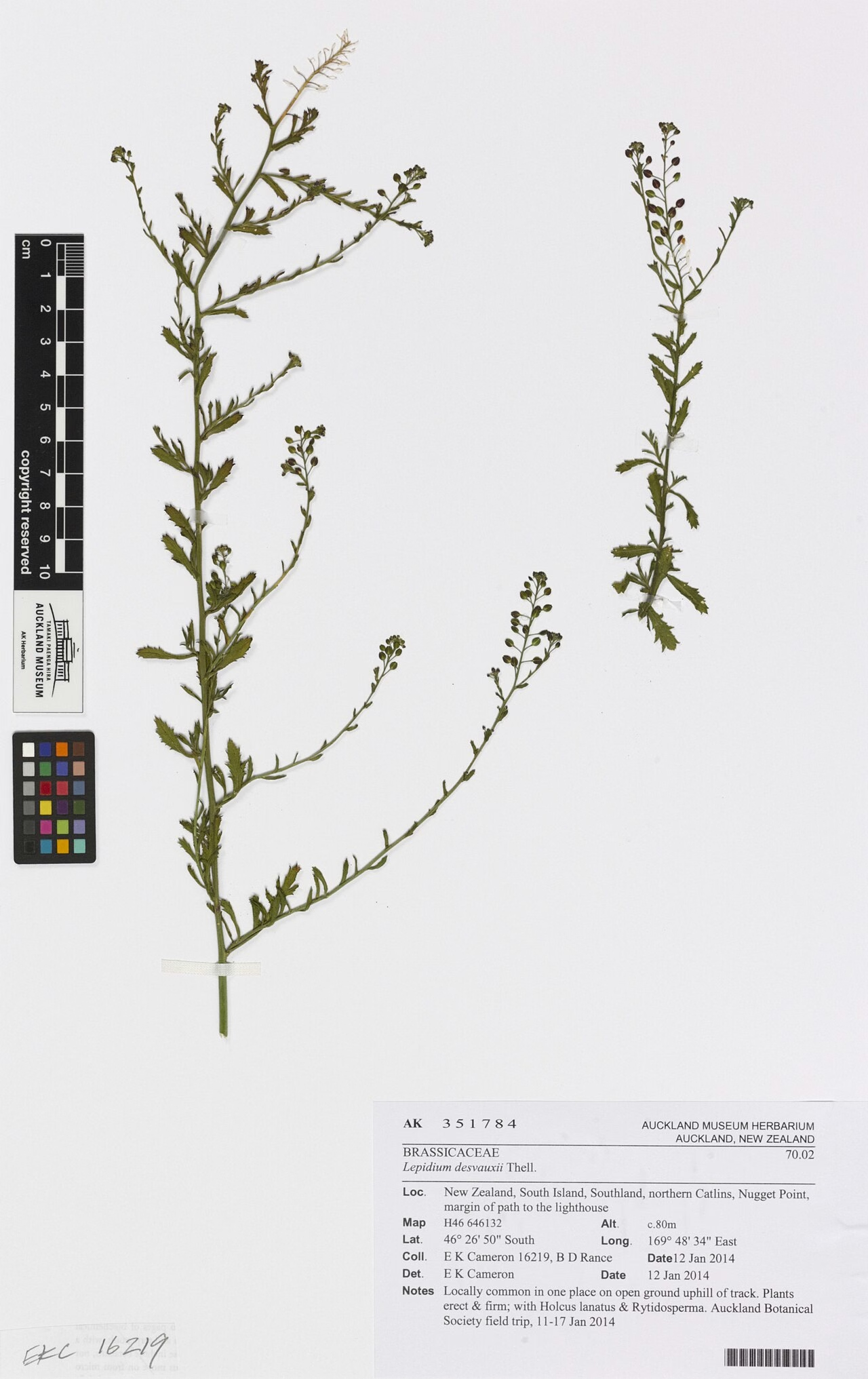
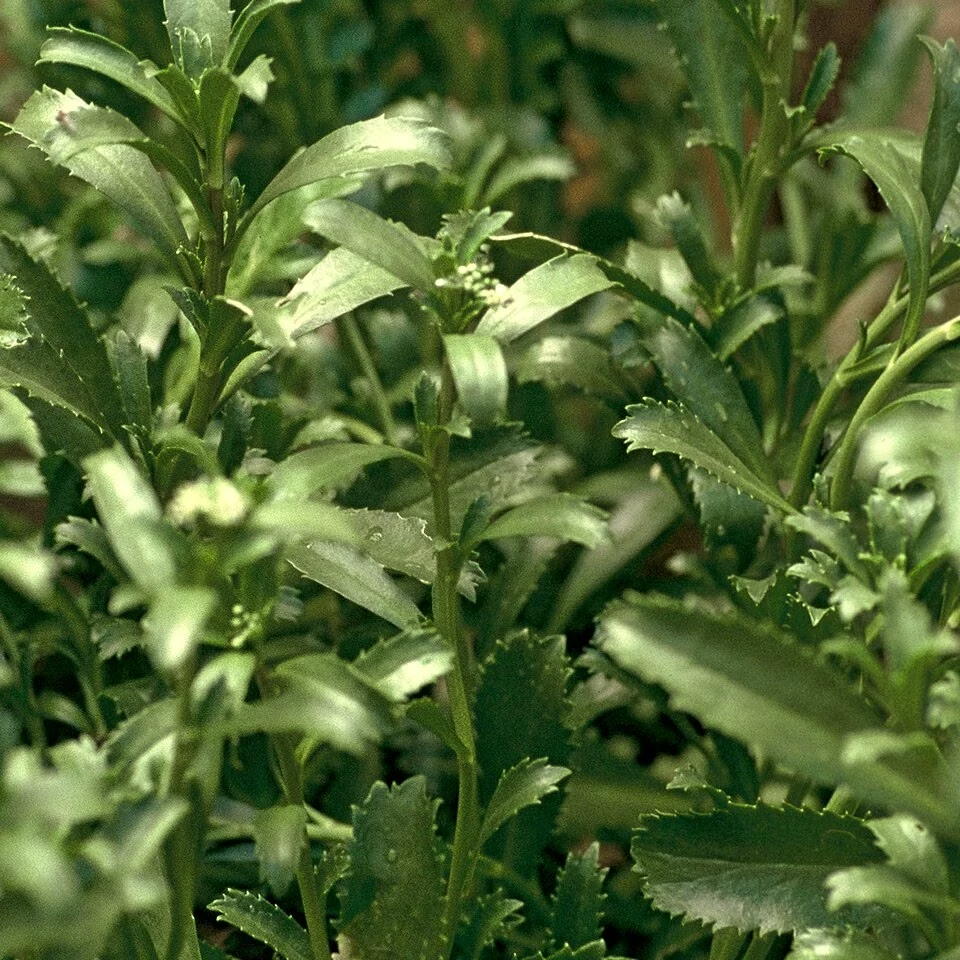
Lepidium desvauxii is a shrubby, tap-rooted herb 20 to 45 cm tall with a woody taproot. All parts smell strongly of cress when crushed. The basal leaves are pinnate, 6 to 12 cm long and 1.5 to 2.5 cm wide, while the leaves up the stem become progressively simpler and smaller. Distinctive small triangular hairs occur on the leaf margins and in the angles between leaves and stems.
The plant produces numerous tangled flowering stems. The flowers are tiny, with purple-margined sepals that are longer than the minute white petals, and only two stamens. The fruit is a small notched pod (silicle), dark maroon to green-brown, containing brown, narrowly egg-shaped seeds about 1.5 mm long. Flowers and fruit can be found at any time of year.
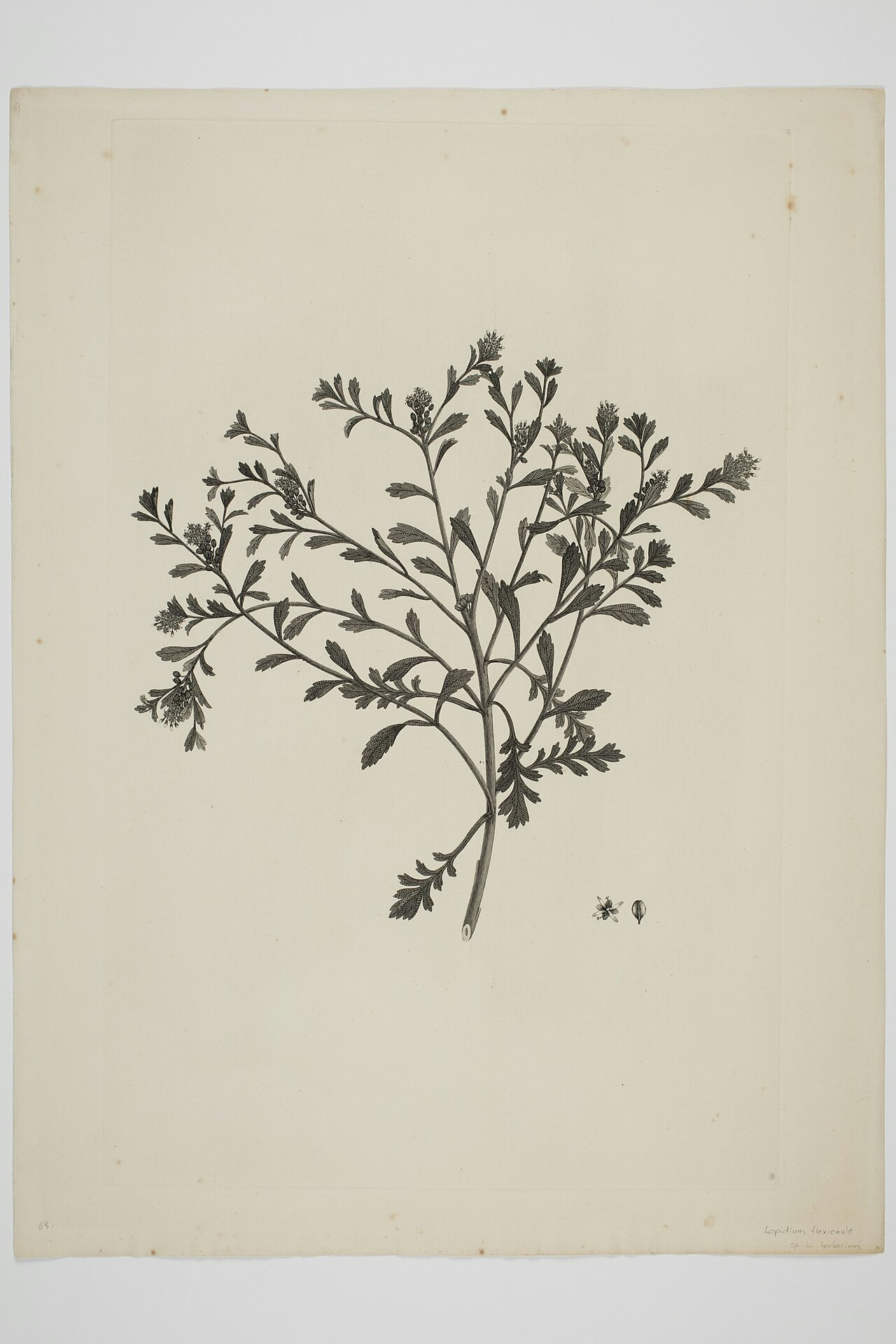
Having two stamens instead of four separates it from several other native lepidiums. It is most often confused with L. flexicaule, a trailing coastal species with leaf-opposed inflorescences. Introduced weedy cresses also look similar, so a hand lens and the pod shape are useful for confirmation.
Quick Facts
| Scientific Name | Lepidium desvauxii |
|---|---|
| Height | 0.2-0.45 m |
| Spread | No published figure; a bushy, branching clump |
| Water Needs | Low to moderate; tolerates dry coastal sites |
| Light | Full sun |
| Frost Tolerance | Moderate; grows south to Rakiura |
| Salt Tolerance | Good; grows in coastal turf and on cliffs |
| Growth Rate | Fast |
| Lifespan | Short-lived perennial |
Climate Best Suited to
Suits temperate to cool coastal climates and tolerates wind, salt and summer dryness. It grows from the Hauraki Gulf south to Rakiura and on the Chatham Islands.
Regional Suitability
| City | Climate Suitability |
|---|---|
| Auckland | Medium |
| Wellington | High |
| Christchurch | High |
| Dunedin | High |
Plant Habitat
In New Zealand NZPCN records it from Motuihe Island in the Hauraki Gulf and throughout the South, Stewart and Chatham islands. In Australia it occurs in several southern states and is common in Tasmania.
Its natural habitat is mainly coastal: short turf, cliff faces, sand, stream banks and boulder fields near the sea. It has also been collected inland as a roadside weed, and these inland populations are thought to be introduced. Indigenous coastal populations are generally scarce, which is why Otago ranks it as Regionally Naturally Uncommon.
Growing Requirements
Soil Requirements
A tolerant plant of thin coastal soils, sand and gravel, as well as disturbed roadside ground.
- Free-draining sand, gravel or loam
- Copes with low fertility
- Tolerates compacted, disturbed soil
- Avoid sites that stay waterlogged
Light Requirements
Grows in open, sunny places with little competition from taller plants.
- Full sun
- Open coastal exposure is tolerated
- Becomes leggy in shade
Water Requirements
NZPCN notes it tolerates more stress than other native lepidiums, and it copes with dry coastal summers once its taproot is established.
- Water seedlings until established
- Mature plants need little watering
- Avoid overwatering in pots
Planting and Establishing
If grown deliberately, for example in a coastal restoration plot or a collection of native cresses, raise plants from local seed and plant into open, sunny gravel or sandy ground. Space plants about 30 cm apart.
Because it can self-seed aggressively, do not plant it near natural coastal turf that holds rarer lepidiums, and remove seedlings that appear where they are not wanted.
Ecological Role
The tiny flowers are produced year round and are probably self-pollinated or visited by small insects, though no pollination studies for this species were found. The small seeds fall near the parent or are moved by water and soil disturbance, which helps explain its spread along roadsides.
As a member of the cabbage family it is eaten by the same insects that attack brassicas. Its hardiness and weedy tendencies mean it can occupy disturbed coastal and roadside ground where rarer native cresses no longer grow.
Uses & Significance
Garden Uses
A plant of limited garden value, mainly of interest to collectors of native Brassicaceae.
- Coastal or gravel gardens in exposed sites
- Demonstration plantings of native cresses
- Leaves have a peppery cress smell; no documented food use found
Ecological Value
Where coastal populations are indigenous, it contributes to short coastal turf and cliff communities.
- Year-round flowers for small insects
- Food plant for brassica-feeding insects
- Part of New Zealand's diverse Lepidium flora
Landscaping Uses
Its fine, much-divided foliage and airy tangle of flower stems suit informal gravel or coastal plantings. It is not a showy plant and is best mixed with low coastal grasses and herbs rather than featured on its own.
Keep it away from formal borders, as its self-seeding can quickly make it a weed.
Seasonal Care Calendar
Spring
Rapid new growth from the taproot, with flowering stems developing.
- Sow seed in trays
- Pull unwanted seedlings
Summer
Flowers and fruit are abundant and the plant copes with dry weather.
- Water young plants only
- Collect ripe pods for seed
Autumn
Flowering and fruiting continue in mild coastal sites.
- Cut back untidy stems
- Remove spent plants
Winter
Plants may keep flowering in mild areas, as flowers can appear year round.
- Little care needed
- Check for slugs on young plants
When to Prune and How Much
Cut back tangled flowering stems after the main flush to tidy the plant and reduce self-seeding. Being short-lived, old plants can simply be replaced with seedlings rather than heavily pruned.
How to Grow Bushy Peppercress
NZPCN describes Lepidium desvauxii as easily grown from fresh seed, and that is by far the simplest way to raise it. Because the species can become an aggressive weed in cultivation, raise only what you need and use seed from local coastal populations rather than roadside plants of uncertain origin. Cuttings of the woody base are possible but seldom necessary given how freely it germinates.
From Seed
Seed is available for much of the year because flowers and fruit can be present in any season. Collect pods as they turn dark maroon or brown and sow promptly, since fresh seed germinates best.
- Collect ripe pods from a local coastal plant
- Rub the pods to release the small brown seeds
- Sow thinly on the surface of a free-draining seed mix
- Cover with a fine layer of sand or seed mix
- Keep moist in a bright position
- Prick out seedlings into small pots once they have their first true leaves
- Plant out within a few months, before the taproot coils in the pot
From Cuttings
Soft shoots can be rooted if you wish to reproduce a particular plant, but this is rarely needed. Cuttings of brassicas tend to wilt quickly, so keep them shaded and humid.
- Take short side shoots 5 to 8 cm long
- Remove the lower leaves
- Insert into a pumice and seed-mix blend
- Keep humid and shaded until roots form
- Pot on and harden off in full sun
Pests & Diseases
Like other lepidiums it is susceptible to the pests and diseases of introduced brassicas. Caterpillars of the cabbage white butterfly and diamondback moth, aphids and whitefly can all damage plants in gardens, as can fungal leaf spots in humid weather.
NZPCN notes that L. desvauxii tolerates more stress than other native lepidiums, so it usually recovers from damage better than its rarer relatives.
Cultural Significance
No Māori name or traditional use is recorded specifically for Lepidium desvauxii. The genus name Lepidium means scale-shaped, referring to the small flat pods, and the epithet honours Desvaux, after whom Albert Thellung named the species.
Its uncertain status illustrates a recurring problem for New Zealand botanists: weedy plants that are native in Australia can arrive by natural means or with people, making it hard to tell native populations from introductions.
Bonus Tip
To separate it from look-alike weedy cresses, examine a single flower with a hand lens and count the stamens: two stamens, purple-edged sepals longer than the petals and a strong cress smell together point to L. desvauxii.
Related Plants
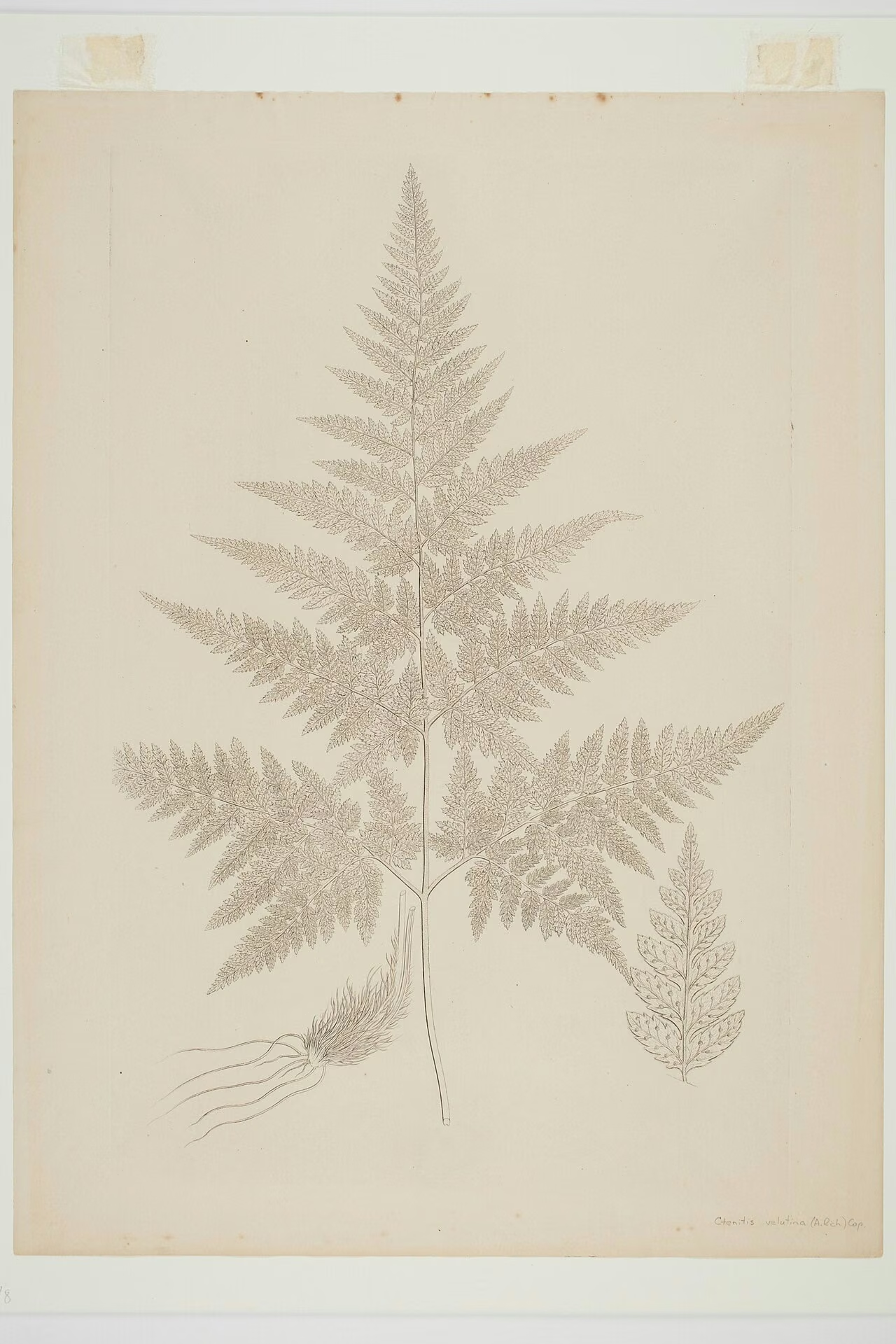
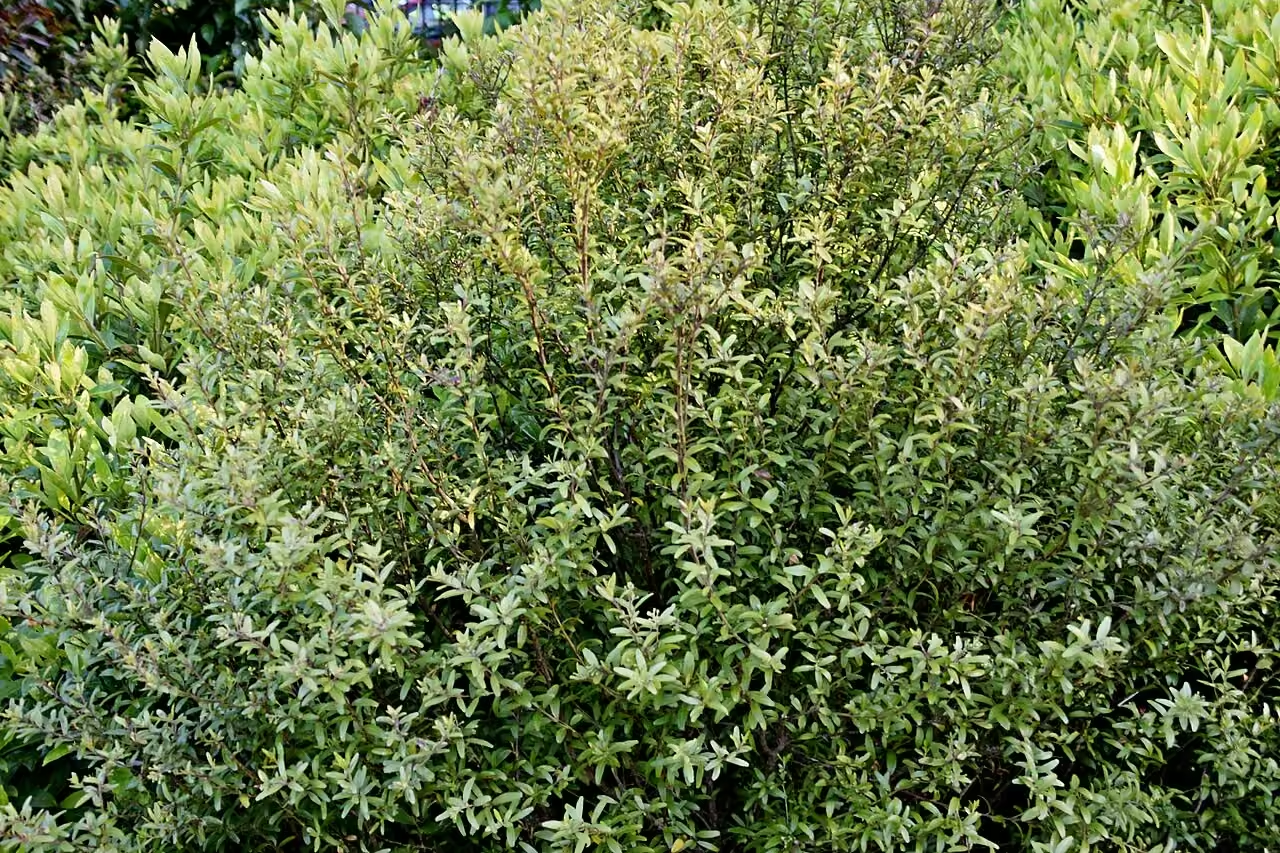
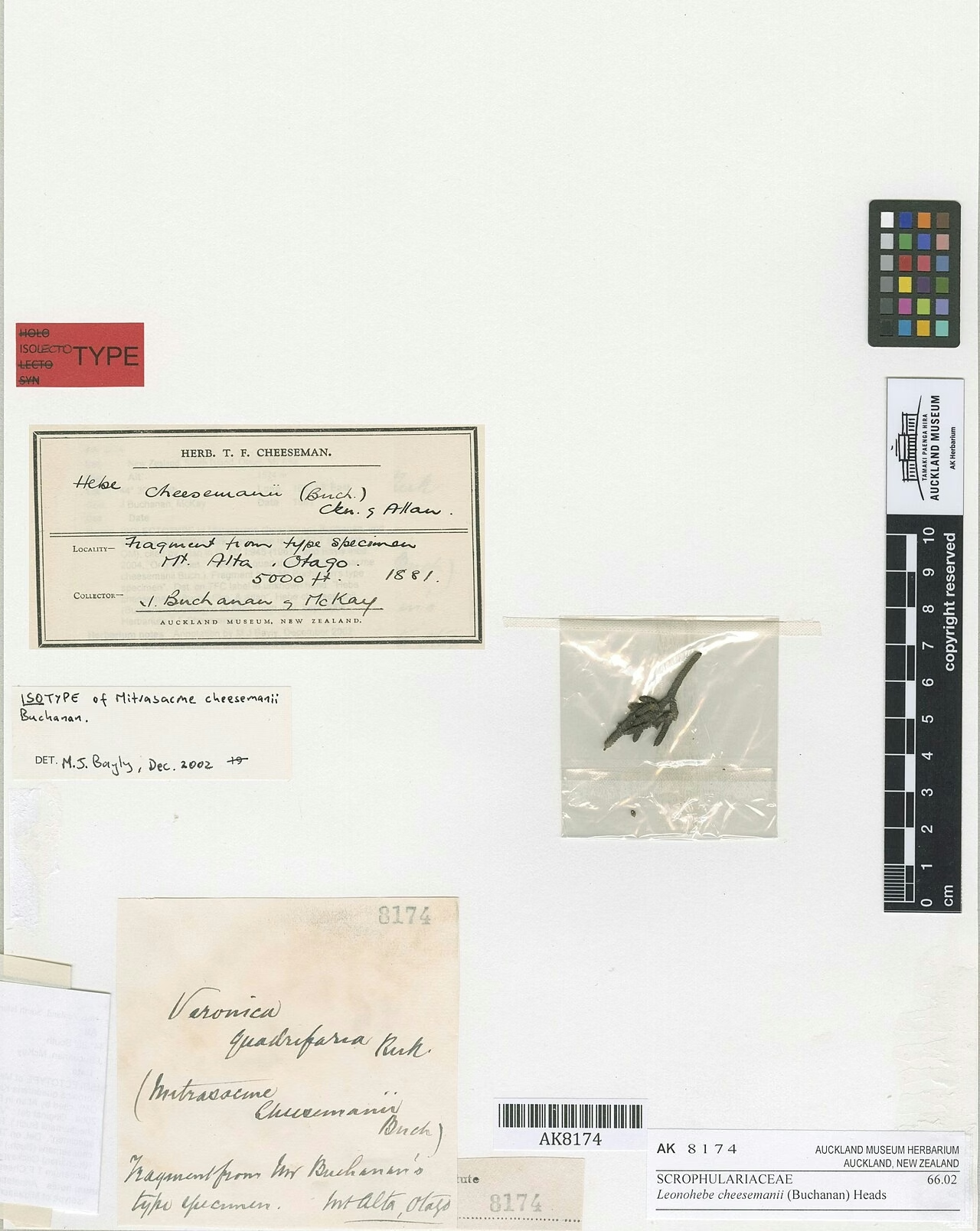
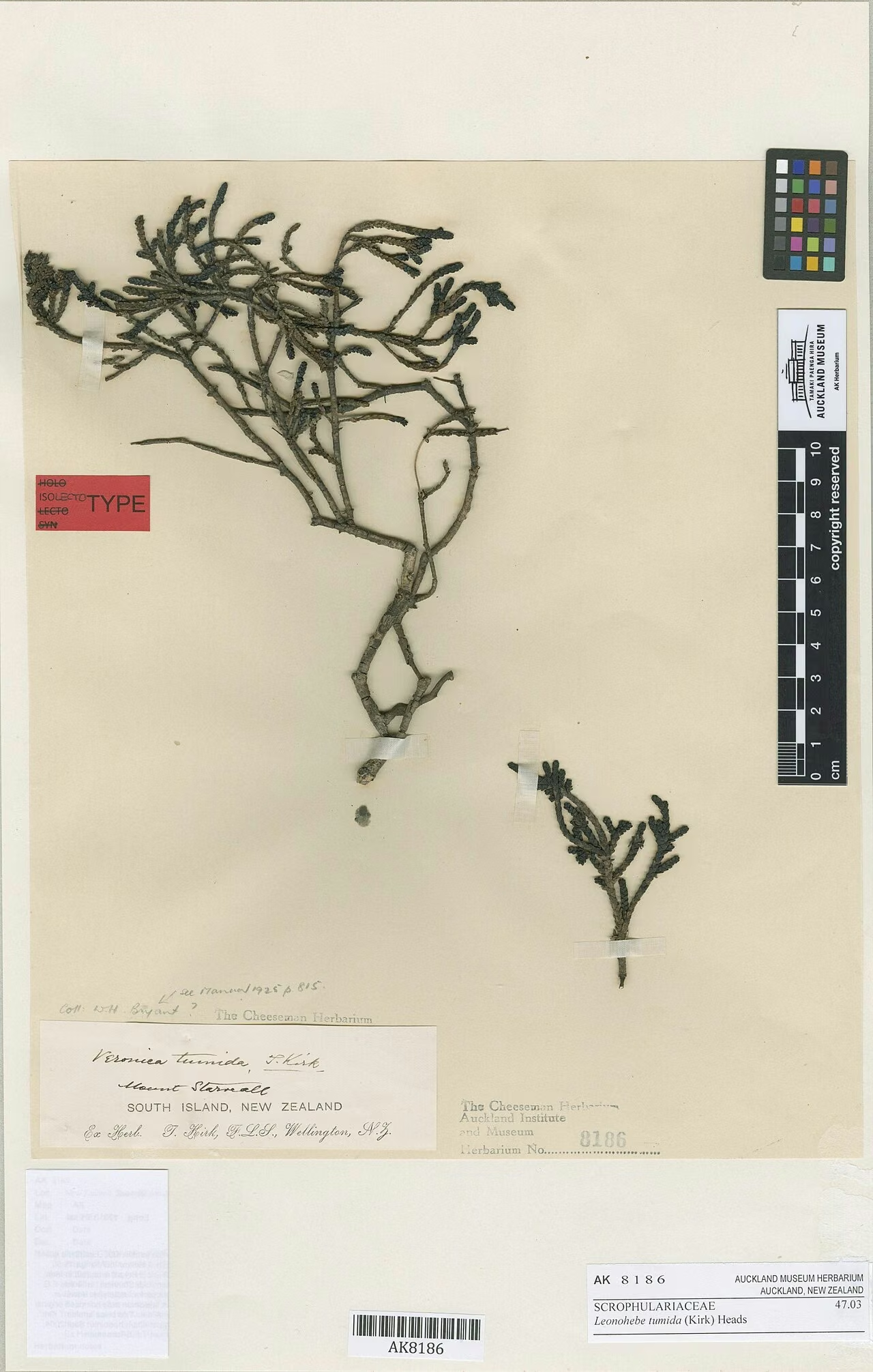
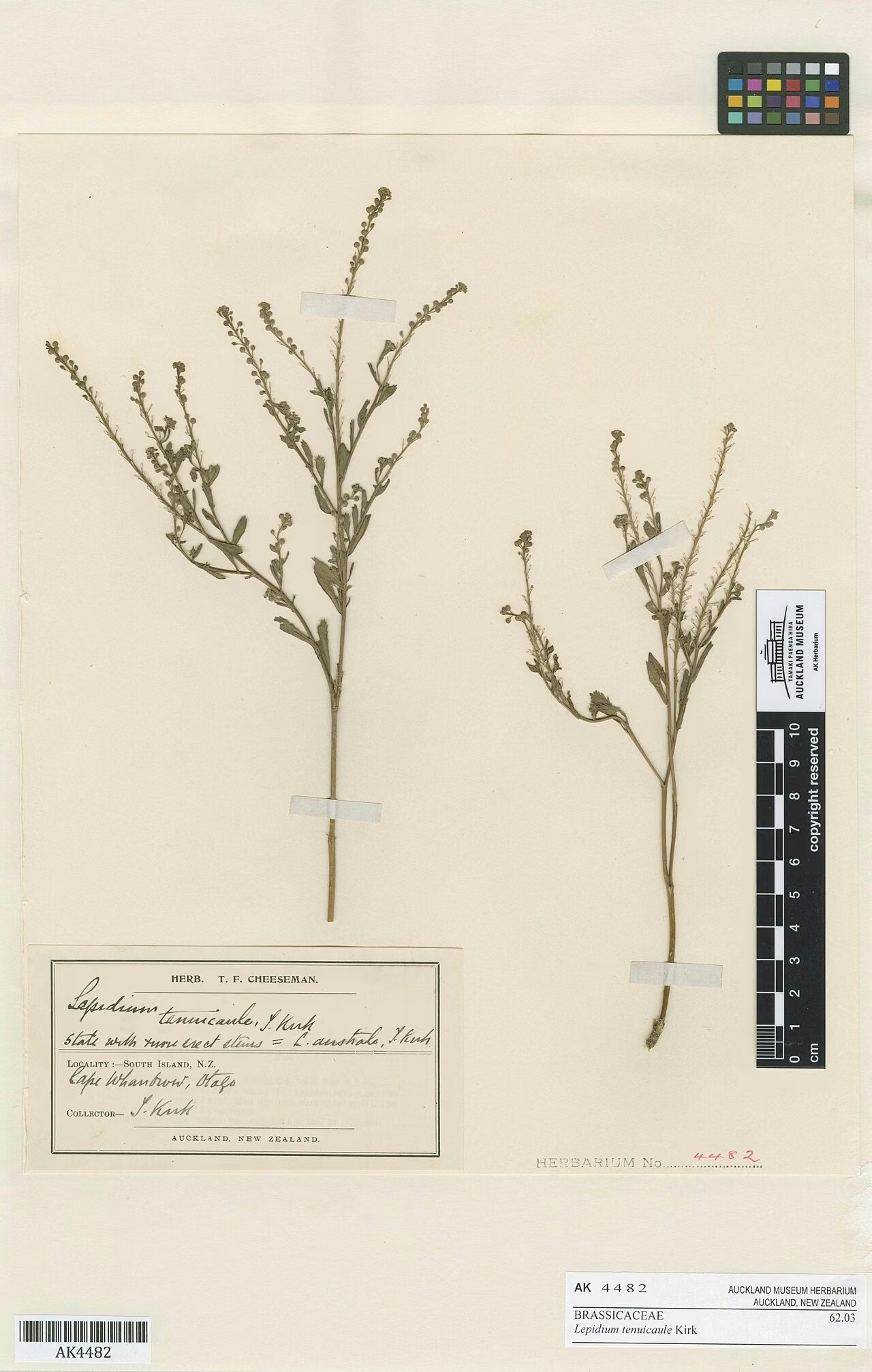
Explore other native plants that share similar characteristics or habitats with Bushy Peppercress (Lepidium desvauxii), offering further insights into New Zealand's diverse flora. These related species provide context and opportunities for complementary planting in your garden.
Plant Conservation
Lepidium desvauxii is ranked Not Threatened (2023) with the qualifier SO, secure overseas, because it is widespread in Australia. Regionally, Otago ranks it At Risk - Regionally Naturally Uncommon and Auckland lists it as Data Deficient.
Indigenous coastal populations are scarce. Protecting coastal turf from weeds and development benefits it along with rarer lepidiums, while inland roadside plants are usually regarded as introduced.
Frequently Asked Questions
Is bushy peppercress native to New Zealand?
Possibly in part. NZPCN says some coastal populations may be indigenous, while inland roadside populations are almost certainly introduced from Australia, where the species is also native.
How do you identify Lepidium desvauxii?
Look for a bushy, cress-scented herb with tangled flower stems, tiny white petals shorter than purple-edged sepals, only two stamens, and notched dark maroon to green-brown seed pods.
What is the difference between Lepidium desvauxii and Lepidium flexicaule?
NZPCN notes the two are often confused. L. flexicaule is a trailing coastal plant whose flower stems arise opposite the leaves, while L. desvauxii is bushier with numerous tangled inflorescences.
Should I grow bushy peppercress in my garden?
Only with care. NZPCN says it is easily grown from fresh seed but inclined to become an aggressive weed in cultivation.
Sources and Further Reading
The botanical, growing, and conservation details for Bushy Peppercress (Lepidium desvauxii) on this page draw on the New Zealand plant references below. Consult them for full technical records and the latest distribution data.