Speargrass
Aciphylla anomala
Last updated:
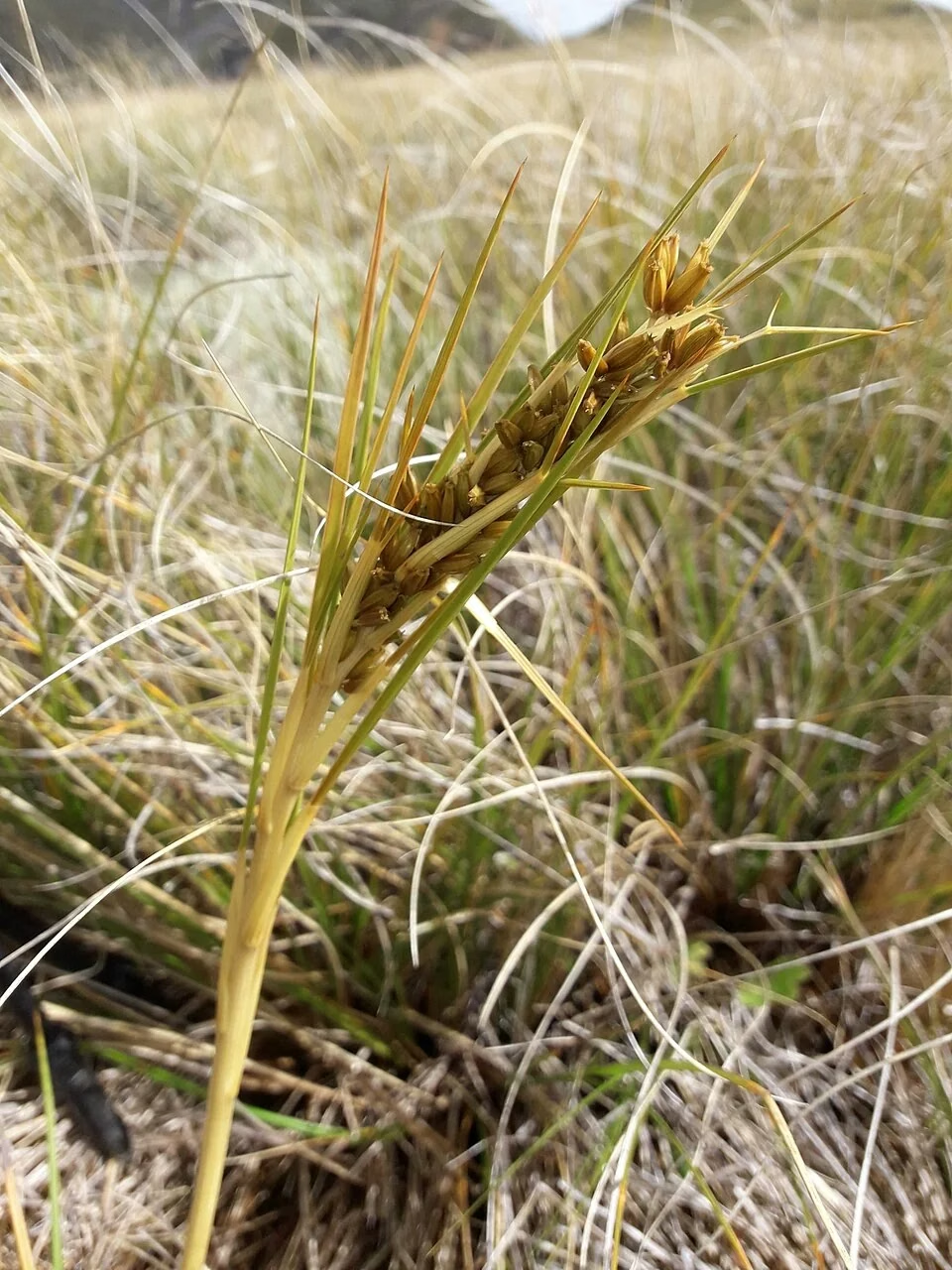
Aciphylla anomala, a New Zealand speargrass, forms compact rosettes of rigid, spine-tipped leaves radiating from a woody crown. It grows 20 to 60 cm tall and wide, its blue-green to grey-green leaves divided into narrow segments that each end in a sharp yellow spine, though they are somewhat softer than those of larger speargrasses. It occupies a narrow niche in subalpine to low-alpine zones between 900 and 1800 metres, favouring moderately stable sites. Classified At Risk - Naturally Uncommon, this frost-hardy, sun-loving perennial is prized for its architectural rosette form and its role sheltering smaller alpine plants. Explore more native plants such as Golden Speargrass.
Plant Description
Identification and Physical Characteristics
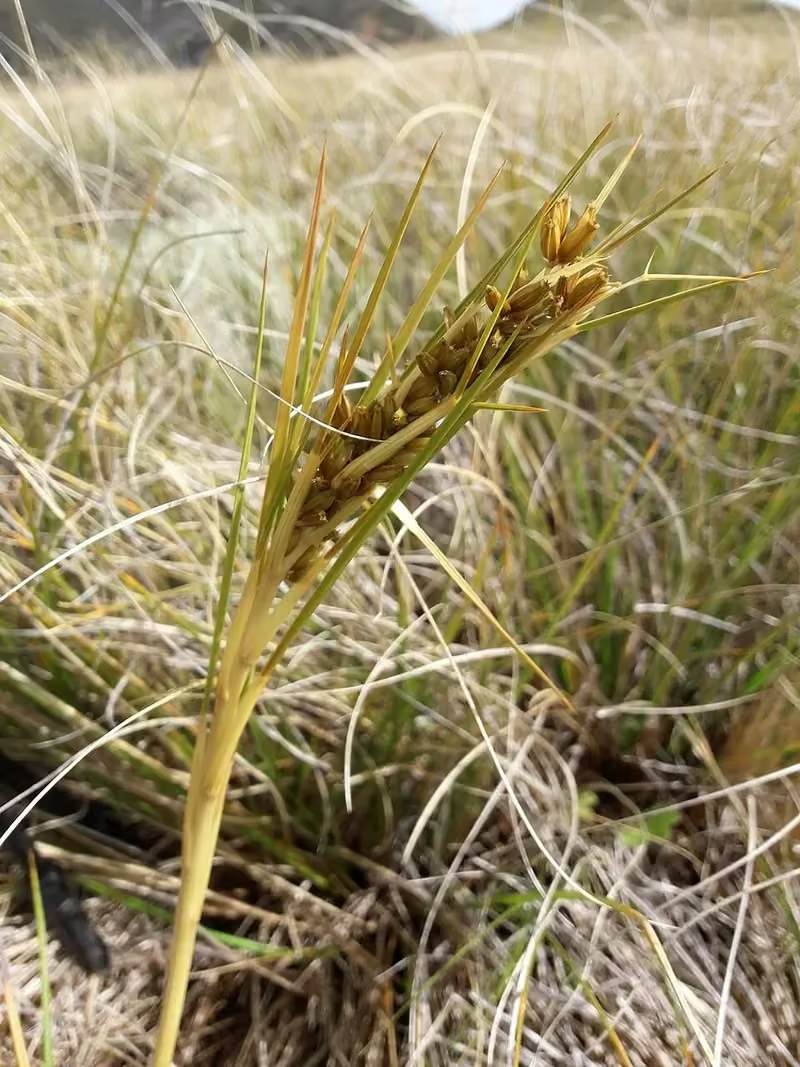
Aciphylla anomala forms compact rosettes of rigid, pinnately divided leaves that radiate from a woody crown Discover more about native shrubs. Individual leaves are 8-20 cm long, divided into 3-5 pairs of narrow segments plus a terminal segment, each ending in a sharp yellow spine. The leaves are somewhat softer and more flexible than those of larger speargrass species, though still capable of inflicting painful wounds. They are blue-green to gray-green with yellow margins that become more pronounced in winter.The rootstock is relatively slender compared to other speargrasses, with a taproot extending 30-60 cm deep. This more modest root system reflects the species' preference for somewhat more favorable microsites than its larger relatives. The crown is protected by persistent dead leaves that form a protective collar around the living rosette.Flowering is irregular, typically every 2-3 years from December to February. The species is dioecious with separate male and female plants. Inflorescences are relatively small, rising 20-40 cm tall with compound umbels of tiny cream to pale yellow flowers. Male plants produce more conspicuous displays with larger flower heads. The flowers emit a faint sweet scent that attracts small alpine insects. Seeds are flattened achenes 4-6 mm long with narrow wings, dispersed by wind in autumn. The species shows lower seed production than many other speargrasses, possibly contributing to its restricted distribution.
Quick Facts
| Scientific Name | Aciphylla anomala |
|---|---|
| Height | 20-60 cm |
| Spread | 30-60 cm |
| Water Needs | Low to moderate |
| Light | Full sun; high light exposure |
| Frost Tolerance | High - tolerant of severe freezes |
| Salt Tolerance | Low to moderate |
| Growth Rate | Fast |
| Lifespan | Long-lived perennial |
Climate Best Suited to
Aciphylla anomala is well adapted to various New Zealand regions.
Regional Suitability
| City | Climate Suitability |
|---|---|
| Auckland | High |
| Wellington | High |
| Christchurch | Medium |
Plant Habitat
Natural Occurrence and Ecology
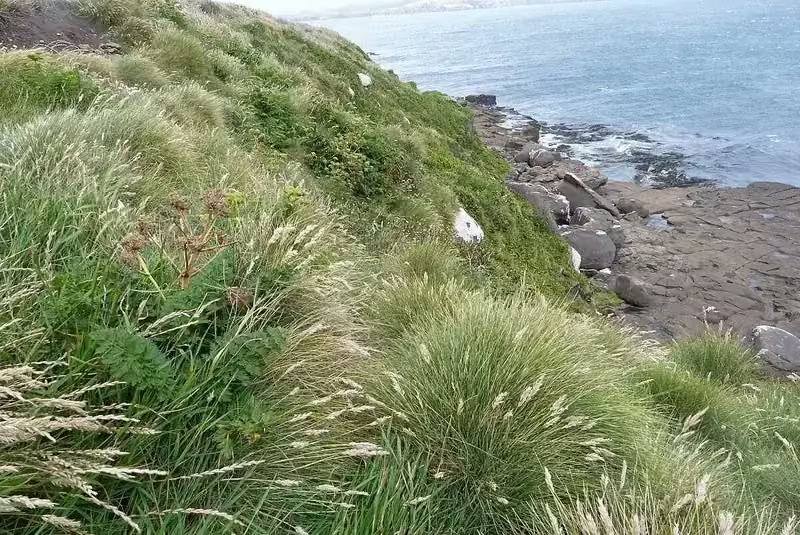
Aciphylla anomala occupies a relatively narrow ecological niche in subalpine to low alpine zones between 900 and 1800 meters elevation. It shows a preference for moderately stable sites with some soil development, avoiding both the exposed fellfields favoured by cushion plants and the deep soils where larger speargrasses dominate. This intermediate habitat preference may explain its 'anomalous' distribution pattern.The species favours well-drained, slightly acidic to neutral soils (pH 5.5-7.0) with moderate organic content. Unlike many alpine plants, it seems to require some nutrient availability, often growing in sites enriched by seepage or where snow lies briefly in spring, providing meltwater and nutrients. It avoids extremely oligotrophic (nutrient-poor) sites as well as highly fertile areas where competition would be intense.Common associates include mid-sized tussock grasses like Chionochloa australis, herbs such as Celmisia species and Ranunculus lyallii, and small shrubs including Hebe species. It often grows in the transition zone between tussock grassland and alpine herbfield, occupying gaps between tussocks where light competition is reduced. The species appears to be a weak competitor, persisting mainly where environmental conditions limit the growth of more vigorous plants.
Growing Requirements
Soil Requirements
Prefers well-draining soil rich in organic matter.
- Well-drained
- Loamy
Light Requirements
Grows best in partial to full sun.
- Full Sun
- Partial Shade
Water Requirements
Requires regular watering during dry periods.
- Regular
- Drought tolerant once established
Planting and Establishing
Establishment Guidance
Anomalous Speargrass requires specific conditions to thrive in cultivation, mirroring its mountain origins. It must be planted in a very free-draining, gritty soil mix to prevent root and crown rot, to which it is highly susceptible. Full sun is essential for maintaining its sturdy, compact form and vibrant leaf colour. When planting, dig a hole slightly larger than the root system and consider positioning the plant on a slight mound or among rocks to ensure rapid water runoff. Avoid areas with high humidity or poor air circulation, and be mindful of its sharp foliage when choosing a location near garden paths.
Ecological Role
Biodiversity and Ecosystem Impact
In its native subalpine ecosystems, Aciphylla anomala plays a unique role by bridging the gap between lowland and high-alpine flora. Its formidable spiny foliage provides protection for smaller, less defended plants, creating localized 'safe sites' within the herbfield. The species supports a variety of specialized native insects, including unique weevil species that have evolved to live on speargrasses. During its summer flowering period, the umbels of tiny flowers provide a vital nectar source for alpine flies, bees, and moths, contributing to the overall health and pollination networks of the high country.
Uses & Significance
Garden Uses
For the dedicated native plant enthusiast, Anomalous Speargrass is a striking architectural addition to rock gardens, alpine troughs, and raised beds. Its blue-green foliage and sharp, structured form provide exceptional textural contrast to softer-leaved alpines. Because of its relatively compact size, it is more manageable in smaller garden spaces than its larger relatives. It is a true conversation piece that represents the wild and defensive nature of New Zealand's unique mountain flora.
- Architectural rock gardens
- Alpine troughs
Ecological Value
Ecologically, it is an important component of subalpine restoration projects in the South Island. It provides habitat for specialized invertebrates and contributes to the complex mosaic of the tussock grassland transition zone.
- Specialized insect habitat
- Soil stabilization
Landscaping Uses
In contemporary landscape design, the Anomalous Speargrass offers a bold, sculptural element that remains visually interesting year-round. Its rigid, radiating leaves and intensifying yellow margins in winter provide a sense of structure and permanence in high-altitude or xeriscape garden designs. It is best used in groups among large natural stones or as a dramatic accent plant where its sharp form can be viewed from a safe distance. Its slow growth and long-lived nature ensure it remains a stable feature of the landscape for many years.
Seasonal Care Calendar
Spring
This is the start of the active growth phase. Monitor for any signs of crown rot if the spring is particularly wet. Avoid disturbing the root system once the plant is established.
- Fertilize
- Mulch
Summer
Flowering occurs irregularly, usually every 2-3 years from December to February. Provide deep, occasional watering during extreme drought, ensuring the water does not sit in the crown of the plant.
- Water
- Check for pests
Autumn
The seeds are dispersed by wind in autumn. Clear any fallen leaves from neighboring plants that might accumulate in the rosette, as these can trap moisture and encourage fungal issues.
- Prune lightly
- Plant new specimens
Winter
Highly frost-hardy and naturally adapted to winter snow. The main winter task is ensuring perfect drainage; the plant prefers to remain relatively dry during its dormant period to avoid rot.
- Frost protection
When to Prune and How Much
Anomalous Speargrass requires very little pruning. In fact, the persistent dead leaves at the base form a natural protective collar for the crown and are best left undisturbed in a naturalistic setting. For a tidier garden appearance, individual dead or damaged leaves can be carefully snipped off at the base using sharp, long-handled shears to avoid the spiny tips. Always use clean tools and wear thick gloves when working with any Aciphylla species to prevent injury from the sharp spines.
- Remove dead branches
Always use clean, sharp tools.
How to Grow Speargrass
Cultivating Anomalous Speargrass ( Aciphylla anomala ) is a rewarding challenge for those interested in New Zealand's specialized alpine flora. This species is primarily propagated from seed, as its woody crown and taproot make it difficult to divide. Successful propagation depends on mimicking the natural cold cycles of its mountain habitat to trigger germination and ensuring the young plants have the gritty, well-drained conditions they require.
From Seed
Seeds should be collected in autumn when they are dry and ready to be dispersed by the wind. For best results, sow the seeds immediately into a gritty, free-draining seed-raising mix. They require a period of cold stratification (exposure to winter temperatures) to break dormancy. Placing the sown trays in a cool, sheltered outdoor position over winter is often the most effective method.
Sow fresh seeds in a seed-raising mix.
- Collect seeds
- Sow in trays
Keep moist until germination.
From Cuttings
Vegetative propagation via cuttings is generally not successful for this species due to its single-crown growth habit. While very large, multi-crowned specimens could theoretically be divided, the risk of rot and transplant shock is extremely high. Gardeners are encouraged to focus on seed-raising as the primary means of increasing their stock of this unique plant.
Take semi-hardwood cuttings in late summer.
- Take cuttings
- Use rooting hormone
Additional Methods
Depending on the growth habit of Aciphylla anomala , other methods such as division or layering might also be viable options. Division is particularly suitable for plants that form dense clumps or have spreading root systems, while layering can be used for species with trailing or flexible stems.
Young speargrasses are slow-growing and vulnerable to browsing by hares or garden snails before their protective spines fully harden. Protect new plantings with a fine wire mesh or organic deterrents. A top-dressing of crushed rock or gravel around the base of the plant will help keep the foliage dry and provide a naturalistic mountain appearance.
- Divide clumps
- Replant immediately
Pests & Diseases
Anomalous Speargrass is generally resistant to most common garden pests once its sharp spines have developed. However, the most significant threat is crown and root rot, caused by excessive humidity or poorly drained soils. Young seedlings and newly emerging leaves can be targeted by slugs and snails. In its natural habitat, it may be browsed by hares or possums, though the mature spines are a formidable deterrent to most animals.
Cultural Significance
The speargrasses, or taramea, hold significant cultural meaning in New Zealand. Known as 'Spaniards' by early European settlers for their defensive appearance, they are iconic symbols of the high-country landscape. For Māori, they were important markers of specialized alpine environments. Today, the Anomalous Speargrass represents the incredible diversity and adaptation within the Aciphylla genus, valued for its botanical uniqueness and its contribution to the rugged beauty of the South Island mountains.
- Traditional medicine
- Crafts
Bonus Tip
To truly appreciate the subtle beauty of Anomalous Speargrass, plant it where it will be illuminated by the early morning sun. The low-angle light highlights the bluish tones of the foliage and the vibrant yellow of the leaf margins and spines.
Related Plants
Explore other native plants that share similar characteristics or habitats with Aciphylla Anomala ( Aciphylla anomala ), offering further insights into New Zealand's diverse flora. These related species provide context and opportunities for complementary planting in your garden.




Plant Conservation
Conservation Status
Listed as 'At Risk - Naturally Uncommon', Aciphylla anomala has always been naturally rare with a restricted and patchy distribution. Population sizes are generally small, with many sites supporting fewer than 100 plants. This natural rarity makes the species vulnerable to stochastic events and habitat degradation.Historical impacts from burning and grazing have likely reduced some populations, particularly at lower elevations. While the spiny leaves deter most browsers, young plants before spine development are vulnerable to hares and possums. Trampling by deer and recreational users poses localized threats.Climate change presents significant challenges. The species' narrow habitat requirements and apparent weak competitive ability make it vulnerable to vegetation changes. Warming temperatures may allow more vigorous species to invade its specialized niche. Additionally, changes in snow patterns could disrupt the seasonal moisture regime the species appears to depend on. Conservation efforts focus on protecting known populations and understanding the species' specific ecological requirements.
Frequently Asked Questions
How tall does Aciphylla anomala grow?
It grows 20 to 60 cm tall and about 30 to 60 cm wide.
Where does Aciphylla anomala grow naturally?
It grows in subalpine to low-alpine zones between 900 and 1800 metres in New Zealand.
Is Aciphylla anomala threatened?
Yes, it is classified At Risk - Naturally Uncommon in New Zealand.
Does Aciphylla anomala tolerate frost?
Yes, it is highly frost tolerant and withstands severe alpine freezes.
Sources and Further Reading
The botanical, growing, and conservation details for Speargrass (Aciphylla anomala) on this page draw on authoritative New Zealand plant references and citizen-science observation records. Consult the sources below for full technical records and the latest distribution data.