Scleranthus
Scleranthus brockiei
Last updated:
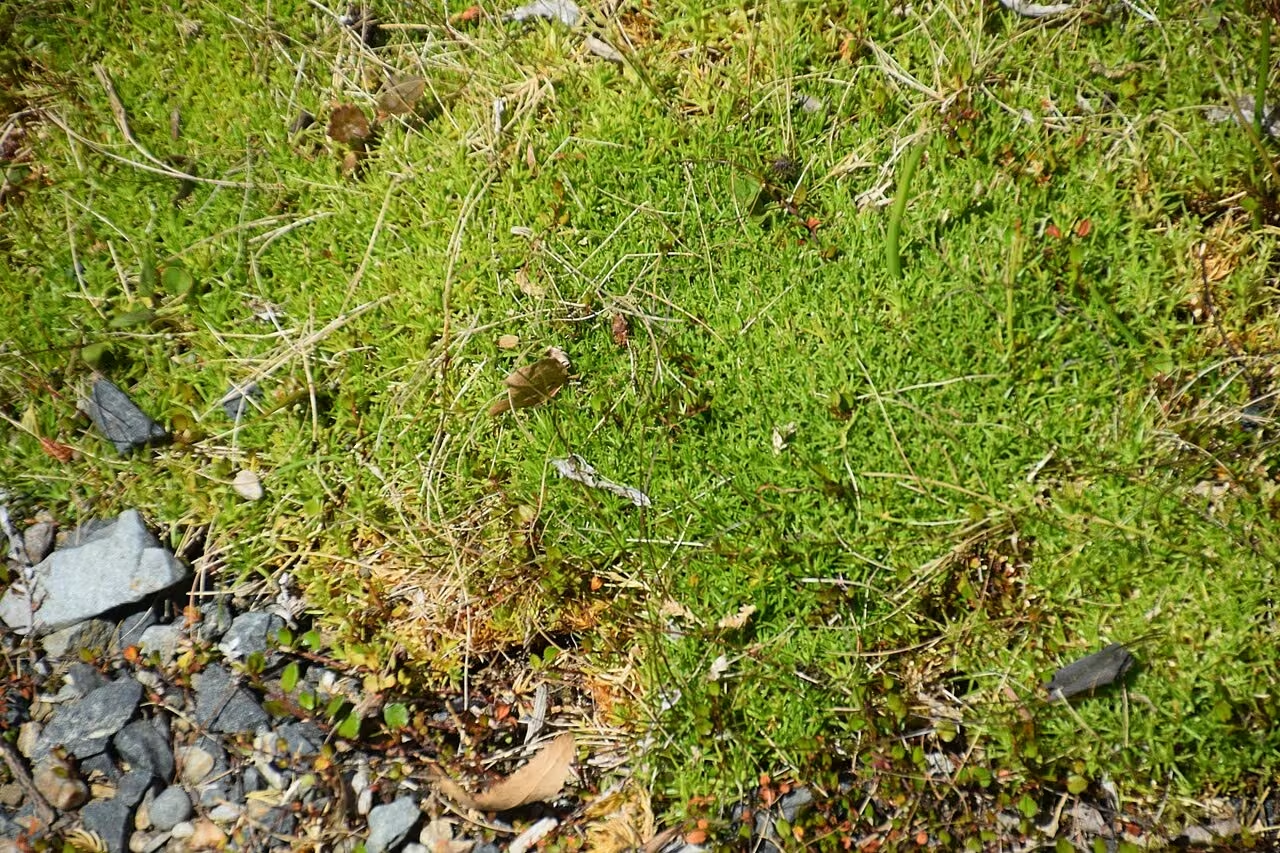
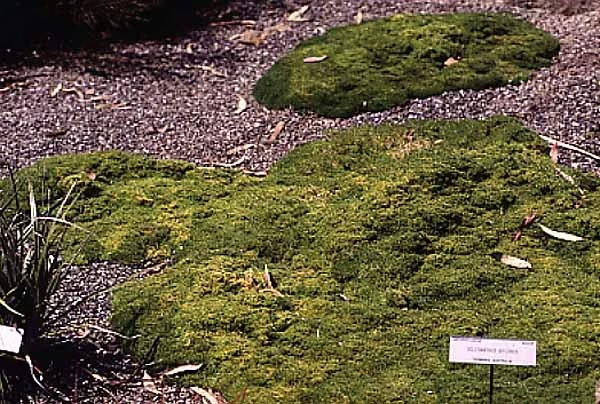
Scleranthus brockiei is a small, closely branched cushion herb in the carnation family (Caryophyllaceae). It forms tight, bright green mats or mounds a few centimetres to about 20 cm across, made of stiff needle-like leaves only 2.5-6 mm long. In New Zealand it is scattered through the South Island from Cape Farewell and the Nelson mountains through Canterbury to Otago, growing on sand, riverbeds, grassland and alpine bogs from sea level to 1500 m. It also occurs in Tasmania. It is ranked Not Threatened, and its neat, mossy-looking mounds make it a useful rock garden and container plant. Explore more native ground covers in our native plant guide.
Plant Description
Scleranthus brockiei is a perennial herb with many short, closely packed branches that build a dense green mat or low mound. Each plant is anchored by a central root system, and older mats often develop extra adventitious roots where the stems touch the ground. The leaves are awl-shaped (subulate), sharply pointed and just 2.5-6 mm long by about 0.5 mm wide, usually with smooth edges but occasionally minutely toothed.
The flowers are tiny and green to yellow-green, with no showy petals. They are borne in pairs of unequal age, each with a single stamen. Flowering is from November to January and fruit follows from December to March. The fruit is about 1.7 mm long, enclosed in a hardened cup with persistent sepals that make up about half the length of the cup.
The most useful field character is the flower stalk (peduncle). In S. brockiei it elongates markedly as the fruit matures, reaching 10-15 mm and holding the fruit well above the leaves. Scleranthus uniflorus has short stalks, so its fruit stays buried in the cushion. Hybrids between the two are thought to occur where they meet, and S. biflorus can also produce intermediate plants.
Quick Facts
| Scientific Name | Scleranthus brockiei |
|---|---|
| Height | A few cm, mounds to about 0.2 m |
| Spread | Mats several cm across, slowly widening |
| Water Needs | Moderate; tolerates both free-draining sand and boggy ground |
| Light | Full sun |
| Frost Tolerance | High; grows up to 1500 m |
| Salt Tolerance | Moderate; grows in coastal rocky sites |
| Growth Rate | Slow |
| Lifespan | Perennial |
Climate Best Suited to
It suits cool, open South Island climates, from mild coastal sites to frosty high country and alpine bogs, and copes with wind and hard frost.
Regional Suitability
| City | Climate Suitability |
|---|---|
| Auckland | Low |
| Wellington | Medium |
| Christchurch | High |
| Dunedin | High |
Plant Habitat
In New Zealand Scleranthus brockiei is confined to the South Island, where it is scattered from Cape Farewell and the Nelson mountains south through Canterbury and Otago. It ranges from sea level to about 1500 m. Outside New Zealand it is recorded from Tasmania. The Otago regional assessment lists it as Regionally Naturally Uncommon.
It grows in a surprisingly wide range of open places: sand, riverbed gravels, short grassland, rocky coastal and alpine faces and cliffs, and alpine bogs. The common thread is a lack of tall competing vegetation, which lets the low cushions get full light.
Growing Requirements
Soil Requirements
In the wild it grows on sand, gravel, rock crevices and peaty bog margins. In cultivation it is easiest in a gritty, free-draining mix that still holds some moisture.
- Gritty or sandy mixes suit it well
- Avoid rich, heavy soils that encourage rot and weeds
- Low fertility is fine; it does not need fertiliser
Light Requirements
A plant of open ground, it needs full sun to stay compact and green.
- Full sun for tight, healthy mounds
- Shade from taller plants causes it to thin and die back
Water Requirements
Its natural sites range from dry sand to alpine bogs, so it tolerates fluctuating moisture, but cushions are best kept from drying out completely in summer.
- Water in prolonged dry spells, especially in pots
- Ensure drainage so water does not sit around the crown
Planting and Establishing
Plant in spring or autumn into a sunny, open spot with gritty soil, such as a rock garden pocket, scree bed, trough or pot. Set the plant so the cushion sits at or slightly above soil level, and top-dress with fine gravel to keep the foliage off damp soil.
Because it is small and slow, keep it away from vigorous neighbours that would smother it. Several plants spaced 15-20 cm apart will knit into a low, moss-like carpet over time.
Ecological Role
The tiny green flowers lack petals and are visited by small insects, though specific pollinators have not been documented for this species. The fruit is a hard, one-seeded unit held up on the lengthening stalk, which may help it be shed away from the parent cushion.
As a pioneer of open sand, gravel and bog margins, it helps stabilise bare surfaces and provides shelter for small invertebrates within the dense cushion.
Uses & Significance
Garden Uses
Its tight, bright green mounds suit small-scale native plantings where texture matters.
- Rock gardens and scree beds
- Troughs and containers
- Between paving stones in sunny spots
- Low ground cover in riparian plantings
Ecological Value
It contributes to the low cushion and turf communities of open South Island habitats.
- Stabilises sand, gravel and bare ground
- Provides microhabitat for small invertebrates
- Part of naturally open riverbed and alpine bog ecosystems
Landscaping Uses
Use Scleranthus brockiei as a living mulch or accent among boulders, where its green domes contrast with grey stone and silver-leaved alpines. Grouped in drifts it gives the look of moss while tolerating full sun.
It also works well in shallow bowls and troughs alongside other small natives such as Raoulia, Leptinella and small Acaena.
Seasonal Care Calendar
Spring
New growth brightens the cushion. A good time to plant or divide.
- Divide or replant
- Top-dress with grit
Summer
Tiny yellow-green flowers appear from November to January, followed by fruit on lengthening stalks.
- Water pots in dry spells
- Collect ripe seed from late summer
Autumn
Fruit ripens into March. Cushions stay green.
- Sow fresh seed
- Clear fallen leaves from cushions
Winter
Fully frost hardy; growth slows.
- Keep pots out of waterlogged spots
- Check drainage
When to Prune and How Much
No pruning is needed. Remove any dead patches by gently teasing them out and filling the gap with a little gritty mix so surrounding shoots can spread back in.
Keep fallen leaves and weeds off the cushion, as trapped debris holds moisture and can cause brown patches.
How to Grow Scleranthus
Scleranthus brockiei can be raised from fresh seed or by dividing established mats. Nursery growers report that the seed germinates without any special pretreatment as long as it is sown fresh and kept moist, and division is the quickest route to a planting-sized cushion. Seed-raised plants are slower to bulk up but give more plants, and they keep a little genetic variety in a collection. Because it can hybridise with Scleranthus uniflorus where the two grow together, collect seed from plants that clearly show the long fruiting stalks typical of this species.
From Seed
Fruit ripens from December to March. The ripe fruits are held up on stalks 10-15 mm long, which makes them easier to gather than those of related species. Sow straight away rather than storing the seed.
- Collect ripe, hard fruits from the stalks in late summer.
- Sow on the surface of a fine, gritty seed mix and cover very lightly.
- Keep the tray evenly moist until germination has finished.
- Prick out seedlings into small pots of gritty mix once they can be handled.
- Grow on in full sun and plant out when the cushion is a few centimetres across.
By Division
Mats that have rooted along their stems can be split. Work in spring or early autumn so the pieces establish before summer drought or winter wet.
- Lift a healthy, well-rooted mat.
- Cut or tease it into pieces, each with its own roots.
- Pot into gritty mix or replant directly at the same depth.
- Water in and shade lightly for a week while the pieces settle.
Pests & Diseases
No particular pests are recorded for this species. The main problems in cultivation are smothering by weeds or taller plants and rot where water sits in heavy soil.
Birds scratching for insects can disturb small plants, so a mulch of coarse grit around new plantings helps.
Cultural Significance
No Māori name or traditional Māori use is recorded for Scleranthus brockiei in the sources consulted. The genus name Scleranthus means 'hard flower', referring to the hardened cup that encloses the fruit.
The species was described with the authority P.A.Will. The epithet brockiei appears to honour a person named Brockie, but the sources consulted do not say who, so that link remains unconfirmed.
Bonus Tip
If you want to be sure you have this species rather than Scleranthus uniflorus, wait until the plant fruits: look for fruit lifted 10-15 mm above the cushion on slender stalks. That single character separates it from its short-stalked relative.
Related Plants
Explore other native plants that share similar characteristics or habitats with Scleranthus (Scleranthus brockiei), offering further insights into New Zealand's diverse flora. These related species provide context and opportunities for complementary planting in your garden.
Plant Conservation
Scleranthus brockiei is ranked Not Threatened (2023) with the qualifier SO (secure overseas), and it has held that ranking in every assessment since 2004. In Otago it is regarded as Regionally Naturally Uncommon.
Its open habitats, especially braided riverbeds and coastal sand, are vulnerable to weed invasion, so weed control in these places helps it and the other small plants that share them.
Frequently Asked Questions
How do you tell Scleranthus brockiei from Scleranthus uniflorus?
In Scleranthus brockiei the flower stalks lengthen as the fruit ripens, reaching 10-15 mm and standing well clear of the leaves. In S. uniflorus they stay short. The two can hybridise where they grow together, which makes some plants hard to name.
Is Scleranthus brockiei endemic to New Zealand?
NZPCN treats it as native but not endemic, and Kew's Plants of the World Online records it from Tasmania as well as the South Island of New Zealand.
Can Scleranthus brockiei be grown in a pot?
Yes. Native plant nurseries recommend it for containers, ground cover and riparian planting, and it can be raised from fresh seed or by division.
Sources and Further Reading
The botanical, growing, and conservation details for Scleranthus (Scleranthus brockiei) on this page draw on the New Zealand plant references below. Consult them for full technical records and the latest distribution data.