Kauri Sedge
Schoenus tendo
Last updated:
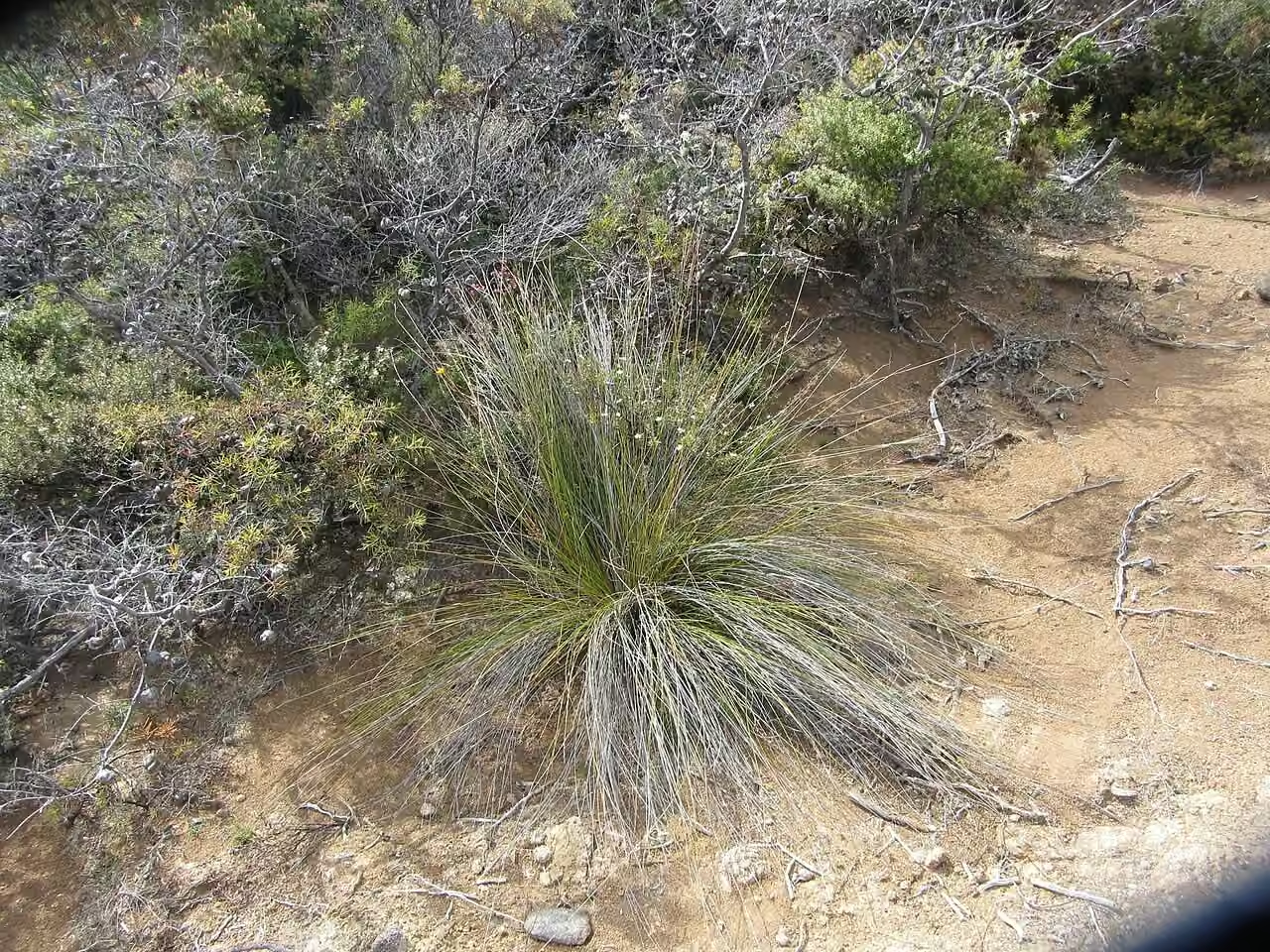
Kauri sedge (Schoenus tendo) is an endemic rush-like sedge of the northern North Island, growing from North Cape to about the southern Waikato, Awakino and the Bay of Plenty. Its glossy green stems, 0.4 to 1.2 m long, grow in dense clumps that often droop into tangles, with almost leafless, dark red-purple sheaths fringed by cobwebby hairs. Narrow panicles of dark brown spikelets appear from spring into summer. It grows mostly in gumland, mānuka (tea tree) scrub and regenerating kauri forest on poorly drained clay, and sometimes persists on clay hills converted to pasture. It is ranked Not Threatened but is difficult to grow, resenting root disturbance. Explore more native grasses and flaxes in our native plant guide.
Plant Description
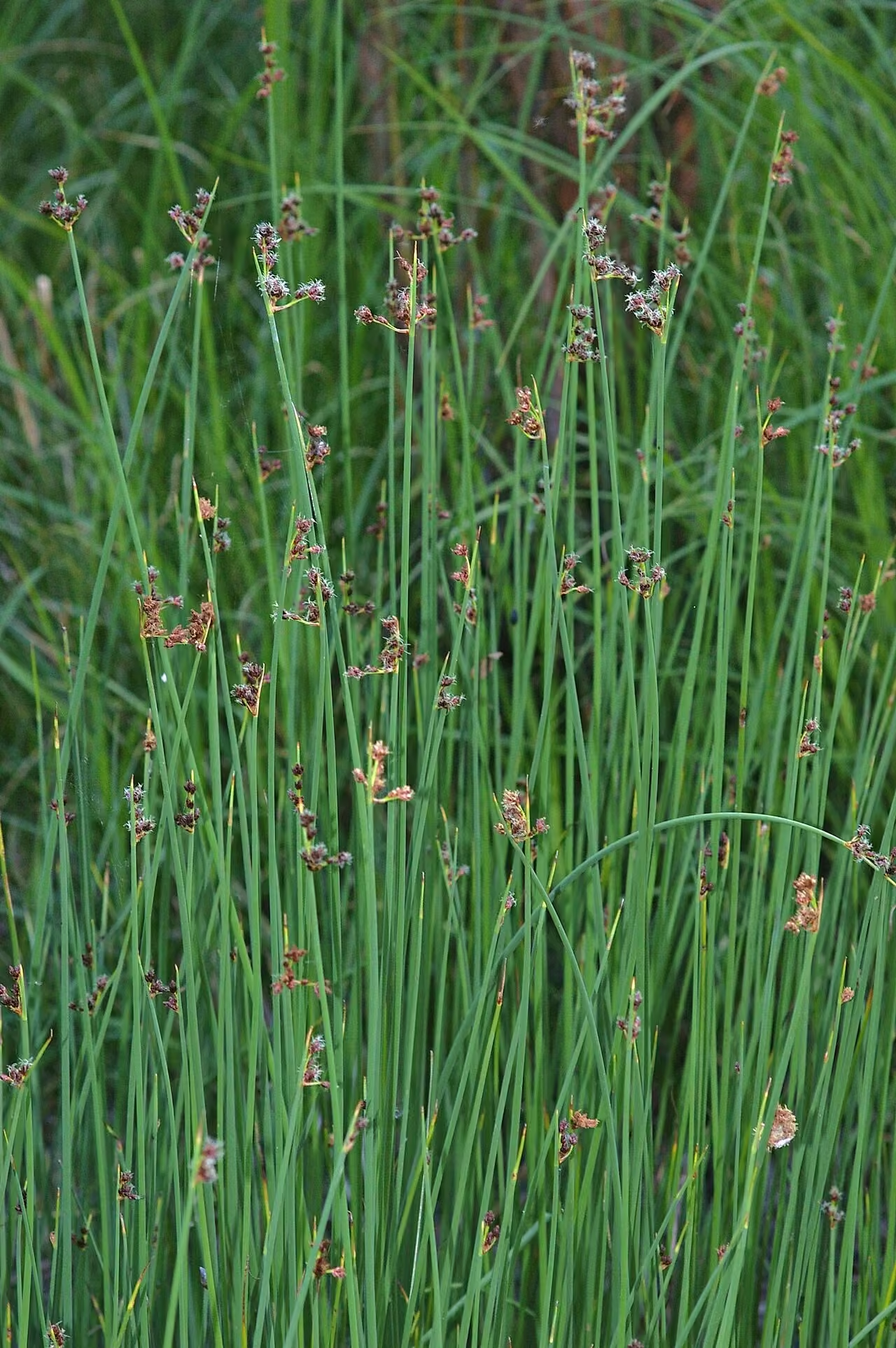
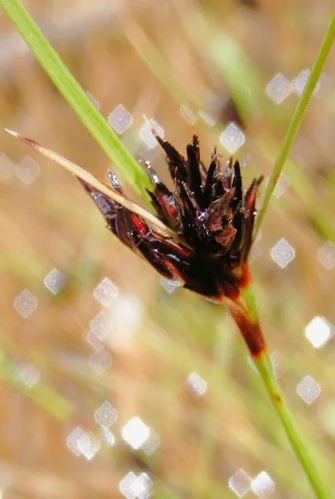
Schoenus tendo is a large, rush-like sedge reaching about 1 m tall. It has a short, hard, woody rhizome up to 4 mm thick, loosely covered in brown or greyish-brown bracts. The culms are densely crowded, erect or drooping, 0.4 to 1.2 m long and about 1 mm thick, light to dark green and glossy, and they often form dense tangles. The leaves are reduced to sheathing, pointed bracts that are dark red-purple to almost black, and the mouth of each sheath is fringed with cobwebby hairs.
The flowering panicle is 15 to 120 mm long and very narrow, with spaced bundles of three or four flexuous, flattened, toothed branchlets. The spikelets are 5 to 8 mm long, linear-lanceolate, dark brown to almost black, with two to four flowers and ten to thirteen glumes whose tips are fringed with tangled woolly hairs. Each flower has two stamens, two (rarely three) style branches and three to six thread-like bristles. The nut is about 1.5 x 1 mm, pale cream to light brown and smooth.
NZPCN notes it is readily identified by its large, often drooping green stems, cobwebby sheath mouths and preference for poorly drained clay. Schoenus carsei, a related bog species, has yellow-green to orange-green stems, no cobwebby hairs and usually three style branches.
Quick Facts
| Scientific Name | Schoenus tendo |
|---|---|
| Height | 0.4-1.2 m |
| Spread | Dense clumps, often forming tangles |
| Water Needs | Permanently damp, poorly drained soil |
| Light | Full sun to light shade of open scrub |
| Frost Tolerance | Low to moderate; a northern lowland species |
| Salt Tolerance | Low to moderate; coastal to lowland but not on the shore |
| Growth Rate | Slow |
| Lifespan | Perennial |
Climate Best Suited to
It suits the warm, humid, frost-light climate of Northland, Auckland, the Coromandel and the Waikato, and would struggle in colder southern districts.
Regional Suitability
| City | Climate Suitability |
|---|---|
| Auckland | High |
| Wellington | Low |
| Christchurch | Low |
| Dunedin | Low |
Plant Habitat
Kauri sedge is endemic to the North Island, from North Cape to about the southern Waikato, near Awakino and the Bay of Plenty. This range closely mirrors the old kauri lands of the north.
It grows from the coast to the lowlands, mostly in gumland, in mānuka scrub and in regenerating kauri forest. It sometimes persists on clay hills converted to pasture and occasionally colonises the margins of peat bogs. It is a facultative wetland plant, equally at home in wet and drier ground, but favours poorly drained clay soils.
Growing Requirements
Soil Requirements
Kauri sedge is a plant of infertile, acidic, poorly drained clays typical of northern gumlands and kauri forest. NZPCN recommends a permanently damp, somewhat acidic soil.
- Poorly drained, acidic clay
- Low fertility; avoid fertiliser and lime
- Tolerates compacted, gumland soils
Light Requirements
It grows in open gumland and the light shade of mānuka scrub and young kauri forest. In cultivation NZPCN advises full sun.
- Full sun to light shade
- Declines under dense canopy
Water Requirements
The soil should stay damp year-round, reflecting the wet winter and seasonally waterlogged clays it grows on naturally.
- Permanently damp soil
- Tolerates winter waterlogging
- Water in dry summers until well established
Planting and Establishing
Because kauri sedge resents root disturbance, plant small, container-grown plants without breaking up the root ball. Plant in autumn or early spring into a sunny, damp, acidic site, such as a gumland restoration area or the wet margin of scrub.
For restoration of gumlands and regenerating kauri forest in Northland and Auckland, include it with mānuka, Gleichenia and other gumland sedges. Use plants from local seed sources wherever possible.
Ecological Role
Like other sedges, kauri sedge is wind-pollinated. Its small nuts fall near the parent or may be moved by water and birds, though no dispersal studies were found.
It is a characteristic plant of northern gumland and kauri forest margins, where its tangled clumps add structure and cover to the low vegetation of infertile clay. Its persistence on converted clay hills shows it can survive moderate disturbance.
Uses & Significance
Garden Uses
It is best used in native restoration plantings in the north rather than in ornamental gardens, given its difficulty in cultivation.
- Gumland and kauri forest restoration
- Damp, acidic clay banks in full sun
- Native plant collections in northern gardens
Ecological Value
Kauri sedge is part of the distinctive gumland flora of northern New Zealand, a habitat that has shrunk greatly with land development.
- Characteristic gumland and kauri forest species
- Adds cover and structure to open gumland vegetation
- Stabilises poorly drained clay soils
Landscaping Uses
Its fountains of fine, glossy, drooping stems give a soft, flowing texture similar to an ornamental grass. Planted in groups on a damp clay bank, it can create a natural gumland look alongside mānuka and kumarahou.
Because it is slow and does not like being moved, plant it in its final position and leave it undisturbed.
Seasonal Care Calendar
Spring
Flowering begins in September, with narrow dark panicles at the tips of the stems.
- Plant small potted specimens
- Water during dry spells
Summer
Flowering continues into January and nuts begin ripening from October.
- Keep soil damp
- Weed carefully without disturbing roots
Autumn
Fruiting continues, with ripe nuts available for collection.
- Collect fresh seed
- Good season for planting
Winter
Nuts may still be found until July. The clay soils it grows in are often waterlogged in winter.
- No feeding required
- Protect young plants from frost in colder sites
When to Prune and How Much
No pruning is required. Tangles of old stems are a natural feature of the plant.
If a clump becomes untidy, comb out dead stems by hand rather than cutting the whole plant back, which would weaken it.
How to Grow Kauri Sedge
NZPCN rates kauri sedge as difficult to propagate. It can be grown from division of whole plants and from fresh seed, but it resents root disturbance, so success depends on handling the roots gently and keeping the plants in permanently damp, somewhat acidic conditions in full sun. Collect material only with permission. Raising plants from seed in deep containers is generally the more reliable route, because the young roots can be planted out intact.
From Seed
Seed is the gentler method because seedlings can be potted on without breaking up an established root system. Ripe nuts are available from October to July.
- Collect spikelets once the pale cream to light brown nuts are ripe.
- Sow fresh on the surface of an acidic, peaty seed mix.
- Keep the tray constantly damp and in good light.
- Be patient, as germination of native Schoenus can be slow and irregular.
- Transplant seedlings young into deep pots, disturbing the roots as little as possible.
By Division
Division is possible but often fails because the plant resents having its roots disturbed. Take larger divisions rather than small pieces to improve survival.
- Divide in spring when growth is active.
- Cut a substantial section from the edge of a clump, keeping a large root mass intact.
- Pot into a damp, acidic mix and avoid firming roughly.
- Keep in a sheltered, sunny spot with the soil permanently moist.
- Wait until new stems emerge before planting out.
Pests & Diseases
No specific pests are recorded for kauri sedge. Root damage during transplanting and drying out are the main causes of failure in cultivation.
In the wild, its gumland habitat is threatened by land development, weed invasion by exotic grasses and woody weeds such as hakea, and changes to drainage.
Cultural Significance
The Flora of New Zealand lists the Māori name wīwī for this species, a name widely used for rushes and rush-like plants generally. No specific traditional Māori use of Schoenus tendo was found in the sources consulted.
Its English name kauri sedge reflects its close association with kauri forest and gumlands, the landscapes of the kauri gum digging era in Northland and Auckland.
Bonus Tip
To grow kauri sedge, raise it from seed in tall, narrow pots so the roots can develop without being disturbed, then plant it out whole into damp, acidic clay. Treat it like a plant that is moved once only.
Related Plants
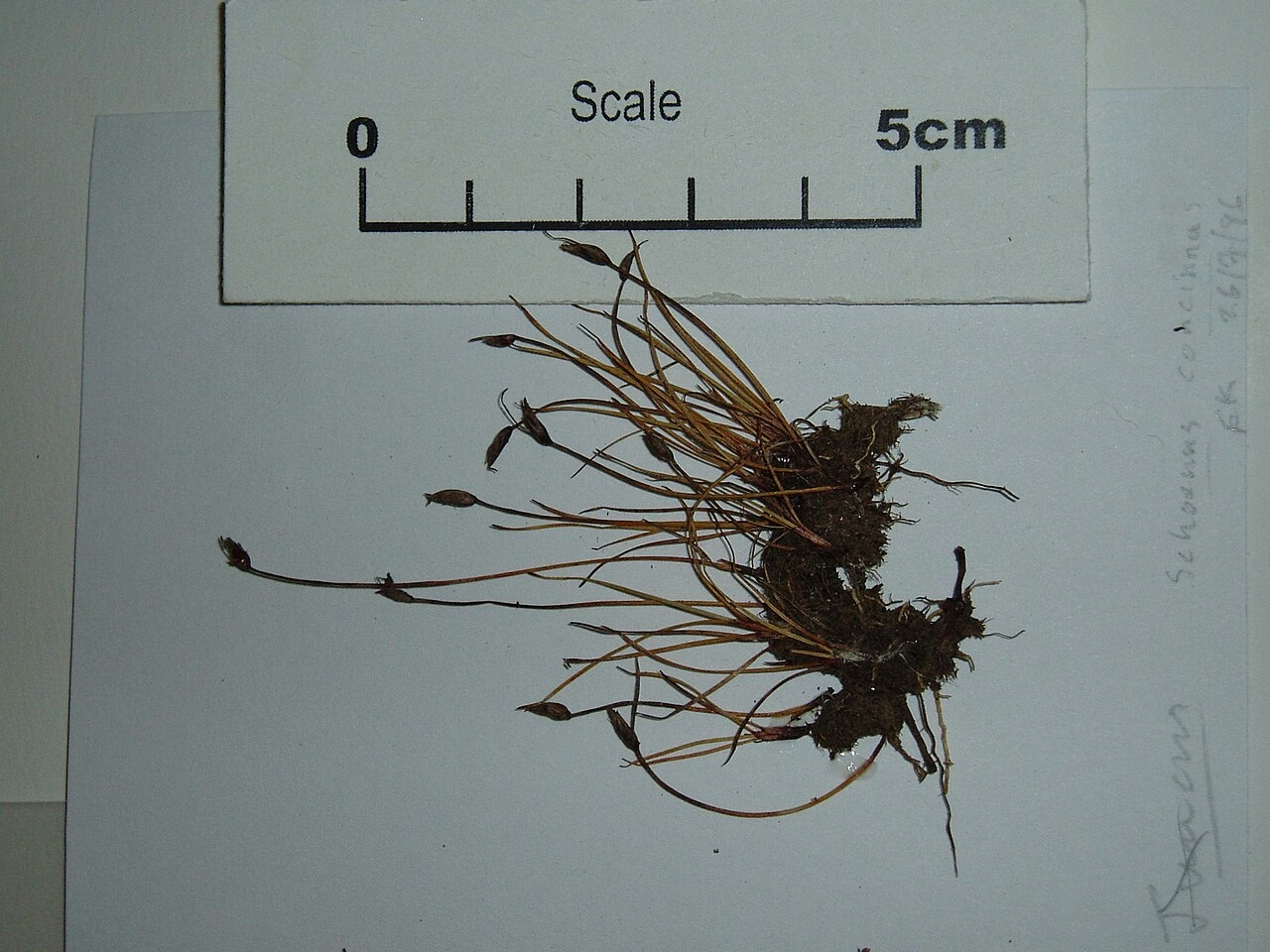
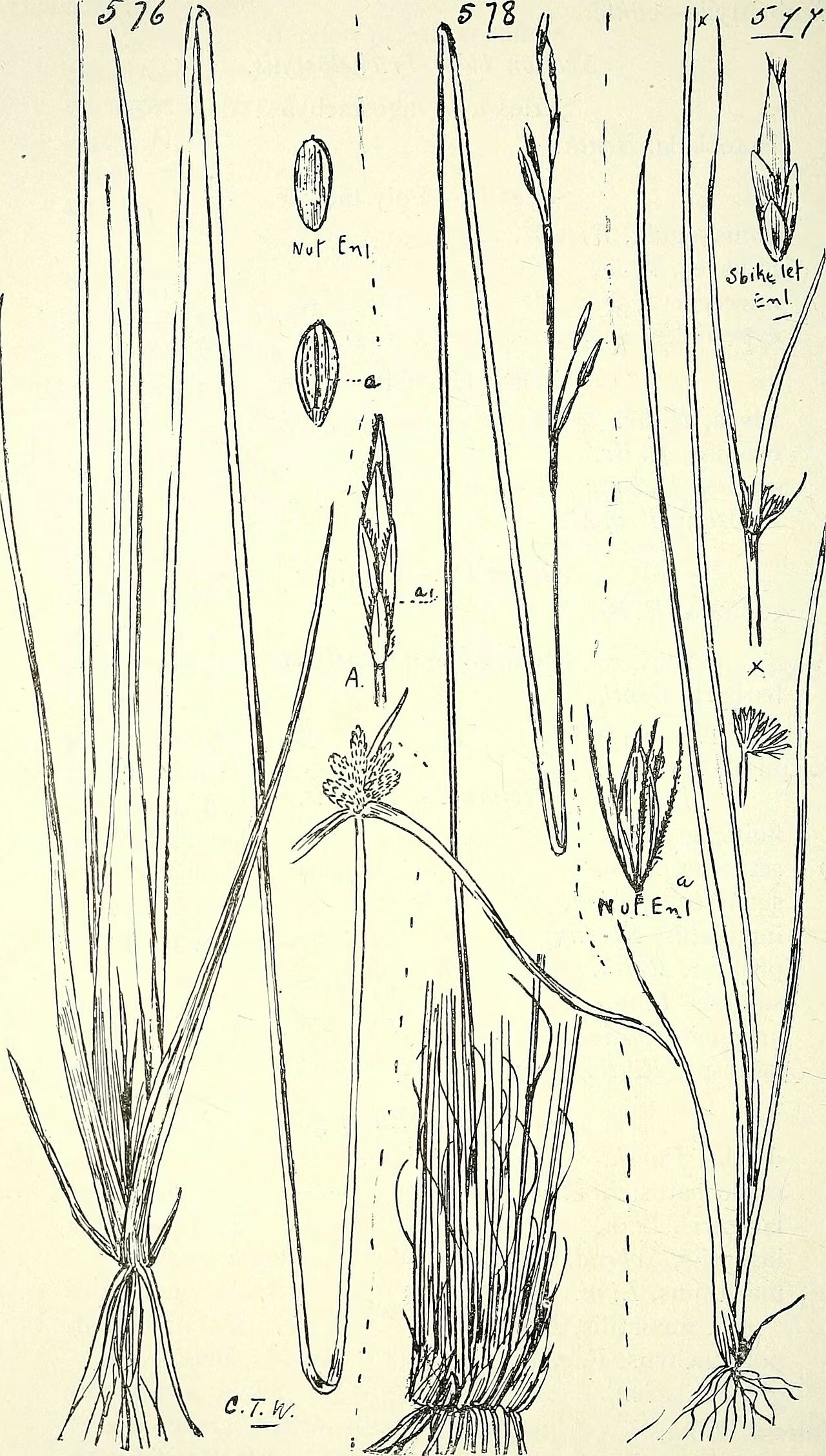
Explore other native plants that share similar characteristics or habitats with Kauri Sedge (Schoenus tendo), offering further insights into New Zealand's diverse flora. These related species provide context and opportunities for complementary planting in your garden.
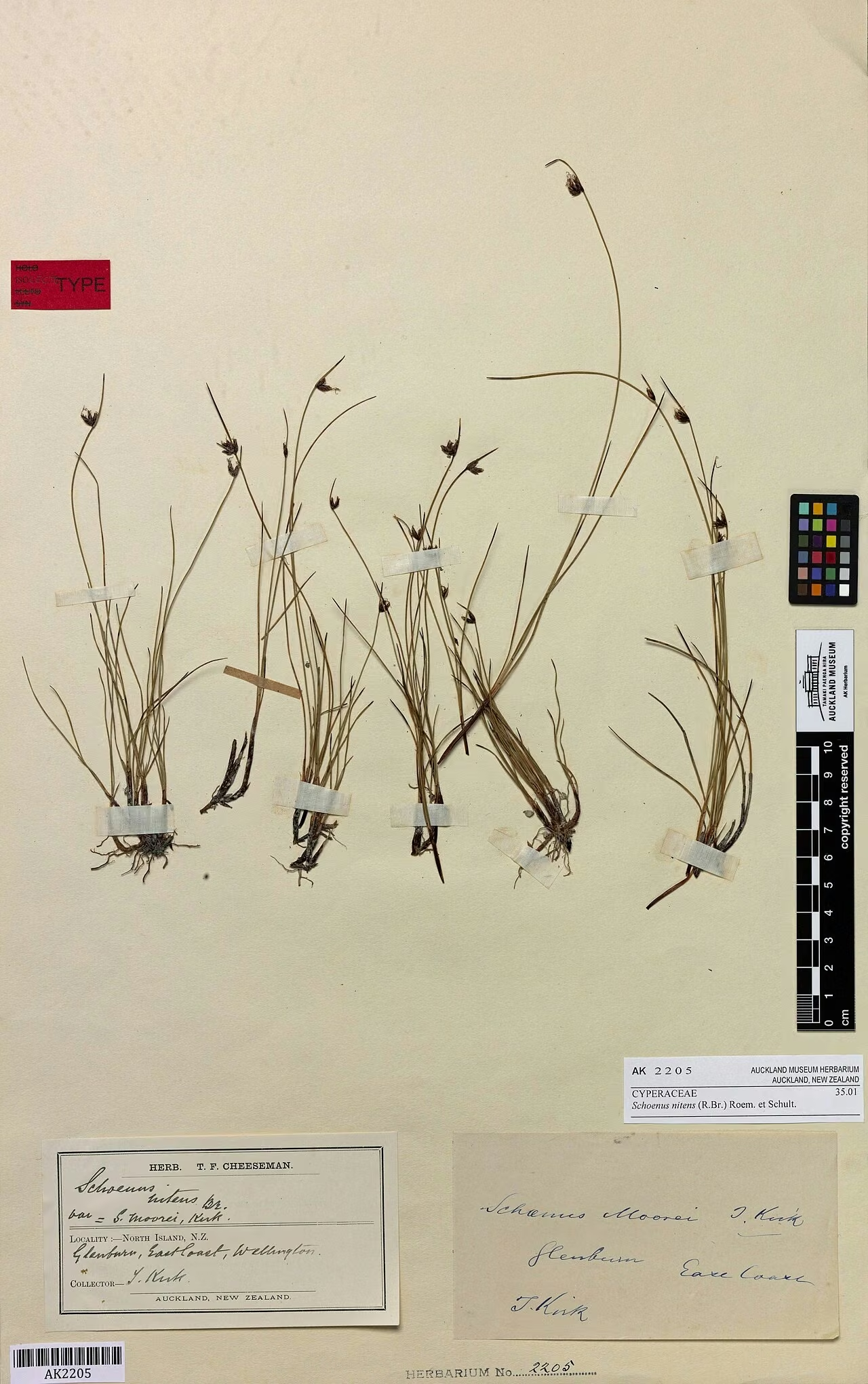
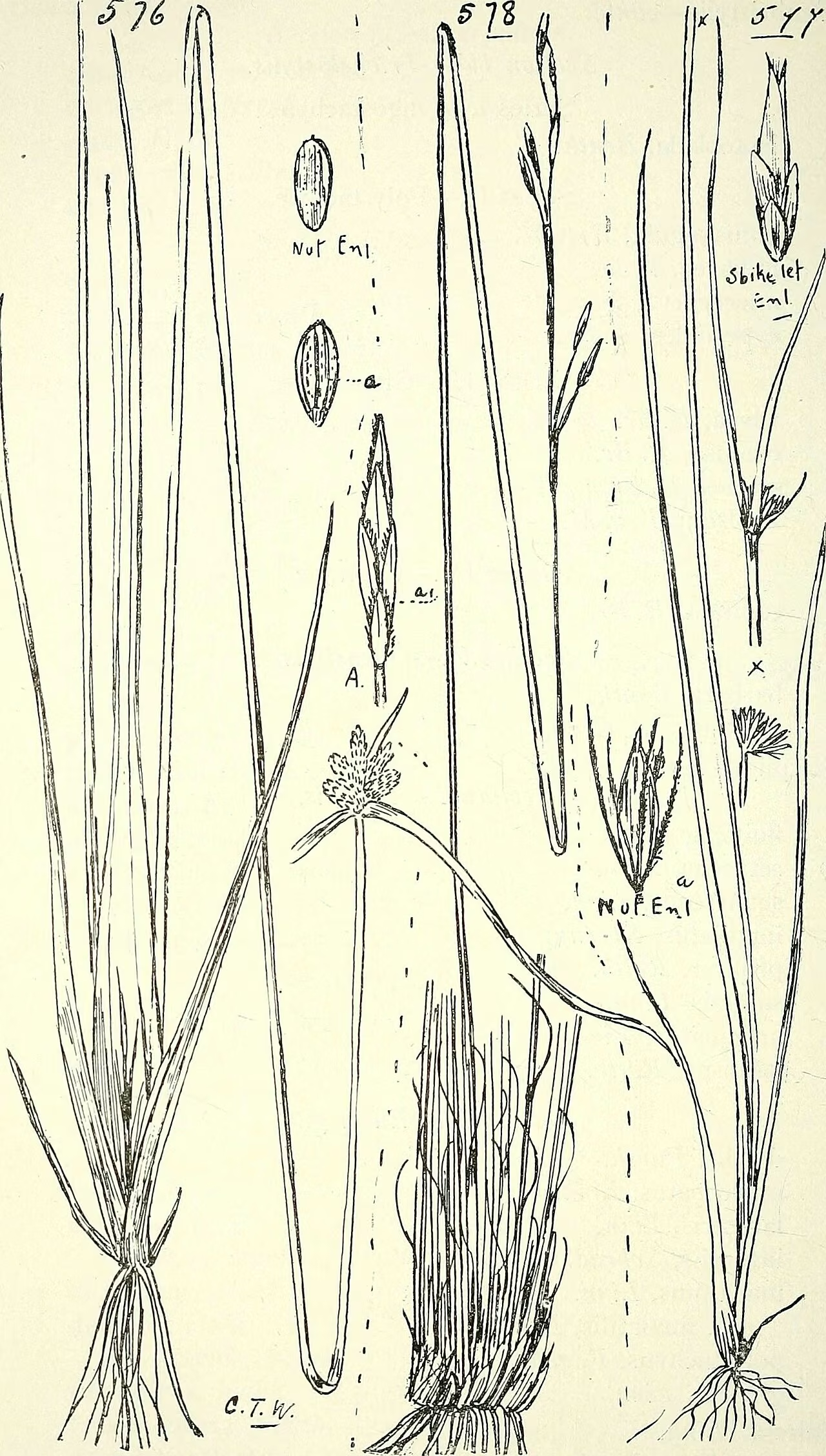
Plant Conservation
Schoenus tendo is ranked Not Threatened (2023) and has been Not Threatened in every national assessment since 2004. It is Regionally Not Threatened in Northland and Auckland.
Although secure, its gumland habitat has been much reduced by conversion to farmland, plantation forestry and development. Protecting remaining gumlands and regenerating kauri forest from weeds and drainage benefits this and many other specialised northern plants.
Frequently Asked Questions
Where does kauri sedge grow?
It is endemic to the North Island from North Cape to about the southern Waikato, Awakino and the Bay of Plenty, mostly in gumland, mānuka scrub and regenerating kauri forest on poorly drained clay soils.
How do you identify Schoenus tendo?
Look for dense clumps of glossy green, often drooping stems up to 1.2 m, dark red-purple to almost black sheaths whose mouths are fringed with cobwebby hairs, and narrow panicles of dark brown spikelets.
How is kauri sedge different from Schoenus carsei?
Schoenus carsei grows in acidic peat bogs and lake margins, has yellow-green to orange-green stems, lacks the cobwebby hairs at the sheath mouth and usually has three style branches rather than two.
Is kauri sedge easy to grow?
No. NZPCN describes it as difficult: it can be grown from division or fresh seed but resents root disturbance and needs permanently damp, somewhat acidic soil in full sun.
Sources and Further Reading
The botanical, growing, and conservation details for Kauri Sedge (Schoenus tendo) on this page draw on the New Zealand plant references below. Consult them for full technical records and the latest distribution data.