Bog Rush
Schoenus concinnus
Last updated:
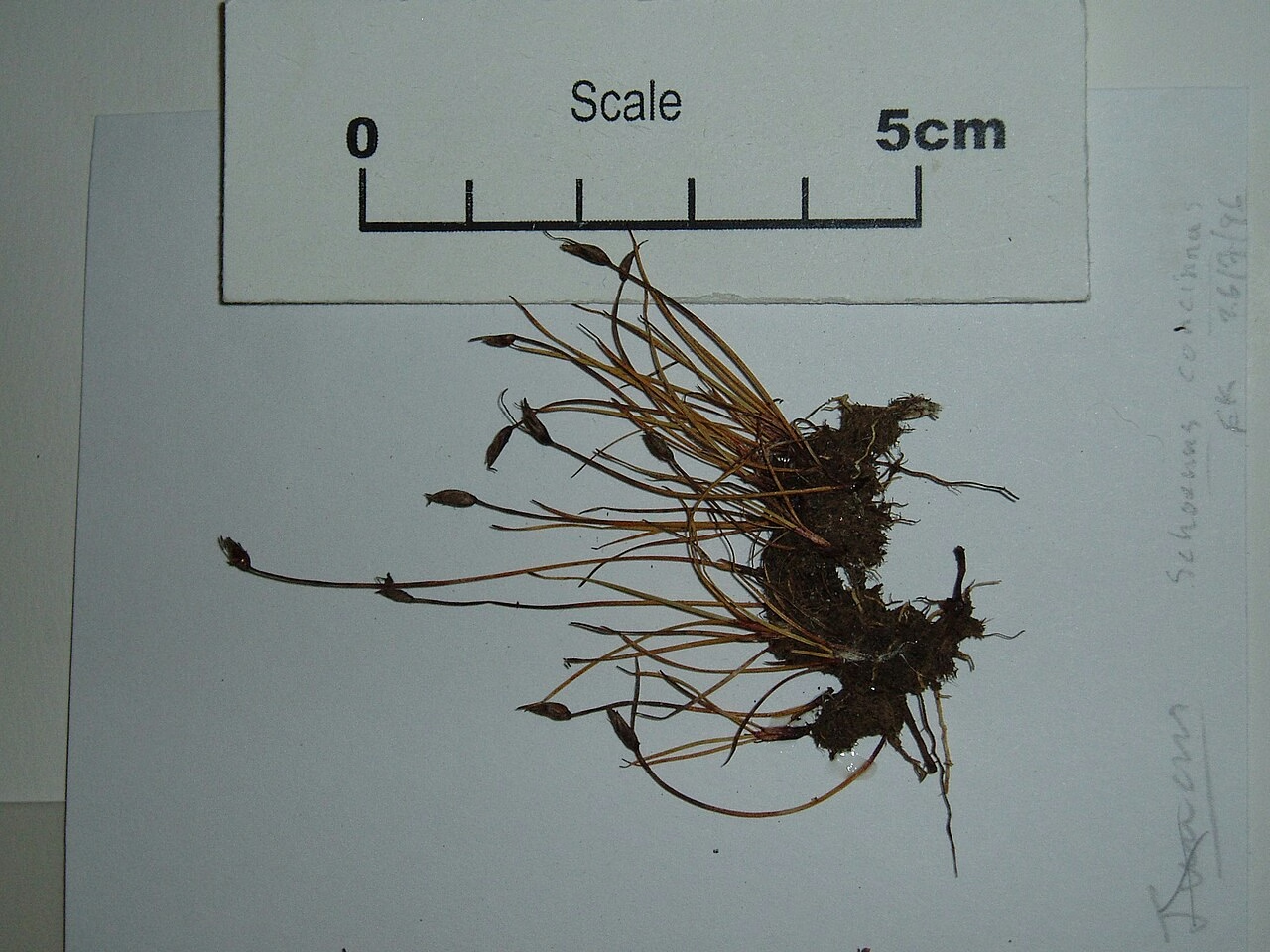
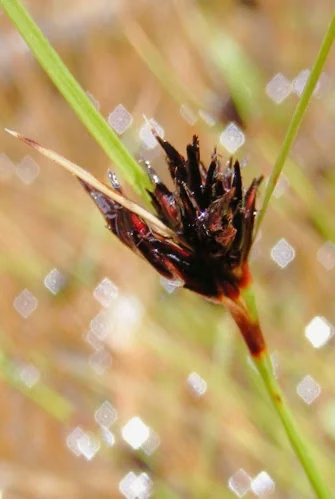
Schoenus concinnus is a small, tufted, rush-like sedge of permanently damp, sunny ground in coastal and alpine turf and along the margins of tidal streams, rivers, ponds and lakes. Its wiry stems are usually only a few centimetres tall, occasionally to 25 cm, topped by a tight head of one to three dark brown to almost black spikelets. It grows on the North, South, Stewart and Chatham Islands, from sea level to about 1200 m. In the North Island it is mainly found in the central ranges and on Mount Taranaki, with outliers in northern dunes. The species name means charming or elegant, and NZPCN notes it looks great in a partly submerged pot. Explore more native grasses and flaxes in our native plant guide.
Plant Description
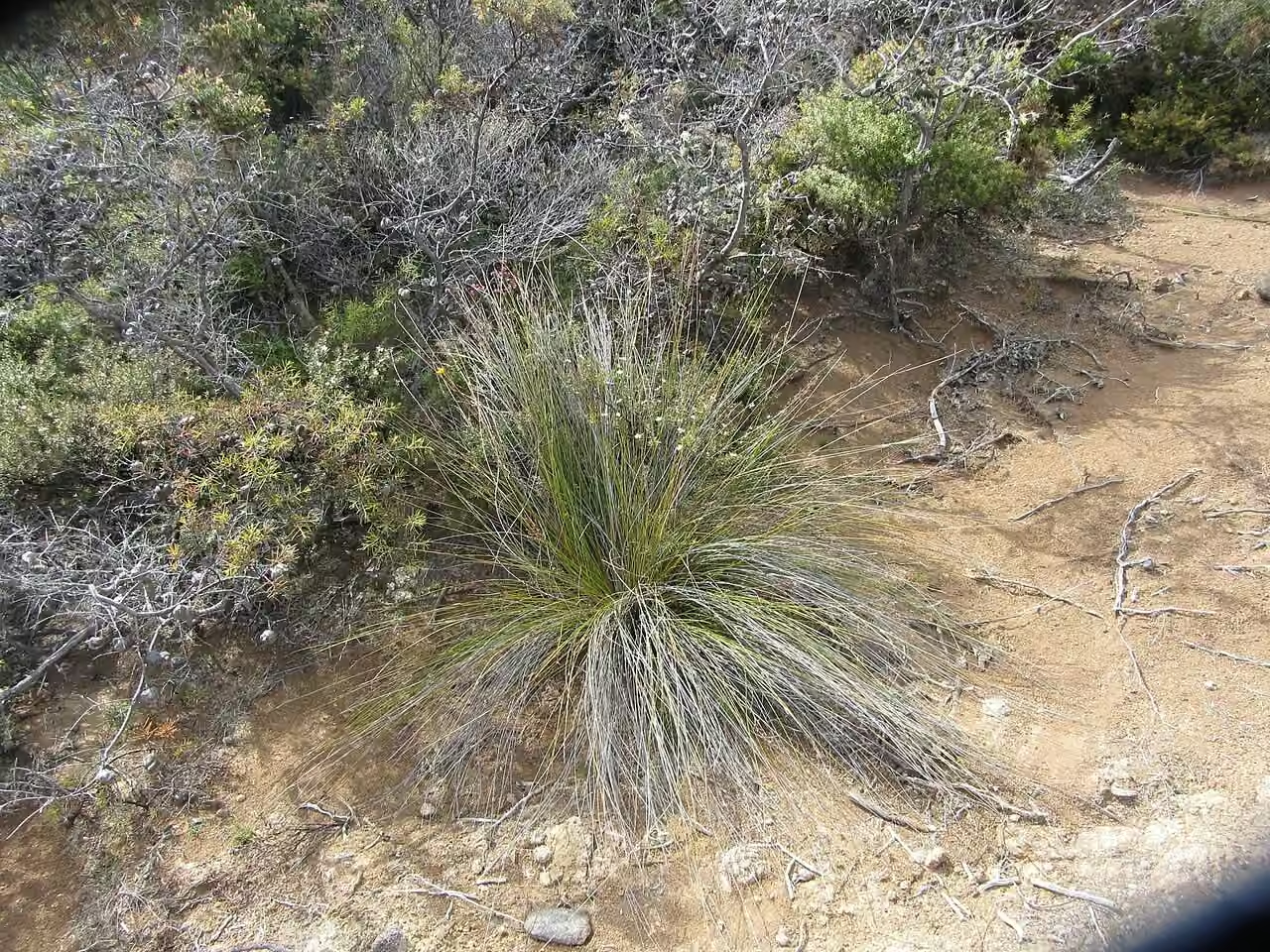
Schoenus concinnus is a rhizomatous, tufted sedge that looks like a miniature rush. The rhizomes are woody and up to 1.5 mm thick, covered in large overlapping scales. Its culms are wiry and erect, densely tufted or more widely spaced, and range from 10 to 250 mm long, though most plants are only a few centimetres high. The leaves are stiff, bristle-like and half-round in section, and the basal sheaths are red-purple and grooved.
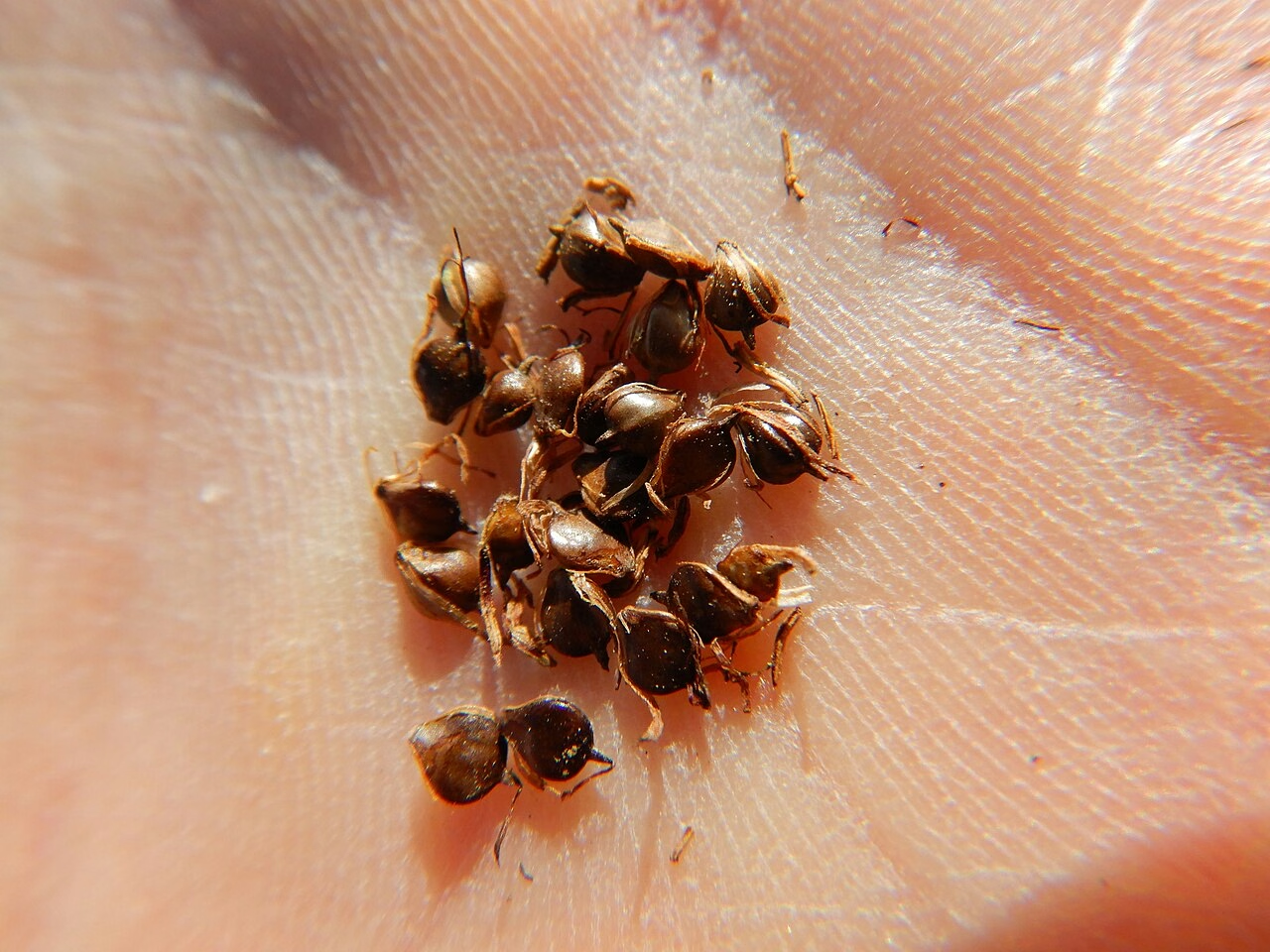
The flower head is a small terminal cluster of stalkless spikelets, usually one but up to three, each 3.5 to 7 mm long and holding two or three flowers. The glumes are dark brown to almost black with a green midrib. Around each flower are six yellow-brown bristles, often branched and with long white hairs at the base. The fruit is a smooth, glossy, yellow-brown nut 1.5 to 2 mm long.
It is most easily confused with Schoenus nitens. That species is taller, less densely tufted and has broader stems, two to many spikelets, and bright chestnut-brown glumes, and it is a strictly coastal plant. Both differ from other small rush-like sedges by having well-developed leaves.
Quick Facts
| Scientific Name | Schoenus concinnus |
|---|---|
| Height | 0.01-0.25 m, usually under 0.1 m |
| Spread | Small tufts, spreading slowly by short rhizomes |
| Water Needs | Permanently damp to wet |
| Light | Full sun |
| Frost Tolerance | High; reaches alpine turf to 1200 m |
| Salt Tolerance | Moderate; grows in coastal turf and tidal stream margins |
| Growth Rate | Slow to moderate |
| Lifespan | Perennial |
Climate Best Suited to
It handles a wide climatic range, from mild, windy coasts to cold alpine turf, provided the ground stays damp and open to the sun.
Regional Suitability
| City | Climate Suitability |
|---|---|
| Auckland | Medium |
| Wellington | High |
| Christchurch | High |
| Dunedin | High |
Plant Habitat
Schoenus concinnus occurs on the North, South, Stewart and Chatham Islands. In the North Island it is known from sand dunes on the Karikari Peninsula and near Whatipu, but mainly from the central ranges and Mount Taranaki. It is widespread in the South Island in coastal or alpine situations, and on the Chatham Islands it is strictly coastal.
It grows from the coast to about 1200 m in permanently damp, usually exposed and sunny sites. Typical habitats are coastal and alpine turf, the margins of tidal streams, and the edges of inland rivers, ponds and lakes. It is classed as a facultative wetland plant, usually found in wet places.
Growing Requirements
Soil Requirements
It roots into wet sand, silt, peat or gravelly turf that stays damp all year, usually in open sites with little competition from taller plants.
- Damp sandy, silty or peaty soil
- Low-fertility turf with sparse competition
- Tolerates periodic flooding on stream and lake margins
Light Requirements
It is a plant of exposed, sunny situations and is quickly shaded out by taller grasses and shrubs.
- Full sun
- Keep surrounding vegetation short
Water Requirements
Constant moisture is essential. In cultivation, standing the pot in a saucer or shallow pond so the base is partly submerged reproduces the wet turf it grows in.
- Permanently damp to wet
- Partly submerged pots suit it
- Do not allow to dry out in summer
Planting and Establishing
Plant in spring into a sunny, permanently damp spot such as a pond edge, bog garden or the wet margin of a rock garden. Because it is so small, it is easily lost among vigorous plants, so give it a clear patch of its own or grow it in a pot.
Schoenus concinnus is not commercially available, so plants are usually raised by enthusiasts from divisions or seed. Never collect from the wild without permission.
Ecological Role
Like other sedges, it is wind-pollinated. The hairy bristles around each nut may help the fruit lodge in mud or be carried by water, and birds using wet turf and lake margins may also move seed, although no specific dispersal studies were found.
It is part of the low, species-rich turf communities of coasts and alpine flushes, where it grows among other small herbs, sedges and rushes in places that are too wet, exposed or infertile for taller vegetation.
Uses & Significance
Garden Uses
This is a miniature sedge for specialist collections and water features where its fine texture can be seen up close.
- Partly submerged pots in full sun
- Edges of small ponds and bog gardens
- Alpine and coastal turf displays
Ecological Value
It contributes to coastal and alpine turf communities, which hold many small and uncommon native plants and are easily damaged by trampling, vehicles and weeds.
- Part of native turf and wetland margin vegetation
- Binds wet sand and silt on stream and lake edges
- Represents a lineage of native bog rushes
Landscaping Uses
Use it in a shallow trough or partly submerged bowl as a living miniature, where its wiry stems and dark seed heads give a fine, textural effect. Group several pots together for a more noticeable display.
In a bog garden, plant it at the front with other small turf species, keeping taller sedges and grasses well back so they do not shade it.
Seasonal Care Calendar
Spring
New stems grow from the rhizomes and flowering begins in October.
- Divide and repot
- Top up water in saucers
Summer
Flowering continues to January and nuts begin to ripen from December.
- Keep constantly wet
- Remove encroaching weeds
Autumn
Fruiting continues until May; ripe nuts can be collected from the dark spikelets.
- Collect fresh seed
- Clear fallen leaves from tufts
Winter
Growth slows. It is frost hardy, and alpine populations sit under snow in winter.
- Little care needed
- Keep pots from drying in wind
When to Prune and How Much
No pruning is needed. Old brown stems can be combed out by hand to tidy the tuft.
Avoid cutting the tufts down, as this slows the slow-growing plant and gives weeds a chance to establish.
How to Grow Bog Rush
NZPCN notes that Schoenus concinnus is easily grown from division of whole plants and from fresh seed. Because it is not available commercially, propagation by enthusiasts is the usual way of obtaining plants. Division is quickest and almost always succeeds, while seed is best for raising larger numbers. Always keep material wet while handling it, as the fine roots dry out quickly. Collect only from your own plants, or with permission from the landowner or the Department of Conservation.
By Division
Established tufts can be pulled or cut apart into smaller clumps, each with a portion of the short rhizome and roots.
- Lift the tuft in spring as growth resumes.
- Gently tease or cut it into clumps of several stems with attached roots.
- Pot each clump into a moist, peaty or sandy mix.
- Stand the pots in a shallow tray of water in full sun.
- Grow on until new stems appear, then plant out or keep in pots.
From Seed
Nuts ripen from December to May. Sow them fresh, as with most native sedges. NZPCN specifically recommends fresh seed for this species.
- Collect spikelets when the glossy yellow-brown nuts come away easily.
- Sow on the surface of a damp, fine seed-raising mix with added sand.
- Keep the tray standing in water so it never dries.
- Place in good light; seedlings usually appear as temperatures rise.
- Prick out when large enough to handle and keep wet.
Pests & Diseases
No specific pests of Schoenus concinnus are recorded. The main risks in cultivation are drying out and being overgrown by stronger plants or weeds.
In the wild, its turf and lakeside habitats are damaged by trampling, vehicles on beaches and riverbeds, and invasion by taller exotic grasses and weeds.
Cultural Significance
No Māori name or traditional Māori use is recorded for Schoenus concinnus.
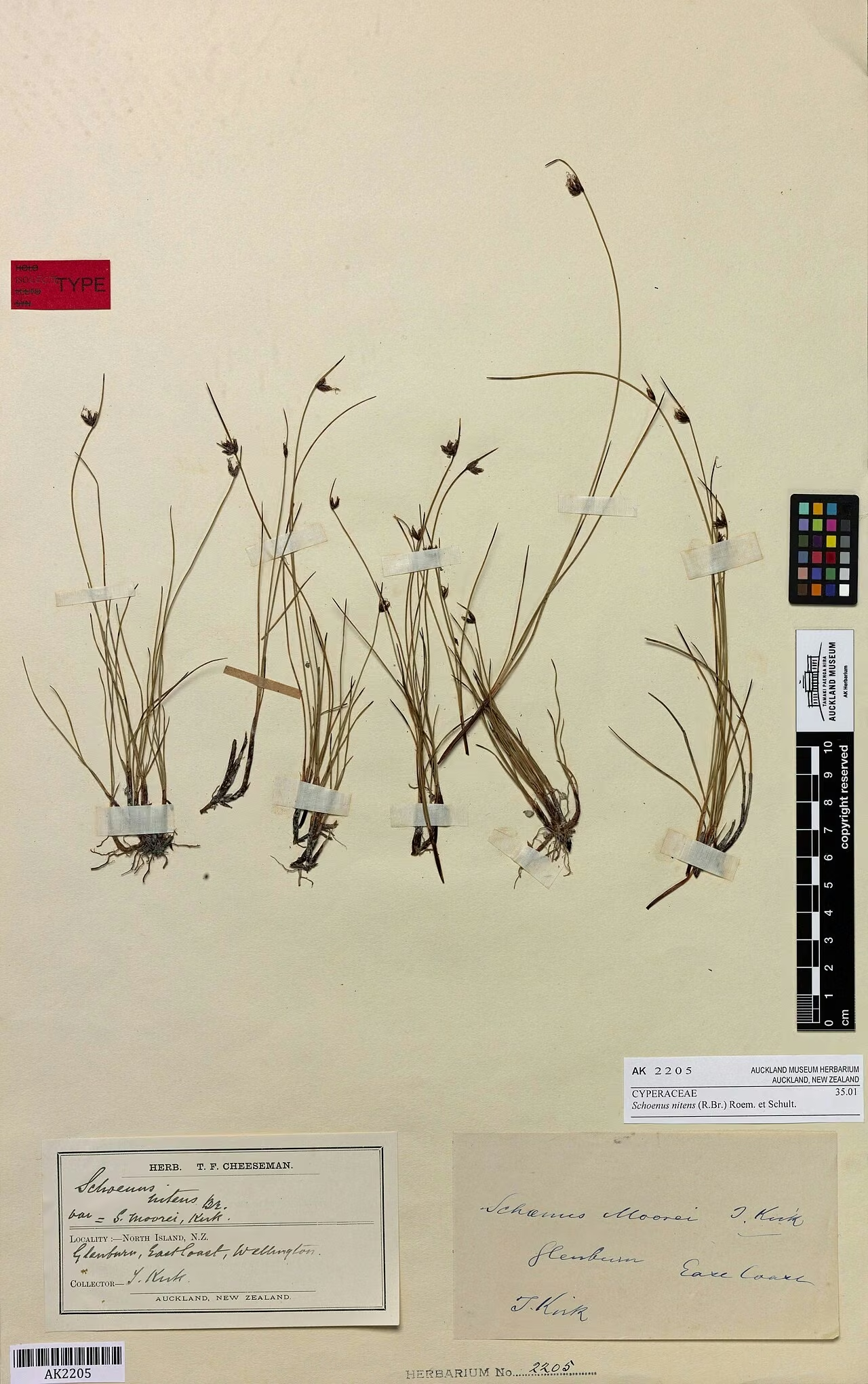
Joseph Hooker described the species, and its name concinnus means charming or elegant, a fitting description of its neat little tufts. Thomas Cheeseman later reduced it to a variety of Schoenus nitens, and it was also once named Schoenus moorei, but it is now accepted as a distinct species.
Bonus Tip
To grow it the way NZPCN recommends, plant a tuft in a small pot of sandy peat, then sit the pot in a dish of water in full sun so the bottom third is always submerged. It mimics the wet turf it grows in and keeps the plant compact.
Related Plants
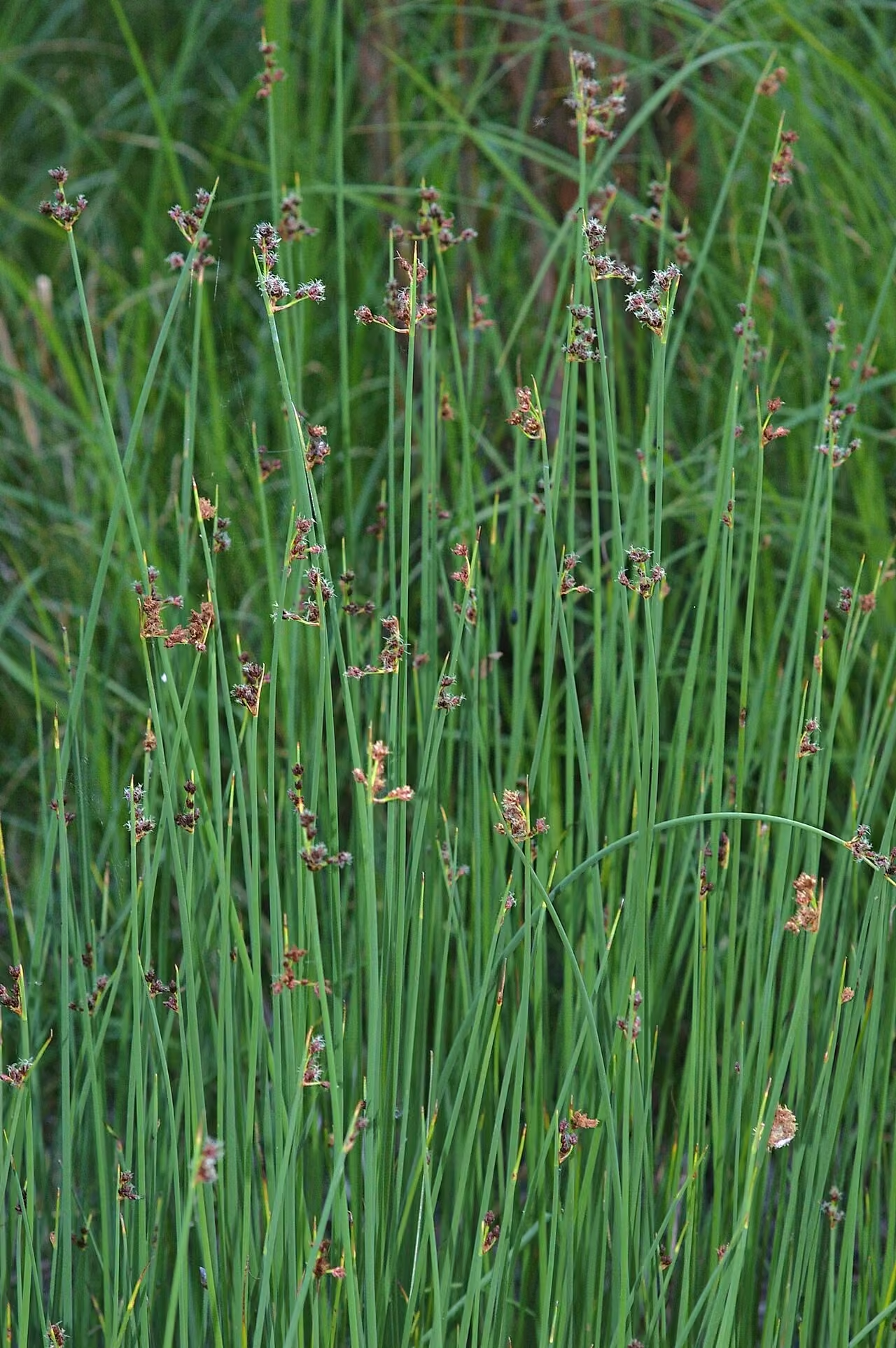
Explore other native plants that share similar characteristics or habitats with Bog Rush (Schoenus concinnus), offering further insights into New Zealand's diverse flora. These related species provide context and opportunities for complementary planting in your garden.
Plant Conservation
Schoenus concinnus is ranked Not Threatened (2023) and has been assessed as Not Threatened in every national listing since 2004. Regionally it is scarcer: Auckland lists it as Regionally Threatened - Regionally Endangered, Wellington as Regionally At Risk - Regionally Naturally Uncommon, and Northland as Regionally Data Deficient.
Protecting coastal and alpine turf from vehicles, trampling and weeds, and keeping lake and stream margins in natural condition, helps this and many other small turf species.
Frequently Asked Questions
How do you tell Schoenus concinnus from Schoenus nitens?
Schoenus concinnus is smaller and more densely tufted, with finer stems, usually one to three spikelets and dark brown to blackish glumes. Schoenus nitens is taller, with two to many spikelets and bright chestnut-brown glumes.
Where does Schoenus concinnus grow?
It grows from the coast to about 1200 m in permanently damp, exposed and sunny places such as coastal and alpine turf, tidal stream margins and the edges of rivers, ponds and lakes.
Can Schoenus concinnus be grown in a pot?
Yes. NZPCN describes it as an attractive sedge that looks great in a pot kept partly submerged in water and placed in full sun.
Sources and Further Reading
The botanical, growing, and conservation details for Bog Rush (Schoenus concinnus) on this page draw on the New Zealand plant references below. Consult them for full technical records and the latest distribution data.